


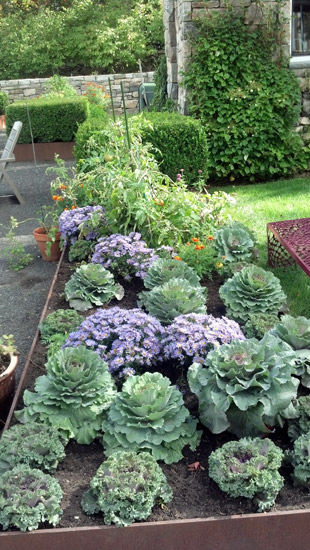
Here in the Northeast, days may be getting shorter and frosty mornings are undoubtedly heading our way, but now is not the time to stop planting. In fact, the opportunity to extend your gardening season long beyond the high season can be found within an edible landscape that encompasses fruits, vegetables and herbs. Patience will be needed since trees and shrubs can take 3-5 years to mature, but beds planted with seeds and starter vegetables will deliver the color and tasty treats within the first season. If garden maintenance is not part of your agenda for the upcoming season, a professional horticulturist that specializes in fine gardening can ensure that your edibles are planted and properly maintained to produce a bountiful harvest.
Ready to begin planning and planting? The greatest rewards are found in marrying easy-to-maintain edible landscapes such as container vegetable gardens, orchards, and grape vines with succulent fall landscapes that are visually compelling. “One of the secrets to creating a meaningful and memorable outdoor space is engaging the user with her natural environment; including edible elements in a finished landscape is a great way of fostering that interaction. Blueberry bushes, pumpkin patches, kale beds, and crabapples bring color and diversity to the seasonal garden palette while also offering scrumptious treats at the dinner table! Edible landscapes provide an easy opportunity of connecting with nature that is regenerative and nurturing for both our minds and bodies,” said Jonathan Tan, Associate Designer, at the LaurelRock Company.
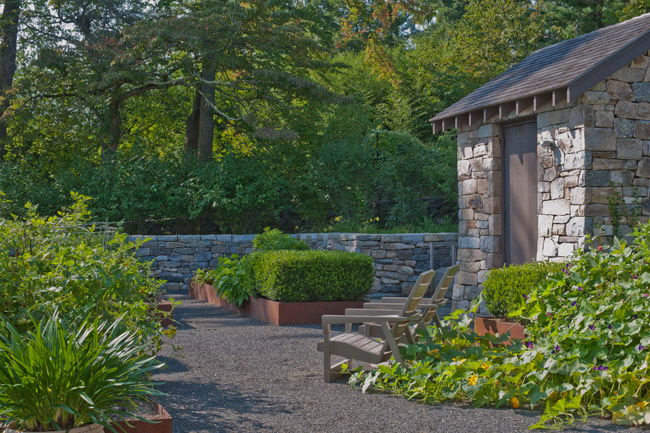
Early fall is the ideal time to tidy up and begin preparing shrubs, lawns and beds for a harsh winter season. One of the biggest challenges in maintaining an edible landscape is making sure plants receive the proper amounts of sunlight throughout the cooler seasons. If you are overseeing maintenance on your own, take note that the Old Farmer’s Almanac encourages east coast gardeners to pay special attention to “protect young plants such as lettuce, spinach, and kale with a cold frame” or 3” of straw around the base of the plants throughout the late fall and early spring.” Properly protecting early and late season plants from frost damage is the key to ensuring a plentiful harvest.
Special Promotion
