


In 1989 Jean-Luc Thunevin planted a few acres of vineyard plots in Saint-Émilion, France, and used a former garage as a makeshift winery. When his homespun label put out its ’95 vintage, Robert Parker gave his Château de Valandraud a perfect 100 points—besting even Château Pétrus. With this triumph, the “garage brand” movement was born. Since Thunevin’s breakthrough, garagistes have risen to the forefront of the world wine scene, including Pingus, the legendary Spanish wine; Harlan Estate, the Napa cult label; and Achaval Ferrer from Mendoza, Argentina’s highest-rated wine.
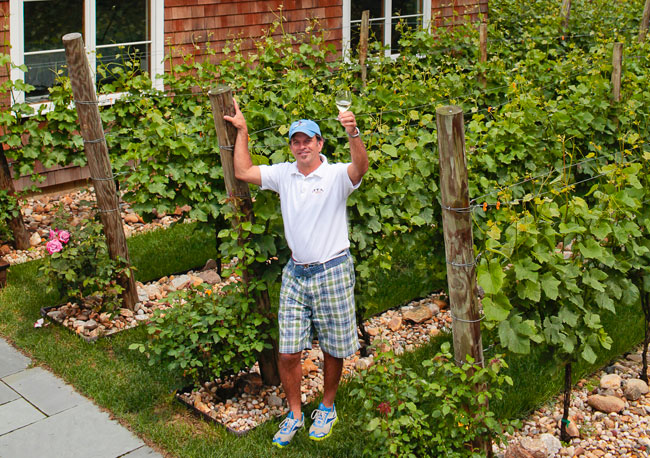
It could happen on terroir near you. Five years ago, Michael Cinque, the owner of Amagansett Wine & Spirits, planted a home vineyard of 1100 vines and now makes wine in his garage, pressing the juice with his grandfather’s old wine press. “I’m totally obsessed,” says Cinque, who has been selling and collecting wine for 33 years. “I wanted to appreciate what goes into making wine from start to finish.” Cinque’s labor of love requires 120 to 140 days a year parenting the vines (trellising, training, spraying, pruning) and months of naturally vinifying the grapes. “I calculated the expense of producing my 48 bottles a year at around $1,500 a bottle,” he says, adding that it’s the same price of a bottle of Screaming Eagle, Napa’s most coveted wine.
The Oeno File
If you have the tenacity of Martha Stewart and are happy to sell no wine before it’s time, then follow these 10 steps.
1. Buy climate-appropriate rootstocks (Cinque started with 100), plus clones to graft onto them.
2. Plant the vines three feet apart and leave about six feet between rows. Create a trellising system with horizontal wires to support the vines.
3. During the first three years, train developing vines along the wires. By the third year, each vine should produce six to eight bunches of grapes, ideally fruiting at a height of about three feet.
4. Water sparingly in spring and prune vigorously in June, July, and August, so vines will use energy to produce fruit.
5. Close to harvest time, net the vines to protect them from birds and deer.
6. Press harvested grapes and pour the juice into a fermenting tank. Add a teabag-size amount of yeast, if needed.
7. Put an airlock onto the tank, store in a cool garage (or cellar), and slowly ferment for four weeks. (53˚F is an ideal temperature.)
8. Rack the wine (siphon it from sediment) and let it settle on its own for the next three months. Keep racking every 30 to 60 days until there are no more deposits.
9. When wine is clear, bottle and cork it. Store for six months (white wine) to a year (red wine).
10. Drink.