


Manicured lawns are so passé—and because of all the maintenance and water they require, not so good for the environment, either. But there are plenty of grasses that will give your garden easy-care, year-round appeal.
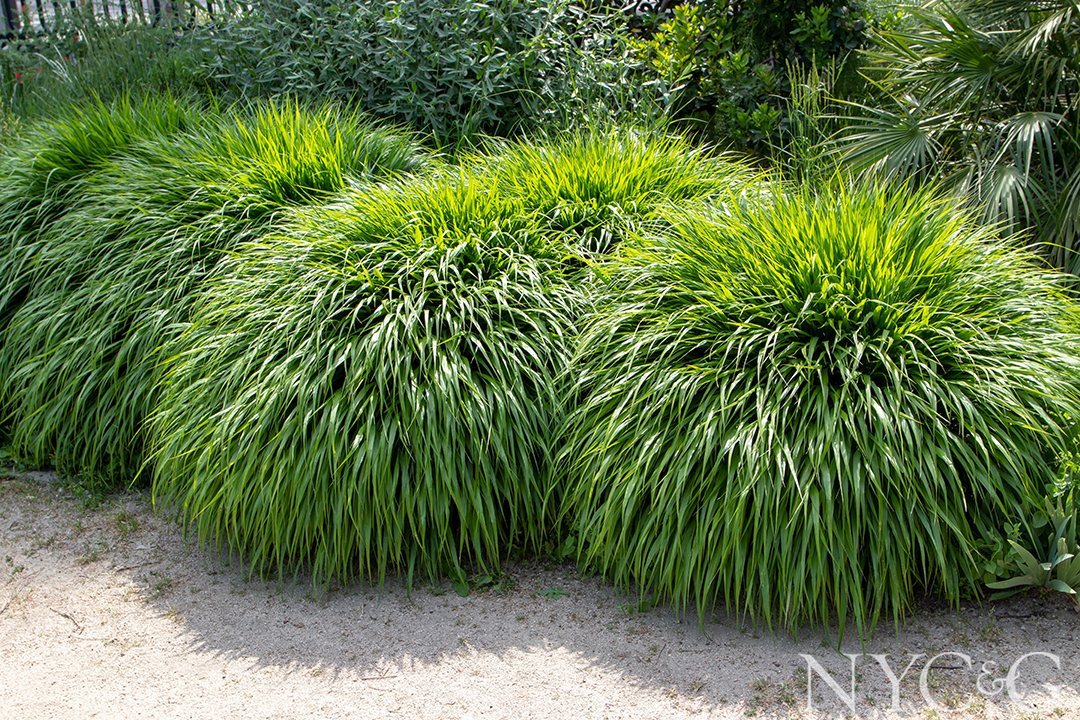
JAPANESE FOREST GRASS
(Hakonechloa macra)
Zones: 5–9; height: 1–2 feet
This shade-loving, mounding grass sways beautifully in the gentlest of breezes. Native to the wet cliffs of Japan’s Mt. Hakone, it also comes in variegated versions striped in white or gold.
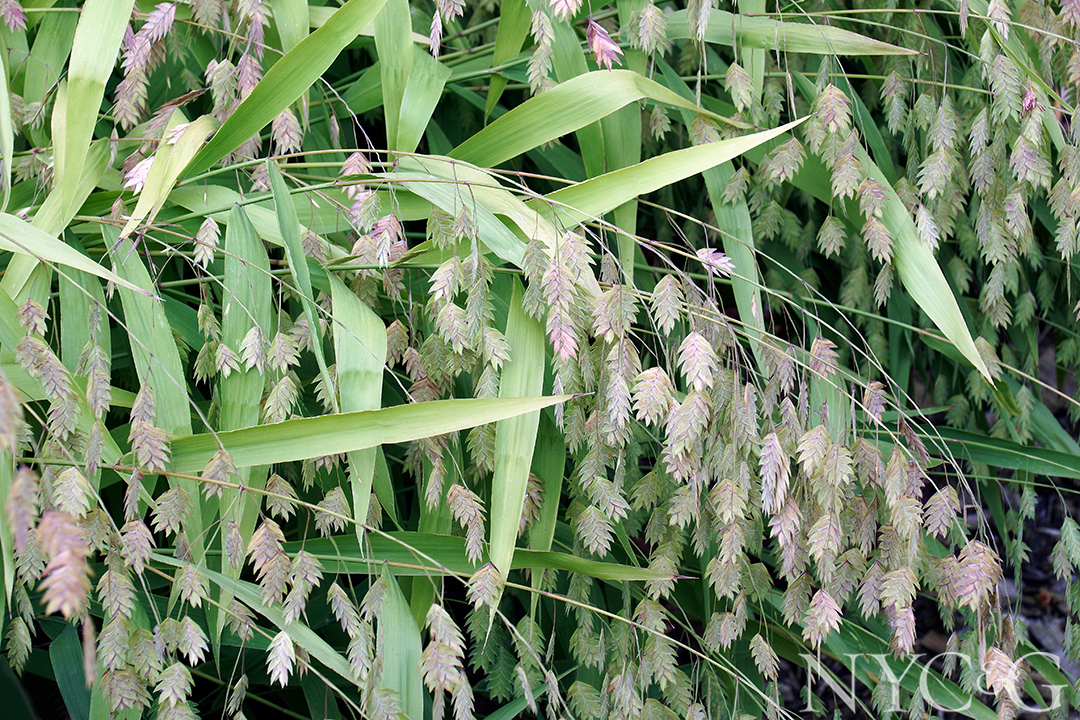
NORTHERN SEA OATS
(Chasmanthium latifolium)
Zones: 5–8; height: 3 feet
The common name of this grass references its attractive seed heads, an extra plus for the garden. Its foliage turns vibrant gold in the fall, and it tends to self-sow.

GOLDEN SWEET FLAG GRASS
(Acorus gramineus ‘Hime-masamune’)
Zones: 5–9; height: 6–12 inches
Useful in mass plantings or water gardens, evergreen Acorus likes moist soil and will brighten a dark area, thanks to its predominantly yellow blade marked by a green stripe.
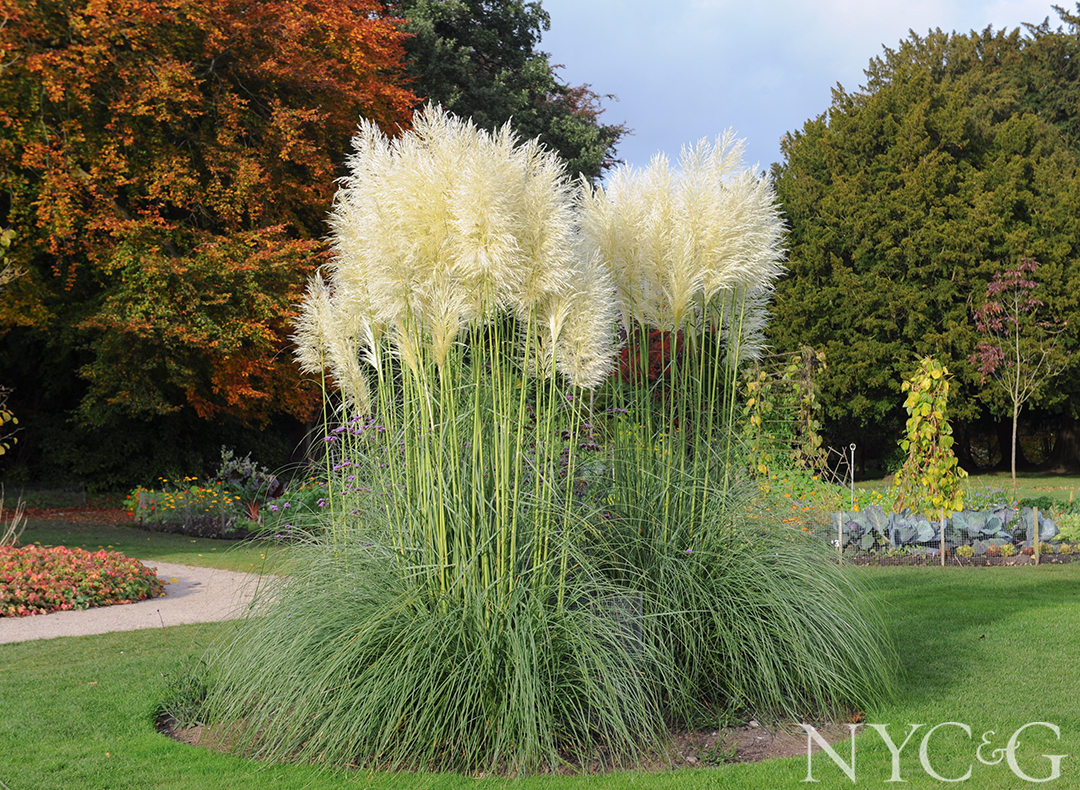
PAMPAS GRASS
(Cortaderia selloana)
Zones: 7–11; height: 8–12 feet
This South American native has true star appeal. Harvested in the autumn, the dramatic seed heads are great in dried arrangements, but the foliage blades are sharp, so be careful.
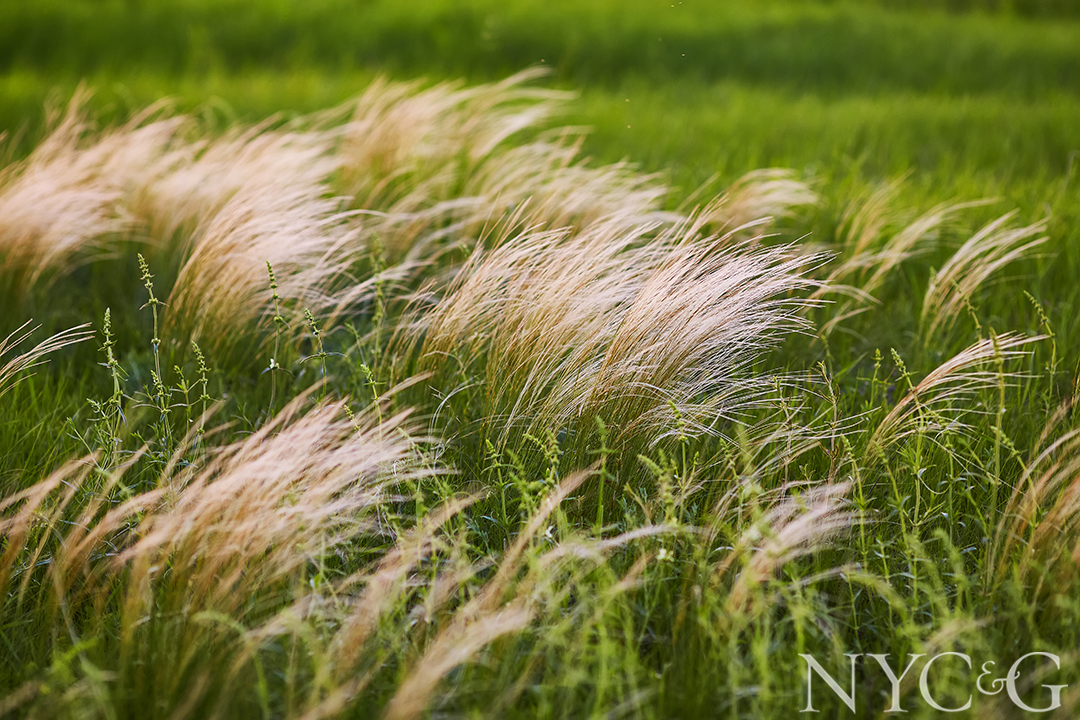
MEXICAN FEATHER GRASS
(Nassella tenuissima)
Zones: 7–10; height: 1–2 feet
A delicate fresh green in spring, this grass turns a soft tan in the second half of summer. It is a perennial, but you might want to comb out the seeds with your fingers and save them for spring planting, too.
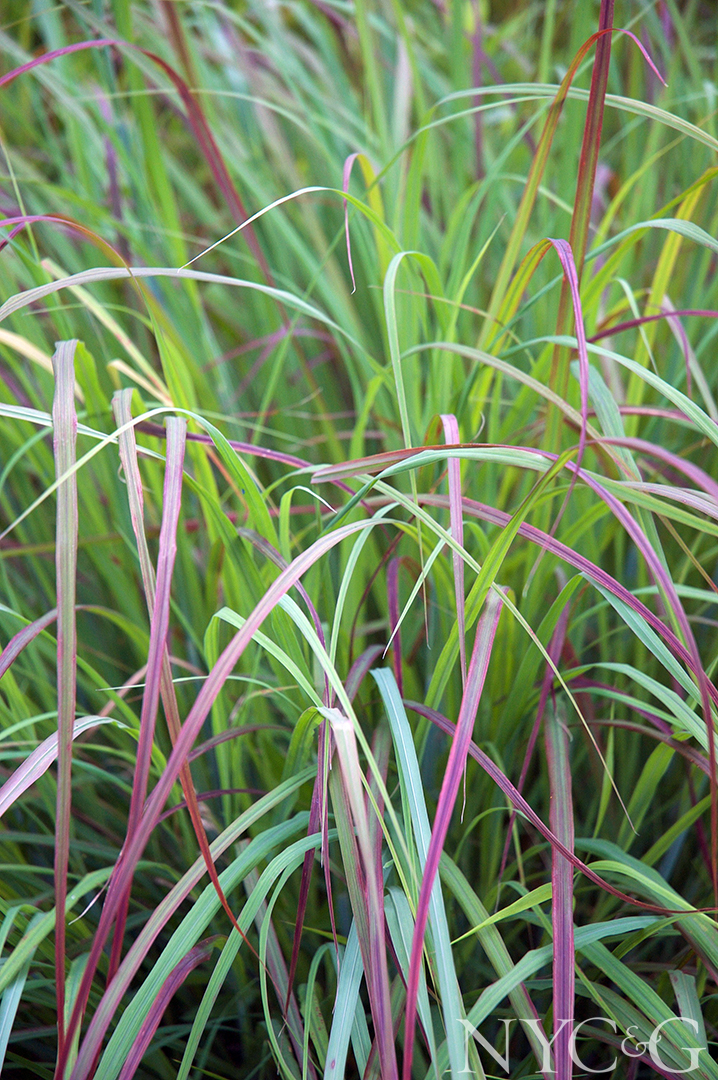
LITTLE BLUESTEM
(Schizachyrium scoparium)
Zones: 4–10; height: 2–4 feet
A native of the northeastern U.S., this meadow grass mixes well with wildflowers. ‘Purple Dunes’, a new variety introduced by Glover Perennials in Cutchogue, Long Island, has standout purple foliage.
Tips
• Prune most grasses in the early spring, rather than the fall, when they provide food and shelter for a variety of birds and insects.
• Most grasses require full sun and good drainage.
• Regular lawn grasses take over mixed meadow plantings easily, so use bunch-forming natives instead.
• Grasses look great in pots and in borders at the end of the season.
• Don’t forage for beach grass—or virtually anything—on our region’s shorelines. They are an important part of erosion control.
