


As a society, we have a moral obligation to care for and nurture our children,
and providing a healthy school lunch—not the carb-intensive, over-processed “food product” served in so many schools—should be part of that effort. The federal government is getting the message. In January, the USDA unveiled what it called “critical upgrades” for nutritional standards for public school meals that include more fruits and vegetables, whole grains, and limited levels of saturated fat, sodium, calories and trans fats. The USDA estimates that 32 million children will benefit from these new guidelines, but they are a far cry from the kind of organic, sustainable food served in pioneering private schools around the U.S.
One of them is The Unquowa School in Fairfield. Founded in 1917, it has 200 students in pre-K through eighth grade. “The school had always provided a balanced meal, but the quality left a bit to be desired,” confesses Head of School Sharon Lauer.
Several years ago, after some parents approached Lauer about making their kids’ school food more organic, she began to study the possibilities. She read about the edible school gardens that legendary chef Alice Waters created in California and in New York, as well as Waters’s influence in changing the food service at Yale University (see sidebar). Then, in the spring of 2005, Lauer attended a lecture series at the National Association of Independent Schools Sustainable Institute. John Turenne, who had created Yale’s sustainable food program, was giving a presentation.
“Afterward, this woman comes running up to me and grabs me and says, ‘I need to talk to you!’” Turenne recalls. “It was Sharon Lauer.”
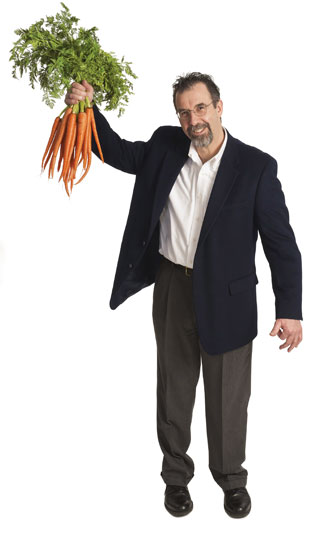
Turenne had just left Yale to start Sustainable Food Systems, a consulting firm that helps institutions shift their menus to locally sourced products. The Unquowa School became his first customer. Out went frozen, prepackaged food and the Frialator; in came an organic garden and fresh produce and meat from local farms. The school also partnered with Sport Hill Farm to start a summer camp where students could learn the arts of planting, cultivating and harvesting.
The school’s new chef was crucial. They hired Peter Gorman, who had worked in schools and restaurants that emphasize seasonal and local ingredients. “Peter tries to get the kids involved in the kitchen,” explains Lauer. “Every fall and spring, we have an Iron Chef competition in which the kids get to make a meal from a secret ingredient. The winner gets their meal on the menu.”
At lunchtime, kids sit at large, round tables. The meal du jour is placed on the table for everyone to share, and a teacher sits at the head of each table to “moderate” the meal, keeping a beneficent eye on what ends up on kids’ plates and what doesn’t. “I can monitor their choices so they can’t eat just bread and butter,” explains fifth-grade teacher and farm camp director Mary Faulkner. “They need a protein, a vegetable, and a healthy starch. We help them to make their own choices.”
This family-style attitude encourages the kids to try new foods. They don’t have to like it; they just have to try it. Some kids will, some kids won’t, but either way, they realize that eating something green isn’t necessarily distasteful. While it’s good food, it’s still kid food. Yes, there are chicken nuggets, but they’re homemade with fresh breadcrumbs and Greek yogurt. There’s tomato sauce for the pasta, but it’s made from heirloom tomatoes. There’s grass-fed beef in the chili. They eat cage-free eggs and organic milk, all from local farms. A fresh salad bar and hot soup are always available, and breads are baked every day on the premises.
Turenne and Gorman constantly tweak the menu and add new dishes, and they stay within budget while reducing waste. “The school ended up reducing its costs because they started buying more in bulk,” Turenne says. The school also buys “seconds” on vegetables—an heirloom tomato that doesn’t look appealing at the farmers market still makes a flavorful sauce or a tangy salsa. The kitchen doesn’t make more food than is needed and uses leftovers whenever possible, and students are encouraged to take only what they can consume.
Not only has the school’s new approach made headlines (it was featured in the school-food documentary Two Angry Moms), it’s attracting parents who want their kids’ school to reinforce the healthy habits they establish at home. When Fairfield resident Mary Sullivan was investigating prospective schools for her two children, “The first thing that sold me [about Unquowa] was the kitchen,” she says. “We eat well at home, and now this can be supported at school. There’s no junky lunch. No one is bringing in Twinkies.”
Turenne made his work at Unquowa a case study for what could happen at other schools. He has created a holistic, five-part system, from locally grown food to infrastructure to fiscal responsibility, to help other institutions go sustainable; recent clients include the East Harlem School and Spence in Manhattan. He’s also brought his expertise to the small screen. In 2009 he joined the production staff for Jamie Oliver’s Food Revolution, the reality show in which the British celebrity chef attempted to transform the eating habits of “the unhealthiest city in America,” Huntington, W.V. Turenne headed the school food makeovers. After the cameras left, he and his staff stayed for six months “to make the changes stick. We went into one school at a time and trained all 77 cooks. We have to make them cooks, not ‘heaters.’ Cooks in these public schools are wonderful people; they’re well intended and passionate and love their kids, but they’ve lost the skills for cooking, if they ever had them. Their idea of a cooking tool is a box cutter.”
Fortunately, Turenne and other activist chefs have a powerful ally: the First Lady. In March 2010 he and seven other chefs teamed up with Sam Kass, assistant White House chef and senior policy adviser for healthy food initiatives, to launch Chefs Move to Schools, a component of Michelle Obama’s Let’s Move! campaign to battle childhood obesity.
“We brainstormed with Kass and the USDA, and the USDA created a tool kit that schools could adopt,” Turenne explains. The program’s website (chefsmove.org) has get-started information for chefs, parents, students and school administrators, as well as a sign-up page for the HealthierUS School Challenge. The initiative also encourages chefs to “adopt” a school; so far, 2,800 chefs across the nation have done so. As a Chefs Move to Schools volunteer, Turenne has been teaching children the virtues of real food at his daughter’s elementary school in Wallingford.
He admits that it’s easier for private schools to adopt these practices, simply because they’re smaller, more autonomous, and have involved parents. “We don’t have enough money now to serve our kids in public schools. I hope it doesn’t become less,” he says. Yet he isn’t discouraged. “I feel like I’m on the front lines of the battle. There’s a growing army of us trying to make these changes stick, no matter what administration is in office.”
Ripple Effect
How Alice Waters came to Yale and changed one chef’s life
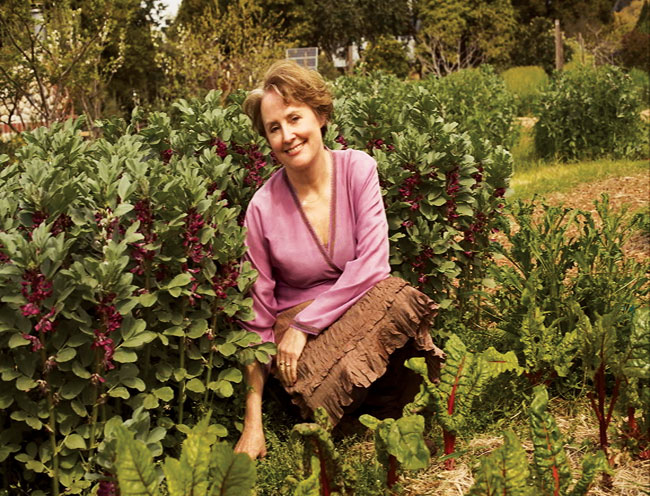
Her name has become synonymous with all things organic. She is a chef. She is a restaurateur. She is an activist. You know her when you see her. The soft gaze. The easy smile. The busy hands always cooking something.
Alice Waters, the proprietor of Chez Panisse in Berkeley, the mother of edible school gardens on both coasts and the genius behind the slow food movement, has been making a difference in the way we eat since 1971. She is the queen of simple food prepared a simple way.
Waters has made a splash in Connecticut, too. Ten years ago, John Turenne, the food service manager at Yale University, got a call from his boss at Aramark, Yale’s food service provider. There was a parent who wished to speak with him. It was Alice Waters.
“I nearly had a heart attack,” he recalls. “Gourmet had just ranked Chez Panisse the number one restaurant in the country. And this woman wanted to talk to me?”
Waters’s daughter, Fanny Singer, was a freshman, and Waters wanted to make sure the food her daughter would be eating was fresh, local and organic. She convinced Yale’s president to switch to a more sustainable food program. With the help of one of Waters’s chefs, Seen Lippert, Turenne threw himself into the task.
“The Aha moment came about four or five months into the project,” he says. “We had a special dinner for about 250 people featuring the new organic menu, and we invited the farmers who provided the food. As I stood there explaining the menu to the guests, I looked up and saw the farmer who dropped off the greens, and the farmer who supplied the tomatoes, and the baker who made the bread. It was very profound.”
Turenne realized food had a face. In the spring of 2005 he left Yale to start his consulting business, Sustainable Food Systems.
Waters has that effect on people. However soft-spoken she might be, she doesn’t really back down from something she believes in. Fresh food will always be good food. As she says in her latest cookbook, In the Green Kitchen, “Cooking creates a sense of well-being…All it requires is common sense—the common sense to eat seasonally, to know where your food comes from, to support and buy from local farmers and producers who are good stewards of our natural resources, and to apply the same principles of conservation to your own home kitchen.”
This is the goal of her Chez Panisse Foundation: to support school gardens so that students can grow, cook, and share their own food for a sustainable future. For more information or to get involved, go to http://www.chezpanissefoundation.org. —Eileen Weber