


Upon walking into the great room of this Miami penthouse, most people immediately take a Rorschach test. It’s not about interpreting an inked pattern on paper but, rather, one that appears in glass on the ceiling. There, a galaxy of two-tone shapes—clear and amber—function as a chandelier, a source as bright when sunlit by day as it is when illuminated at night. Catherine Carmody, who lives there with her husband, Bill Carmody, says the chandelier is “reminiscent of stingrays.” Others see it as a school of swimming tropical fish. After every one of the 200 elements was hung from the ceiling, the interior designer for the project, Bennett Leifer, says, “I saw a flock of birds, other times I see the wave-like effects of water,” a not unreasonable allusion given the prow-like views of Biscayne Bay through the two-story-high windows. “The chandelier is a favorite element of Bennett’s design because during sunsets it mirrors the sun’s reflection on the water,” Carmody emphasizes. “We love the chandelier as a piece of sculpture.”

The Carmodys are the first occupants of this three-level, four-bedroom penthouse in a building by French architect Jean Nouvel. The couple—he’s a trial lawyer, she’s a writer—had been living in an iconic Herzog & DeMeuron building on New York’s Bond Street prior to purchasing this home and deciding to spend as much time in Miami as possible. “We loved the building’s contemporary feel with a unique style that melds with the water,” says Carmody. “During sunsets, the building seems to float and feels ethereal. Living in iconic buildings designed by Pritzker Prize–winning architects has an allure for us.”
For a home they own in Water Mill, New York, the couple room-tested, in a sense, several designers to see what resulted. As Leifer recalls, “I started working with them room by room, as a test, but by room five I had the commission.” As Carmody emphasizes, “Bennett was so flexible, such a hard worker, and so easy to work with that for this new home we wouldn’t have considered anyone else.”
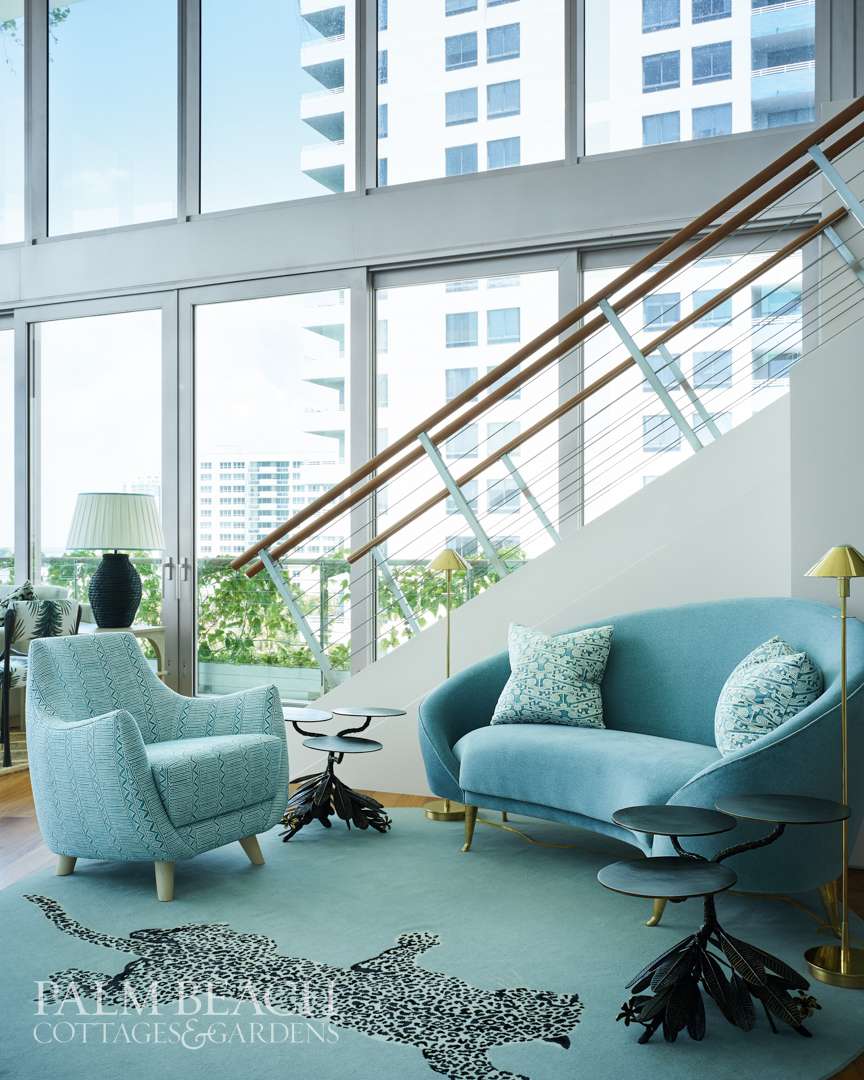
A seating area features a Bourgeois Boheme settee, a chair from Studio Van Den Akker, and a whimsical rug from The Rug Company.
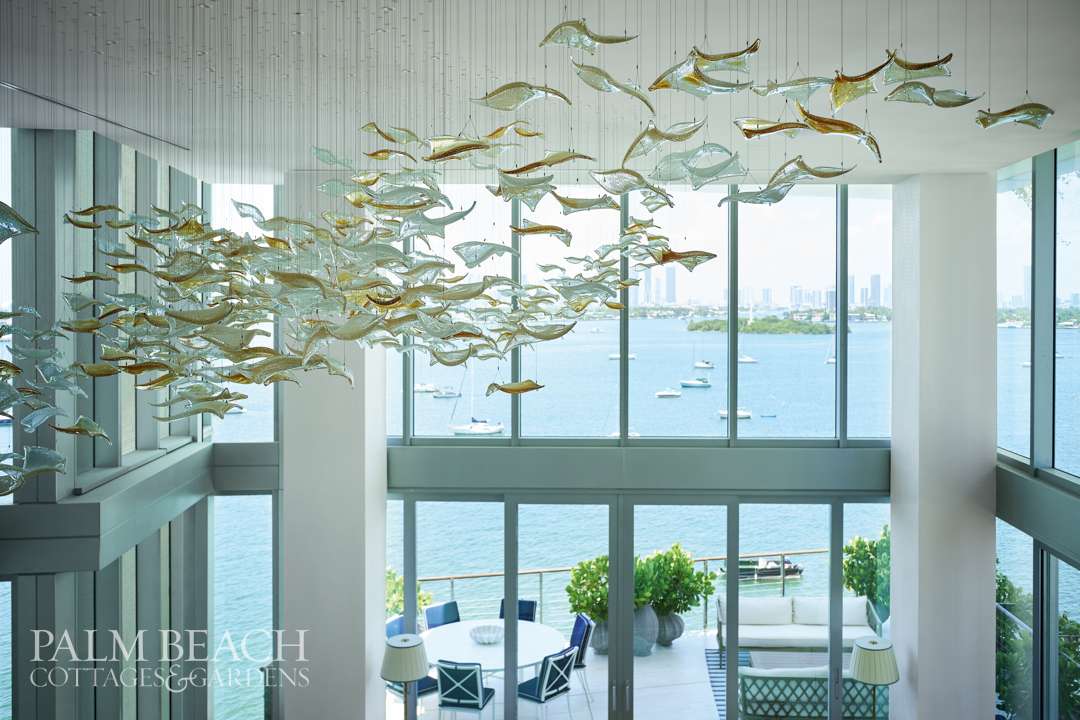
For the great room of this Miami penthouse, it took a crew to install a chandelier composed of glass pieces.

One of the apartment’s terraces is finished with planters from Pennoyer Newman and a Restoration Hardware table and chairs. A view of Miami across Biscayne Bay serves as permanent décor.
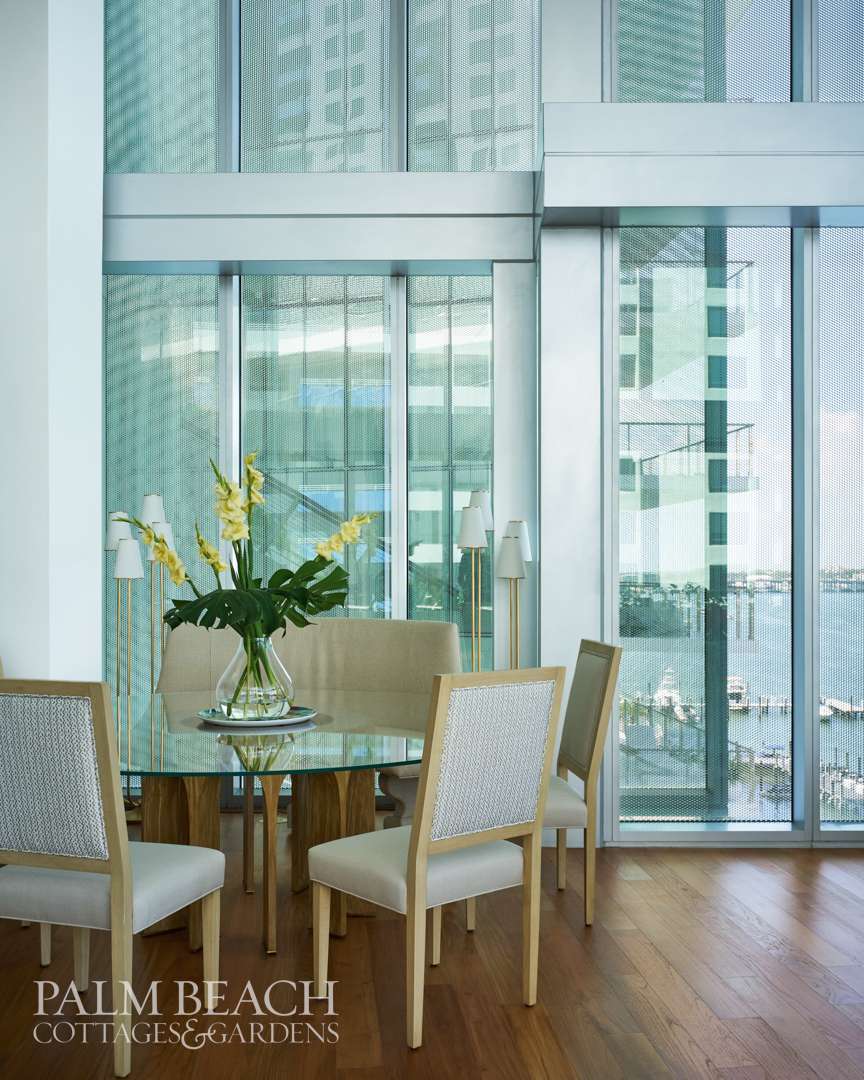
Artistic Frame chairs and a John Saladino banquette are grouped around a Baker table.
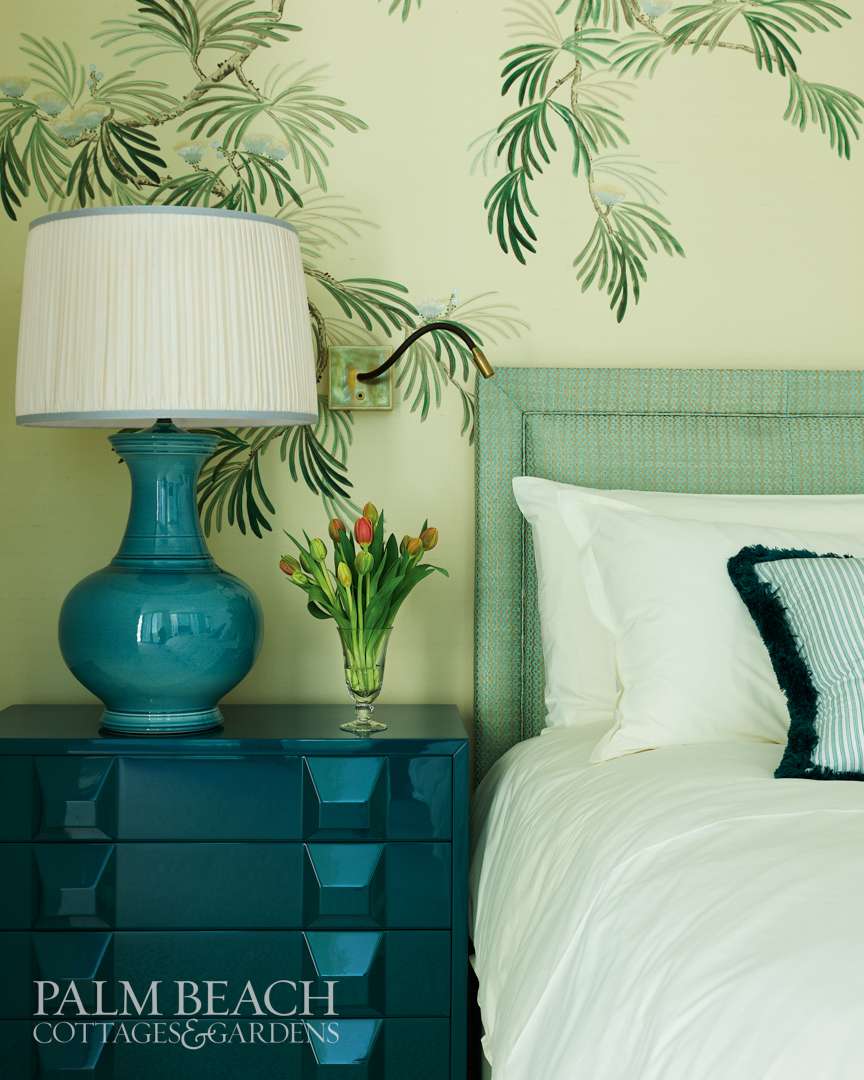
The branches on a De Gournay wallpaper in a bedroom appear to be blowing in a breeze. A John Rosselli lamp sits on a Gary Rubinstein nightstand.


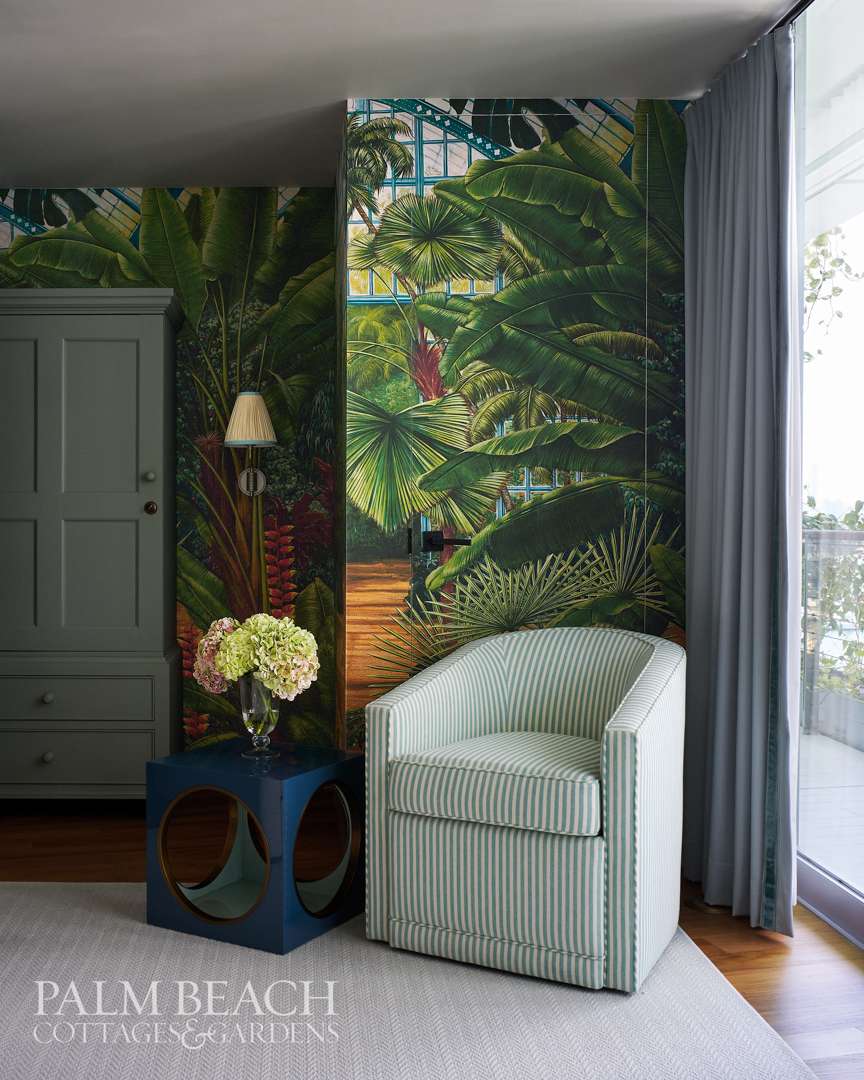
Because of his prior work on the Hamptons house, Leifer knows a key dynamic about the couple. “Bill leans more toward the contemporary and conceptual, Catherine more to the traditional and comfortable,” he states. Apart from filling such vaulting, airy, bright spaces with furnishings and artwork that would stand out from the views all around, Leifer needed to marry these two decidedly opposing aesthetics. Bold wallpaper patterns proved to be one method for answering to both. At the entry, a design of palm fronds on a Pierre Frey paper appear so real they assume the effect of trompe l’oeil. In a guest bedroom, a pattern depicting a greenhouse imbues the space with an extra “view.” As Leifer describes this latter choice, “It’s one of the least used rooms and, so, to have a very graphic paper there makes the space particularly memorable.”
“So many of the elements and patterns Bennett chose,” says Carmody, “add a level of warmth and coziness to the home while keeping it sophisticated. We believe the elements that we all selected kept the home from looking too sleek or too modern. My husband and I wanted warmth and Bennett surely accomplished this.”

One of the given decorative elements Leifer had to work with was Miami light—dazzling and inviting, yes, but also overpowering, especially in homes with 25-foot expanses of glass. Seating areas in the great room are demarcated by graphic rugs, while furnishings wear combinations of bold patterns and traditional ticking-stripe fabrics. A vigorously hued Fornasetti cabinet features a scene of tropical fish and jellyfish amid bright corals and sea plants. “The levity of the imagery and the sophistication of the color stand out in the apartment,” Leifer emphasizes. “It’s the kind of item that is very strong and chic and welcoming, a statement made right as you walk into the apartment.”
Sometimes, life in a new building, absent the patina of time, can seem austere. But because of Leifer’s work, Carmody says that their apartment already has “a feel of timelessness and longevity. We absolutely love our home and would not change one single thing.”
