


The month of October always brings a wealth of winemakers and whisky-makers to Manhattan. The annual Fete du Bordeaux once again rolled out the classified growths at the Four Seasons restaurant with Julian Niccolini orchestrating the crowd in the fully packed Pool Room. The great Leoville-Barton (St. Julien), Lynch Bages (Pauillac) and Montrose (St. Estephe) families presented their wines.
Event upon event brought out the treasures: an evening of Sandeman Declared Vintage Ports going back to 1970, lunches showcasing Domaines Louis Max Burgundy and Perrier-Jouet 2006 Cuvee Belle Epoque. As a little diversion from all these whiskies and wines, Petrossian introduced a fanciful cocktail, which actually uses dried caviar as an ingredient (recipe at end of this column).

Montes, the Chilean winery known for the angels on its label and its unique act of playing Gregorian chants in its circular feng sui barrel room threw an extravaganza to celebrate its 25th anniversary with performance art, a vertical tasting, an operatic piece, a big ‘reveal’ of its new anniversary Cabernet and a gala dinner.
The evening even included a prelude to the party. Each guest received a telephone call from a muse giving instructions to look for an angel at the island across from the Plaza Hotel between 6:00-6:30 p.m. There a towering woman dressed in a gold gown with white feathery angel wings placed a white rose onto each guest’s lapel and instructed them to go to the Central Park and look for other characters who would lead them to the event. I did so and entered the park where another costumed character handed me a map.

I followed a path into the park now dark and spooky—and was greeted by an array of theatrical characters: one sitting atop a high rock and philosophizing about shedding all human worries; next a tap dancer under a bridge; then a Shakespearean actor in a top hat who recited poetry and finally another muse who walked me to the Academy Mansion off 5th Avenue at 63rd Street where the party unfolded with more performances.

In a vertical tasting, starting from the 1990 vintage, guests were poured seven vintages of the famous Montes Alpha Cabernet Sauvignon (with an angel on the label), Chile’s first premium wine. The 1997 and then the 2007 were the two favorites, both mysteriously nuanced wines with great fruit and chewy tannins. Then we were treated to a dance performance to operatic music with a singer and a harpist.

The next pre-dinner event was the U.S. launch of Taita 2007, a Cabernet Sauvignon coming from the Marchigue Vineyard in the Colchagua Valley, a cool-climate moonlike landscape near the sea. Montes’ 25th anniversary cuvee, Taita (pronounced Tight-Ta), was unveiled in its handsome wooden case designed by Chilean artisans with its lenga wood coming from the sustainable forests of Patagonia. The heavy black bottle has a copper angel affixed to the glass. At $300, Taita is Chile’s most expensive wine.
I was enamored with the wine. Taita is extremely seductive with round velvety mouth-filling tannins and it unfolds in rich layers of flavor with cherry, blackberry, blueberry vivid fruits and hints of mocha, butterscotch, truffle, cedar and bitter chocolate. Aurelio Montes, the winery’s founder, enjoyed the admiration chorused by the wine critics and guests. Out of the 3,000 bottles, only 200 were allocated for the U.S.

It seems that lately wine tastings are turning into theatrical events. Ravenswood, the iconic maker of Zinfandel in Sonoma, staged a spooky evening at the taxidermy, decorated Jane Hotel Ballroom for the launch of its new Halloween-inspired Zinfandel called Besieged.
The super-star Zinfandel-maker, Joel Peterson, and Scottish theater and film actor, Alan Cumming, sat on chairs which had menacing black birds attached to their high back cushions. They conducted a fireside chat about the mysteries of California’s heritage black grape.

The evening included a tasting of six Single Vineyard Designate Zinfandels. Among them Belloni (boysenberry, plum and tobacco notes); Teldeschi (flavors of black cherries, coffee, smoke and caramel); and Old Hill (my favorite with its rich dark fruit, spice and sandalwood), and a discussion of Ravenswood’s growing cult following. The ravens on the Ravenswood logo are the most tattooed symbol in the wine world (Ardbeg smoky single malt takes that honor in the spirits world).
Peterson started off with a story of how a woman dropped trou to show him the tattoo on her upper inner thigh (his wife later found out about the incident). A real raconteur, Peterson is considered the “Godfather of Zin” and admitted that he often sees such displays of raven tattoos and his wife understands the cultists’ enthusiasm.

Cumming asked Peterson what makes a good Zinfandel. Peterson answered by pointing out the “three sins of Zin”: too sweet, high alcohol, and not well made. He can never be accused of these sins since Ravenswood keeps the alcohol around 14 percent, the sugar down, and vinifies with care and ages in oak. Peterson started Ravenswood in 1976 after apprenticing with another Zinfandel pioneer, Joseph Swan, who taught him the Old World winemaking techniques. Now Peterson works with over 100 northern California grape growers to make his sought-after Ravenswood Zins.

No one puts on great theatre like British men describing their Scottish single malts! I had the rare treat of meeting the handsome Ronnie Cox of Berry Bros & Rudd—venerable London-based wine and spirits merchants who date back to 1698—who must have kissed the Blarney Stone because he had an intoxicating gift of the gab.
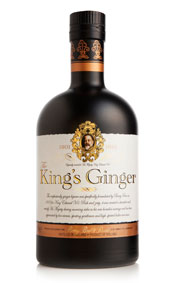
Cox started with a little history of gin and showed off his No. 3 Gin, a London Dry style gin made in Holland which was “destined” to be a Martini. He then went on to describe King’s Ginger, a ginger liqueur formulated in 1903 by Berry Bros. in London for King Edward VII, but then got to the point of the evening: Glenrothes rare and extinct vintages. Yes, some are as extinct as the Dodo bird of Mauritius.
“Malt whisky is for thinkers and blended whisky is for drinkers,” Cox proclaimed provocatively. There are three styles of single malts: the uplifting style, the classic conversational style and the relaxation style. The uplifting style has stimulating citrus and floral. The conversation style with its butterscotch and cedar woodnotes will never put you to sleep. And mellow spice and leather are the main notes in the relaxing style.

“Don’t put water into older whiskies. It’s like old people who don’t swim. Old whiskies dissipate,” was Cox’s first enlightening instruction. The discussion dispersed into many directions and brought all sorts of lessons. It’s all about maturity of the whisky more than age and what sort of casks the whisky has aged in. We learned the four main aromas in Glenrothes’ house style: butterscotch notes, citrus notes, vanilla spices and dried fruits.

Glenrothes, a distillery in Speyside, Scotland, will not bottle vintages every year and when they do each vintage represents something important. We tasted Glenrothes 1991, which was the year of the first Gulf War, the year Clinton was nominated and the JFK film came out. It has butterscotch on the nose and vanilla. It’s clearly a conversational style and it comes in waves of different aromas—middle palate sweetness and a spice on the back. Cox suggested listening to Mendelssohn’s overture The Hebrides while sipping this.
“The 1995 is even more honeyed with acacia. It’s like a walk in the woods with beehives, a mild caressing citrus and then a bit of new leather, not old leather, suddenly it exploded on the palate with dried fruits, nuts and cinnamon,” Cox rhapsodized.

We went back in time to Glenrothes 1988 ($200), which has poise, polish and elegance with nutmeg, butterscotch and honey at the edge of the palate. A few drops of water bring out the creaminess. It then becomes like lemon meringue pie.
“Nose the Extraordinary Cask 1970, it’s orange marmalade with ethereal notes like flowers and a texture of silk….do you get jasmine on the middle palate? All this for $750 a bottle. It comes in a hand blown bottle made in Portugal. Extremely rare, only 14 bottles left,” Cox was on a roll.

“Cider is a hot category now and it’s not going away,” is how Greg Hall, the celebrated former brew-master for Goose Island craft beer and now the cider-master for the Fennville, Michigan-based Virtue Cider started off his presentation of the wonders of European-style ciders.
“Hard cider is no longer just for picking up while buying pumpkins at the farm stand,” he quipped at Spotted Pig’s test kitchen in Manhattan. Hall traveled around Europe to England, France and Spain to see how families who’ve been making cider for generations do it. He learned the techniques of natural fermentation. In Spain they use natural yeasts and they age the cider in wood.
This inspired Hall to make Sidra de Nava, a Spanish-style cider with 5.2% alcohol, which is fermented with native yeasts which he ages in French oak. The Sidras of Spain are principally made in the Asturias region and their bracing acidity make them very much like a lemony white wine. A perfect pairing to counter the fatty suckling pig served with it, Sidra had a rich tart flavor of lemon bordering on vinegar. A fascinating cider.
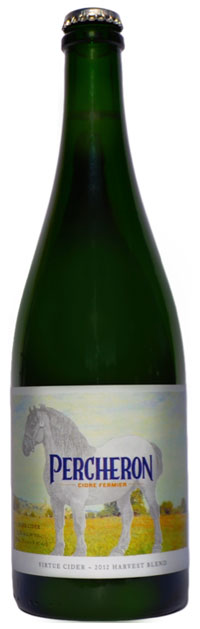
Another eye-opener, Percheron (5.5% alc.), named for the workhorses of Normandy, is a French farmhouse cider also made with native yeasts and aged in French oak. France’s Normandy is considered the top cider specialist region and has been making farmhouse ciders for over a thousand years. Percheron is aged in French barrels that were found to have a touch of brettanomyces and thus were rejected for aging wines. These barrels give the cider a slight bret flavor (referred to as “barnyard” in the wine world) and makes this cider rustic and a bit funky, i.e. aromatically complex in a good way.The Mitten, an English-style cider (which typically smells like apples) aged in Heaven Hill bourbon barrels, is another one of Hall’s great achievements. All these European ciders redefined my notion of hard cider and the Sidra, especially, convinced me to open Virtue Cider when indulging in delicious fatty pork.
Just when you thought you knew the texture of caviar, Petrossian goes and changes it. Purveyors of the fine foods and Ossetra, Alverta, and Transmontamus White Sturgeon caviar since 1920, Petrossian has just put out a caviar powder, which comes in a designer mill. It contains dried caviar beads that you grind and sprinkle over everything from scrambled eggs to risotto and even use as a garnish for a cocktail.

I attended an event at Petrossian on West 58th Street where the company introduced its caviar powder along with a newly created cocktail, Fleur de Vers, to showcase it. The cocktail has an ingenious garnish, a floating island of dried caviar atop a lemon peel. Once you sip the drink, the caviar beads spill into the liquid and become an interesting textural element to the drink. The cocktail, a mix of chartreuse, gin and elderflower liqueur, has an intriguing botanical flavor and the sprinkle of caviar makes it feel glamorously self-indulgent.

Petrossian Fleur de Vers
1 tsp Petrossian Caviar Powder
1 drop of rose water
¾ oz of St Germain Elder Flower
¾ oz of Green Chartreuse
1½ oz of Tanqueray Gin
Directions: Shake with ice, strain ingredients into martini glass or champagne flute. Garnish with a large lemon peel on the top and caviar powder in the middle of the lemon peel.
