




Subscribe

Subscribe

Subscribe

Subscribe



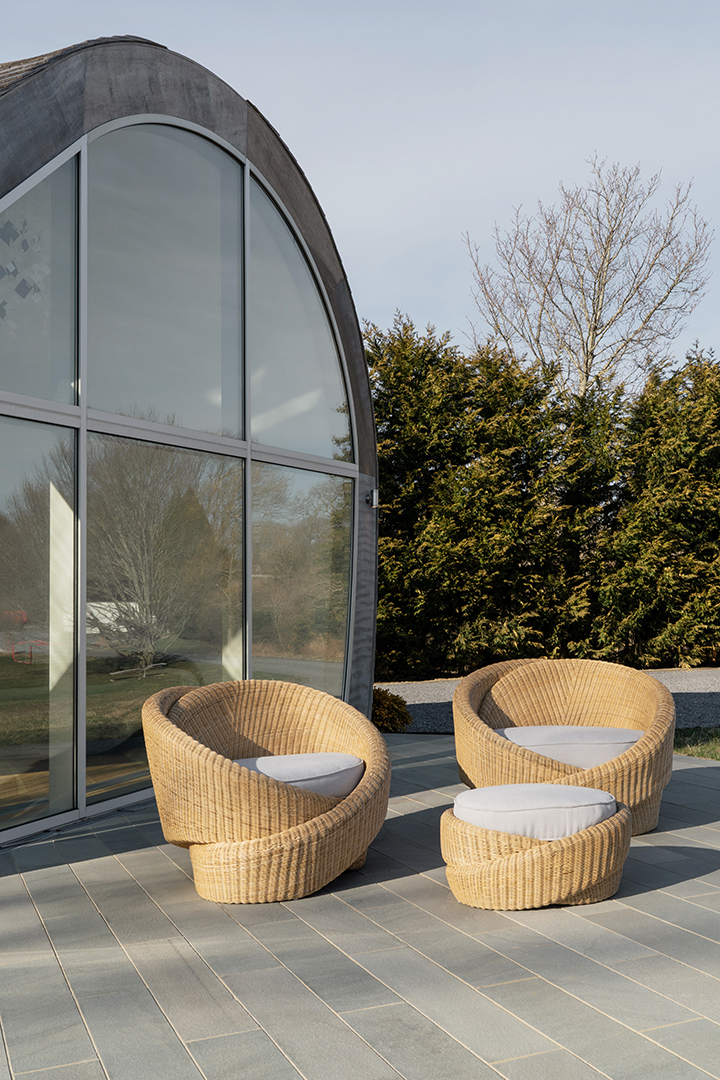
Knotties are a lovely addition to a beach home, poolside as well as for those living in warmer climes. The Knotties are a set of armchairs in polyethylene rattan, comprising of sculptural knot forms. Edwards Anker says: “The affect of the form imitates the function, which is to embrace the user in their comfort and relaxation.” The indoor/outdoor set, comprising of armchair, love seat and footrest, comes in waterproof polyethylene rattan with outdoor cushions in different colors.
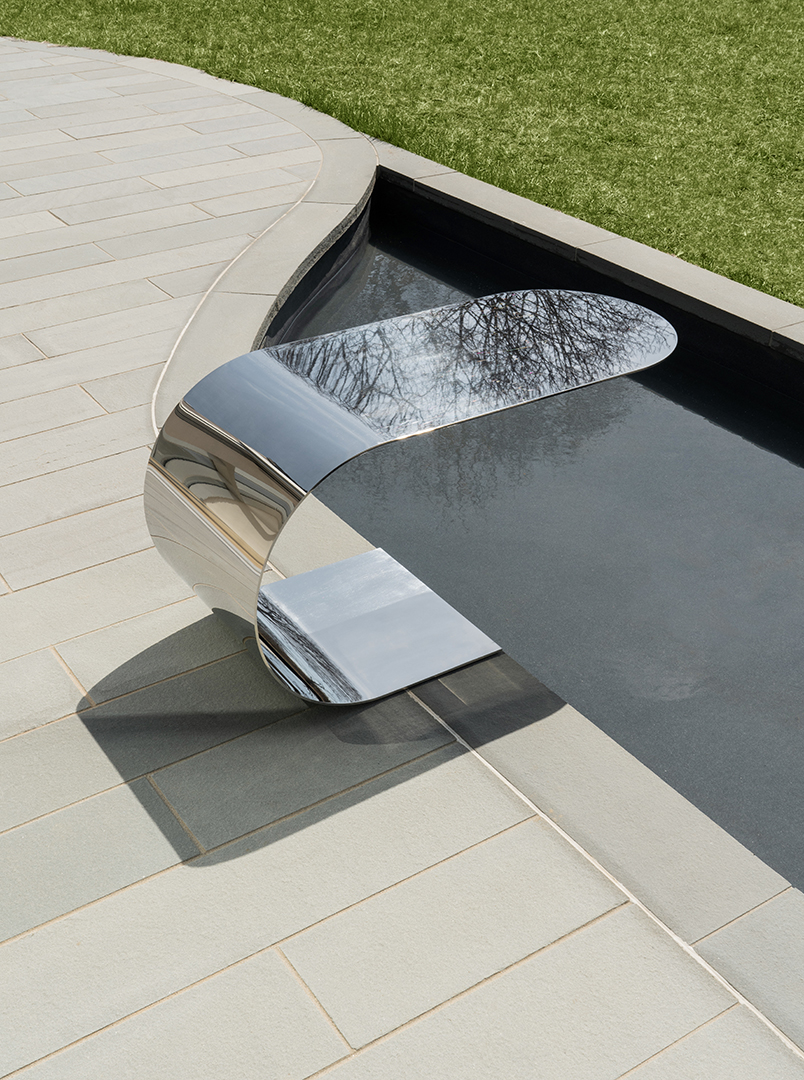
This extended c-shaped side table with cantilevering top is made of 3/16” recy- cled polished stainless steel or brass. Its top projecting surface, at sofa height, seems to cantilever outward. Because the table’s organic curved form is metal, its reflective surfaces amplify light. The polished version of the side table mirrors and distorts its surroundings. This sustainable end table’s soft lines are classic and minimalist in style. Its versatility suits a wide range of interiors.











































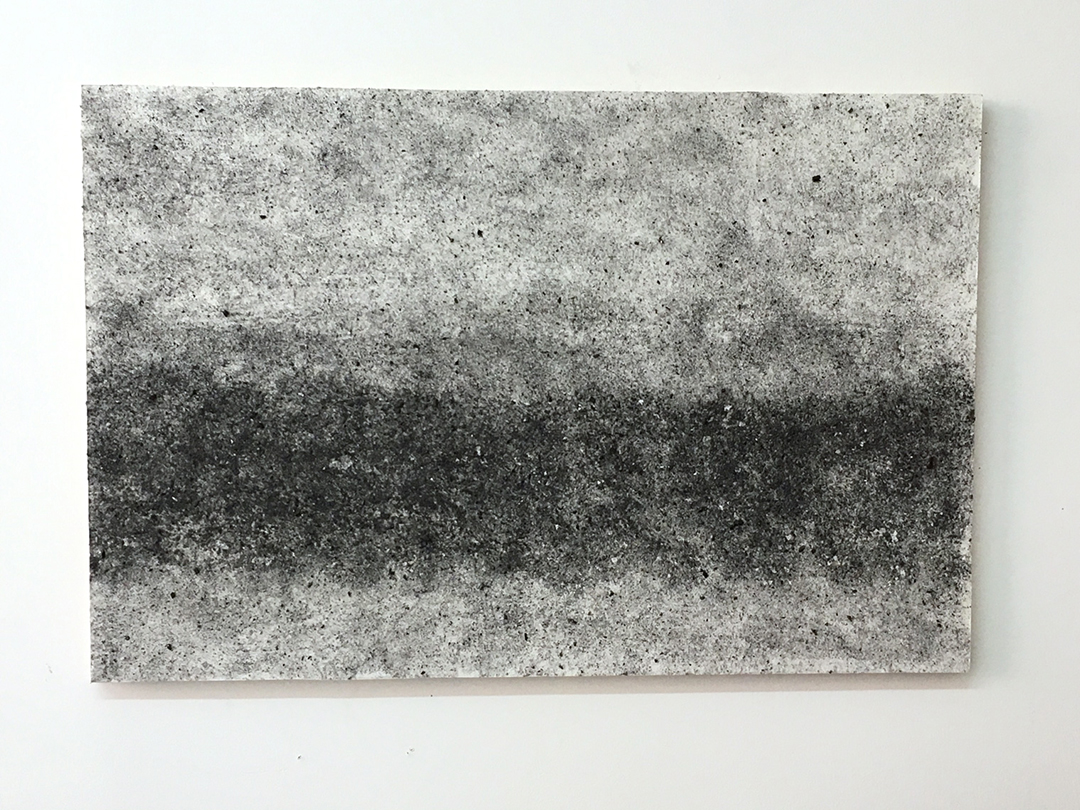
The Coal Dust works evolved, quite literally, from an earlier series of photographs I called Elemental. Looking to reuse the birch board mounts from several damaged Elemental prints, I peeled off the images and exposed the archival paper underneath. I then had my son walk around on the boards to mark them with his footprints. Afterwards, I scattered layers of coal dust and albumen on top, mixing in salt and milk, so that the footprints—the human presence—is rendered invisible. As with the earlier Elemental series, the work is about materials and, more specifically, about processes of creation, re-creation, and degeneration. These abstractions are both universal (the carbon present in all living things) and deeply personal (my son’s footprints and the use of materials associated with nurturing – milk – and preservation – salt). They are not photographs, of course, but in using albumen and salt as a binding agent they reference photographic processes and history, as early photographic prints used salt and albumen to set an image. The works appear as both two-dimensional and three-dimensional, with reference to the layers of earth’s strata and depth of the night sky. And while grounded in earthly materials, they call to mind skies filled with distant stars inverted in a photographic negative.
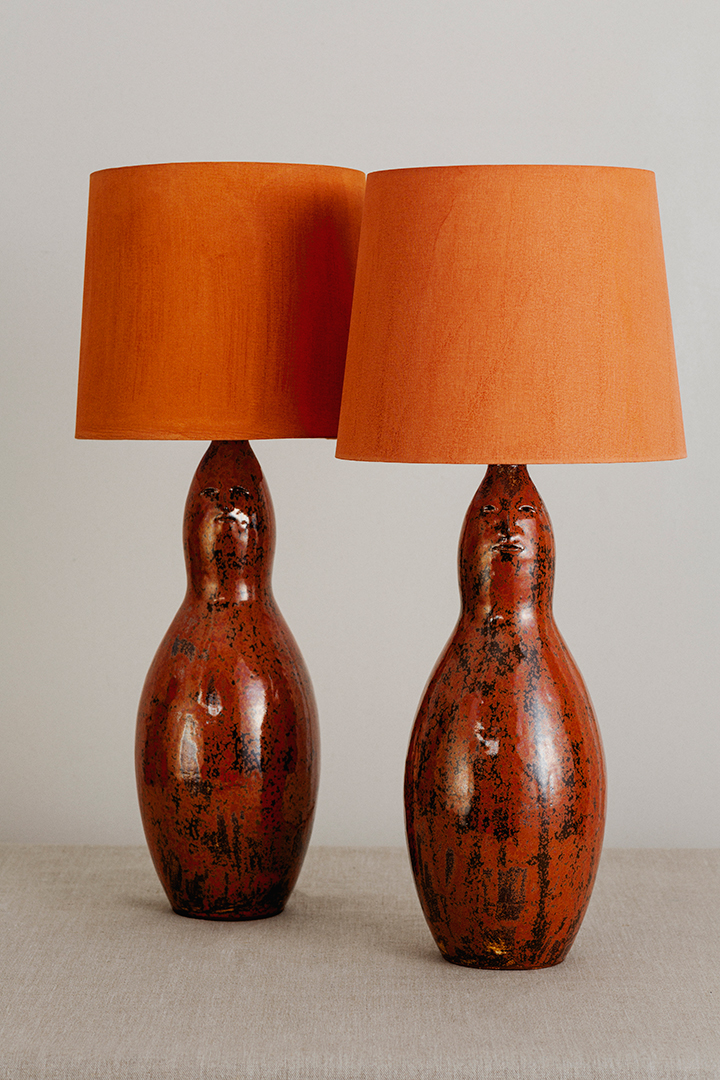
Danish visual artist Cathrine Raben Davidsen featured these stunning ember vessel lamps with a special ember glaze developed in Mashiko, Japan.
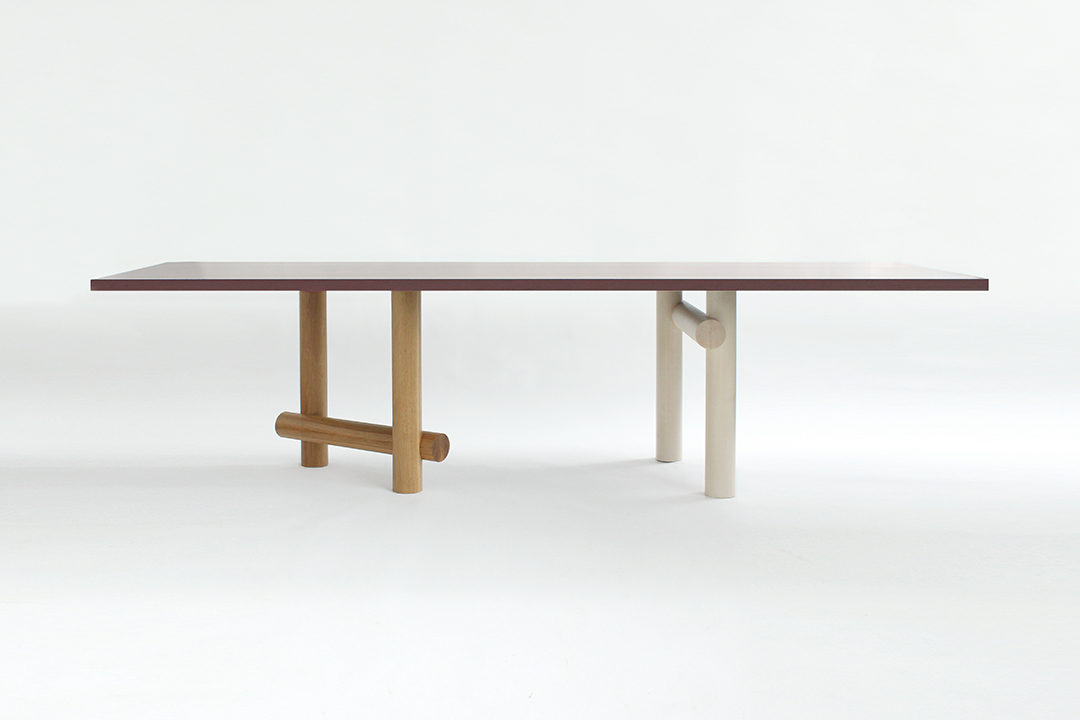
New York-based design firm Egg Collective showcased the Kenny Dining Table. Created by Stephanie Beamer, Crystal Ellis, and Hillary Petrie, the playful but austere, Kenny Dining Table’s features a customizable composition that effortlessly adapts to various sizes and shapes, its solid wood tabletop works equally well with metal or wooden legs. (this is our standard description for the Kenny — the one for this show is a custom / special material palette)
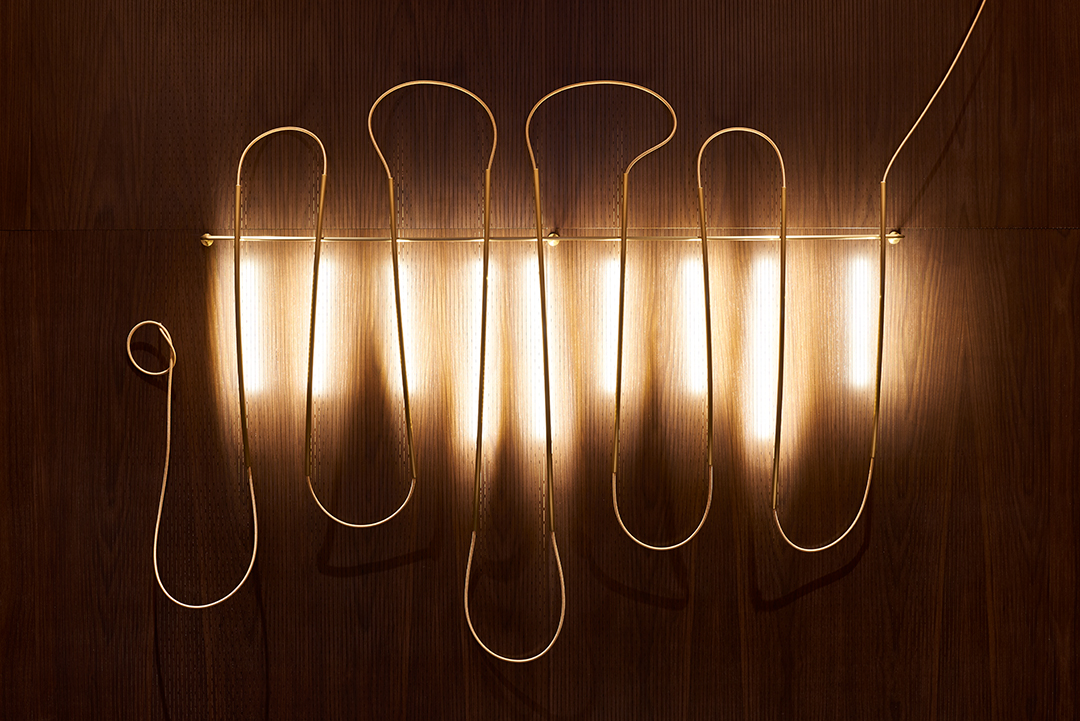
The Line Lamp created by Brooklyn-based lighting and furniture designer Elish Warlop features the duality of motion and stillness manifests itself in the Line Lamp which curves across and shines light back upon the wall. Graphically it represents a simple sketch or line drawing—an expression of the motion of the hand. Each bar can be slid back and forth, changing the density of light and shadow along the wall. Made of solid brass, LEDs, and cloth cords, the width of the design can easily be expanded or contracted to fit the space in which it will eventually live.

Grace Song of Grace Song Studio featured a hanging unit made of vegetable tanned leather exterior. Carved american holly lid Hammered silver hardware Orylag lined Hanging from braided rope of artists’ own hair
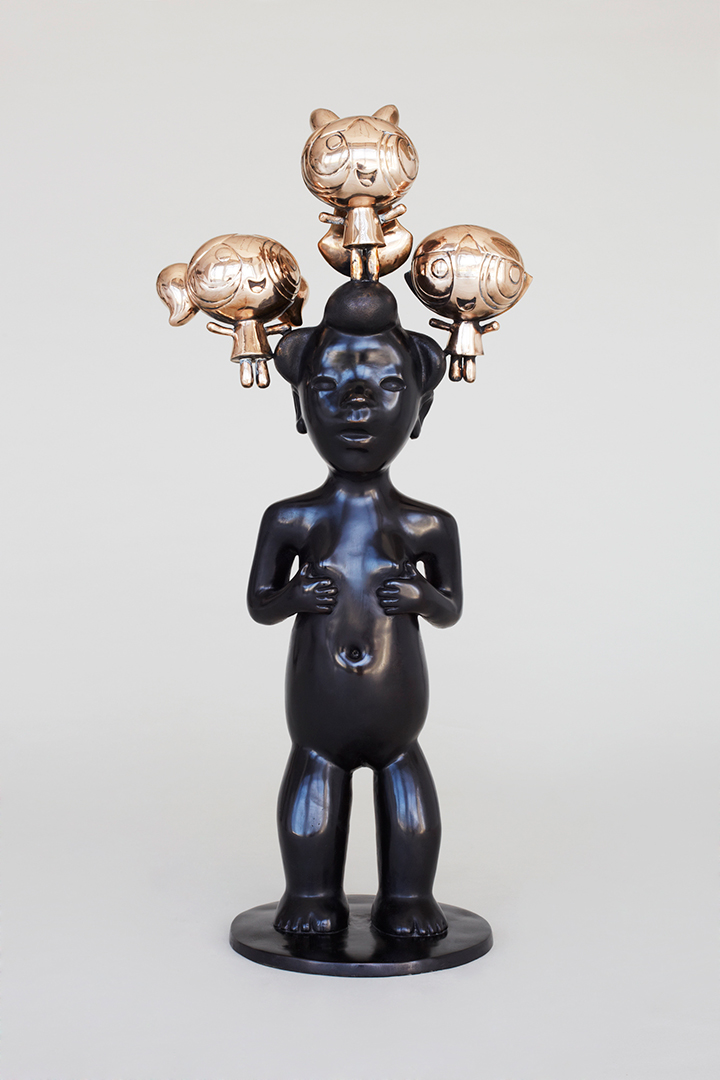
Justine Mahoney is a Johannesburg-based artist creates collages and sculptures that reflect her childhood growing up in South Africa. The sculpture entitled, “Initiation *Special Edition” was made using patinated and polished bronze.

Hiroshima is an exercise in perspective. From one viewpoint, the domed shade is solidly fixed to the metal base by a massive neck. From another, it fragilely balances on a wire. Depending on your position, the mushroom-shaped lamp takes on a different signification. Meanings, interpretations, and reactions vary. Hiroshima is full of affecting possibilities. “Everything can be something else.” What seem like contrasting situations exist concurrently. What seems unbalanced is actually in equal proportion. Both captivating and disturbing, the lamp is a calm and silent presence, “a retained intensity”. Twenty stainless steel Hiroshima lamps were produced in limited edition in 2003. A wood, copper and brass edition were developed in 2011. Each lamp is made by hand.