


WINNER: BURR SALVATORE ARCHITECTS WITH HEMINGWAY FINE HOMES
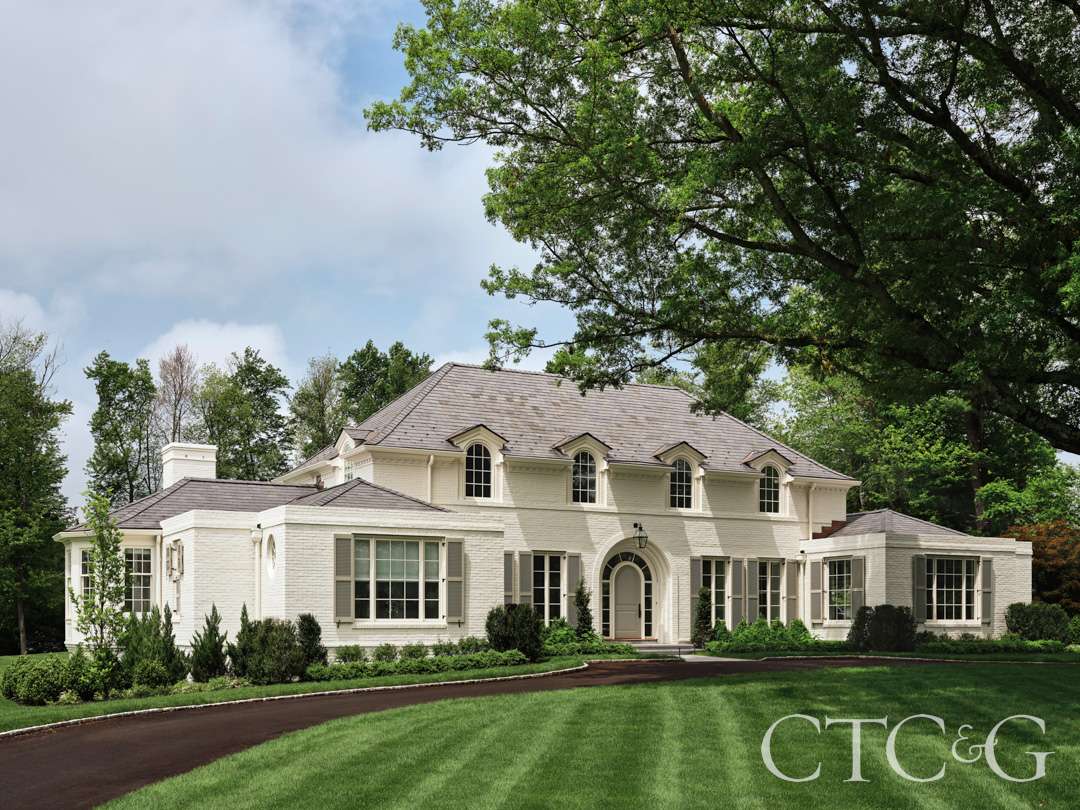

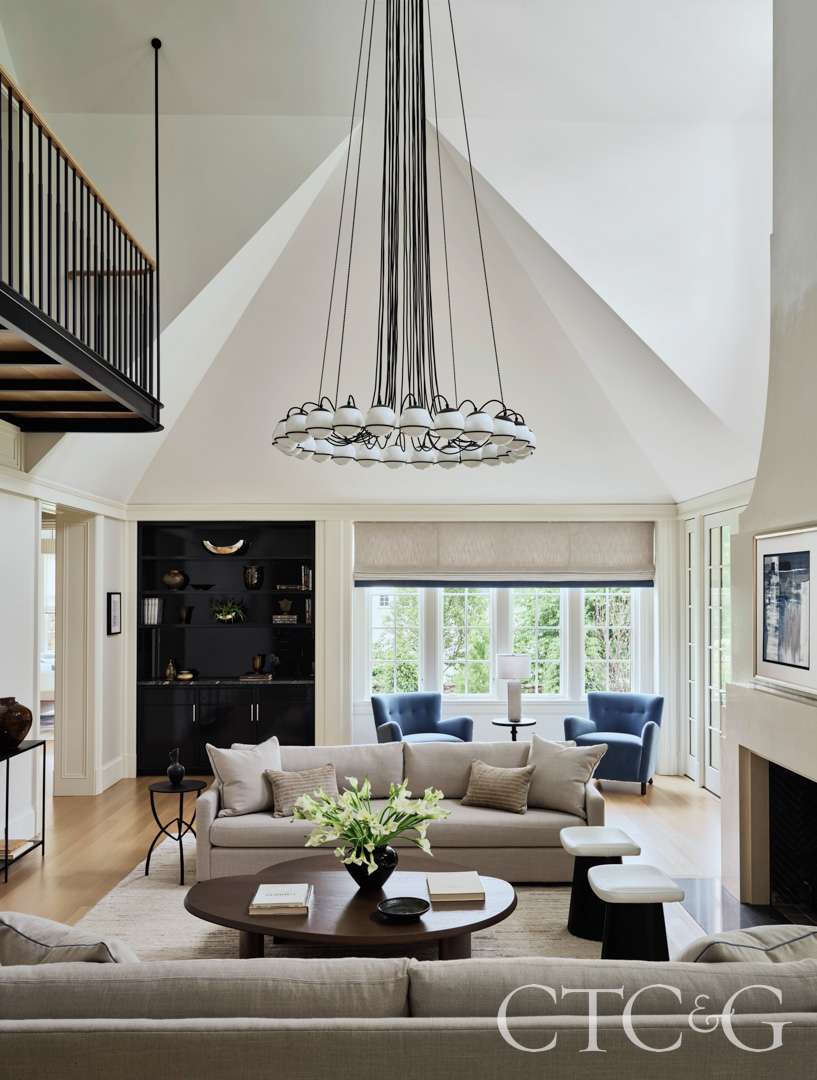
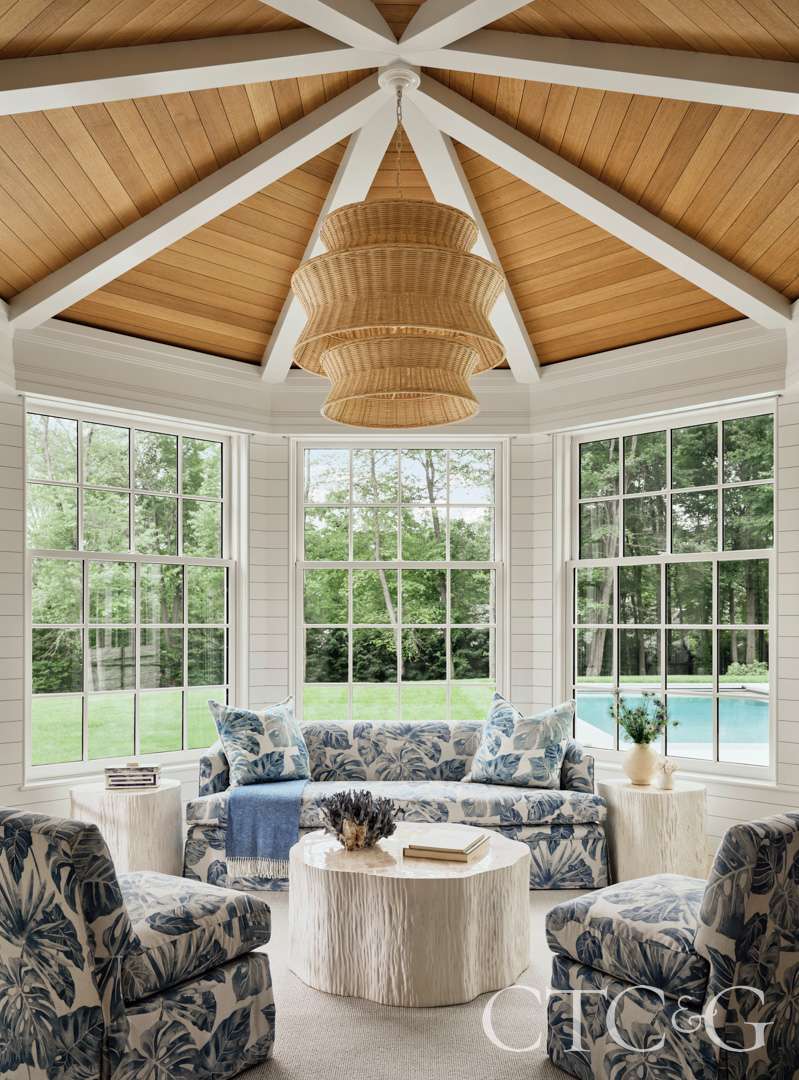
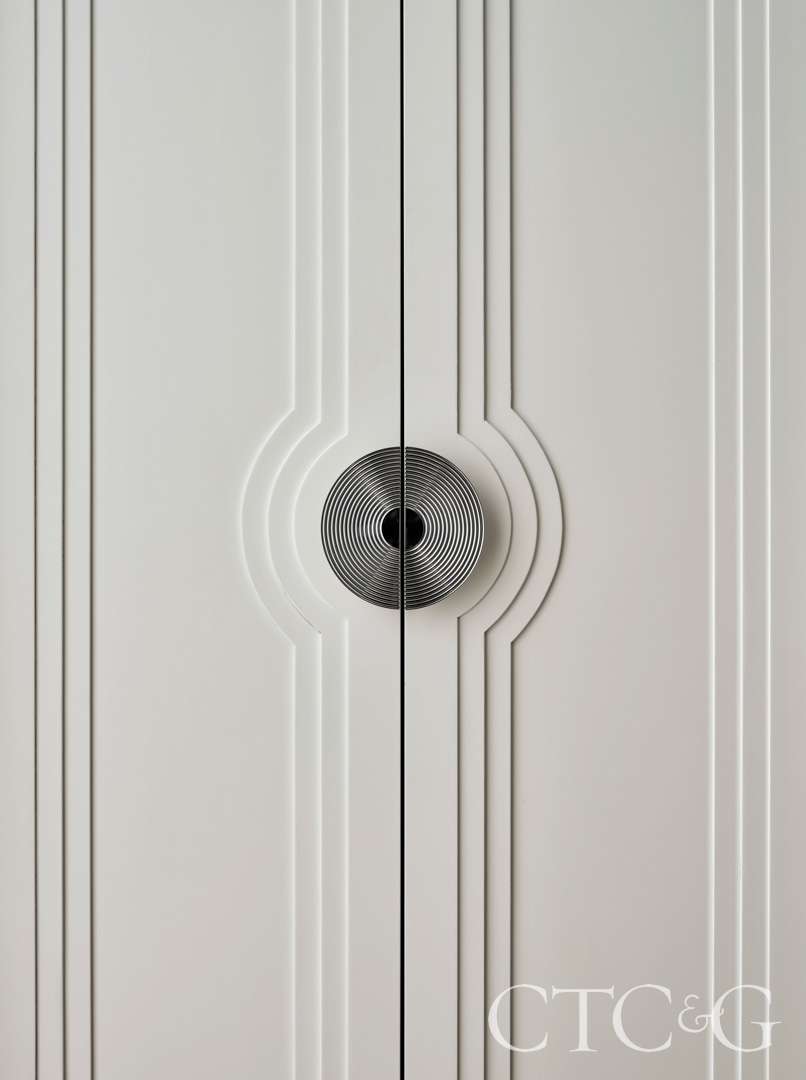
Among the appeals of many Connecticut small towns are the streetscapes of unique houses that date back several decades. The empty-nester couple who commissioned this new house from Burr Salvatore Architects wanted their residence to seem as if it had been part of the town for a long time. They envisioned both the outside and the inside appearing to have evolved naturally. The architects responded to their directives by designing a Regency-style residence more typical of the 1920s. Indeed, from the street, the handsome structure reflects the best tenets of the style, with its repeating rhythm of dormered multi-paned windows, white-painted brick façade, perfect symmetry, and center-placed entry door surrounded by glass sidelights (though here, the door appears to float since the windows form an archway). The design team even managed to site the house so that a venerable oak tree remained at the center of the front yard. To adhere to a period feel, while establishing fresh, timeless interiors, all casings and baseboards, even the architectural hardware were custom designed.
FINALIST: ROLFS ELERT OFFICE


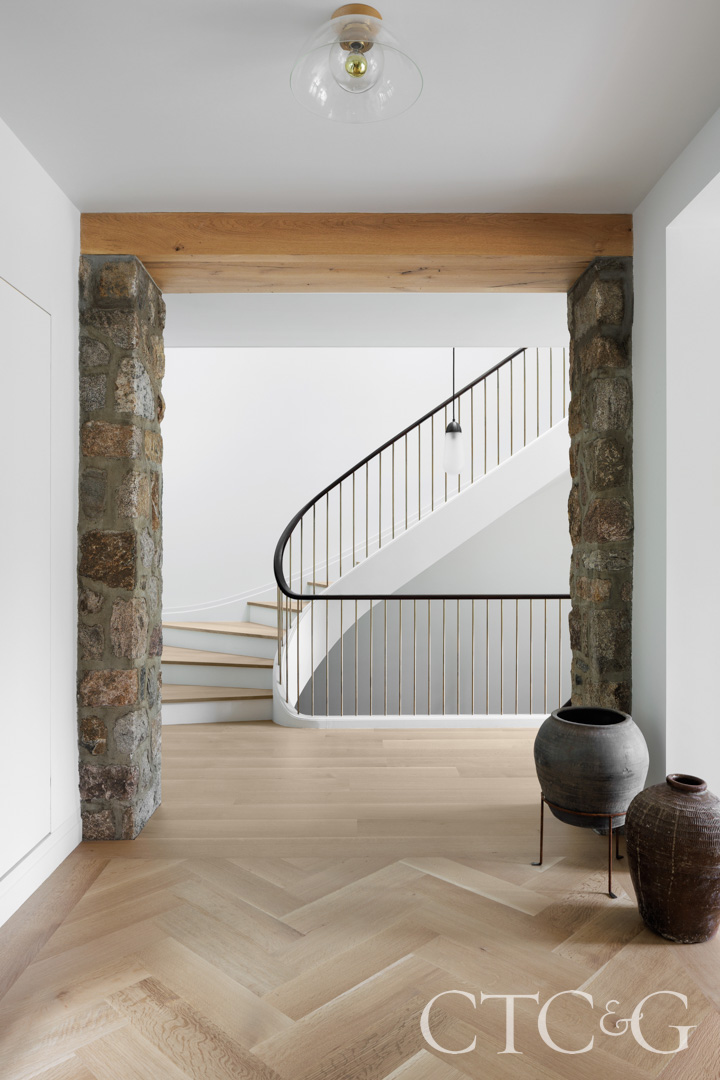
The name alone, Four Winds, sums up the strength and power of this house, as it sits perched atop a secluded hilltop within a breeze’s reach of Long Island Sound. The main house, designed by the famous architect Calvin Kiesling, dates to 1931, when it was built by architect and stone mason Frazier Foreman Peters. The home featured a building method called “Flagg Masonry Construction” in which exterior stones are laid vertically against formwork, held in place with sticks, and then backfilled with concrete. During a substantial reconstruction to modernize and expand the original house—adding new steel windows, a new kitchen, conservatory dining area, family room, plus primary and guest suites—Rolfs Elert Office managed also to reveal the texture and character of the original stonework as an interior wall next to a new main stairway. That stair hall, lit with a natural glow via a skylight, culminates in a dramatic floor-to-ceiling pane of glass that captures views of the landscape. The resulting home meets the needs of a modern-day family, fusing new and old elements in elegant and innovative ways.
FINALIST: REESE OWENS ARCHITECTS
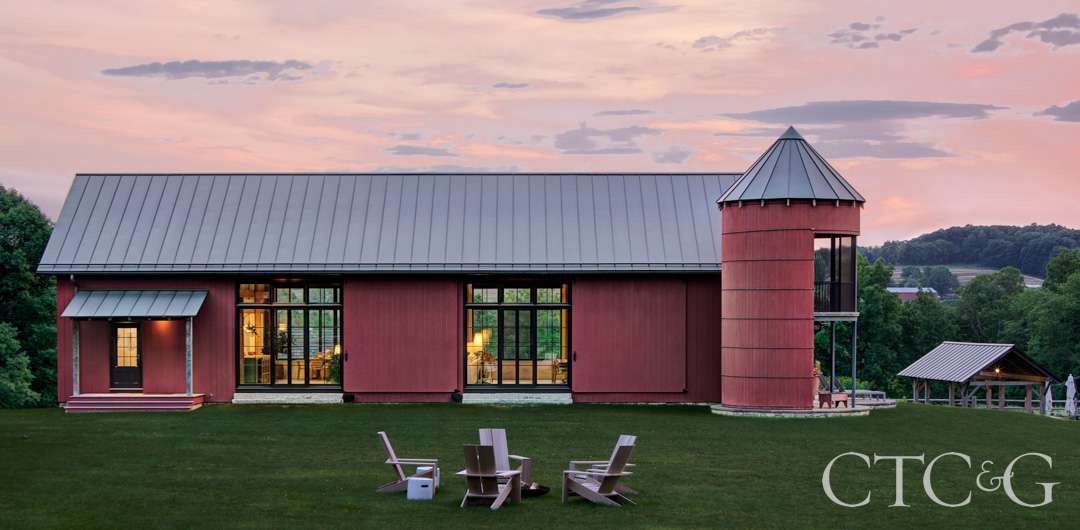
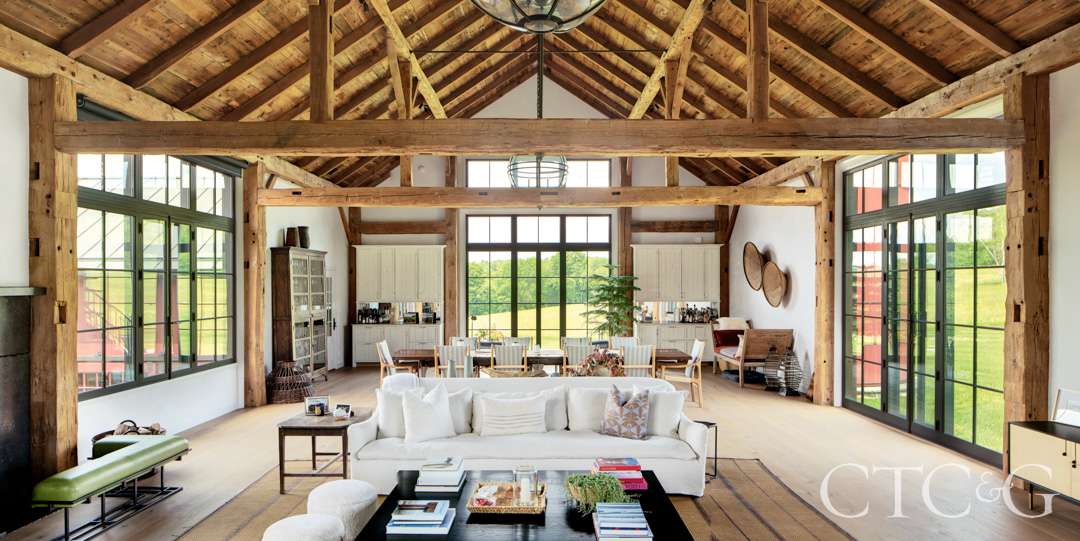
We know by now how barns can make for great homes, but it’s important to remember that they were designed first for cows and hay. When Reese Owens Architects undertook the wholesale transformation of a barn into a living space, they were well cognizant of this basic fact. For generations, this simple, but handsome structure had been a recognizable icon in this part of Litchfield County. The barn and turreted silo were visible from the roadway. The designers were commissioned to reimagine the red barn as an entertaining/recreation destination for the family, whose main residence was situated just yards away. The first task involved rebuilding the foundation and preserving as much of the original timber frame as possible. An antique barn in Canada was acquired as a source for period materials. The overall process prioritized preserving the original configuration and joinery, while exposing tie-rods as a way to create an open span without visible support posts. Where there were once barn doors are now picture windows. The original profile of the building remains, while serving as a new entertaining space.
