


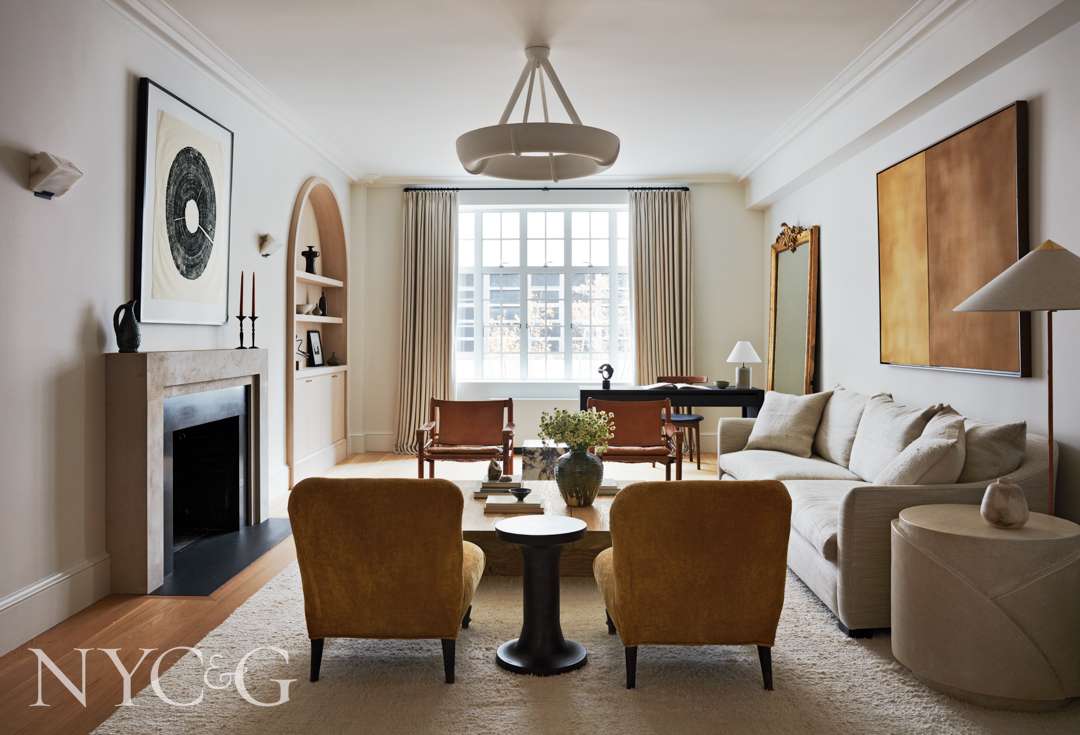
A custom pendant from Lamp Touch hangs above the living room. Vintage Arne Norell chairs near the window are from 1stDibs. The drapes are from The Shade Store.
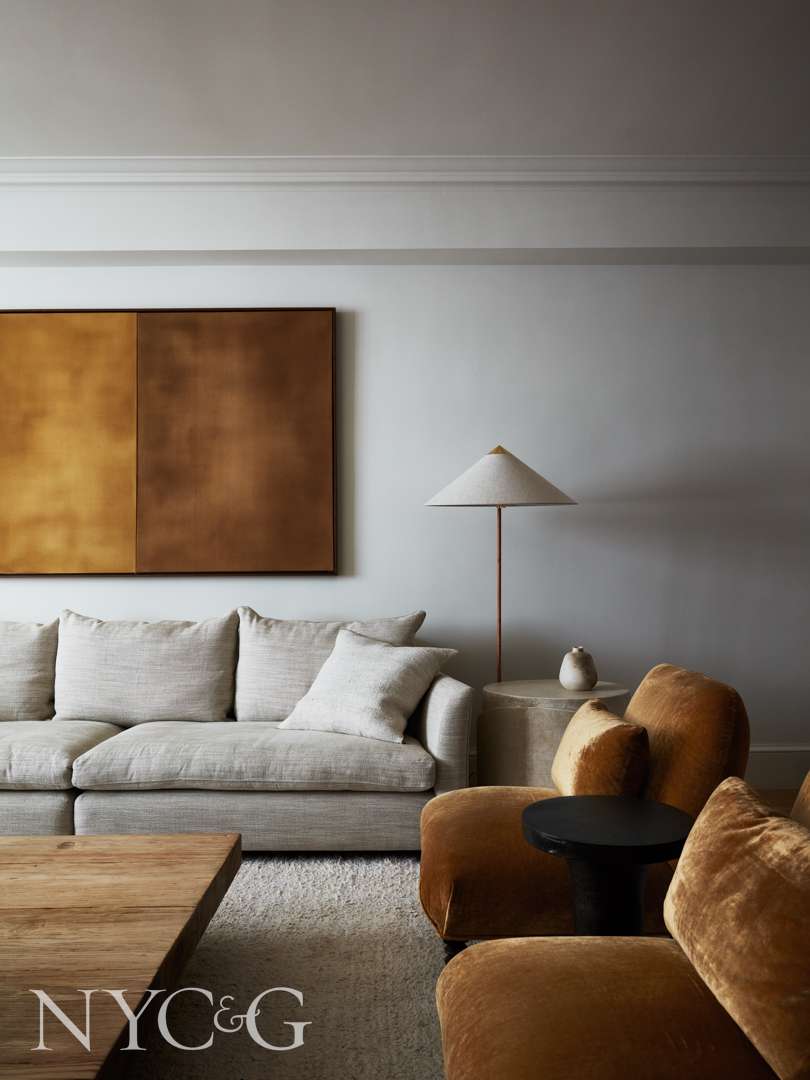

Karakter chairs from Suite NY surround a table from Uhuru Design.
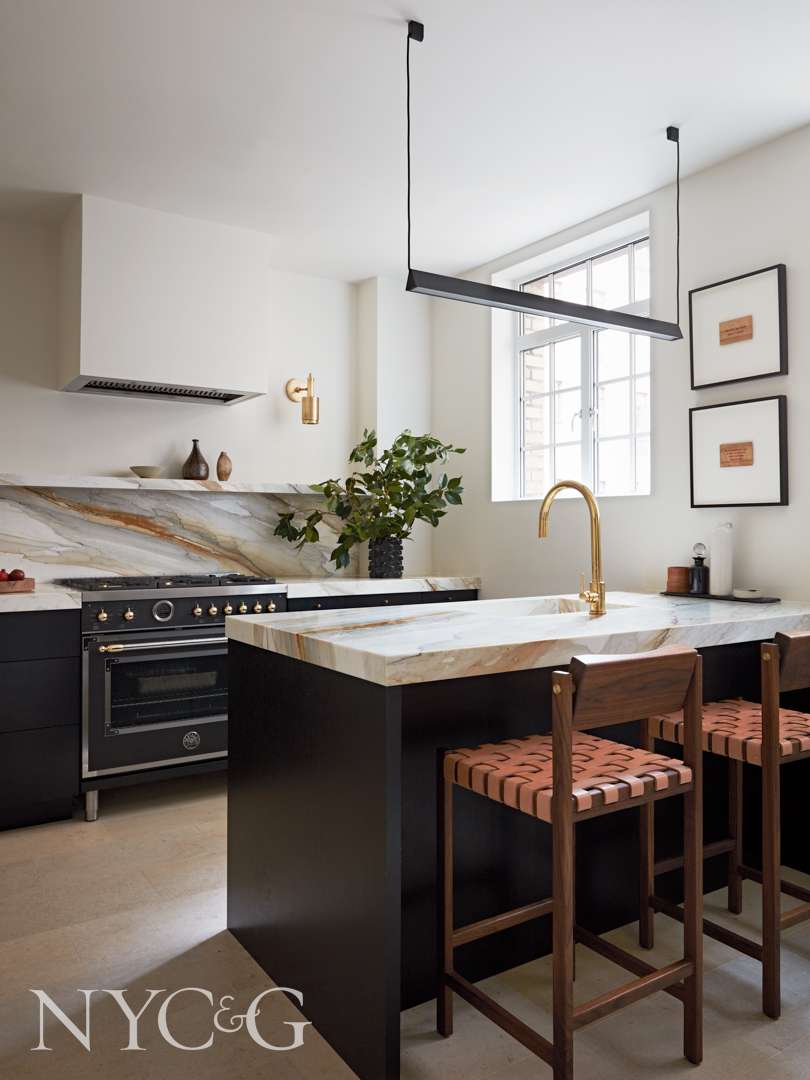
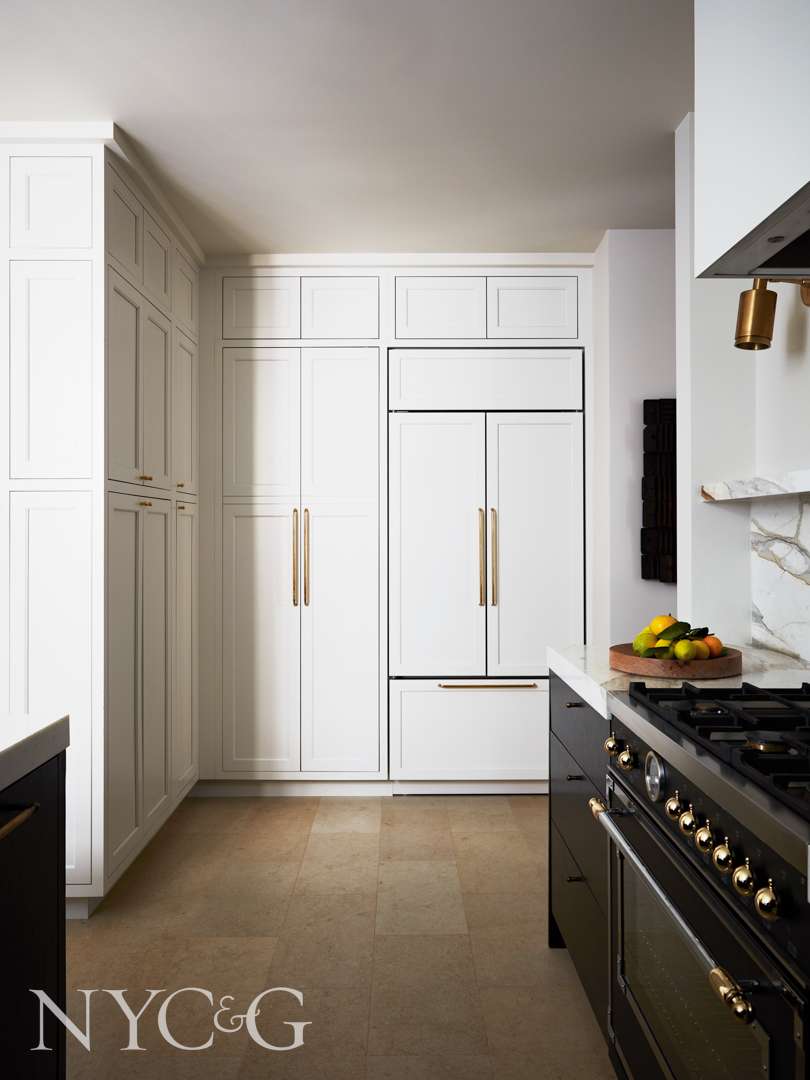
In the kitchen, the cabinetry is by Candlelight Cabinetry. A marble from Bas Stone is used on the countertops and backsplash.

In the primary bedroom, artwork by Kate Zimmerman hangs above a bed covered in a linen coverlet from RW Guild.

A custom built-in desk is by Prospect Woodworks.
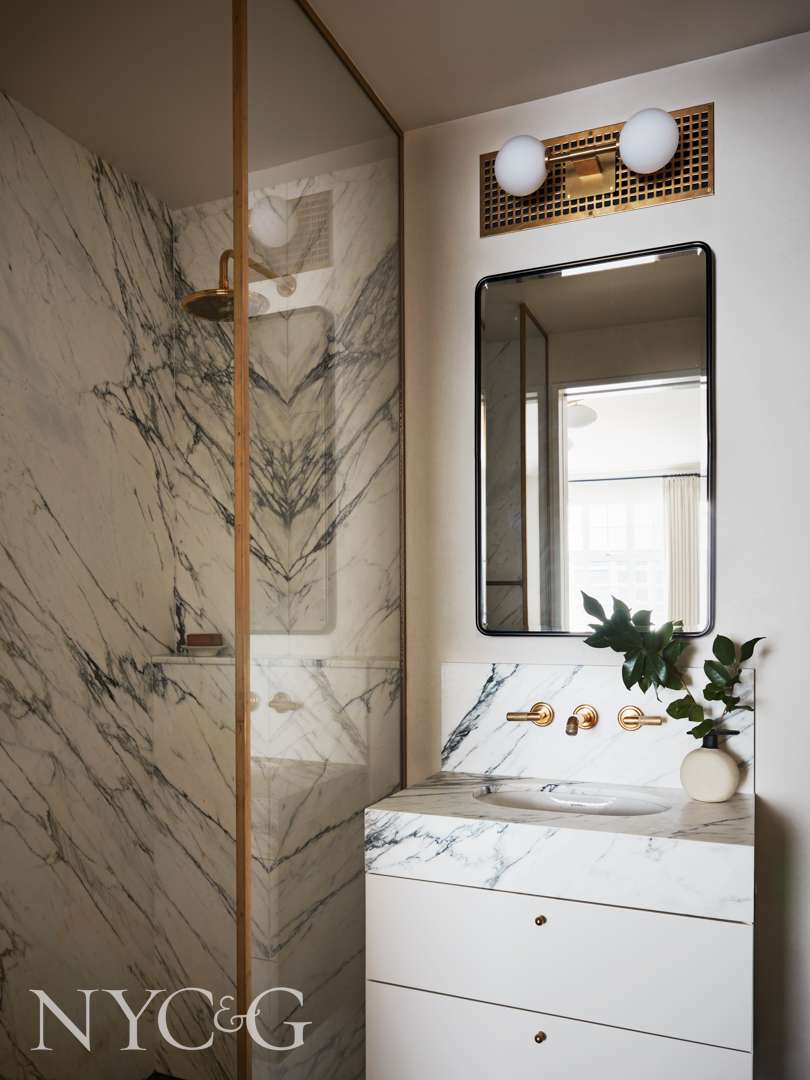
A sconce from Allied Maker hangs above a custom vanity by Prospect Woodworks in the primary bath.
Cottages & Gardens: This apartment is imbued with European influences. Was that always the original idea?
Designer Juliette Spencer: The original idea was a playful notion: Paris in Milan. The building itself is called Millan House—with two L’s—but the client was drawn to the charm and romance of a Parisian apartment. That became our guiding inspiration, blending the elegance and refinement of Paris with the historic character of Millan House.
Had you worked with the client before? Did they have a clear idea of what they wanted? How did you guide them?
I hadn’t worked with the client before, but we had a few mutual friends, which is how we first connected. From the beginning, she had such a strong vision for what she wanted the home to feel like, and it really aligned with my own aesthetic. That made the collaboration feel very natural. My role was more about guiding and shaping her ideas—bringing in my knowledge of materials and finishes, introducing trusted craftsmen, and leaning on my design and construction experience to help bring it all together.
How would you describe the palette of this apartment?
The apartment’s palette is warm and textural, composed of natural materials and finishes that will patina over time, developing a richness and depth—much like a well-worn, well-loved pair of jeans.

Art seems to play a major role in many of the spaces. How did you go about curating the selections?
Curating the artwork was a natural process, as the client is an avid collector. The husband inherited several important works by Alex Katz and Claes Oldenburg, and together over the years the couple has built their own collection, which now includes pieces by Agnes Martin, Jenny Holzer, Pat Kim, Jonathan Smith, and Kate Zimmerman Turpin.
Once the installation is complete, I like to walk the project with the client after every piece has been unwrapped. Together, we move through the home, shifting works from room to room, allowing them to interact and resonate until we find the right balance. The goal is always to emphasize favorite pieces along key sightlines, while positioning others so they reveal themselves in quieter, more unexpected moments throughout the home.
Tell us about the mix of vintage and contemporary pieces you’ve used throughout.
The client has a deep love of vintage and had already collected many special pieces before we began. Blending these with newer, more functional items gave the home a sense of soul and personality. I love when a space feels layered, as if it has many stories to tell.
Several gilt mirrors and a chandelier had actually been left behind by the previous owner, who had sourced them decades ago at European auctions. The client chose to keep them, adding another chapter to their history. In the dining room, we introduced a striking Gaston Poisson Art Deco credenza, which pairs seamlessly with the Joe Colombo 300 Chair—a classic design now being reissued. This thoughtful mix of old and new feels effortless, giving the apartment warmth and a sense of continuity.

Each of the lighting fixtures you’ve used has a sculptural feel to them, yet none of them overpower the space.
That was a conscious decision. The living and dining rooms flow into one another through the entry hallway, so from any vantage point you see all of the pendants at once. They needed to be in harmony—complementing rather than competing—while still having the presence to illuminate and define the space.
What state was the apartment in when you first visited? Did you have to reconfigure the apartment’s floor plan or deal with any structural issues?
The apartment hadn’t been touched in 45 years, so the entire infrastructure had to be upgraded—the kind of work you don’t see. The plumbing was especially complex, requiring us to cut into the slab to reach the pipes in the apartment below. For the most part, we preserved the main spaces and proportions of the apartment, but we did enlarge the primary bath. The kitchen, office, and back-of-house areas were opened up and reconfigured to create a more gracious flow.

The kitchen and baths are very calming—do you have any dos and don’ts when it comes to designing those sort of spaces?
The calming quality of the bathrooms comes from the materiality. Using large slabs of marble or Tadelakt plaster instead of tile reduces the visual noise created by grout lines. In smaller spaces, I prefer a more monolithic approach—in both finish and color—to create a sense of serenity.
Your use of natural materials is beautiful—was incorporating them something that was important to your vision?
For me, the tactility of natural materials is essential in every interior. The feel of rough-hewn wood, or the cool touch of marble or stone, is instantly calming. I was grateful that the client embraced the idea of patina—materials that age and evolve with you. They make a home feel unpretentious and comfortable, never too precious, yet still deeply refined.

What was the biggest challenge working on this project?
The greatest challenge lay in the building’s age—peeling back the layers of a turn-of-the-century structure to bring it into the present, without erasing the very character that made it extraordinary.
What has been the biggest reward?
The biggest reward is having a client who is not only happy with the home, but truly ‘feels’ at home. It’s not a show house, it’s not staged, it’s a home.
