


The saying “less is more” is popular for a reason, and it couldn’t ring truer than in the case of this Southampton residence. With a site this stunning—3.3 acres flanked by a freshwater pond and the Atlantic Ocean—the most important thing, according to architect Andre Kikoski, is allowing the location to speak for itself. When the architect was tapped for the project, the clients had just purchased the 1980s Shingle-style structure after renting it for a couple of seasons. And although the owners fell in love with the setting, the house needed a major refresh if it was to serve as a forever home for their large family. On the agenda: Cleaning up the roof line and modifying the massing, opening up the choppy layout, expanding the top floor primary suite, and reorganizing the additional eight bedrooms on the lower level. “Since the clients had rented the property prior to purchasing it, they knew what they liked and what needed to be eliminated or optimized,” explains the architect.

One of the most pressing concerns, says Kikoski, was that “the original residence’s ground level looked right into the dunes, so essentially 50 percent of the house was cut off from the ocean views.” As it just so happened, FEMA’s current flood zone requirements forced the team to raise the entire 10,000-square foot bi-level structure 10 feet, thus recapturing the views. Now the residence sits gracefully atop a limestone-wrapped reinforced-steel flood story, which houses the garage, basement, and main entry.
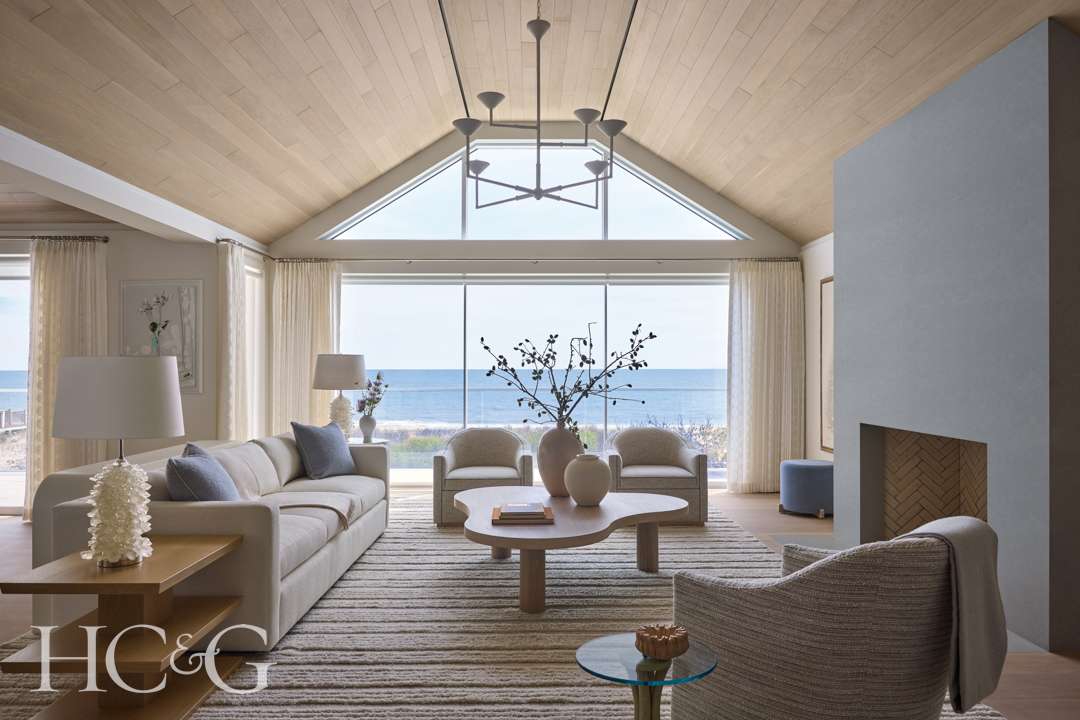
A sofa from John Rosselli & Associates is covered in a Rosemary Hallgarten fabric in the living room.

The coffee table is custom from Bradley and the armchairs near left are from Monica James & Co.

In the kitchen, the island, countertops, and cabinetry are from Poliform.

Chairs from Baker surround a custom table by Keith Fritz in the dining area. The window fabric is from John Rosselli & Associates.

Chairs from Janus et Cie flank a coffee table from Currey & Company in the outdoor seating area.

The exterior of this modern residence transformed by Andre Kikoski Architecture.

The beach is accessible from the backyard.
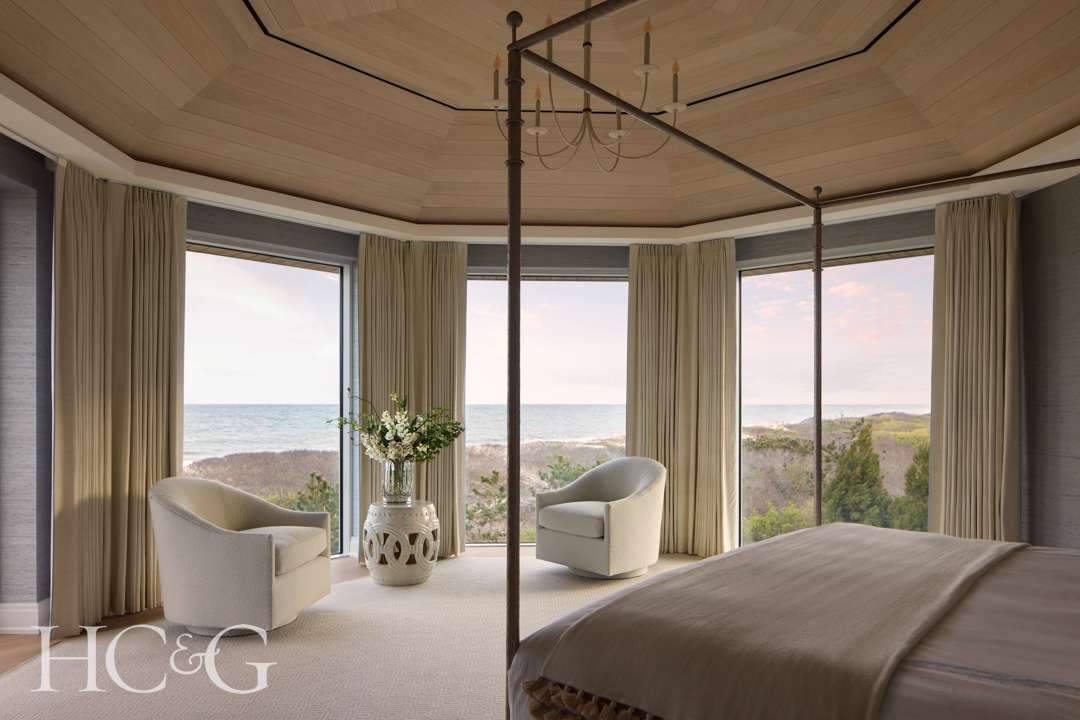
Armchairs from Ferrell Mittman are covered in a fabric from Cowtan & Tout in the primary bedroom. The rug is custom by L&M Carpets and the chandelier is custom.

In the primary bath, the mirror and vanity are custom by Matrix Mirrors and 212 Renovations Group.
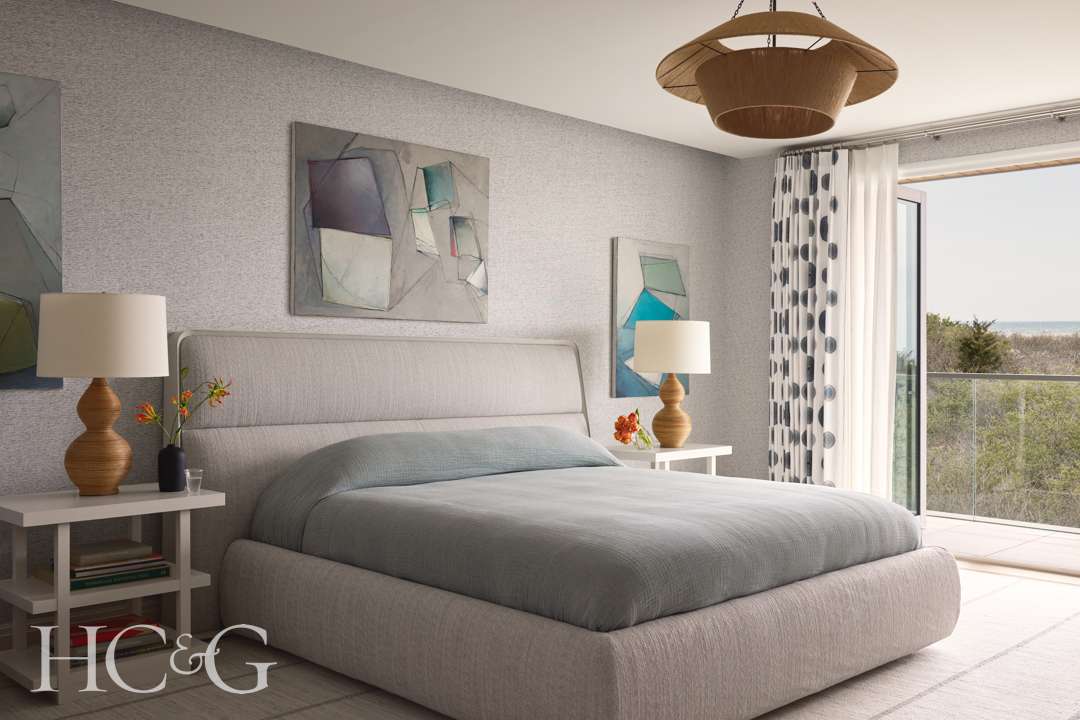
Window fabric from Holland & Sherry complements a ceiling fixture from Nickey Kehoe in a bedroom.
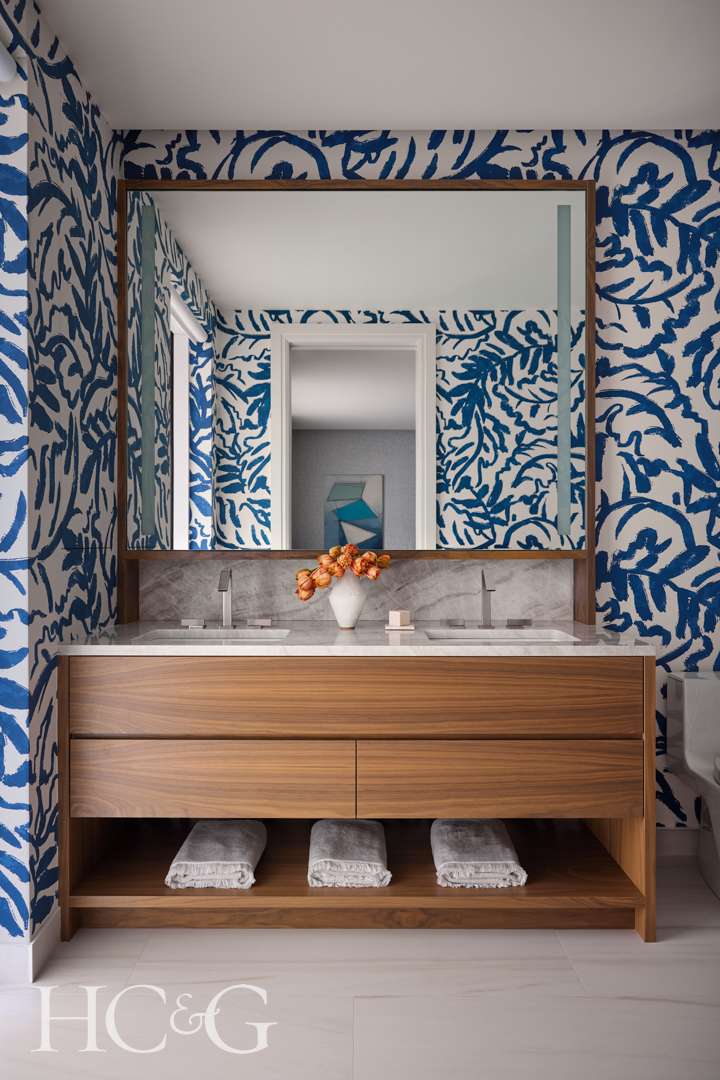
A wall covering from Zak+Fox complements a custom vanity and mirror by Matrix Mirrors and 212 Renovations Group.

An ottoman by George Smith is covered in a Pierre Frey fabric in the den. The armchair near right is by Julian Chichester and is also covered in a fabric by Pierre Frey.


The exterior of the home shows the vast oceanfront views.
The entry itself makes quite the first impression, featuring a triple-height glass-and-cerused-oak staircase with a custom illuminated glass sculpture crafted by Czech company Lasvit. The original building’s upside down layout was maintained, with the majority of the bedrooms on the first level above the entry, and the main living areas as well as the primary suite on the top floor where the views are best. “We were restricted from expanding the home beyond its current footprint, so the layout remained more or less the same,” says Kikoski. “We did think about how a large family can live together while retaining some privacy. There are a variety of living spaces, from a den, lounge, and combination kitchenette and-dining area on the lower level to the library upstairs. Even when the house is full, everyone can comfortably coexist.”

This idea of feeling comfortable and relaxed—along with a sense of elegance and refinement—drove the restrained materials palette, which features cerused white oak, limestone, granite, porcelain tiles, and sleek Poliform cabinetry inside. “The oak floors and ceilings create a warm, soothing cocoon,” notes Kikoski. “We like the challenge of simplicity and selecting materials that help highlight the beauty of the site.” However, despite the overall effect being simple, a great deal of research went into selecting the materials—especially when it came to those on the exterior, which needed to withstand the site’s harsh elements as well as satisfy the homeowner’s request for items that are sustainable and environmentally friendly. The team landed on a panel system made of recycled resins, concrete, and marble dust that’s poured against slabs of slate to impart texture. This is paired with a limestone base, a metal roof, and wood accents that have been naturally treated to withstand weathering. “The house dissolves into the site,” says the architect.

To help carry out this serene feeling, the clients called on West Palm Beach–based McCann Design Group to furnish the interiors. “The wife’s taste normally skews more traditional, while the husband’s leans more contemporary, so we tried to balance that,” says the firm’s Ashley Warren of the mostly custom furnishings upholstered in durable, yet luxurious, performance fabrics. “We selected soft shades and textured fabrics and wall coverings that complement the natural surroundings. We played a bit more with color in some of the bedrooms and baths, but the main objective was for the home to feel inviting and calm when you walk in.” In the end, it’s all about spending quality time with family. “This home,” says Kikoski, “is a vessel for multiple generations to gather and live in harmony with the place.”
