


Set on a verdant 50-acre estate along the shoreline of Coconut Grove, Vizcaya was conceived as a subtropical interpretation of 18th-century Italian villas, particularly those of the Veneto region. (The primary influence on the façade was the Villa Rezzonico at Bassano del Grappa.) Built between 1914 and 1922, it was the winter home of James Deering, heir to the Deering Harvester Company fortune.
Deering relied on three men to develop his mansion: architect F. Burrall Hoffman, landscape architect Diego Suarez, and Paul Chalfin, a painter, art curator and interior designer, who became the project’s impresario. (Chalfin had been an employee of Elsie de Wolfe, the woman who, according to The New Yorker magazine, “invented interior design as a profession.”)

Chalfin was an expert in Italian furniture and interiors, and the principal rooms ref lect the breadth of his historical knowledge. Vizcaya includes elements that range from the asymmetrical and inventive Rococo to the linear and austere Neoclassical styles. Together, Chalfin and Deering amassed one of the most significant collections of Italian furniture in America. In addition, the statues, busts, vases and urns that decorate the gardens have a provenance that extends from antiquity to the Renaissance and Baroque periods.
Surprisingly, at Vizcaya a love of the past was combined with an enthusiastic embrace of technology. Despite a traditional appearance, it was a very modern house. Built largely of reinforced concrete, it featured innovations such as generators and a water filtration system. It was also equipped with heating, elevators, an automated telephone switch board, and a partly automated laundry room.

Vizcaya has provided a glamorous venue for state occasions. In 1987 it was where President Ronald Reagan received Pope John Paul II on his first visit to Miami. And in 1994 the mansion was the location of the first “Summit of the Americas,” convened by President Bill Clinton.
Palm Beach Cottages & Gardens was given privileged access to this National Historic Landmark and allowed to photograph areas not generally accessible to the public.
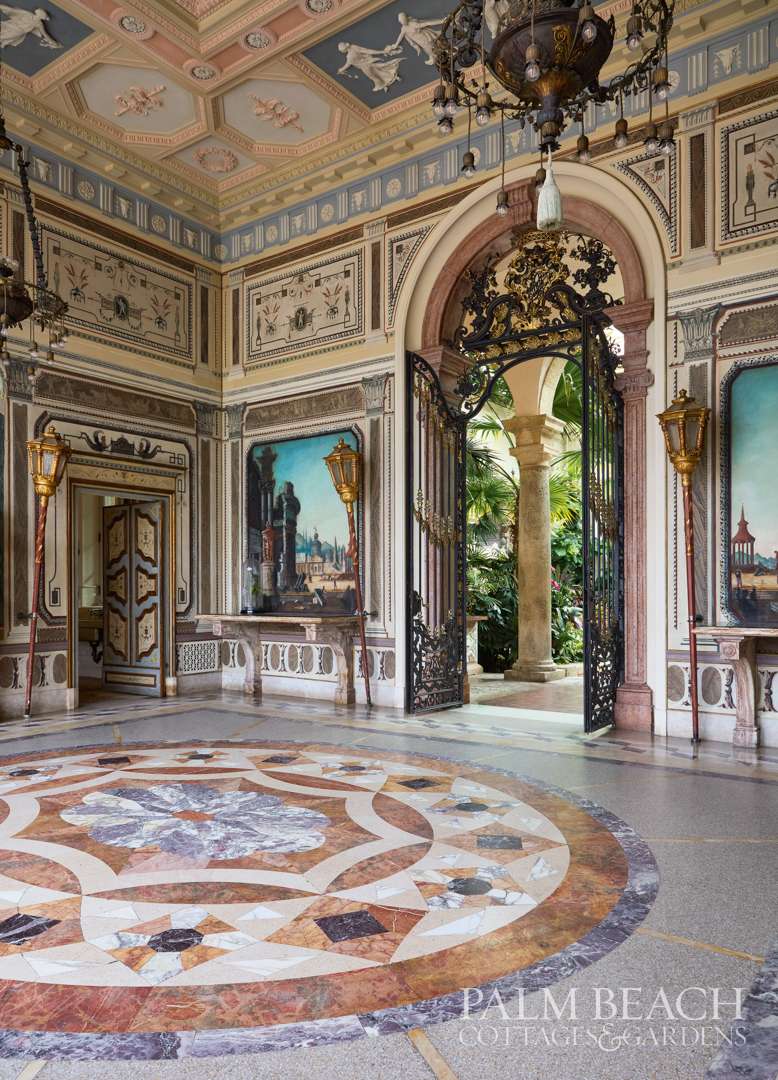
View of the Enclosed Loggia, decorated with late 18th-century Neapolitan paintings and featuring wrought-iron gates from the Palazzo Pisani in Venice.
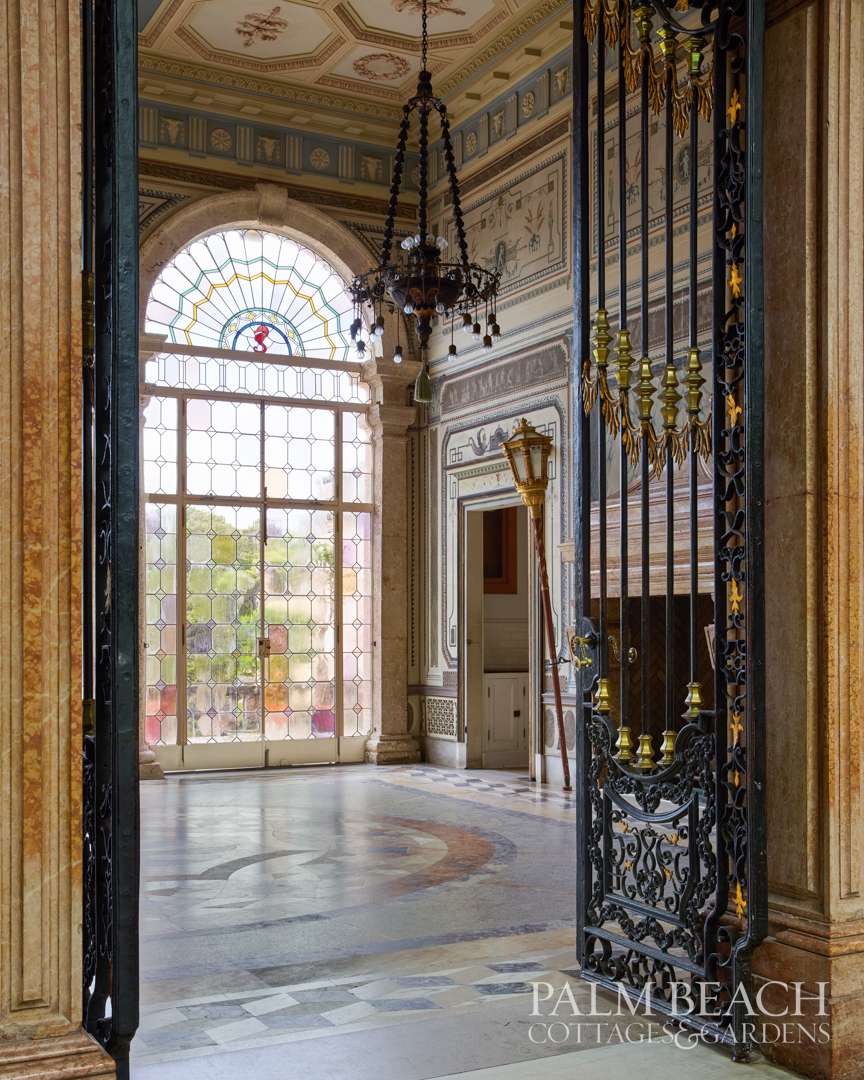
South view of the Enclosed Loggia. The room has direct access to the gardens through a leaded glass door decorated with Vizcaya’s symbols, the caravel (sailing ship) and the seahorse.
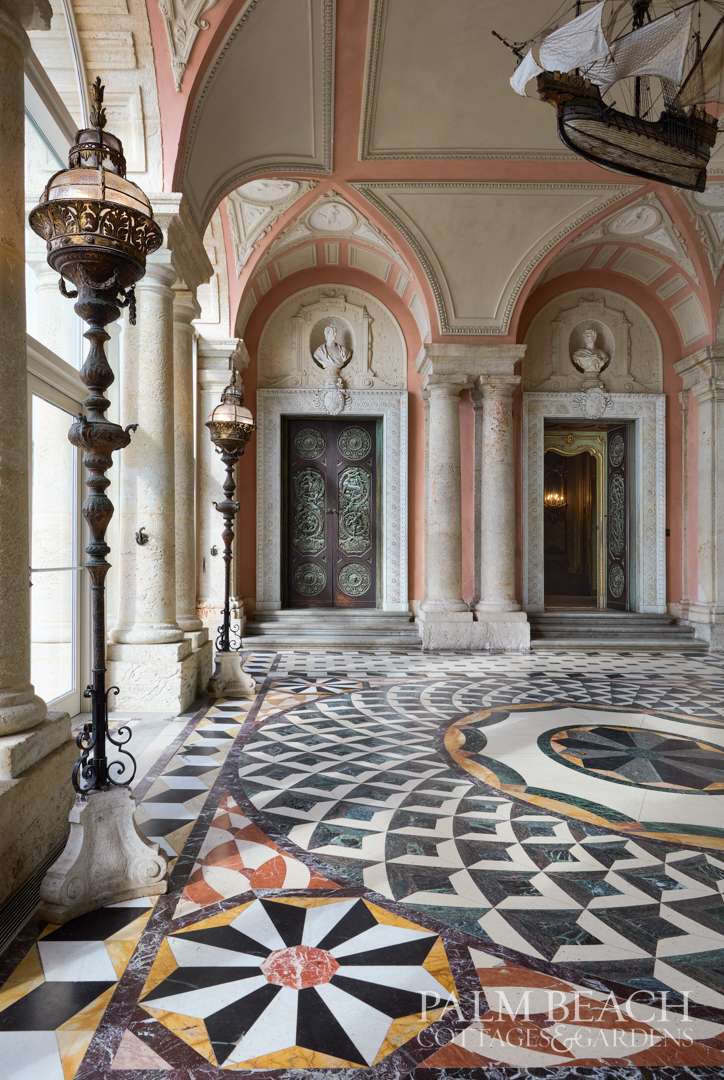
The East Loggia, which was originally an outdoor living room facing Biscayne Bay. The four doors flanking the sides of the room were part of the Torlonia Palace in Rome.
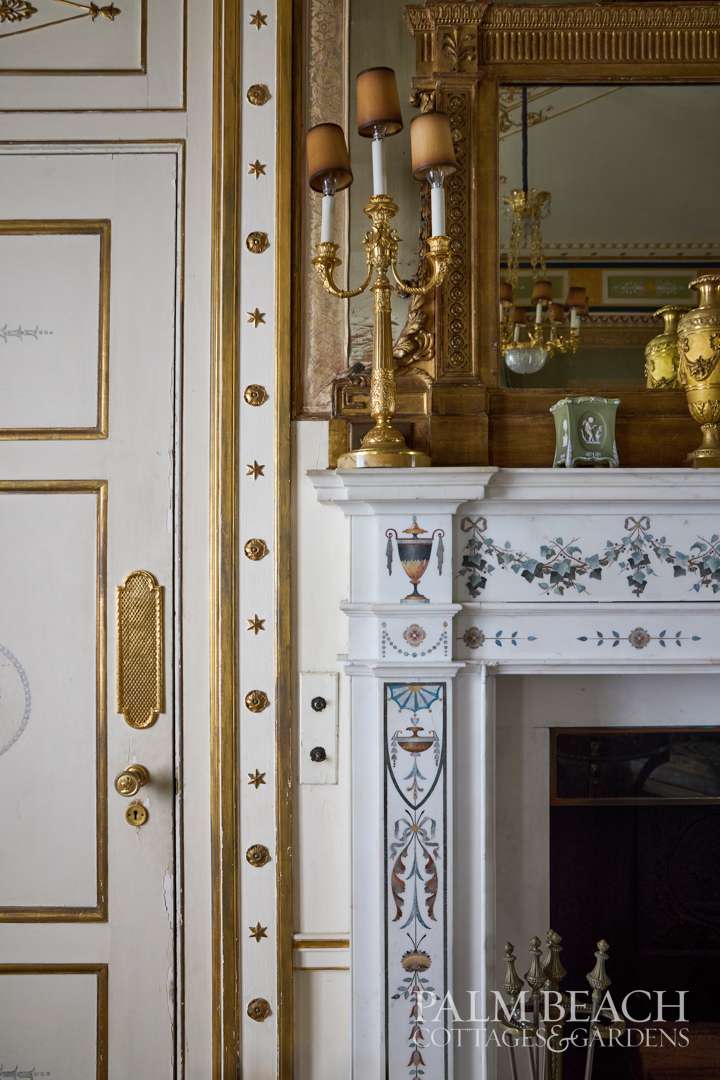
Detail of mantel and door frame in James Deering’s room, which displayed a mixture of French, Italian and modern elements in the Empire style.
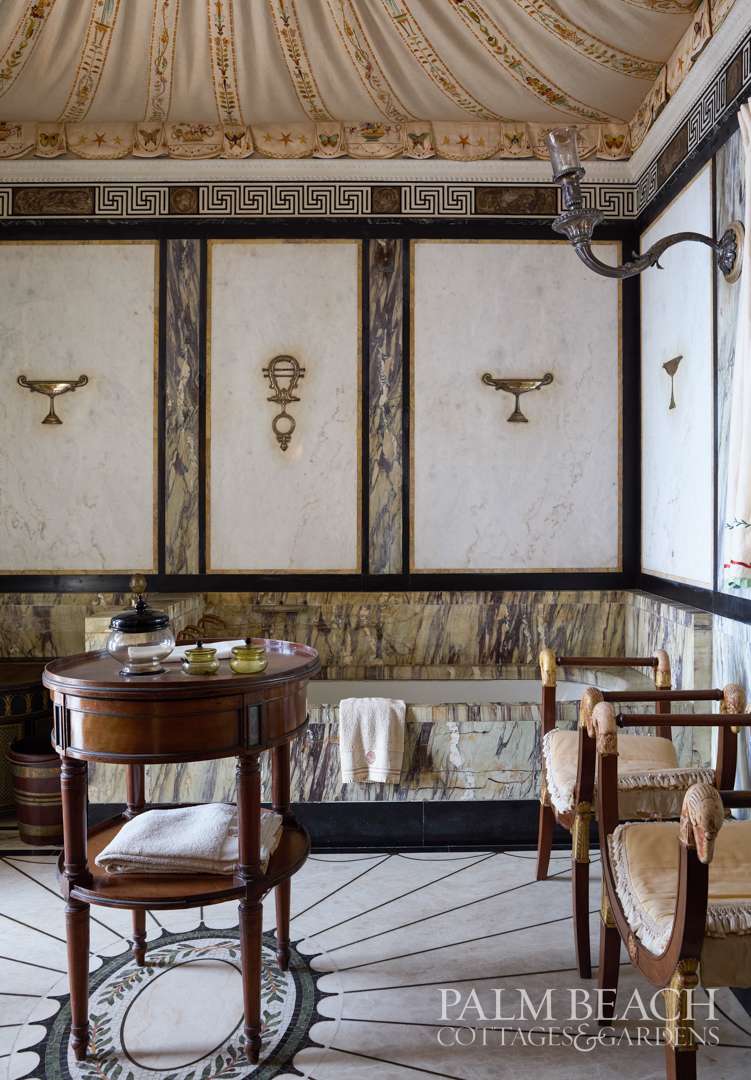
James Deering’s bathroom paneled in black, white and gray marble. It includes an embroidered tented ceiling. The bath taps provided both fresh and salt water.
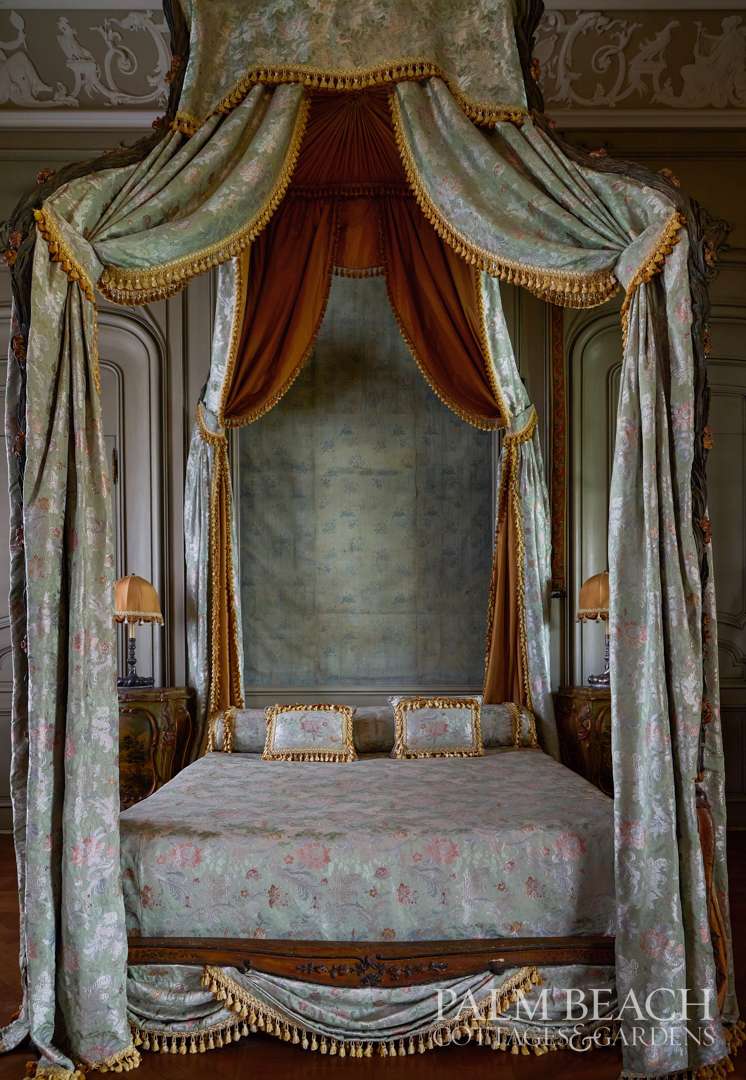
An elaborate canopied bed in the guestroom named “Espagnolette.” The room was a Venetian interpretation of French Rococo decoration.
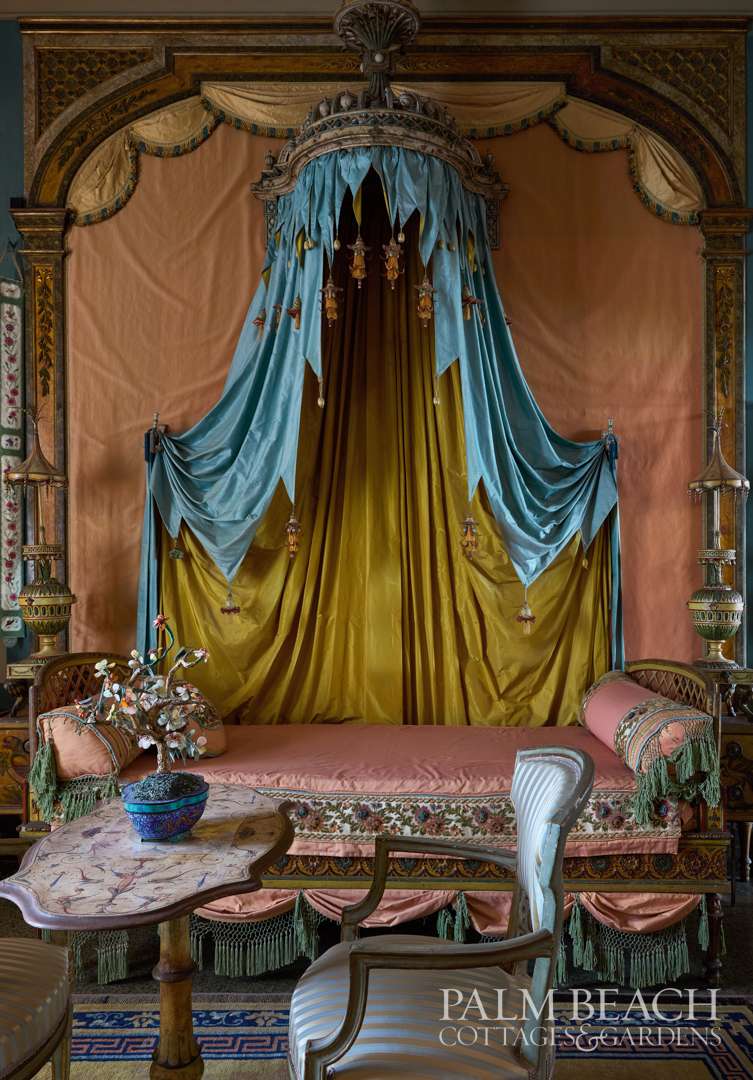
The guestroom named “Cathay” was decorated with Italian furniture and complemented with wall silks and decorative tassels, drawing inspiration from oriental motifs. Muriel Draper, a Manhattan decorator best known as a bohemian salon hostess, designed and made the canopy’s tassels.
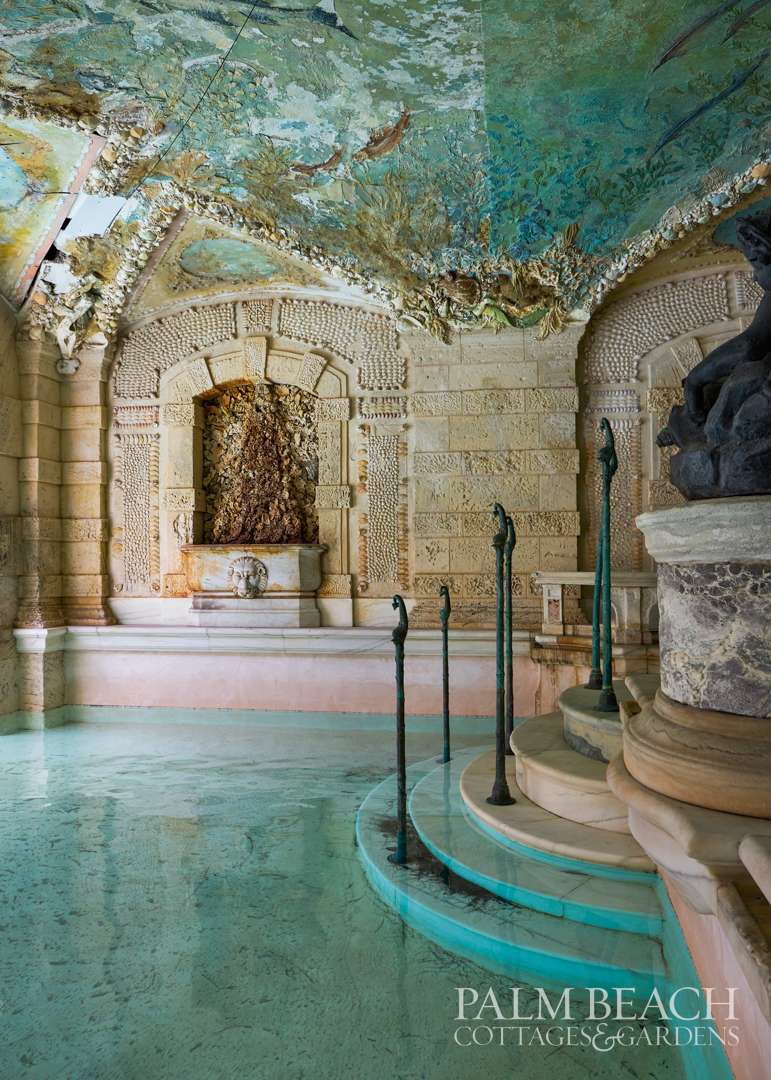
Vizcaya’s Swimming Pool Grotto is half indoors and half out, decorated with shell mosaics and stucco bas-relief representing the flora and fauna of the Florida Keys, and painted by American artist Robert Winthrop Chanler. The dolphin-finialed balusters once held railings made of nautical rope.
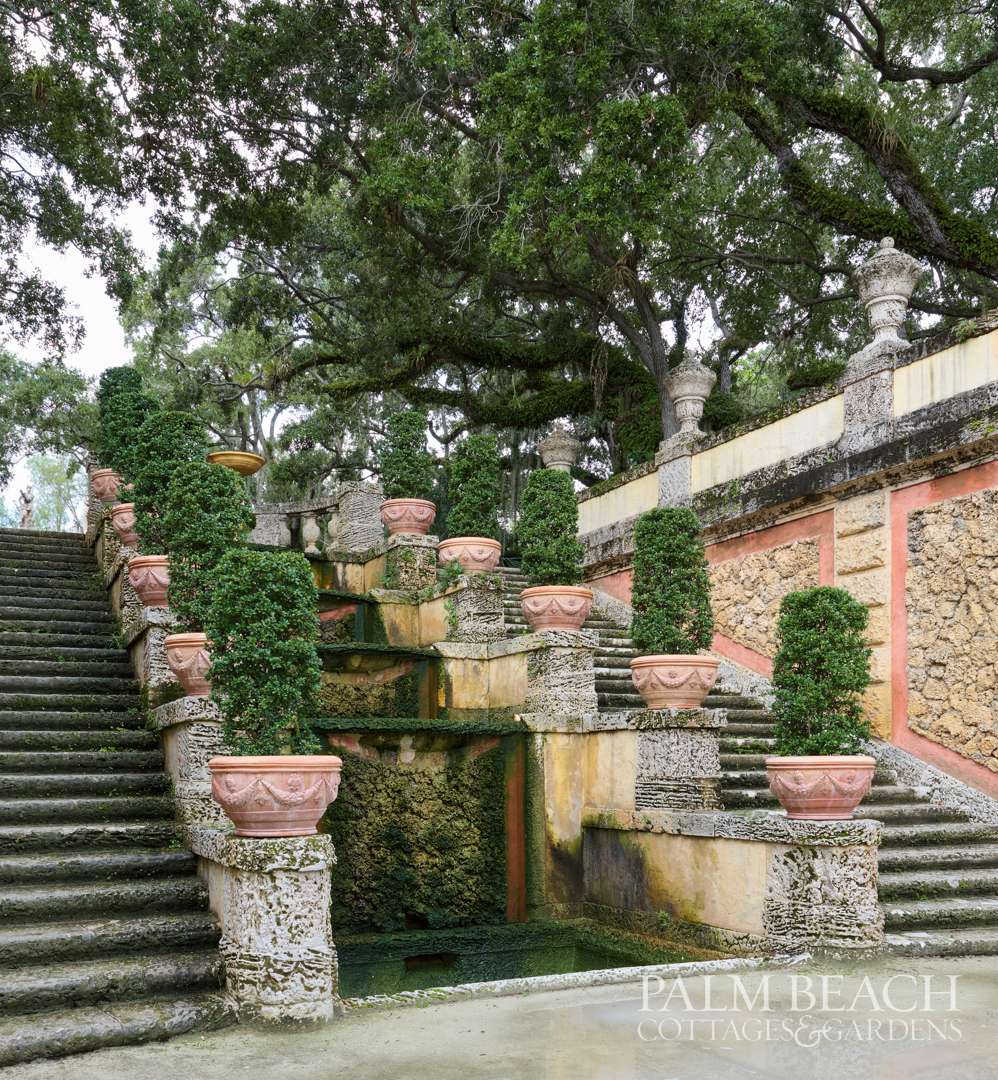
Steps and cascading fountain on the Mound.

Statue of Apollo (18th century), located in the East Statuary Walk.
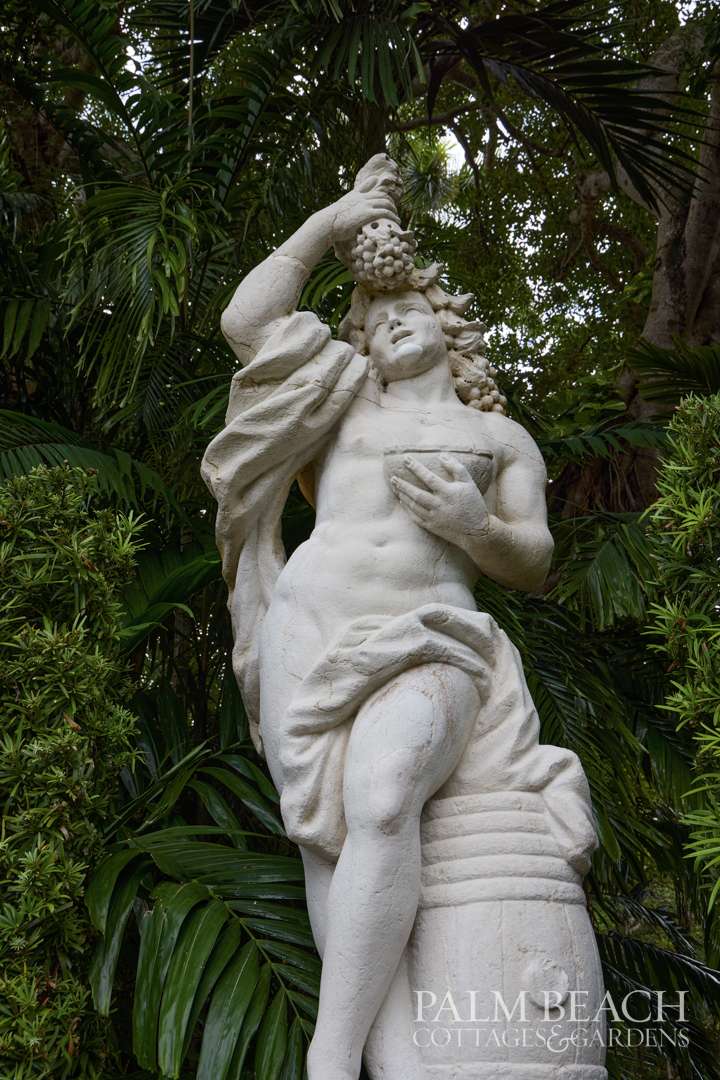
Statue of Bacchus, from the workshop of Enrico Merengo (18th century), located in the East Statuary Walk.
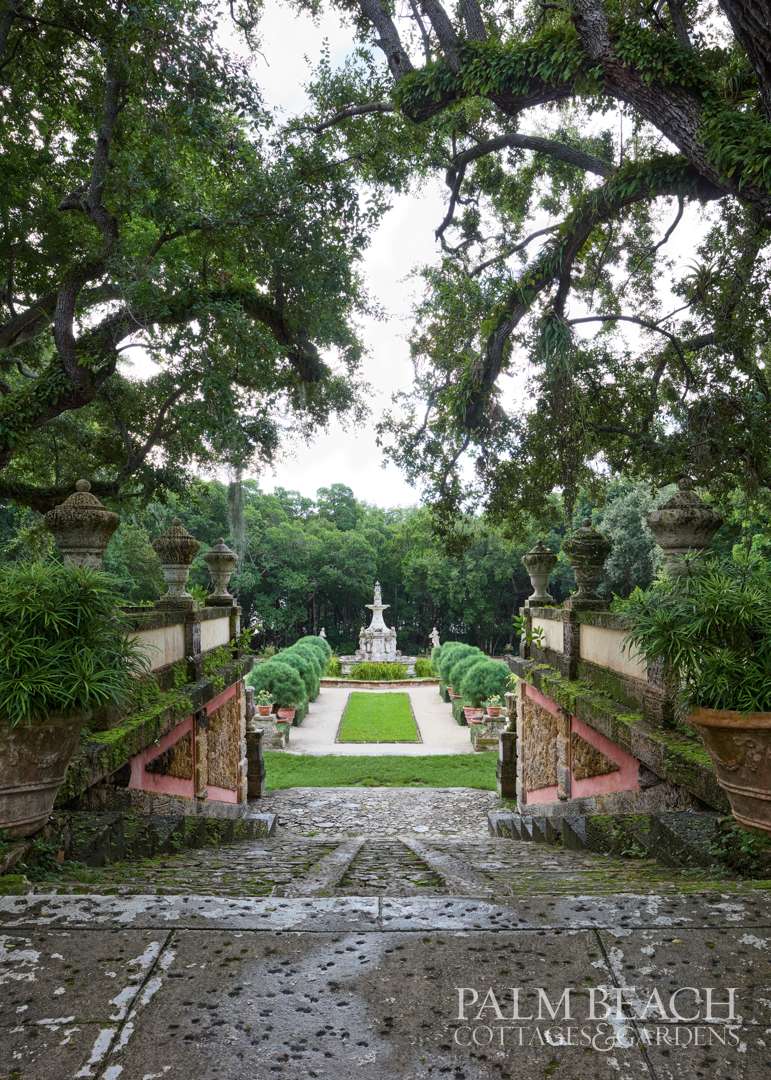
A view leading to the Rose Garden, anchored by a large 18th-century fountain from Sutri, Italy.
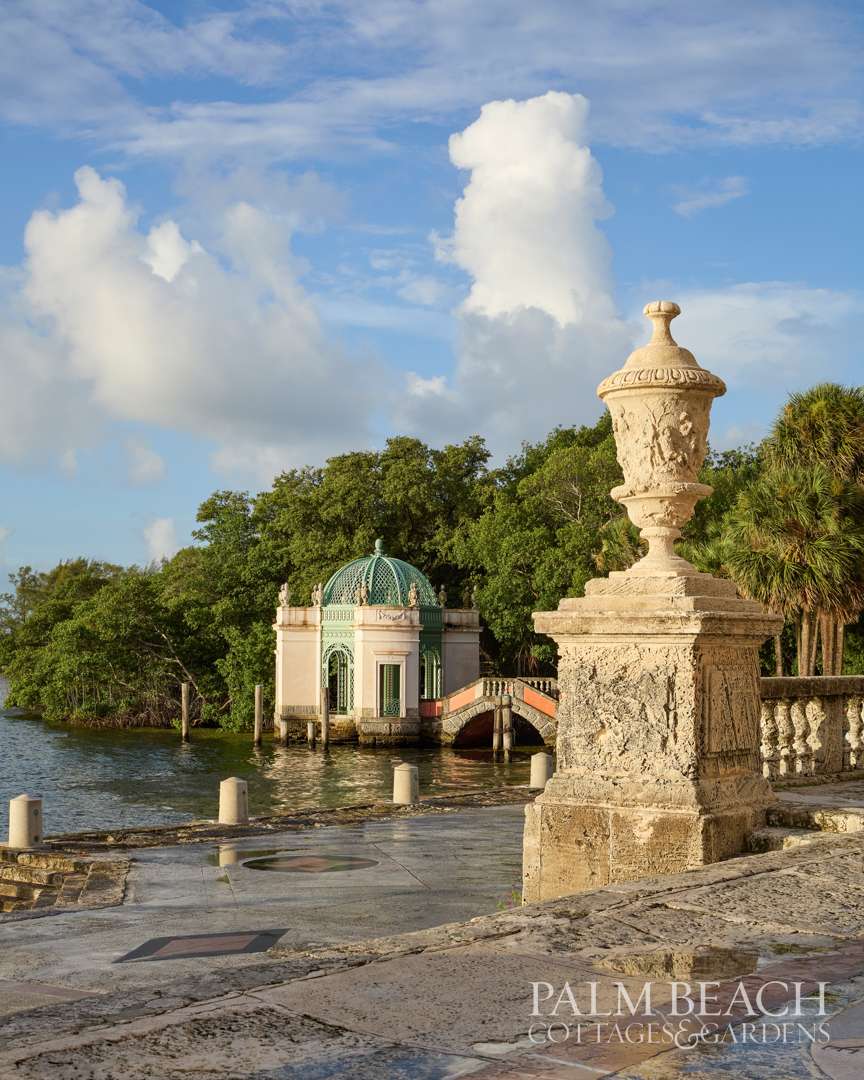
Overlooking Biscayne Bay, a Venetian-style bridge leads to the Tea House.
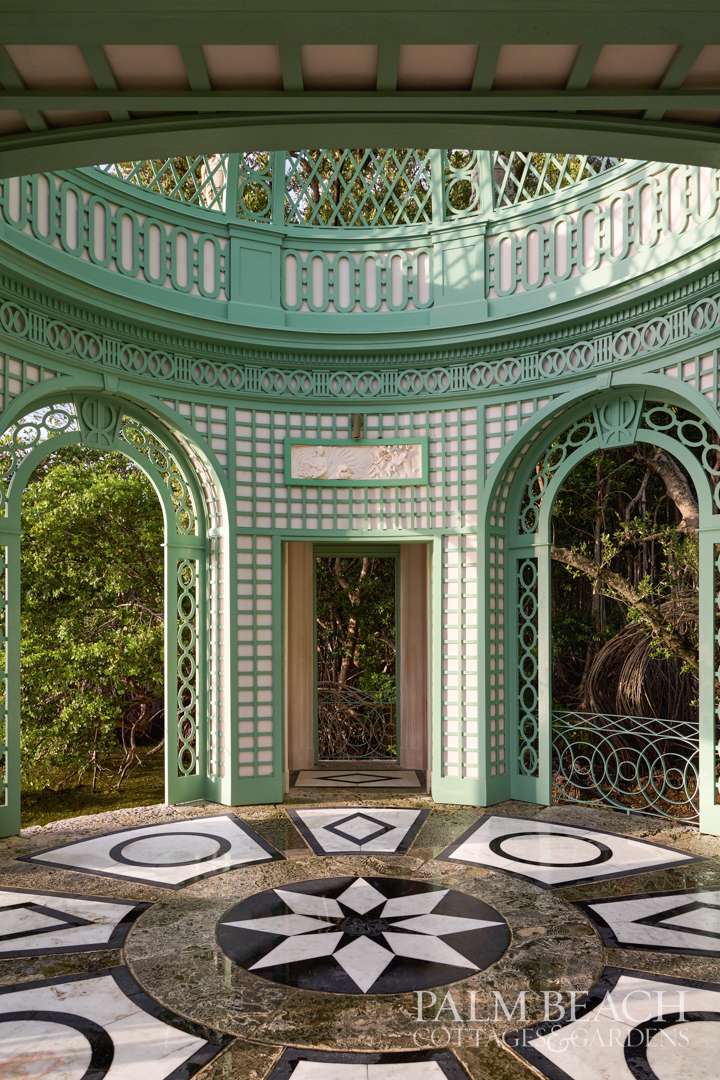
Inside view of the Tea House. A compass rose is inlaid into the house’s marble floor. Lattice lines the stucco-on-concrete structure, copied from the treillage fancies found in 18th-century French gardens, a taste shared by Chalfin and his former employer, Elsie de Wolfe.
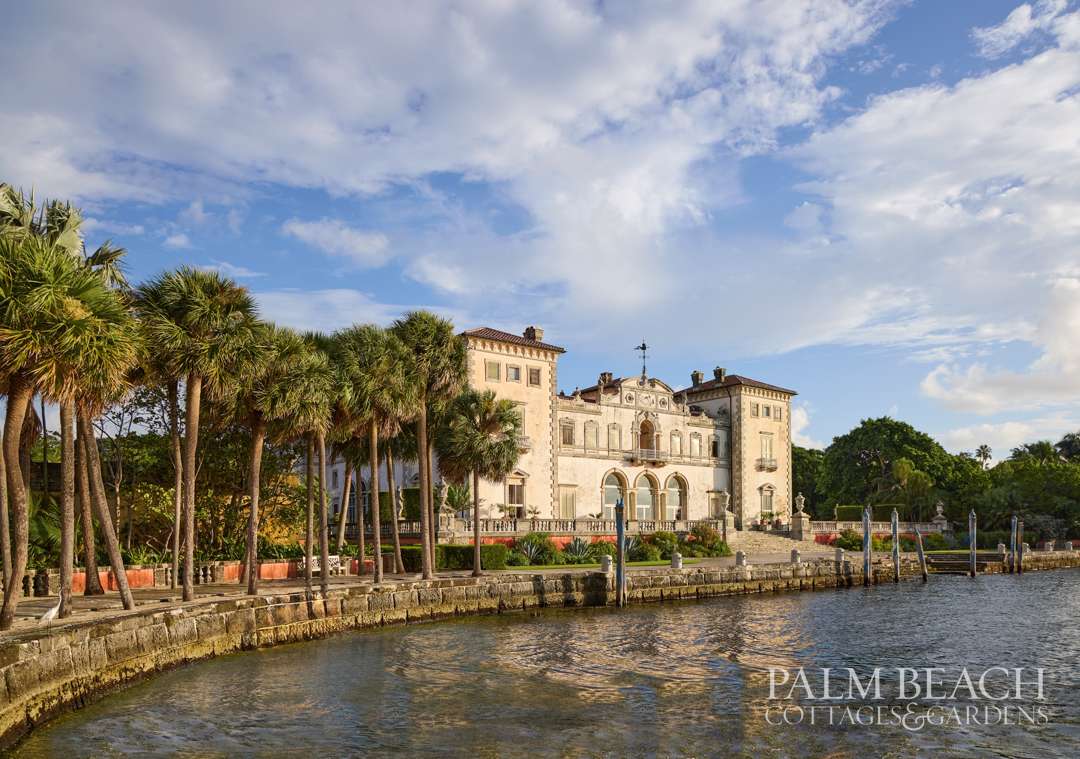
Panoramic view of the estate from Biscayne Bay.
