


Architectural designer Judy Larson likes it when she sees people walking or driving along a street who suddenly pause to take in a house. She imagines them likely wondering when the structure was built and whether what they’re seeing is the original house as it was when first completed. So, when she and her husband, who own and run Gardiner & Larson Homes, were commissioned by clients in Greenwich to design a new house on a waterfront site, she wanted to create something wholly original, while also creating a little mystery from the street about whether the dwelling was new or old or a combination of both.

Larson had a precedent to work with. A house dating from the early 1800s had stood on the site, had been added to over the years, and had weathered over time from its coastal site. “I’m all about preserving old houses,” Larson emphasizes, “but what had been on this spot was not your typical charming Colonial. It had become decrepit and unwieldy.” The owners decided to demolish that structure and begin anew with a four-bedroom house set well above the FEMA-stipulated waterline (the old house was situated 13 feet below sea level).
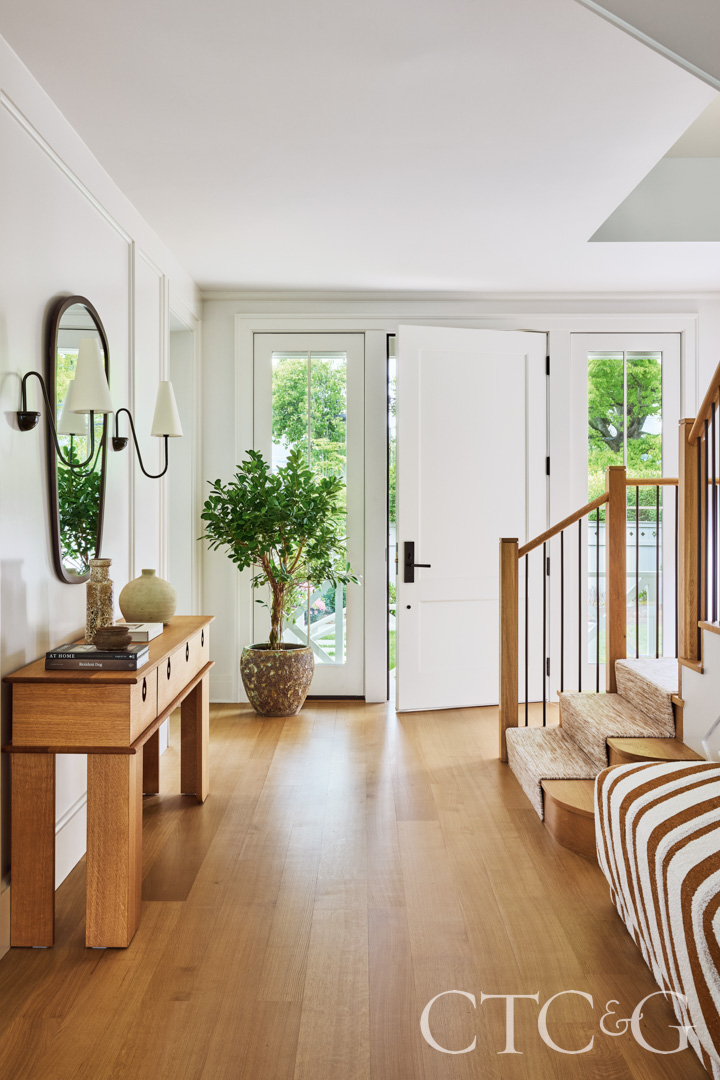
The bright foyer is furnished with a Fern console, a Tom Faulkner mirror, and a Phase Design bench that wears a zebra-like Casamance fabric.
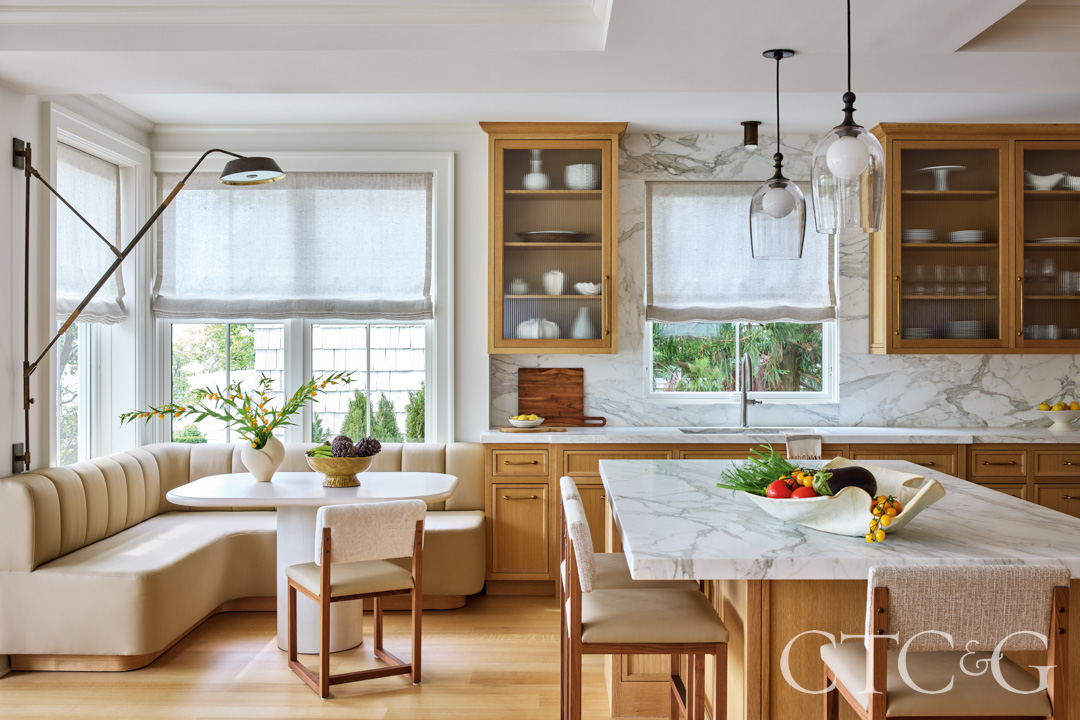
In the kitchen, a banquette in a Pindler fabric anchors a corner of the kitchen. The island is defined by David Gaynor Design stools and Allied Maker pendants.
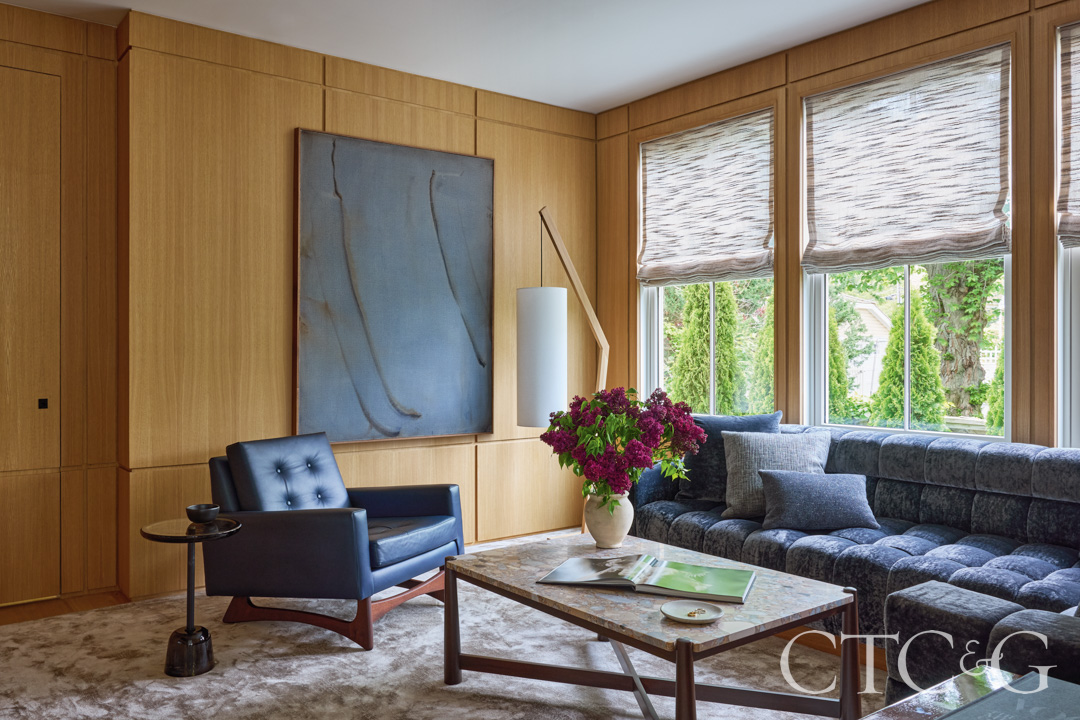
A sofa upholstered in a blue Romo fabric and a chair through Craft Associates Furniture are paired with a Lawson-Fenning coffee table, and the artwork is through the Heather Gaudio Fine Art gallery.
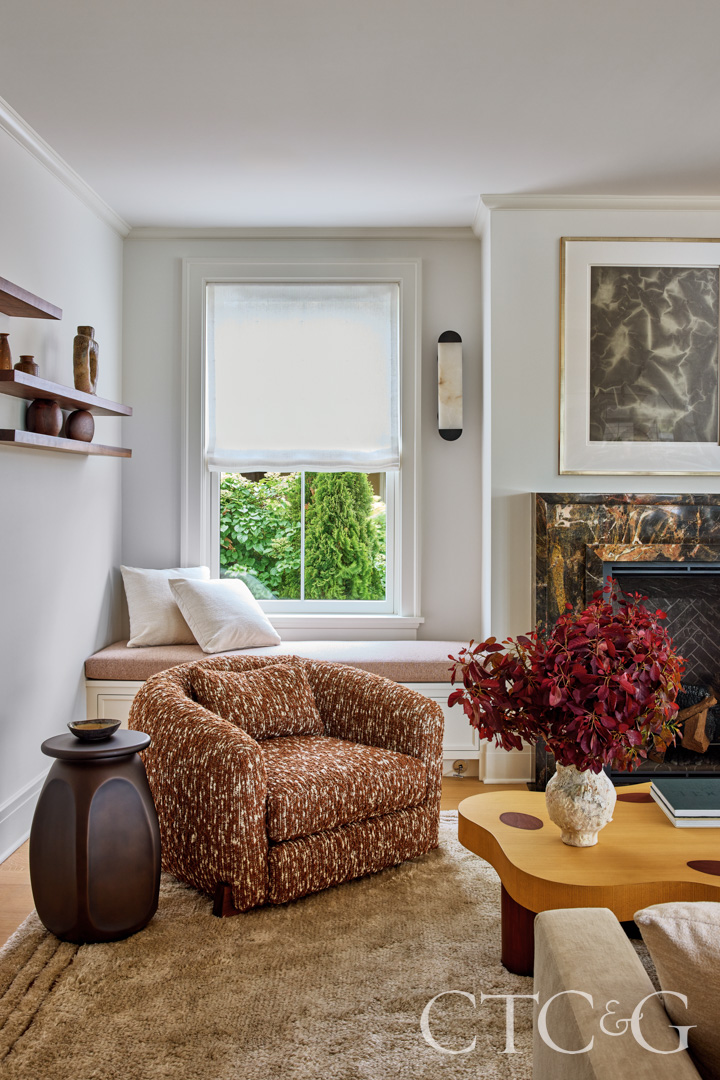
In the living room, a Stahl + Band chair is finished in an Elitis fabric, the shelves were made by Joel Escalona, and the side table is from Carlyle Collective.
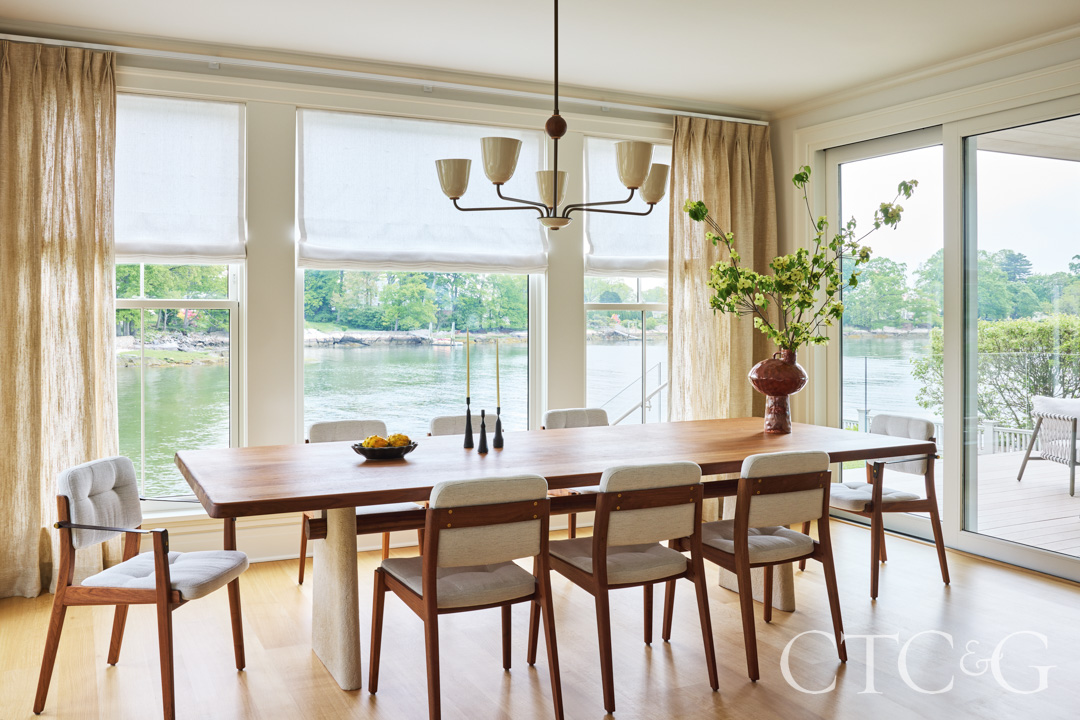
In the dining room, a Yucca Stuff walnut and limestone table is surrounded by De La Espada walnut chairs upholstered with a Bart Halpern fabric. Lostine’s Lola chandelier provides discreet, moody light.
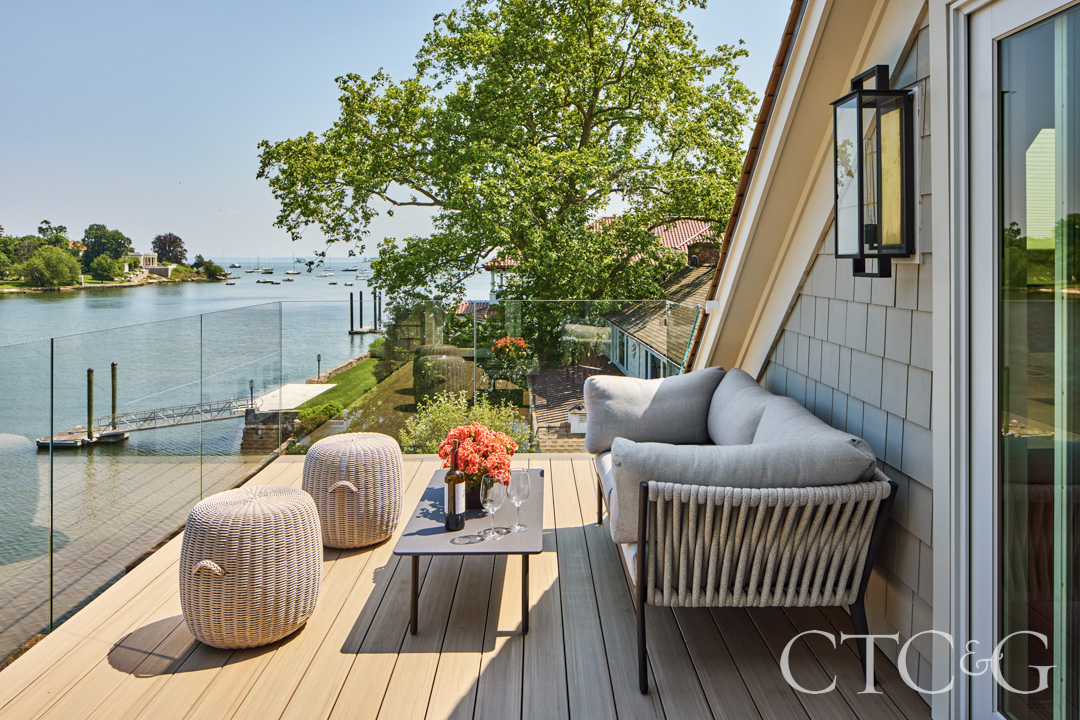
The deck outside his third-floor home office is furnished with a Brown Jordan sofa, coffee table, and ottomans.
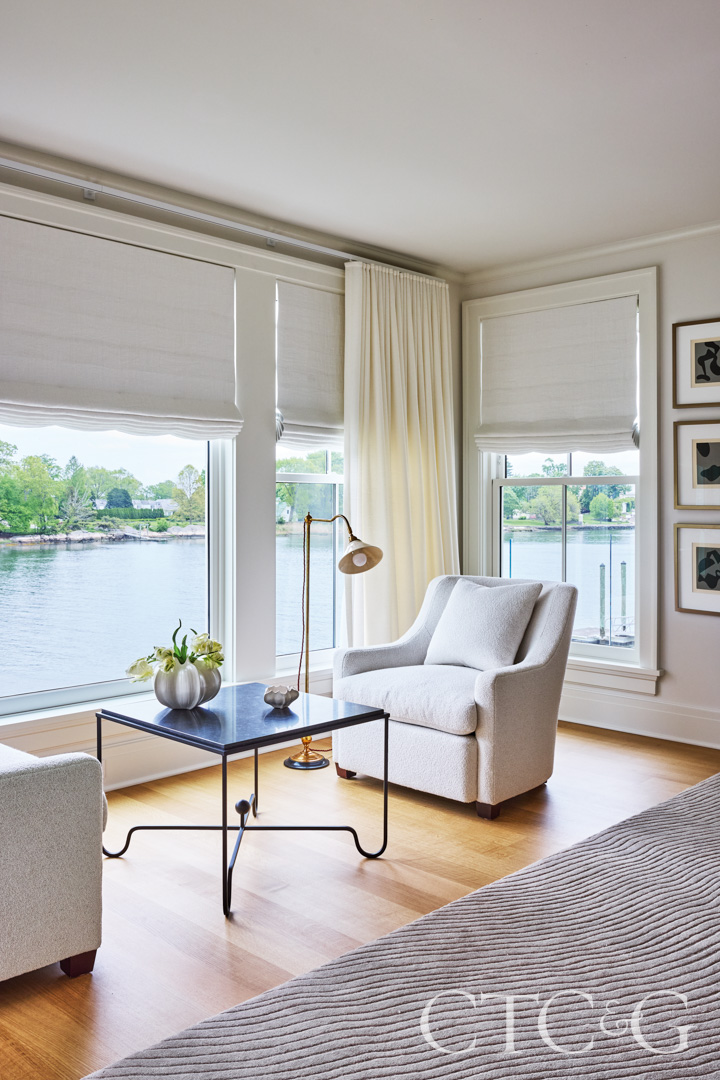
A primary bedroom sitting area features a pair of chairs in a Westbury Textiles fabric; the table is through 1stDibs; and the reading lamp is from DeVol.
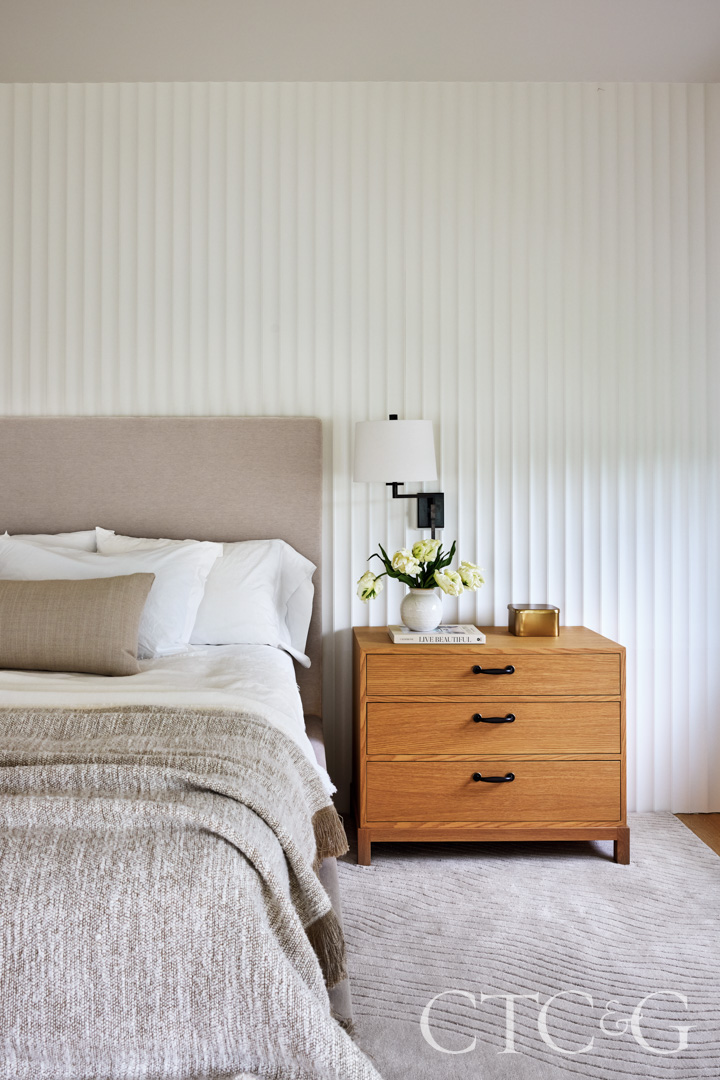
The bed is dressed with Castel fabrics and a Uniquity blanket, while fluted panels from Casa Metier cover the wall behind the bed.
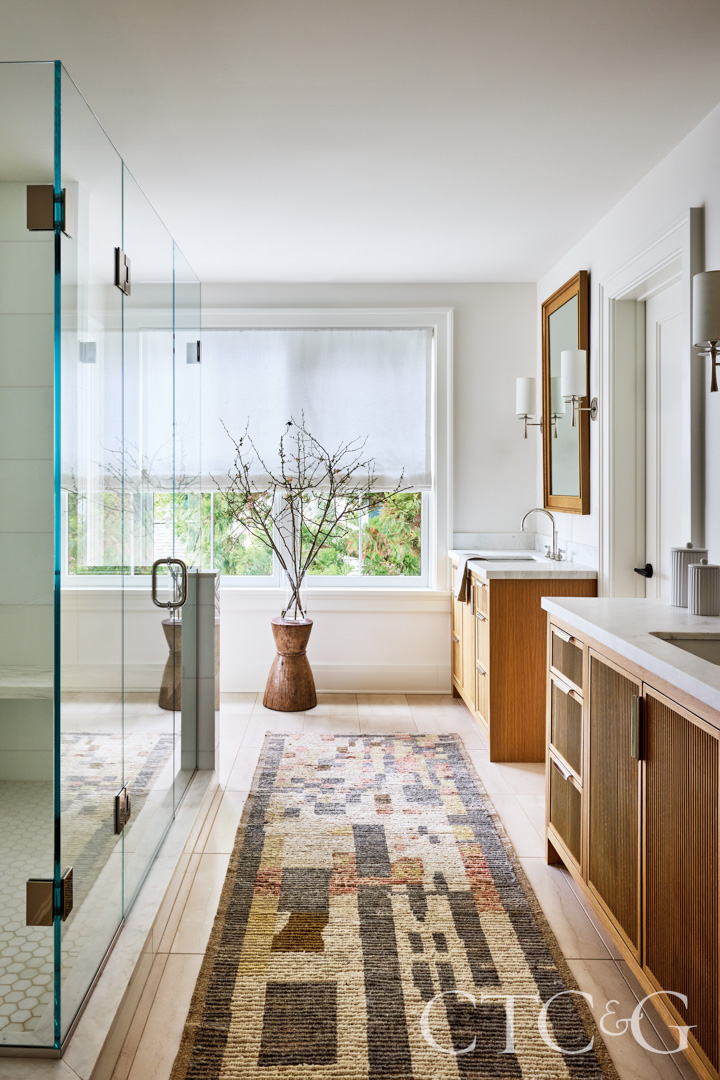
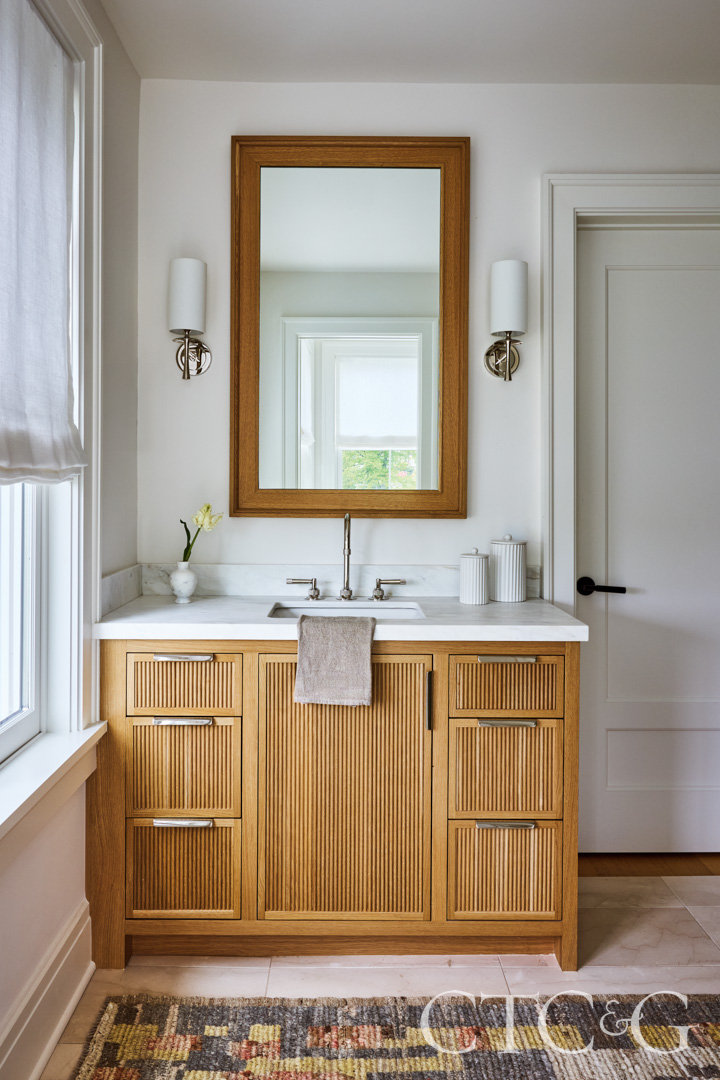
Visual Comfort sconces flank the mirrors above the vanities.
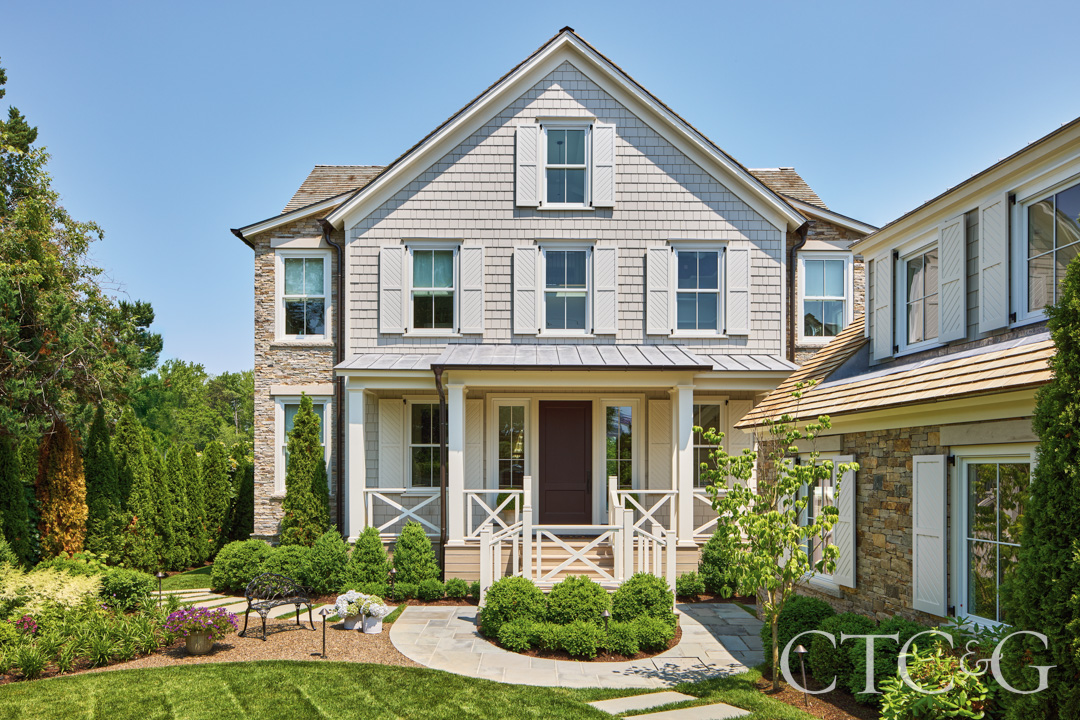
The street side of this new house by Gardiner & Larson Homes mimics vernacular forms.
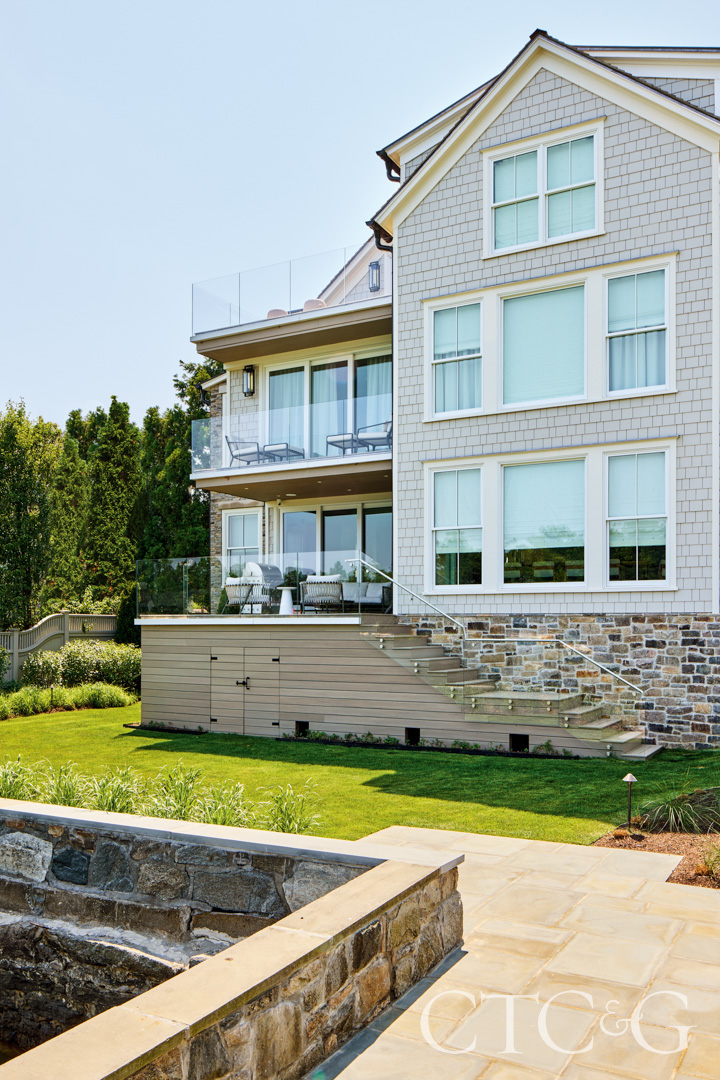
The rear of the house is decidedly more modern.
The resulting design harkened to a classic seacoast Colonial model, complete with a shingled roof, a main wooden gabled portion, along with side gables made of stone so as to make the new structure appear to be an old one onto which new wings had been added over generations. “It’s important for me to make houses that from the streetside harmonize with other existing homes in the neighborhood.” The resulting dwelling is, indeed, a welcome addition to the Greenwich street, while also fitting right in as it came with the town long ago.
That very architectural dynamic is what presented a new—and admittedly exhilarating—challenge to Vanessa Rome, the New York–based interior designer. Rome had worked on the owners’ prior residence in Water Mill, as well as the updating of their former house in Scarsdale. “I really loved working on this house because it was different for me architecturally. It was meant to feel like a re-created period home,” she explains. “It had a different feel from the Hamptons houses and Manhattan apartments I typically do, but it felt like such a welcoming opportunity to try something with a different vibe—what I might call French Country.”

As she often does, Rome and her team began each room with the rug, designing around the colors of what they put first on the floor. In the living room, for instance, the hues of a lush and plush rust-colored Beauvais rug set the agenda for that room, and many others. “I fell in love with the rug the moment I saw it,” she recalls, “and when the client agreed, off we went from there. And because I’ve worked with these clients before, they had total trust in me and let me perform the designs pretty much carte blanche.”
Rome is prolific in her palette of browns, referring to the rusts, the beiges, the taupes, the walnuts, the travertines she employs throughout the home. One of the most novel and creative interior design moments occurs in an unlikely place—a wide second-floor landing. There, in a space flooded with natural light via a skylight, Rome placed a table and two ottoman seats, along with a settee. “Given its position next to the laundry room and a coffee bar, and the primary suite just steps away, I wanted a way to make use of this otherwise potentially dead space.”

While Larson ensured that every room—public and private—took advantage of extraordinary Sound views, inside Rome made maximum use of every cornered window, picture window and terrace. In the kitchen, she wrapped a corner with a beige banquette and positioned the spacious marbled island so that when prepping a meal, water views were front and center. A two-seat nook in the primary suite aligns with the inlet water.
This new house is well anchored on the footprint of an old house. It distantly echoes those earlier forms while taking its place on a street, where it is willing to age in place.
