


The owner of this Water Mill house is so in love with playing pickleball that she wants to be immersed in the game even when she’s not on a court. “To be honest, our guiding light when we began was to focus on creating a room that the owner now calls The Pickleball Room,” says Tate Casper, a principal with her business partner, Jordan Winston, of Oxford Design, a Tampa-based interior design firm. “She obsessively plays the game,” Tate says with humor, especially since the homeowner is her sister-in-law. “Jordan and I landed on creating an all-green room.”

The hue not only references a pickleball court, but also the expansive lawn on which the Shingle-style house sits. “We played with the idea of visually extending the lawn, melding the inside of the house with its outside,” says Winston, “plus there’s the green of hedges, a common feature you associate with the Hamptons.” The design duo even filled the bookshelves with all green books. “The room is so gorgeous and super cozy,” adds the homeowner.

The homeowners, a couple with two 20-something daughters, live fulltime in Tampa, but retreat to the cooler climes of the Hamptons in summers. “My husband and I have been renting in the Hamptons since 2019,” says the homeowner, “but I always had my eye out everywhere I went looking for the right house. I loved the location of this house, I loved its layout and yard and its bones. I’m just so happy out here. It’s fun here.”
What she did not love was what she first encountered upon walking inside. “This was a big gray and white box when we got hold of it,” declares Casper. “Our goal was to infuse it with soul and personality, and while she [the client] likes both traditional and contemporary, she wanted to experiment here.”

Minnear Architects designed this Water Mill home and Farrell Custom Homes built it.

Artwork by Jessica Brilli complements a vintage table from Lucca Antiques in the foyer.

In the living room, a custom sofa by Highland House is covered in a fabric by Mahala Textiles. The wallcovering is from Phillip Jeffries, and the David Duncan sconces are from 1stDibs.

In a dining area, a ceiling fixture from Charles Edwards hangs above a table from Schwung. Peter Dunham chairs from Hollywood At Home are covered in a fabric by Lisa Fine Textiles.
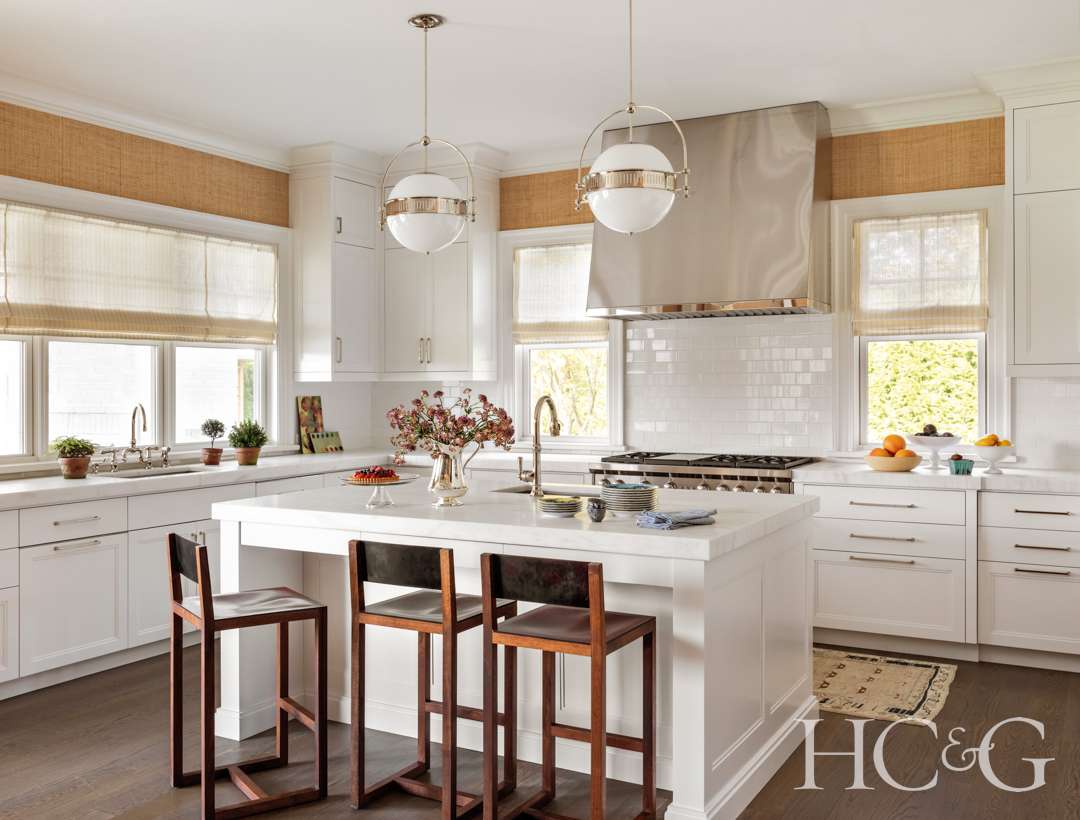
Pendants from Urban Electric hang above an island surrounded by bar stools from BDDW.
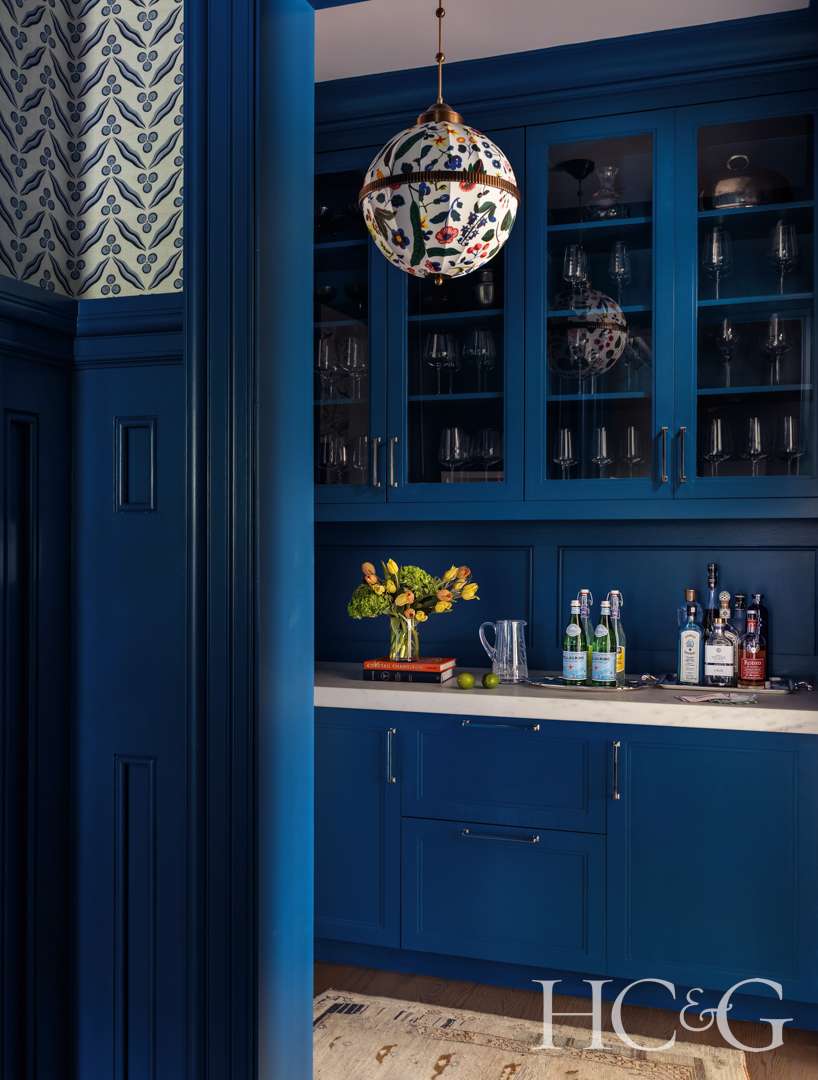
In the bar, the cabinetry is painted Caribbean Azure by Benjamin Moore, and the ceiling fixture by Woka Lamps is from 1stDibs.
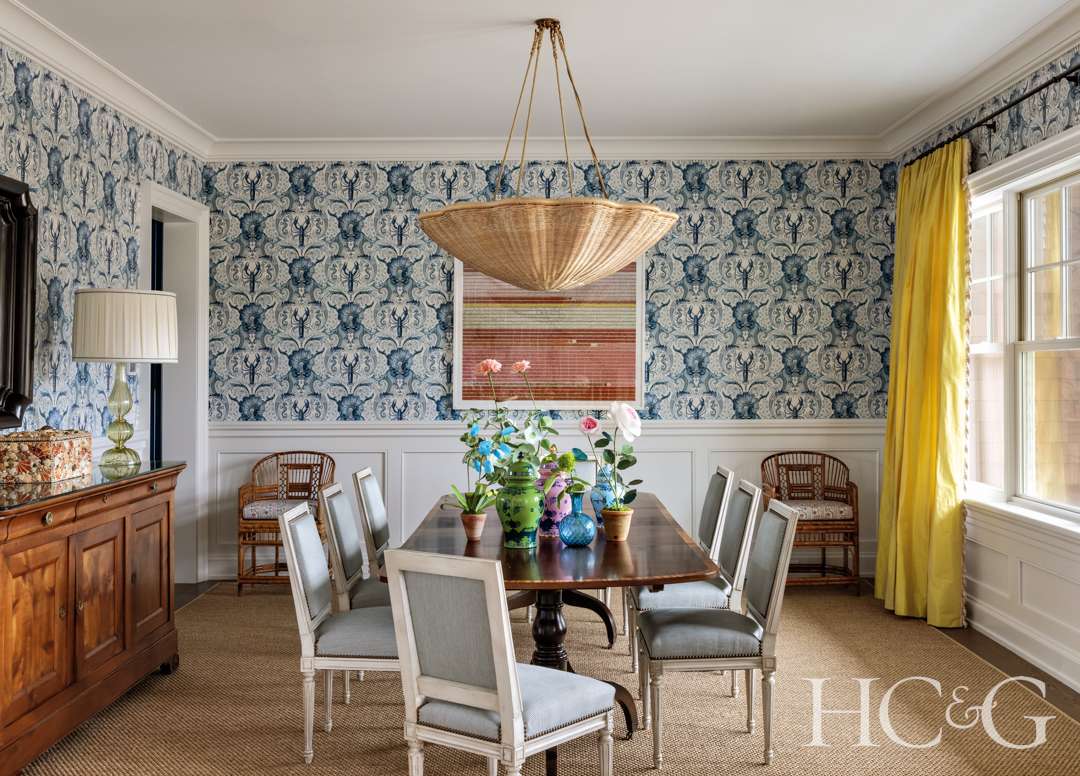
In the dining room, the wall covering is from Pierre Frey. French Louis XVI side chairs from Old Plank Antiques are covered in a Loro Piana fabric, and the antique dining table is from Steven Postans Antiques.

In an outdoor seating area, chairs by John Himmel are covered in a Perennials fabric.
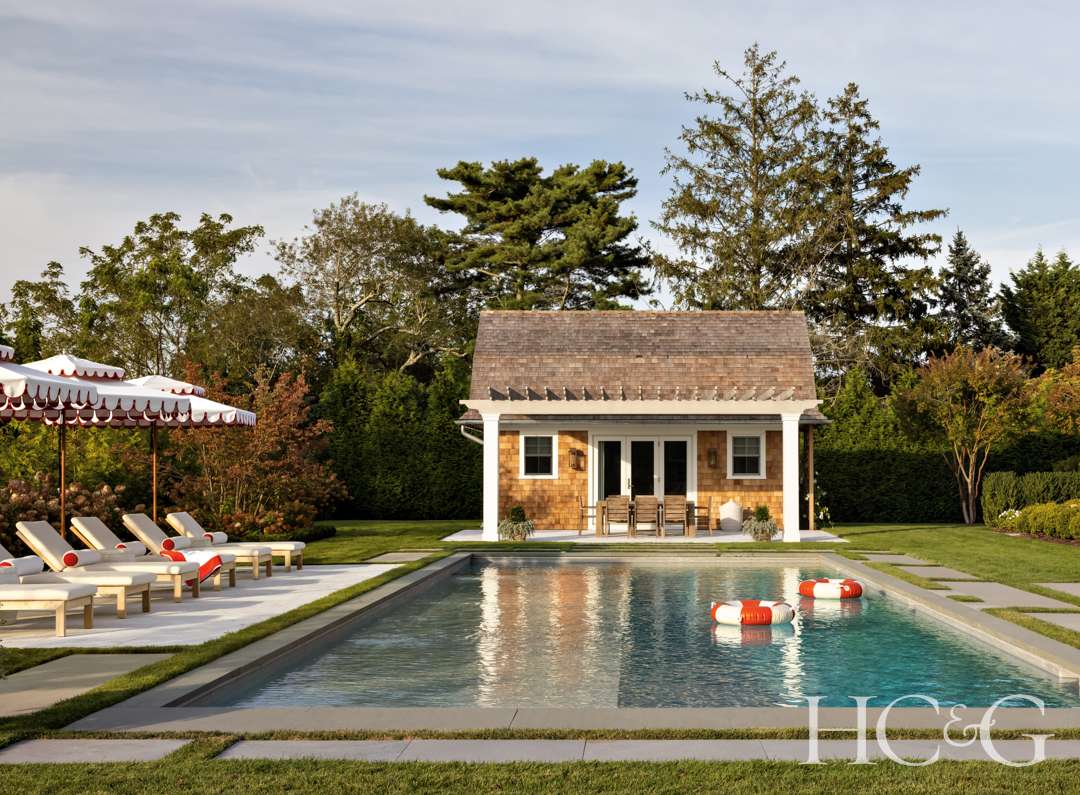
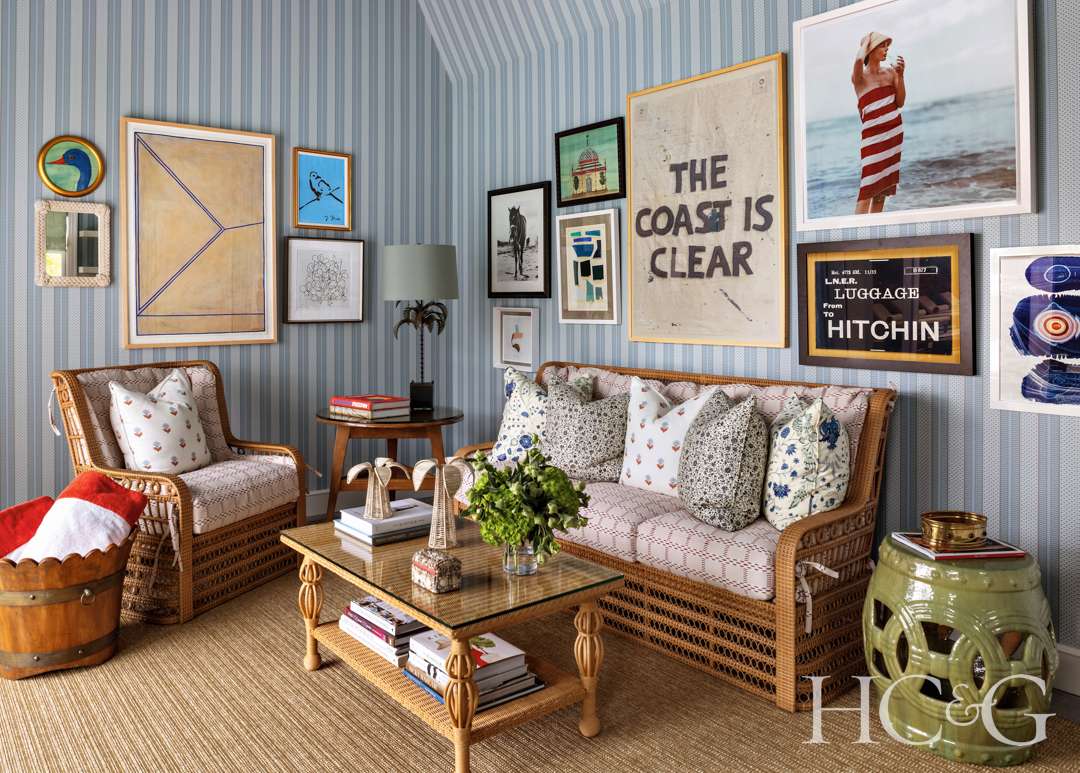
In the pool cabana, a sofa and chair from Bunny Williams Home are covered in a textile by Mally Skok.
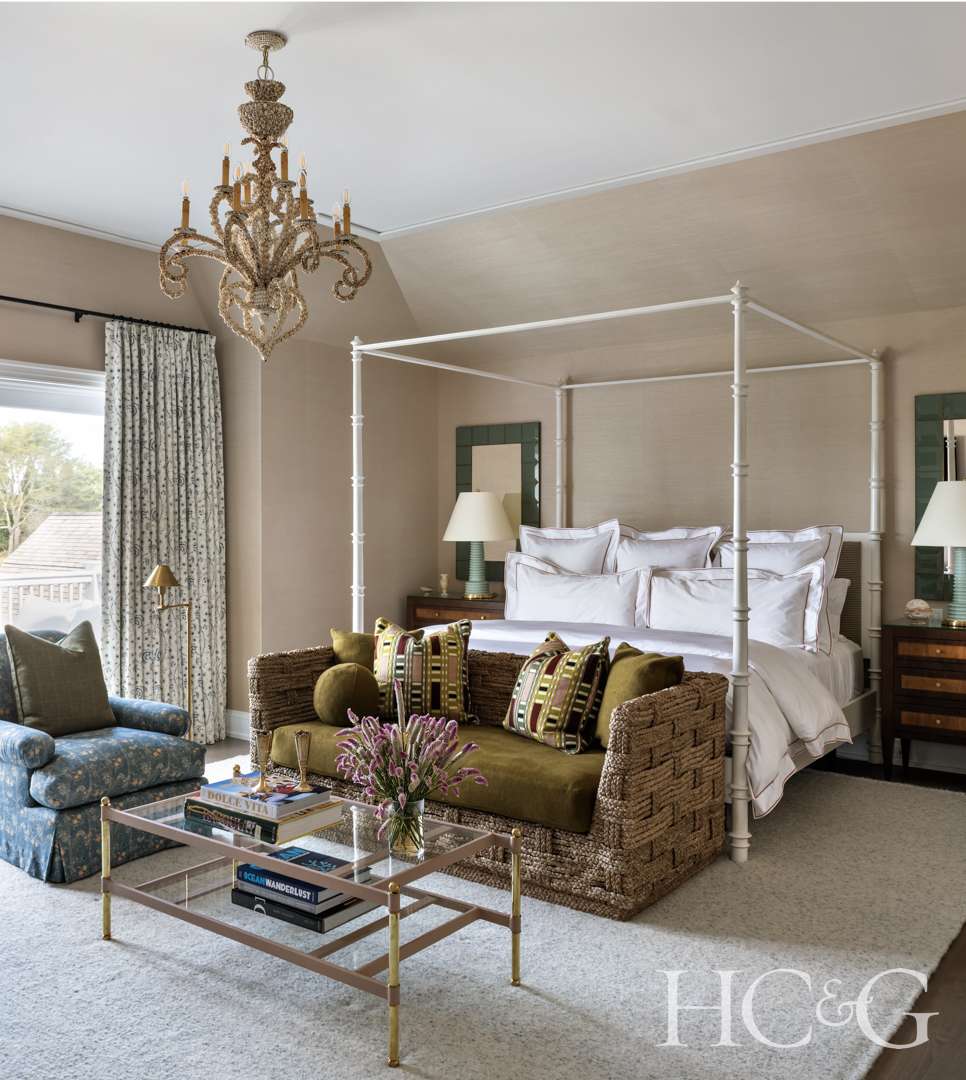
In the primary bedroom, a sofa by John Himmel is covered in a Rose Uniacke fabric. The coffee table is by Mary Beth Wagner Interiors.
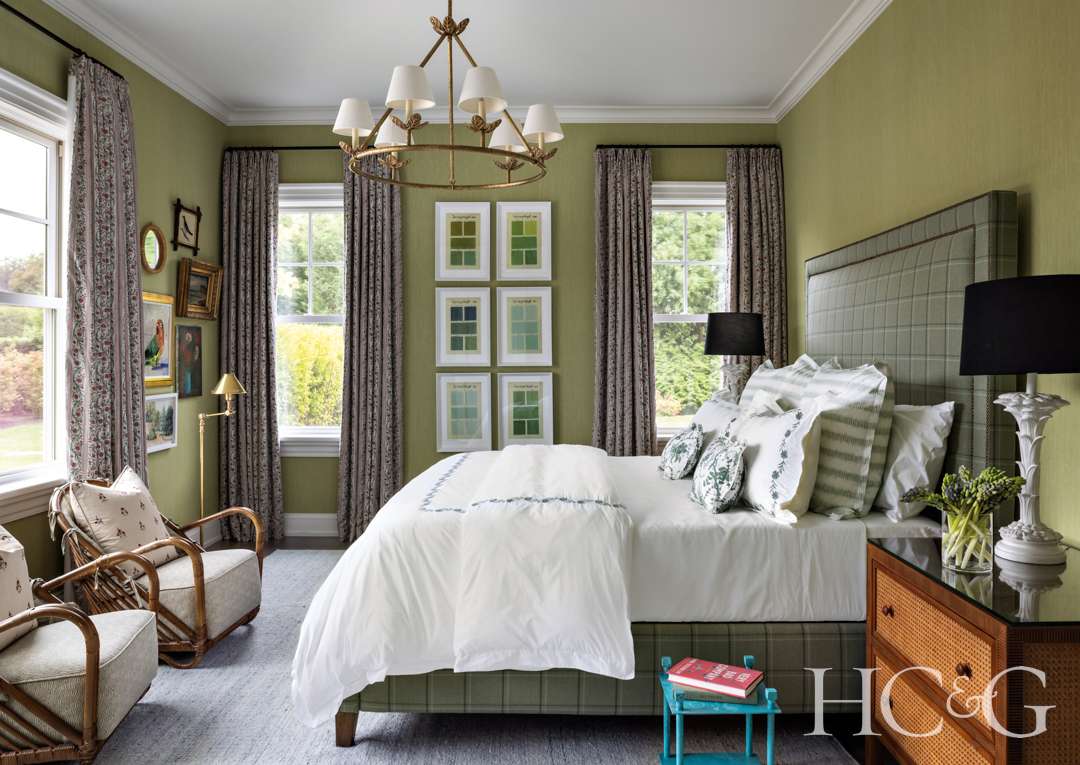
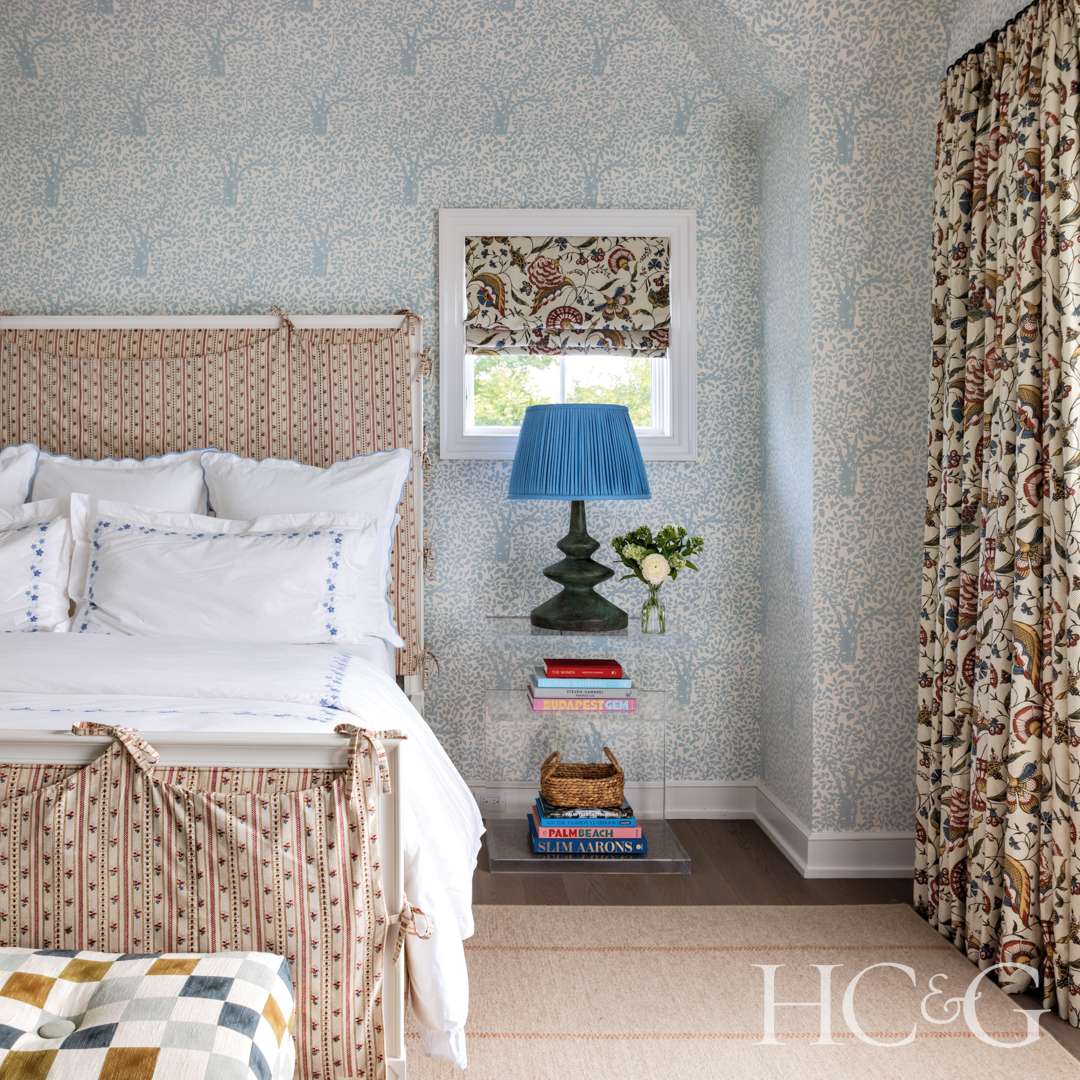
In a guest bedroom, curtain fabric by Pukka Print pairs with a bed frame reupholstered in a Holland & Sherry fabric.
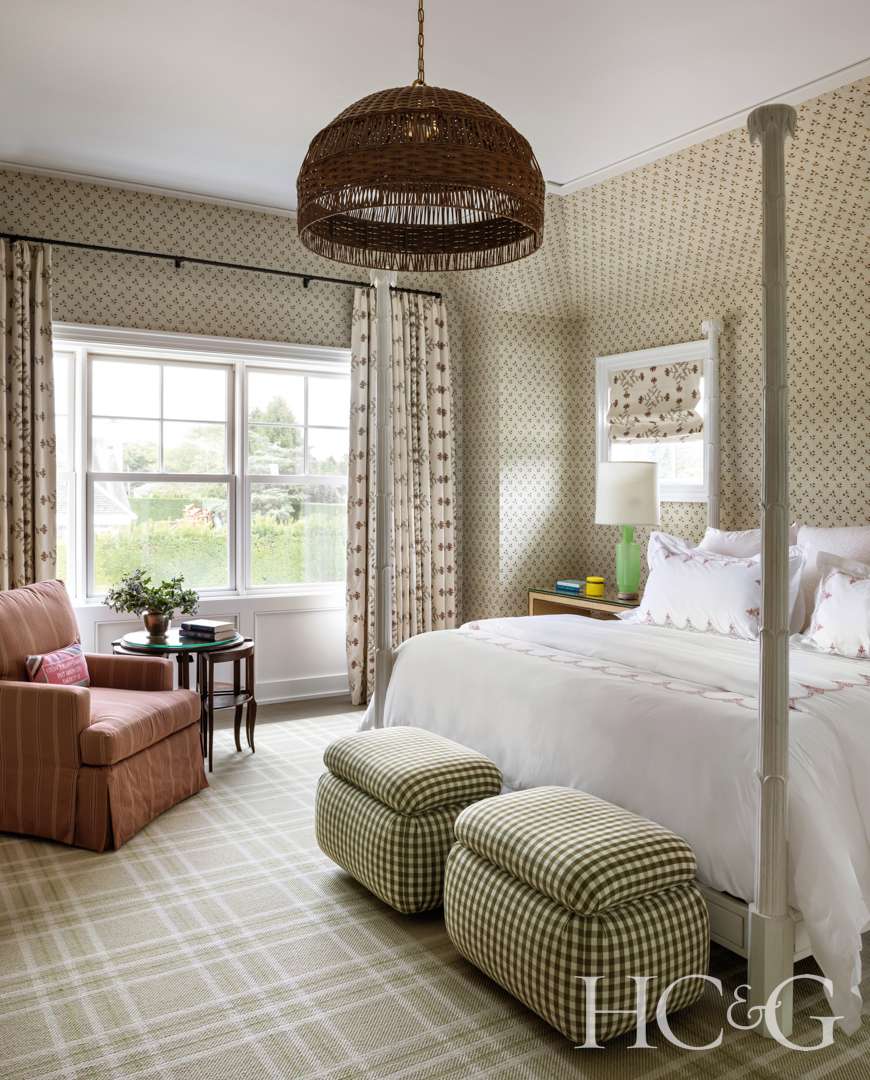
Curtain fabric by Heather Chadduck and a wallcovering by Antoinette Poisson are focal points in another bedroom.
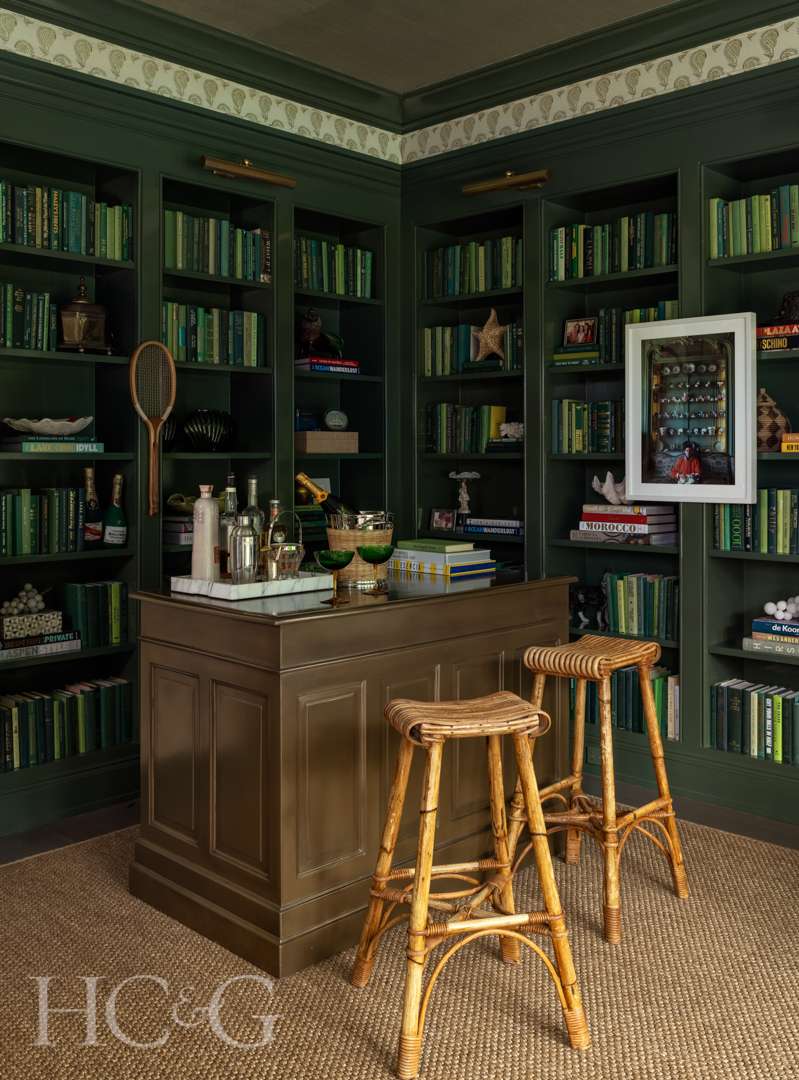
The owner calls this space “The Pickleball Room.”
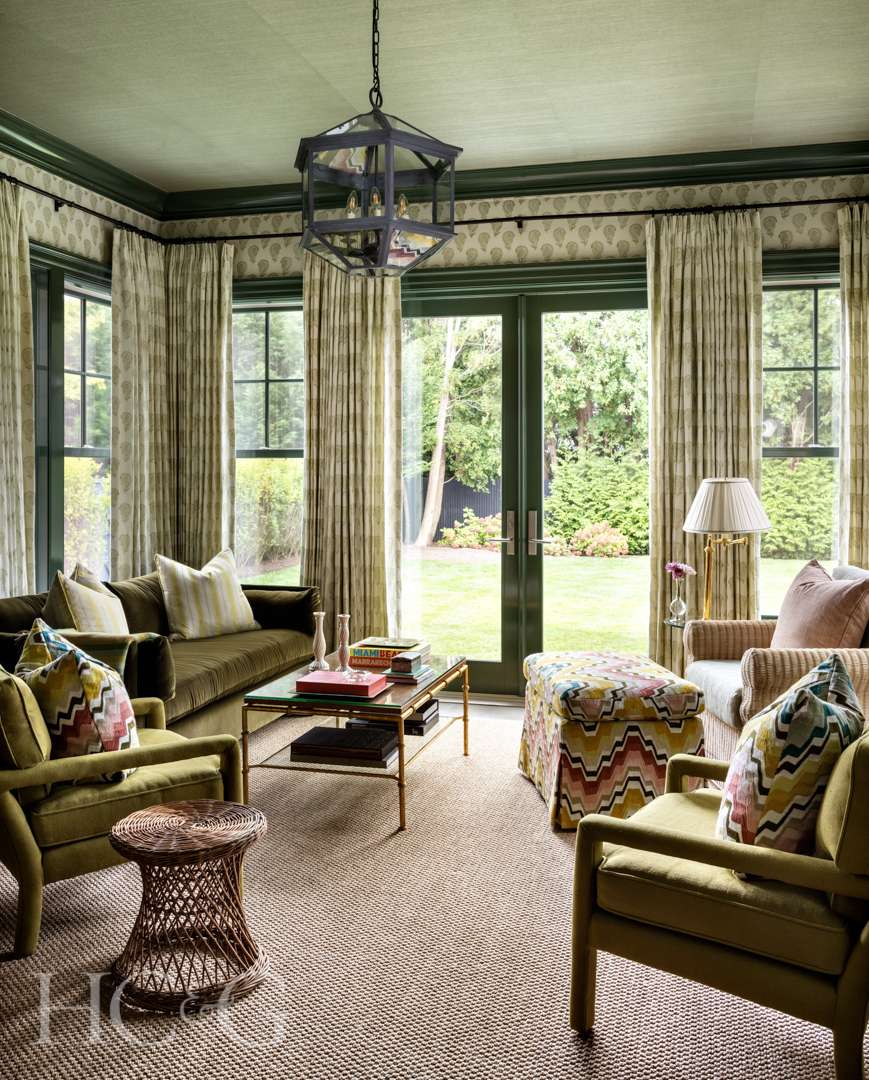
The designers visually extended the lawn, blending the line between indoors and out.
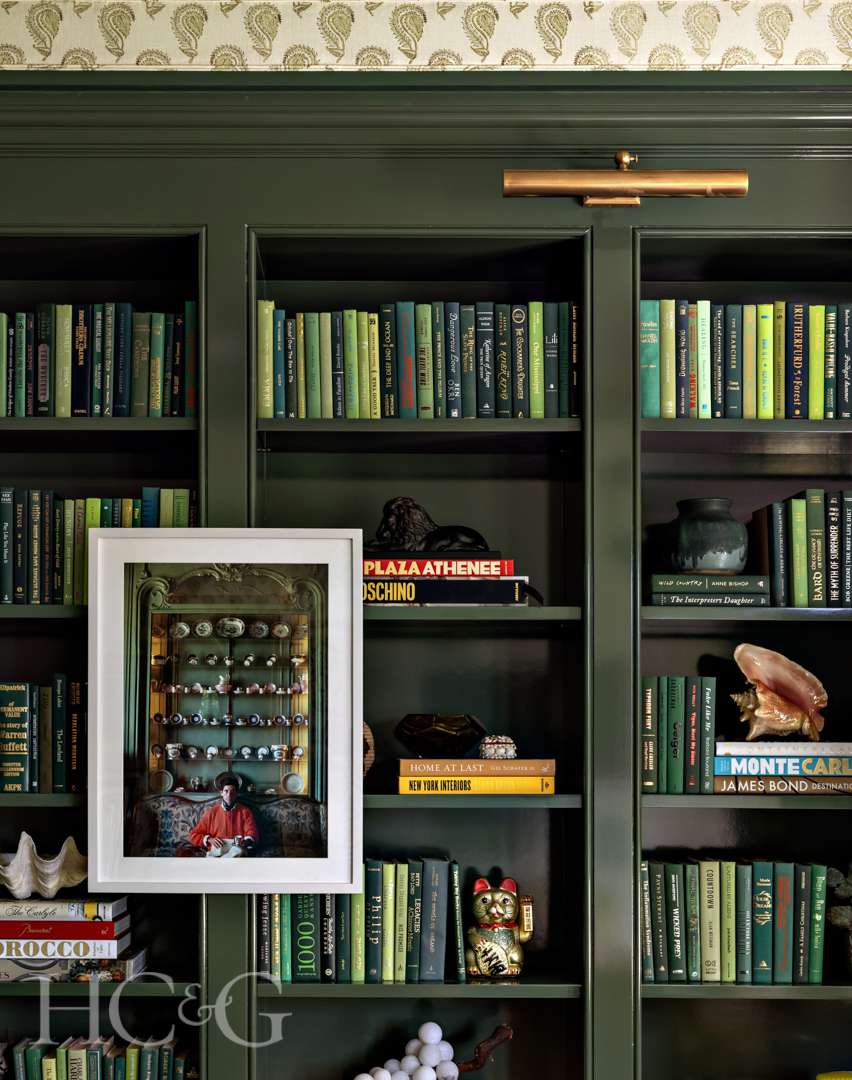
The shelves are filled with green books.
Every room in the eight-bedroom house has its own personality and look, though a harmony prevails throughout, given the designers’ ability to subtly carry colors through, room to room. Upon seeing a bedroom that Casper and Winston designed for the 2023 Hampton Designer Showhouse, the homeowner felt confident giving them “carte blanche” in choosing patterns, colors, wallpapers, lighting fixtures, and accessories. “I just said to them, ‘Go,’ says the homeowner. There’s nothing they chose that I said ‘No’ to.”
One aspect of the design process, though, that the homeowner kept control over was the placement of the paintings she owns. “She’s very particular about where her art is placed,” says Casper, while Winston adds, “She’s more exacting about where the art is hung than she is about the furniture. Placing the furniture was easy going.”

Of all the artworks, though, one in particular bespeaks the very attitude of the homeowner. A painting of a Holiday Inn sign by artist Jessica Brilli manages to be, at once, a realistic depiction of an iconic American brand, while also being whimsical yet moody. “They entertain more than anyone I know,” says Casper, “and have so many people staying there that the painting reflects that.” The homeowner concedes that she has even created a personal home logo that uses an image of the painting on napkins and cups to signify the ethos of how they live there.

The owner and designers were fearless about pattern. The dining room walls use a Pierre Frey wallpaper depicting blue lobsters. An arresting jewel-toned blue fills a pantry/bar area, a hue the designers admit to having had “a joint panic attack over” when they first saw it applied—but with the owner’s wholehearted blessing, they calmed down. The living room features three distinct seating areas, each expertly articulated with a variety of patterns, amassed artworks, and colors, including pops of pink lampshades. The primary suite is bathed in a “nude pink” Philip Jeffries grasscloth, along with an exuberant multi-armed, scrolling antique chandelier. So intent were Casper and Winston to get everything right that they even sacrificed two striped ottomans they cherished in their own Tampa design studio for use here. “They were hard to give up,” says Casper, “but we loved how their mid-century shapes gave a new facet to the room.”
As Casper emphasizes, “With second homes, people are willing to take more risk, go out-of-the-ordinary, to have a little more fun.”
