


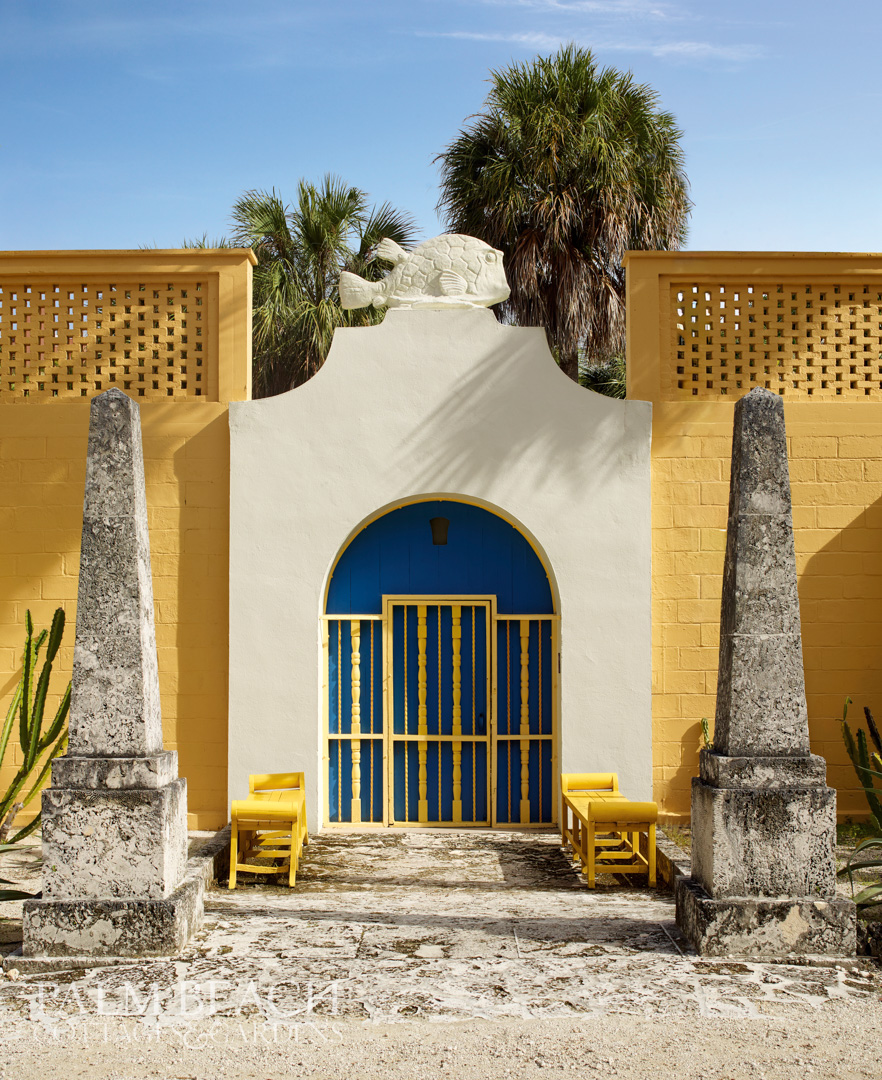
The sculpture of a cowfish tops the arched entrance to Bonnet House.
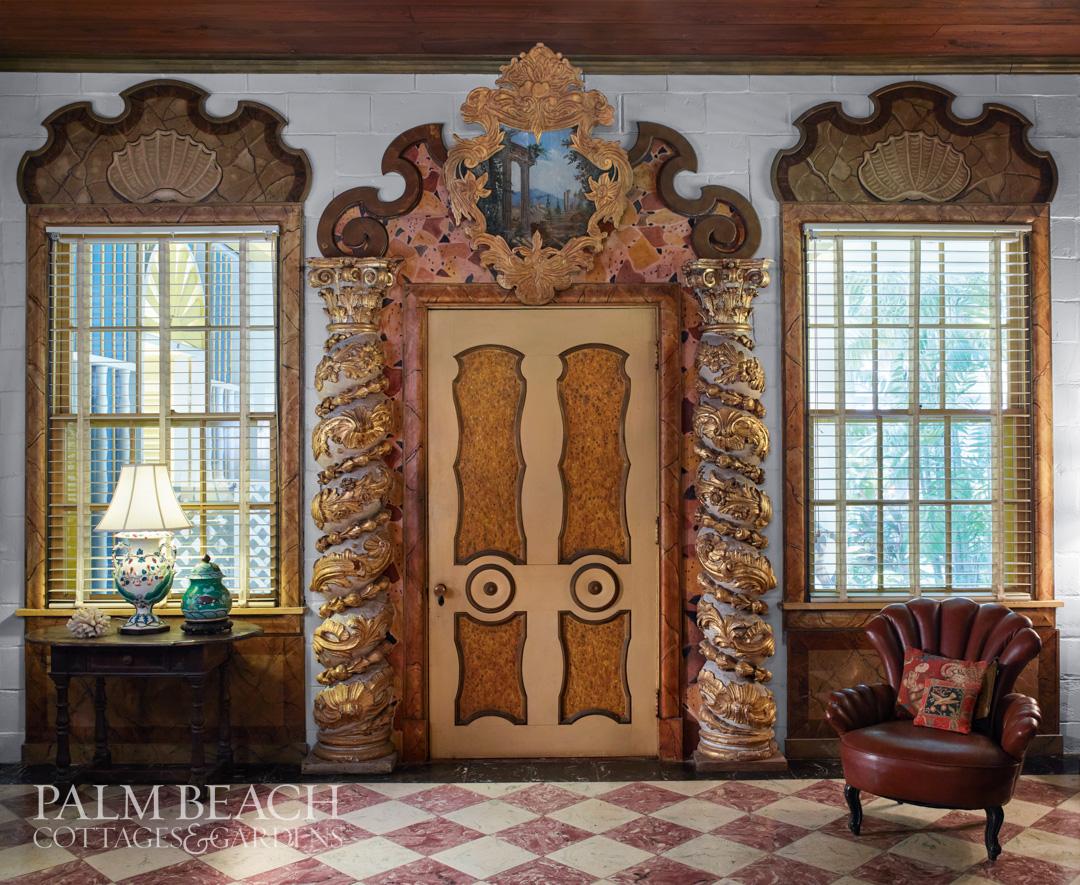
Antique gilded spiral columns flank the trompe l’oeil panelled doors in the drawing room.
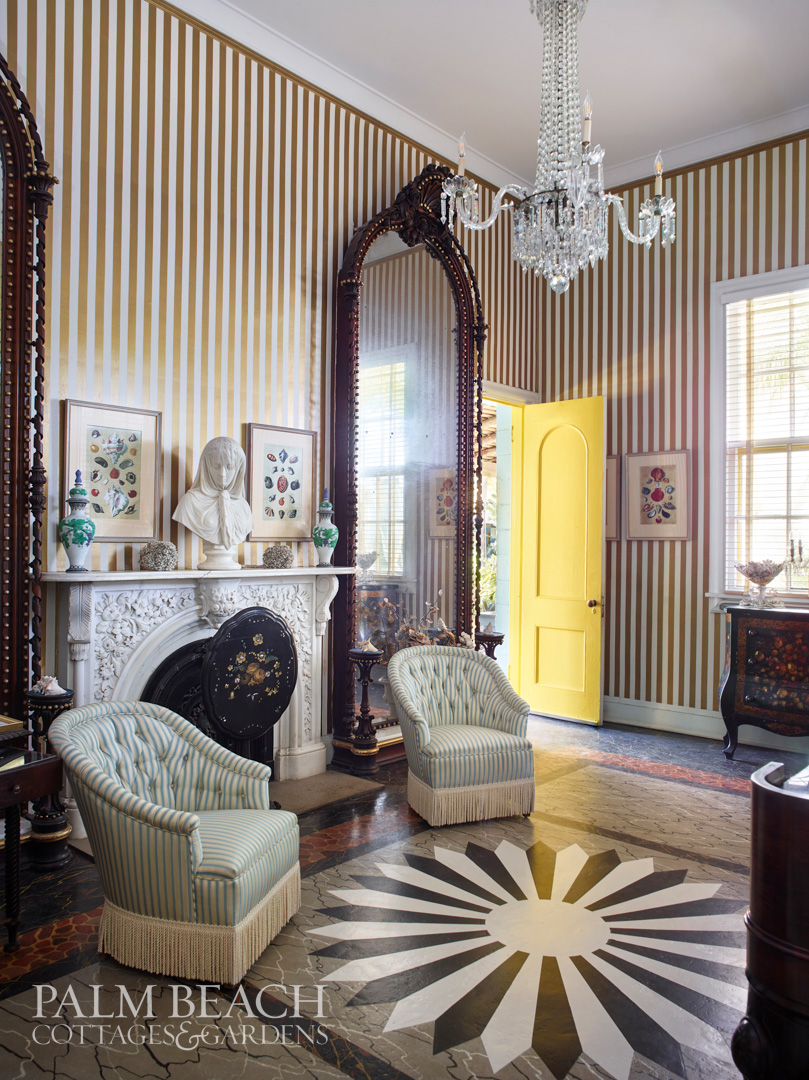
A secluded music room for Frederic’s second wife, Helen, a composer, with a floor painted by him to resemble marble and terrazzo. The space is Victorian in tone, from the towering pier mirrors to the chimney piece, on which stands an 1860s marble bust by Giovanni Battista Lombardi.
A secluded music room for Frederic’s second wife, Helen, a composer, with a floor painted by him to resemble marble and terrazzo. The space is Victorian in tone, from the towering pier mirrors to the chimney piece, on which stands an 1860s marble bust by Giovanni Battista Lombardi.
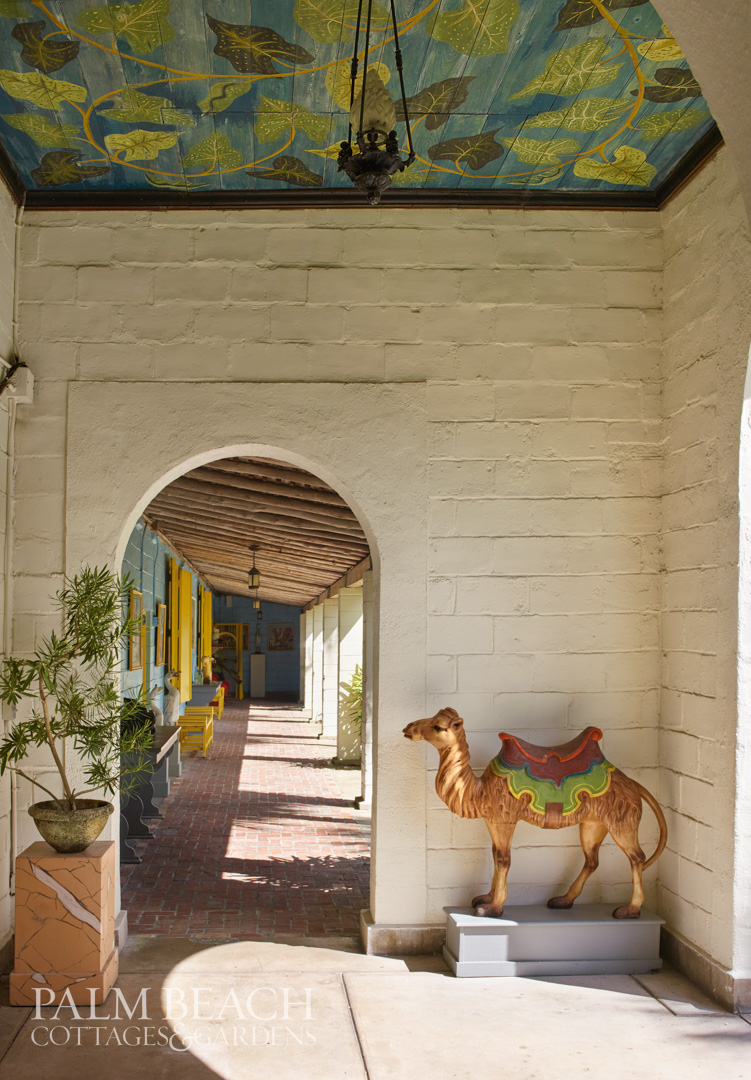
A mural of philodendrons crowns the entrance to Frederic’s studio. The camel—Evelyn was an ardent animal lover—was made for a carousel.
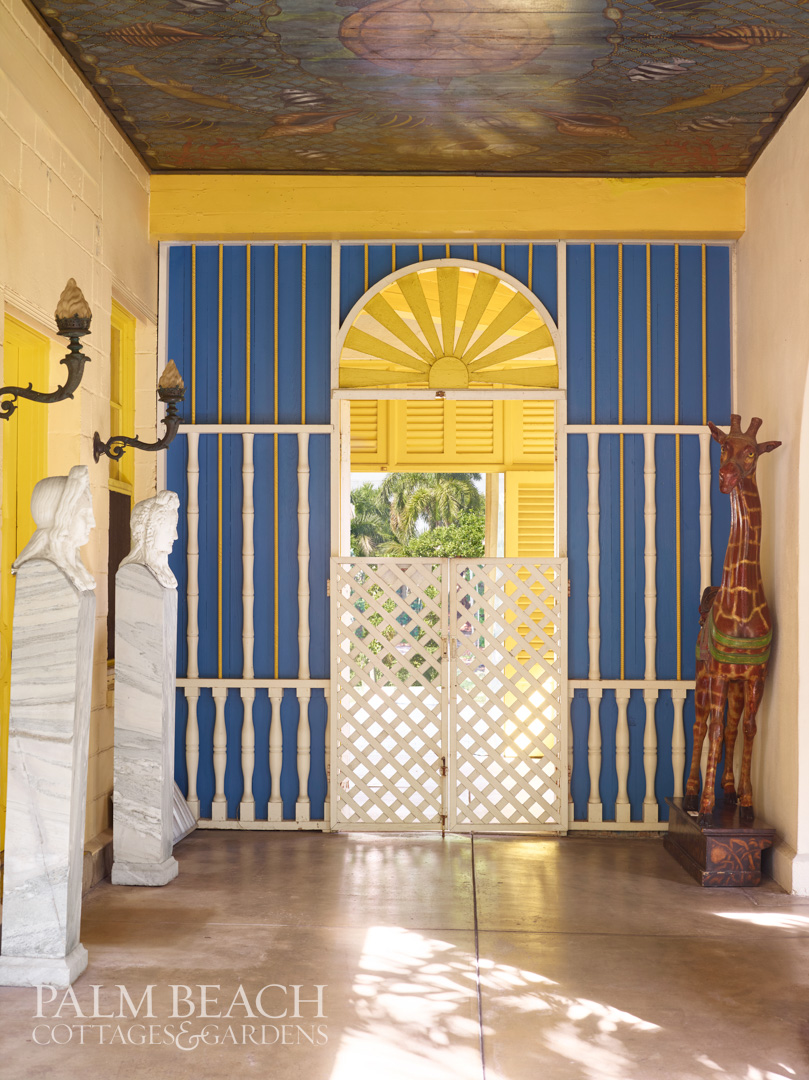
A primitive fanlight tops another portal, this one composed of balusters and bamboo-turned rods.
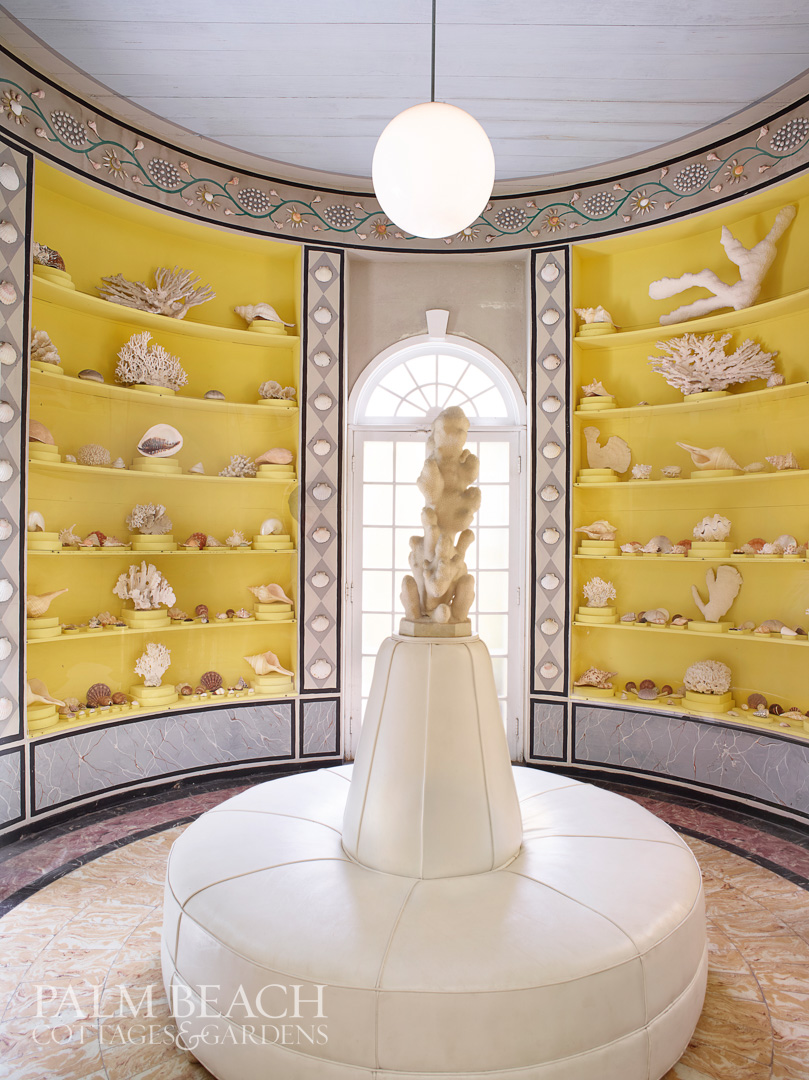
A finial of white coral tops a circular ottoman in the shell museum, a round gallery that was added to the house in the 1930s.
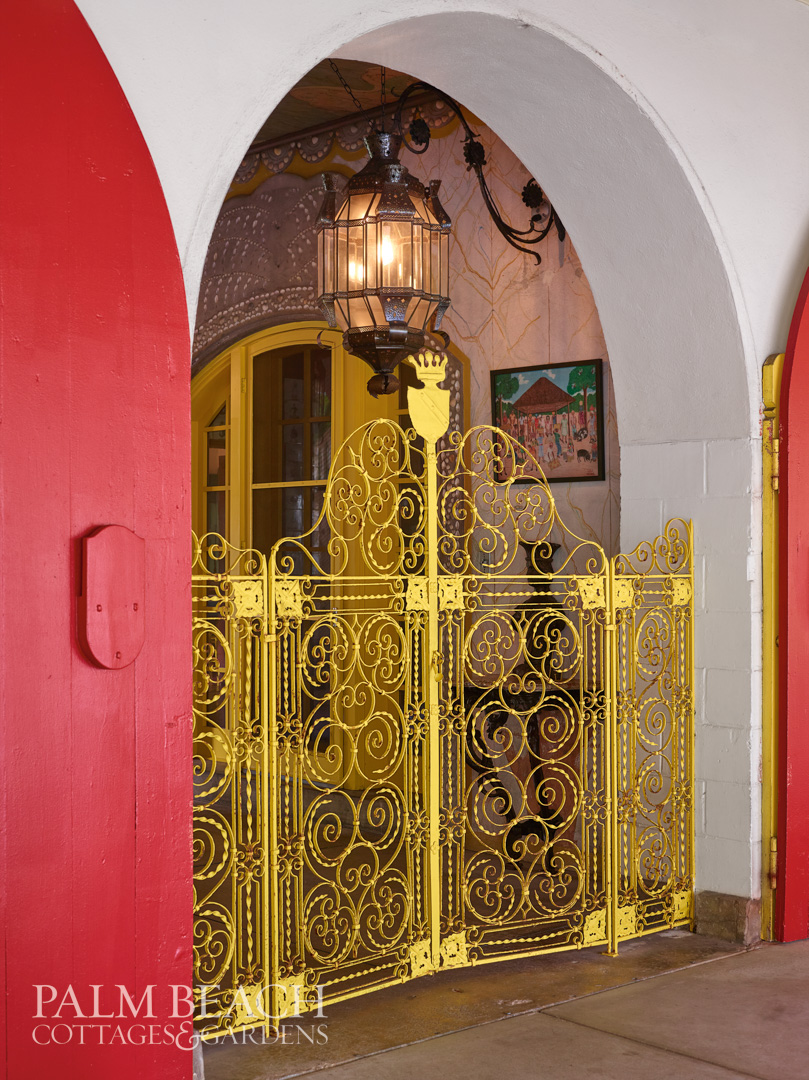
Wooden doors open up to an arched entryway with an ornamental wrought iron gate.
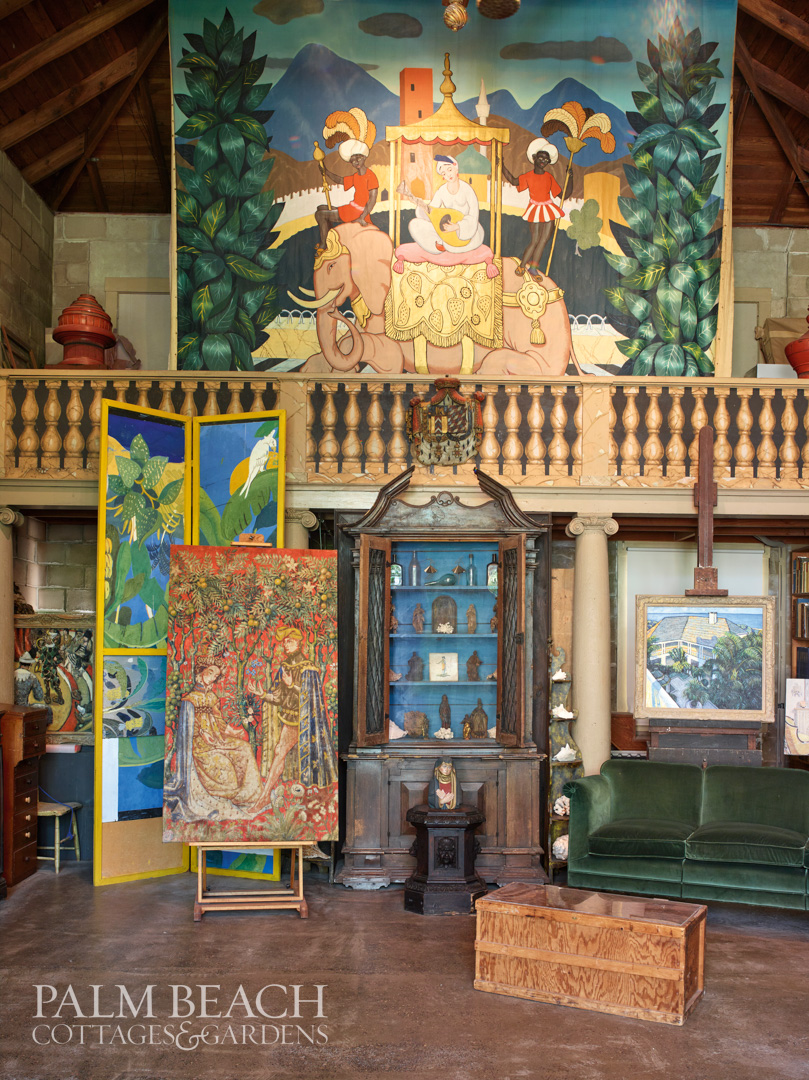
Landscapes, portraits and more are displayed in Frederic’s double-height vaulted studio. All are works by him—as is the trompe l’oeil balustrade.
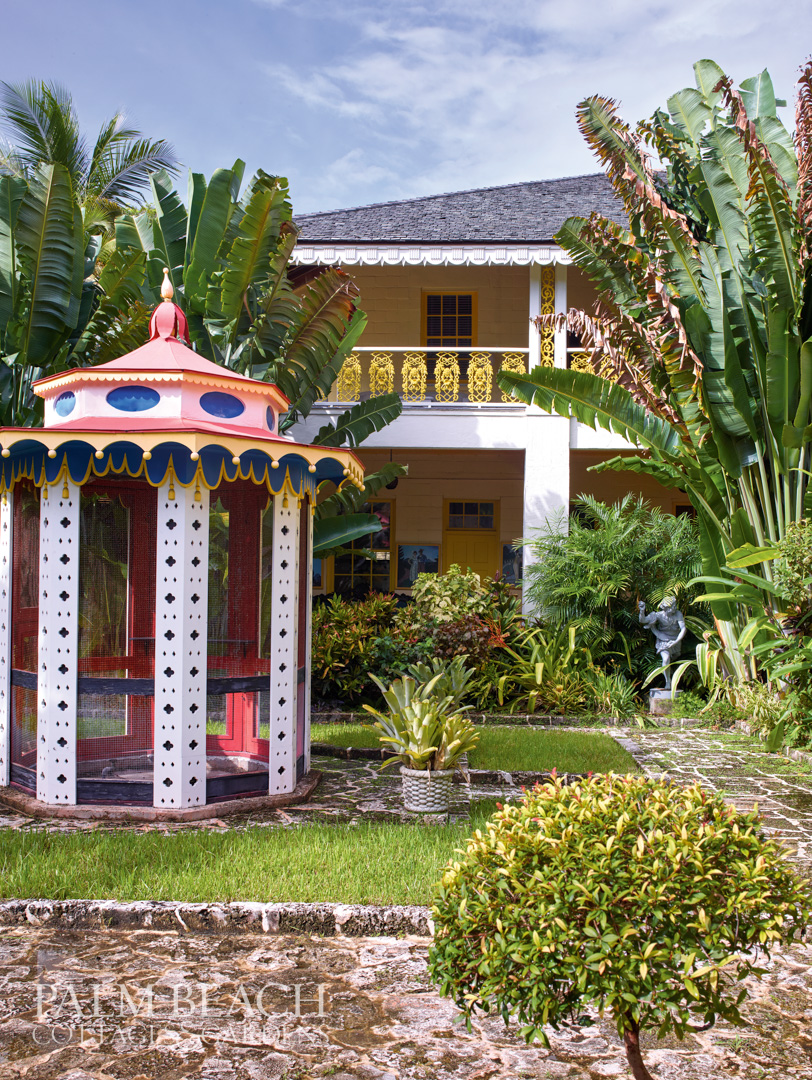
Palms encircle the courtyard, where coral-rock paths wander through the lush plantings. The pagoda has housed monkeys and birds at various times in the past.
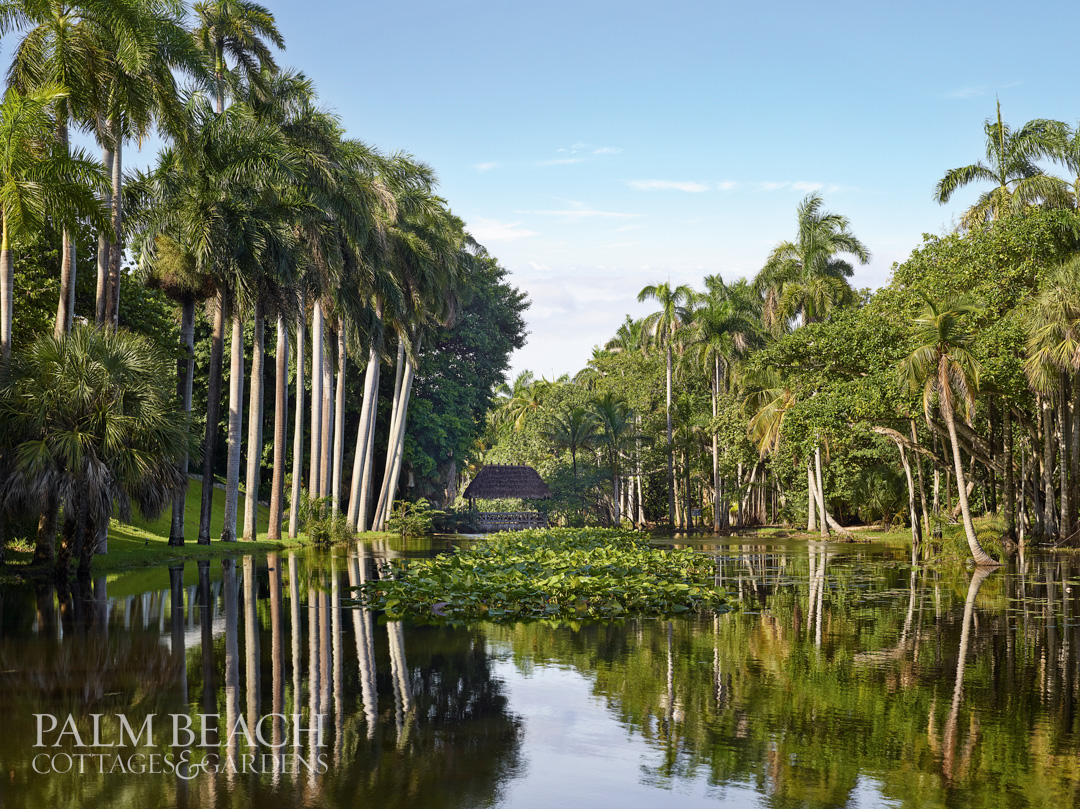
The Bonnet Slough, a pond of fresh water covered by Bonnet Lilies.
Built in 1920 as a winter retreat for artists Frederic Clay Bartlett and his wife Evelyn, the Bonnet House is a reflection of their combined artistic passions. The couple adorned the property with an eclectic assortment of artwork and antiques, creating an utterly unique environment.

Now a protected historical site, the 35-acre estate is set on an island, located between the Atlantic and the Intracoastal Waterway. Its name comes from the bonnet water lilies that grow abundantly on the property (the name of the plant having been inspired by alligators emerging from the water with lilies on their heads resembling bonnets).

In building the home, the Bartletts chose indigenous materials—coral rock, cypress, and sand-made concrete blocks—to create a property that is both grand and suitable for beachfront living, in an architectural style that is a hybrid of a Florida bungalow and a Caribbean villa. It is laid out around a central courtyard, adorned with tropical plants and fountains, with loggias connecting the rooms. Imaginative touches are everywhere: For example, an array of antique wooden carousel animals provides playful surprises. Frederic’s artistic flair is abundantly displayed in murals and trompe l’oeil paintings.

The couple’s love of travel is also evident. The house incorporates architectural details such as twisted, ornately gilded columns from Cuba. These were cut in half to frame the two doorways in the drawing room, exemplifying the Bartletts’ penchant for quirky design decisions. The Haitian Loggia, a breezeway that connects the main house to the studio, features intricate shell designs created by Evelyn. And the Shell House, one of the estate’s outbuildings, displays an extensive collection of seashells from around the world.

Bonnet House’s CEO Patrick Shavloske summarizes this special place by saying “It is like walking into a painting where each room tells a story.” The entire property, from the architecture to the décor, is a “testament to the owners’ distinctive and highly personal taste, making it an invaluable treasure.”
