


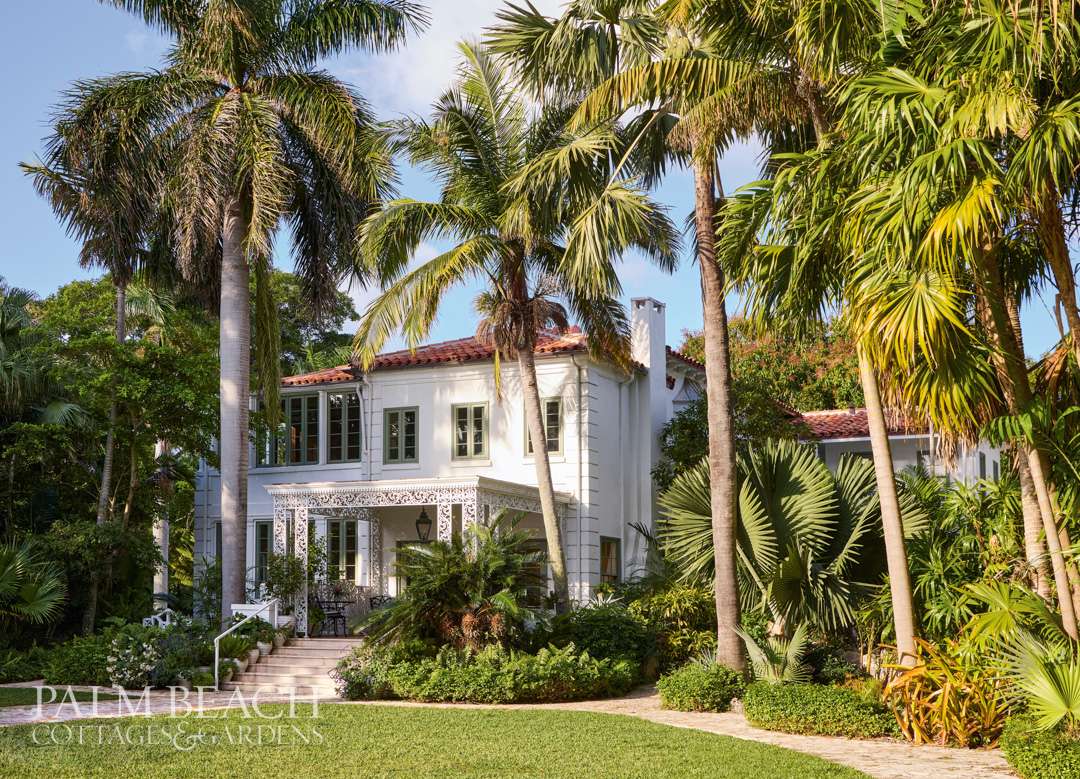
The home of Anne and Ralph Norton, now open to the public in the Ann Norton Sculpture Gardens.
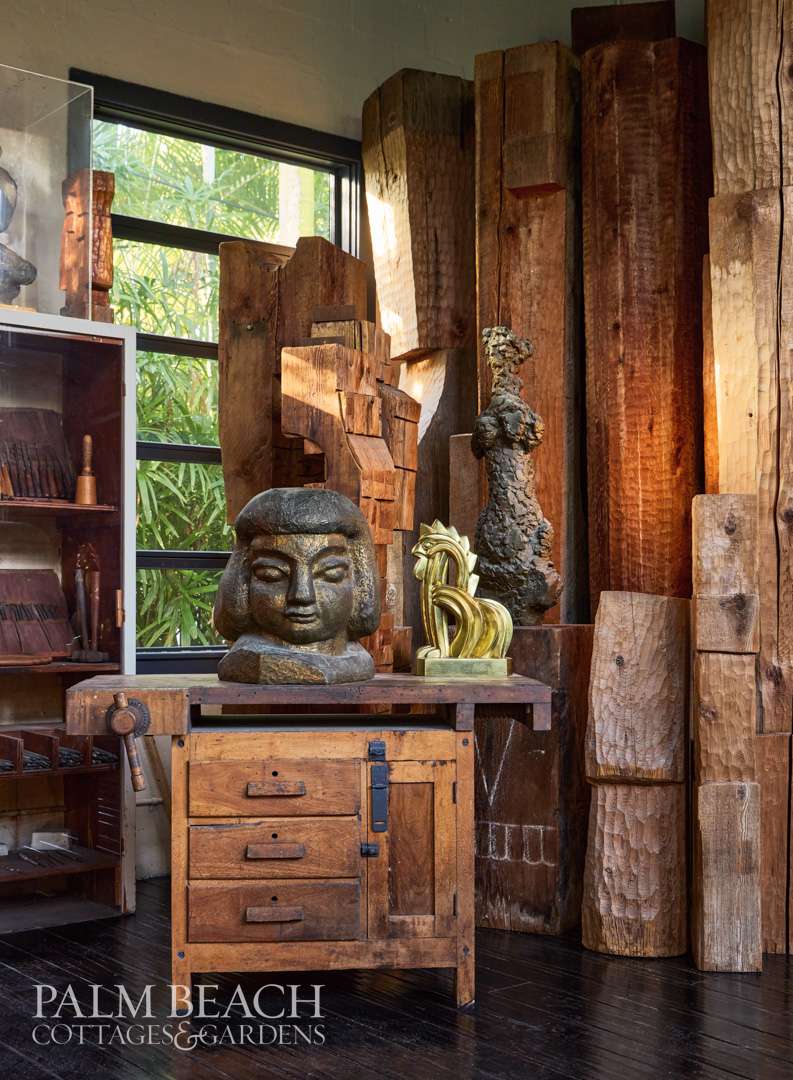
The artist’s studio, facing west. In the foreground: Head of Girl, 1957, bronze with gold patina; Rooster (Roscoe), 1936, brass. In the background: Gateways, c. 1970s, sculpted from American Northern cedar.
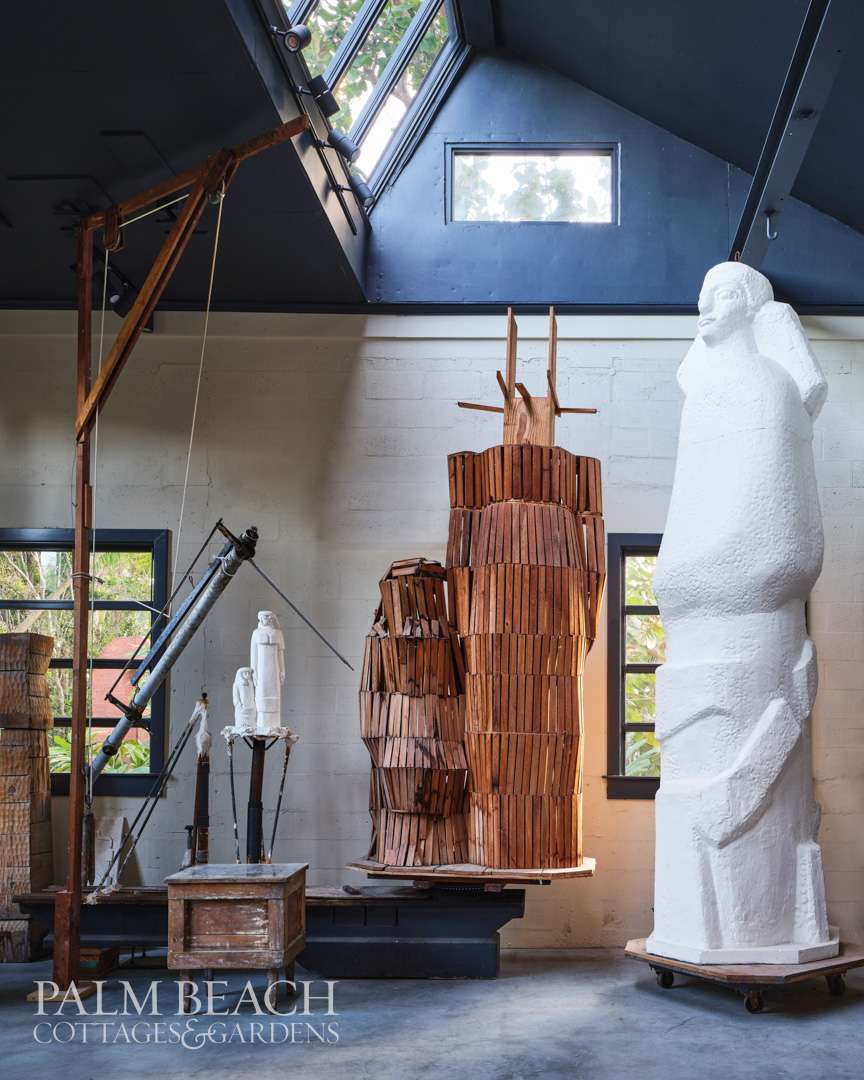
Artist’s studio, facing east. The Study and Process for Seven Beings captures the early stages of Norton’s sculptural process, including a 3D pantograph—used to scale a small model into a larger form—a wooden armature that serves as the foundational framework for the final plaster sculpture, and a plaster study for Seven Beings.
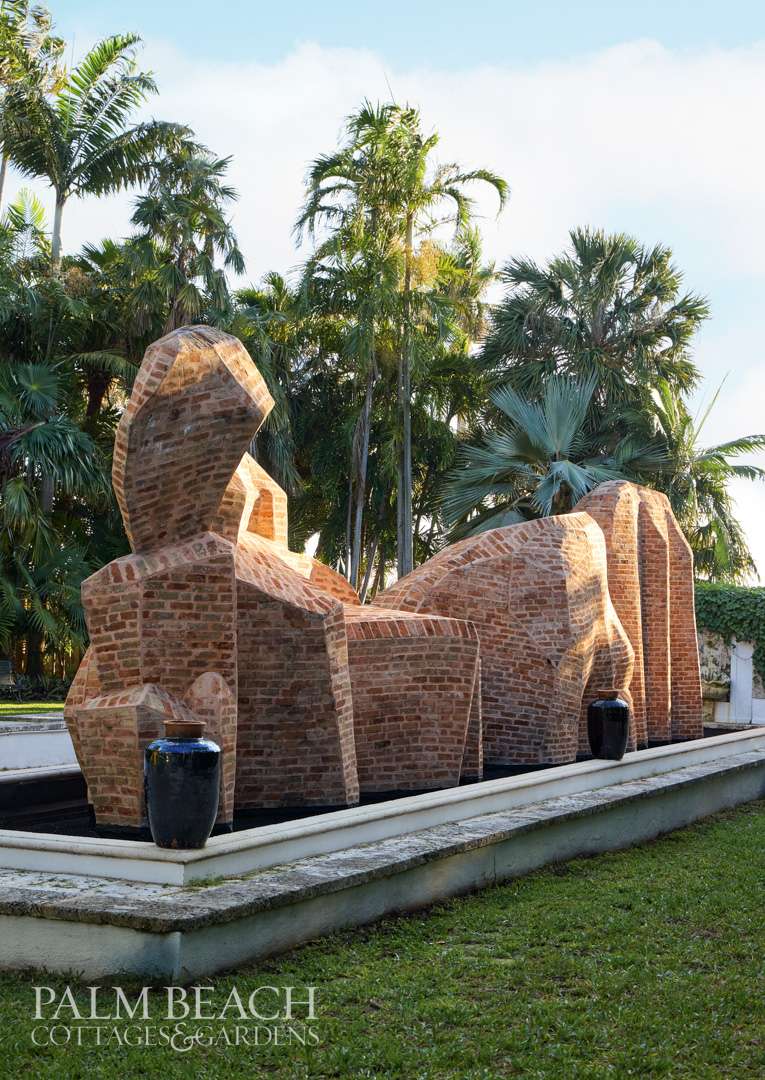
Untitled Horizontal Sculpture, 1979, 48 feet in length, was created from handmade Mexican brick.
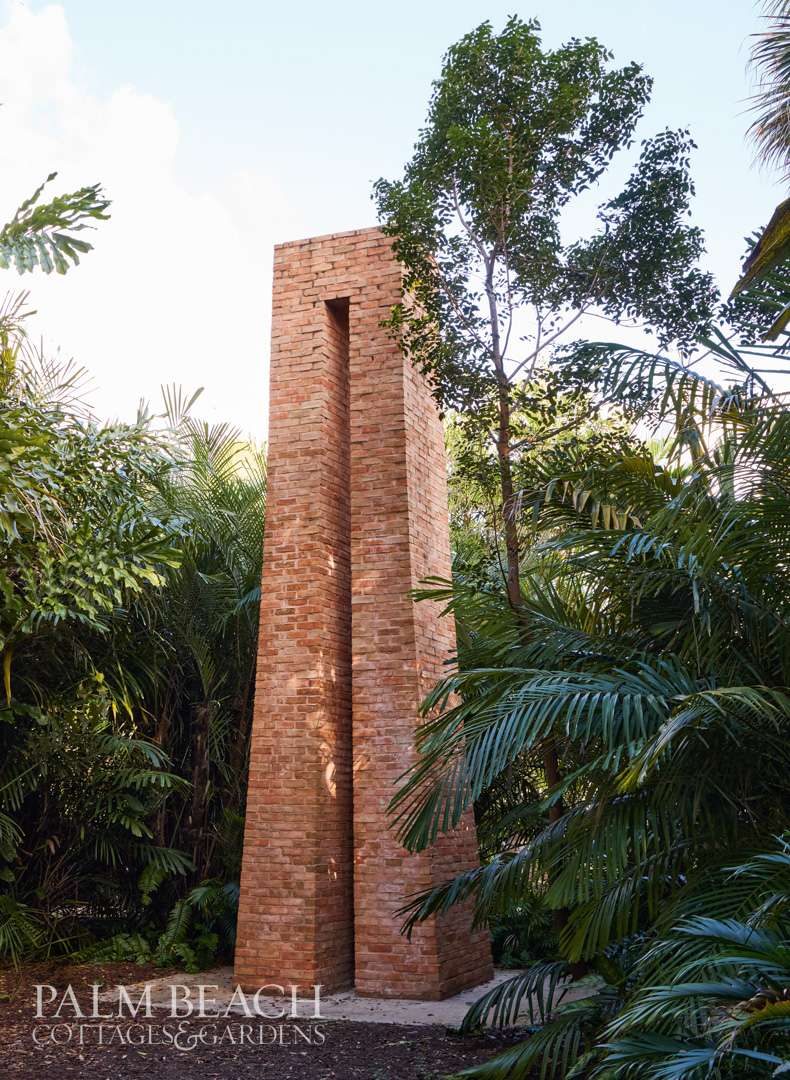
Located in the north garden, Gateway to Knowledge, 1983-84, 30 feet high, in Boston brick.
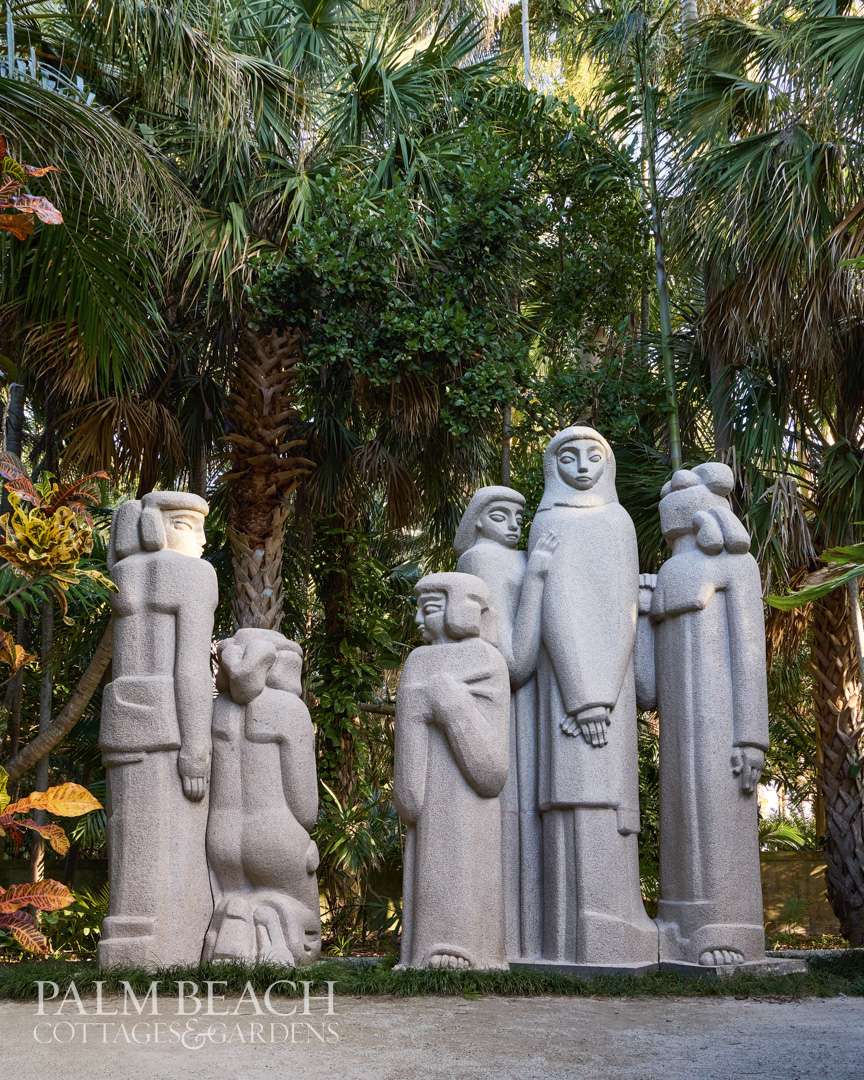
Seven Beings, completed 1965, 15 by 21 feet, sculpted from pink Norwegian granite, stands mid-garden.
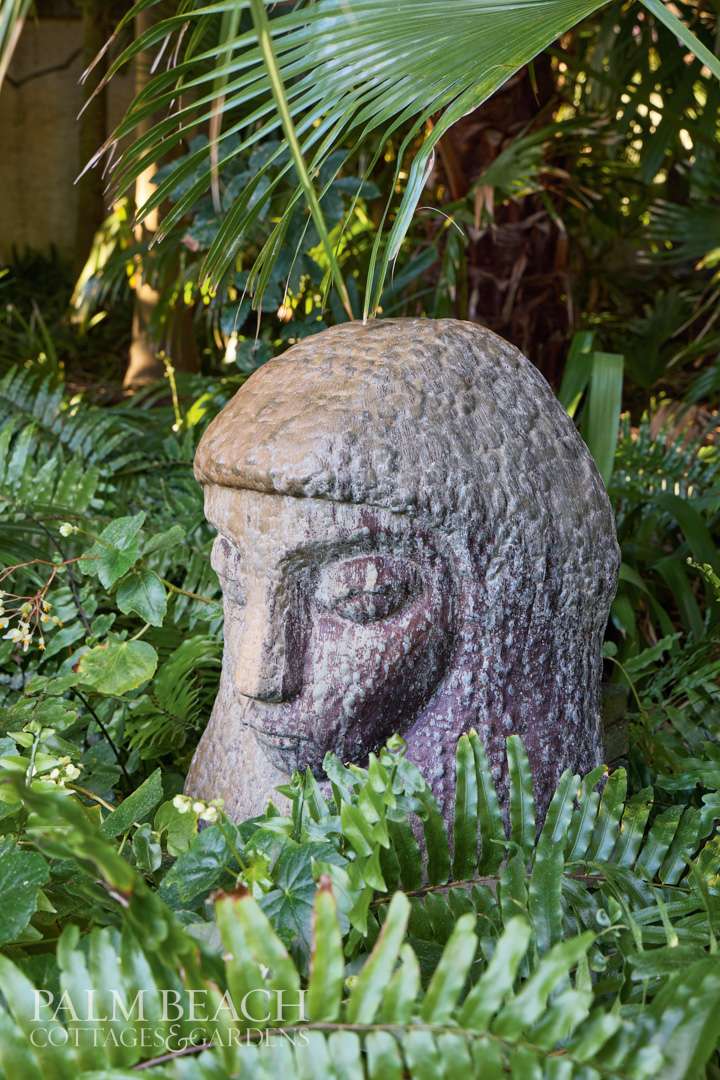
Located on the main lawn of the Norton house, Head #2, 1957, 24 by 19 by12.5 inches, in bronze.

Gateway 4, 1975, 24 feet high, in handmade North Carolina Brick.
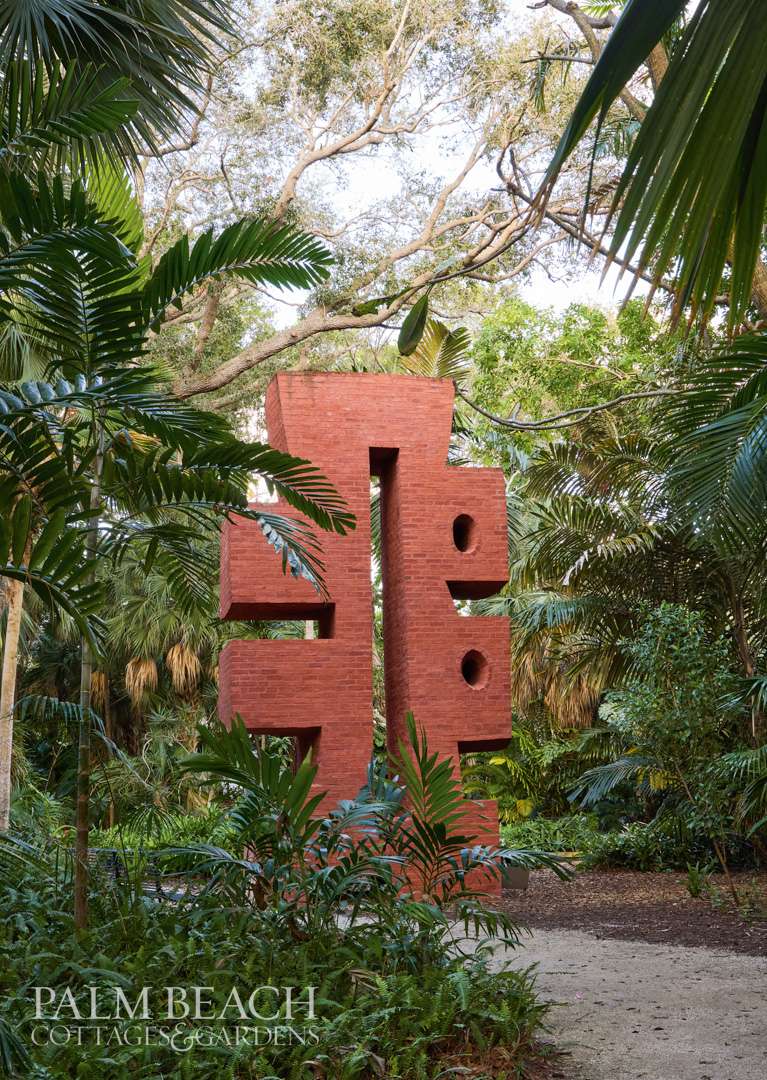
Gateway 5, 1977. This 30-foot sculpture was created with handmade North Carolina Brick.
Tucked away in the El Cid historic neighborhood of West Palm Beach lies a two-acre oasis, a refuge from the city’s bustling downtown. The Ann Norton Sculpture Gardens were once the home of Ann Weaver Norton and her husband Ralph Hubbard Norton, the founder of the Norton Gallery and School of Art (now the Norton Museum of Art).
“This was their personal home,” says Margaret Horgan, the Gardens’ Executive Director. “But Ann saw the development coming and turned it into a public museum in 1977 to save it for the community.” Today, the nonprofit organization displays over 100 of Norton’s works scattered throughout the house, studio and gardens.

After graduating from high school, Weaver wrote and illustrated three children’s books to help fund her further education. She graduated from Smith College in 1927 and later studied at the National Academy of Art, the Art Students League of New York, and Cooper Union. Her obvious talent earned her traveling fellowships to Italy and England.
On her return to the United States, Weaver worked with sculptor John Hovannes, who taught at the Art Students League and Cooper Union, and was also influenced by Alexander Archipenko, a Ukrainian sculptor who had been part of an artists’ group in Paris that included Pablo Picasso, Juan Gris and Georges Braque. In all, she spent five years as an apprentice for Archipenko and Hovannes.

In 1943, Weaver accepted a teaching position at the Norton Gallery and School of Art, where she met its founder, Ralph Norton. After the death of his first wife, Norton proposed to Ann in 1948. She initially hesitated, wary of being distracted from her work by the pressures of Palm Beach society, but Norton offered reassurance and even gave her a custom-built studio as a wedding present. It was there that she began creating the large-scale sculptures that would define her legacy.
Norton’s process always began with a drawing—charcoal, watercolor, or pastel—before building a maquette or wire armature. These would evolve into the towering forms that now populate the gardens. “Some of the giant brick “Gateways,” she had seen in her mind since childhood,” Horgan notes. “But it wasn’t until she lived on this property that she could realize them on such a grand scale.” Some of the works in the Gardens are over 20 feet tall. “We love to tell people when they come here how petite she actually was,” says Horgan. “She was barely five feet! But she was fearless and did not let the dimensions or the scope be hindered by her size.”

Ann Norton exhibited at major institutions, including the Museum of Modern Art and the Whitney Museum. Her work is also held in collections at the Los Angeles County Museum of Art, the Musée Rodin, and the Detroit Institute of Art.
