


Although she possesses a degree in environmental studies from Stony Brook University, Deborah Klughers wasn’t always familiar with the important role honeybees play in farming practices. “I was working on a television program and interviewed a farmer in Riverhead about how his crop yields had increased by a third since he first introduced pollinating honeybees,” recounts Klughers, a resident of Hampton Bays, “and that intrigued me.” Since then, Klughers has become a master beekeeper with the Eastern Apicultural Society of North America and an award-winning honey-maker whose label, Bonac Bees, is now 10 years old. With the help of a friend, landscape designer Edwina von Gal, she learned how to raise bees and extract honey from hives on von Gal’s clients’ properties, essentially becoming a “homeowners’ beekeeper, much like a babysitter.”
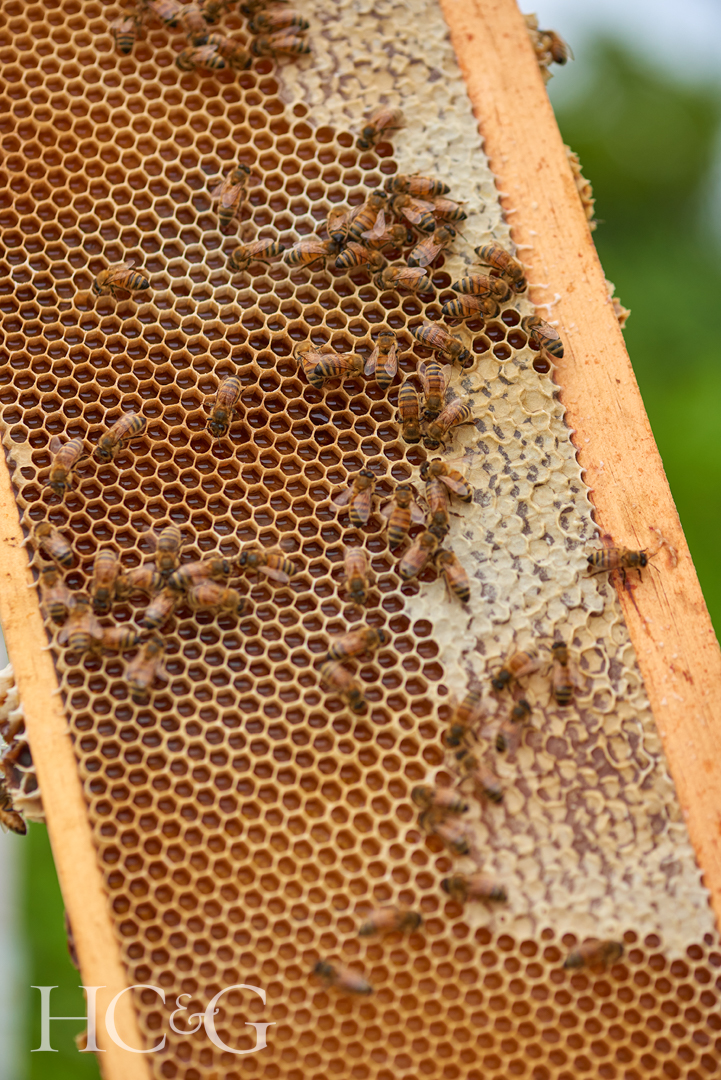
“From hive to jar,” Klughers says, “it’s a quick process.”
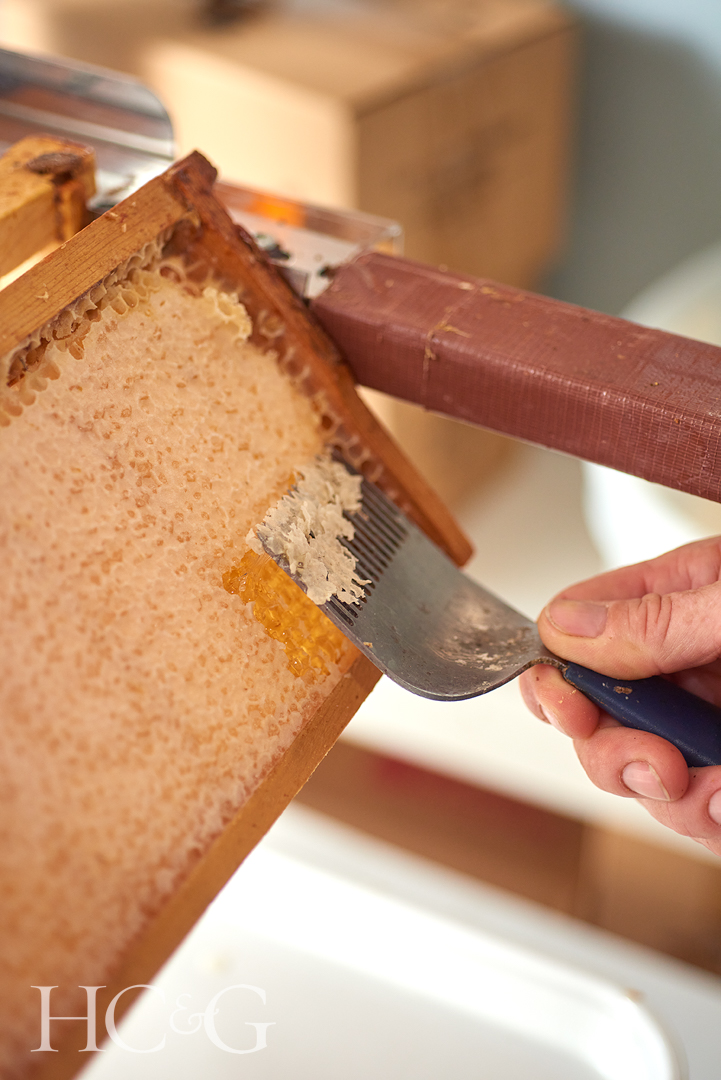
Beeswax caps can be removed by hand with a scraping tool, but Klughers prefers to use a Lega uncapping machine to slice off the wax that seals the honeycomb cells.

Beeswax caps can be removed by hand with a scraping tool, but Klughers prefers to use a Lega uncapping machine to slice off the wax that seals the honeycomb cells.
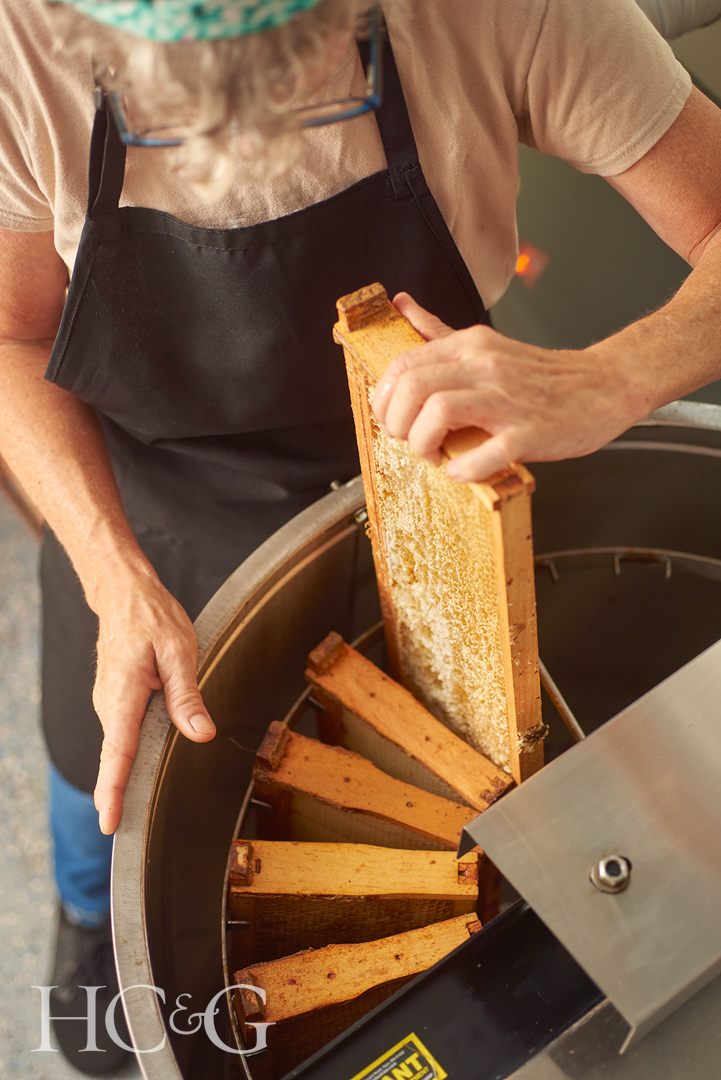
The uncapped honeycomb frames are placed into a stainless-steel extractor that removes the honey.
Klughers’s personal beehive colonies—collective organisms made up of a single bee family comprising one queen, drones, and thousands of worker honeybees—produce a variety of products ranging from pure beeswax candles and propolis tinctures to fresh pollen and honey, which is extracted and bottled in her one-car-garage “honey room.” The process starts in the hives, with Klughers, armed with a pine needle–filled smoker, puffing cool smoke into the top of each to calm the bees and inspect the structures’ hive frames. Bees turn nectar into honey by removing moisture from it, then capping the cells within the hives with wax. The frames of beeswax-capped honeycombs are then transported to Klughers’s honey room, where a Lega uncapping machine removes the thin layer of beeswax that seals the honey. (“It changed my life, since I previously had to scrape the frames one at a time by hand,” she says.) Next, frames are placed into a stainless-steel extractor, in which “the honey gets spun around in centrifugal motion and basically flies out of the cells and is funneled through a spout into a coarse strainer, then into a bucket where it settles for a couple of days so the bubbles can rise.” Unlike some honey producers, Klughers does not heat the product to allow easy flow while bottling but keeps her honey room warm and dry. The raw and unfiltered honey is then jarred, labeled, and ready for delivery. “From hive to jar,” she comments, “it’s a quick process.”

Klughers can often be spotted across the East End in her Bonac Bees minivan, capturing and relocating honeybee swarms and offering professional honeybee removal from homes and other structures. “I do a lot of rescue work and re-homing of honeybees,” she says, in addition to making “a lot of splits, which involves creating an artificial swarm from a colony and giving them a new queen, in the hope that they accept her and start new colonies. That’s how beekeepers have been trying to overcome the more than 50 percent yearly loss in our honeybee population, which would not be sustainable otherwise.”
