


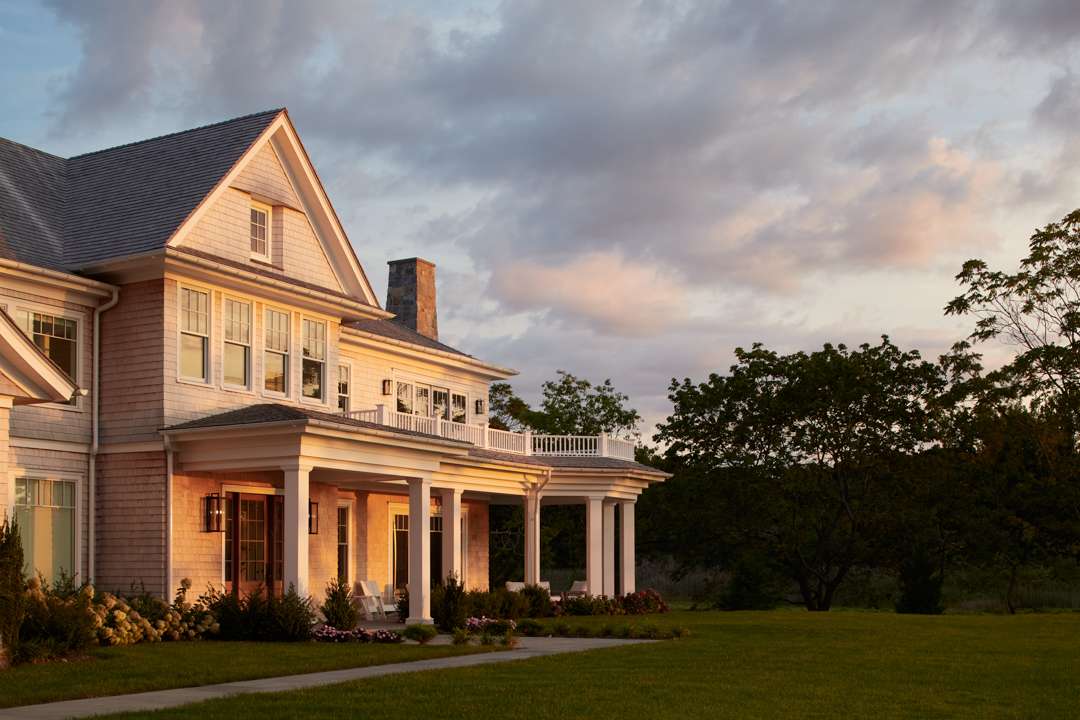
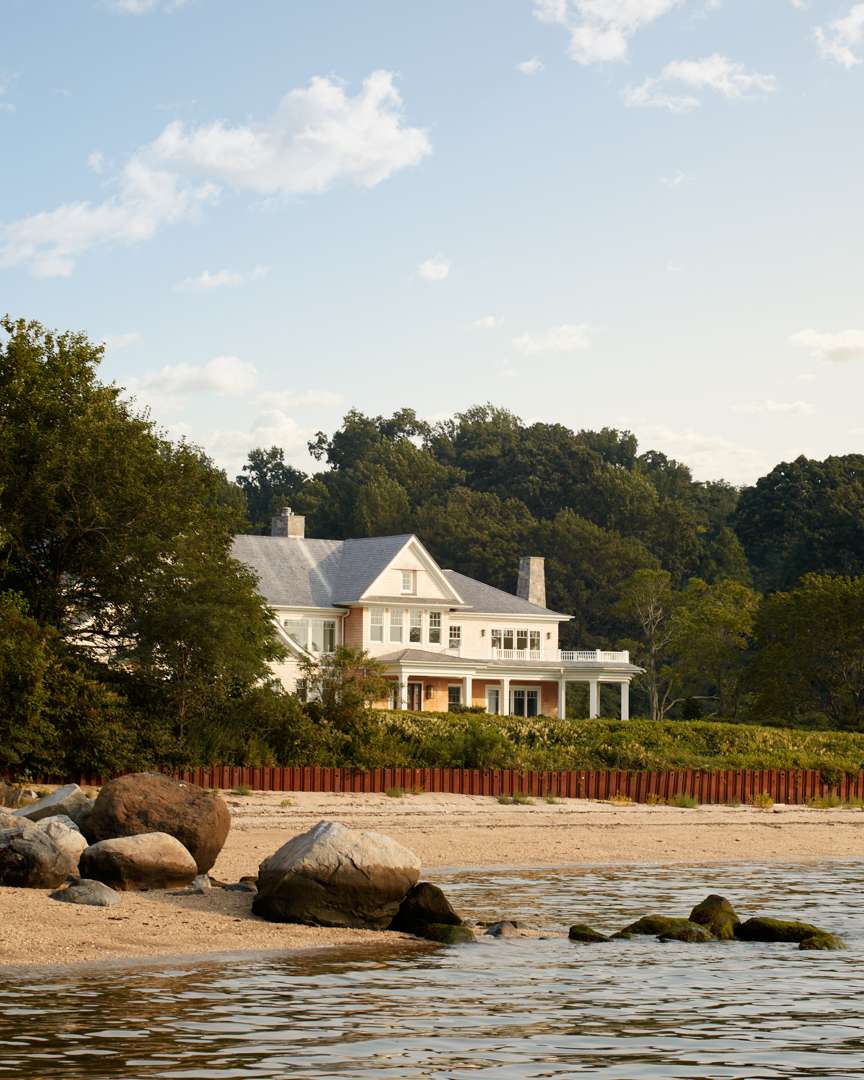
After years of working under Mark Cunningham in New York City and Waldo Fernandez in Los Angeles, interior designer Brittany Hakimfar founded her own firm, Far Studio, out of Philadelphia. Hakimfar and her team bring their touch to projects from coast to coast—including this new-build in Port Washington, New York. The 9,000 square-foot home totals six bedrooms, seven bathrooms, and a half bath. Read on to learn more about the project.




What were your clients looking for when they came to you?
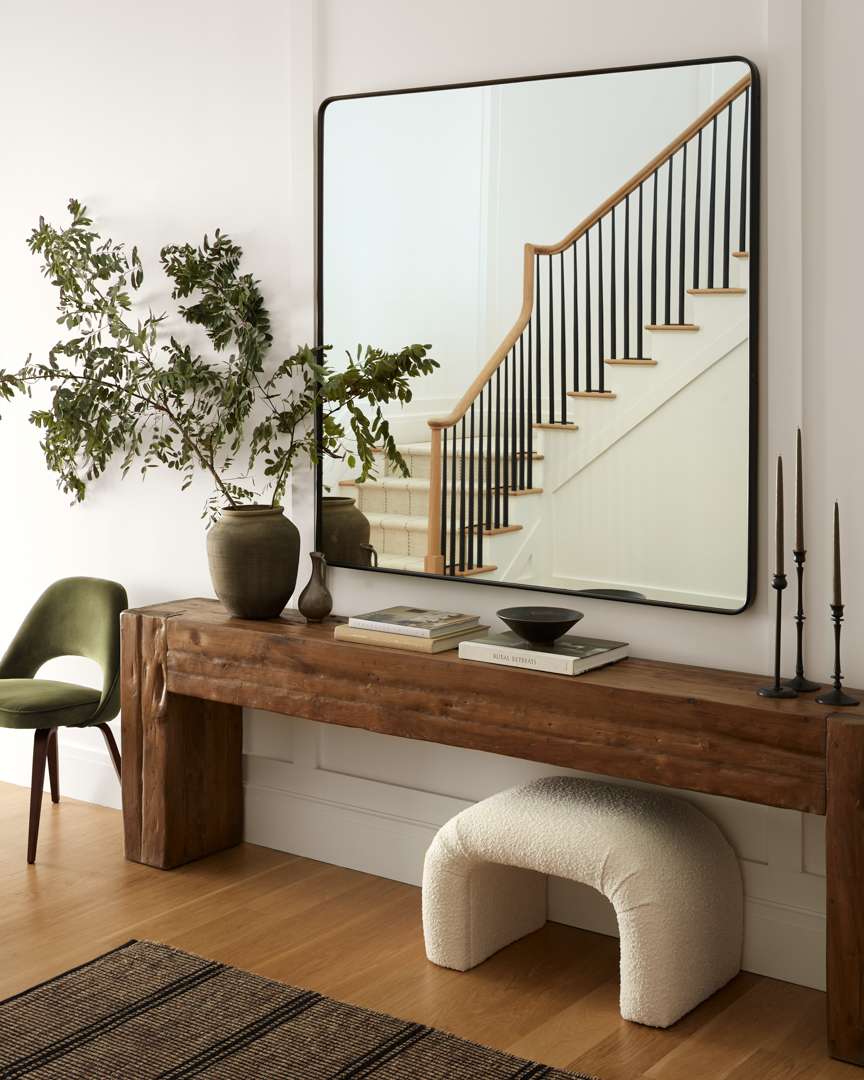
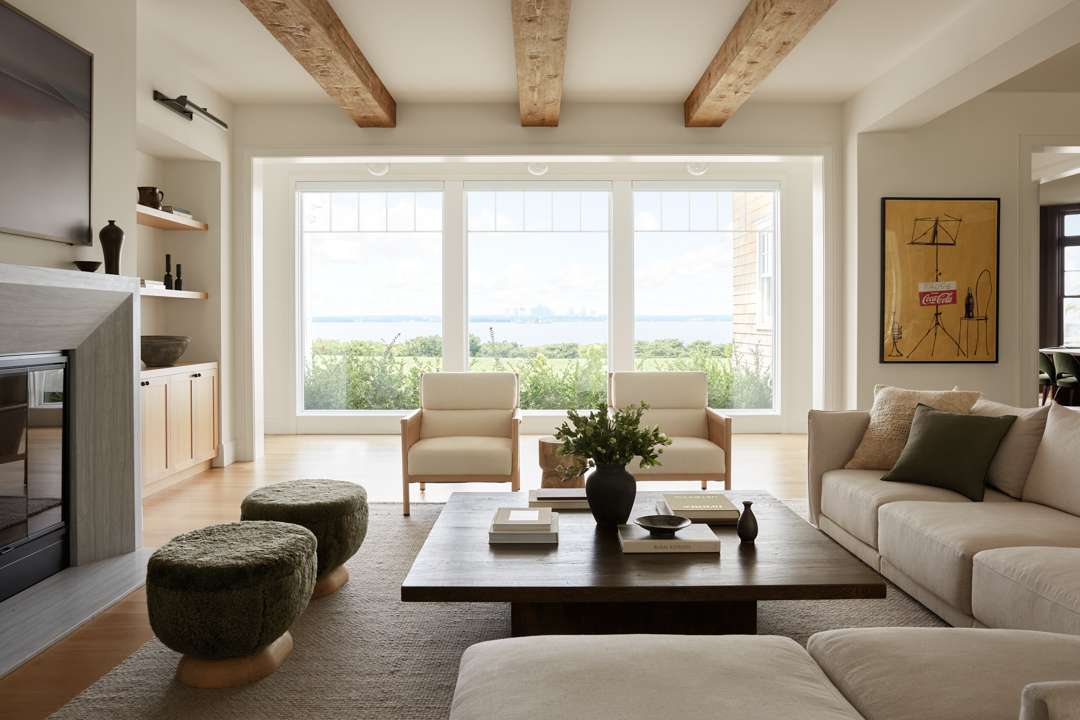
They wanted help creating their forever family home—something timeless, beautiful, textured, layered, and warm. We were designing with future generations in mind, imagining their kids growing up in this idyllic waterfront setting. The views and surroundings are truly special, and we wanted the home to reflect that. We thoughtfully incorporated large windows to capture the sunrise and sunset over the water.
You began your career in New York City and then moved to work in Los Angeles. What is different between East Coast design and West Coast design? What is similar?
East Coast and West Coast design styles are quite distinct. In Los Angeles, people tend to be more adventurous and trend-forward, and the architecture often leans modern. On the East Coast, design feels more timeless and sophisticated. There’s a natural beauty in the landscape—especially the trees and changing seasons—that we often bring into the interiors to create homes that feel grounded and enduring.

How did you infuse West Coast design influence into this Port Washington project?
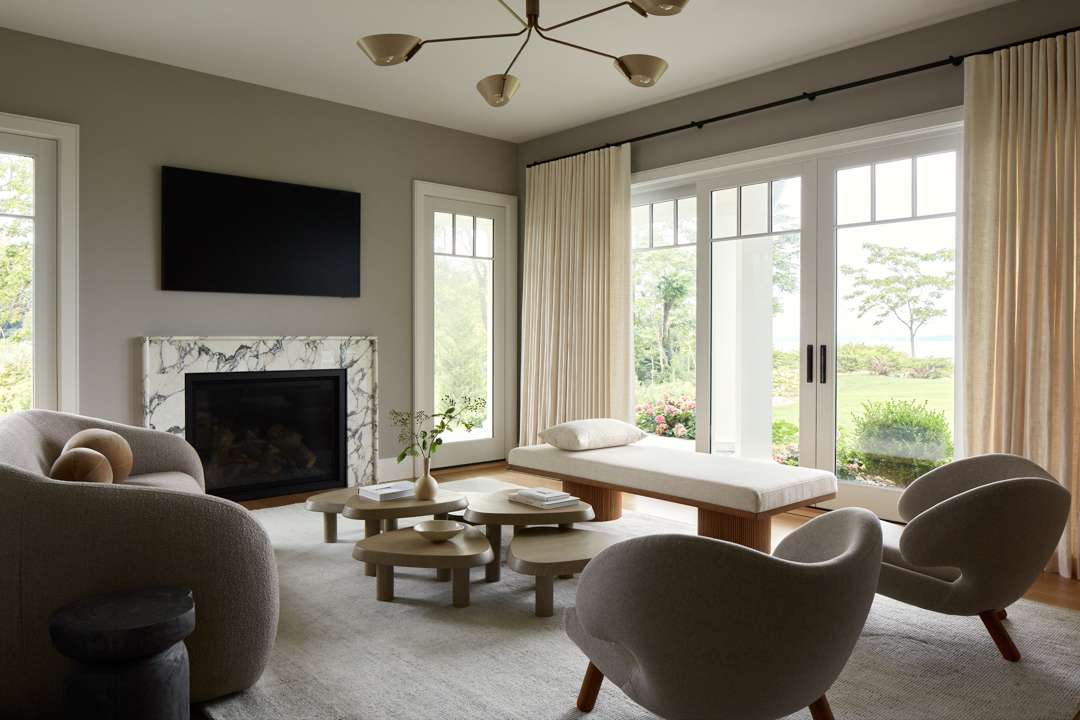
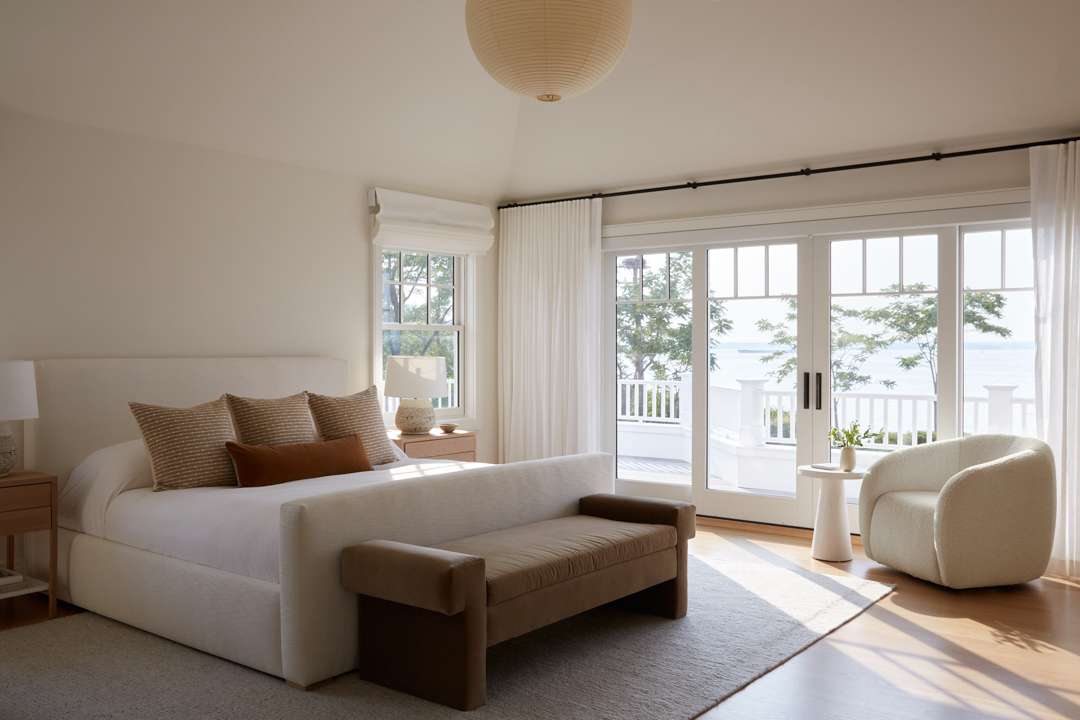
The natural white oak flooring keeps the palette light and fresh, and the lighting choices nod to that California vibe. For example, the Viscontea pendant over the morning room table and the original Noguchi lantern in the primary bedroom both bring in that sculptural, laid-back West Coast feel. My signature off-white linen window treatments also add texture while maintaining an airy, open feeling throughout the home.
Your clients wanted to draw inspiration from the Hamptons. How did you accomplish this?
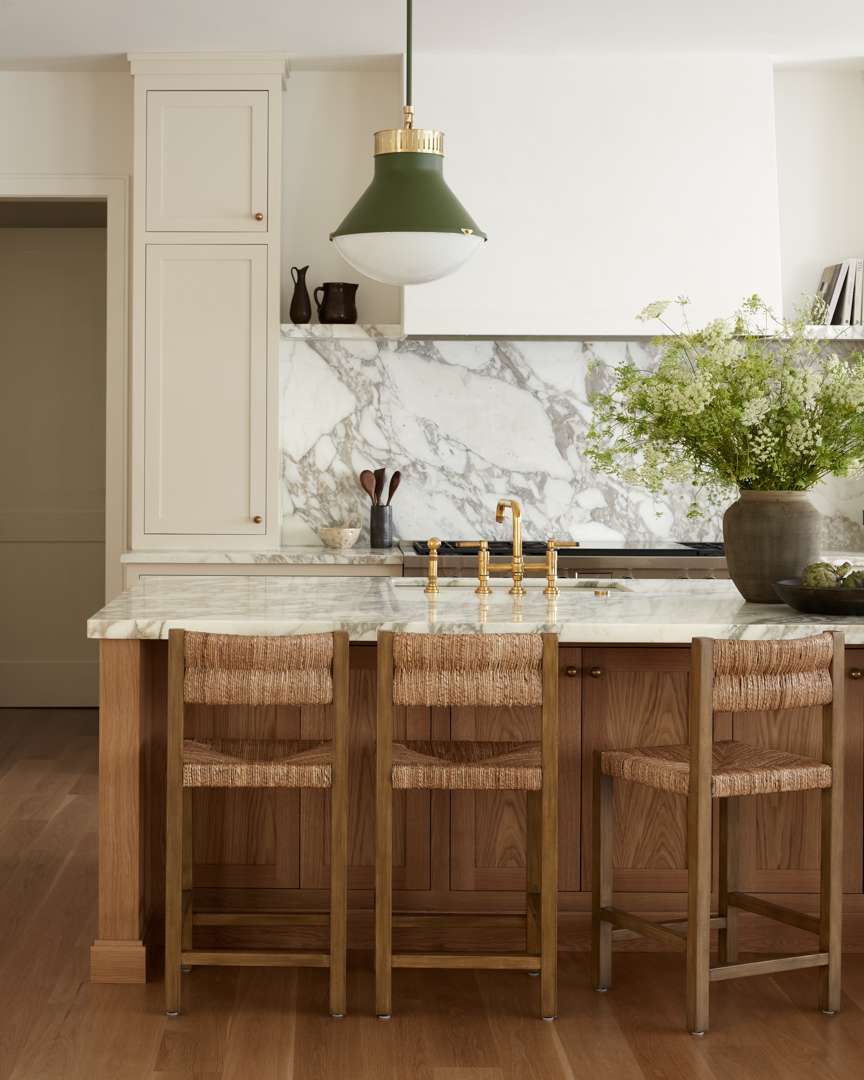
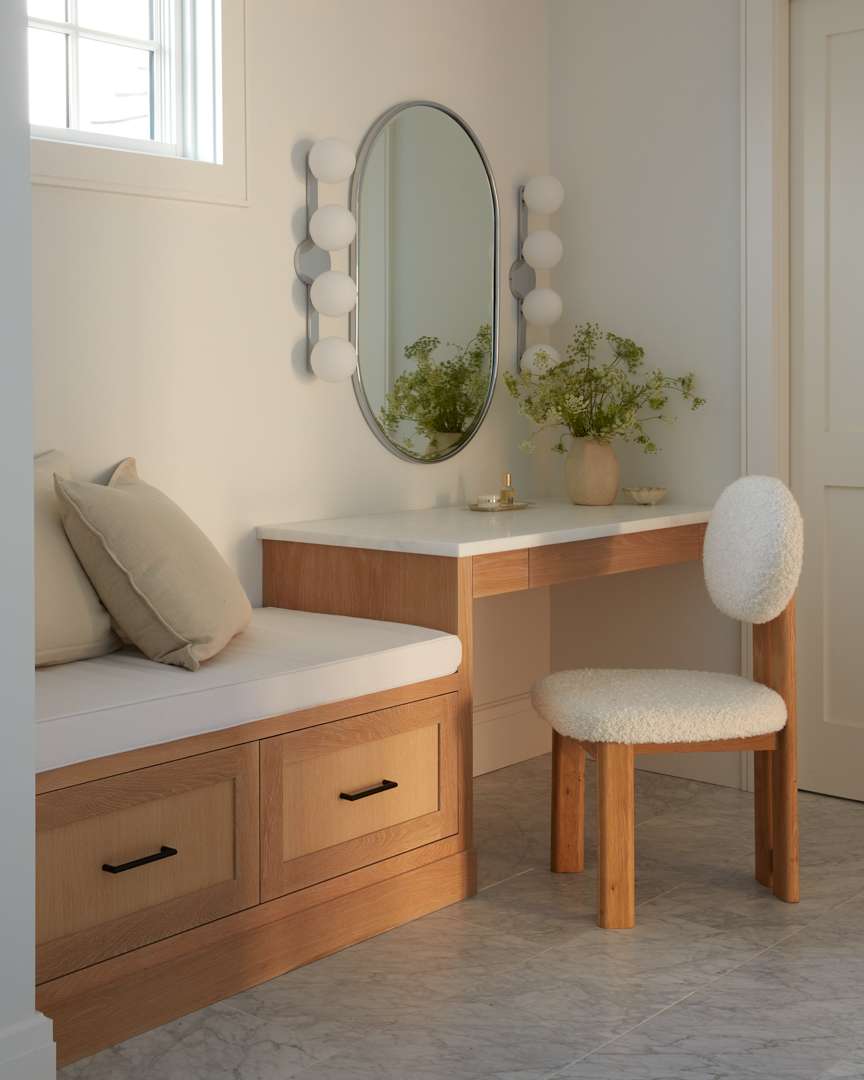
The architectural details—natural shingle siding, white windows, and a wrap-around front porch—set the tone. Inside, we layered materials like linen, velvet, mohair, and shearling, and used textural rugs in jute and wool. The kitchen features white oak cabinetry paired with a stunning Calacatta Vagli marble. The furnishings are light and tonal, with subtle pops of saturated color to keep things fresh but understated.

There is a lot of gorgeous marble incorporated throughout the home, from the kitchen to the powder room.
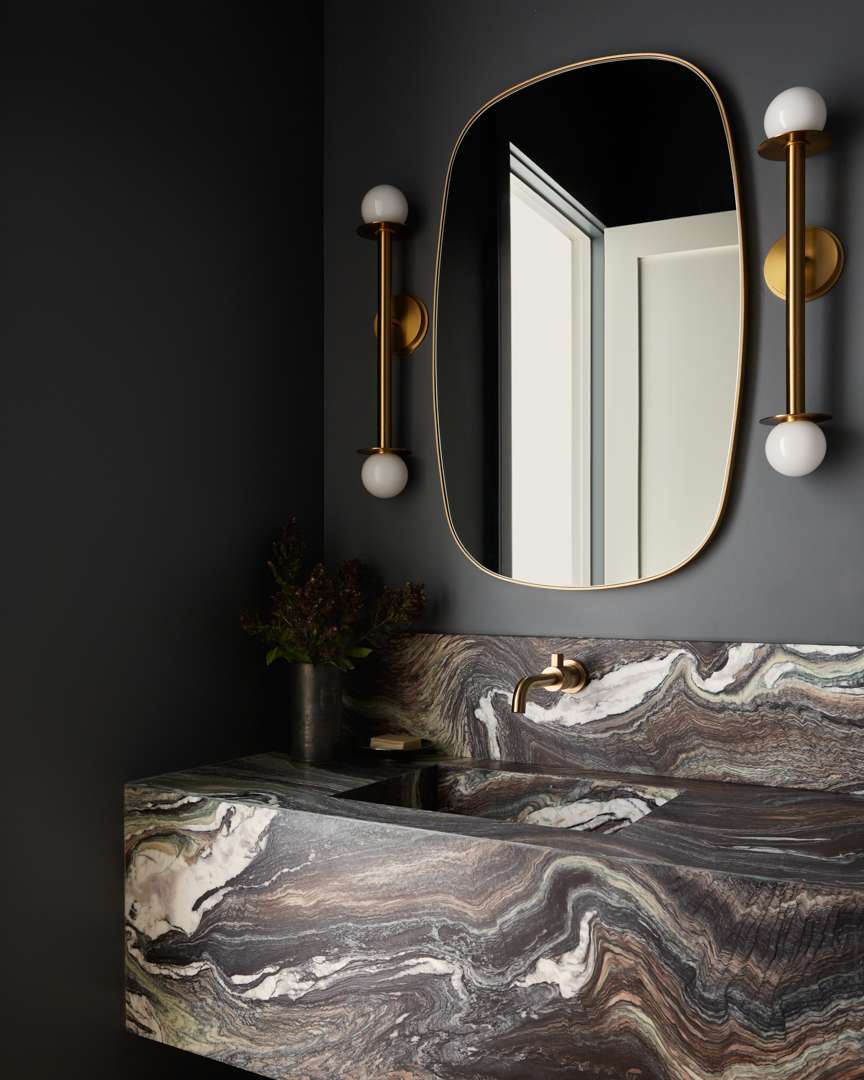
We sourced all the marble from a local stoneyard. Marble is incredibly unique and adds such a special element to any home, so we spent a lot of time selecting the perfect slabs. I wanted the clients to feel connected to the materials and really fall in love with what they chose—it needed to feel personal and lasting.
What about the wood beams in the living room?
The beams are made from reclaimed wood, which brings a beautiful, earthy contrast to the cleaner, more modern lines in the home. They ground the space and add a sense of character and warmth.

I love all of the lighting throughout the home! Do you have a go-to source for lighting?
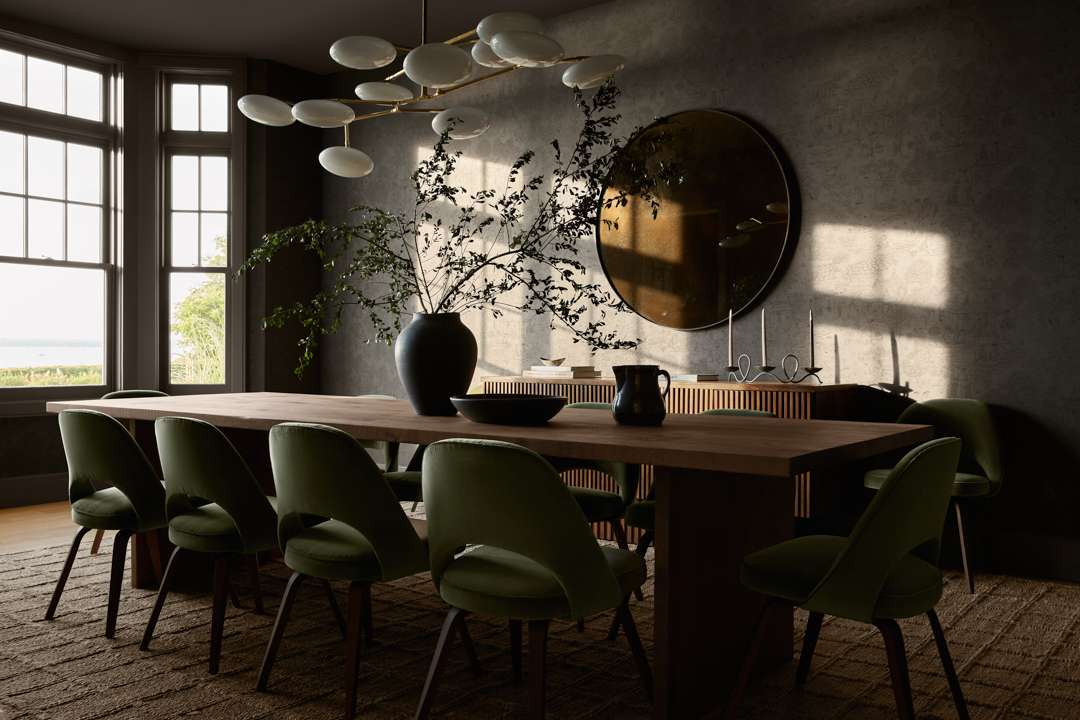
We love lighting—it’s such a powerful design layer and brings so much personality into a space. We source from a mix of local artisans, lighting showrooms, European designers, and vintage finds. The kitchen pendants are from Urban Electric, the primary bedroom light is an original Noguchi lantern from the Noguchi Museum, and many of the vanity sconces and the dining room fixture were sourced from Visual Comfort.
Do you have a favorite room in this project?
That’s such a hard question because I truly love every space in this home. But if I had to choose, I’d say the dining room. It really captures the essence of “Far Studio”—it’s dark and moody, yet still chic, timeless, and layered with one-of-a-kind pieces that we thoughtfully sourced and curated.

How did you choose the wallpaper in the dining room?
The wallpaper in the dining room is incredibly special. It’s called “Jim’s Dream” by Jim Thompson. I had loved it for a long time and was just waiting for the right project. It has a beautiful, scenic quality with tonal elements—you have to look closely to see all the hand-sketched details. It’s subtle, but it tells a story and really sets the mood for the space.
How do you ensure that a home, such as this one, will remain timeless?
Timelessness is something I think about constantly. I want my clients to love their home for many years to come, so I focus on thoughtful, understated elegance. It’s about striking the right balance—nothing should feel like “too much,” but rather, like every detail was considered and contributes to the overall feeling of the space. That’s what makes a home feel timeless.
