


It was developer Craig Robins, the man chiefly responsible for today’s Miami Design District, who chose to transform its mundane infrastructure into works of public art.
Robins engaged Terence Riley, the former chief curator of architecture and design at MoMA. To facilitate maximum creativity, Riley allowed his chosen architects and artists, many with international reputations, to work on different areas, without knowledge of the others’ designs. (This was a deliberate echo of a famous game played by French Surrealists back in the 1920s.)
This unconventional approach transformed urban necessities like the City View Garage and the Museum Garage into landmarks.
Besides parking, the garages house a garden, a lending library, a dedicated art space, an adult-sized playground, and numerous retail spaces.

Urban Jam
Designed by Spanish architect Manuel Clavel of Clavel Arquitectos, the façade of this garage features 45 gold and silver full-sized car bodies that appear to be in a vertical traffic jam.
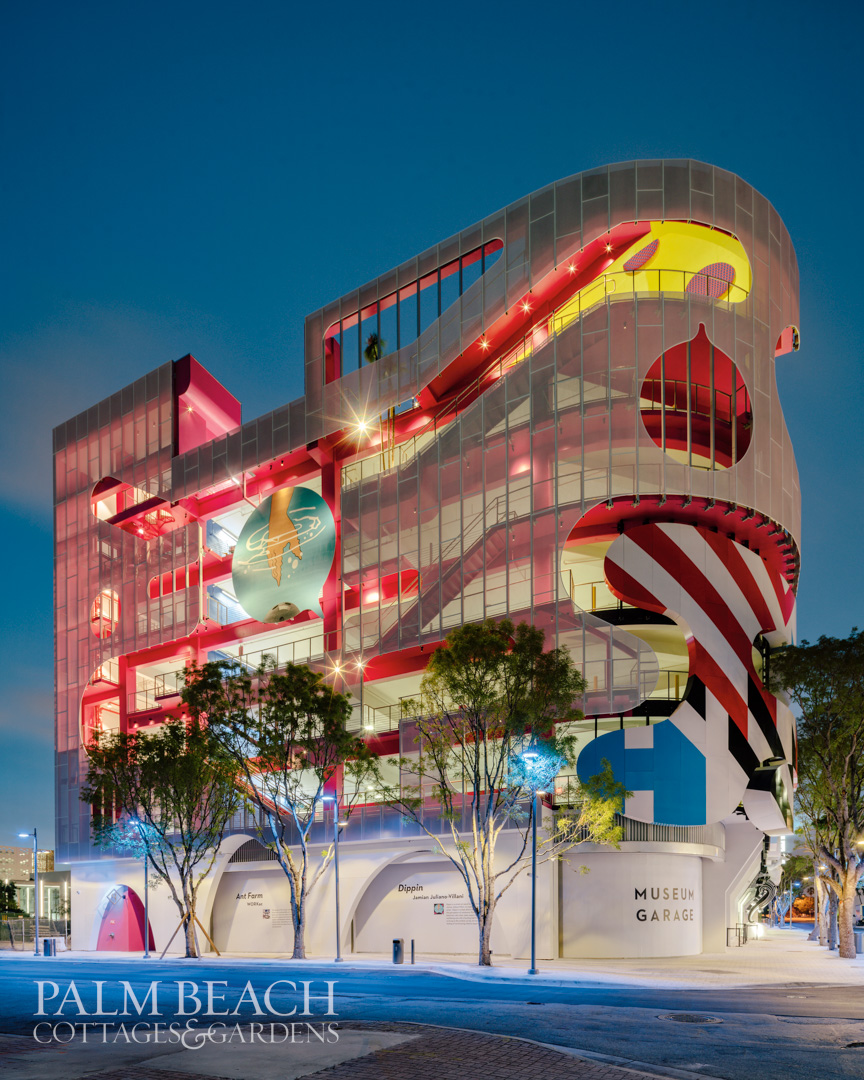
XOX (Hugs and Kisses)
The work of Berlin firm J Mayer H, this garage comprises gigantic interlocking red and blue stripes, with sections covered in white metal screens, all intended to evoke puzzle pieces floating above the sidewalk below.
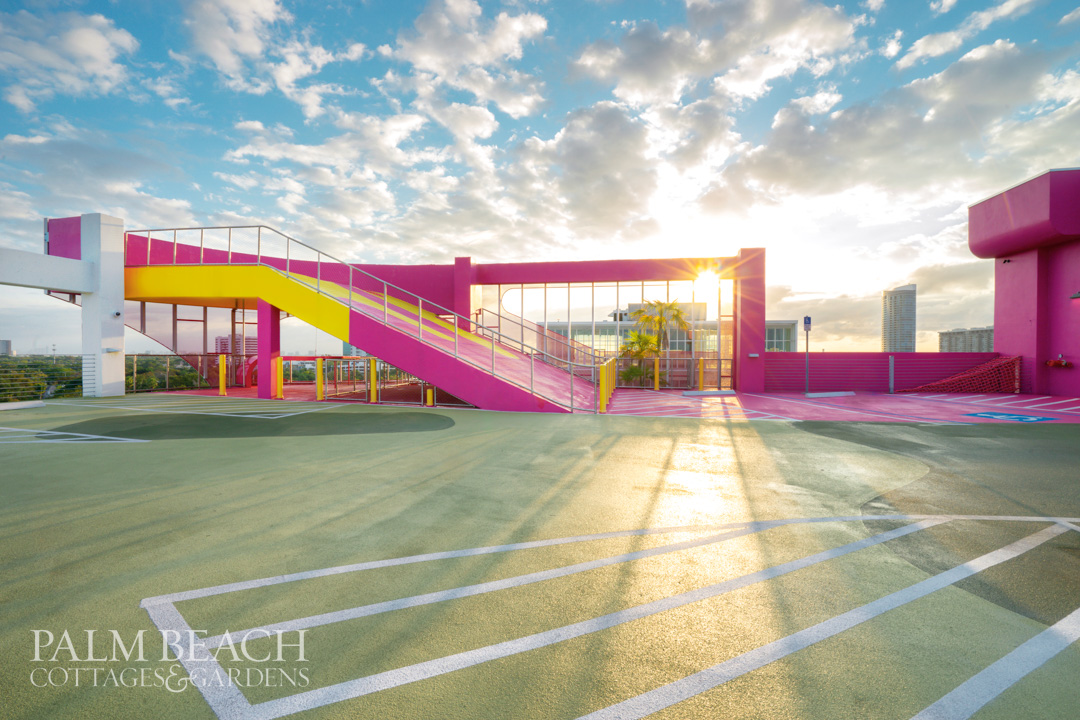
Hit The Roof
Awash in pink, yellow, and green, the top floor comes with playful textures and graphics. It provides access to a playground, with a slide that takes you down to a ropes course.
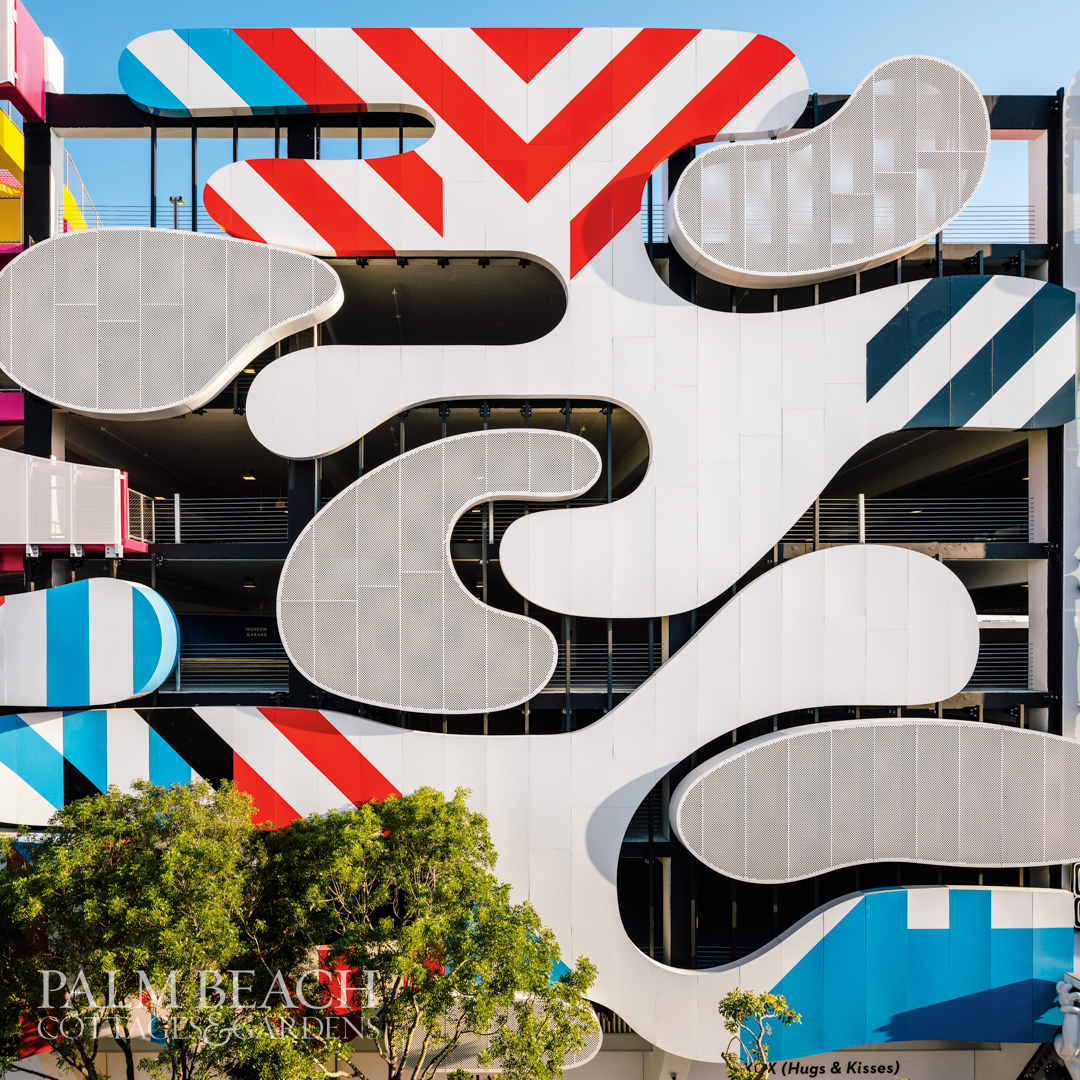
Ant Farm
Designed by WORKac, the façade is an ant colony-inspired design, with a perforated metal screen that hides and reveals public spaces including a garden, a library, and a playground.
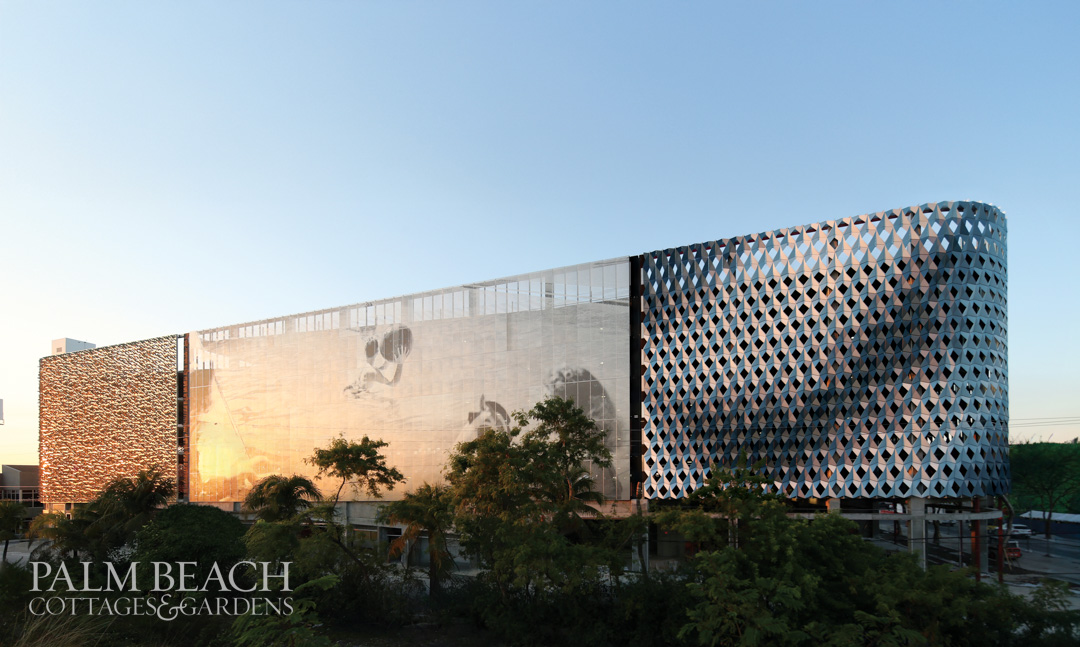
City View Garage
One end of the garage is a wave-like structure created by the firm Leong Leong, using gold titanium-coated steel with a shimmering foliage pattern. At the other end, a silver geometric pattern designed by artist Iwamoto Scott, is made entirely of aluminum. Between the two, are Fun Part 1 and Fun Part 2, by artist John Baldessari, with billboard-sized black and white stills, depicting nostalgic beach and poolside scenes.
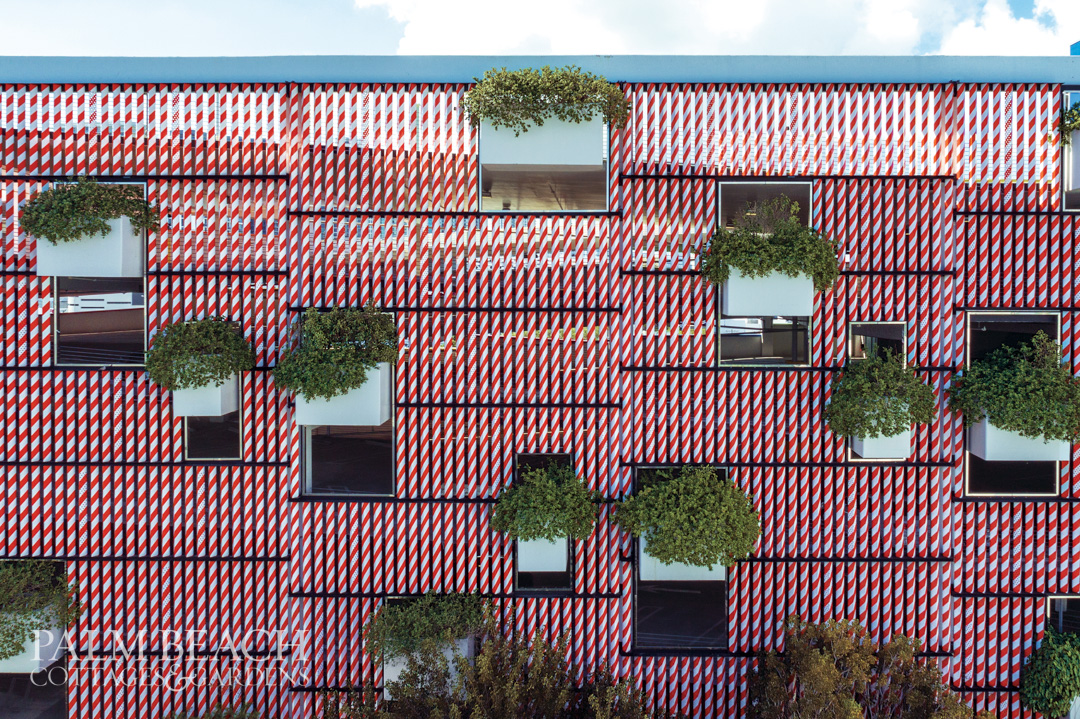
Barricade
K/R Architects took its cue from orange-and-white traffic barriers. Here the patterns form an architectural screen made from stainless steel, with concrete planters that pop out above the sidewalk.
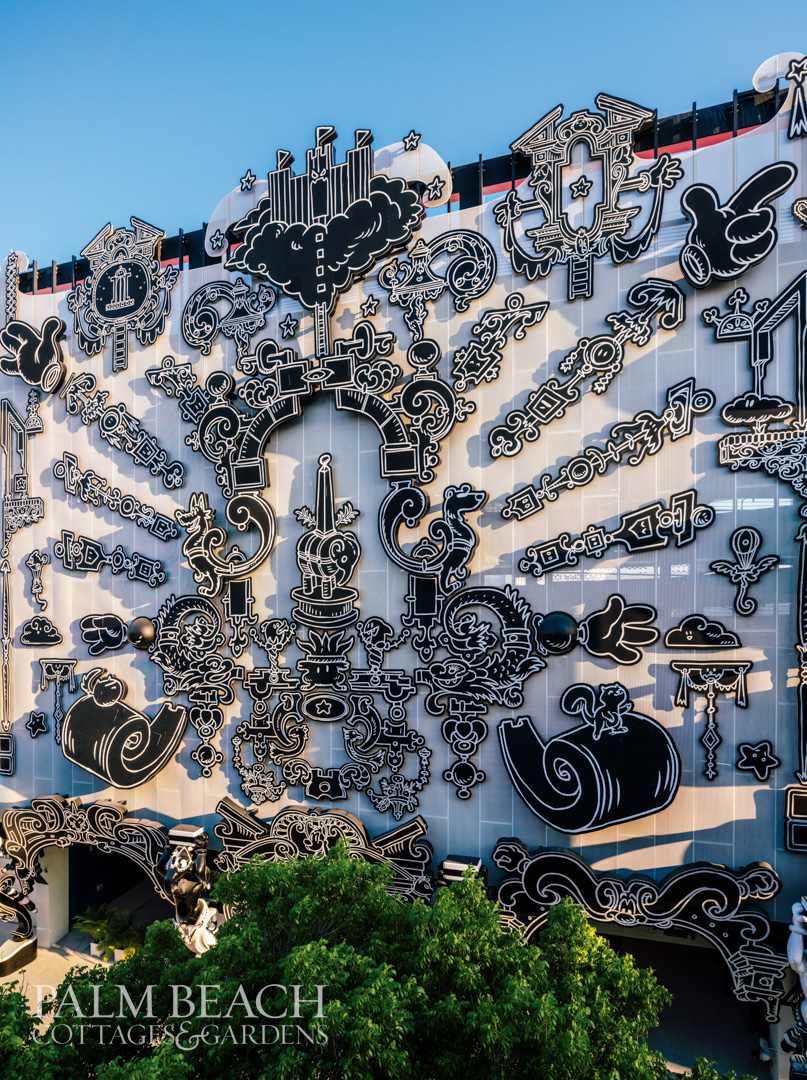
Serious Play
Nicolas Buffe’s back-and-white façade blends Japanese pop
culture and video game imagery with Baroque arches and giant caryatids, employing 2D and 3D elements of laser-cut metals and fiber resin plastic.
