


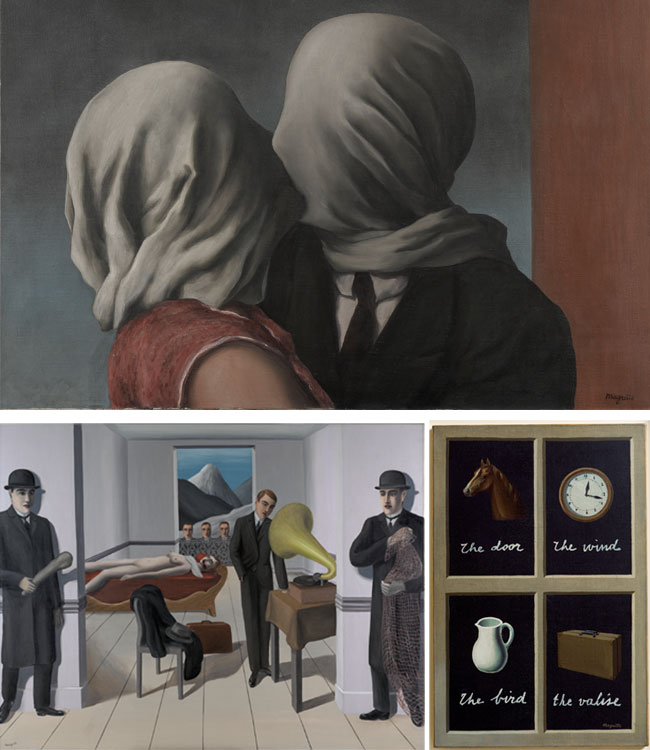
top: René Magritte (Belgian, 1898–1967)
Les amants (The Lovers), 1928
Oil on canvas
21 3/8 x 28 7/8″ (54 x 73.4 cm).
Museum of Modern Art. Gift of Richard S. Zeisler.
© Charly Herscovici -– ADAGP – ARS, 2013
bottom left to right: René Magritte (Belgian, 1898–1967)
L’assassin menacé (The Menaced Assassin), 1927
Oil on canvas
59 1/4″ x 6′ 4 7/8″ (150.4 x 195.2 cm).
Museum of Modern Art. Kay Sage Tanguy Fund.
© Charly Herscovici – ADAGP – ARS, 2013
René Magritte (Belgian, 1898–1967)
La clef des songes (The Interpretation of Dreams), 1935
Oil on canvas
16 1/8 x 10 5/8″ (41 x 27 cm)
Collection of Jasper Johns
© Charly Herscovici -– ADAGP – ARS, 2013
Photograph: Jerry Thompson
ILLUSIONS AND ALLUSIONS
Double takes, optical illusions, “full-face” torsos and other provocative tricks of the eye are on full display in MoMA’s popular “Magritte: The Mystery of the Ordinary 1926-1938.” Rene Magritte’s familiar iconic images of bowler hats, the pipe, clouds, locomotives all meticulously painted, are arranged in juxtapositions that raise questions about the slippery relationship between words and images and about the ways in which the world can be perceived. So often reproduced that they are many are easily recognizable the Surrealist pictures are all the more powerful confronting the viewer directly on the wall. www.MoMa.org
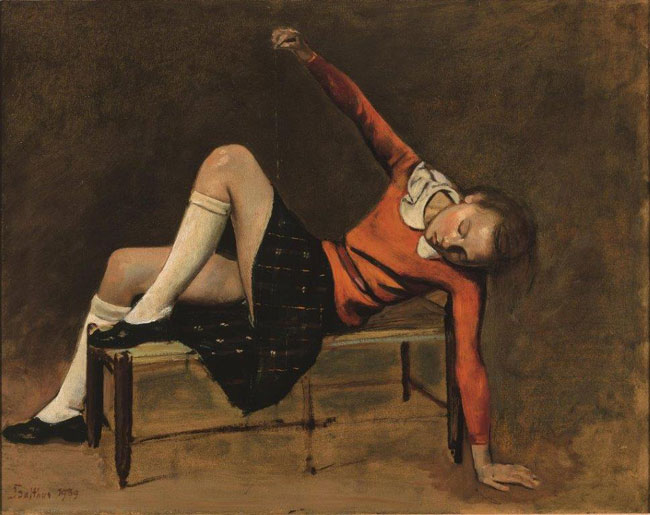
PUSSYS GALORE
Inscrutable felines and nubile adolescent girls are pictured in “Balthus: Cats and Girls, Paintings and Provocations” early works of the French painter at the Metropolitan Museum of Art. A suite of early pictures of his young model Therese Blanchard, convey the girl’s intelligence and aloofness as she sits dreamily staring into space.
A cat affectionately rubbing at the artist’s trouser leg in a self portrait conveys his affection for the animals, perhaps stemming from his adoption and then loss of a beloved stray tomcat Mitsou, a tale conveyed in 104 black and white images created when Balthus was 11-years-old and displayed together here. The sequence traces the young boy finding the stray, playing with the pet, and then searching frantically after his pet goes missing. www.metmuseum.org
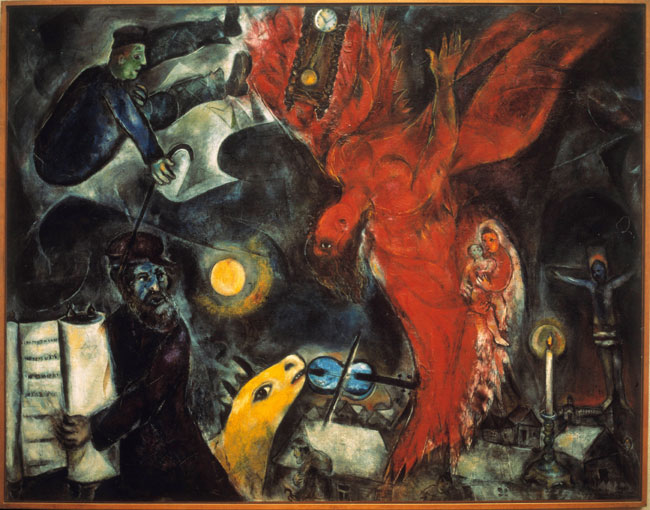
EMOTIONAL EVOLUTION
On the eve of war, with his world collapsing, Marc Chagall turned from early lyrical joyous compositions to works, which reflect the torment of violence and persecution. “Chagall: Love, War, and Exile” at the Jewish Museum traces those images, notably the theme of Jesus on the cross which the artist found as a powerful means to express the agony of Europe’s Jews and the Holocaust. After the war, relocated to the United States and remarried, his pictures reflect the tension between memories of his first marriage and the presence of his new wife, with lighter colors and more spirited subjects expressing the affirmation of survival. www.thejm.org
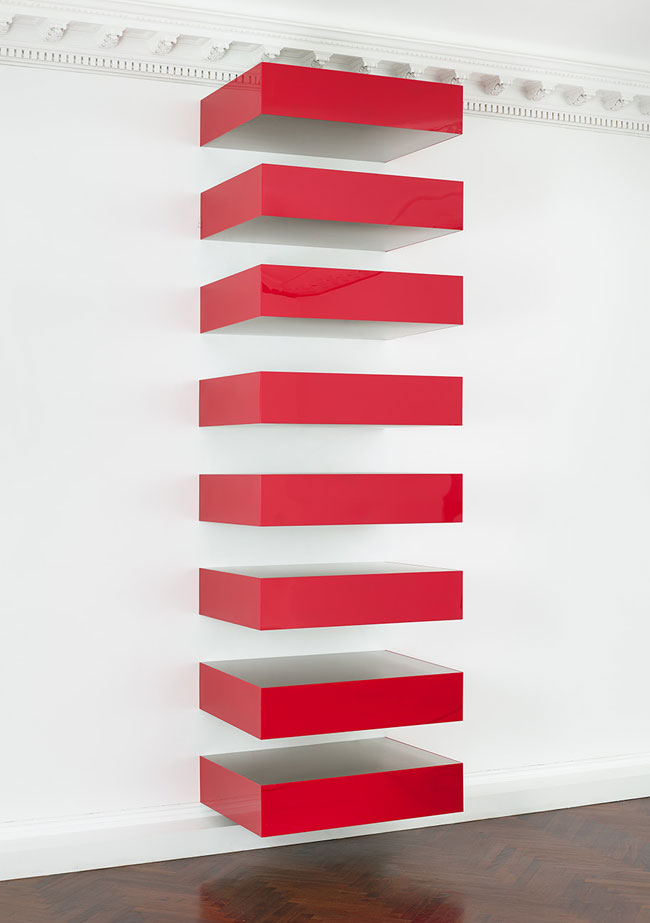
Donald Judd
Untitled (Bernstein 78-69), 1978
Tom Powel Imaging, Inc.
© Judd Foundation. Licensed by VAGA, New York, NY
UP AGAINST THE WALL
Identical “box” units extending from floor to ceiling comprise iconic signature works in “Donald Judd: Stacks” at the Mnuchin Gallery a display of ten stacks from four decades illustrating the artist’s geometric explorations of volume, space, and color. The alternation of solids and voids leaves spaces between the pieces, which become part of the works, functioning as open volumes giving “nothingness” a spatial identity. Using warm amber and candy red plexiglass, violet anodized aluminum and cool stainless steel, Judd explores myriad effects of varying transparency, opacity, surface and color. www.mnuchingallery.com
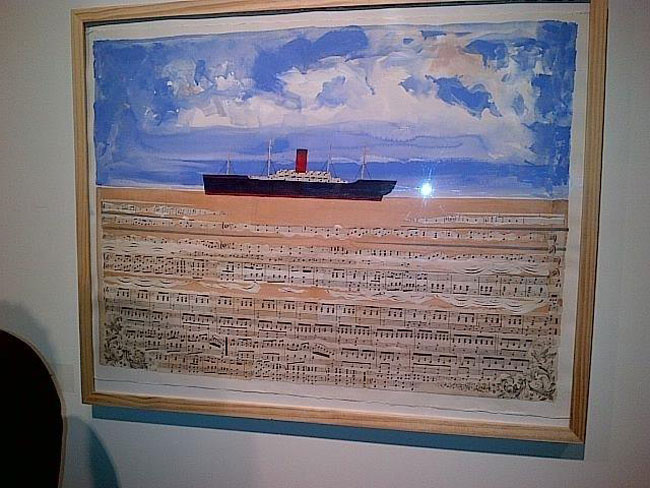
SCORES AND SHIPS AHOY
Collages and paintings utilizing music scores render John Spinks lingering impressions of the Swan Hunter shipyard in the north English town of Wallsend. Displayed at the Public Theater in conjunction with Sting’s special benefit concert series, the pictures’ nautical themes are testimones to shared heritage and passion for music and art. www.ktfineart.com
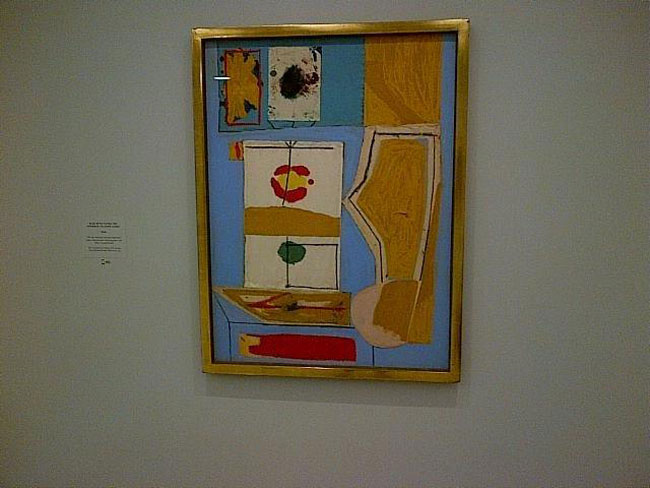
CUT AND PASTE
Lore has it that it was Peggy Guggenheim who urged fledgling artist Robert Motherwell to experiment with the papier collé technique. Working with Surrealist artist Matta and Jackson Pollack, in the 1940s, Motherwell found his identity by cutting, tearing and layering pasted papers to express the tumult and violence of the modern world. Early figural and surreal collages evolved in the 1950s into the artist’s distinctive mature style, firmly rooted in Abstract Expressionism. “Robert Motherwell: Early Collages” runs at the Guggenheim through January 5th. www.guggenheim.org
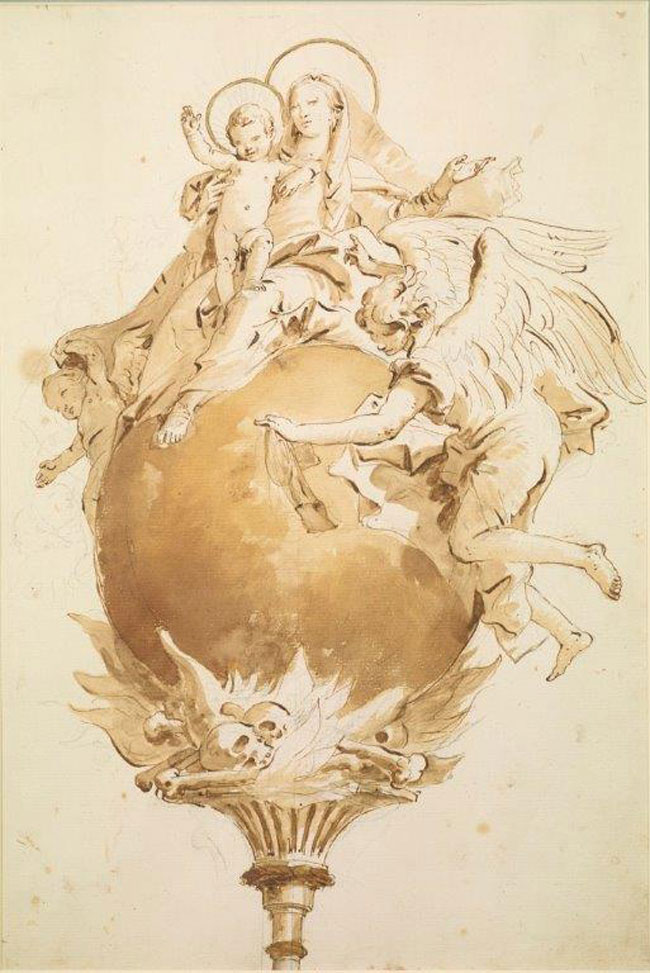
VENETIAN CLASS
Cherubs, gondolas, goddesses, Biblical characters, and noble portraits inhabit drawings from the 18the century Golden Age of Venice in the Morgan’s new show “Tiepolo, Guardi, and Their World: Eighteenth-Cetury Venetian drawings.” While the city was declining as a world power, the arts were flourishing and these works, all drawn from the Morgan’s own collection, vividly illustrate the talents of the Tiepolos, Canaletto, Guardi, artists who left lasting marks on western art. www.themorgan.org
