


Carol Neiley, an interior designer and co-owner of Maison Collab, embodies a bold sense of adventure. “I love a challenge and taking on things other people would avoid,” says Neiley, who in a gutsy move in 2007 as a single mom with two young daughters moved her family to Lyon, France, where she purchased and restored an 18th-century stone farmhouse.
It was with that same intrepid spirit that decades later she tackled a 1907 tenant farmhouse in Sharon, Connecticut. Located on the former William F. Buckley estate, the abandoned residence was teeming with bats and mice, but the sprawling property filled with mature maples and red elms won her over. “Despite its state, the house had an incredible energy,” she recalls. “And it was perfectly situated on this beautiful piece of land.”

The refurbishing of the modest structure quickly turned into a comprehensive gut renovation. Working with business partner Pamela Duncan Silver, the duo determined nothing was worth salvaging including the deteriorating clapboard siding. “We replaced it all with HardiePlank and hired a local mason to craft a beautiful chimney with 18th-century brick,” says Neiley, who envisioned an end product in keeping with the simplicity and elegance of Federalist style architecture.
Indoors, new larger windows raised to maximum height with sills set at 18-inches above the floor, counter the low ceilings and flood the rearranged layout—which includes the addition of a mudroom and office—with plenty of natural light. “All the doors and the molding—which is from a Federal farmhouse—are 18th century,” explains Neiley, who addressed the home’s lack of storage by designing floor-to-ceiling cabinets for the mudroom, dining area and primary bedroom dressing area. “With such low ceilings there was no room for large furniture. Everything had to be built in.”

Designer and homeowner Carol Neiley (right) and her business partner, Pamela Duncan Silver, are pictured in front of the farmhouse they renovated together.
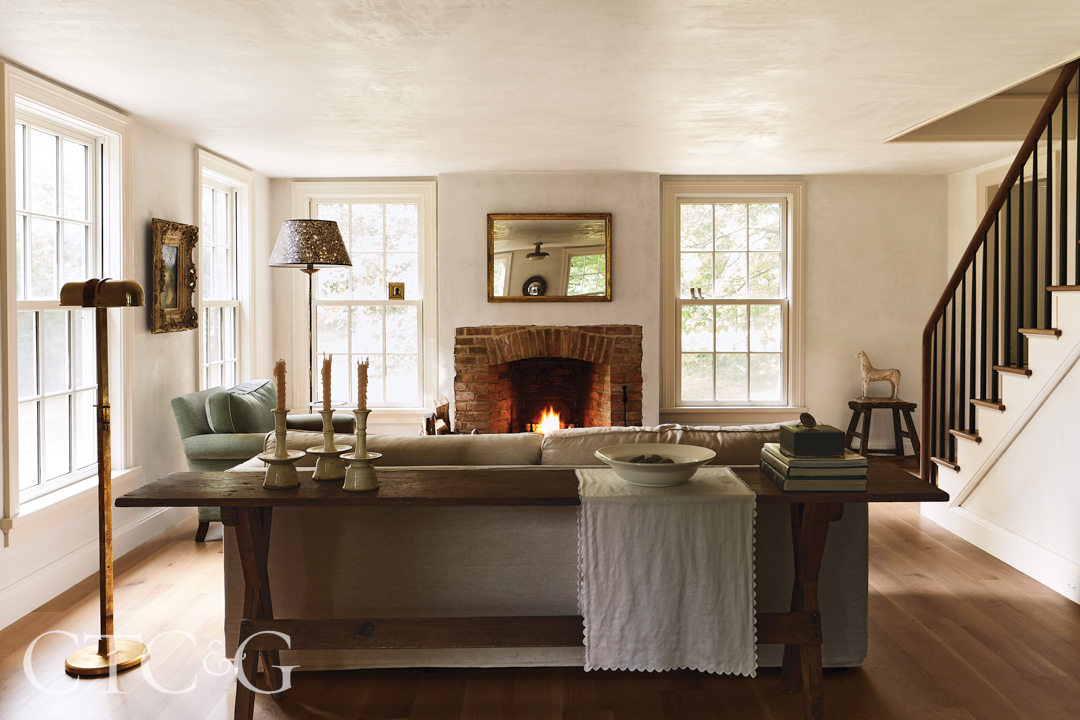
A new fireplace composed of 18th-century brick is the living room centerpiece, and the double-hung windows are from Lepage Millwork. The Cisco Home sofa is through J. Seitz & Co., and the brass floor lamp is through Roman and Williams.
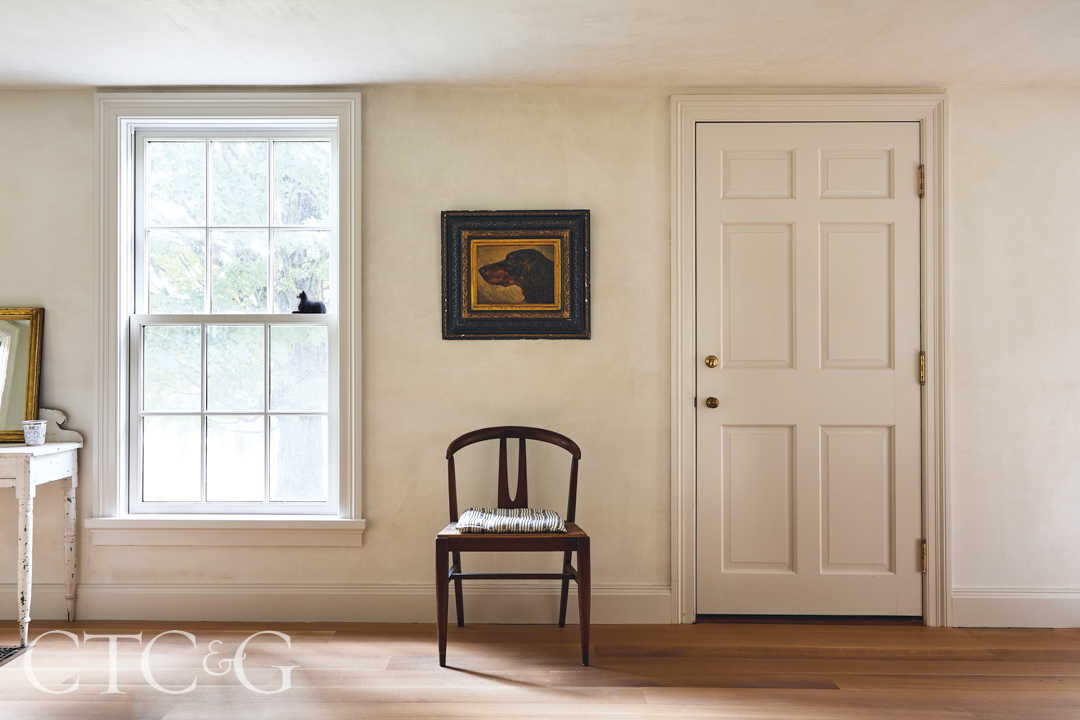
The moldings, door and Venetian plaster walls—painted in Farrow & Ball’s Slipper Satin—create a calming backdrop.
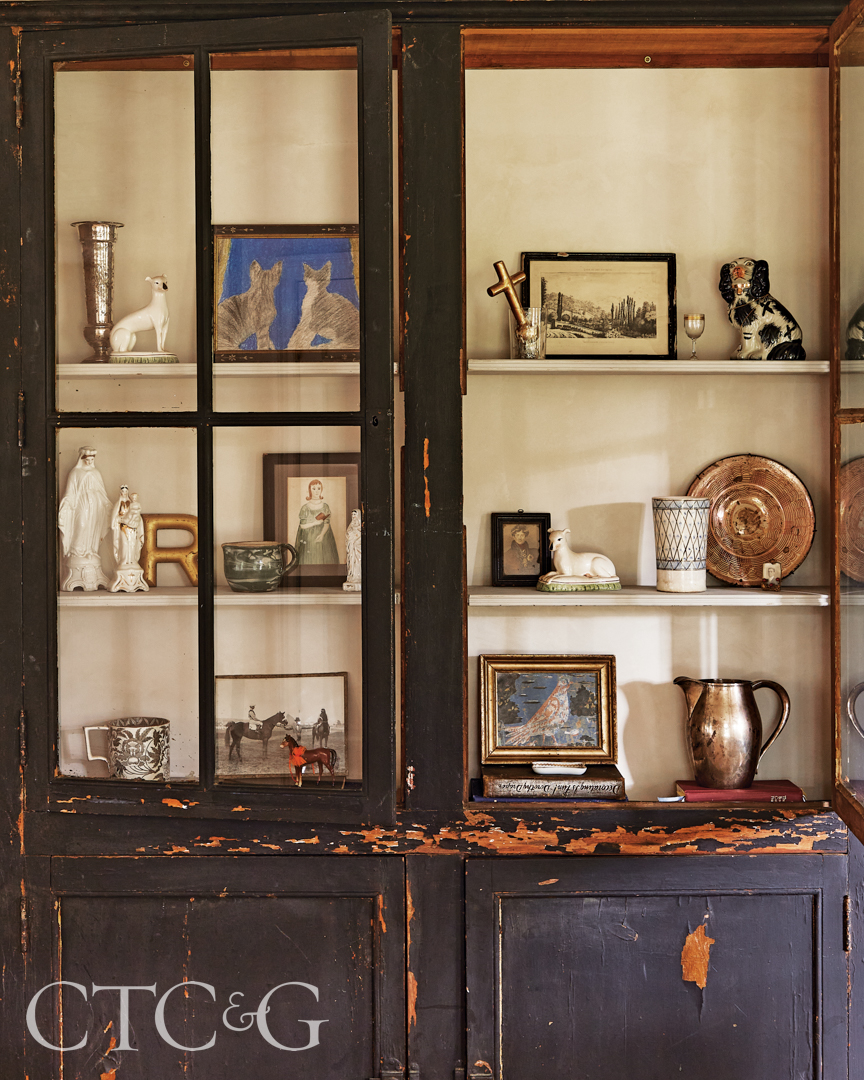
A 19th-century cabinet houses an array of artwork and collectibles.
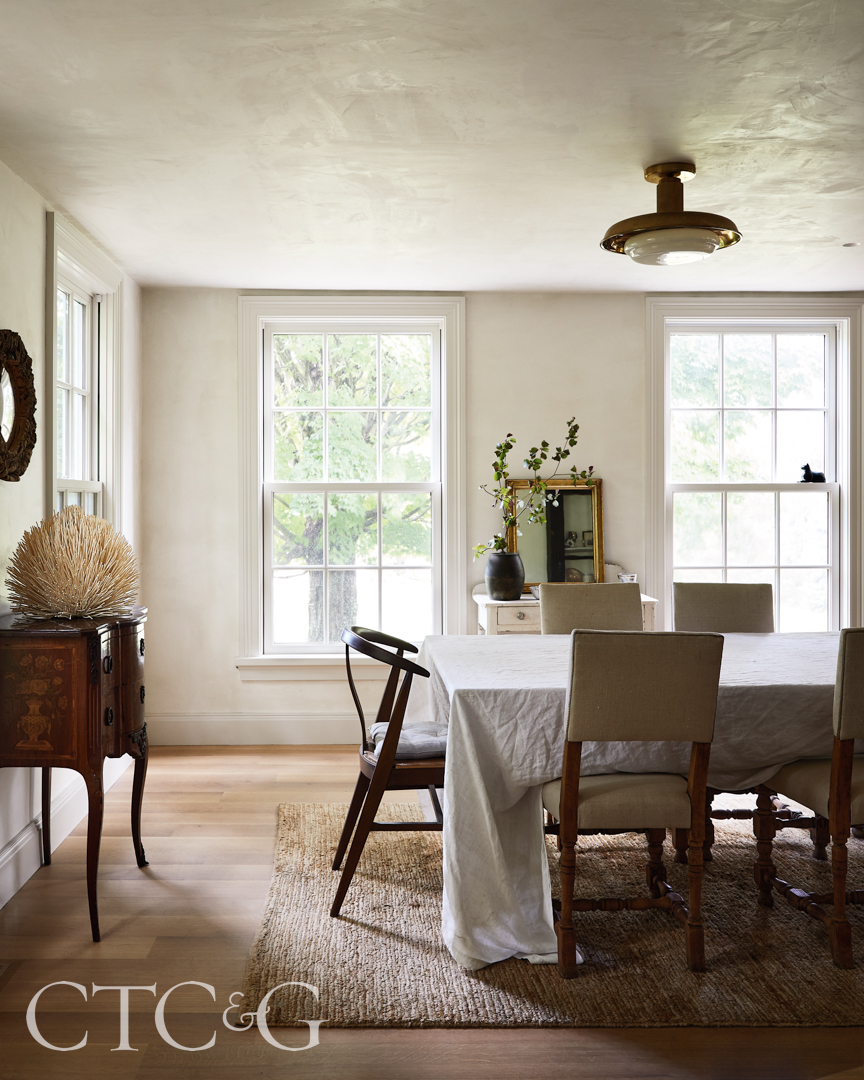
An Oscar light fixture casts a warm glow on chairs wearing oatmeal linen through Montage Antiques.
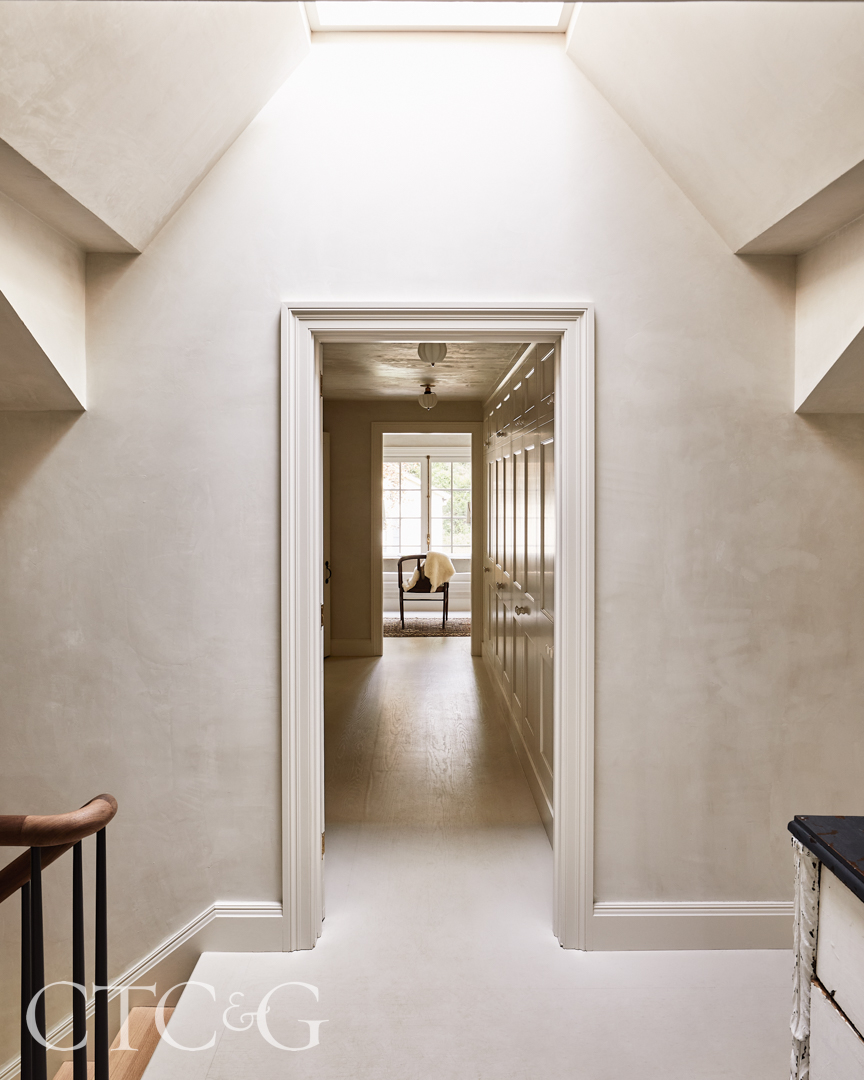
A new up-to-code staircase leads upstairs.

In the upstairs hall, a 19th-century oil painting hangs above an antique dresser garnered at a French flea market.
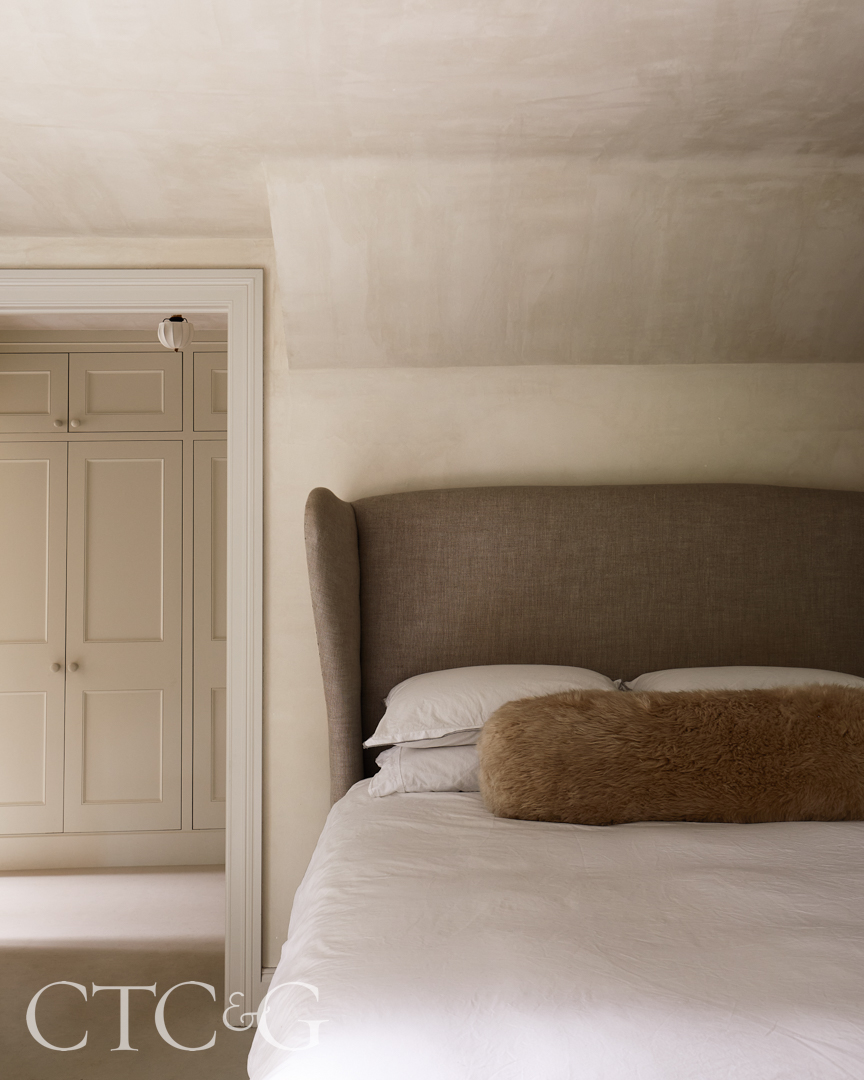
In the primary bedroom, the bed is from RH.
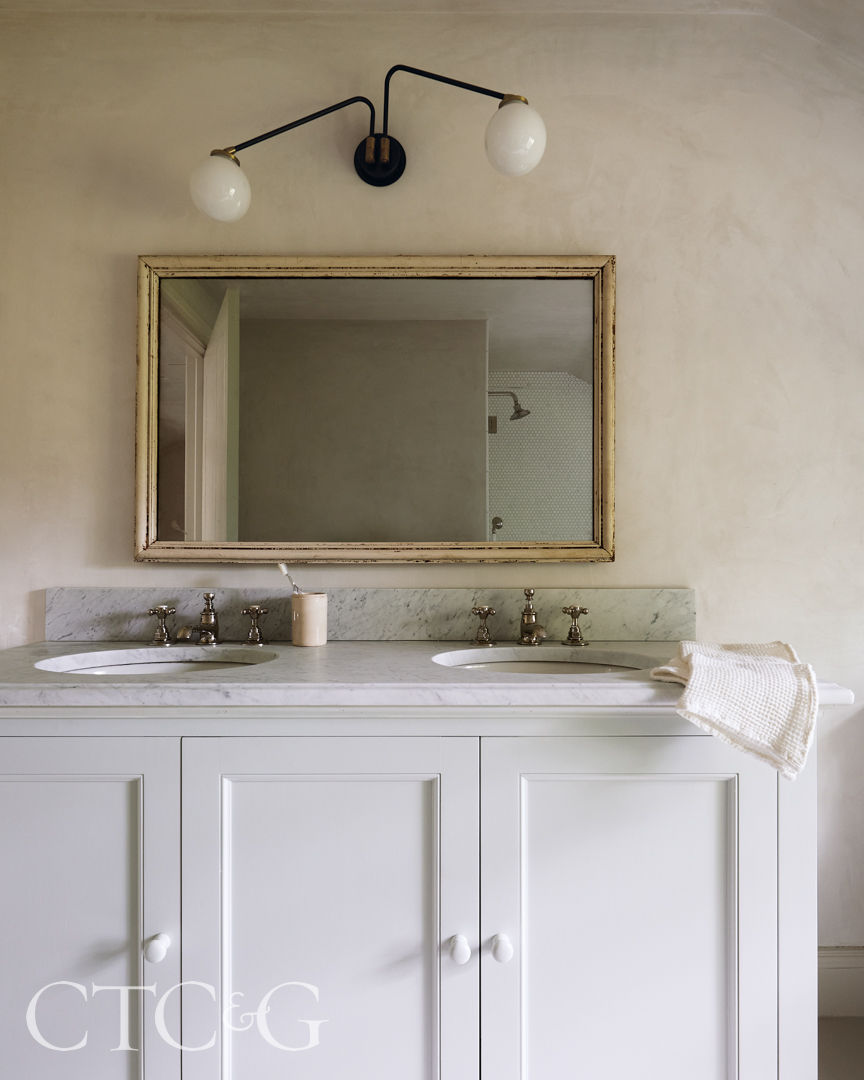
In the guest bathroom a CTO Lighting double sconce illuminates a vintage mirror.

Primary bathroom fixtures from Waterworks complement shower tiles from Clé.
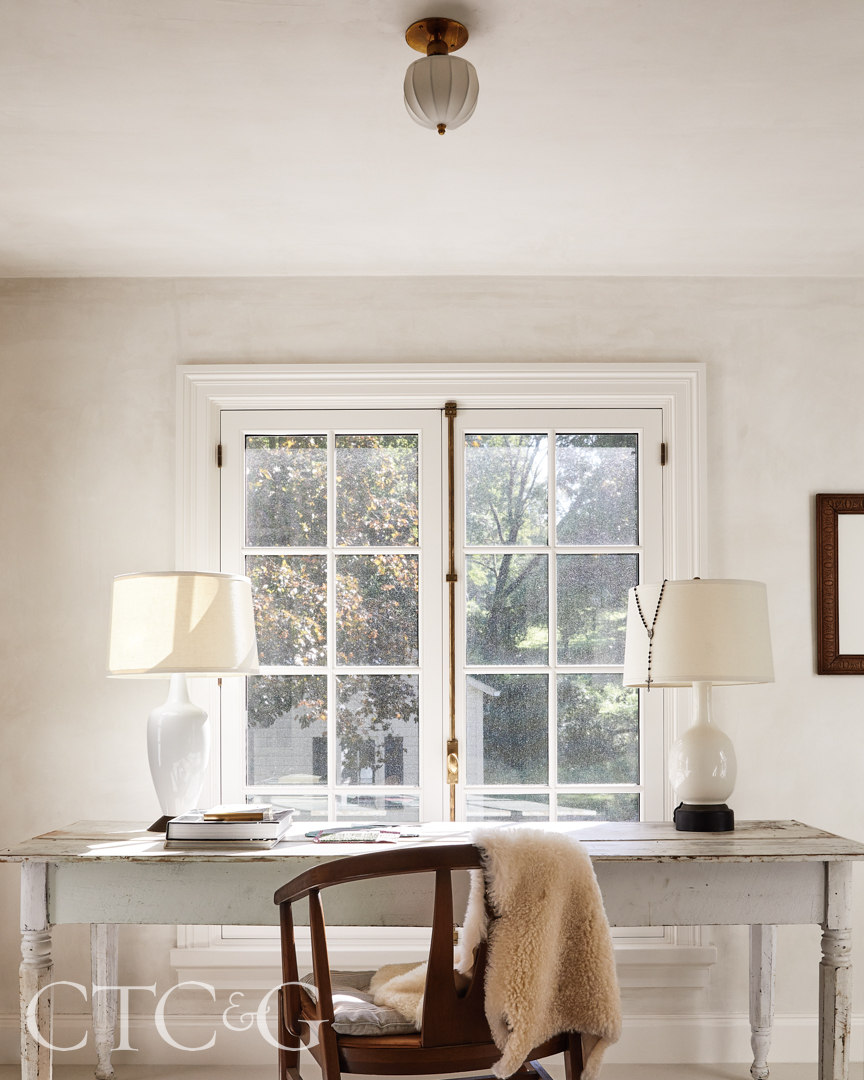
Down the hall in the office, lamps through Montage Antiques top a Gustavian antique table that serves as a desk. The chair is from Bowen Barn.
A significant portion of the interior renovation focused on aligning the design with Neiley’s Federalist vison but with a French accent. White oak floors with a matte water-based finish and Venetian plaster walls tinted the same Farrow and Ball Slipper Satin color as the trim and moldings establish the desired effect. “Everything is intentionally white on white on cream, which is very peaceful and also provided a blank canvas for my art and collectibles,” says the designer, who used durable terrazzo tiles on the mudroom floors, and painted the red oak flooring on the upper-level a light gray for a country feel.
After years of living as a self-described maximalist in France—“It was hard to resist all those beautiful linens, pottery and antiques,” Neiley says—she needed to downsize significantly. “I got rid of so many things and kept just enough to furnish the house.” Among the treasured items that made the cut was an 19th-century cabinet that was adapted to fit in the more than a century old house. “I love containment units and arranging things like collages,” she adds.

Taking a decidedly minimalist approach to the home’s interior design, select pieces and artwork are artfully arranged in simple vignettes throughout. In the upstairs hallway, for example, an early 19th-century oil painting poised above a distressed antique dresser make an unpretentious statement. The sole new purchases include French-inspired light fixtures, and a living room sofa situated to enjoy the fireplace composed of the same brick as the chimney.
“We did more taking out than putting in,” notes Neiley, who took a similar approach with her use of color. With the exception of the aqueous blue shower tiles in the upstairs bathroom, the rest of the house reads more like a sepia-toned photograph. “Basically, we succeeded in creating a country house without pretense. We took out the unremarkable architecture and built in character.”
