


This is not the first time that this saltbox has appeared in print: The house made its editorial debut in Country Life in 1931. The article documented how Lurelle Van Arsdale Guild—an artist, noted industrial designer and antiquarian—moved the circa-1690 house from Stratford to its current location in Darien. By the time interior designer Lexi Brandfon, of Brooklyn-based Lex & Hudson, was hired to decorate the house, it had been significantly expanded in 2006, but the original portion remained remarkably intact with its timber framing, wide-plank pine floors, and even a secret staircase. “I was really interested in buying a historical house,” says the homeowner, who is trained as an architect. “I like when things are a bit wonky and imperfect.”
However, Brandfon’s clients didn’t want to reside in a museum. A young couple with a baby on the way, who were moving out of the city, the clients wanted to honor the house’s history while creating a home that allowed for modern family living—and they needed furniture in a hurry, since they were moving in with not much more than a mattress.

The client was drawn to Brandfon’s firm’s work—in particular in Brooklyn townhouses—but she also liked that Brandfon was a mom of three. “I wanted someone who could take into consideration the fact that we needed something livable and durable,” the homeowner says. The client also wanted a designer who would be comfortable obtaining antique pieces that she felt the house needed. “We knew we wanted a mix of old and new,” says the homeowner. “Going fully antique didn’t fit with our own taste, but we didn’t want everything new because that might clash with the house.”

In the entrance, the antique mirror can pop open to reveal a secret staircase; the stone dog is from Montage Antiques.

Safari-style bar stools (sourced through Somerset House) provide seating at the soapstone-topped kitchen island.

Brandfon paired the custom dining table with 1960s Guillerme and Chambron chairs through Chairish and artwork by Aya Nakamura.
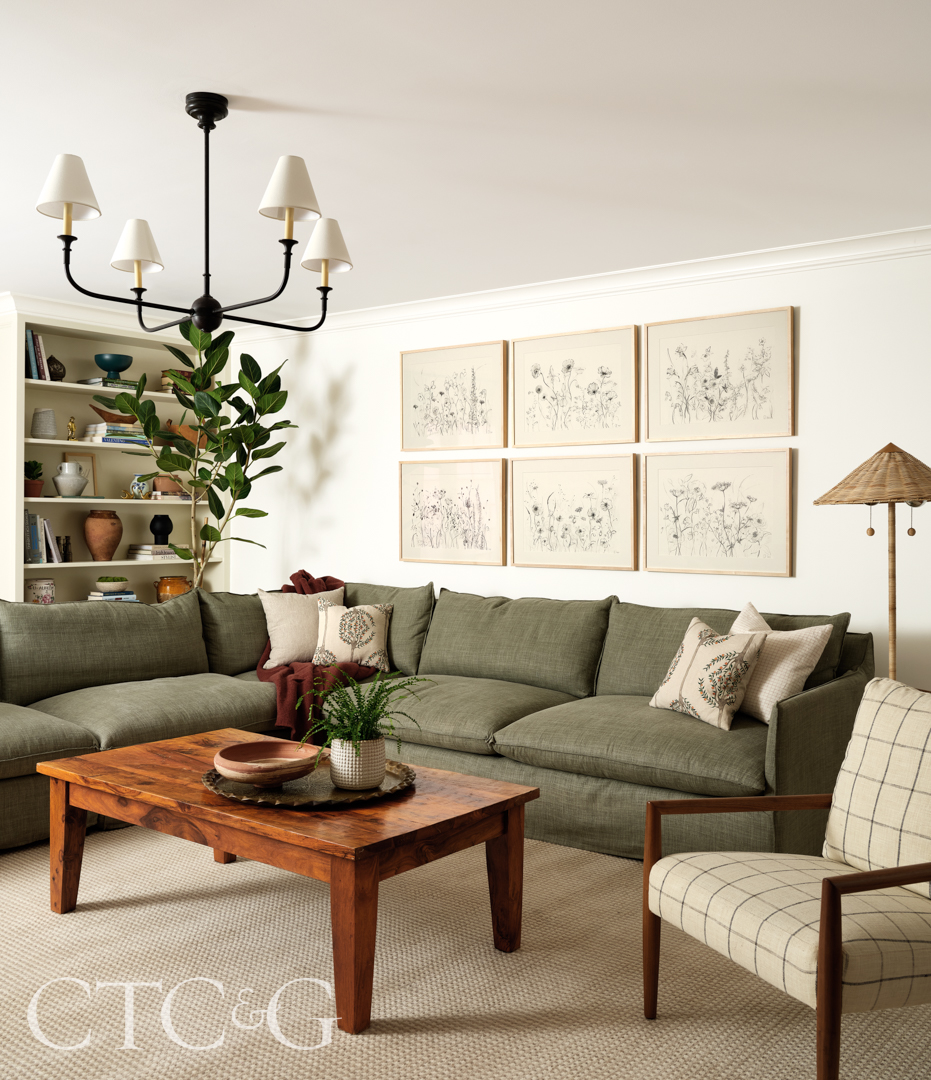
A Visual Comfort chandelier illuminates the family room, where a grid of Claudia Lowry charcoal drawings hangs above a Lee Industries sofa.
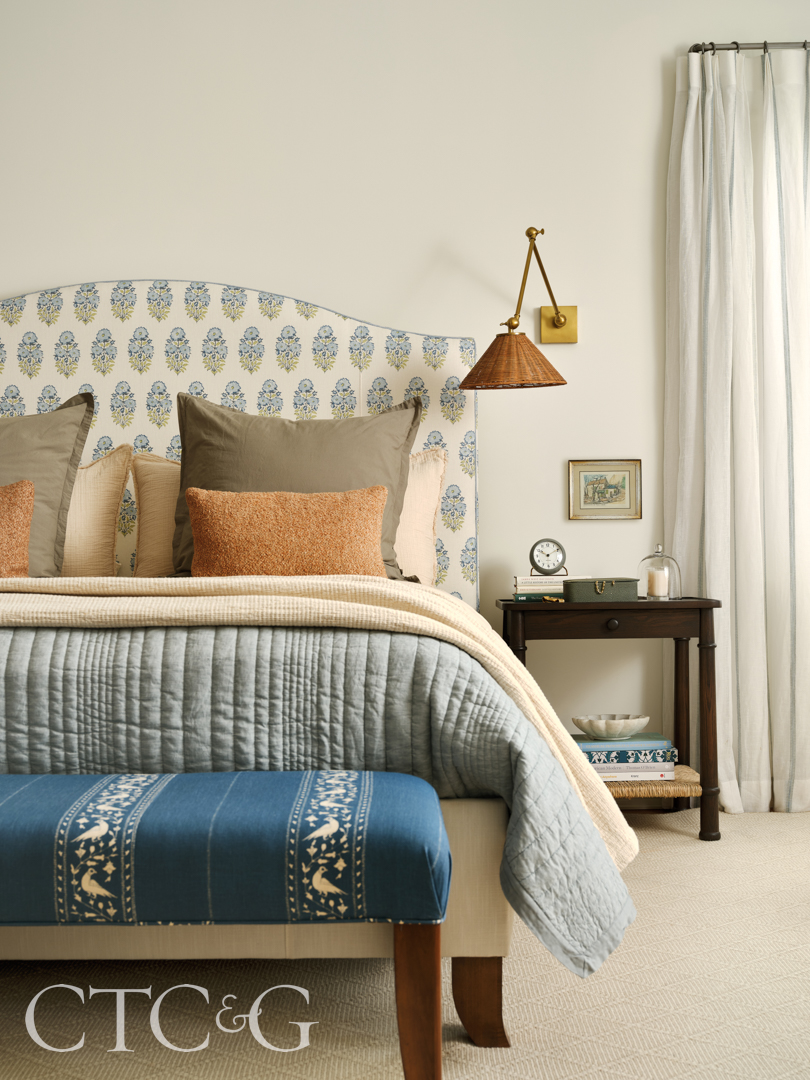
Lisa Fine Textiles through John Rosselli & Associates adorn a Century headboard and bench in the primary bedroom, while rattan sconces from Arteriors and nightstands through Shoppe Amber Interiors add texture.

Nearby, Cisco Home chairs through Schwartz Design Showrooms upholstered in Kravet linen flank artwork by Christy Matson.

The “cozy room” has a collected-over-time look with a coffee table from Chairish, marble-topped side table from Four Hands and a sofa through Clad Home.

Floral notes in the living room include an armchair from Temple Studio in an Alice Sergeant print fabric and a Jo Barrett painting above the bar cart.

On the flagstone patio, chairs by Four Hands marry an iconic 1960s silhouette with the traditional texture of wicker in an all-weather fiber.
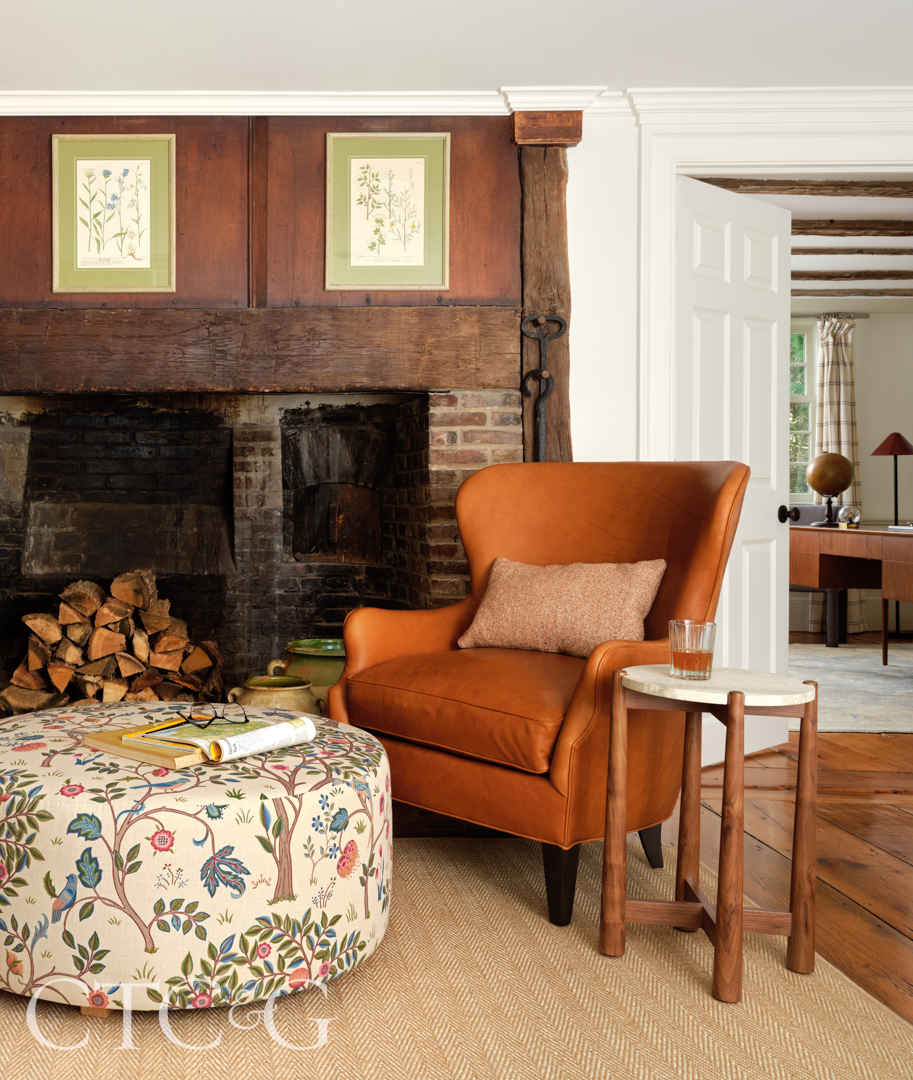
The largest of the Colonial-era hearths is now a snug seating area thanks to Serena & Lily’s fresh take on the classic wingback and an ottoman upholstered in a William Morris print.
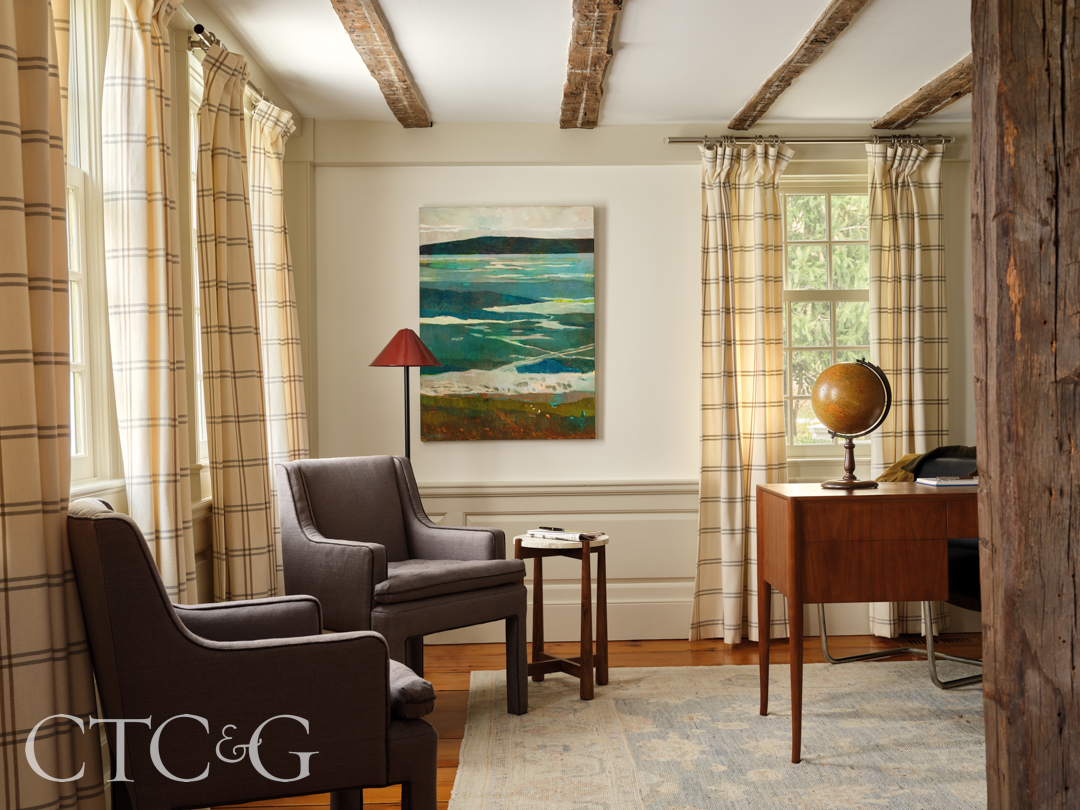
A painting by Liana Steinmetz occupies a corner wall in the office, where a midcentury Widdicomb desk through 1st Dibs and plaid drapes lend a masculine edge.
Brandfon was up for the challenge. “I love working in historical houses and being able to build off of the character that they start with,” says Brandfon. “No matter how much millwork and vintage lighting you bring into a new-build, it’s hard to even come close to the character of an older home.” To align on the design direction, Brandfon first helped her clients zero in on their palette of sky blue, apricot, sage and olive tones that Brandfon describes as “classic but fresh.” Brandfon also quickly ascertained that her clients loved florals and simple plaids. The lone leather strap chair the couple brought from their previous apartment clued Brandfon into their appreciation for materials, particularly leather, that would patina over time. “With the palette and the patterns that we chose, I wanted to keep everything classic—natural materials and a certain patina—which is why we brought in a lot of vintage for this project,” the designer notes.

While Brandfon didn’t make any big changes to the bones of the house, she strove to improve the flow. First, she unified the downstairs rooms with a consistent paint palette, including a soft hint of olive that accentuates the historical millwork. Then she did some rearranging: Where the previous owners had a dining room, Brandfon put the formal living room (which the clients now call “the cozy room”). Then she relocated the dining room to the space adjacent to the kitchen, sourcing an enormous antique rug to anchor the table within the large room. Instead of a sofa awkwardly positioned by the largest hearth, Brandfon selected two leather chairs that encourage better circulation. Brandfon’s expertise as a parent led her to suggest adding doors to some rooms, including the husband’s office, thereby preserving the furnishings and letting toddlers roam more freely.

As the house gradually filled up with furniture, Brandfon introduced her clients to art advisor Laurie Caroll of Procurio, who helped the couple choose contemporary artwork to populate the walls (many of which pick up on Brandfon’s floral leitmotif ). The finished rooms give a nod to the past, but feel decidedly lively and lived-in. “Vintage doesn’t mean you need to have a cluttered space with dusty books and layers of things,” says Brandfon. “It can feel tailored, clean, and fresh.” And Brandfon proves this can be true, even in the very oldest of American homes.
