


Interior designer Anthony Baratta has been transforming houses since the mid-1980s, around the time he bought his own “little cottage” in low-key Flanders, a laid-back community that sits near the point where the north and south forks of Long Island meet. At the time, he had been working for the late William Diamond, who later became his design partner for some 30 years. Baratta’s makeover of the cottage was so successful that it was snatched up for publication, and he has been in high demand ever since, first as a partner in the award-winning firm Diamond Baratta and now on his own.
The Diamond Baratta brand was all about color, lots of it, in extravagant, exuberant applications. It also embraced a great fondness for Americana, reinterpreted for a new generation. The duo’s rooms were full of exaggerated quilt motifs, rarefied upholstery fabrics, overscale tartan wallpapers, and layered collections of antiques from all eras. Together, they pulsed with optimism. Diamond Baratta was so well known for its extroverted, multichromatic rooms that in 2010 Benjamin Moore awarded the company its lifetime achievement award for the use of color in architecture and interiors.
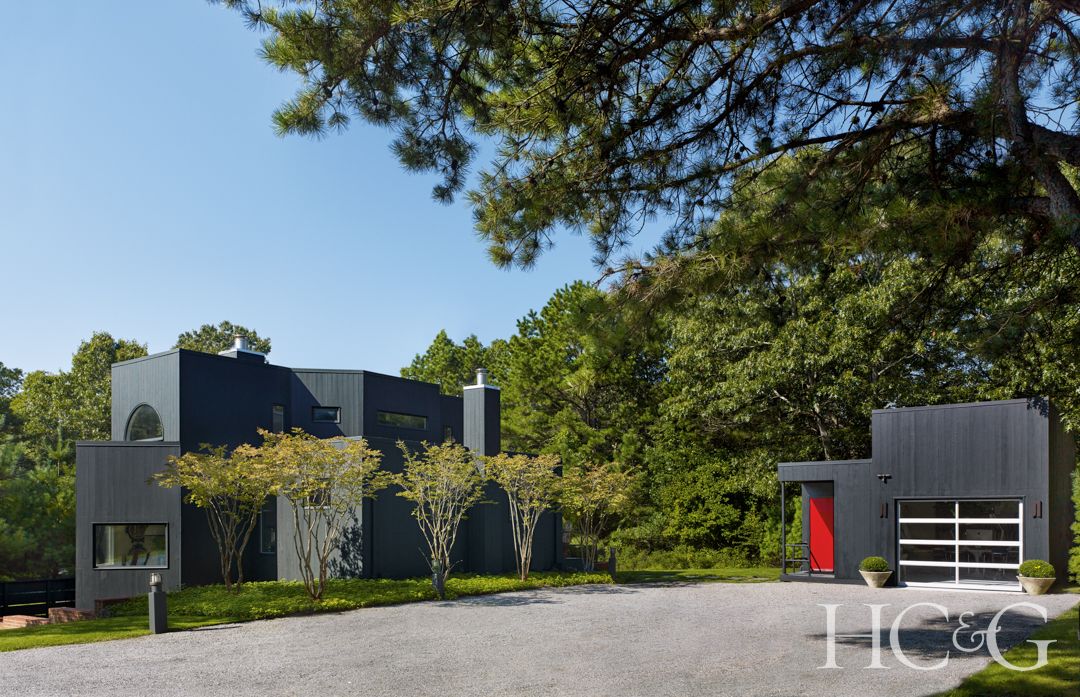
For three decades, Baratta’s Long Island residence remained the little cottage that had jump-started his career. But in 2013, he decided to make a change. He bought a newer, larger home, also in Flanders and including a detached garage that is now the headquarters of Anthony Baratta, LLC. Painted black and nearly devoid of the full-tilt color that made the decorator’s career, the 2,200-square-foot two-bedroom house sits on four and a half acres surrounded by reserve. “It’s in the middle of the Pine Barrens,” Baratta says. “A friend of mine calls it ‘Pine Barrens chic.’”

Baratta outside his studio, formerly the garage.
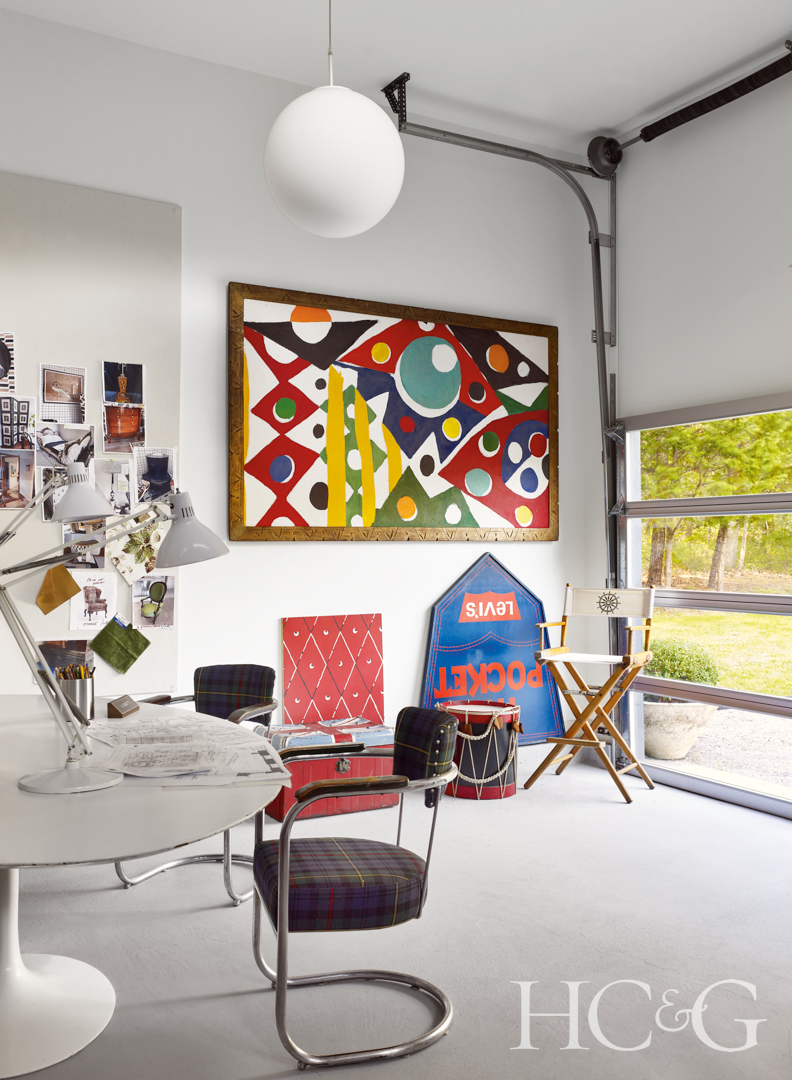
Baratta commutes only a few feet to his office, which he set up in the detached garage after his beloved vintage convertible died. Furniture pieces include an Eero Saarinen Tulip table, Luxo desk lamps, and Kem Weber chairs. The canvas is by Kim MacConnell.
Previous owners of the 1979 house had painted the original cedar siding bright white. Designer and homeowner Anthony Baratta switched gears with a coat of Benjamin Moore’s Nightfall, which he describes as a shade of black with a lot of green in it.

Baratta’s den/study features an Art Deco daybed, Memphis ceramics by Ettore Sottsass, a terrazzo table and Country Braid House rug of his own design.

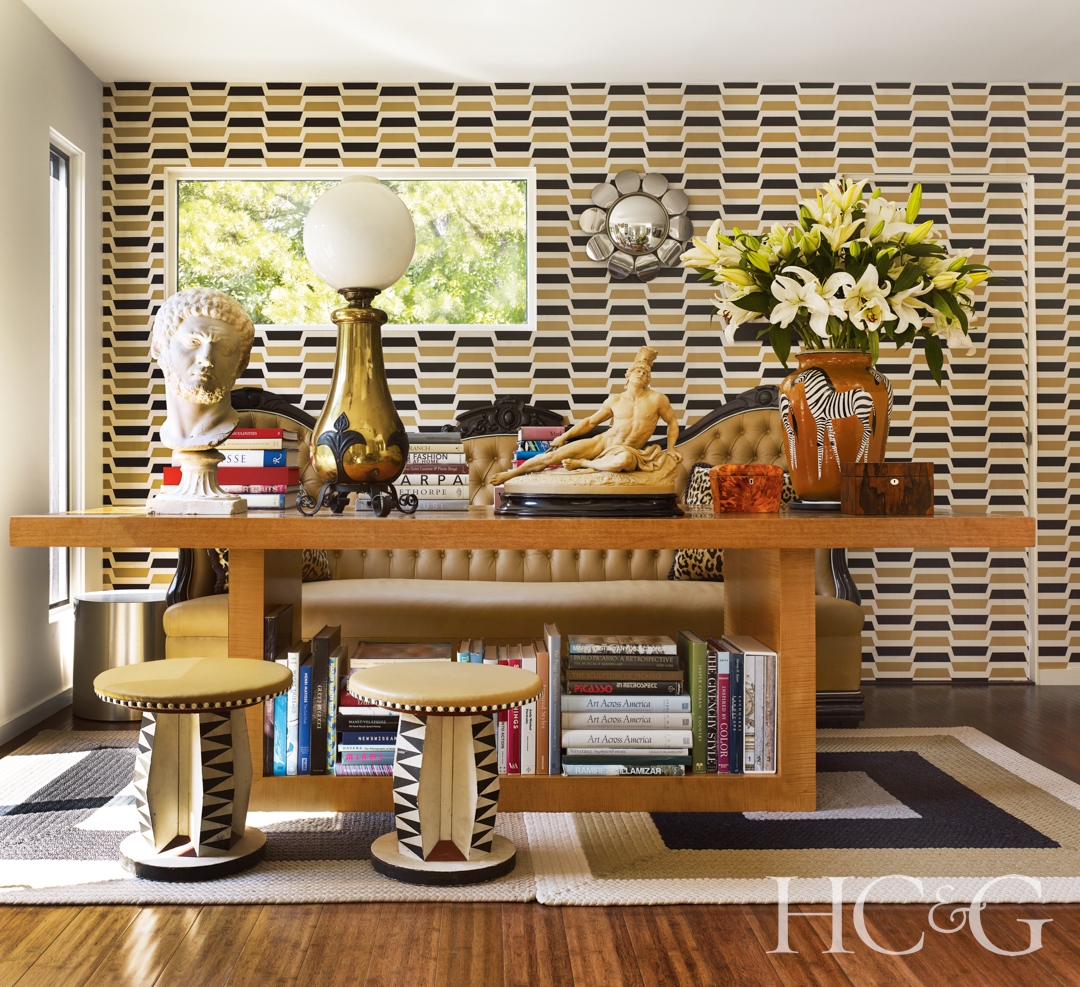
In the dining area, Baratta paired an English Art Deco library table with a tufted Victorian settee and period “Belgian Congo Deco” stools. The custom wallpaper was a surprise gift from two of his design associates, Erick Espinoza and Jaime Magoon.
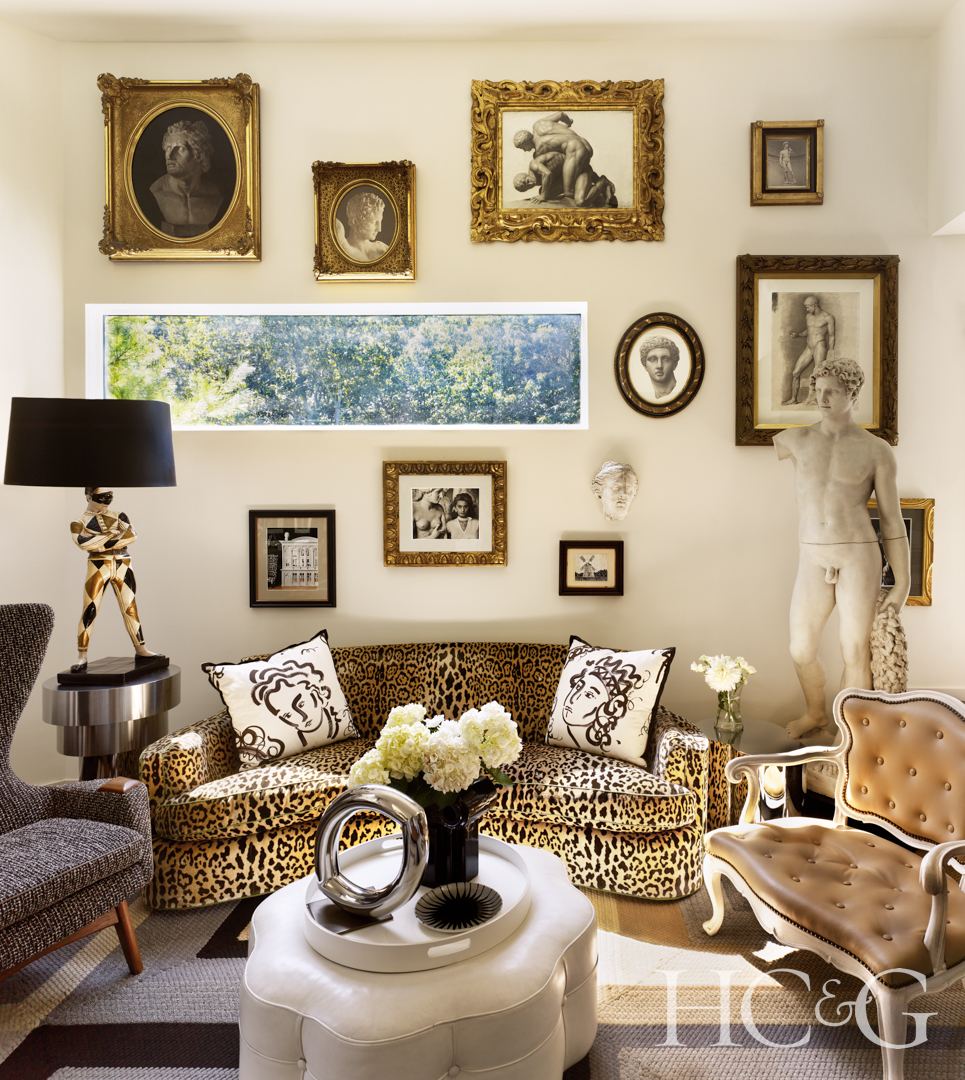
In the living room, Baratta enhanced his prized leopard-print Harvey Probber sofa with Matisse-inspired accent pillows made from a Clarence House fabric. The button-tufted bergère is vintage Jansen.
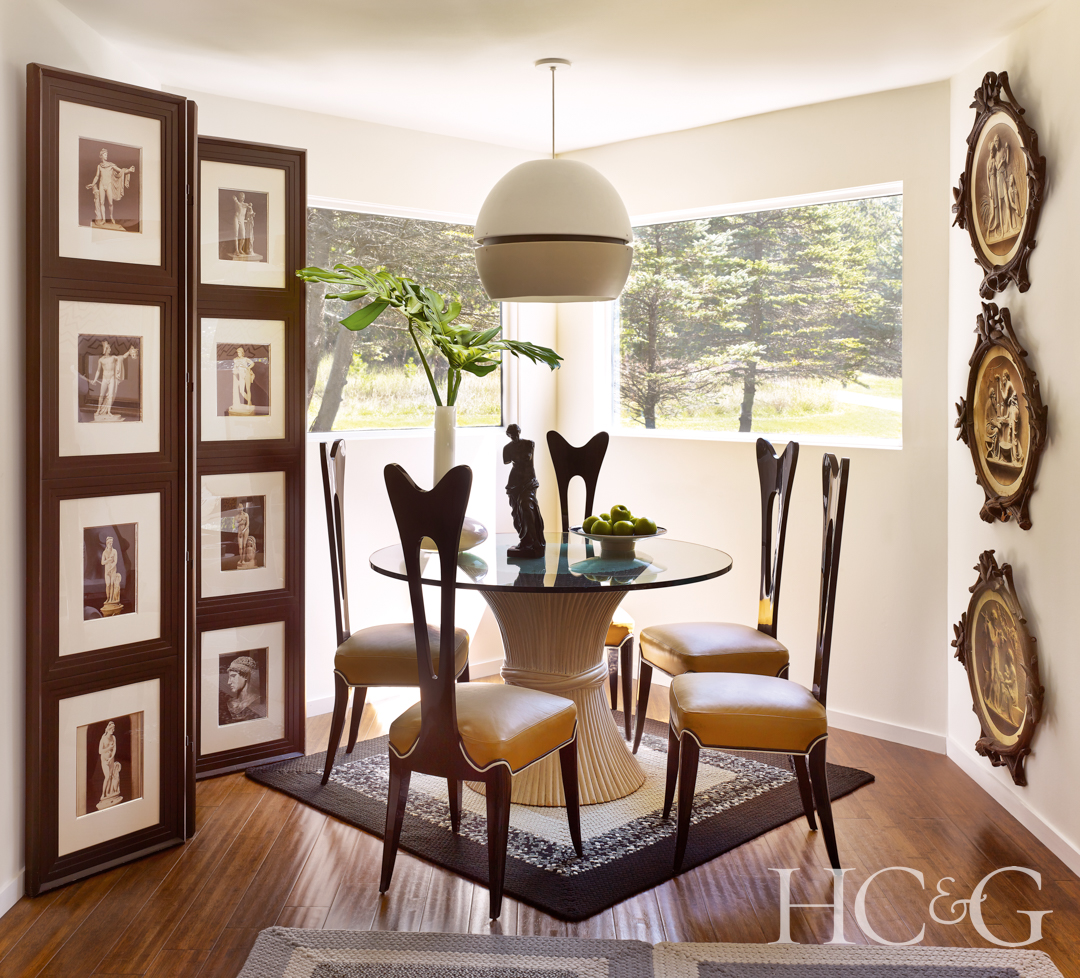
Baratta embellished the screen in the breakfast room with a set of antique photographs. Custom chairs surround the vintage McGuire table.
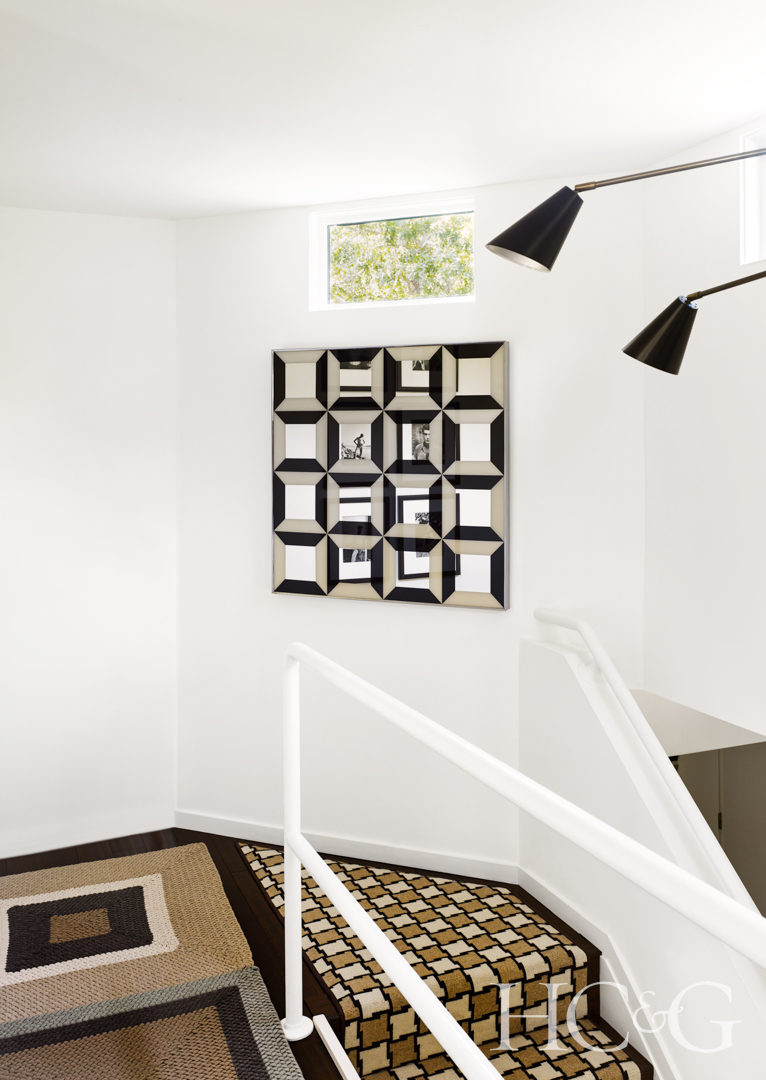
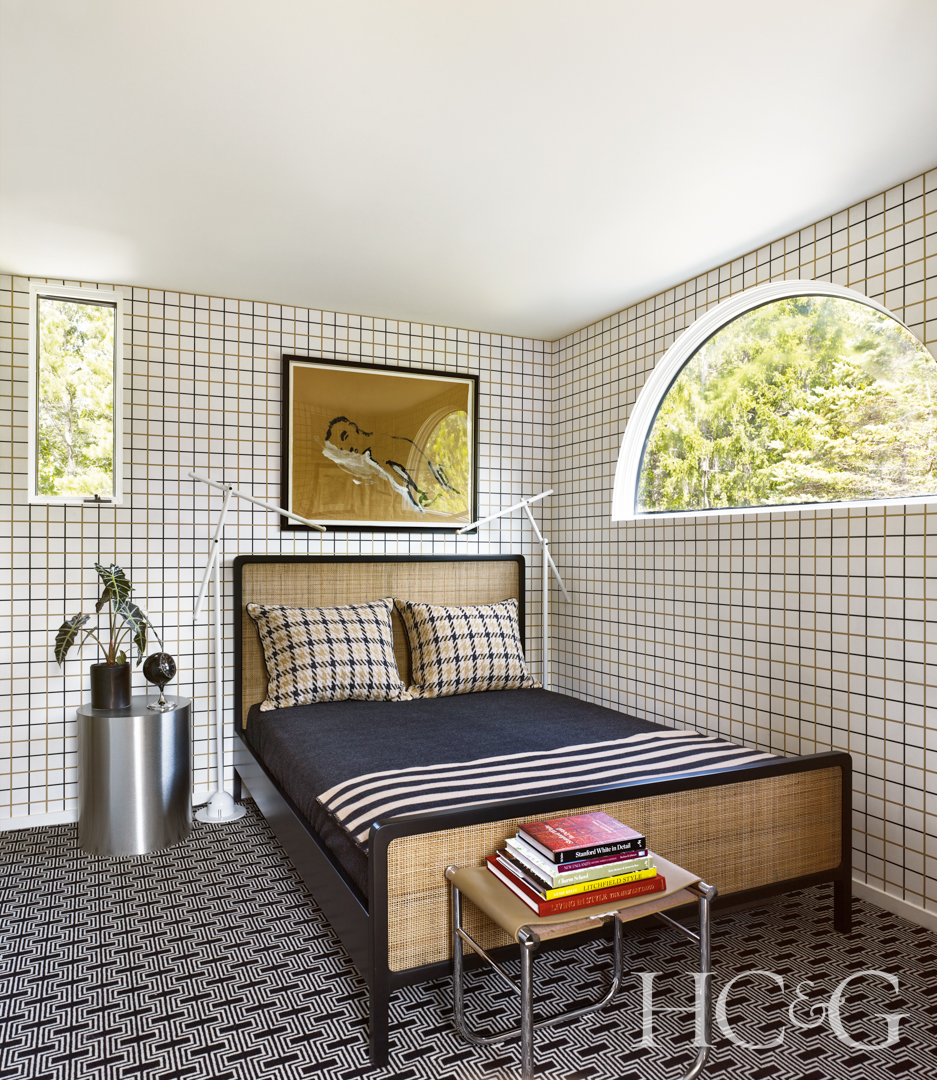
Baratta designed the Stark carpet for his bedroom, which features a custom tattersall wallpaper.
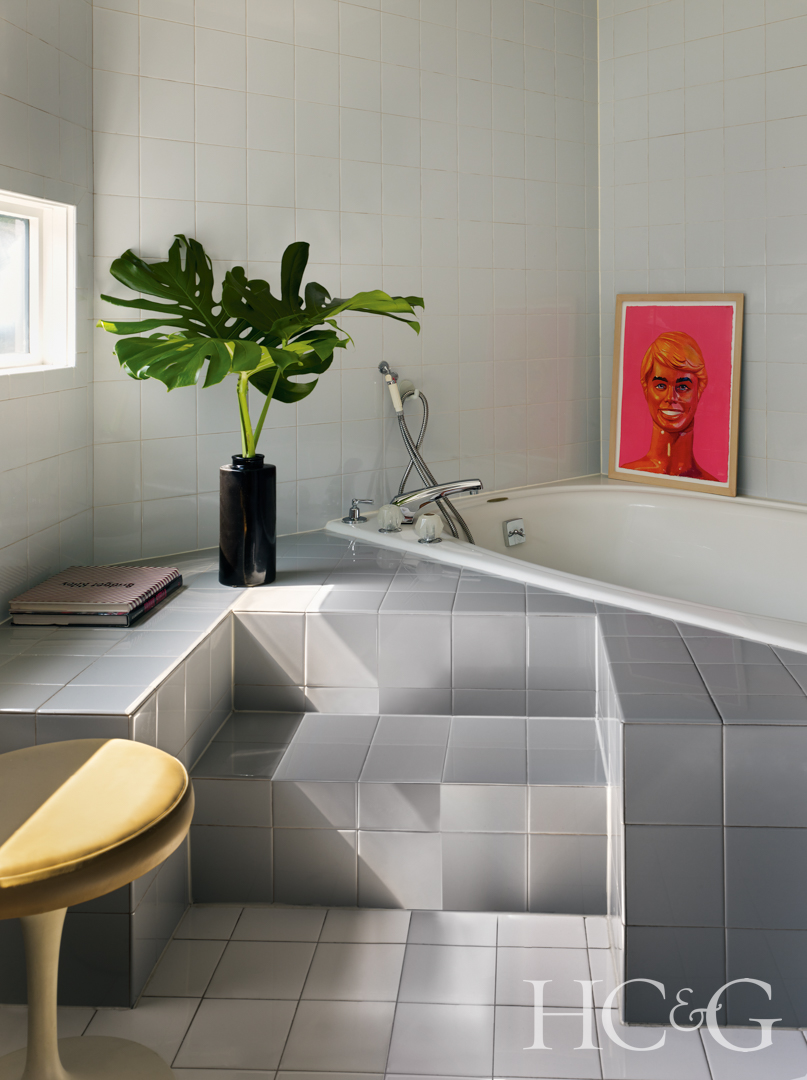
The original spa bath remains untouched.
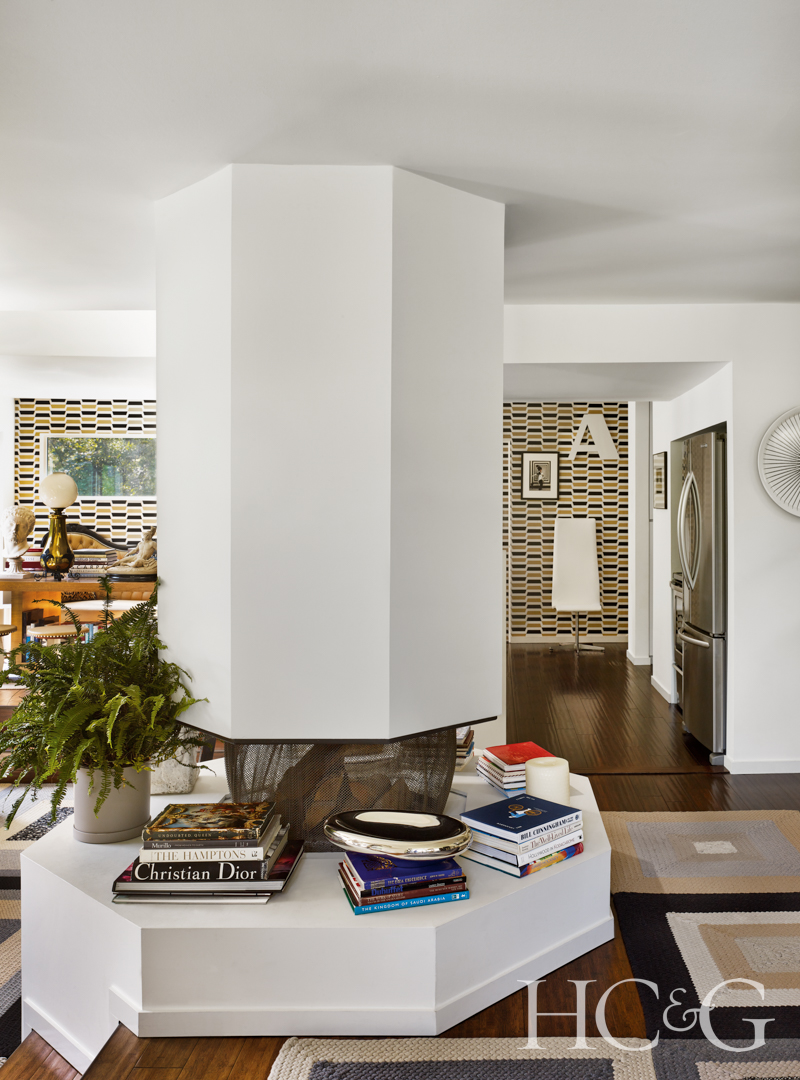
The octagonal fireplace anchors the primary floor, connecting the living room, dining area, kitchen, and breakfast room.
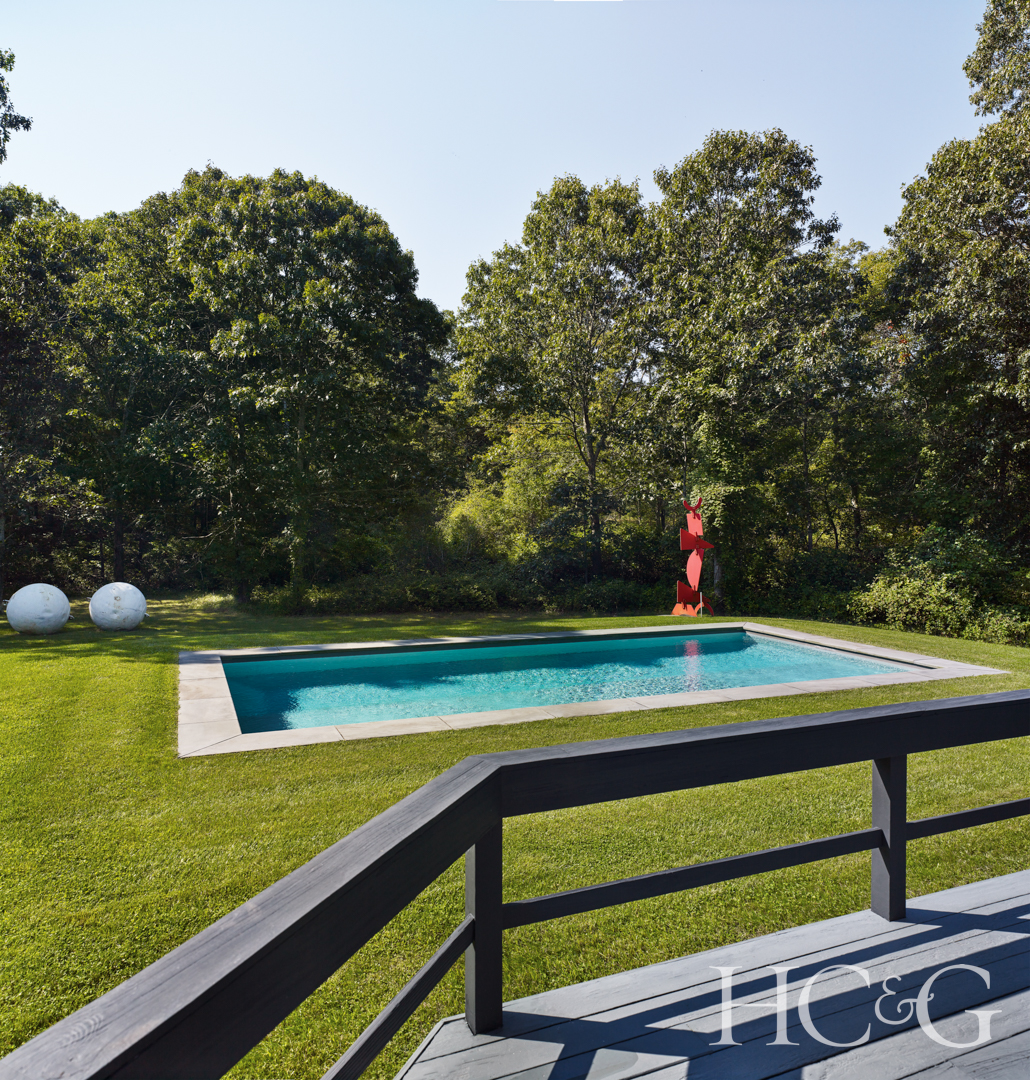
Baratta installed the pool, which is notable for its simplicity. “I didn’t want to look out at decking and pool furniture,” he says. The sculpture to the right is by Ginette Heuman.
Built in 1979, the house is the ne plus ultra of post-modern eastern Long Island architecture, although mysteriously there is no record of the architect who built it. “About three years ago,” Baratta recounts, “someone left a set of the original plans in my mailbox. But they had cut out the architect’s name.”
Always a wiz with color, Baratta “started with a brighter palette, but I wasn’t feeling it,” he says. “For one thing, I had had other homes, and they were much more colorful. So, I thought it might make sense to take a different path. I also had a lot of pieces, like my leopard sofa, that suggested a mellower palette.” The sofa in question: a Harvey Probber score that Baratta bought “in very shabby shape” in the 1990s from a shop in the West Village. He had it upholstered in faux-fur leopard at first, but later upgraded it with a silk velvet from Scalamandré.
In the past 10 years, Baratta’s house has become a showcase for things he loves, such as plaster casts of Roman statuary, which he has been collecting for decades. “They were made as models for art students,” explains the decorator, who was delighted to find a twin of his living room statue serving as a mannequin in a costume exhibit on a recent visit to the V&A Museum in London. These latter-day antiquities are paired with a range of antiques and vintage pieces, including a Victorian settee, a suite of “Belgian Congo Deco” stools, a reproduction tufted bergère, Memphis ceramics by Ettore Sottsass, and several original mid-20th-century accessories, some of them idiosyncratically reimagined. Eclectic? He designed his own dining chairs based on a much smaller version he bought in Europe, and his bed frame is from West Elm. Geometrical braided rugs, a reference to his earlier work as a decorator, grace several floors (one featuring suiting fabrics like houndstooth, flannel, and camel hair provides graphic contrast to the leopard sofa). Upstairs, his bedroom wallpaper is an oversize tattersall.
“Living here,” Baratta reflects, “has been an interesting transformation for me. I love the house, but its open plan is different from a house with conventional rooms, so I’ve learned to live in it a different way. It’s actually lots of fun.”
