


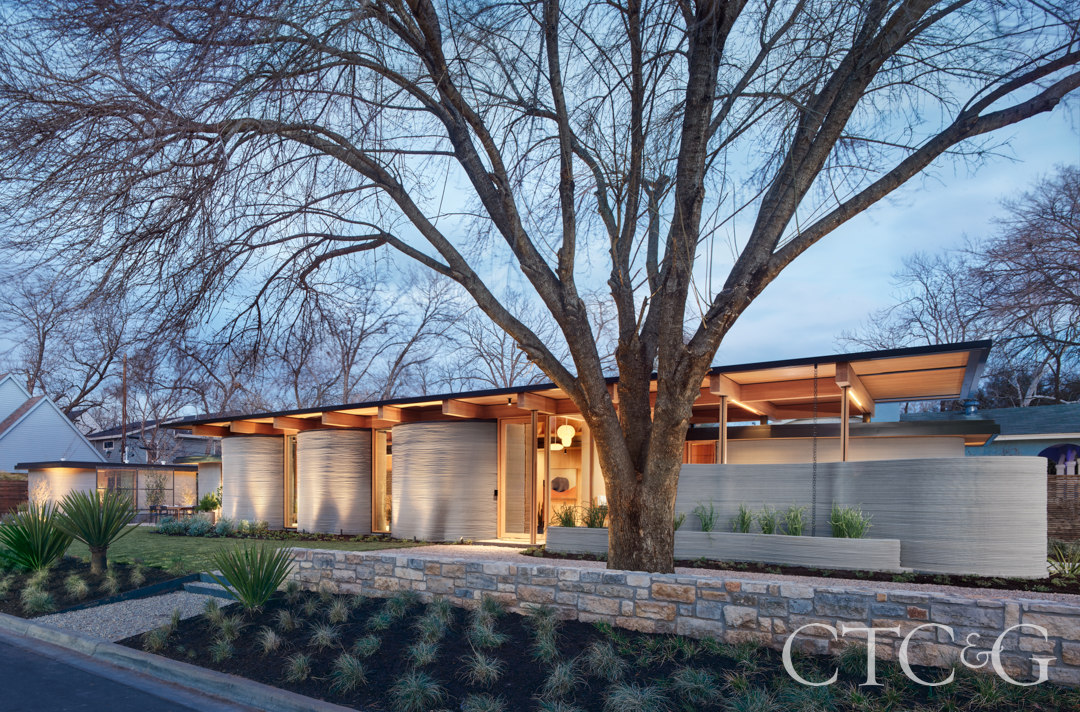
Icon’s Wimberley Springs homes in Wimberley, Texas, are offered in four unique floor plans, including AlphaBeta S., shown here.
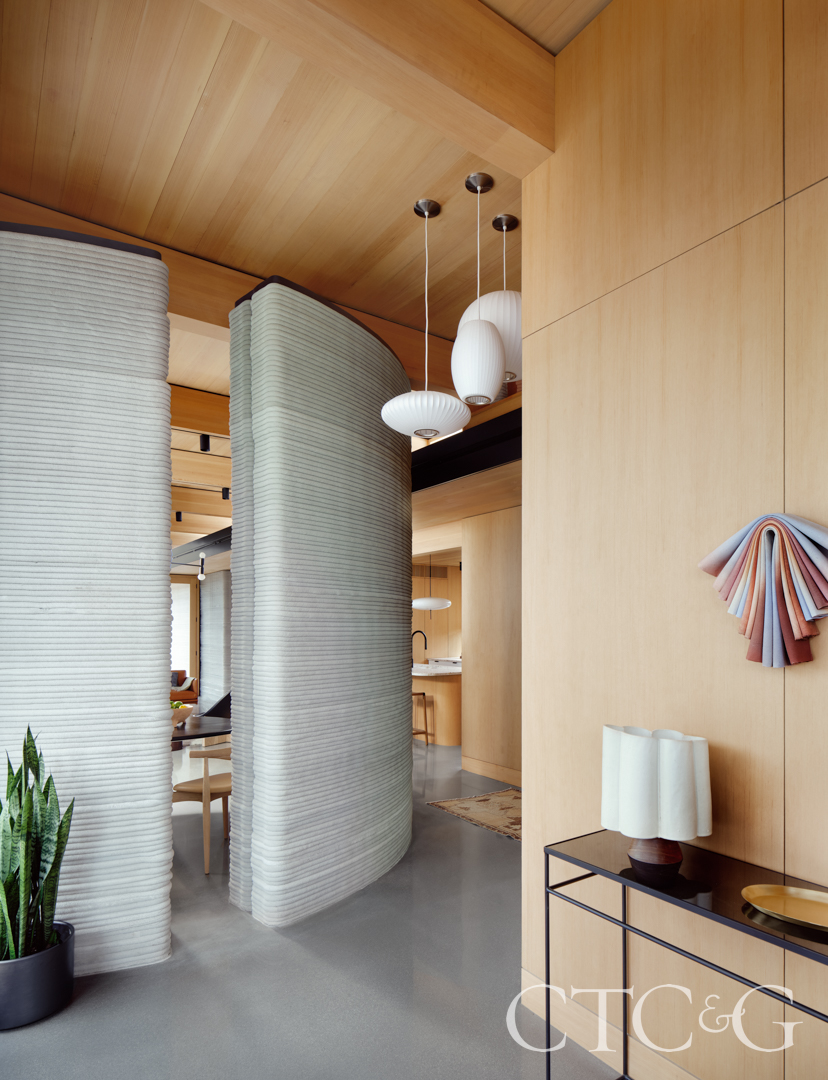
House Zero entryway.
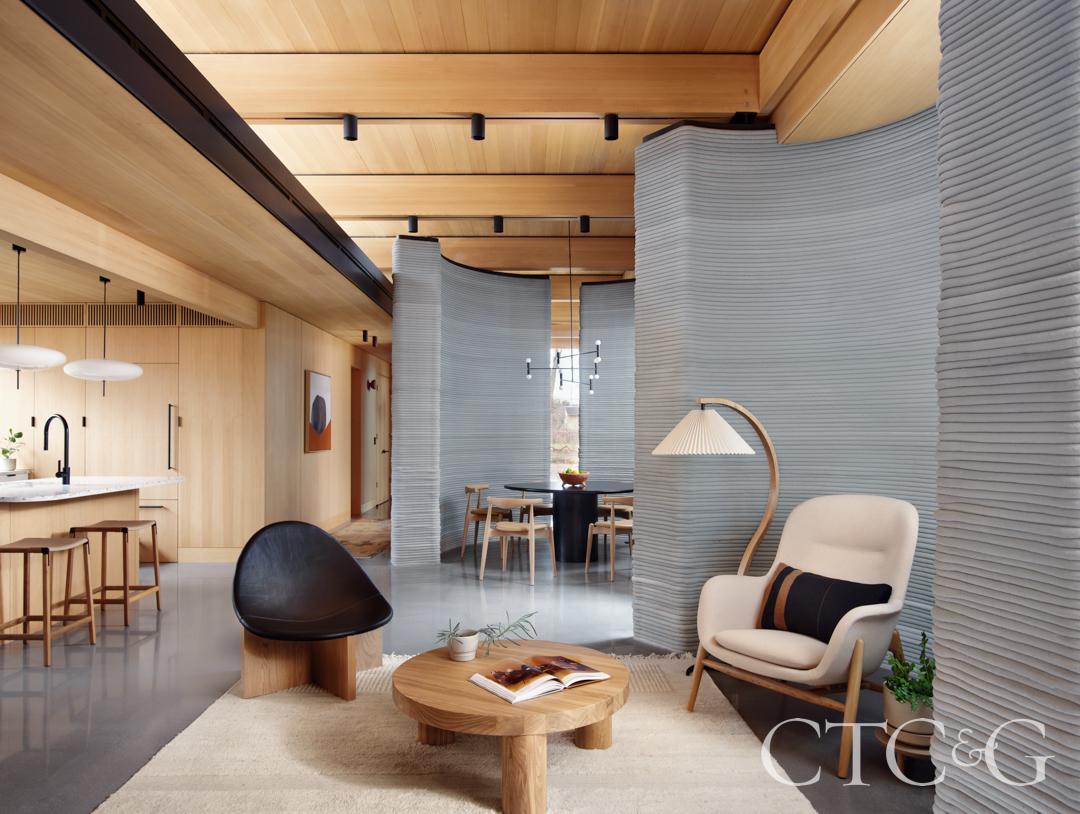
House Zero interior.
CTC&G recently reached out to Icon, an innovator in the building of homes. Melodie Yashar, VP of Building Design and Building Performance, talks about the company’s innovative technologies and thinking about how to build better.
Tell us about Icon and why your story is so compelling.
Icon is a construction technology company developing robotic and AI systems to lower the cost—and increase the speed and quality—of construction to tackle the global housing crisis.
Tell us more about the intersection of home building and technology. How have architects and builders reacted?
Part of what is so exciting about the design-build landscape today is that new building systems, materials and construction processes always introduce new opportunities for designers and architects to work and build in different ways. 3D printing is used very frequently in architecture to advance design visions and concepts. 3D printing also enables new design possibilities that were previously too difficult to manufacture using traditional construction means and methods.
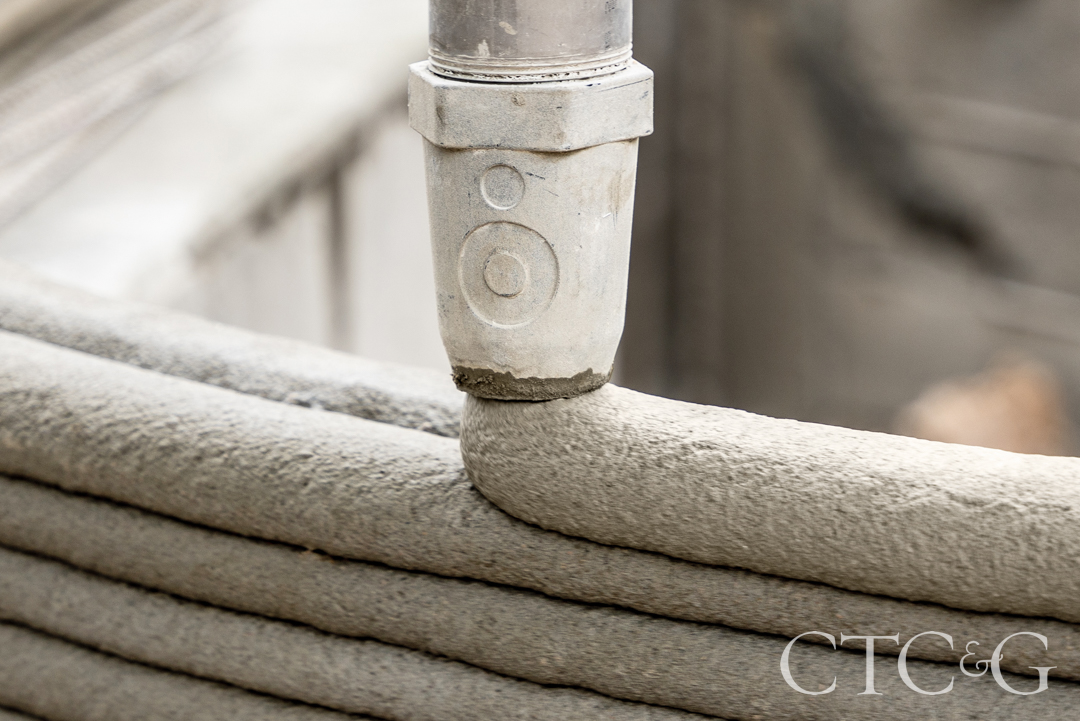
The extrusion system at work.
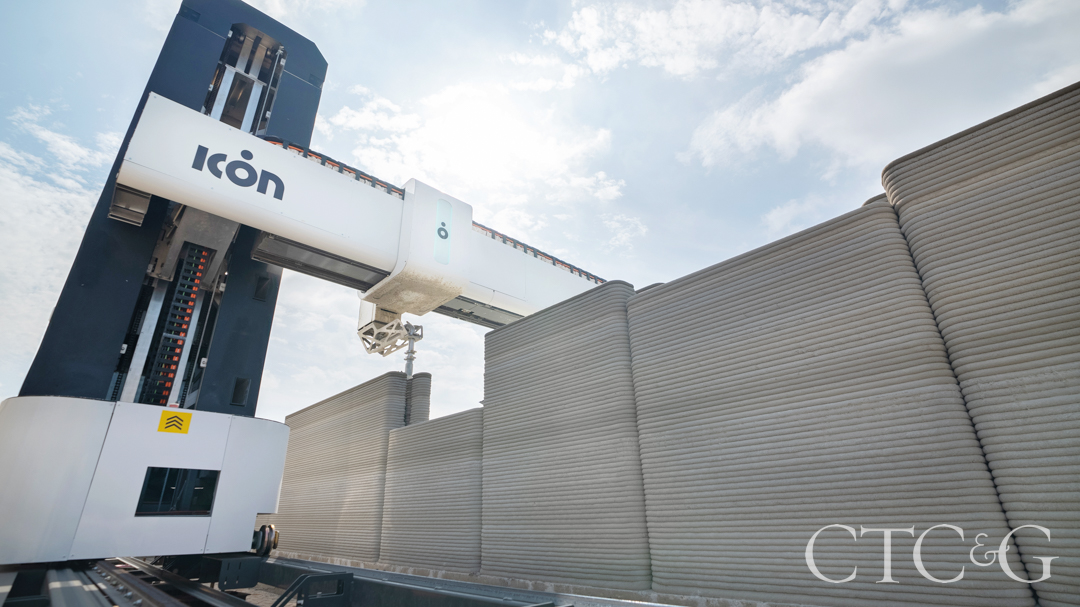
Construction system for 3D-printed homes.
The notion of 3D printing a home is fascinating. Tell us about the process, the advantages and the limitations.
Icon homes are 3D-printed directly on site. Once the foundation has been poured and cured, the Vulcan, a mobile, gantry-style 3D printer, arrives and rolls off the truck and onto the slab and then begins to extrude our CarbonX material layer by layer to deliver the full wall system of the home. The printer is operated with an Icon-developed app for mobile devices, such as a tablet or smartphone.
The durable walls of Icon homes are what is “3D printed”—meaning a high-tech robot built the home layer by layer with cement-like material to ensure maximum comfort and efficiency. Icon homes provide better insulation compared to conventional construction, and the wall construction decreases the home’s temperature fluctuations in the summer and winter and during extreme weather events. Our customers love it.
By using automated construction and 3D-printing the wall system, numerous steps of the traditional construction process are eliminated, saving time, labor and materials. Icon’s 3D printing technology also presents endless possibilities to create curves, slopes and modify the formal geometry of a wall system. We feel that 3D-printed construction introduces potential for amorphous, eccentric and courageously divergent architectures that cannot be easily or economically constructed using traditional construction means and methods.
AI has arrived at Icon. Explain how it works and how clients have reacted to it.
Earlier this year we unveiled Vitruvius—an AI system for designing and building homes. The ultimate goal of Vitruvius is to take human and project inputs and produce robust architecture, plans, permit-ready designs, budgets and schedules. Vitruvius will help anyone design homes and generate floor plans, interior renders and exterior renders in minutes based on their own desires, budgets, and feedback. In the future, Vitruvius will progress all the way through schematic designs and produce full construction documents, as well as permit-ready designs, budgets and schedules. What truly makes Vitruvius unique is the combination of design and construction know-how. That knowledge is what allows Vitruvius to produce designs that can actually be built.
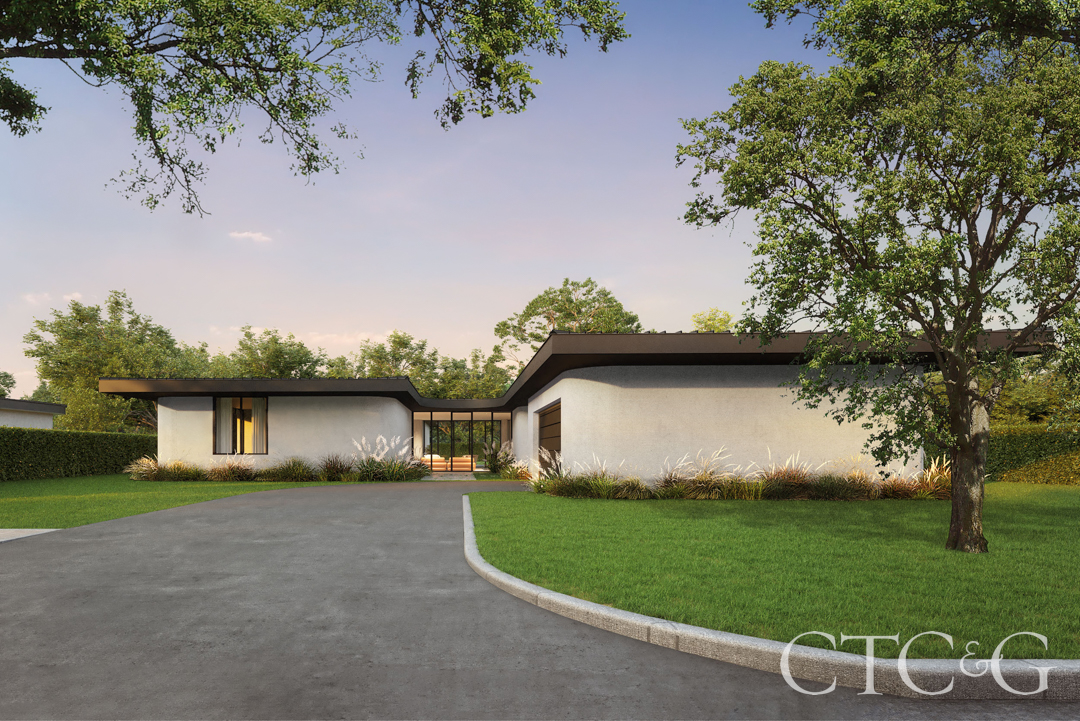
Icon’s Wimberley Springs homes in Wimberley, Texas, are offered in four unique floor plans, including AlphaBeta S., shown here.
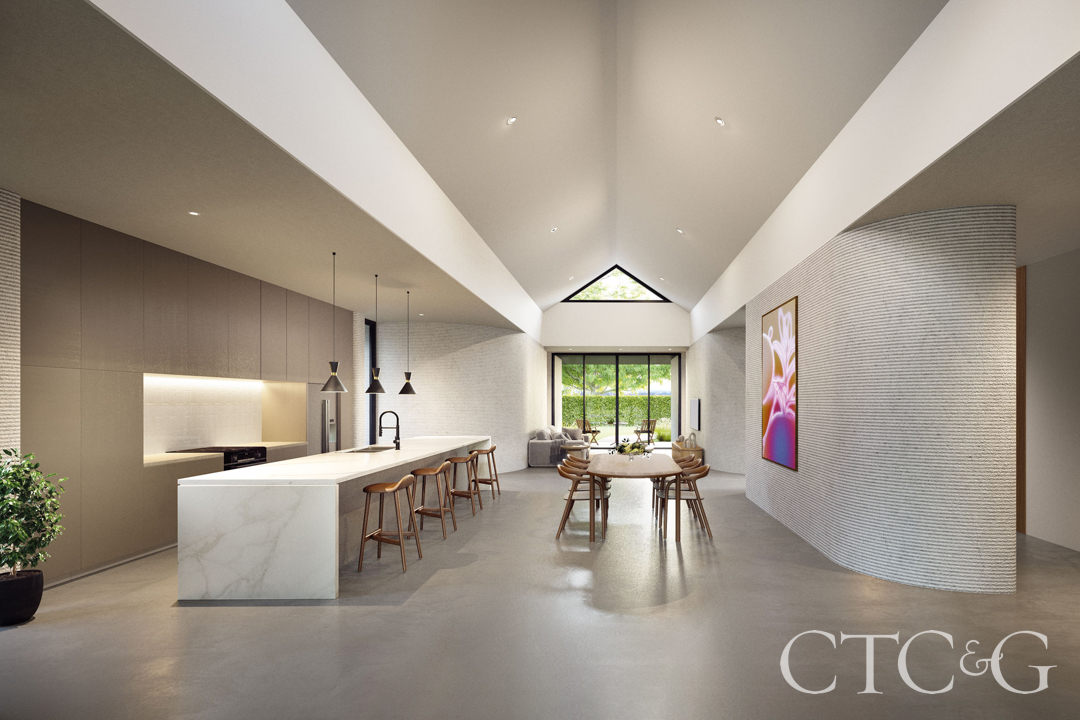
Icon’s Wimberley Springs homes in Wimberley, Texas, are offered in four unique floor plans, including Ranch Mesa, shown here.
Why is philanthropy important to your company?
We exist as a response to the global housing crisis. Construction-scale 3D printing is designed to not only deliver high-quality homes faster and more affordably, but fleets of printers can change the way that entire communities are built for the better. The U.S. faces a deficit of 5 million new homes and worldwide there are 1.2 billion humans that lack adequate shelter. There is a profound need to swiftly increase supply without compromising quality, beauty or sustainability and that is exactly the strength of Icon’s technology.
You talk about architecture and a sense of place, which is what CTC&G has been about for 20 years. How would your company approach a residential project in Connecticut? Are there limitations due to climate?
In all our projects, we look to incorporate regional and cultural vernaculars within our designs that can represent a sense of place and locality. A project in Connecticut would be approached quite similarly—we always strive to ensure that local materials and design vernaculars are represented within our work. We have also engineered specific wall systems for different climate zones, and we work to ensure that the wall system and architecture we are delivering in the climate in question exceeds code requirements for thermal insulation, promotes sustainable design approaches, and more.
What’s next for Icon and for the industry?
We have a number of projects in development that will span across the U.S. and globally. Additional social housing, disaster relief housing and market-rate residential housing projects are also underway. We are working with NASA to develop construction systems to create infrastructure and habitats on the Moon and eventually Mars. In the future, we will build differently than we build today.
