


Winner: Studio Bartolotta
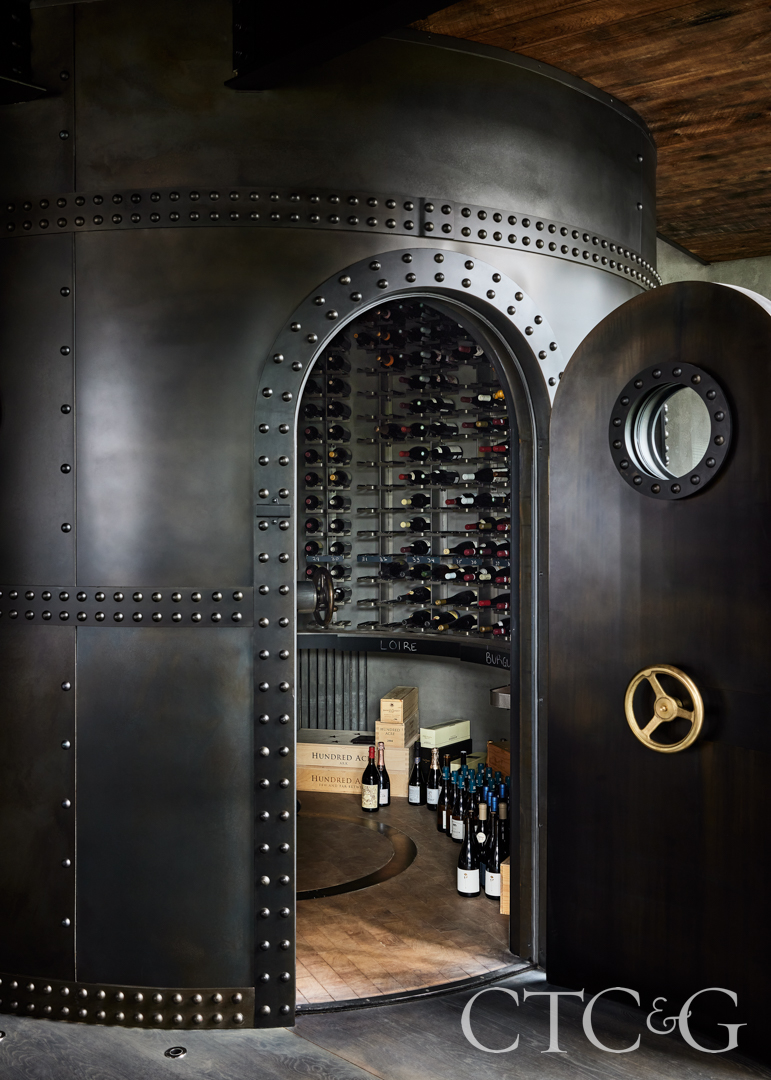
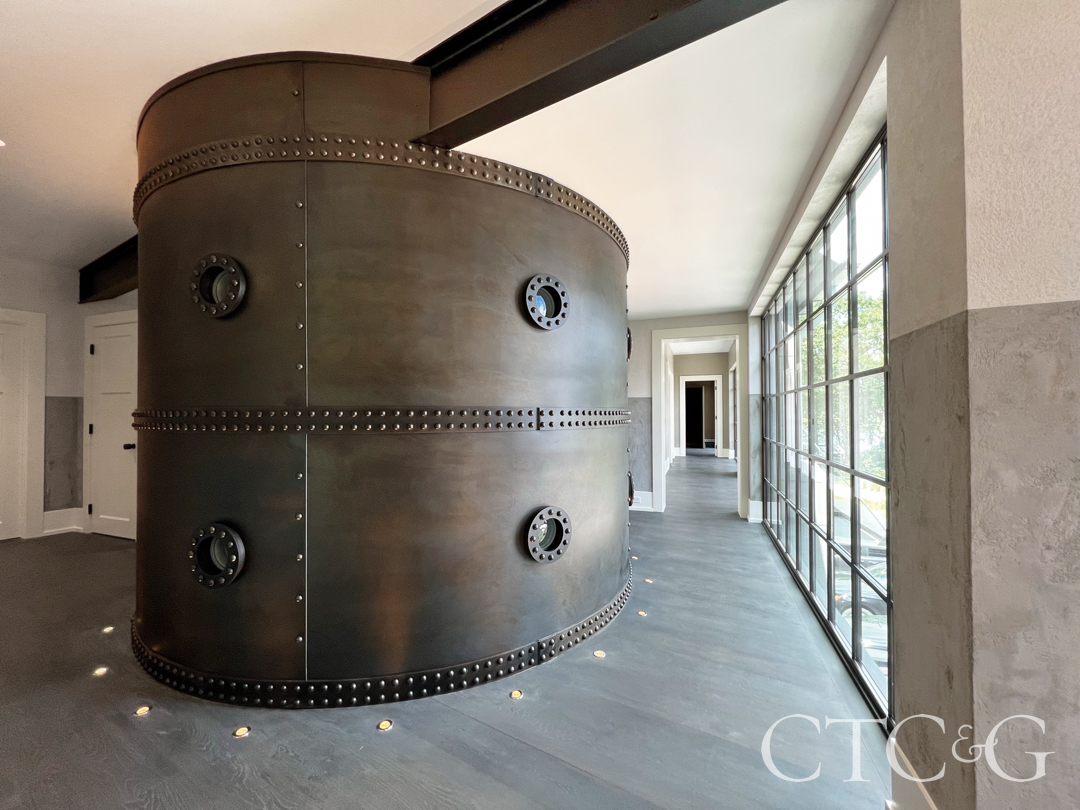
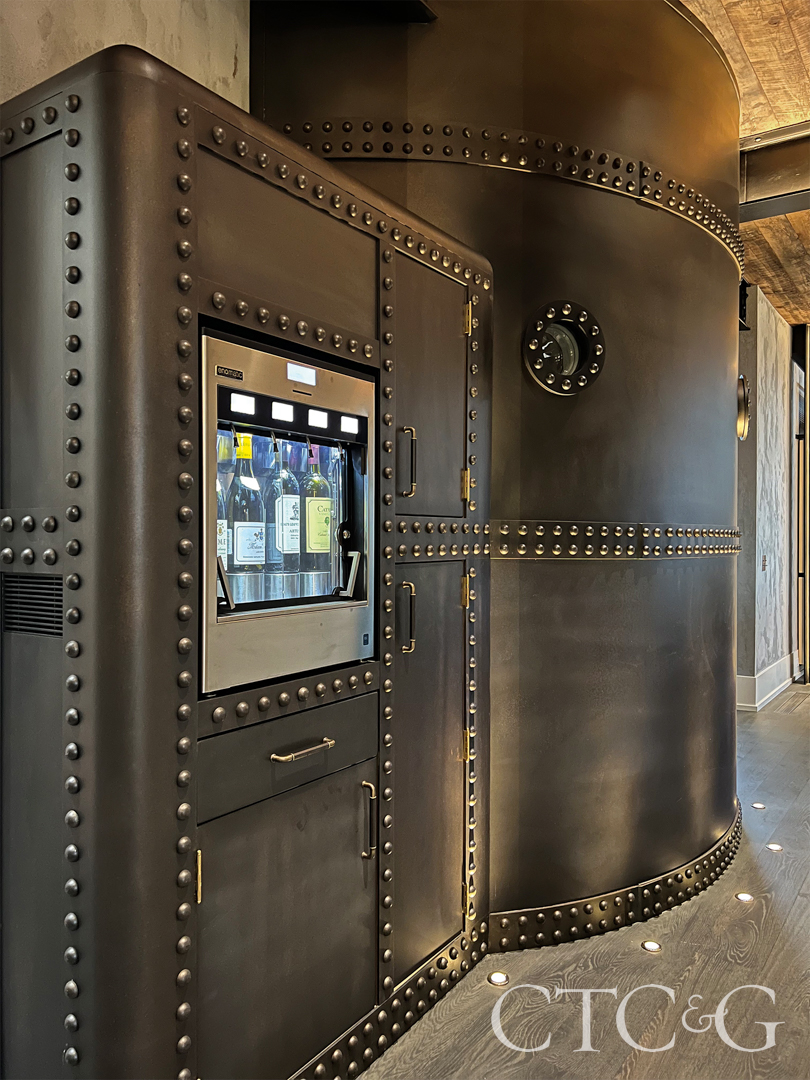
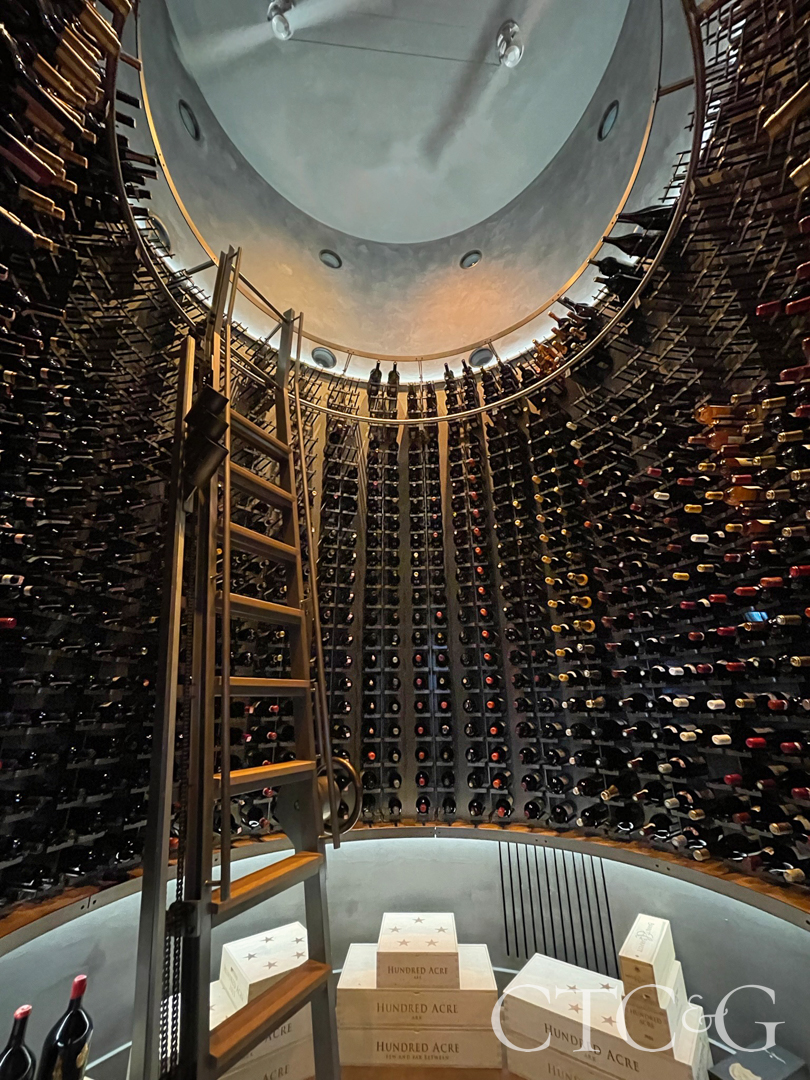
When walking into this residential, restaurant-quality kitchen, visitors find something that looks akin to a surfaced submarine, complete with windowed portholes and a riveted steel exterior. What proudly takes its place in this room is a circular two-story, metal-armored wine silo able to hold 2,000-plus bottles. Upon entering through a fortified, arched doorway, you encounter an 18-foot-high space ringed by a curved steel and bronze wine rack. A custom ladder rotates around the space on a bronze ring track, mortised into a vertical grain, industrial wood block floor. When accessing the upper bottles, a three-bottle funicular-like mechanism allows for bottles at the top to be safely brought down mechanically. Meanwhile, a curved staircase on the outside circles to the silo’s top for a view to the inside, which also includes a sommelier tasting space. Affixed to one end of the structure is a four-bottle wine dispenser and storage for wine accessories. Here, at once, is a whimsical, yet practical architectural element within the architectural envelope of a private home.
Finalist: Beinfield Architecture

Bruce and Carol Beinfield wanted a place to go on weekends that felt far away but that was close by. The couple chose an old Connecticut fisherman’s shack—on the same property as their primary residence—that occupied a spit of land measuring a mere 25 feet wide and extending some 400 feet into a tidal estuary. It was there that they decided to establish their vacation home. The project began with something far more pedestrian than dreams of an exotic locale—a leaky roof.

In order to fix that, they ripped out moldy expanses of drywall and replaced it with reclaimed barnwood, an appropriate material for a firm that specializes in making architecture with, as its mission statement declares, “an environmentally sustainable solution.” Salvaged oak framing members were used to simulate barn framing, an effect that imbues the interior with a romantic allure. While Bruce credits himself with devising the architectural backbone of the project, he cites Carol as the creative force behind the multilayered interior design.
Finalist: Alisberg Parker Architects

It’s a building that has had many identities since it was first constructed as a horse barn in the 19th century. By the late 1990s, the structure had become a guesthouse on an estate in Greenwich, yet it remained dark and, at best, rustic, inside. The new owners envisioned it as a true guesthouse that would also function as a pool house and a space for their family and friends to gather.

Alisberg Parker Architects responded to the challenge by reconfiguring the interior layout and adding a small modern addition at the rear—an element that is marked by a wall of glass divided by giant panes, the whole of which is clad in galvalume (a steel-based material that combines zinc and aluminum).

Although the addition contrasts with the more traditional wooden barn, it is an exhilarating and inviting structure, while still harkening to the vernacular architecture of the original barn. The new curtain wall in the living space allows for the interiors to remain bright with natural light, filtered by the property’s surrounding trees.
