


While architects have to be exacting in their work, Mark Finlay is happiest when he doesn’t have to follow any rules. “When it comes to the Shingle style,” the architect says from his Southport office, “you’re allowed to ‘do your own thing.’” With this five-bedroom house in New Canaan, Finlay had a second chance to design it. He was the architect for its first incarnation in 2000 and then again when it underwent, as he calls it, “a major reboot” two decades later.
As he had done the first time with this residence, Finlay readopted his favored Shingle style, that quintessentially American architectural discipline developed in the late 19th century by McKim, Mead & White. Just as that venerable firm did in its day, Finlay, too, adopted many tenets of the style—cedar shingles coupled with stonework, flared roofs, steep gables, bay windows. “The Shingle style is a broad spectrum, and you’re allowed to introduce a lot of distinctive elements,” Finlay relates. New York–based interior designer Dominick Rotondi, who furnished the interiors of both this version of the house and its prior one, concurs by saying, “This is a classic Shingle-style house, but one with extra special surprises. That’s something Mark knows how to do so well.”
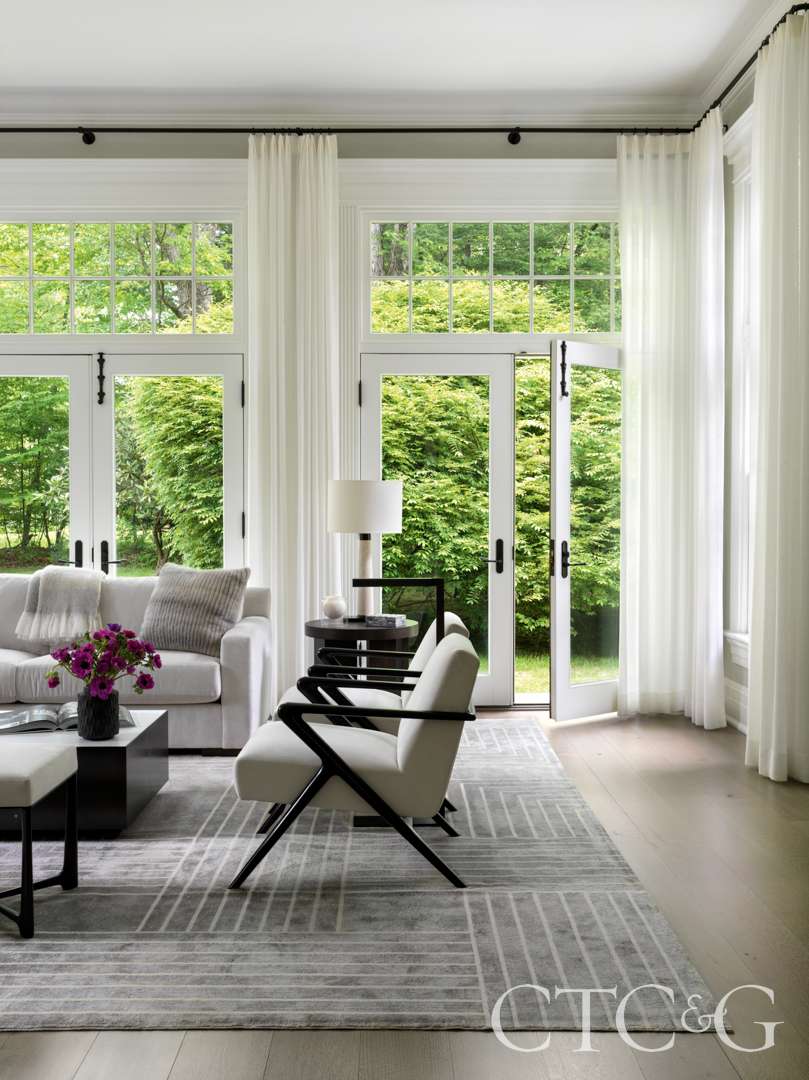
Living room seating includes a pair of Holly Hunt Capri lounge chairs on a Beauvais silk carpet.
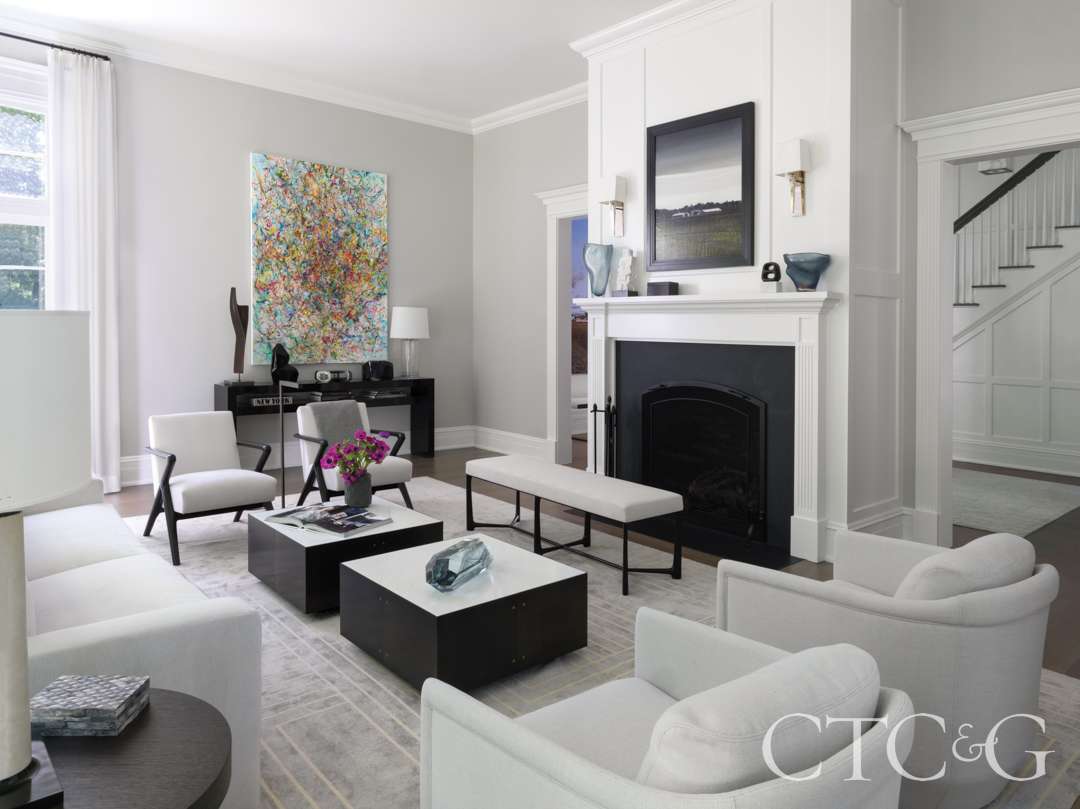
In the living room, Phillip Michaels’ vibrant Burst is positioned over a Ryan Jackson console.
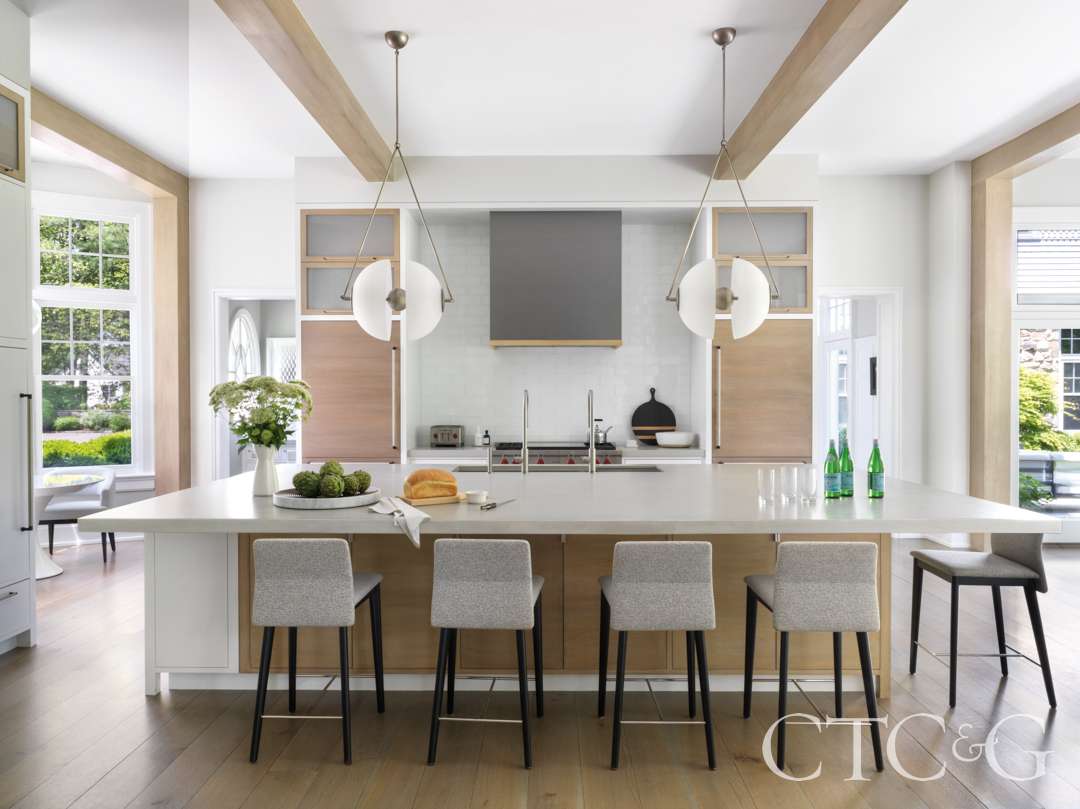
In the kitchen, Apparatus Studio pendants serve as task and ambient lighting over the large island, where Bernhardt counter stools provide seating.
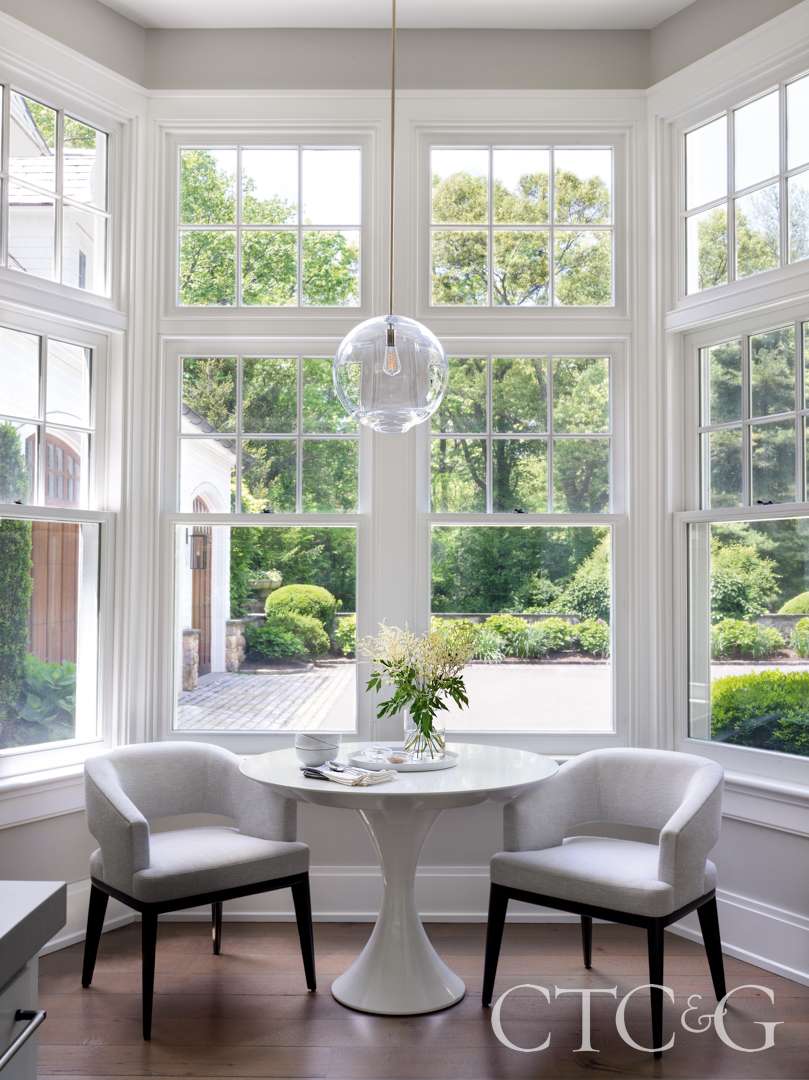
A breakfast nook is furnished with a pair of Holly Hunt dining chairs, above which hangs a clear glass globe from the Comerford Collection.
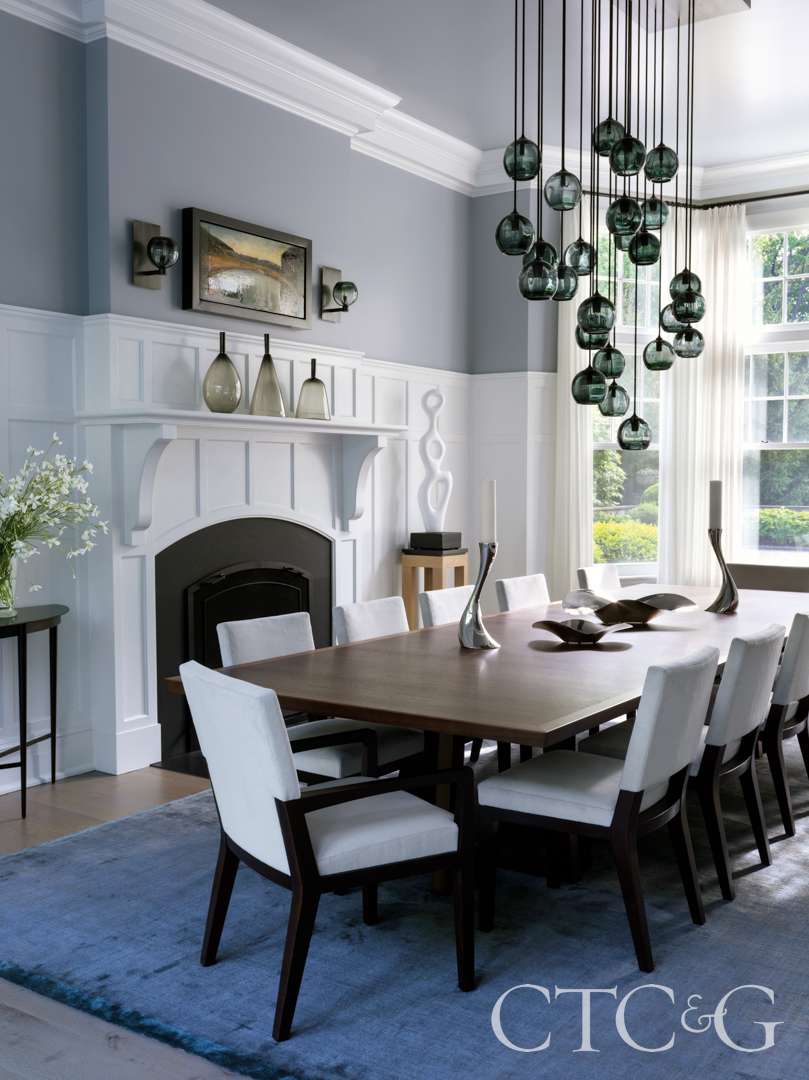
In the dining room, Georg Jensen bowls and candlesticks from Bloomingdale’s top a Dennis Miller table, and the artwork over the fireplace is from Nancy Hoffman Gallery.
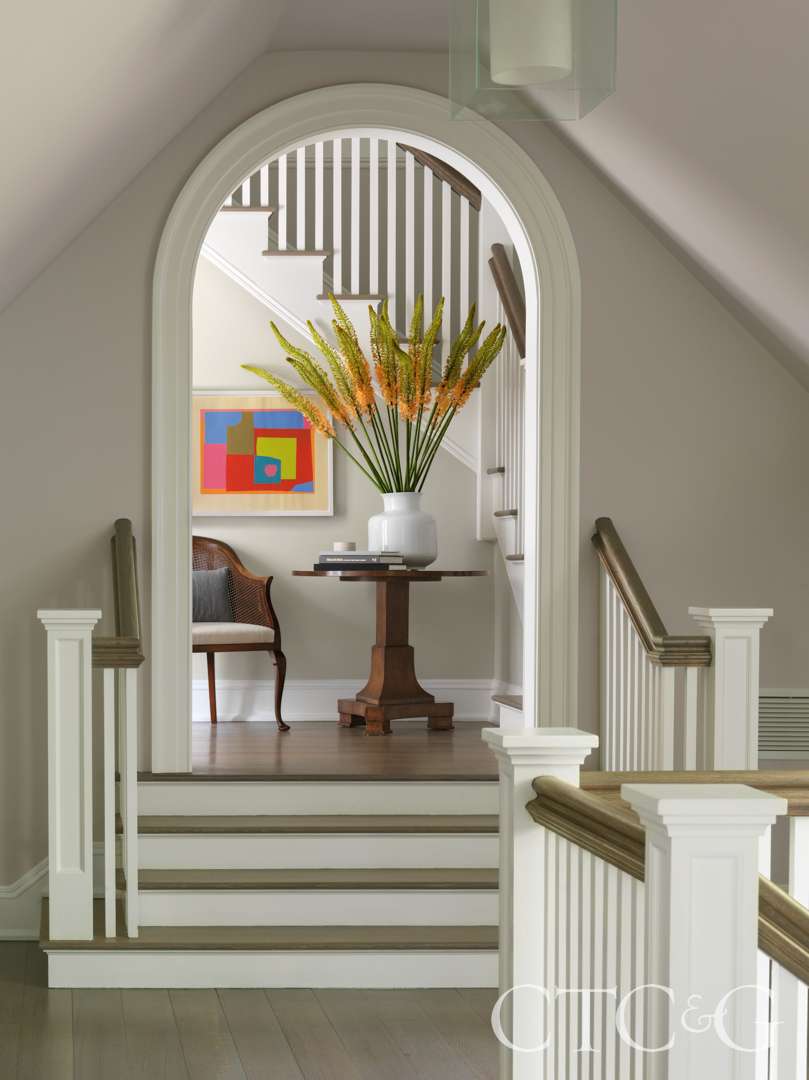
In a stairway hallway, a white vase from Aero Studios tops a table through John Rosselli & Associates. The artwork was purchased from Rago.
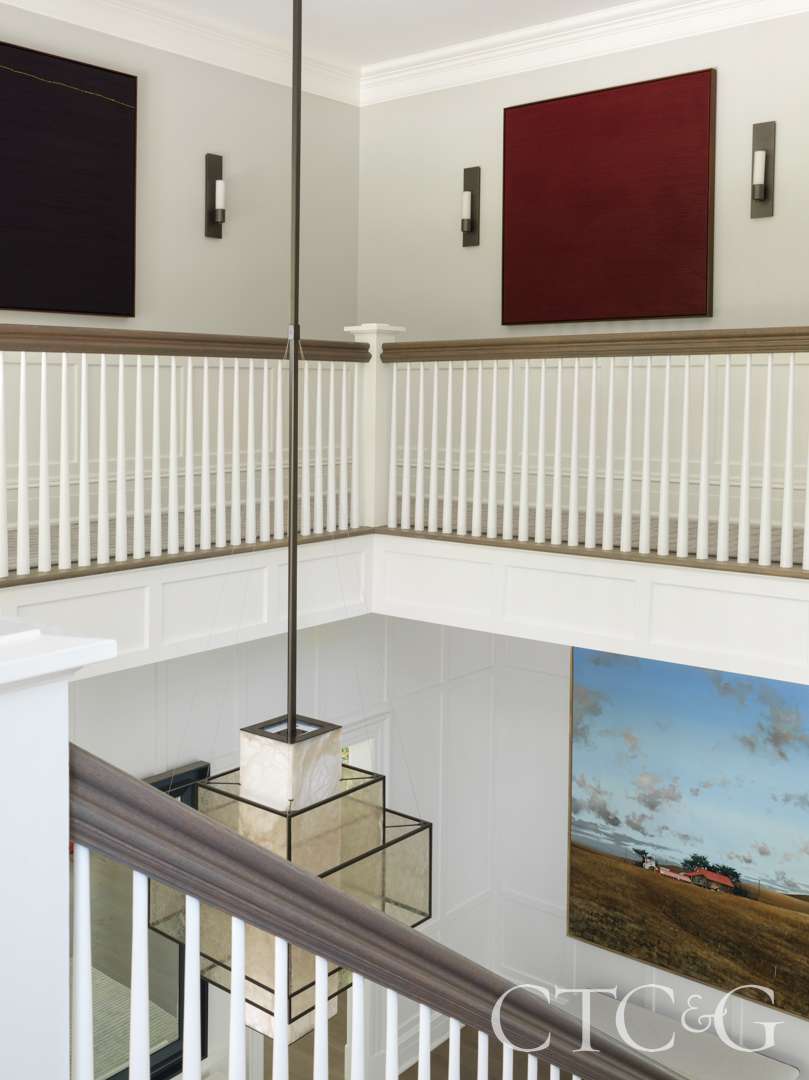
Two paintings by John Muller through Holly Hunt on the second floor are paired with a realistic work by Michael Gregory on the first floor from Nancy Hoffman Gallery.
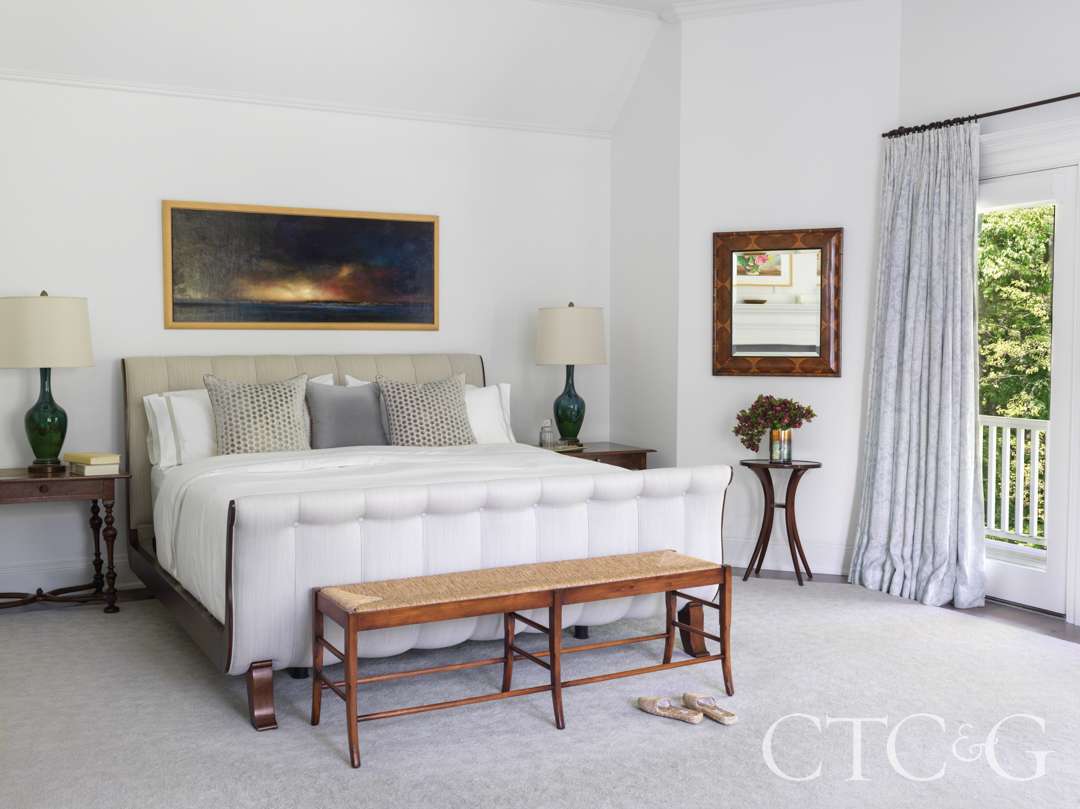
In the primary bedroom, lamps through John Rosselli & Associates top bedside tables from Hickory Chair.
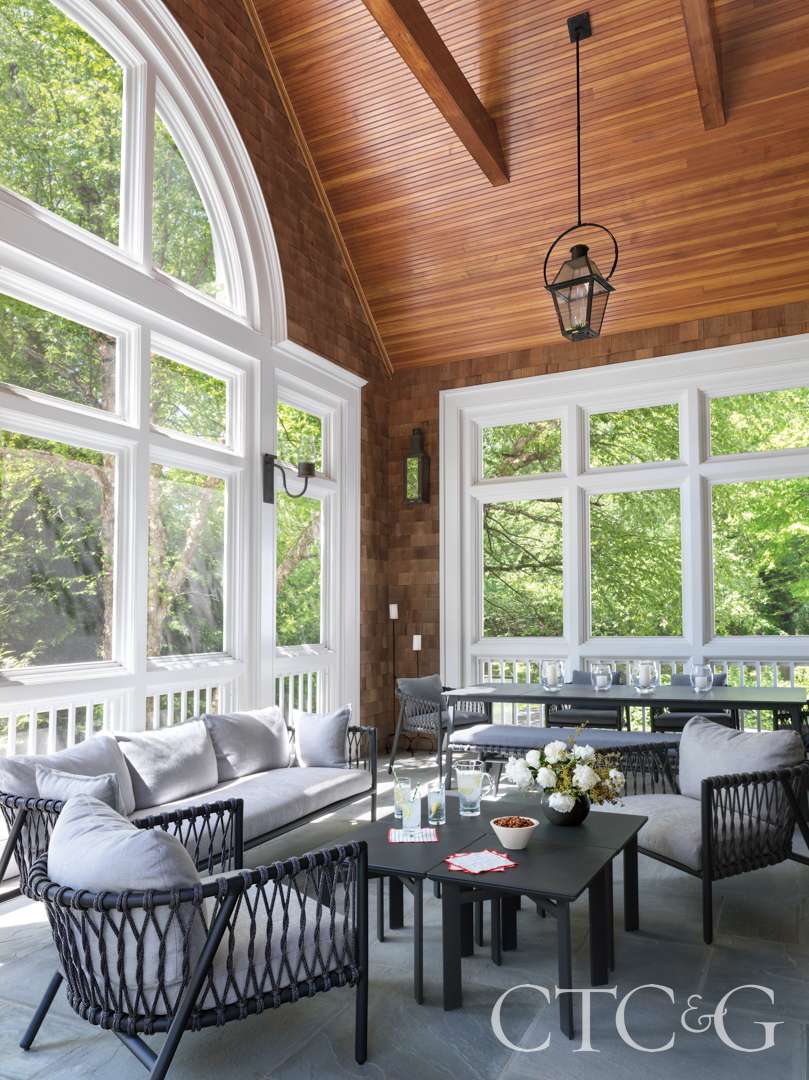
A year-round sunroom is furnished with Brown Jordan pieces and illuminated by Bevolo lighting.
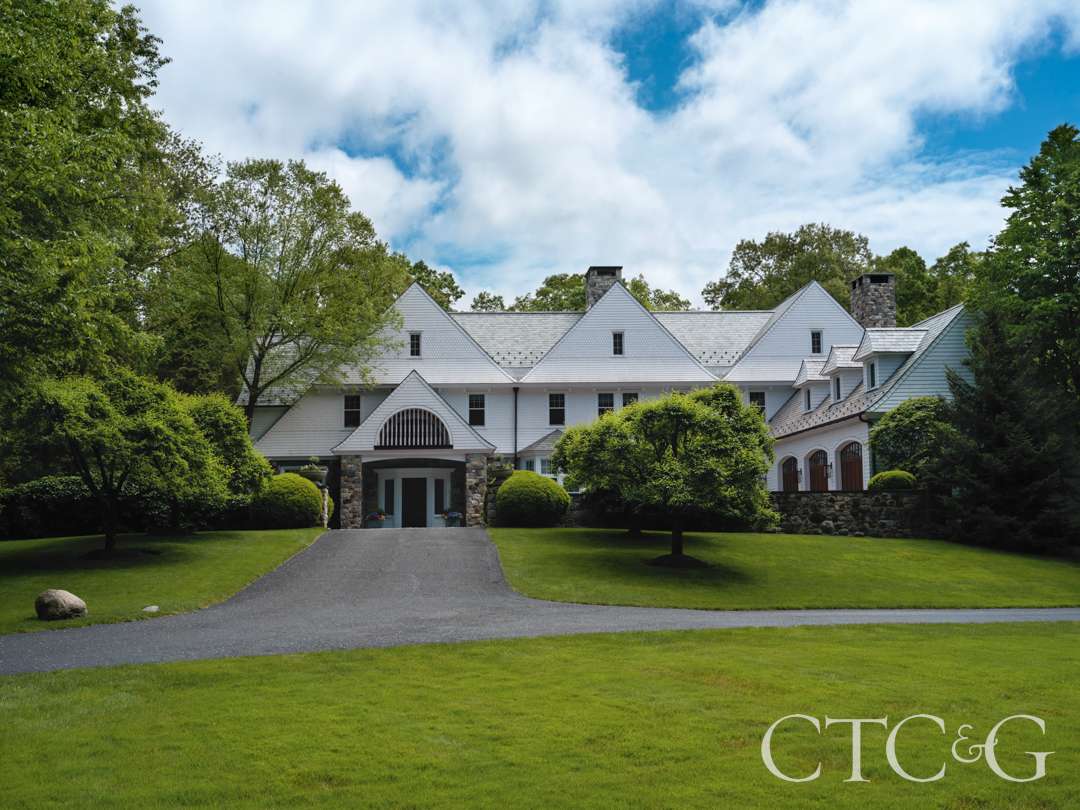
Landscape design by Highland Design Gardens complements this Shingle-style home designed by architect Mark Finlay.
Although the clients loved their home, as the homeowner says, “We were looking to move in a more modern direction, while keeping consistent with the style of the house, and my husband and I really wanted an open feel with a lot of natural light.”
To accommodate the homeowners’ request, the footprint was slightly expanded with the addition of a sunroom—a glassy, vaulted space that melds with an enlarged kitchen. “The light that now comes in through the kitchen/ family room allows us to feel like we are outside even in the dead of winter,” says the wife.

Meanwhile, Finlay’s three gables continue to march dramatically across the site, the house’s stone base combined with exuberantly articulated scallop-shaped shingles. “The stone anchors the house to the site,” Finlay emphasizes, “and as your eye works its way up the façade, the siding accents the horizontal lines. This technique takes a big house and brings it back to earth a bit.”
As for the interiors, Rotondi has worked on other projects with the clients—both incarnations of this residence, another in Nantucket, and a new one in Florida—and he knows well the aesthetics of the husband and wife. “She’s a modernist, he’s a traditionalist,” Rotondi says definitively, “and this juxtaposition of styles makes for a fun push and pull. How far can we go either way?” he asks rhetorically.

The interiors now skew more modern. “She likes clean lines and comfortable furnishings, but she also understands that while we can push the limits, we need to respect the grand moldings that Mark designed,” notes the designer. In the dining room, for instance, Rotondi employed a palette that includes a flat white, a mix of Benjamin Moore grays, and a high-gloss white on the ceiling. “When you’re sitting at this long table, the two tones on the walls quiet the eye,” he explains. A John Pomp chandelier, composed of gray-blue glass globes set at varying levels, creates what Rotondi calls “a starry-night moment.”
For the redone kitchen, which features a large island, Finlay framed the room with lightly stained white oak beams as a way to articulate the openings to the family room. “These beams tie the family room and kitchen visually in a more modern way,” says Finlay. “The kitchen is now the center of the universe of this house,” he adds.

And throughout the rooms, white furnishings, geometrically precise coffee tables, benches and desks, along with a mix of minimalist and representational artworks chosen mostly by Rotondi help foster the modern aesthetic. “One of the most fun aspects of my job when working with clients I’ve built a strong relationship with over the years,” says Rotondi, “is watching them change and embrace new looks. These clients are so young at heart, and it’s exciting to work with people who aren’t afraid of new things.” As the wife adds, “While the house has many new features, it still feels like our home, the one we have always lived in.”
