


Ever since it was built in 1936, this Woodbury house has been a welcoming home to its residents, but not until now has it taken advantage of its best feature. Its current owners, who have been living here for decades, decided to undertake a change that would transform how they—and everyone who visits—experience their home.

“There was never a good connection to what happens at the back of this house,” explains Steven Kalur, who was commissioned as an architectural designer to reconfigure and reinvent the residence. “When the house was built, there was no thought as to how it would use the land on which it sits.” From the rear of the house, a swath of the Connecticut River Valley opens up. Although the house is sited atop a hill, the grade dips to reveal an expanse of undulating land, the green gully dotted with Litchfield County towns, trees and a distant panorama of hills. As Kalur says of the changes that he made to the four-bedroom house: “You are now constantly engaged with that view even when inside. The goal with our additions and changes was to focus the living areas toward the back of the house, and have the rooms there engage with those views.”

Unlike many of the secondary houses Kalur redesigns for clients, he emphasizes that this one is a true family home, in that it never functioned as a getaway weekend house, as many such residences are in parts of Litchfield County. “This is a full-time family home,” he stresses. “The family, over all these years, has really enjoyed life in the house, but it had become desperately out of date, and they recognized that.”
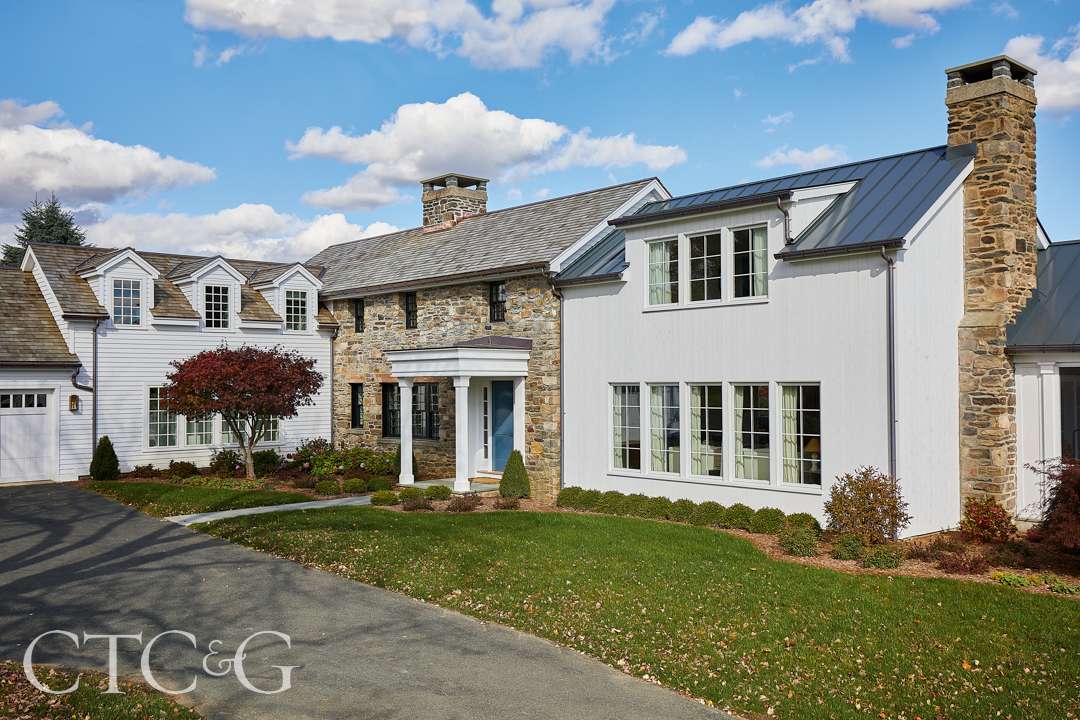
The main section of the home is New England fieldstone, which was repaired and extended to the soffits.

A look inside the foyer reveals Paris Ceramics’ Vintage Marquina Negra and Carrara checkerboard flooring and a ballerina sculpture by Margot Frances Kalur.
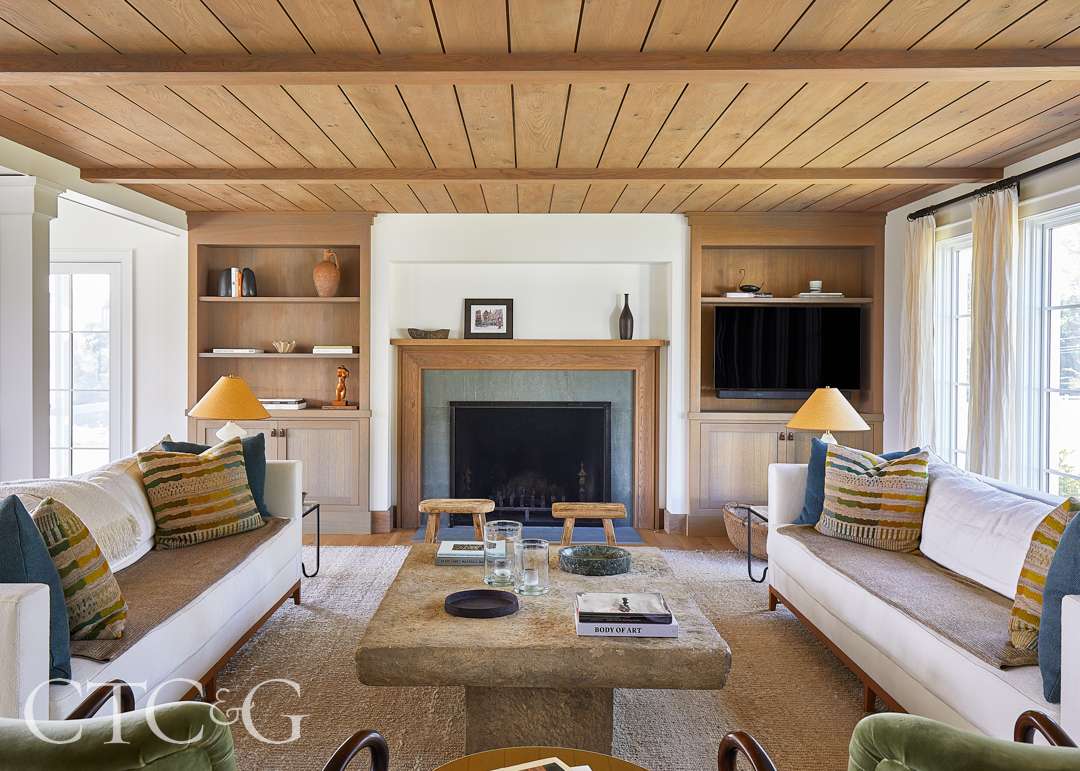
A white oak ceiling brings warmth to the redone living room, where vintage sofas are upholstered in linen.
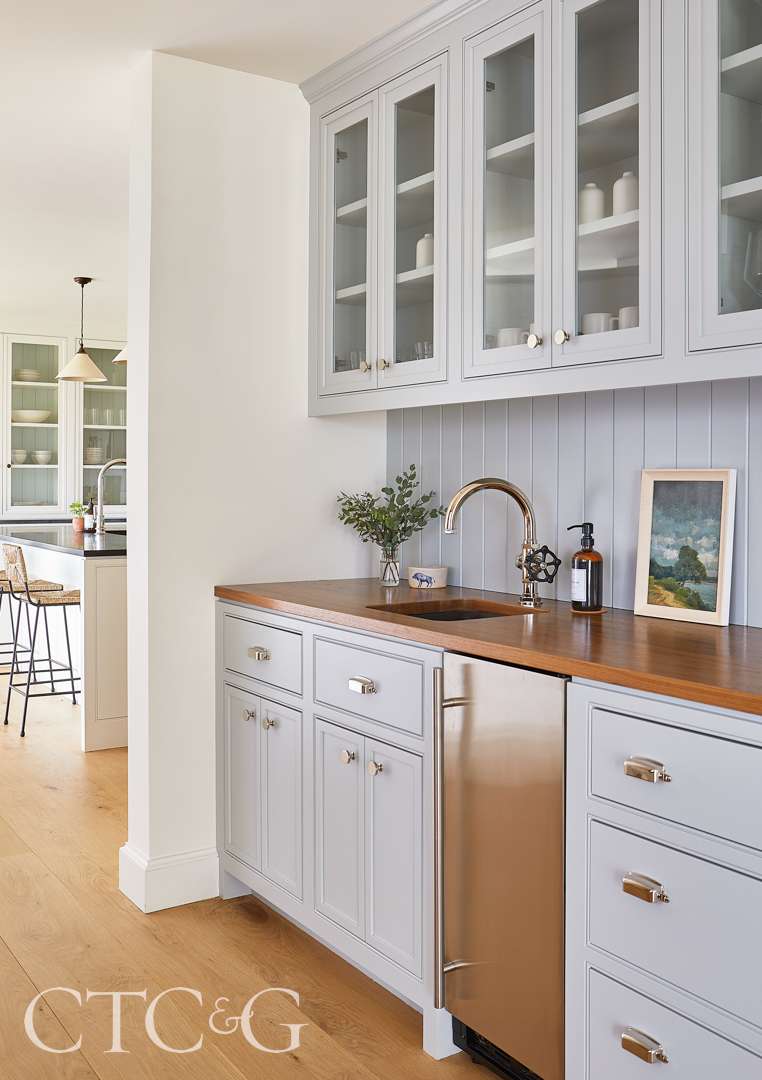
Bar cabinetry finished in Farrow & Ball’s Light Blue is complemented by a walnut countertop and a Waterworks faucet.

Custom kitchen cabinetry is painted in Benjamin Moore’s Nature’s Essentials with Classic Brass hardware, while the countertops are a honed soapstone, the range is Bertazzoni, and the pendants are by DeVol Kitchens.
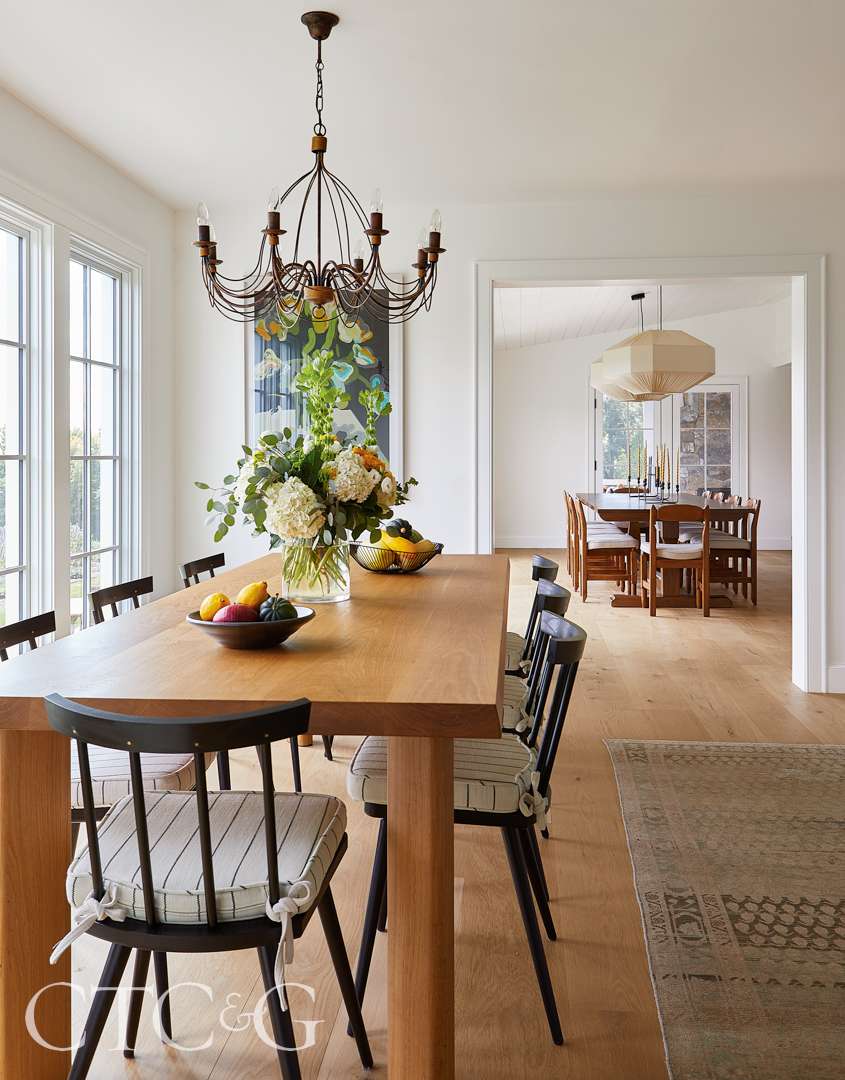
A vintage French chandelier from South Loop Loft hangs over the kitchen table.
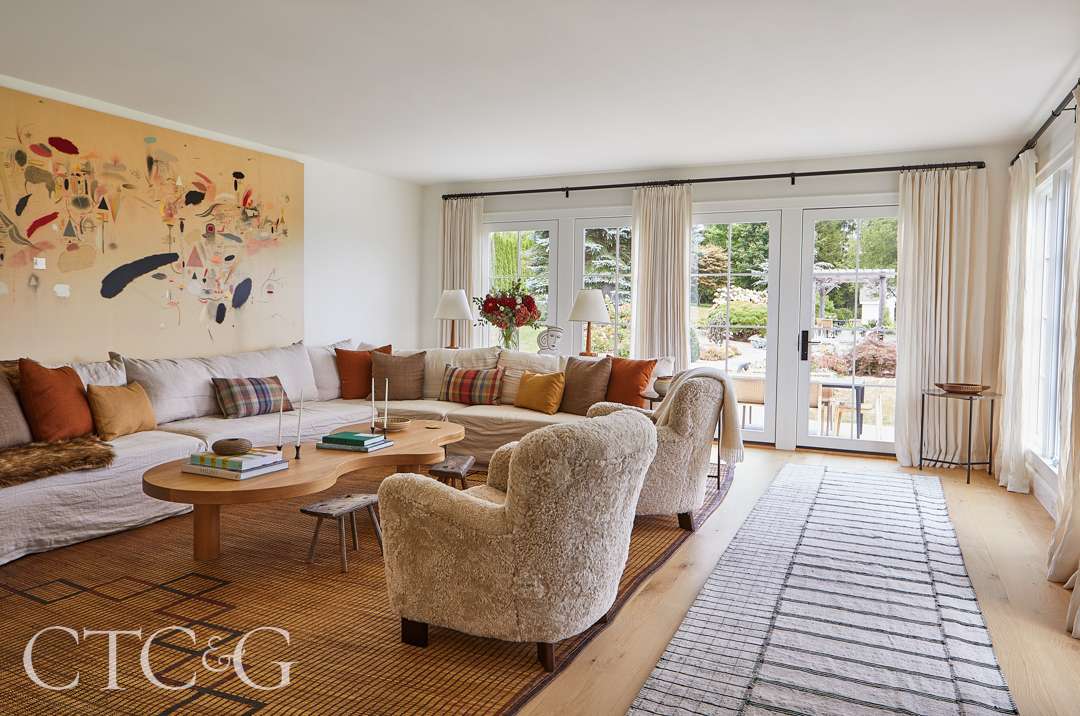
In the sunroom, furnishings are arranged on a vintage reed mat from Michael Trapp.
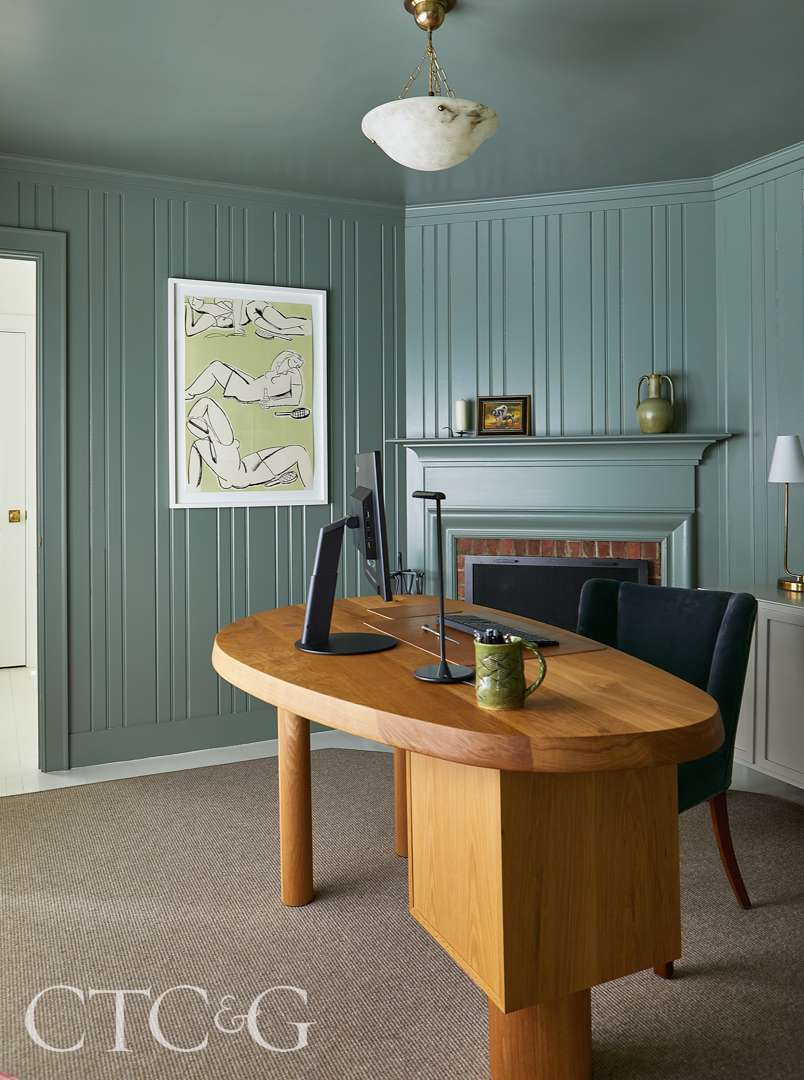
A vintage alabaster pendant from 1stDibs hangs over a midcentury modern desk in the office.
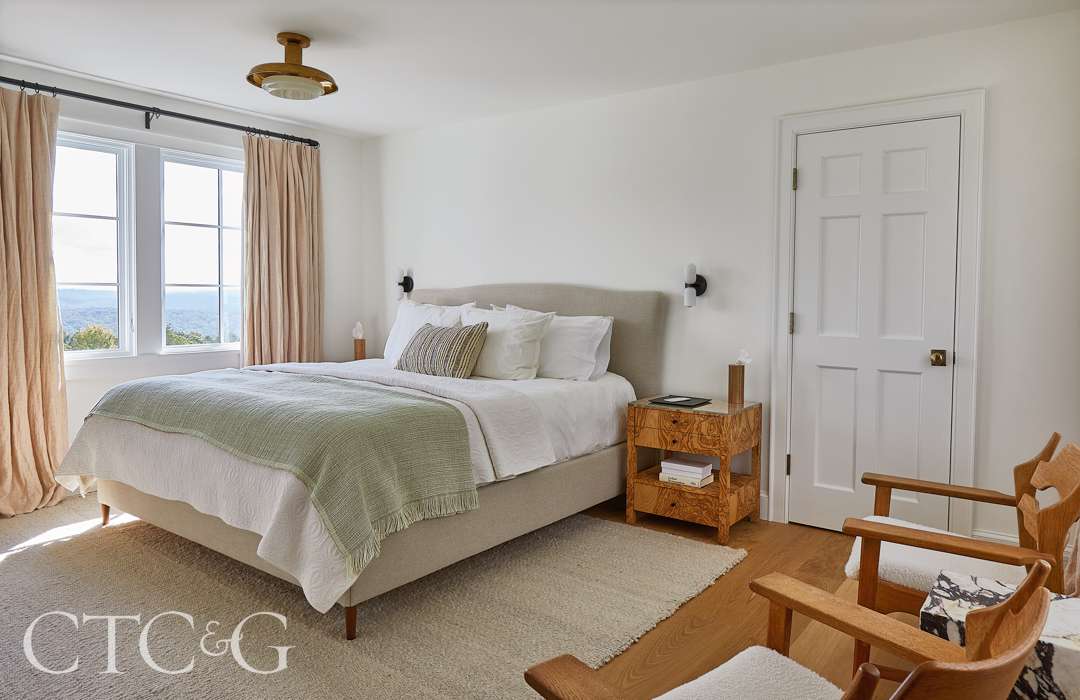
Lighting in the primary suite includes a flushmount fixture from Roman and Williams and sconces by In Common With.
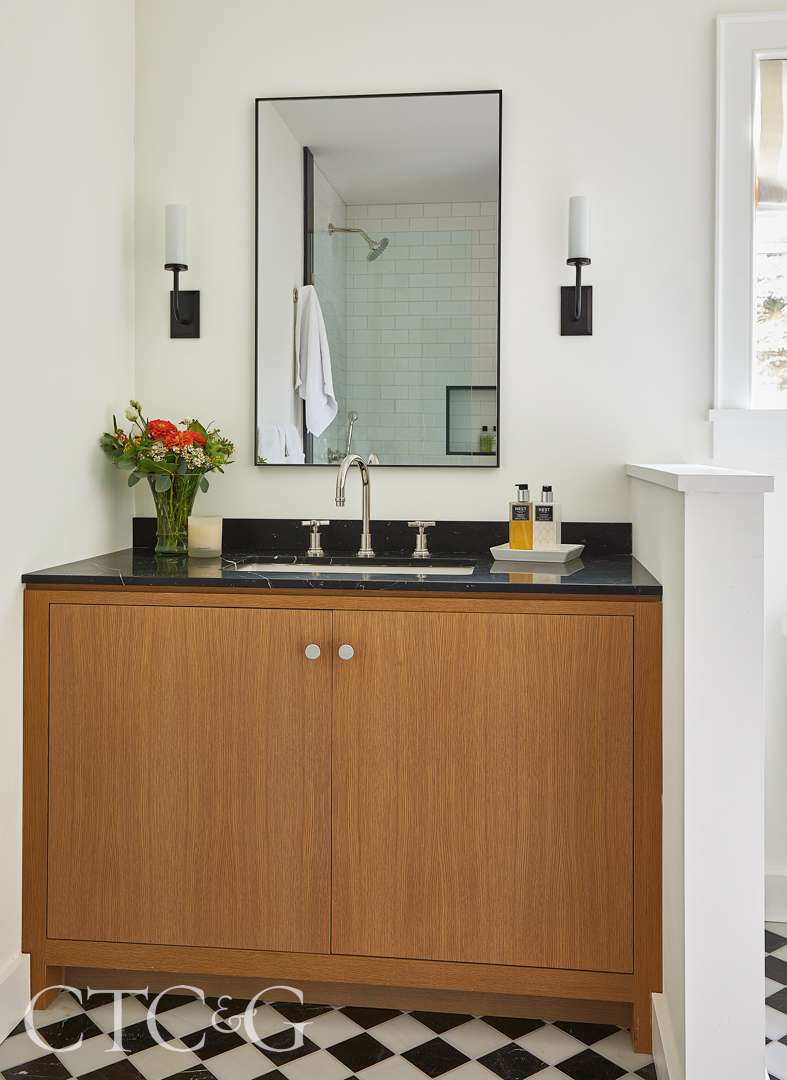
A custom white oak vanity in the primary bathroom is equipped with a Lefroy Brooks faucet, and the sconces are through Remains Lighting Company.
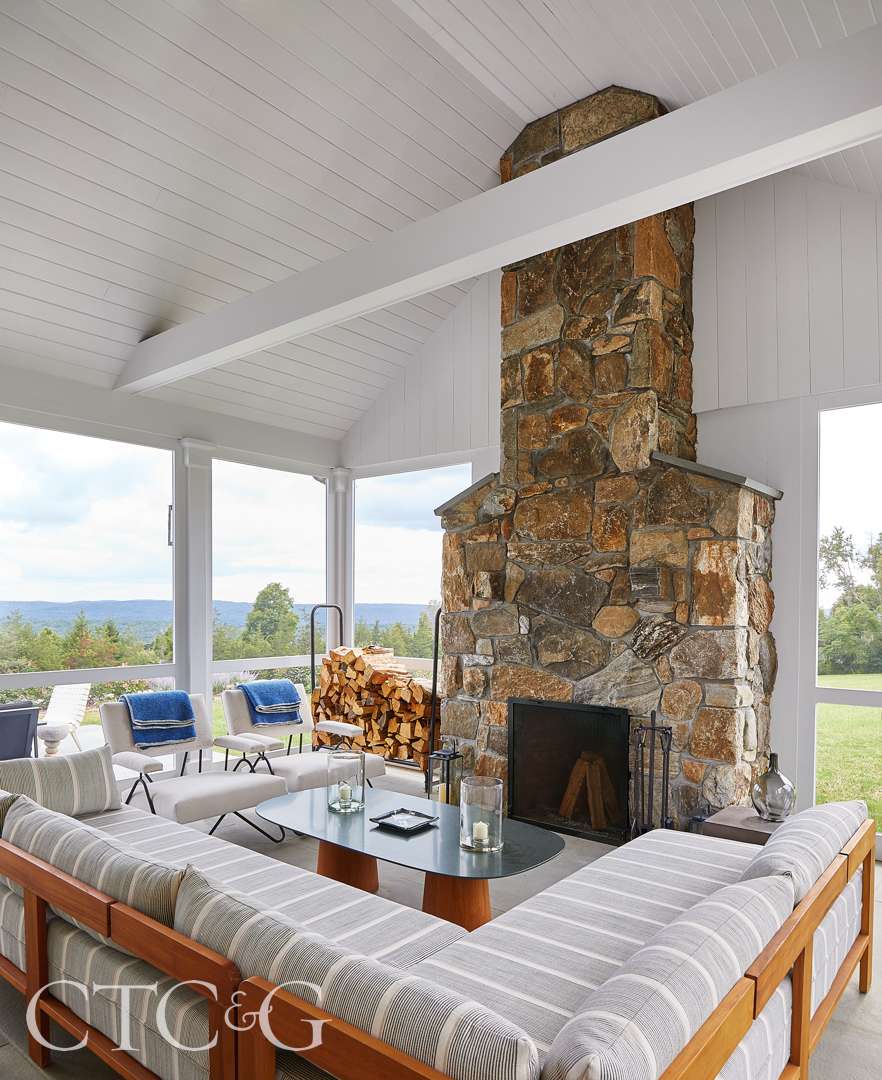
A new stone chimney was installed on the rebuilt screened porch.

Mudroom walls wear Benjamin Moore’s White Dove, which contrasts with slate floor tiles.
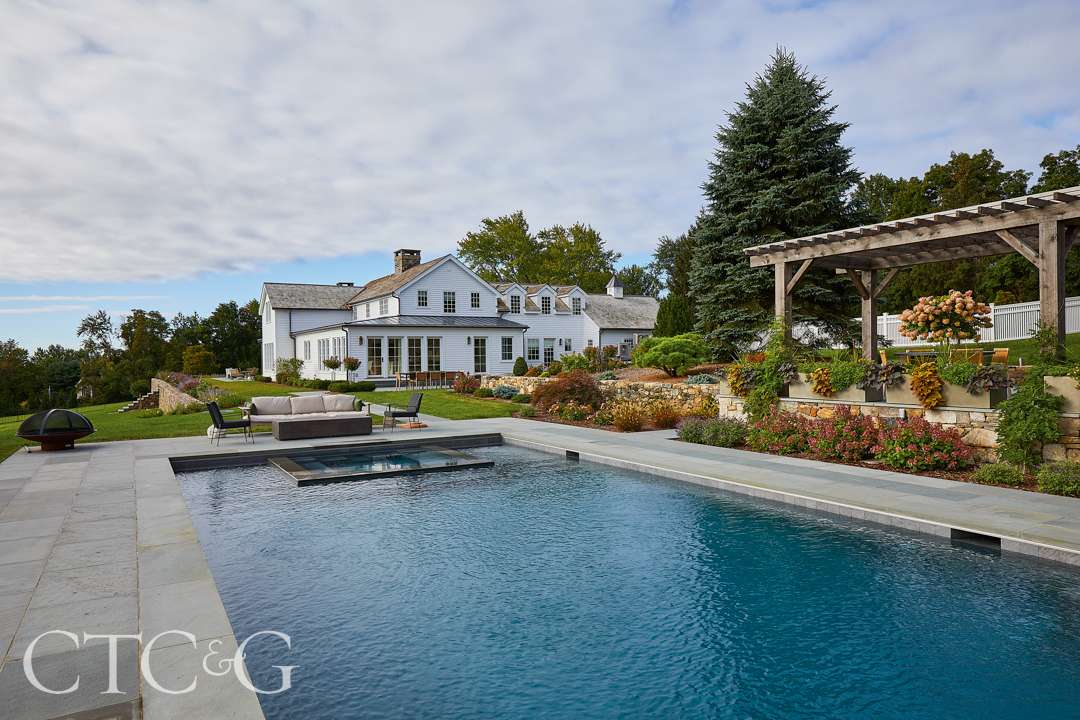
New bluestone walkways surround the pool.
Working closely with the couple’s grown daughter, Kalur and she agreed on what needed to be done—a gut renovation that would keep the essential original layout, but add 1,400-square feet at the back, open up its rooms to the views; a more open floorplan inside would result in rooms that felt airier and fresher. The scope of his work involved rebuilding the primary suite and living room wing, configuring an expanded screened porch, adding expanses of white clapboard siding and New England fieldstone, putting up new stone chimneys, laying bluestone walkways, erecting low-rising stone walls, and knitting together a pergola as an al fresco dining space.

Changes occurred quickly, in part because the grown daughter wanted it all finished in time for her wedding, which was to take place in the home in which she had grown up. “The daughter really steered us on this project,” says Kalur, whose practice is based in Washington Depot. “She had lived in the house for more than 30 years before moving away. She has really good taste and knew what she wanted—and knew what the house needed. She, along with her mother, were my point persons.”

Like many houses of its era, the rooms were tightly proscribed in size and function, with an emphasis on the dwelling’s having a strong curb appeal in its neighborhood. Indeed, the neo-Colonial fit in well and harmoniously with its neighbors, and still does, but it assumes a new identity inside and in back. Kalur and the owners were intent on making the rooms flow into one another, and, as he says, “for the house to be oriented so that it invited people outside in a way that it hadn’t before.” A long passageway now links rooms at the rear, so that while traversing the house, the views beyond remain visible.

Kalur was adamant about retaining the traditional look of the house. “We didn’t lose the language of the type of house this is,” he says. Like many renovation projects, what began as a modest desire to change up some rooms soon became a much larger endeavor. “Once I started playing with the plans, the clients realized the full potential, and they were gently eased out of their caution to let the house be what it could be,” Kalur explains. “Given their desire to entertain more often and on a larger scale, the house now suits them and accomplishes what they wanted it to do all along.”
