


Designing within historic buildings or ones with a certain patina is often a delicate balancing act—channeling a structure’s innate original charms with the demands of 21st century living is no small feat. For this homeowner, who found a light-filled apartment from 1908 on a high floor overlooking a central internal courtyard, the challenge was to combine the classic with contemporary, while amplifying an abundance of natural light.
For the residence, architect Gordon Kahn began with the building’s exterior—which spans an entire city block—for inspiration and reference.

“The main theme to me was how to create a light and open, airy space within an Italian Renaissance revival building, and not make that interior feel as though it’s an alien entity within it,” says Kahn. Think of a light-filled TriBeca loft transported uptown, but one that makes sense in the upper quarters of Manhattan in a classically detailed building not stripped of its detailing and ornamentation.
Seen from many of the room’s windows, the exterior classical detailing, with its European references, required a certain reverence, which designer Ellen Hamilton channeled.
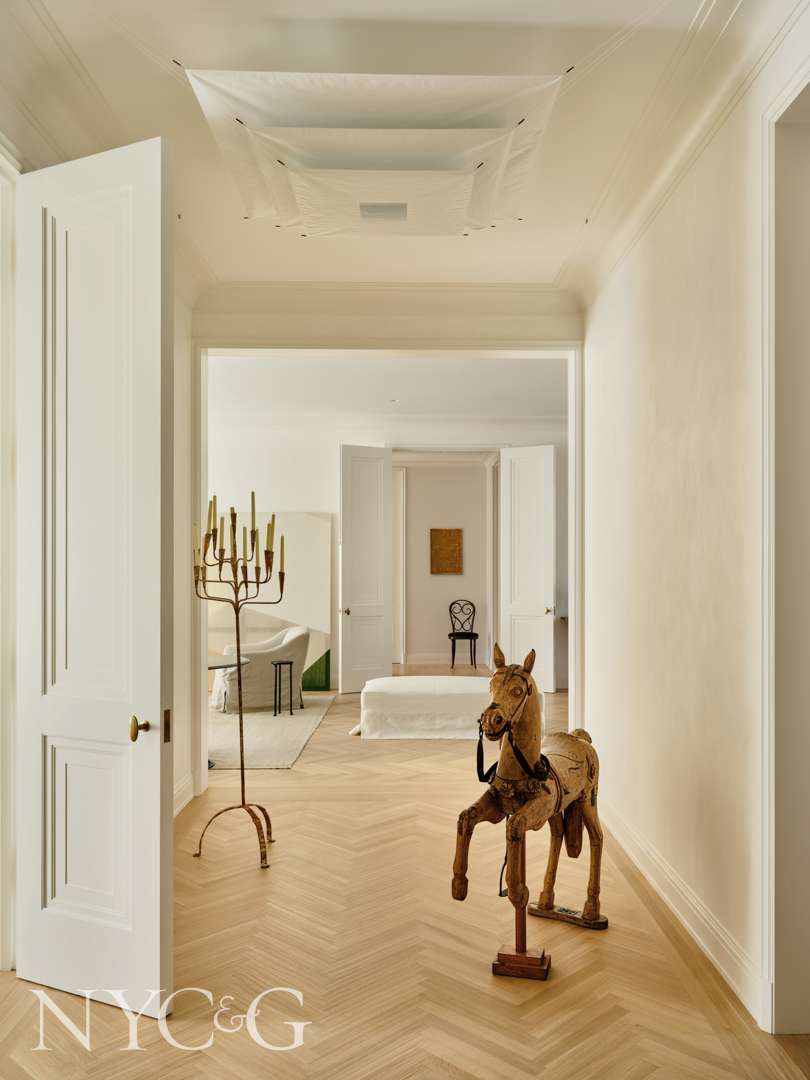
A ceiling fixture from Lumens hangs above an antique carousel horse in a hallway.
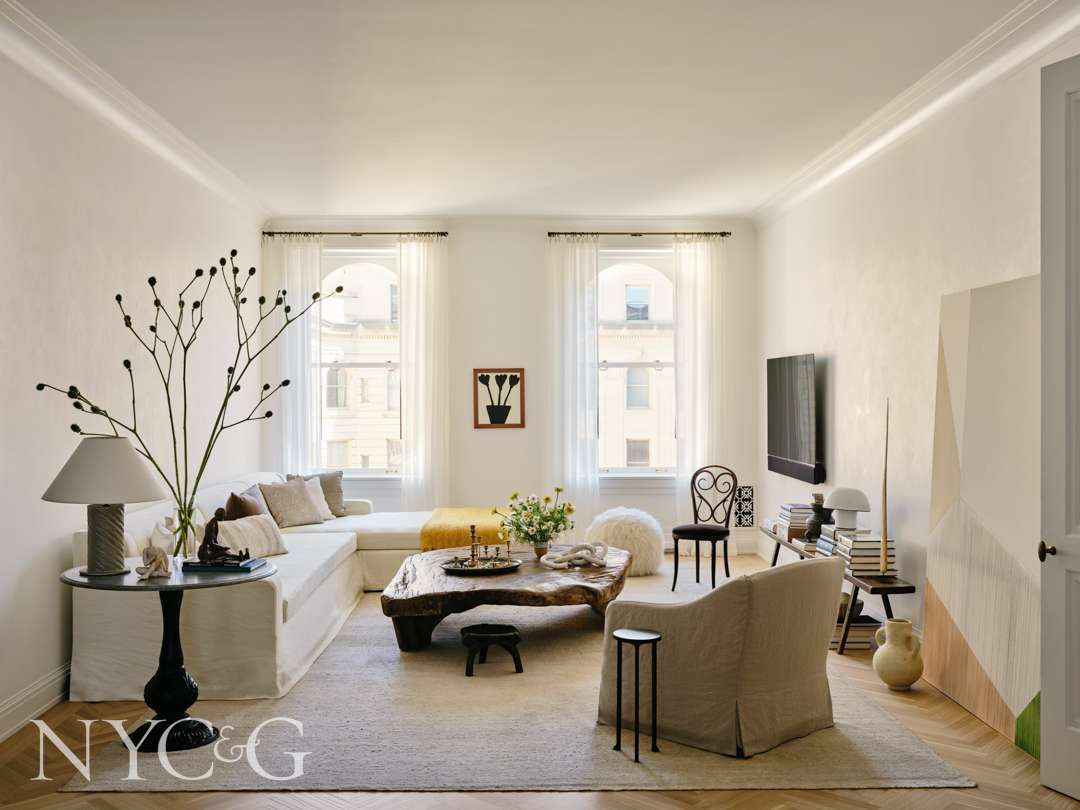
In the living room, the sectional is custom by JM Upholstery, and the rug is custom by Beauvais. The coffee table is an antique from Galerie Provenance.
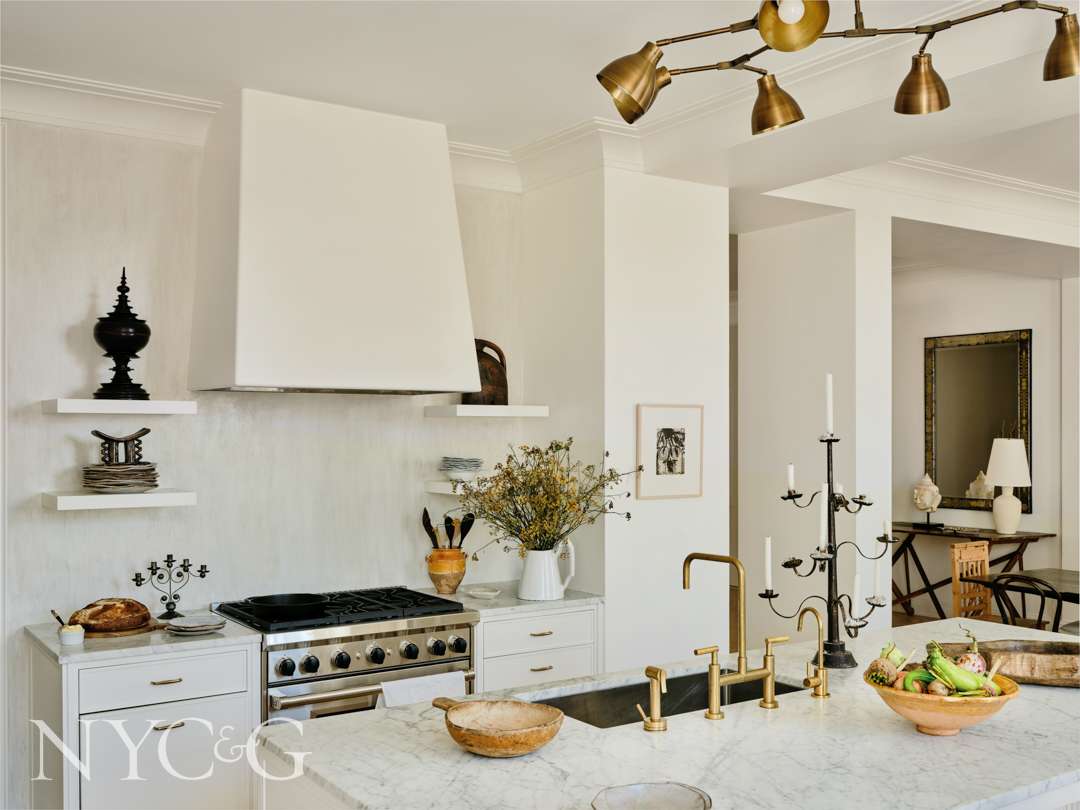
The custom backsplash and hood are by Italiano Bros. Enterprise. The cabinetry is custom by Christopher Peacock.
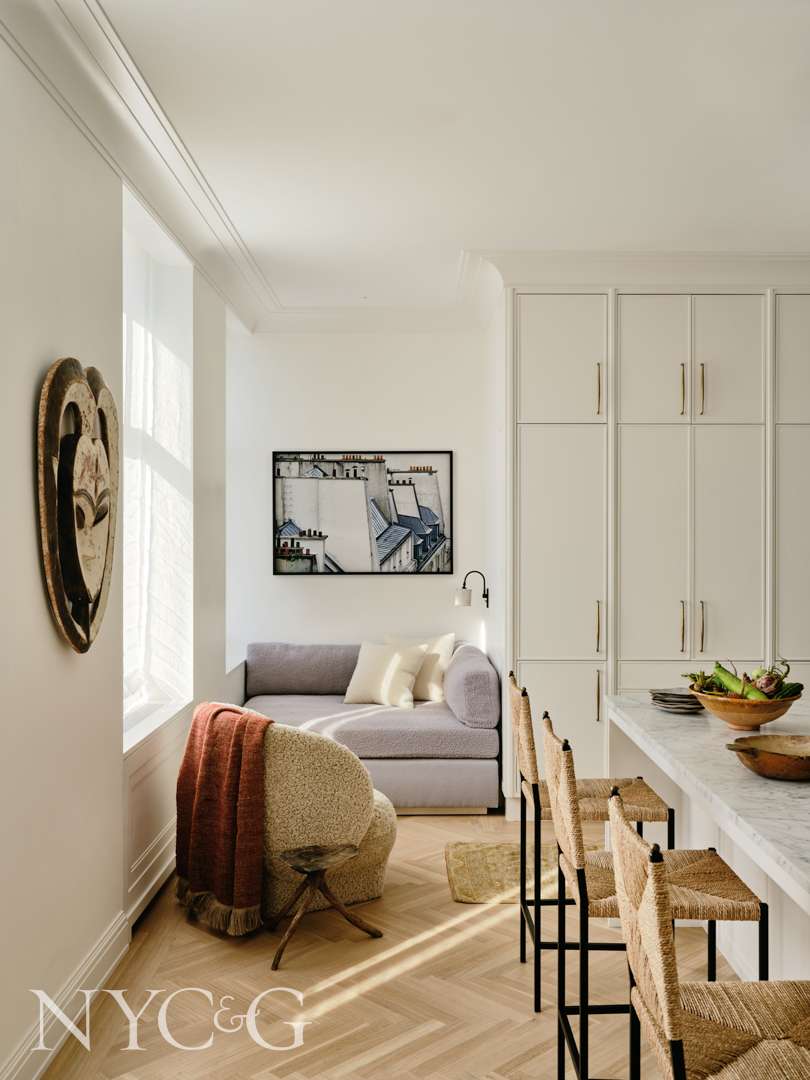
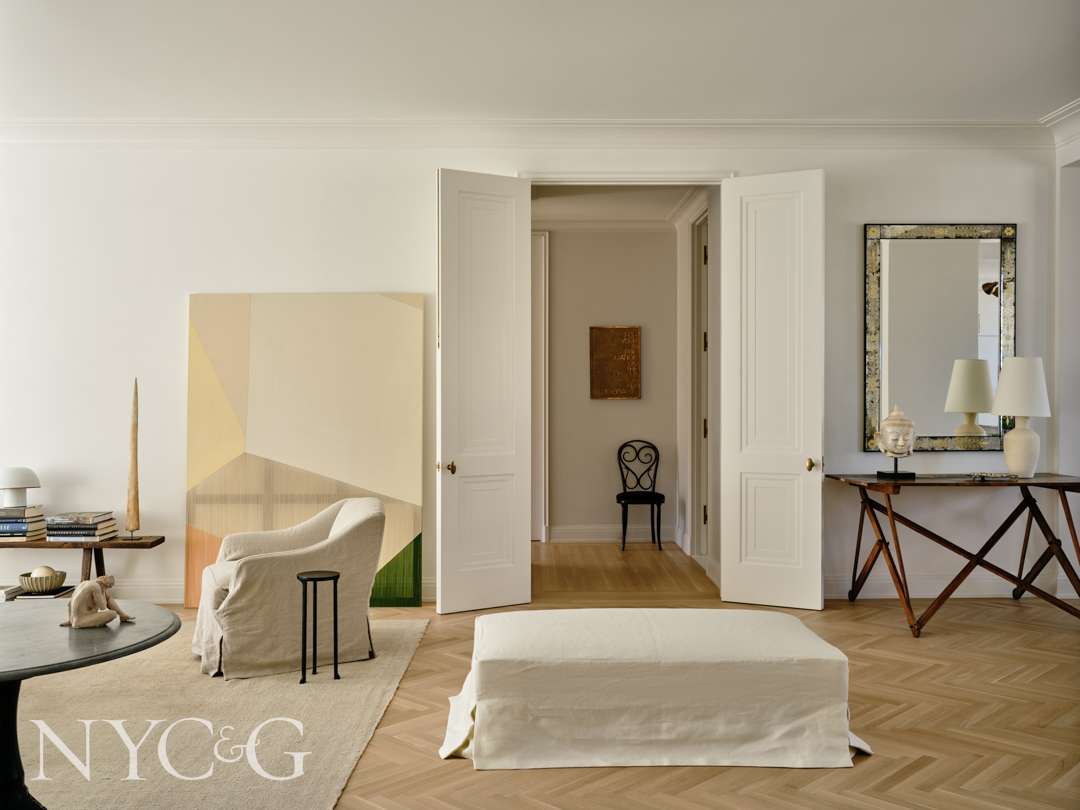
A custom daybed by JM Upholstery is covered in a fabric by Pierre Frey.
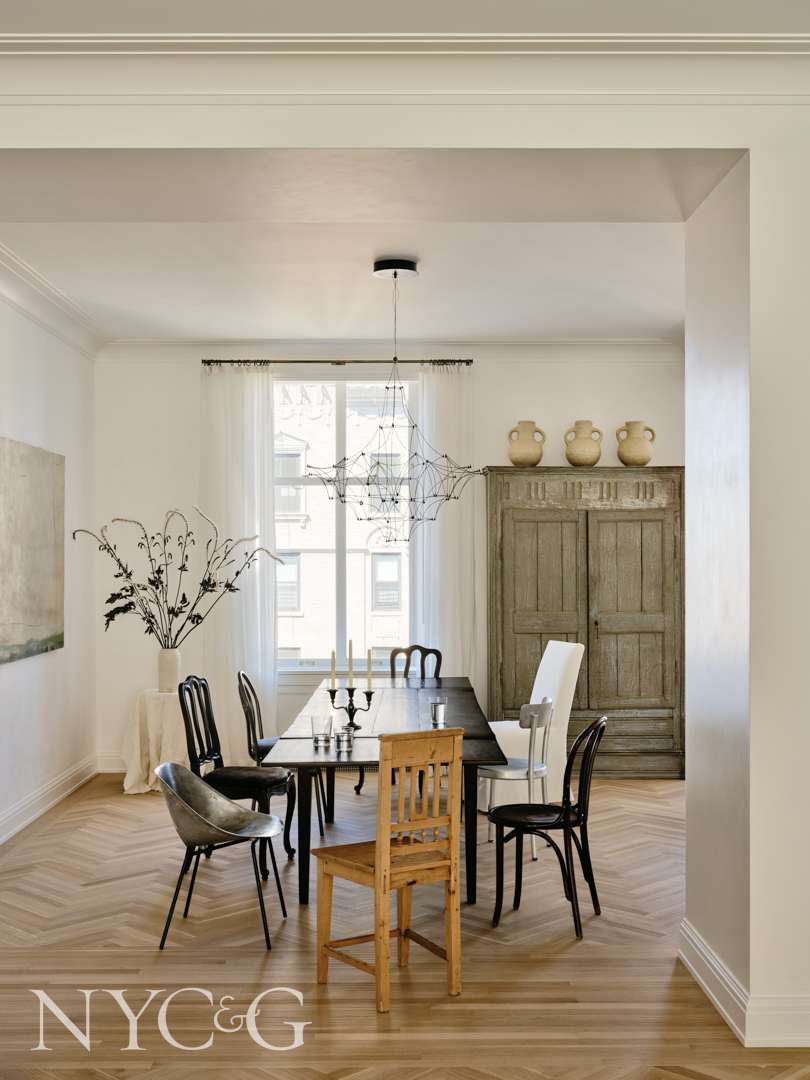
In the dining room, an eclectic mix of chairs surround an antique dining table. The ceiling fixture is from Zaneen Lighting.

In the office, the shelving is custom millwork by Highline Construction Group and was designed by Gordon Kahn.
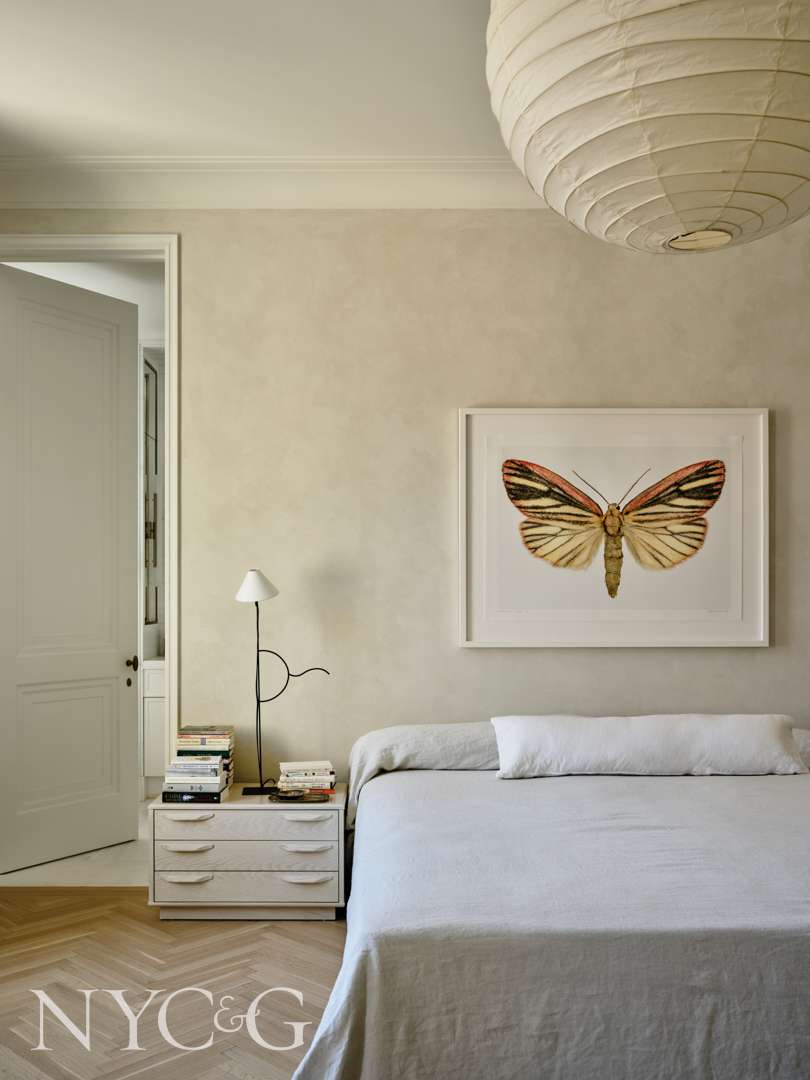
The primary bedroom’s custom bed covering is by JM Upholstery. The walls are covered in a custom limewash by Italiano Bros. Enterprise.

The primary bath features a custom mirror and vanity by Highline Construction Group, both designed by Gordon Kahn. The walls are covered in a stone from Bas Stone.

“We wanted to impart an American’s understanding of a white Parisian apartment,” says Hamilton of the ethereal interiors. “We were really interested in giving the client that really open feeling that she wanted, but to give it just enough compartmentalization and trim that it again referenced something of a more classical nature. That was the dance.”
For Kahn, the dance was similar in nature.

“We try to keep vertical proportions tall and lean wherever we can, to help ceiling heights feel bigger so the space doesn’t become truncated, he says. “We kept everything sort of tall and lean but beautifully detailed. The trim is narrow but nicely detailed, and the doors are paneled—and not with sort of an expected panel, but we designed something that was a series of smaller steps, and then the crown at the top is a plaster cove with some detail in it.”
Those sort of nuanced, subtle details emanate throughout, with Hamilton infusing the space with many custom and one-of-a-kind pieces that give the apartment a certain carefree European nonchalance (although every single piece was chosen with great intent).

“The client didn’t want the apartment to feel studied or designed,” says Hamilton, “but it couldn’t look empty or spare, and it couldn’t look contrived.” In the end, it once again proves that less can, indeed, be more.
