


Robert Frost wrote a famous poem about how a good wall is a way to maintain good relations. For East Hampton homeowners Ed Fogarty and Tim McMullan, the best way to keep and even strengthen friendships and familial relations is with a breezeway. In order to meet up, visitors to the couple’s architecturally arresting home on the East End need to traverse a 12-foot covered outdoor breezeway that separates the guest quarters from those of Fogarty and McMullan.
“The idea was to have a main residence that would have an intimate feel to it,” says Fogarty, who works as a senior vice president for Paramount Global, “but have it attached to another residence for friends so that we can have our privacy when we want it and they can maintain theirs.” Essentially, the resulting house assumes a singular presence on the land, but within its envelope are two residences.

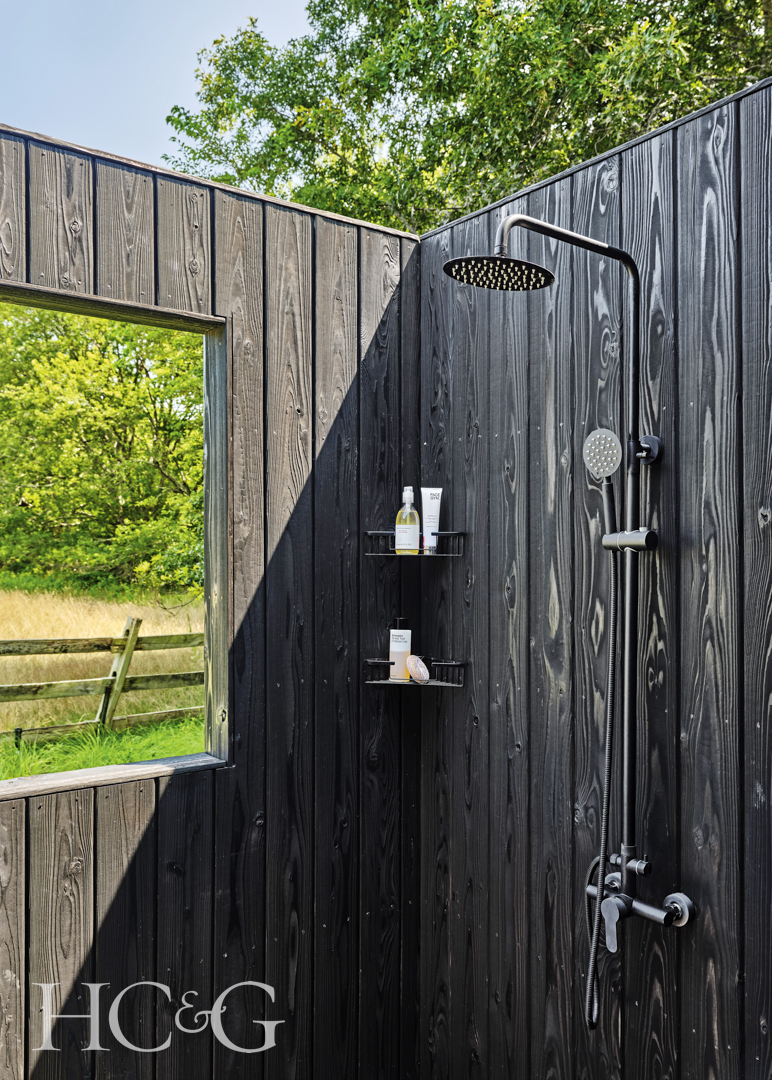
Their house of five gables that appear to pierce and vault across the sky on their meadowed property, a short walk from the village of East Hampton, is one of the more dramatic architectural statements found on the East End. Workshop/APD’s Tyler Marshall designed a deliberately dark house, composed of dramatic peaks, with whole facades of shou sugi ban, an ancient Japanese technique that involves charring wood, in this case Western red cedar. “The shou sugi ban is not only durable and beautiful,” says the architect, “but we also find that the dark color, when set against the tree line, makes the house recede more into nature. It’s also a very intriguing building material because it really allows the grain to shine through and for the texture to actually rise.” As Fogarty emphasizes, “The black of the house blends into the surroundings very well, while a white house would have been too much of a contrast. To me, something about the black color is soothing.”
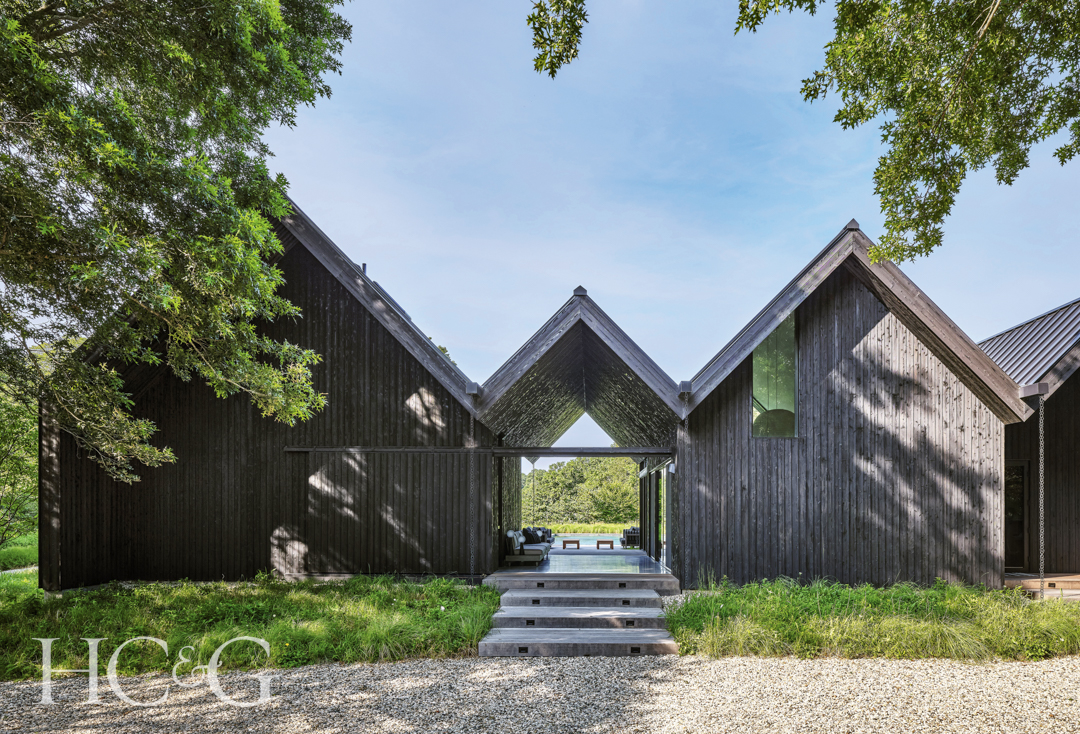
The exterior is clad in shou sugi ban cedar.
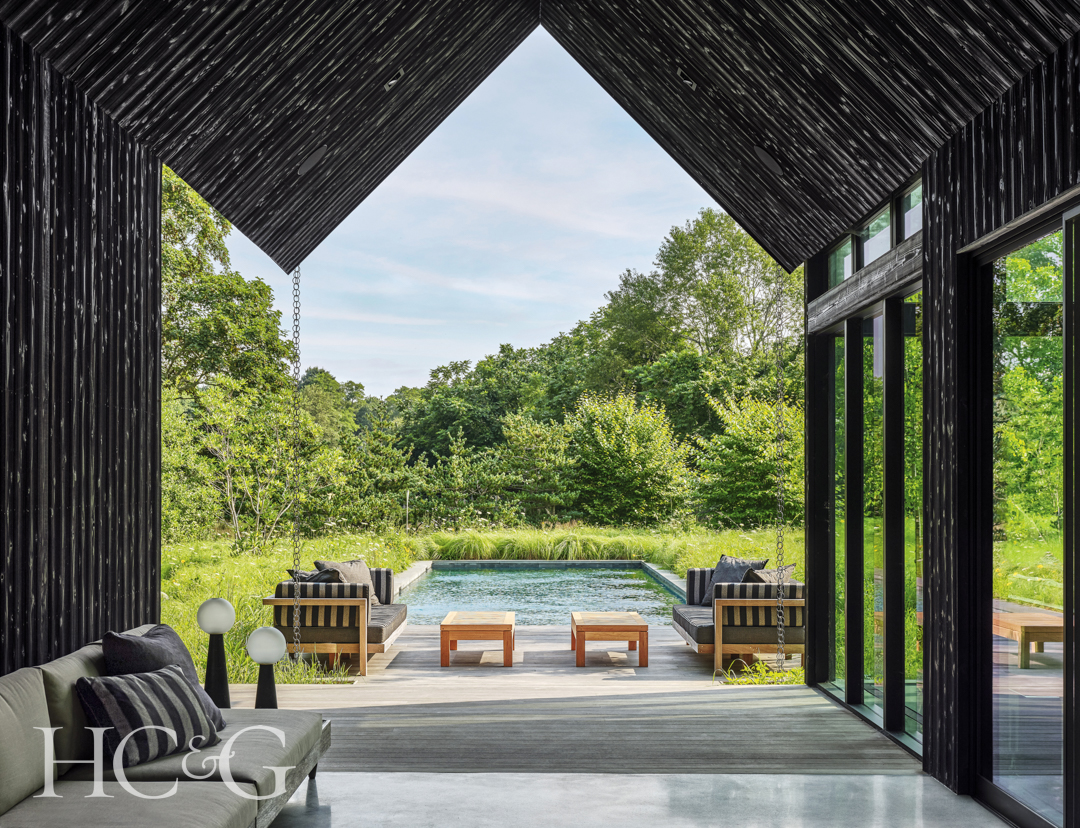
The home is surrounded by a bucolic landscape.
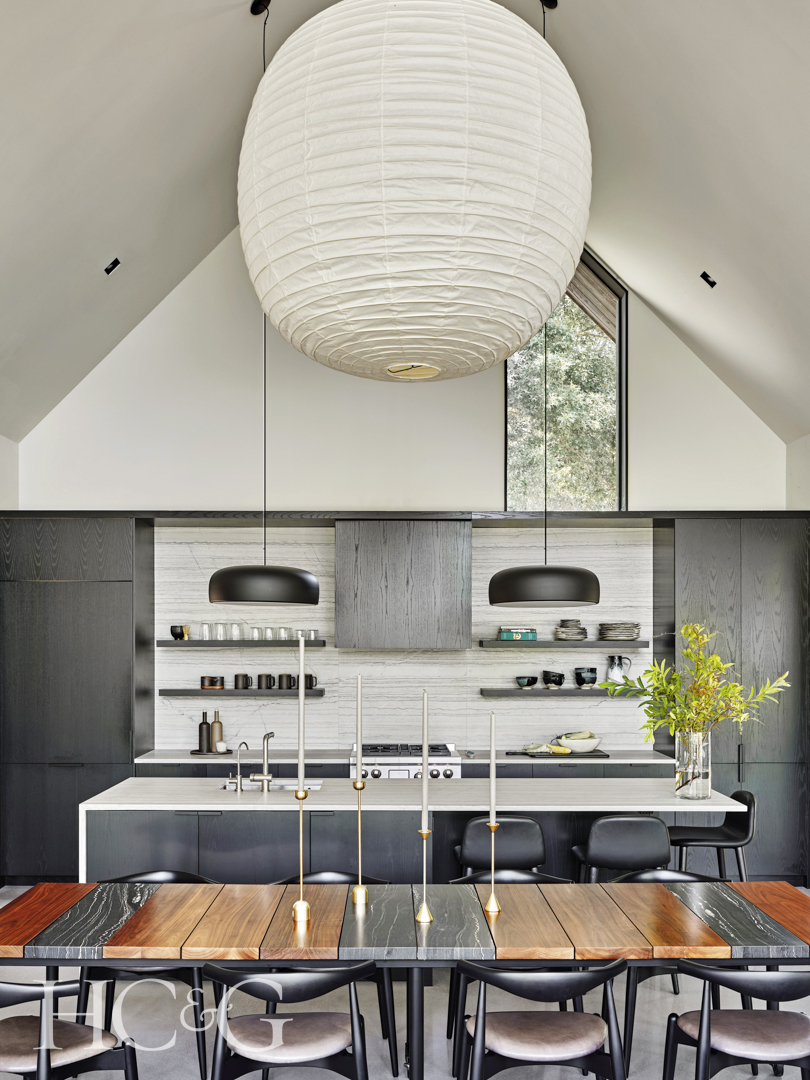
Kitchen cabinetry is made from ebonized oak.

The light-filled living room is intimately connected to the outdoors.
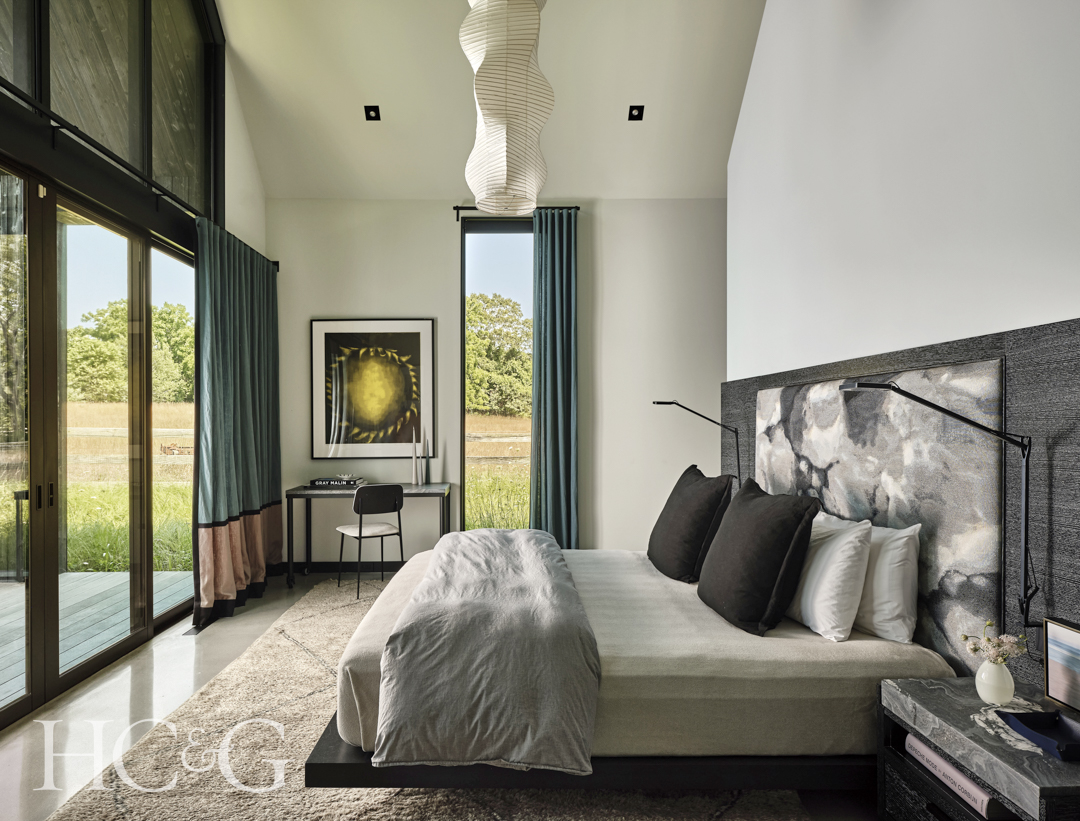
With its soaring ceilings, the primary bedroom features artwork by Ross Bleckner and a sculptural hanging fixture by Flos.
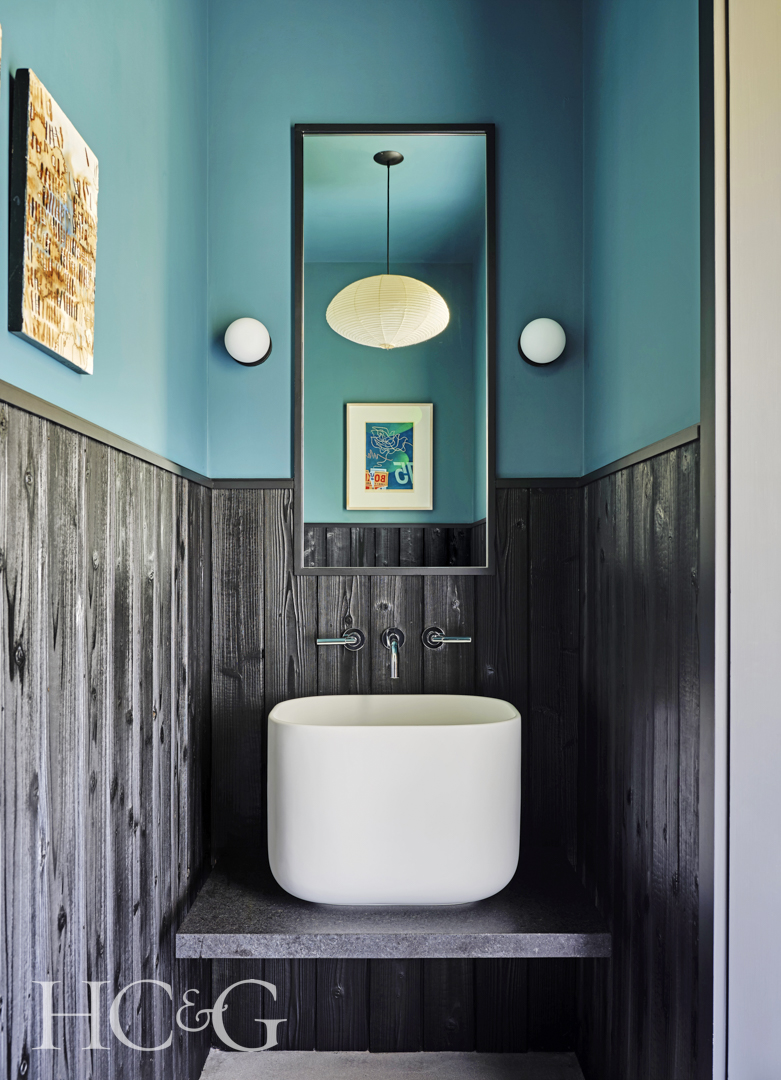
The powder room’s wainscoting from Nakamoto Forestry is the same as the home’s exterior.

Verdant meadows meld directly with the pool’s edges.
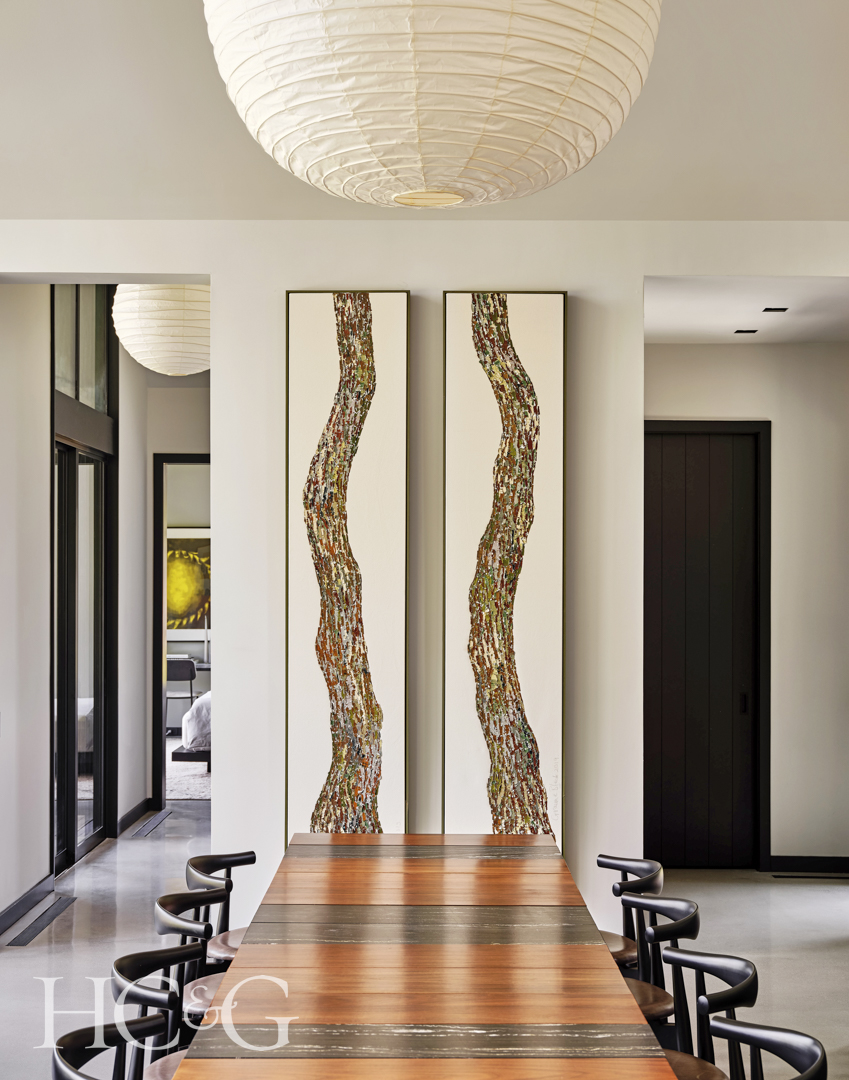
Meanwhile, a series of outdoor decks, however, are built of a lighter-hued Ipe wood. The breezeway itself is composed of poured concrete, a material echoed throughout the interiors. The subtly-hued, even spare interiors, were fashioned by interior designers Tom Flynn and Kimberly Manne of Warp Designs.

Marshall designed the roof lines to cantilever out, so as to create outdoor areas protected from inclement weather, to soften harsh summer sunlight, and also to make for large columnless expanses of living space. Given the setting of the house, adjacent to a 17-acre horse farm, and the planted meadow that the homeowners commissioned from landscape architect Abby Lawless, the emphasis from inside the home were to be the views. A fifty-foot rectangular pool that Fogarty and McMullan designed was positioned by Marshall exactly on axis with the breezeway, thus immediately establishing symmetry on the site. And to foster an even greater sense of nature as the main decorative outdoor décor, the couple left the pool edges to meld directly with the meadow. “When you’re in the pool, you’re totally immersed in nature—it comes right up to you when you’re in the water,” says McMullan, who works as a leadership coach and consultant.

Fogarty and McMullan were involved in every design choice, outside and in. They even found a supplier in Oregon for the shou sugi ban. “We chose a shade in what I would call a ‘middle-burn’ color,” says McMullan. “We decided on a grade of the wood with a subtle charring.” In keeping with its decidedly unconventional shape and presence on the land, Marshall introduced equally novel practical solutions. Rain chains, for instance, as opposed to traditional gutters, are used to channel downpours. “It would have been a sad design choice to have had typical gutter downspouts from the roof,” he says. “The chains let the water drain freely into the ground and collect in gravel-lined wells.”
What was meant to be a secondary house has become a primary one, clearly a testament to its effect on the homeowners. “I can’t underscore enough the connection to nature,” says McMullan. “The house itself is almost a living thing. It’s inspired me to become a birder. I’ve gotten more and more into the wildflowers that grow in the meadow. The house has inspired me to grow and connect with the landscape.”
