


If past is prologue, a historic North Fork farmhouse house known as “Nut Hill” was destined to be reborn. Owned long ago by the community’s doctor who delivered babies in a small barn located near the main house, the circa-1900 residence remained in the physician’s family until recently, when it was sold to a Brooklyn Heights couple with two young sons. Because it had been minimally altered over the years, the property’s historical character remained intact, including the doctor’s office, where even his medical books and specimens had been left undisturbed. The house’s faded, frowsy interior, however, had seen better days, prompting the new homeowners to entrust designers Chappell Loudermilk and Zeke Jordan with bringing the farmhouse back to life.

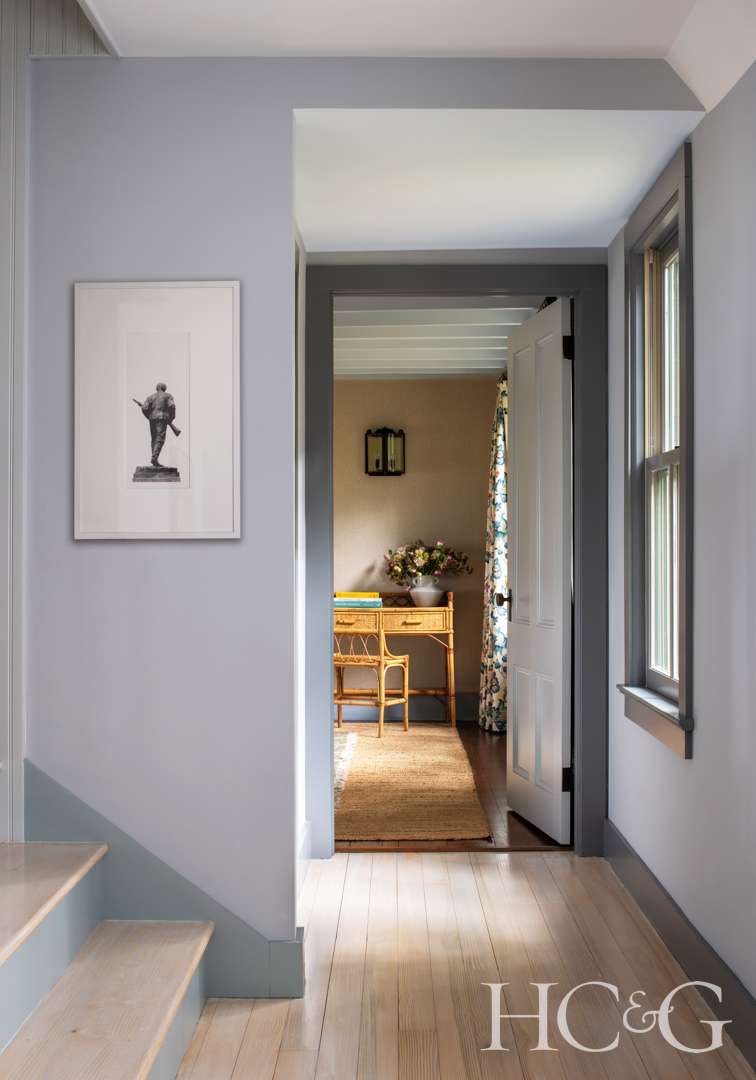
Altering the home’s turn-of-last-century architecture was a non-starter for the preservation-minded homeowners, even though that meant living with low ceilings and small room sizes. With a renovation off the table, Loudermilk and Jordan instead focused their efforts, instead, on updating the interior architecture and period finishes with paint and wallpaper. One of the home’s more prominent throwbacks is the beadboard and wall paneling that runs throughout the house. By painting it primarily in bluish grey tones, the designers brightened the once-dark interior, suffusing it with a freshness that had been missing. In the bedrooms, grasscloth wallpaper in a range of blue and neutral hues provided the modern kick they needed.
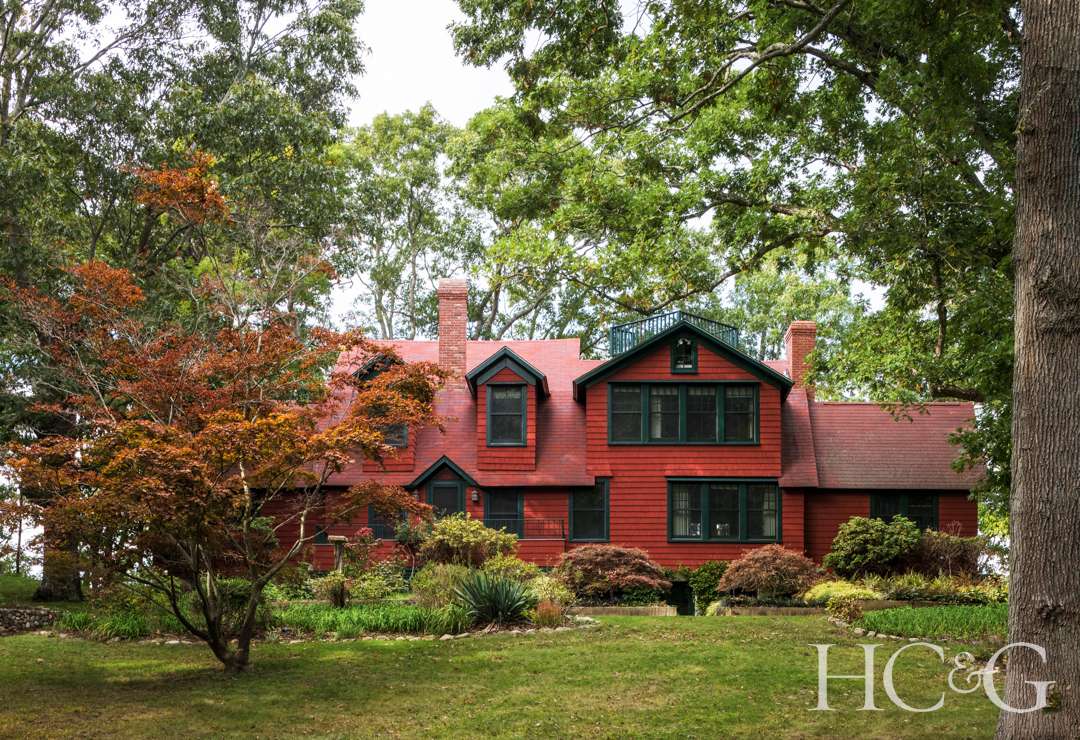
Red shingles make up the exterior of this country home.

A sectional from Ballard Designs is covered in a fabric from Christopher Farr Cloth in the sunroom. The chair features a fabric by Peter Dunham Textiles.
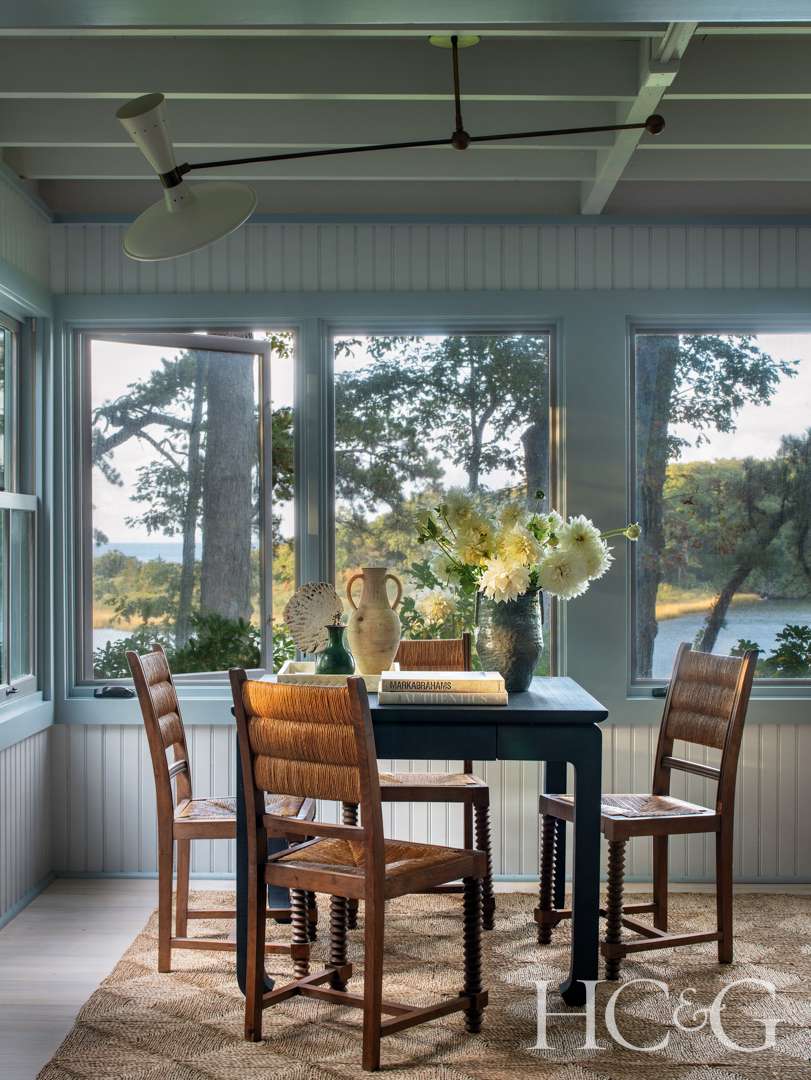
French chairs by Charles Dudouyt surround a table from JDouglas in the sunroom.

In the living room, sofas are from Bungalow Classic and Maiden Home; the coffee table is by RH. The armchair by Henning Kjaernulf is covered in a fabric from Kravet.

In the kitchen, the cabinetry is painted in Benjamin Moore’s Mount Saint Anne.

In the dining room, chairs by Henning Kjaernulf from Wright surround a table by Charles Dudouyt from Kamelot Auctions.
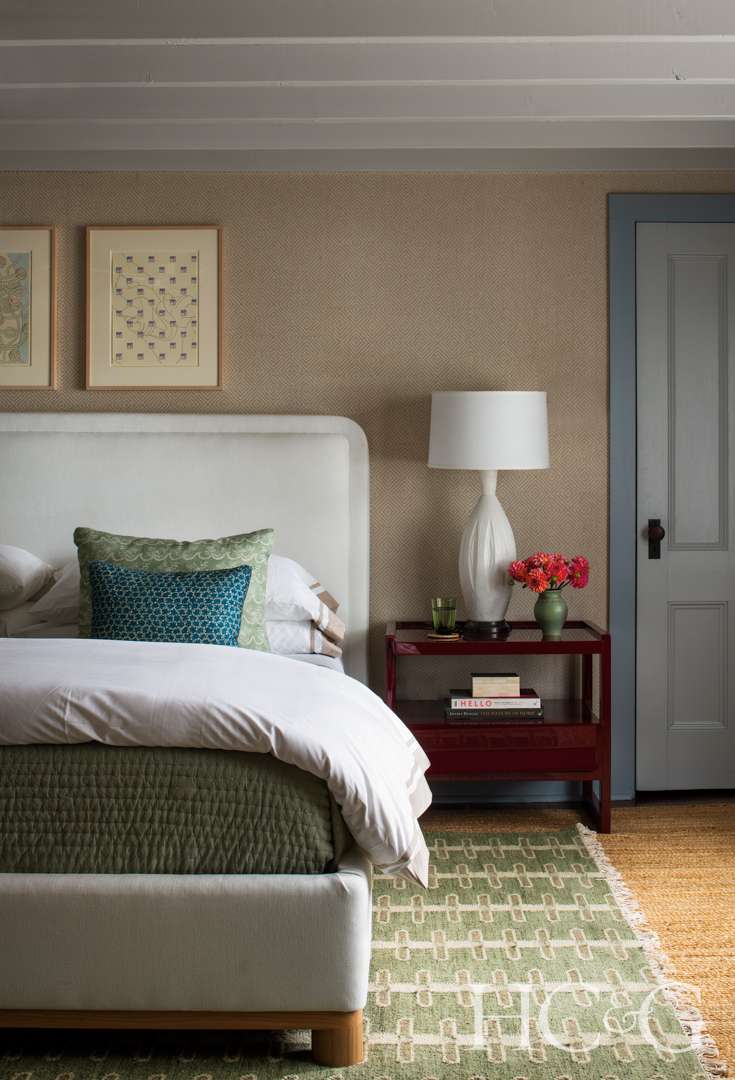
In the primary bedroom, a bed covering from West Elm covers a bed from Maiden Home.
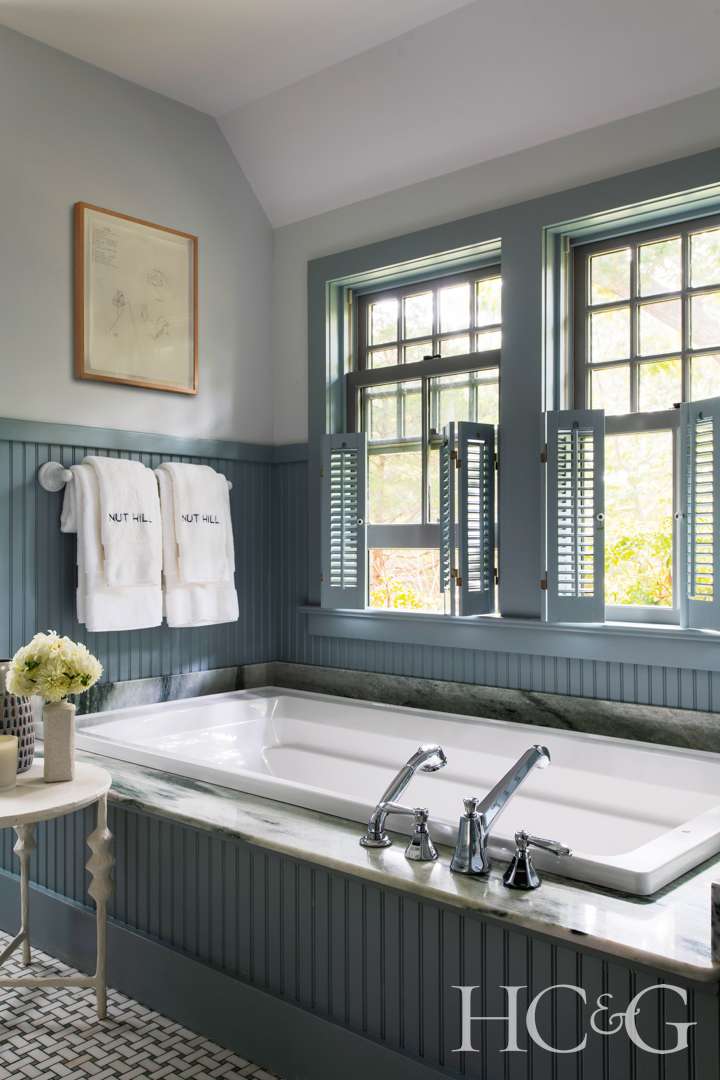
In the primary bath the wainscoting and shutters are painted in the shade Mount Saint Anne by Benjamin Moore.

Curtain fabrics from Schumacher complement a bed covering from West Elm in a guest bedroom.

In the children’s sitting room, the desk is from Crate & Barrel and the chairs are from Williams Sonoma Home.
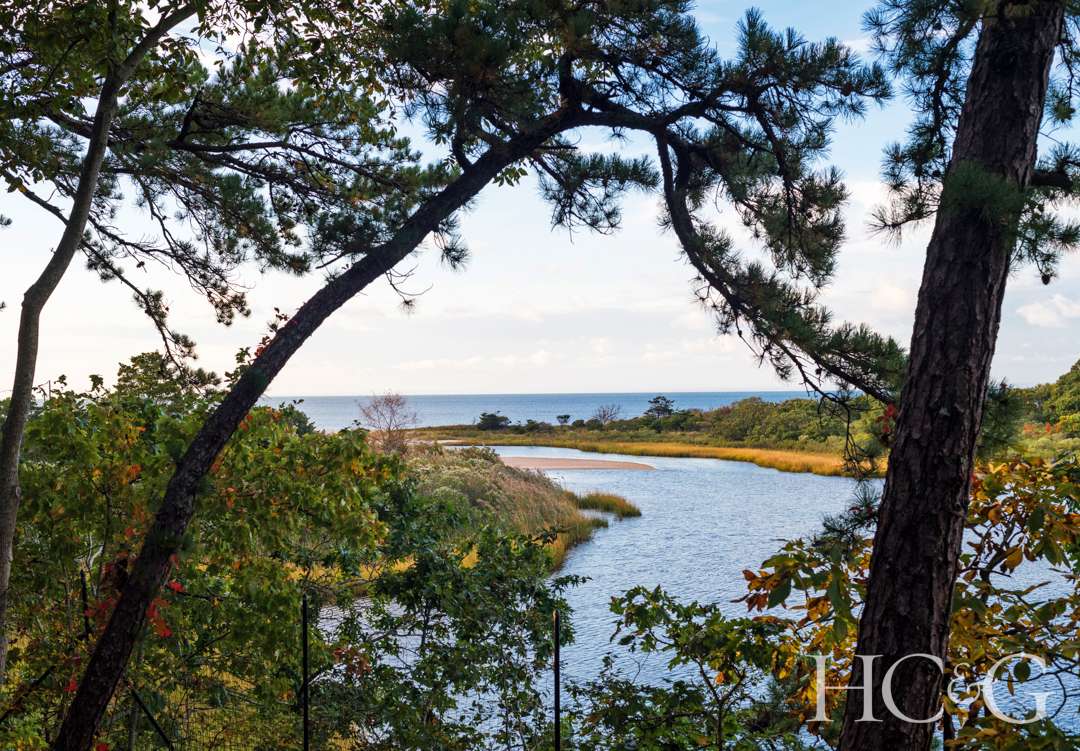
Views of the water from the backyard.
Although the home’s architecture may have maintained its historical accuracy, when it came to choosing furnishings, Loudermilk and Jordan took creative license. In the living room, especially, they blended old and new furniture and lighting to give the impression of a century’s worth of accrual. While the room’s contemporary sofas and streamlined coffee table gently place the interior in the present, older pieces, like a vintage Swedish wooden chair, pay homage to the home’s past. It is a magpie mix reminiscent of filmmaker Wes Anderson’s movie sets, whose fictional vintage charm inspired the two designers. “These old-fashioned ideas may never have really existed, but when you pull them off in a charming, creative way, you’re convinced that must have been the way people lived in this house,” explains Jordan.

As diligent as the designers were in safeguarding the home’s heritage (at their insistence, an original cast-iron stove was left standing as a relic in the boys’ bedroom), they were equally mindful of their clients, whose youthful vitality inspired their use of lively patterned fabrics, many in red hues that mimic the farmhouse’s colorful exterior. The designers also endeavored to create the relaxed weekend retreat the house was intended to be. “When we were initially talking about the vibe of the house, the clients kept talking about summer camp. Because they have two sons, we designed and built twin captain’s beds into their bedroom’s window niches to make it feel like summer camp,” Loudermilk says. Other leisure amenities include a game table, a lounge-worthy corner banquette in the living room, as well as an enclosed sleeping porch that now serves as an upstairs sitting room.

Despite the challenges that came with decorating the old house, specifically irregularly shaped rooms and unevenly sized windows, the designers relished the opportunity to contribute to the home’s history. “We accepted the quirkiness of the home rather than deny it. It was nice to add our finishes to what was already there,” Jordan says. Loudermilk agrees. “It’s a special property that is very serene and magical. I hope we made that come to life.”
