


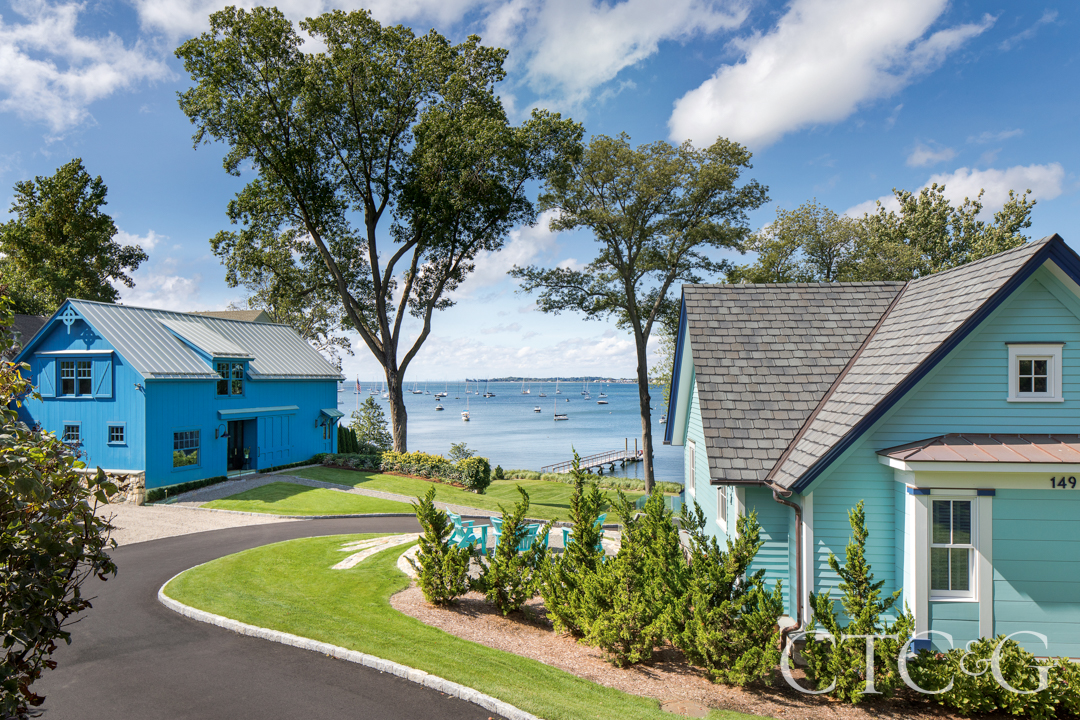
From the street, the pair of clapboard houses painted a cheerful turquoise in sync with their Long Island Sound locale plus a complementary blue barn look as if they have always been part of a cohesive compound. However, the property actually came together in stages, starting in 2009 when a local couple purchased the 19th-century Victorian—it once belonged to Richard H. Gillespie whose family founded the Stamford Advocate—made some renovations and moved in full time. Several years later, that same couple obtained the two adjoining properties with a barn on one and a house on the other. About the acquisition, the homeowner explains, “We had extra bedrooms in the main house, but we wanted spaces where our sons and their families could have some privacy during their visits.”
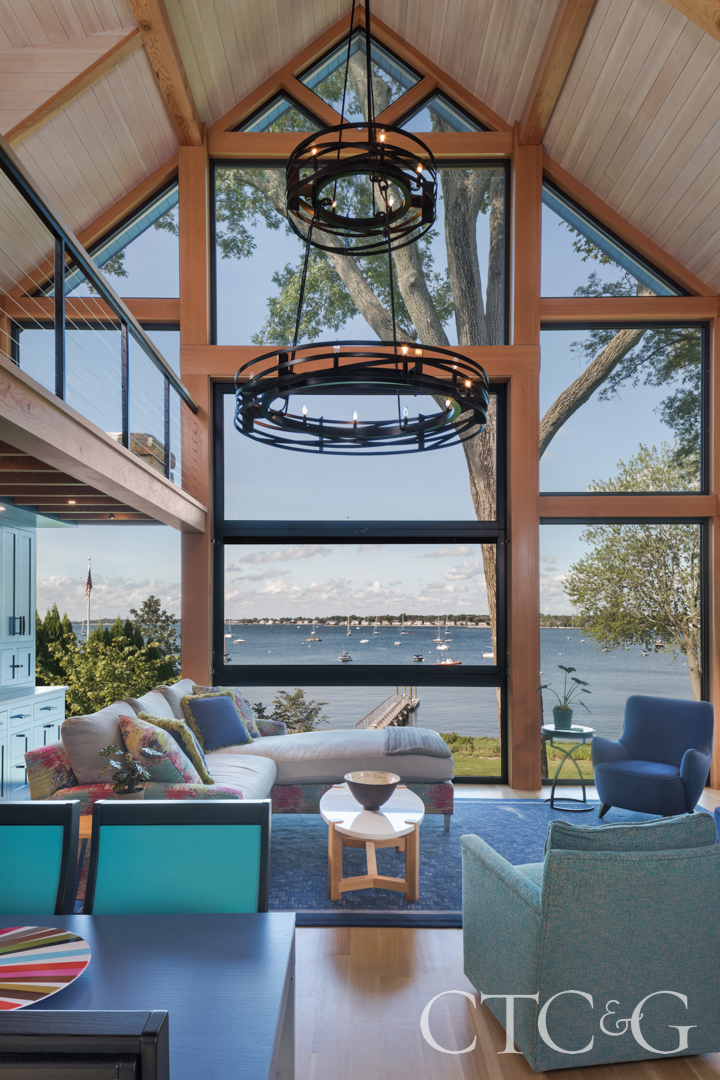
With the assistance of architect Ryan Salvatore of Burr Salvatore Architects, they turned their sights to revamping the barn and its existing office/workshop and second-floor apartment. “The building was completely sealed off from the water, and the apartment was in shambles,” recalls Salvatore, who shaved off the west elevation, gutted the interior, and introduced exposed post and beam construction with lots of glass to open the lower-level living spaces and upper-level bedroom to the water.
A custom Stark rug is topped by a Tomlinson sectional upholstered with Schnabel fabric, and the chandelier is from Wanderlust Ironworks.
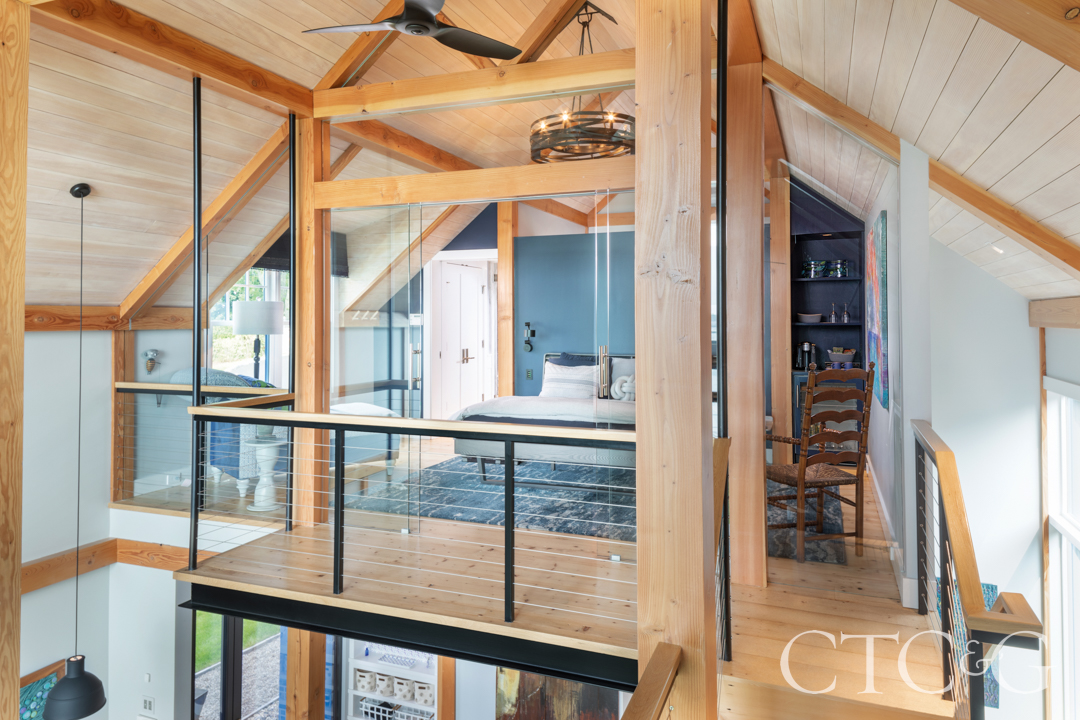
Interior designer Katie Goldfarb selected the Copeland Contour bed with attached nightstands for the primary bedroom.
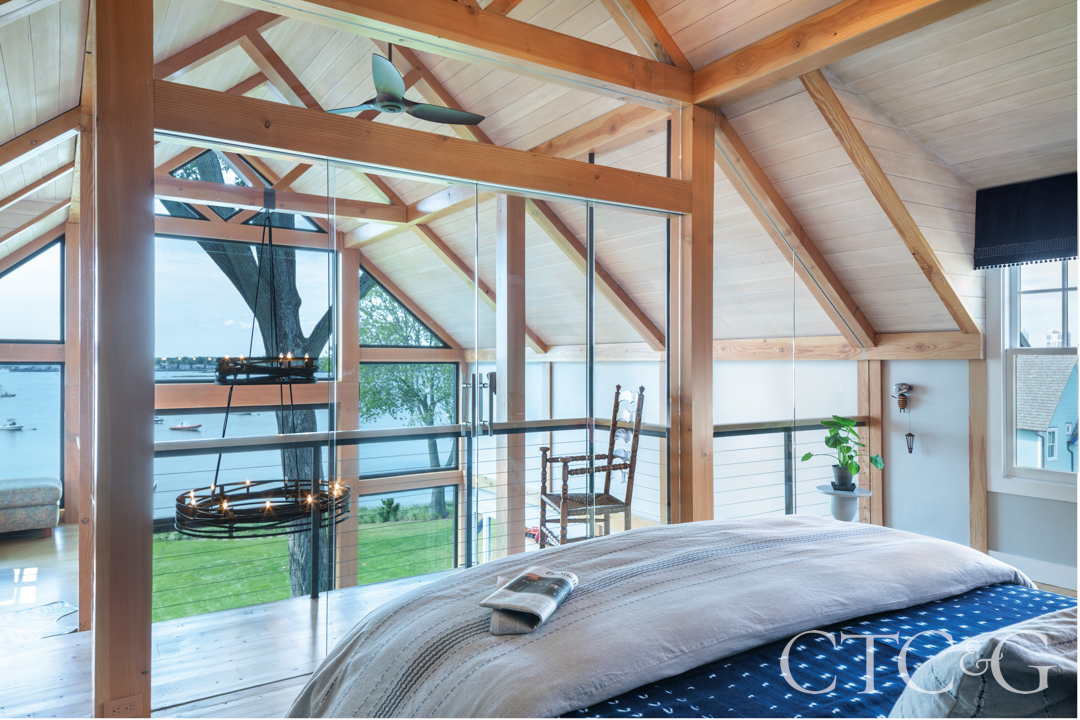
Vertical-grain fir posts and beams define the sleeping quarters where the ceiling planks of the same material have a wiped-paint finish. A smaller version of the Wanderlust Ironworks chandelier is visible from the bed but does not impede the view. Bedding is by Coyuchi.
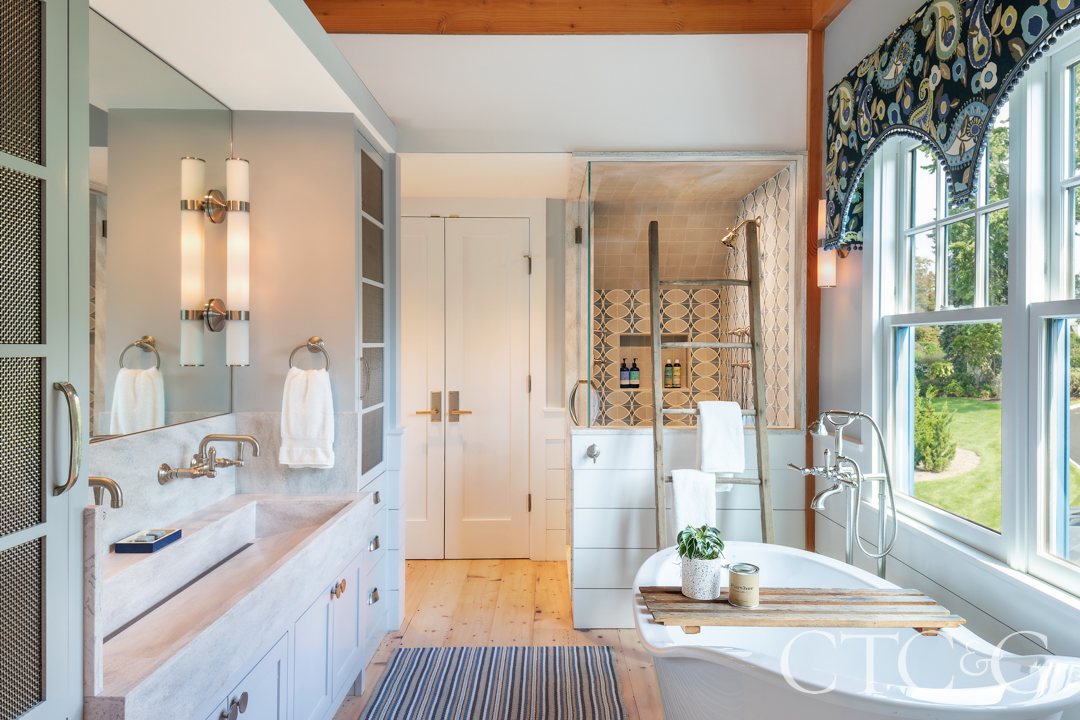
The primary bathroom features a freestanding soaking tub from American Standard; the vanity has Rohl wall-mounted faucets through Waterware Showrooms.
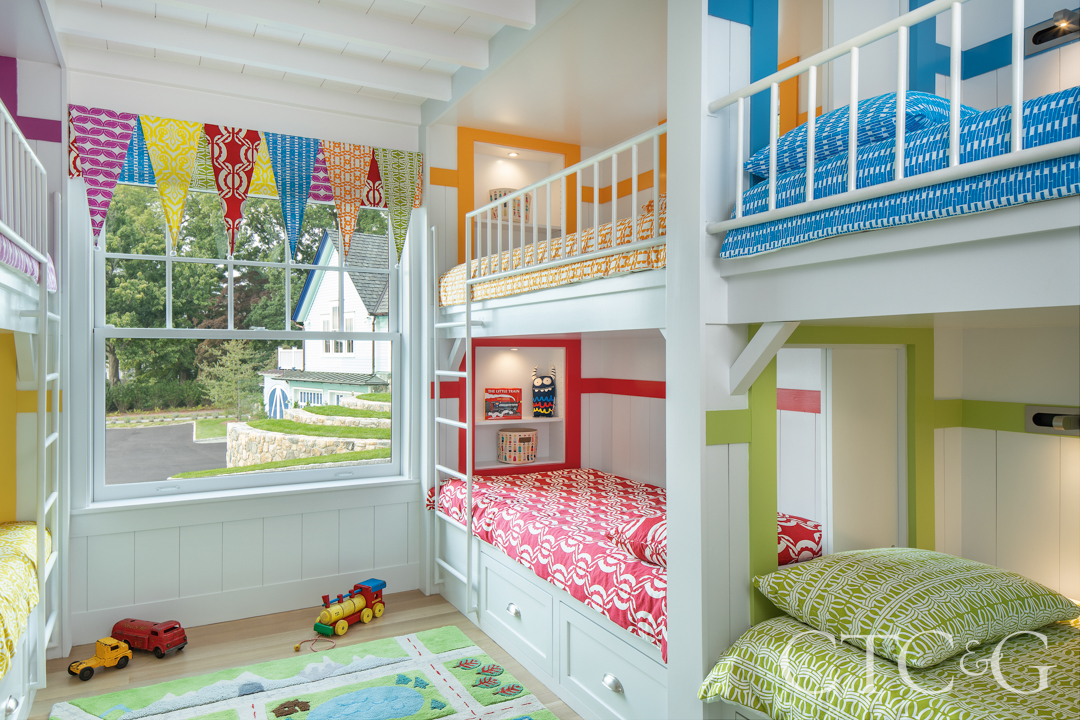
A Land of Nod floor rug is part of the upbeat tone in the bunk room, where custom comforters and curtains are fashioned from Josi Severson fabrics. Each bunk has its own bookcase and Pehr basket for personal treasures.
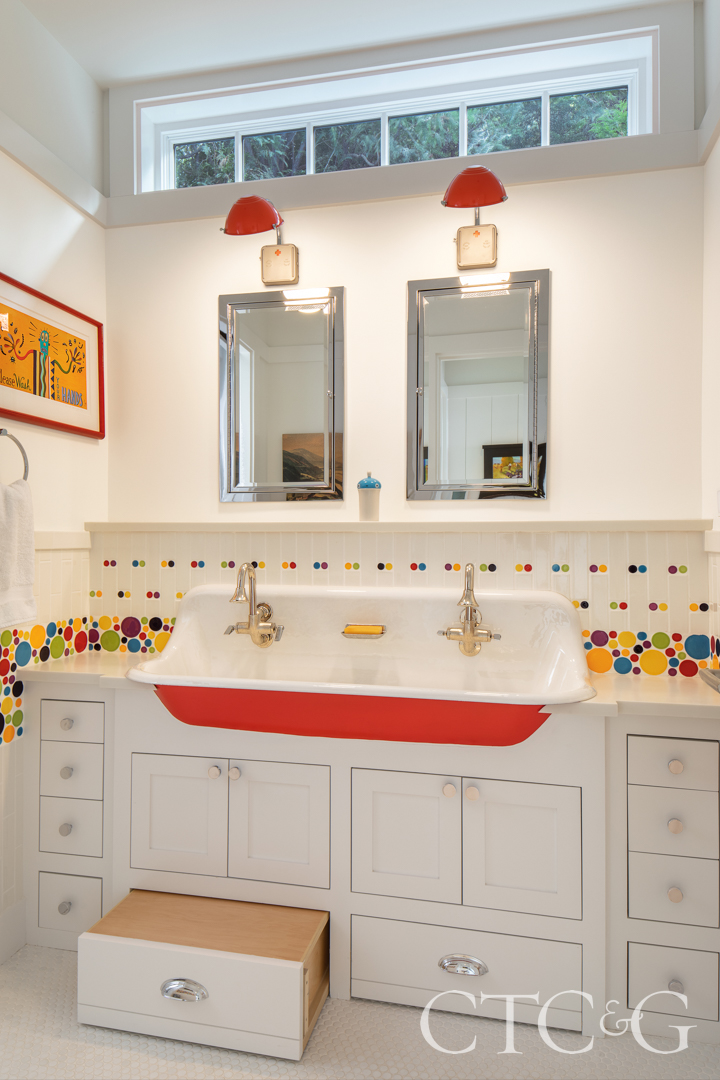
A Kohler sink painted orange, and Pratt + Larson bright circle tiles signal fun times in the bunk bathroom where the medicine cabinets are from RH, and the sconces are from Schoolhouse.
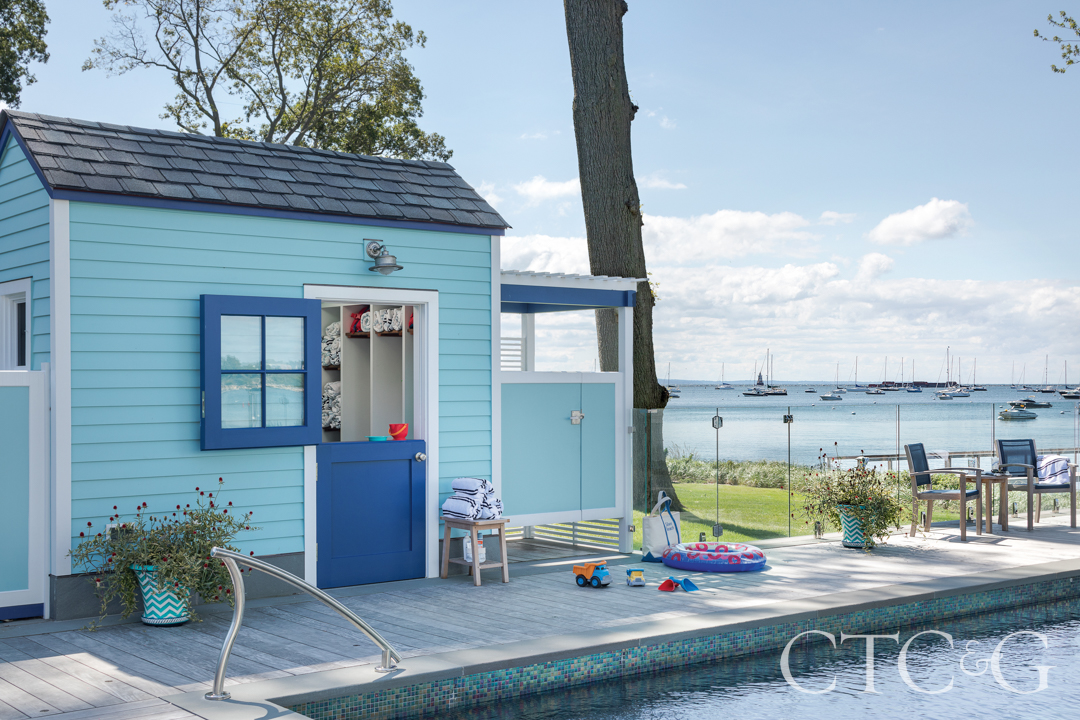
The pool house continues both the architectural style and palette of all three buildings on the property.
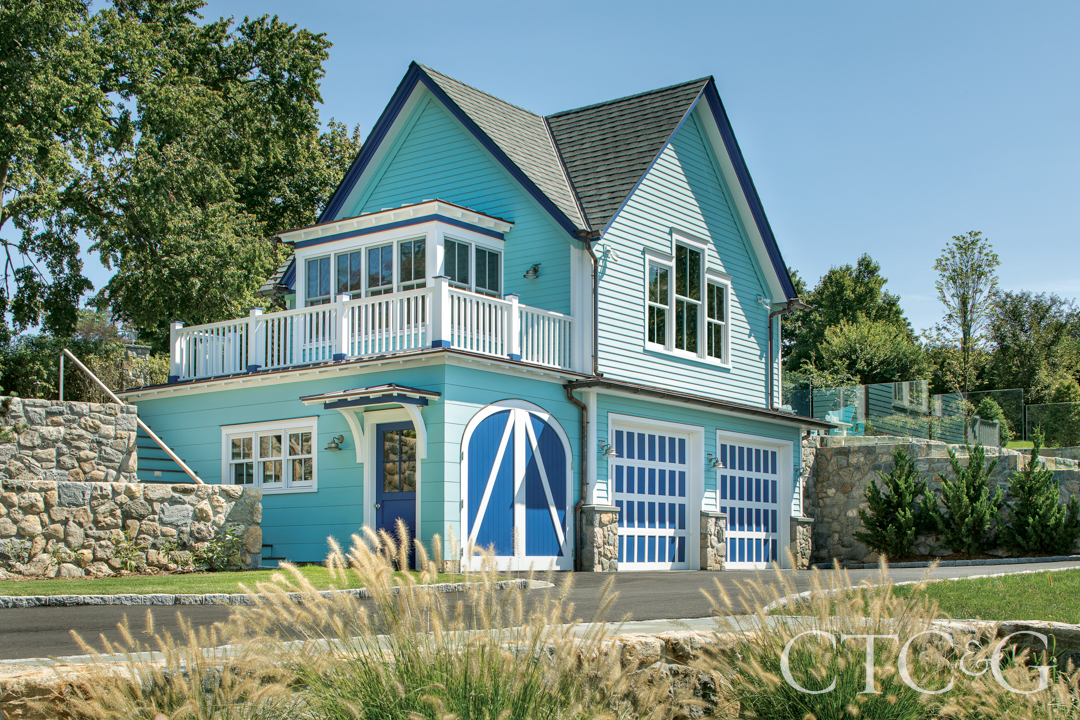
The new three-car garage with studio apartment above is painted in the same turquoise as the main Victorian on the property with dark blue accents to match the barn.
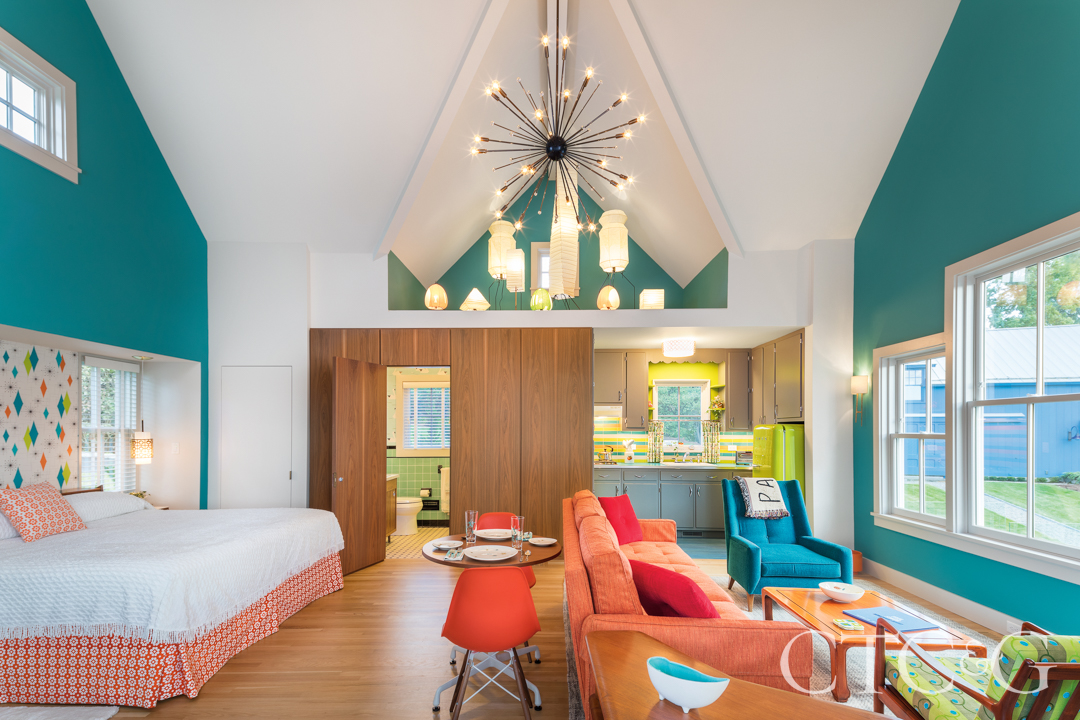
Inside, authentic interjections like the Folke Ohlsson and Paul McCobb chairs, and 1950s cherry coffee table firmly establish the midcentury modern theme.
In lieu of a typical New England red barn, architect Ryan Salvatore opted to paint this one a deep blue. “Everyone agreed it should have a more modern feel,” he says of the structure defined by vertical wood siding and a standing seam metal roof. The sliding door is a nod to its history as a carriage house.
Meanwhile, the homeowner worked with now-retired interior designer Katie Goldfarb on creating a welcoming respite in the tight footprint. Extra-deep cushions on the sofa and an upholstered teal-and-raspberry frame set the comfy tone and color scheme in the main living area. About her furnishings selections for the upper-level primary suite, Goldfarb says, “The bed with a louver slats headboard and attached nightstands stained ash gray felt just right in a barn.” The homeowner found the matching wrought-iron chandeliers that illuminate both levels.
In contrast, two floors down, the bunk room is an explosion of bold primary colors. “As soon as I saw the circle tiles in crayon box colors, I knew we had the kids’ bath scheme done,” says Goldfarb, noting the tiles served as inspiration for the equally exuberant linens and curtains in the bunk room.
Regarding the second house, Salvatore determined the residence located just 17 feet from the main house, would be better off gone. “It was blocking light and views, and on the extra land, we were able to build a cottage and a garage,” says the architect whose design resembles a mini version of the Victorian next door.
The studio apartment above the garage also satisfied local zoning requirements, which allowed for the addition of pool. “We were not permitted to have a pool in our own side yard,” explains the homeowner. “The only way to achieve that was to maintain three separate lots. The pool had to have a residence to which it was an accessory, giving rise to the studio.”
Doing double duty as an office and overflow guest quarters, the homeowner seized the opportunity to outfit the studio with classic midcentury modern furniture and accessories. “It takes us back to our childhoods,” she says, and personally handpicked every item in accordance with the theme. Everything from the vintage Franciscan Starburst Atomic Age dishware and chenille bedspread to current versions of a sputnik chandelier and molded plastic Eames side chairs, entering the room is like stepping back into the last century. “It’s my favorite place on the property,” enthuses the homeowner. “It’s like comfort food for the soul.”
Despite disparate interiors, the homeowner credits landscape architect Bruce Zellers (recently deceased) with pulling the three properties together by designing the driveway that joins all three lots and replicating the Victorian wrought-iron fencing that runs the length of their shoreline. “He also planted the dozens and dozens of hydrangeas,” she says. “They touch every part of the property and help unite it in bloom all summer long.”
