


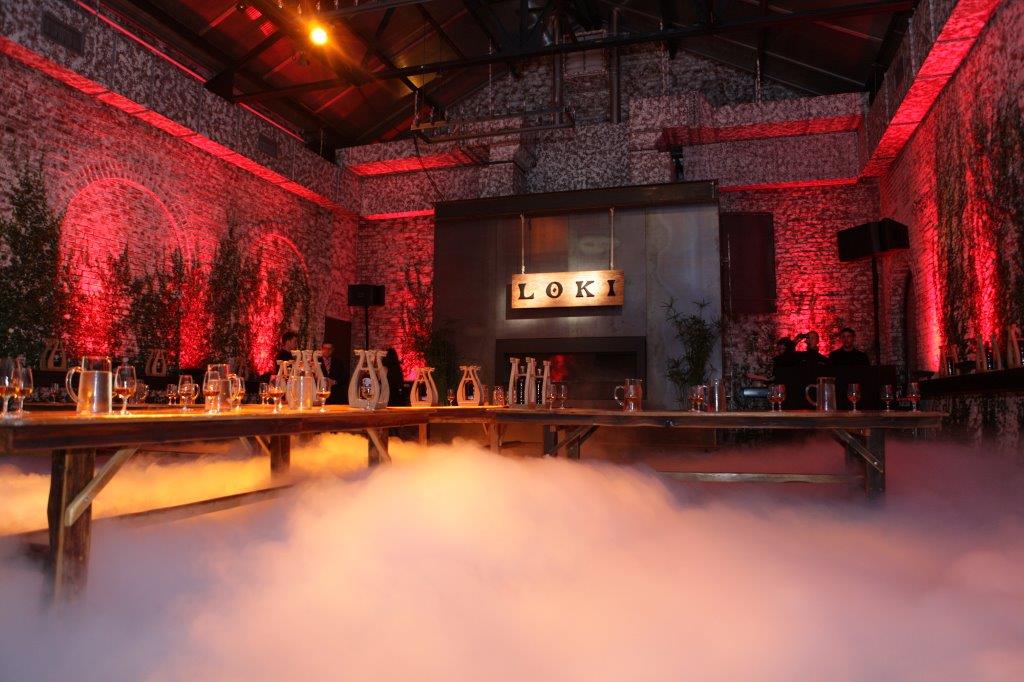
Spirits brands go to remarkable lengths to call attention to their new expressions. Highland Park staged a world launch of their single malt scotch Loki—named for a treacherous and cunning Norse god—like a theatrical production of Norse mythology. Loki was the second in their celebrated Valhalla Collection (the first was Thor).
The event was held at what to Manhattanites is considered a remote location: The Foundry in Long Island City, a party venue with outdoor terrace with great views of Manhattan. To sweeten the idea of a journey to the outer boroughs, Highland Park hired chauffeured vans with Mission Impossible 4 playing to transport journalists to the venue.
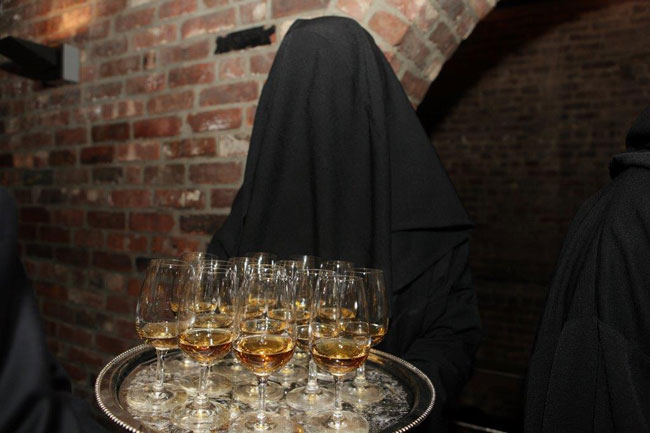
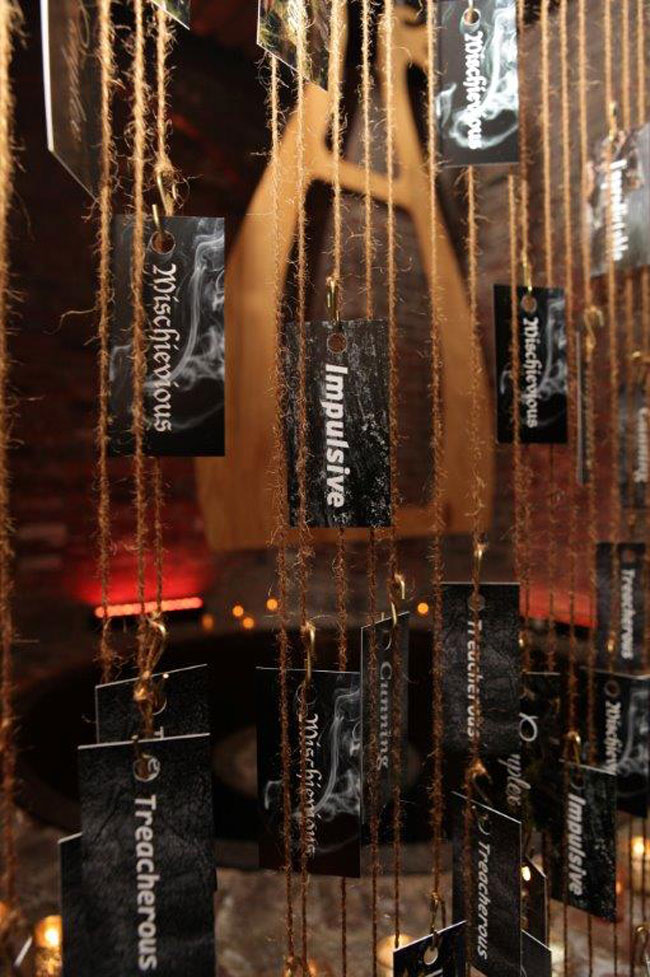
Upon entering each attendant received a double-sided card with two characteristics of the Norse god, Loki. My partner and I got “cunning and complex.” Other friends received “unpredictable and mischievous” and others got the worst decree, “shape shifting and treacherous.” These cards determined our fate that evening and when we would be called into to confer with the whisky gods and get our first taste of Loki.
Scotch cocktails were served and journalists could also taste Highland Park single malts either 12 or 15 year olds neat, with a trickle of water or with a cube of ice. Delicious hors d’oeuvres fortified the crowd for the high alcohol drams (Loki at 48.7 percent) to come.
Soon “cunning and complex” was announced and we were ushered through a tunnel entrance to a room filled with smoke and a brisk fire pit within. There to the echoing sounds from the whiskey maker, the “cunning” group was lead through the lasting notes, snifters in hand. “On the nose, gingerbread and bitter orange…a smoky note is release when adding a drop of water; on the palate, grapefruit and citrus and then smoky dark chocolate; and on the finish, a toasted cloves, hickory smoke and vanilla.” The bellowing voice ended with, “Loki is truly a whisky of the gods.”
Loki, priced at a neat $250, is a 15-year old that has been finished in two different casks, one a Spanish Sherry cask and later finished with a heavily peated cask, which imparts a smoky and enigmatic finish.
Angostura, a Trinidad & Tobago Caribbean rum company mostly known for their ubiquitous Angostura Bitters, has just come out with the world’s most expensive rum, a limited edition of 20 bottles at $25,000 each. This rum surely shouldn’t go into your Rum & Coke.
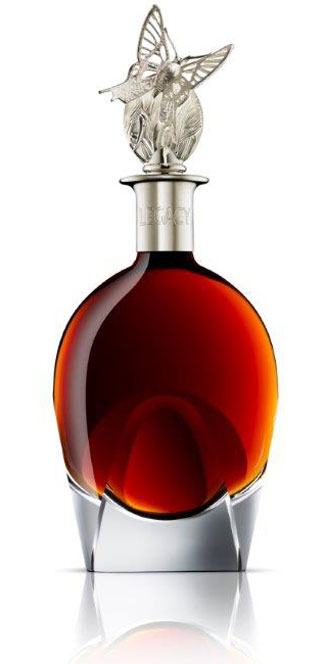
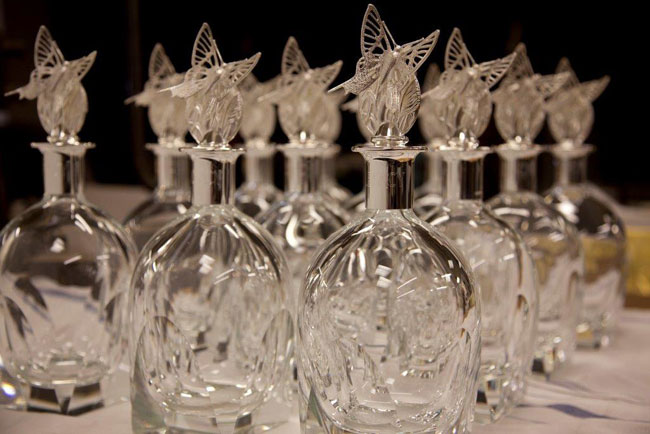
Three of these collectibles have been allocated to the United States and just one night after I tasted Loki—a mere hundredth of the price—I had the privilege to sip Legacy. The decanter, designed by Asprey of London, jewelers to the Prince of Wales, is something to behold. It’s crowned by a butterfly, a symbol of the harvest. When butterflies appear on sugarcane fields, it signals cane is ripe.
The question with these stratospherically priced spirits releases is what makes this cost $25,000? For one, it is a collectible with only 20 for the world, it then becomes a rarity, presumably will appreciate in value, and can later be auctioned off. But in terms of the actual taste that’s a matter for true rum connoisseurs to appraise.
I always love to hear the elaborate back story for limited edition expressions and in this case: seven of Angostura’s most rare and precious rums, the youngest at 17-years -old, have been blended by masters over a period of six years to finalize this extraordinary blend. The rums, hand-selected from “80,000 casks”, are all 100 percent Trinidadian and aged in a once used 200 liter American oak bourbon cask. The blend can never be replicated making this a one-of-a-kind handcrafted bespoke spirit.
Over a dinner at Crown restaurant, John Georges, the master distiller, took the select press group through the unveiling of Legacy, which was presented in elegant cut-glass snifters: “Look at the color…it’s like polished oak with lovely auburn highlights. Nose it. It has dried fruit, honey vanilla with a hint of spice. Now taste the leather notes and feel the viscosity. It flows over the tongue, sweet at first, then dry and spicy and fruity notes remain on the long finish.” The assembled group called out tasting impressions, “It’s like Christmas pudding boiled up.” “A little licorice on the finish.” “Butterscotch and toffee.”
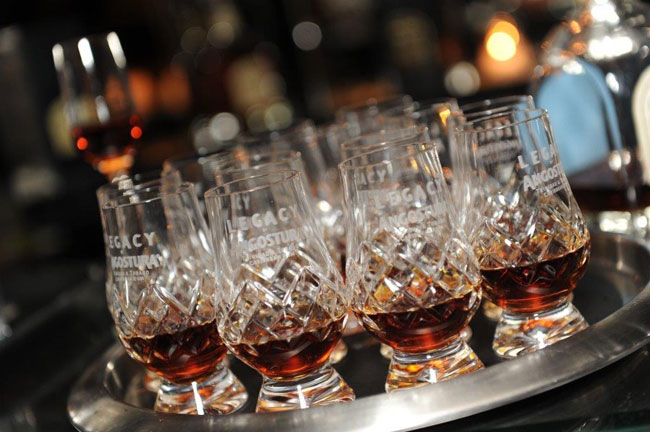
During the dinner, we had a chance to taste the more affordable Angostura Rum editions: The five year old rum at $21, the seven year old at $23, “1919” flagship at $35 and the “1824” at $65. When returning home (also transported by the hosts in a chauffeured car) to my night doormen, he asked, “So what did you taste tonight?” “A $25,000 bottle of rum, the most expensive rum in the world,” I said. He shook his head and replied with more than a hint of envy, “Not another most expensive in the world!” He remembered that a few months back, I had raved about tasting a $30,000 bottle of 50-year-old Balvenie scotch, the most expensive in the world.
Wine producers and importers go to equally great lengths as spirits companies to impress journalists. They stage old vintages tastings with a lot of formality and solemnity where each journalist has scores of crystal tall-stemmed glasses set before him. In March, I was invited to three such extraordinary vertical tasting events. I felt proud to be considered among the wine journalists who could appreciate and judge these rare vintages.
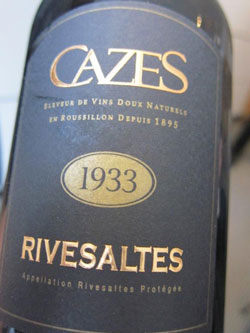
The first extravaganza tasting, held at The Modern, featured the venerable sweet wine house Maison Cazes of Roussillon, located between the Pyrenees and the Mediterranean. We tasted vintages of Rivesaltes AOC going back to 1931! 80-year-old wines. Maison Cazes, founded in 1895, recently bottled 30 different vintages from the 30’s, 40’s, 50’s and 60s and is releasing them to the market for the first time.
These Rivesaltes natural fortified wines are made in a complicated process where they stop the action of yeasts with a house-made neutral alcohol to preserve a portion of the sugars in the grapes. Made from white, gray or black Grenache grapes (and sometimes in a field blend) from very old vines (as old as 100-years-old), the wines have shimmering colors in one of four tones: amber, garnet, brick red and brown brick. Since they possess a strong acidic balance to offset the high sugar content, they don’t taste is exceedingly sweet, but instead honeyed and nutty.

Lionel Lavail, the seventh generation of the family, led us through the tasting and the discussion of how the vineyard has turning biodynamic. The area is very adaptable to biodynamic viticulture since it is very dry with strong wines from the mountain range.
The tasting started with recent vintages (affordable just upwards of thirty dollars) and went back in time to old vintages priced between $250-$450. The two youngest, the 1999 Rivesaltes tasted of honey, apricots, dates and nuts and the 1995 had evolved more elegance, complexity and spice on the finish. From there we worked our way back from the 1960’s to the 1930’s!
In vintages in the 1960’s the honed taste can take on gravitas and display rancio (translated as rancid but considered a desirable flavor coming from slight oxidization, often expressed as a walnut nuttiness). Some labels feature the important event of that year. On the 1962 label it notes that JFK became President. The 1954 ($225) displayed a dark color and complex flavors with hints of tobacco.
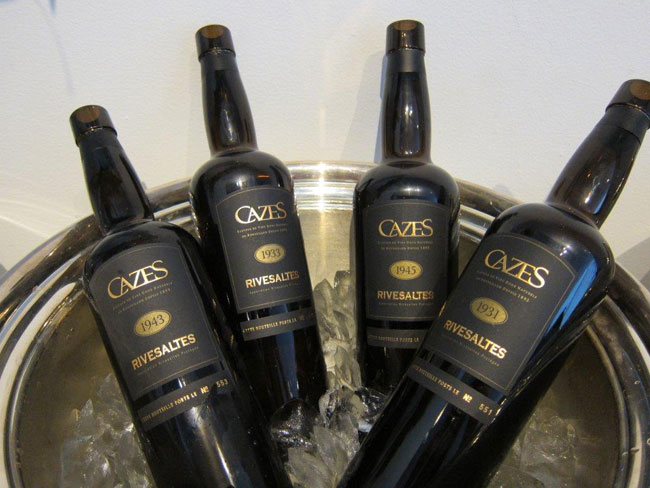
Great rancio notes had evolved in the elegant 1949 Rivesaltes ($255) with a spicy long finish. The outstanding 1945 ($375) with its honey, nuts and figs still felt fresh. Lionel noted here that chefs in China often serve these marvelous old vintages with spicy food. And great chefs in the UK pair sweet wines with game. London is crazy for Rivesaltes and pheasant.
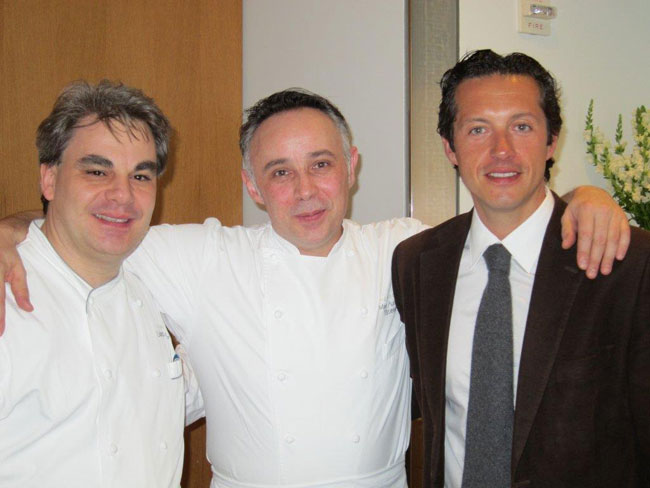
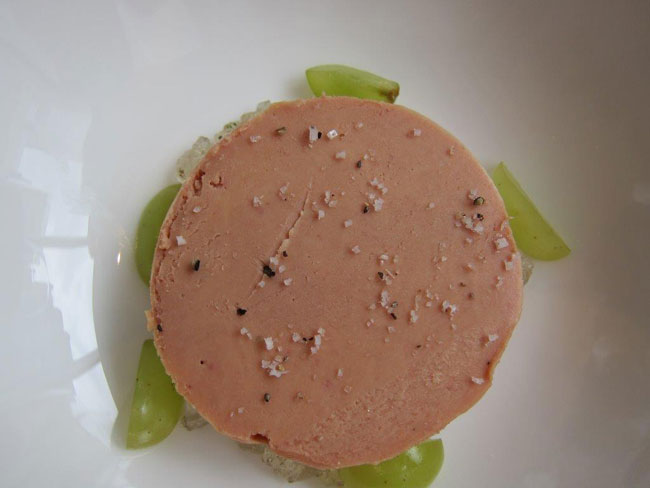
Drum roll came with the 1930’s vintages. The 1933 ($445) and 1931 ($475) both felt remarkable young and honeyed. We were able to sip these gems over the four course lunch, which chef Gabriel Kreuther designed to complement and befit the rarity of these rare wines: foie gras with a Rivesaltes gelee; Long Island duck breast with black trumpet marmalade, Roquefort millefeuille with black truffle, and an apple strudel with chestnut confit.
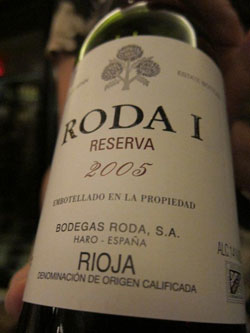
The next serious tasting came days later at the new Spanish brassiere, Manzanilla near Gramercy Park: Bodegas Roda of Haro, Spain, celebrating its 25th anniversary year. Bodegas Roda, considered the most classic of the traditional wineries of Rioja, uses old vine Tempranillo (30-90-years -ld) and indigenous yeast and has a minimal winemaking intervention philosophy. They plant flowers and bushes in their 17 different vineyards. The architecturally modern winery, built over the long tunnels of a 19thcentury cellar, currently control 370 acres of vineyard, owning half and working with growers for half, extending over higher elevation zones (up to 2000 feet above sea level) in Rioja Alta and Rioja Baja.
The handsome Agustin Santolaya, first starting as enological consultant for the winery in 1992 and now CEO, led the tasting through different vintages of their three lines: RODA Reserva ($45), RODA I Reserva ($70) and RODA Cirsion ($250). “The Tempranillo can show two different ripeness profiles in Rioja,” he said, “Some years it has strawberry/cherry profile and it fresh with a long finish and some years it displays dark plum flavors and it is more apt to be a long aging wine. Often Roda I is crafted to have the black fruit flavors and Roda, the red fruit freshness.
Approaching this tasting in a unique way, we tasted great years of Roda and Roda I at ten-year intervals: the 1996 and 2006, the 1994 and 2004, the 1995 and 2005. Santolaya commented on various years, “Roda 1996 has one third 80-year-old Garnacha in the blend. In 2006, that Garnacha was destroyed in a hailstorm, so that year it’s mostly Tempranillo with bright cherry flavors, very nice gripping tannins.” And on it went with: 1995 was the outstanding vintage year and possesses perfectly integrated flavor: the 2005 having the dark plum profile.
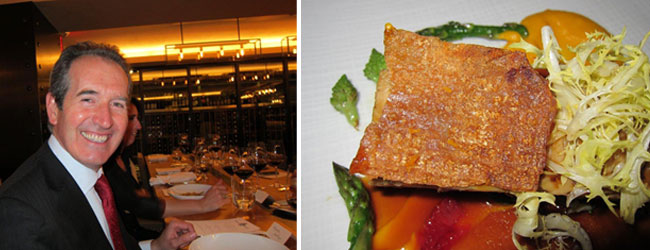
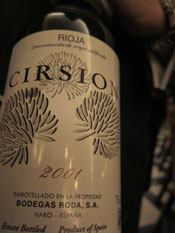
When we got to the top of the line Cirsion 2001, one of Rioja’s greatest vintages, the flavor was of dark fruit and chocolate and it showed harmony, volume and length. These wines were all remarkable and just soared when tasted with food. Manzanilla showcased the perfect dishes: oxtail brioche, cuttlefish croquettes, artichoke with Iberico pork lardo and suckling pig with crispy skin.
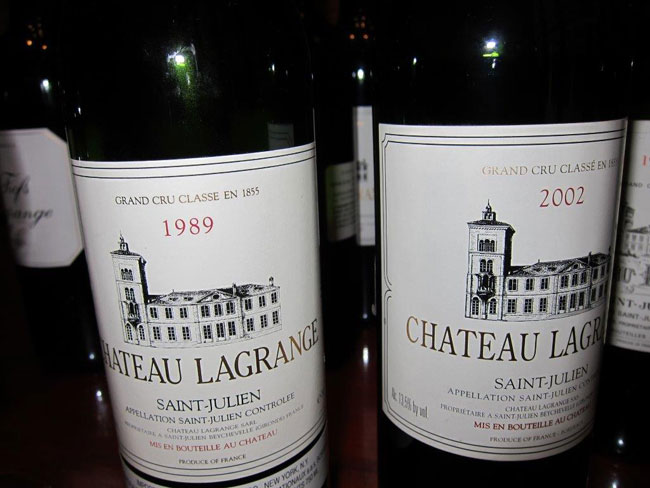
Good things usually come in threes, three important tastings, and I thrilled at the idea of a vertical Bordeaux tasting of Chateau Lagrange (St.-Julien) which was recognized in the famous and definitive Classification of 1855 as a third growth (it was giving a numerical rating of 3rd in the third growth).
The prestige tasting was held at the Four Seasons and Bruno Eynard, the winery’s general manager, started off with a little slide show taking us through the statistics and history. Chateau Lagrange’s cellars are the largest in the Medoc with 4,000 barrels and three long cellar tunnels. The winery has 128,000 vines planted on two hills in St.-Julien with five kinds of terroir. “The white gravel and stone terroir gives elegance and the red gravel creates more powerful wines,” said Eynard. The viticulture is now sustainable with about 20 acres grown biodynamically. The winery has a second wine, Les Fiefs de Lagrange and a third label, Les Cygnes de Saint-Julien (the swans) and two whites: Les Arums de Lagrange and Haut-Medoc de Lagrange.
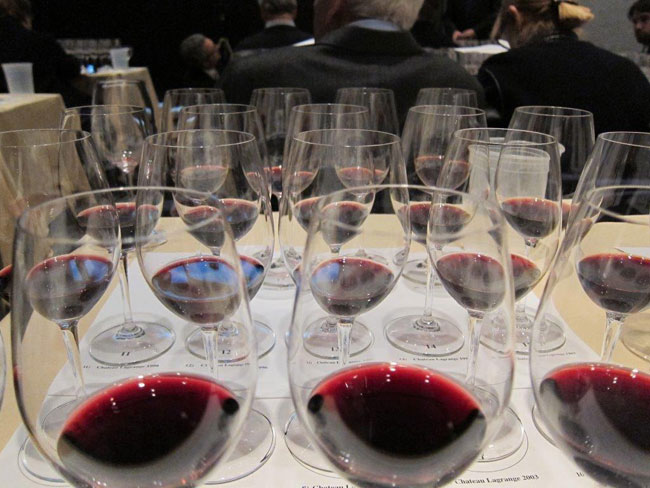
The tasting was super, serious and formal. In front of each journalist, master sommelier or wine merchant stood 19 tall glasses of Chateau Lagrange vintage years separated into four flights. Covering wines from excellent or outstanding vintage years, we started from the year 2008 and worked back to 1959.
First we tasted through in silence and then the discussion started after each flight with comments from Eynard explaining the climate conditions of each vintage, “2004, 2006 and 2008 we had Indian summer. 2008 was a late risky harvest. 2002 was a very good vintage, one of the best of Bordeaux. We look for ripeness in the seeds and then you avoid the bad tannins.” The famous flight was the vintages of the 90’s going back to the 1989, which was especially lively for its age. People liked the 1996 and 2000. And the 1959, served out of magnum? Very animal.
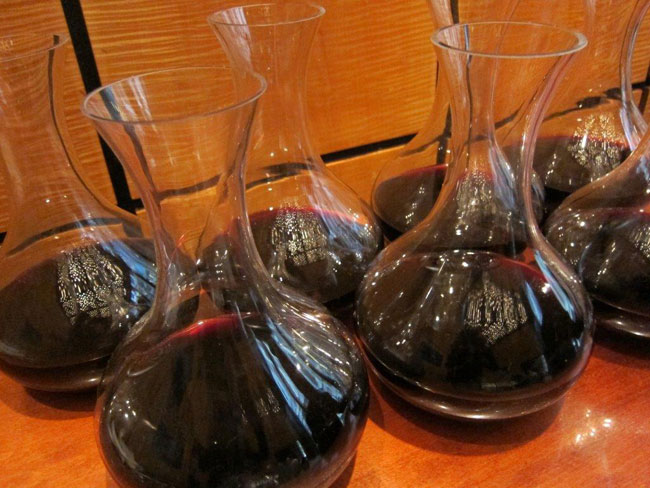
The older vintages has been decanted for hours before the tasting and during a lunch pairing the ideal dish—thick and rare filet mignon with sautéed foie gras atop—we could re-taste the old vintages at will. Well, the life of a wine journalist is not so shabby…we might not get compensated in much cash, but we certainly get to smell the Bordeaux.
