


In Burgundy, the great vintages have uncannily fallen in years ending in “9.” This was true in 1999, 1989, 1969 and in 1959 (arguably one of Burgundy’s greatest in the last 60 years). The most recent vintage of 2009 is on course with the ‘lucky nine’ rule.

Maison Louis Jadot held their 2009 barrel tasting hosted by their esteemed winemaker Jacques Lardiere. Held at Jean-Georges downtown (with Jean-Georges’ handsome young son, Cedric Vongerichten, as chef), Lardiere enchanted journalists with his vibrant yet elliptical wine descriptions. We sipped all the legends: Meusault “Les Genevrieres,” Gevry Chambertin “Clos Saint Jacques,” Echezeaux Grand Cru—13 wines in all.
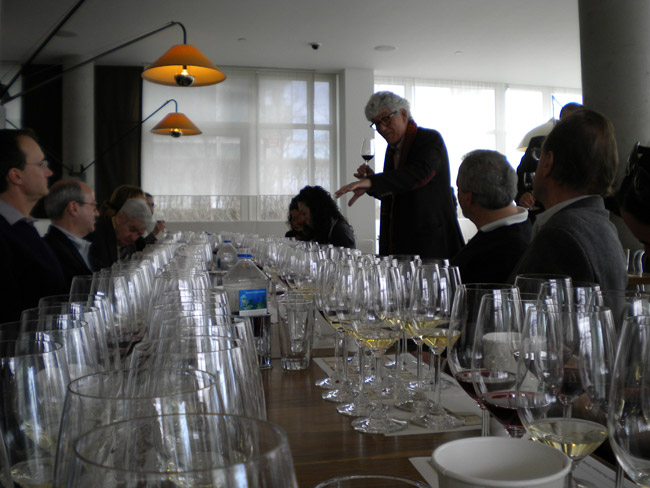
Like a stage actor with dashing looks and a shock of gray-blond hair, Lardiere commented on each barrel sample in dramatically spoken Franglais punctuated with sweeping hand gestures. “You taste, and you taste … and then you see the light,” he said while demonstrating the soulful tasting (a deeply reflective tasting style, which has earned him the moniker the Buddha of Burgundy). It was great theatre with the top tier of the wine-writing community all in attendance—the Wine Spectator guys, Food & Wine’s Ray Isle (who will soon have a TV wine show), even the writer of the Wine for Dummies books (though this Burgundy seminar was hardly for dummies).
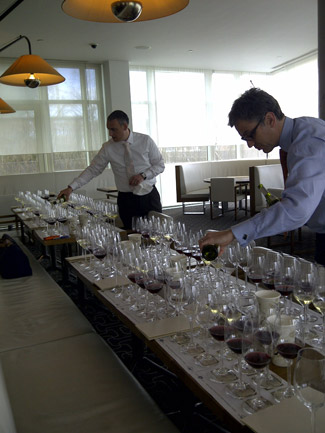
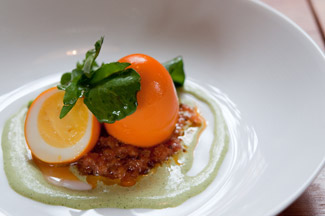
An epic lunch followed with older vintages that would make a “Burghound” salivate. The Japanese red snapper sashimi was paired with a heavenly Chassagne-Montrachet ‘Morgeot Clos de la Chapelle’ 1999. The beet salad with Coach Farm goat cheese (the chef’s splendid creation in taste and design) was matched with two gems, Corton-Charlemagne 06 served out of magnum and Corton Blanc, a Grand Cru from 03. The crowd of journalists swooned and continued swooning as the short ribs were paired with a fabulous Chambertin “Clos de Beze” 2004.
The grand finale with the cheese course was Beaune “Clos des Ursules from 1959 coming in a jeroboam. It literally took two people to lift the huge bottle. This is the flagship wine for the Jadot family estate, and we were all just humbled that Jacques Lardiere presented this 53-year-old bottle, which was probably Burgundy’s greatest vintage in 60 years.

It takes years of drinking it to understand the nuances and to fully appreciate great Burgundy. The standard joke about Burgundy was retold that afternoon … Burgundy is like a mistress; it can be very bad and cost you a fortune at times, but when it’s good, it’s exceptional and hooks you forever … you’d sell your soul for it. When I interview collectors, I notice that as a rule they generally start with Bordeaux and then after years, graduate to Burgundy, which is considered the ultimate. Going from Bordeaux to Burgundy in travel terms is like first appreciating the islands of the Caribbean and then moving on to the truly sublime islands of the Seychelles and the Maldives.
Although I love highbrow wine, I don’t hesitate to switch camps to spirits and hit the bourbon as I embark on a pub crawl in Brooklyn. Indeed there was a time when this baroness was afraid to venture to the outer boroughs (except to go to the airport), but those days are gone—Brooklyn, having transformed itself, is now ready for “royalty.”
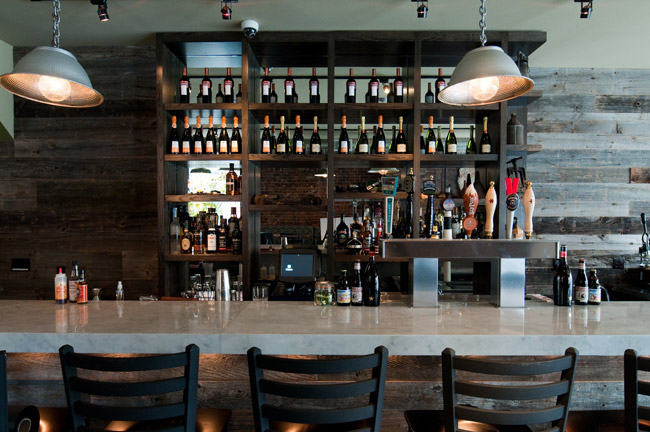

A few friends and I started at the high-design restaurant, The Vanderbilt, in Prospect Heights, which has a 30-foot counter bar where you can drink and indulge in innovative snacks. Mississippi- born barman Brian Floyd mixed exciting cocktails with a Southern flair. His bourbon drinks were testament to his origins south of the Mason-Dixon Line. Brian did a little demonstration of his homemade bitters and sweet vermouth and let me sample drinks made with his bitters versus Angostura and Peychaud’s. The chef brought out appetizers: Serrano ham croquettes, blistered Shishito peppers (addictive), golden picked egg and spicy fried chicken wings.
I was so happy with this array of snacks I could have stayed at The Vanderbilt late into the night but we proceeded across the street to another Brooklyn favorite, Weather-up, with its walls and ceiling of white tiles. This is one of those cocoon-like joints that feels so good on a cool spring night and it seemed that everyone from the writing world was hanging out there. I switched to mineral water, for once following my own advice to pace myself and hydrate.
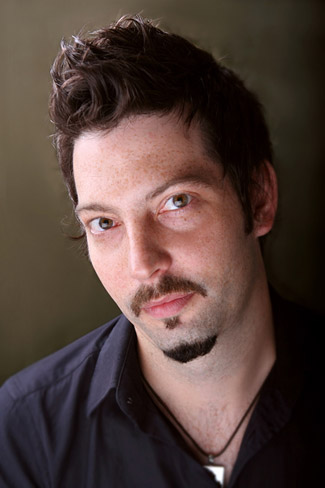
Soon we all hopped a cab to Lady Jay’s in Williamsburg, where noted chef (previously of Tailor and WD-50) and TV food show host, Sam Mason, has taken on a new role of running a dive bar—make that a deliberately-designed dive bar—where he serves mostly inexpensive beer, wine by the glass and easy mixed drinks. No fancy Mississippi cocktails here with a choice of four types of bitters. Open just a year, the distressed-wood designed joint has a juke box, a touch of taxidermy with deer antlers, dart boards and neon Pabst signs. With his tattooed arm, handsome face with hipster facial hair and salty attitude, Sam looks straight out of central casting for the role as dive-barkeep, yet knowing that a talented chef stood before me, I was itching to taste his food. However Lady Jay’s is for drinking only, so I went on to another bourbon on the rocks, no bitters. This is really a place to stay till the wee hours but I feared that if I lingered much longer then the Jamie Fox song, “Blame it on the al… al… alcohol,” would play in my head like a damage-control refrain throughout the next day.
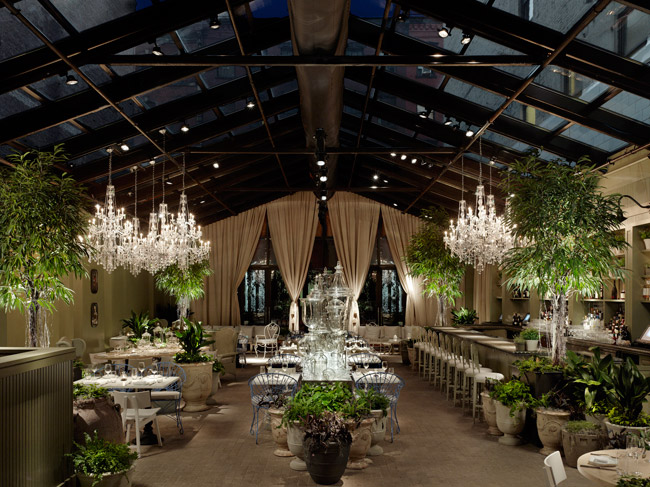
The week, which started with Monday’s Burgundy extravaganza lunch, ended on another high wine note with a vintage Veuve Clicquot Champagne on Friday dinner at the newest hot venue, the Mondrian Soho’s Imperial Number Nine restaurant, under the toque of celebrity chef Sam Talbot. The high-ceilinged restaurant is splendid, an ornate modern palace with oversized crystal chandeliers and a center sculpture displaying a massive still life of tumbling crystal objects (vases, candelabras).
I dined with Veuve Clicquot winemaker, Cyril Brun. We started with the newly released 2002 vintage, which had a lovely creamy texture and was silky with notes of honey and almonds. It was long lasting and very zesty on the finish. Looking over the menu and noticing oysters, Cyril warned, “Never oysters with Champagne. You don’t add salt to salt.” (Despite his wine pairing advice, we ordered the oysters anyway.)
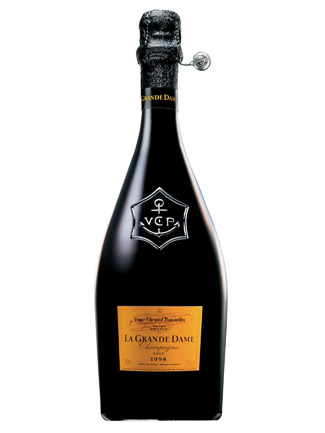
Our Champagne-soaked dinner culminated with two marvelous cuvees, La Grand Dame 1998 and Veuve Clicquot 93. Of the La Grande Dame, Cyril said, “1998 was an impressive year. It’s ripe with high acidity.” And then he explained to me his process in making it: “I don’t see myself as the grand creator. With this cuvee I feel we inherited the style from Madame Clicquot. My main ambition is to be the guardian of the temple. I use the same eight villages of cru that went into her original blend for La Grande Dame. She had the right instincts.” The Grande Dame had wonderful caramel notes and Cyril felt it could age 20 years more. It would become even more toasty and truffle-y in time.
Cyril explained that it is in the Veuve Clicquot yellow label, which comes out every year, that he has discretion in the blend. The NV Champagne is comprised of 400 different wines and a 10-person tasting panel (all oenologists) sample all the wines and decide on the final blend. Though the recipe is similar from one vintage year to another, they must adjust the proportions. Cyril has the final word.
The Veuve Clicquot 93 (disgorged at the end of 99) and also had wonderful caramel and mineral notes that developed from resting 18 years on the lees. Feeling the effects of all that vintage Champagne, we engaged in some personal talk and I was charmed when Cyril related a story about his son, Leon, who is two-and-a-half. When friends ask little Leon what his father does for a living, the boy replies, “My father makes something to drink. And when people drink it, everyone says, ‘Wow it’s so good.’ ” Indeed Leon’s daddy makes something just remarkable to drink.
