


“As I was scrolling through Instagram…” might very well be the current zeitgeist’s newest iteration of “Once upon a time.” At least this has been the case for fashion and accessories designer and art collector Lisa Perry, who found her latest venture, a modernist home in East Hampton that she calls Onna House, on TheCreativesAgent, an Instagram account which features mid-20th-century homes in danger of being demolished. “In the attached video a person asks, ‘Can someone please save this home?’ And that intrigued me,” Perry recounts. “The pictures reminded me of the house I grew up in outside of Chicago, and I told myself, ‘I want to save it.’”
The home Perry grew up in featured a Japanese-inflected façade with shoji screens oriented around an indoor pool. Onna House, designed by architect Paul Lester Wiener in 1962 for art collectors Ethel and Robert Scull, has a similar vibe.

“When I pulled up to the property, it was like the mini version of where I grew up,” Perry says. “I got this deeply physical feeling and knew it was my next project.” Perry bought the house and asked her longtime architect and collaborator Christine Harper to begin a restoration. “The bones of the house are beautiful. We only needed to change the kitchen and the bathrooms, whereas the main spaces just needed some love. The gardens needed the most love. Halfway through the project, I decided that I was going to focus on filling the house with art and design pieces exclusively made by women.” Not surprisingly, “onna” means “woman” in Japanese.

By the fall of last year, Perry was ready to open the doors to Onna House by appointment to aficionados of architecture, art, and design. With a goal of giving women artists more visibility, Perry uses the home to mount revolving exhibitions, and she purchases a piece from each artist she exhibits for her permanent collection. “We focus on some very young artists who are breaking out, but also on women of all ages at any point in their career who can benefit from the exposure.”
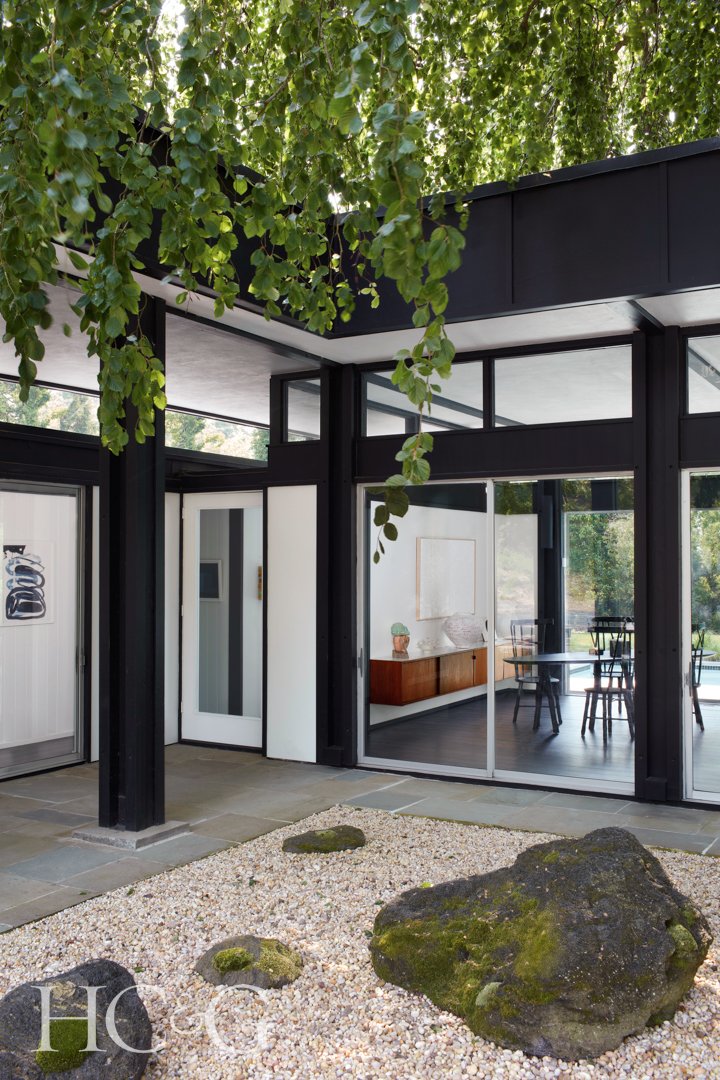
Mirroring Japanese design tenets, the gravel-lined entry courtyard is anchored with an array of boulders.
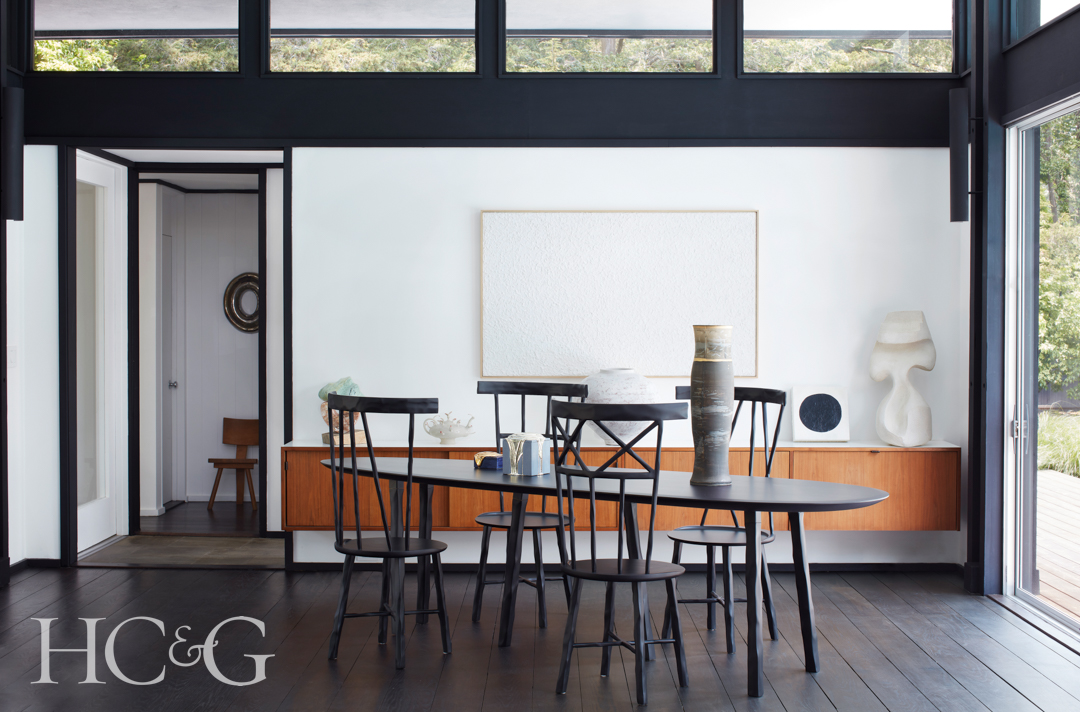
A corner of the open living area features a T-W table and chairs by Anna Karlin.
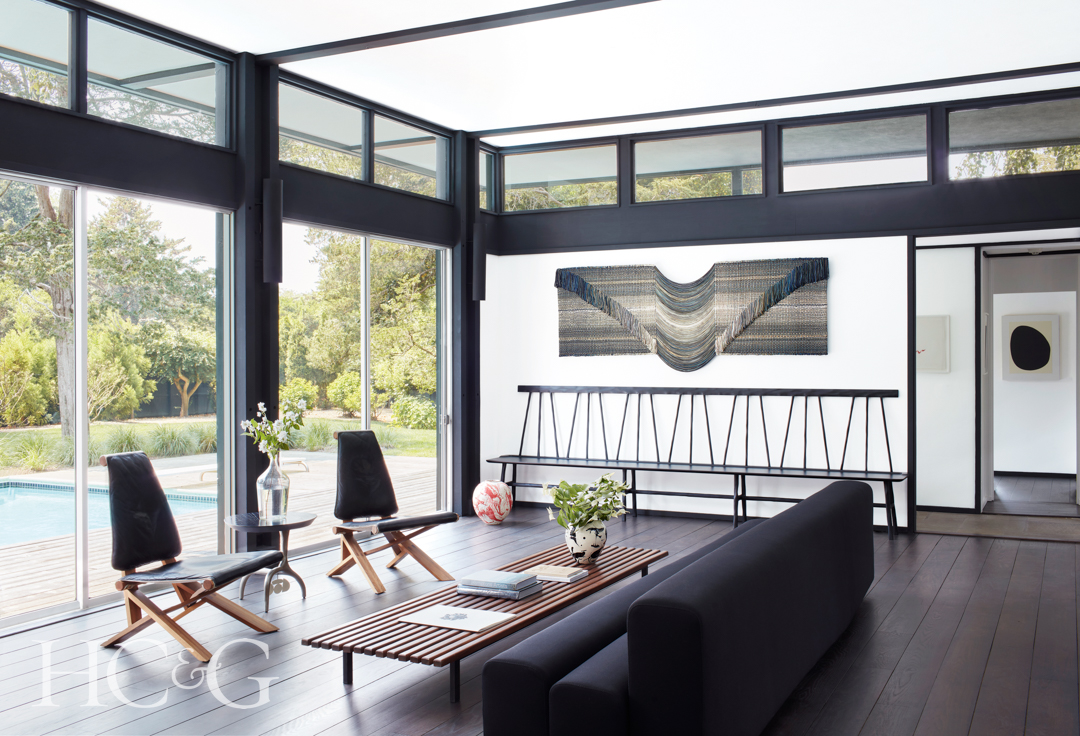
In the living area, an elaborate woven wall hanging by Mitsuko Asakura hangs above a T-Glyph bench by Anna Karlin. In the foreground, an Osaka sofa by Pierre Paulin and a pair of chairs by Pierre Chapo flank a Charlotte Perriand bench.
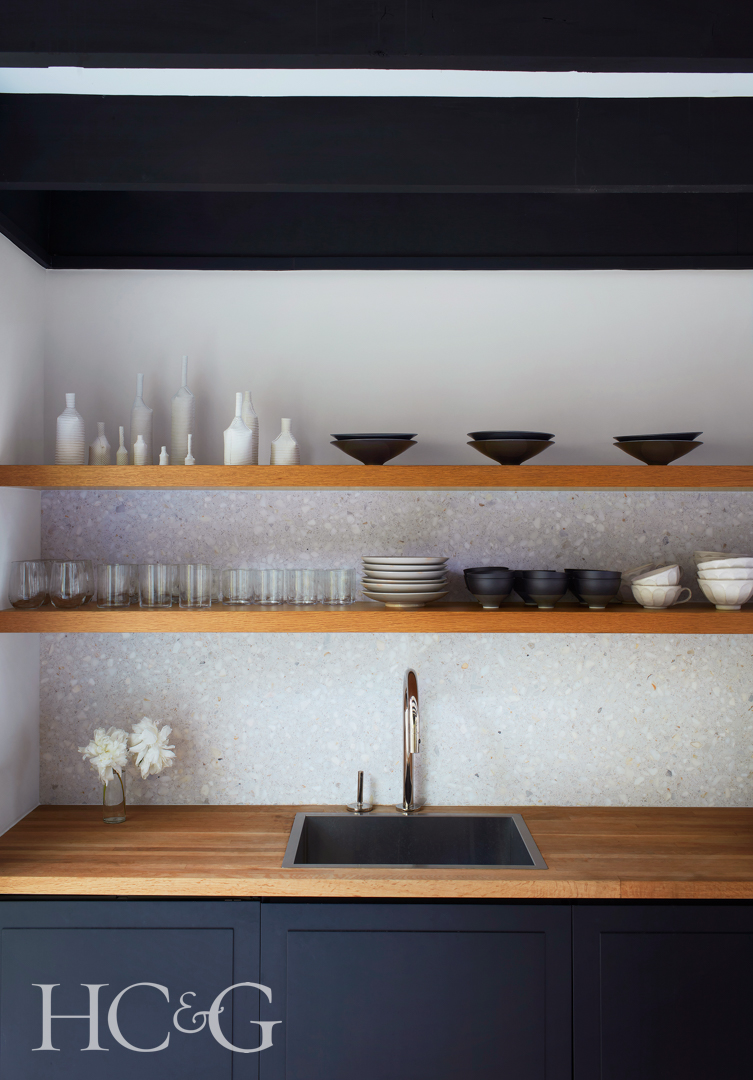
In the kitchen, the 1950s Janine Abraham stools were sourced from an Isle-sur-la-Sorgue market vendor. The island slab is from Artistic Tile.
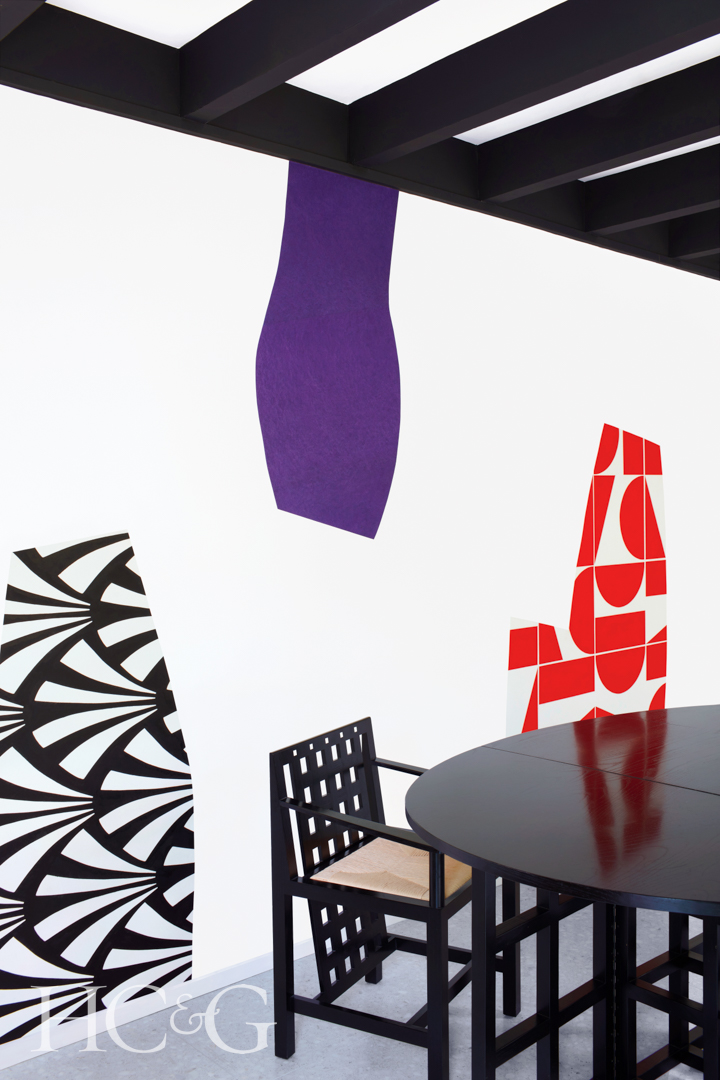
Perry commissioned local artist Almond Zigmund to paint an artwork titled Dresses and Urns. The 1970s Charles Rennie Mackintosh table and chairs are a score from 1stdibs.
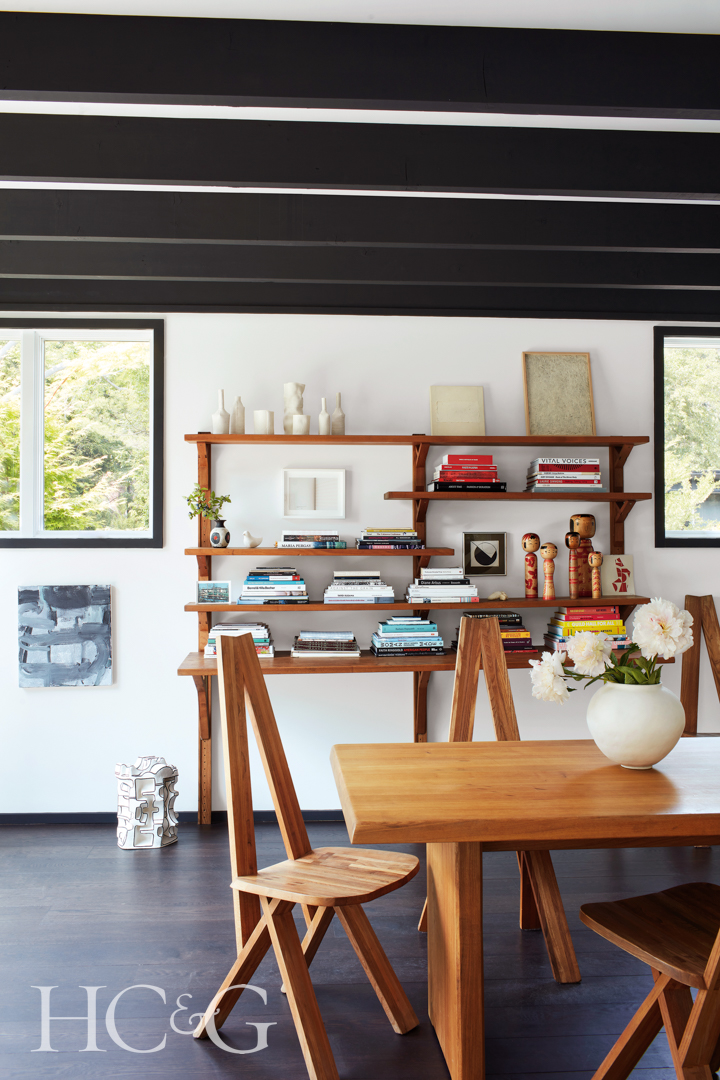
Perry’s office, which features a table and chairs by Pierre Chapo, looks onto the entry courtyard.
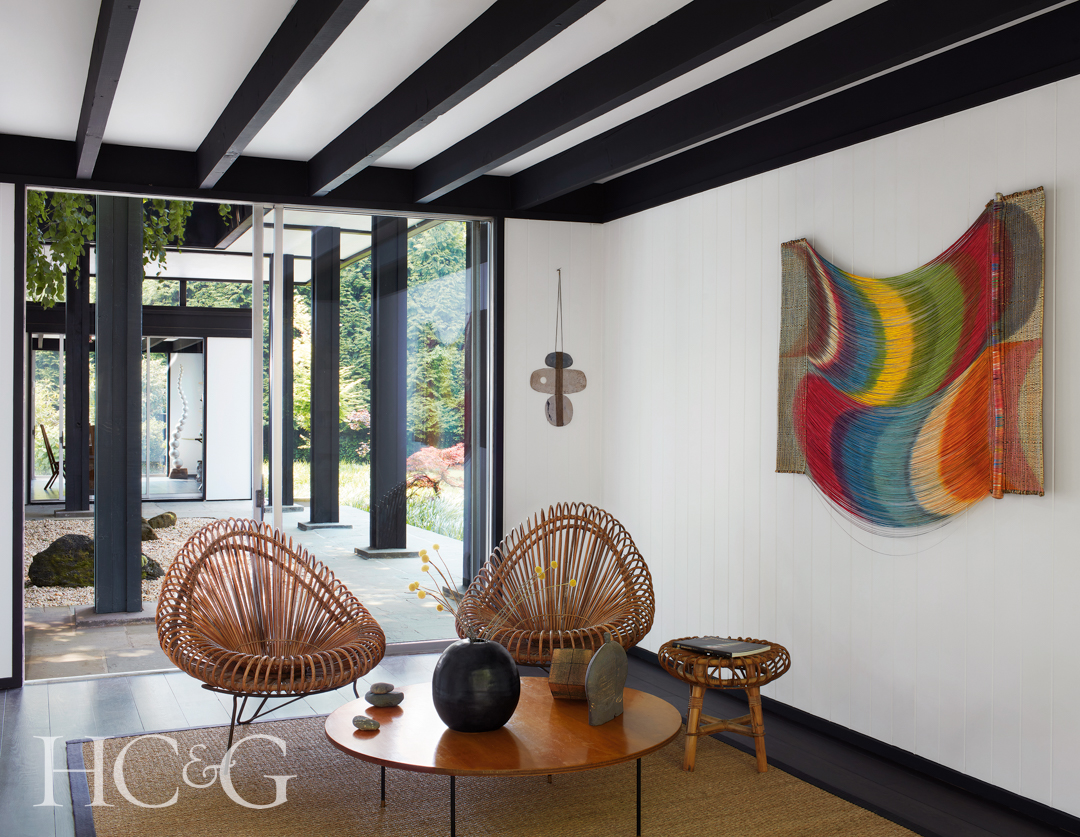
The tearoom includes a pair of circa-1960 Janine Abraham chairs, a table from R. E. Steele, and a Mitsuko Asakura wall hanging.
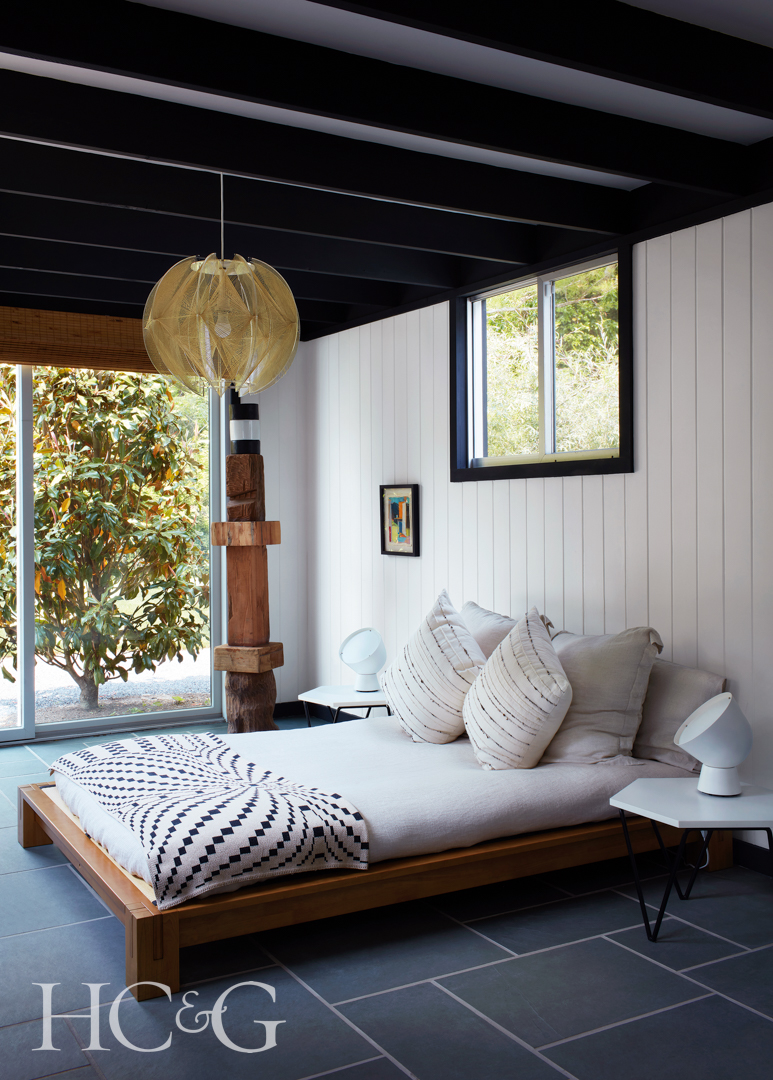
The bedroom in the guesthouse includes a vintage Paul Secon pendant and a pair of Gio Ponti side tables.
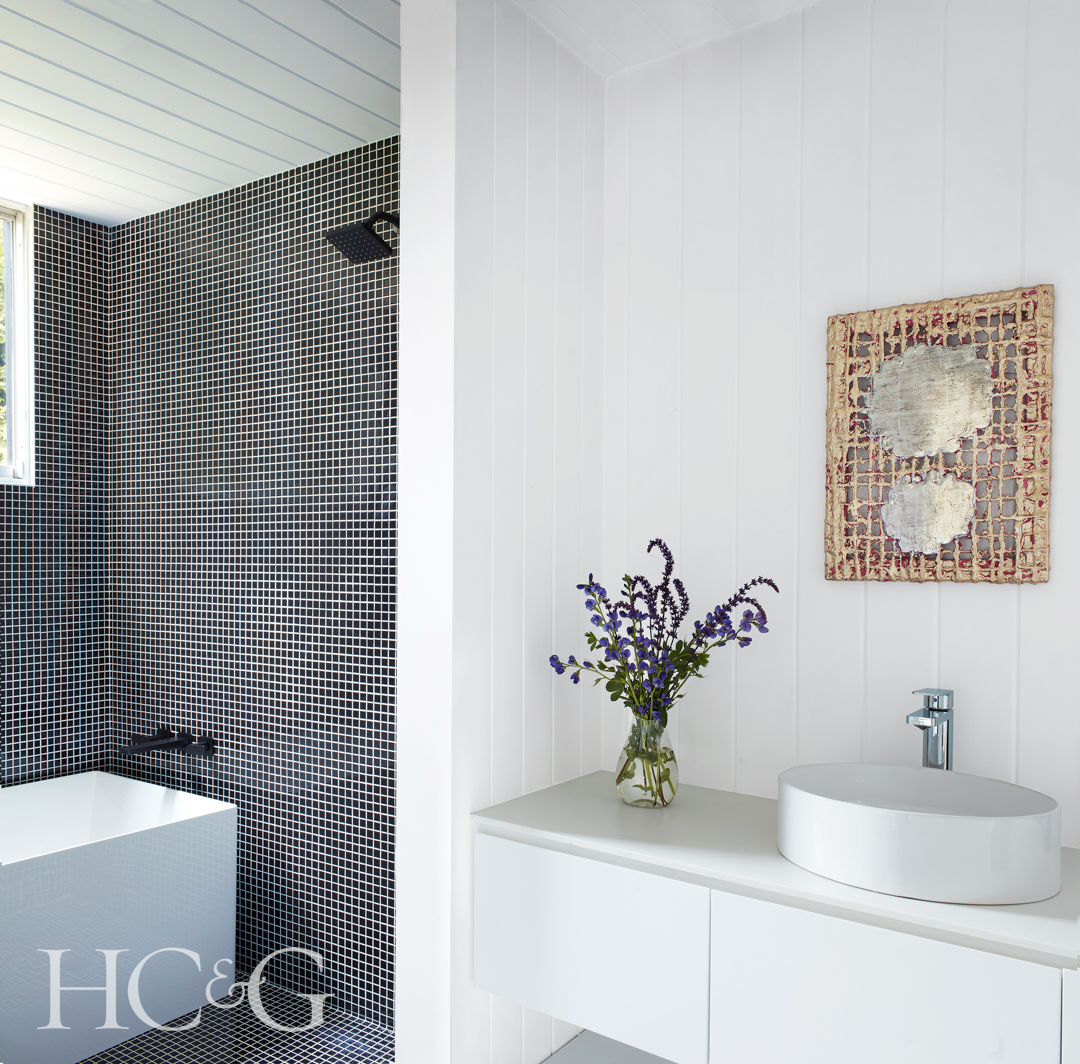
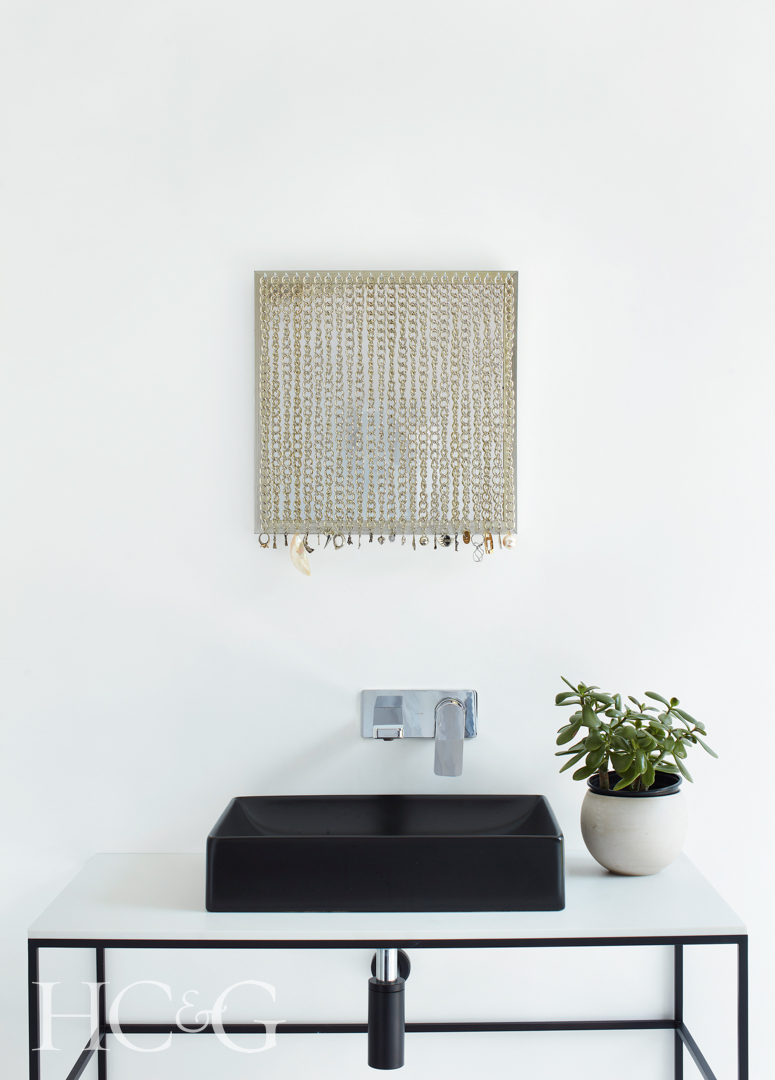
The office bathroom artwork by Ligia Dias mirrors the artwork in the gallery bathroom.
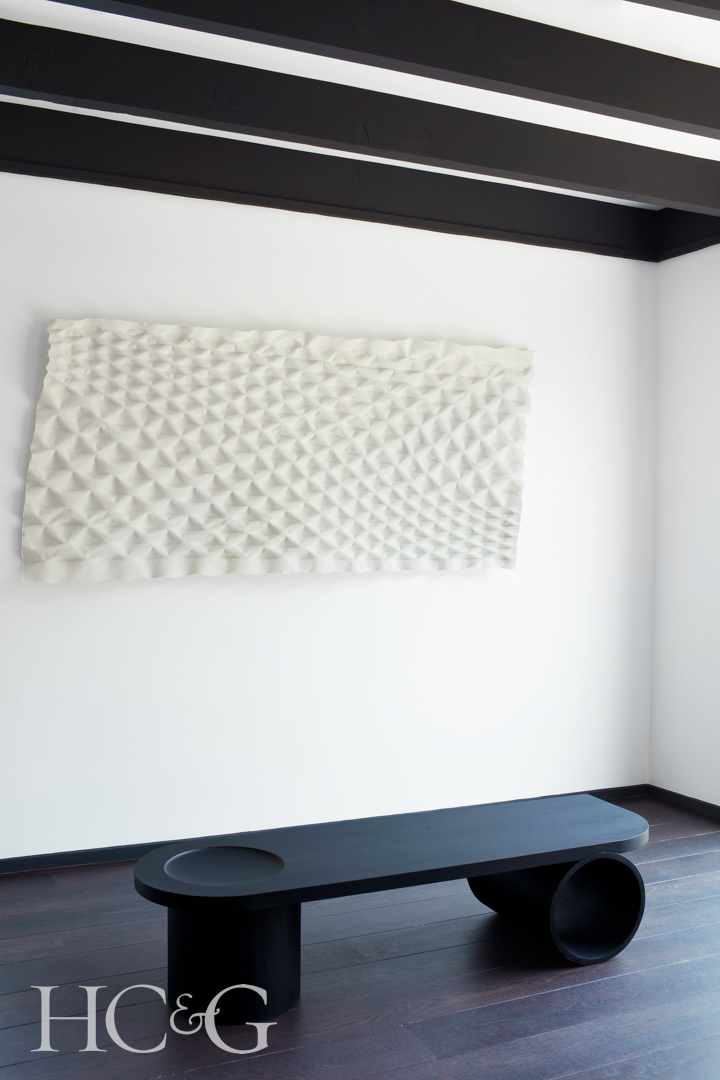
In the gallery, a wall hanging by Mary Little hangs above a table/ bench by Nina Cho.
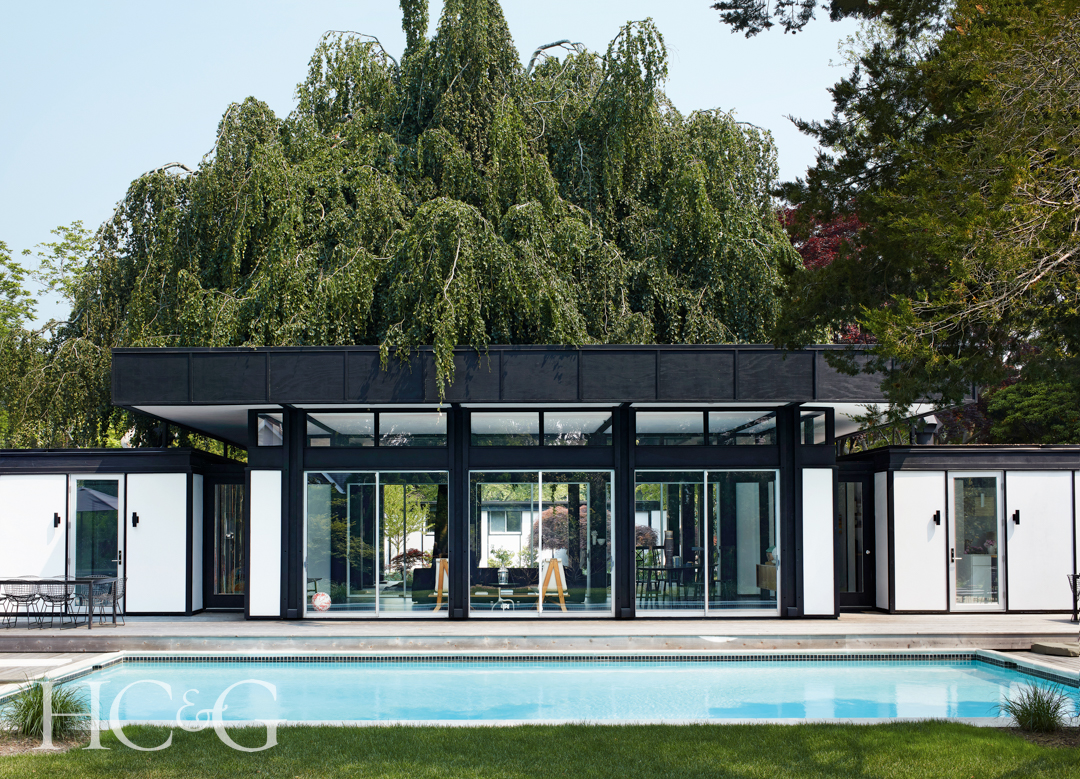
A weeping beech, planted in the entry courtyard when the house was built, now spills over the home’s rear elevation.
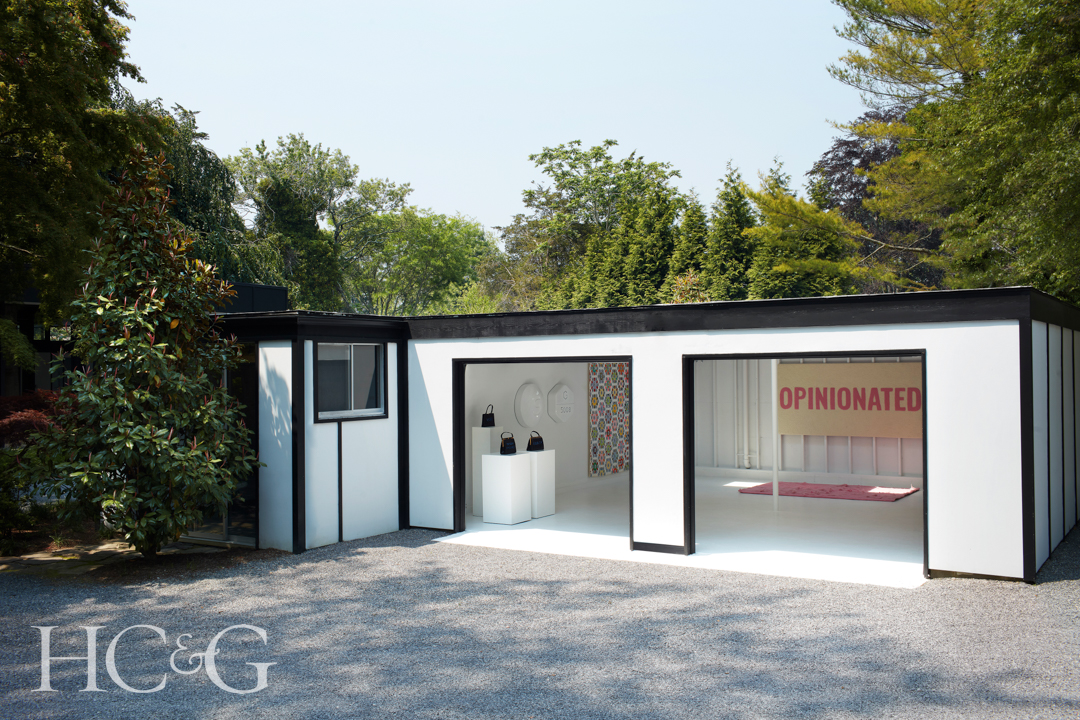
Perry uses the garage as a gallery space, most recently the site of the show “Pearls, Pills, and Protests,” which closed in June. It featured work by Kelly Tapìa-Chuning, Michele Pred, and Lulu Varona.
Perry uses the garage as a gallery space, most recently the site of the show “Pearls, Pills, and Protests,” which closed in June. It featured work by Kelly Tapìa-Chuning, Michele Pred, and Lulu Varona.
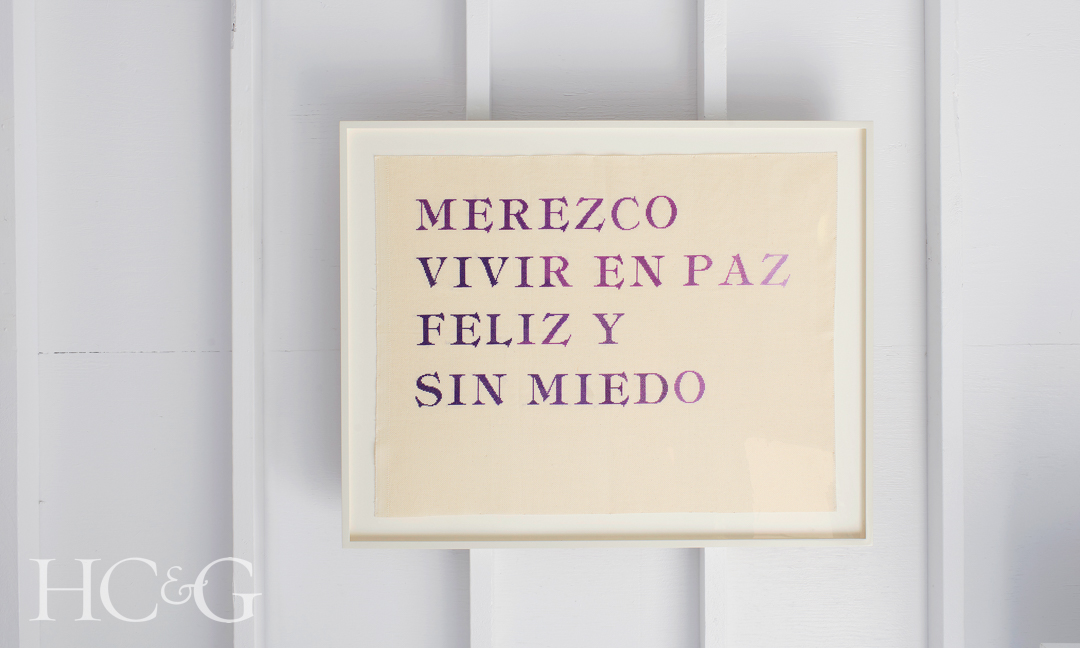
Perry uses the garage as a gallery space, most recently the site of the show “Pearls, Pills, and Protests,” which closed in June. It featured work by Kelly Tapìa-Chuning, Michele Pred, and Lulu Varona.
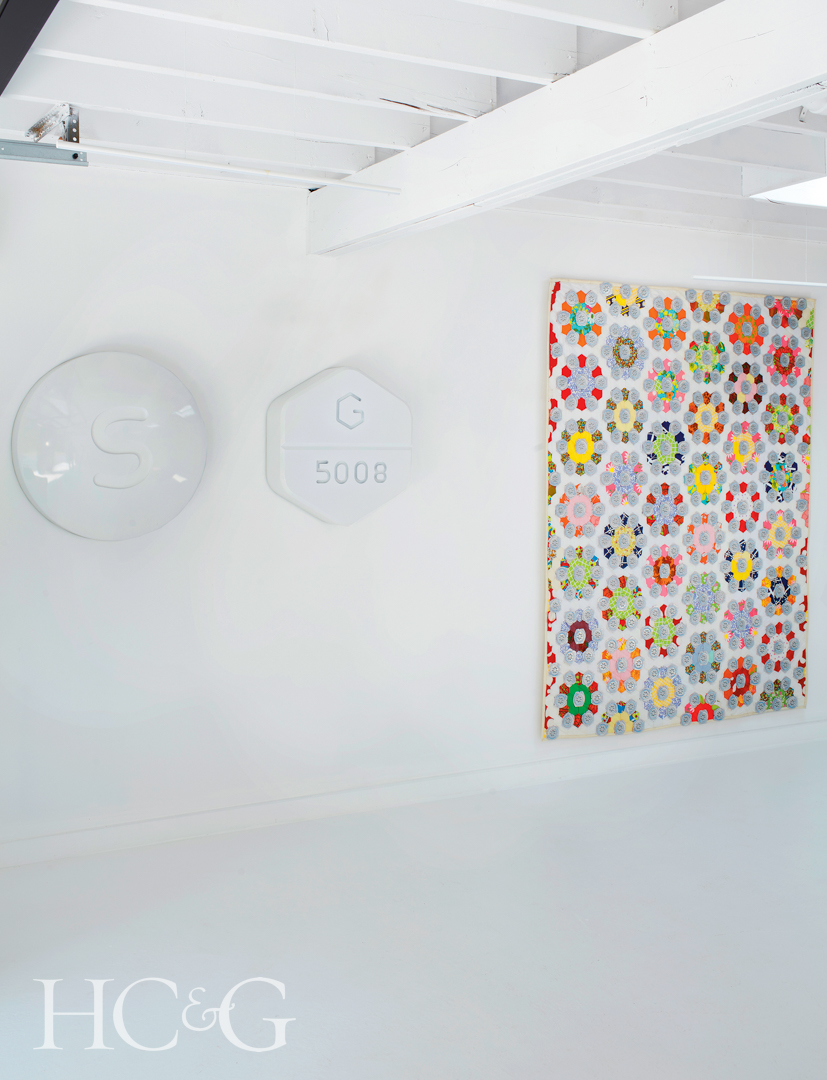
Perry uses the garage as a gallery space, most recently the site of the show “Pearls, Pills, and Protests,” which closed in June. It featured work by Kelly Tapìa-Chuning, Michele Pred, and Lulu Varona.
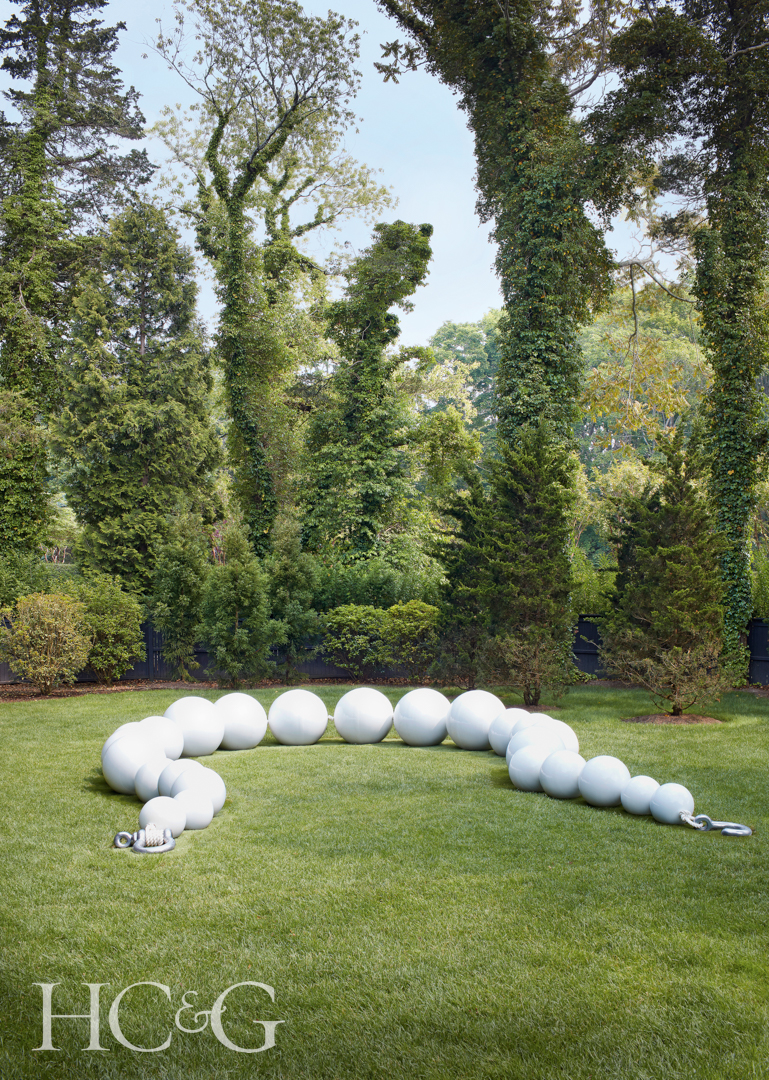
Jerelyn Hanrahan’s Graduated Pearls occupies a corner of the yard beyond the pool.
Homeowner Lisa Perry hired architect Christine Harper of Harper Design + Build to give a gentle upgrade to the original house, designed in 1962 by architect Paul Lester Wiener.
The bonus: Displaying furniture, sculpture, and art in the context of a private home, instead of a sterile white-walled gallery. “I like to show every aspect of my collecting,” Perry says, “and mix it all together. I’m fortunate enough to have people tell me that they love my taste, and now I have a place where I can share every step of the process, down to where I get the bath towels!” During the years when she was collecting vintage clothing from the 1960s, she adds, “I was going to fairs and shops all over the world and people would send me things. It’s the same now with this collection.” In true contemporary fashion, pieces come to her attention via a host of sources, from Instagram to her frequent travels to submissions to Onna House’s website.
The art and furnishings in Onna House largely adhere to the notion of form and function, from a dining table and chairs by Anna Karlin and a table/bench by Nina Cho to Graduated Pearls, a large sculpture by Jerelyn Hanrahan that appears to be tossed into the lawn adjacent to the swimming pool. The latter doubles as a seating piece where women can gather and share stories, while “reclaiming the pearl necklace from the nape of the 1950s housewife… and creating a modern power symbol,” according to text accompanying the exhibition “Pearls, Pills, and Protests,” which closed at the end of June.
Perry keeps an office in the house directly across the entry courtyard from the tearoom, her favorite space in the structure, where she can take a break to relax and look out over the zen-like moss garden. The kitchen, meanwhile, has been turned into an efficient command central for small gatherings and events. Here, she commissioned local artist Almond Zigmund to paint a mural on the wall and also stores thank-you cards and “beautiful teapots by women ceramists. Everything you see is by a woman maker, and it starts a conversation. I like to think of myself as the connector.”
The substantial lush gardens surrounding the house extend the Japanese theme further. Perry has added bamboo fencing along with tall grasses and mountain laurels, which complement established Japanese maples original to the property, as well as a weeping beech that extends “through the central entry courtyard and was planted at the time when the house was built.”
Like the Sculls, Perry is a passionate art collector and advocate of women’s rights. “The Sculls,” she says, “were great collectors and had the vision not just to build this house, but also to have parties and fundraisers there in support of women’s issues. People like Gloria Steinem and Betty Friedan were often at the house, and I am hoping to use it now as a platform for women’s rights, for women makers, and for people who love architecture, design, art, and gardens. There is a lot to offer at Onna House.”
