


We chatted live with Neal Schwartz of Schwartz and Architecture, whose Sonoma Valley project is featured in our current issue of SFC&G (San Francisco Cottages & Gardens). He shared with us his inspiration, process and some insight into his most notable projects. Here is an archive of what went down during our discussion.
Welcome Neal! We’ve prepared a few questions for you…You’ve recently completed two homes with very distinctive forms – Lichen House and “Box on the Rock.” Is working with non-traditional shapes liberating or more challenging, or perhaps both?
Neal Schwartz: After years of working primarily in the city, the distinctive forms of our more recent work are a reflection of the opportunities of designing larger free-standing buildings on more expansive natural sites. This has been entirely liberating on many levels.
In our city work, sites tend to be rigidly defined with more tangible pre-existing built contexts to respond to. In many ways, on the unbuilt sites in nature, we need to define our own context to respond to, and this context is often more subtle and ephemeral than in the city.
For example, the Lichen House currently under construction in Sonoma County derives inspiration for its shape and details from the Lace Lichen draped throughout the surrounding Oak trees.
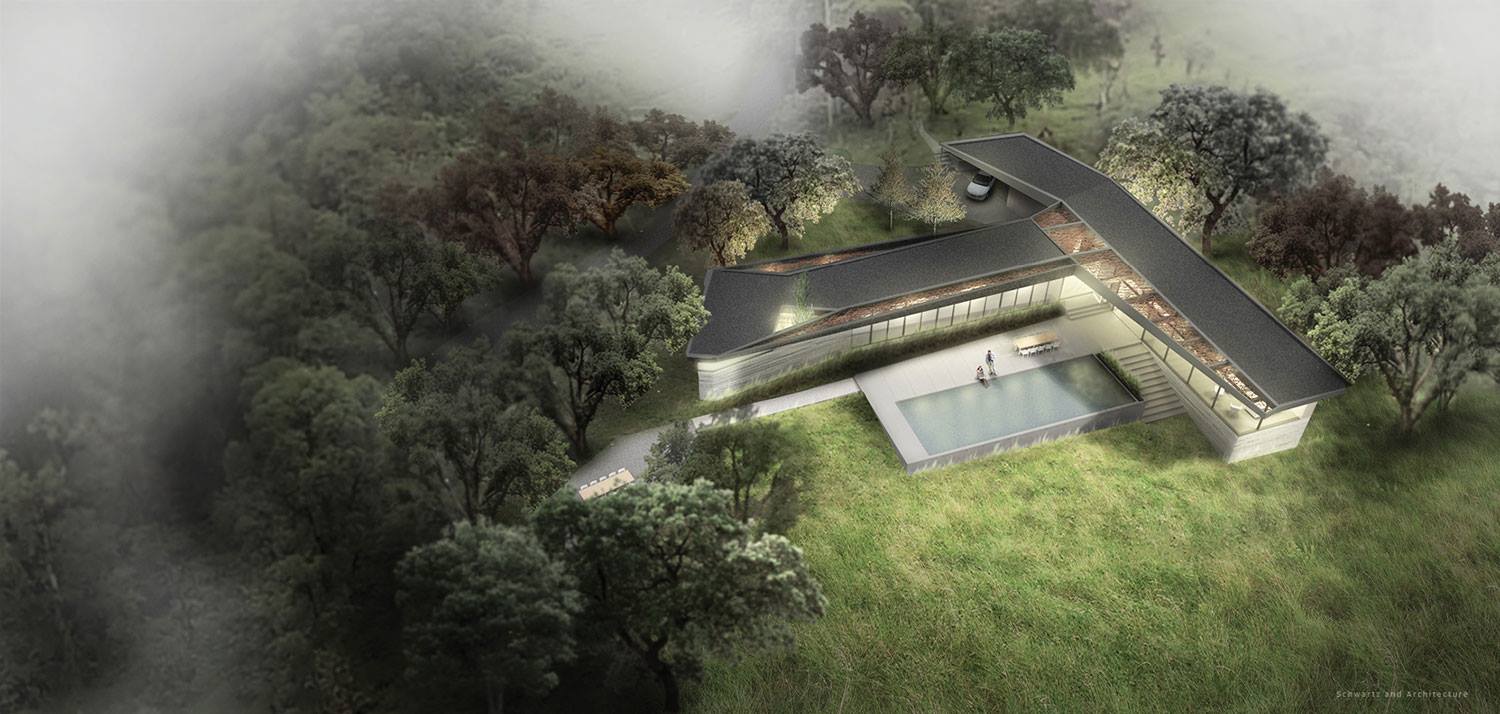
Our recent project Crook | Cup | Bow | Twist in Marin County creates a unique context by conceiving of the house as the knot at the center of a much broader system of movement across the 40-acre site. Here we looked at everything from the movement of people and water across the site, to long worn horse trails across the hillside, to the subtle movement of the native grasses surrounding the home.
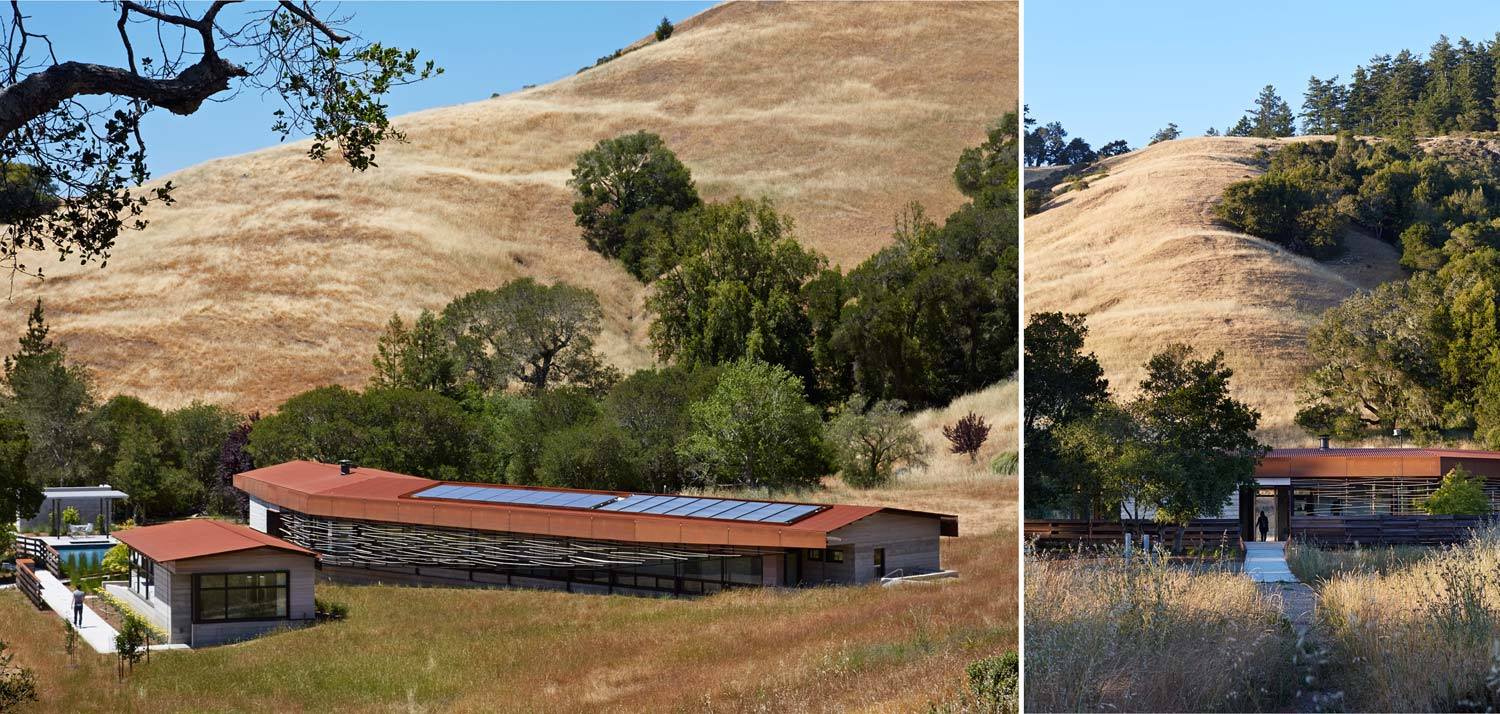
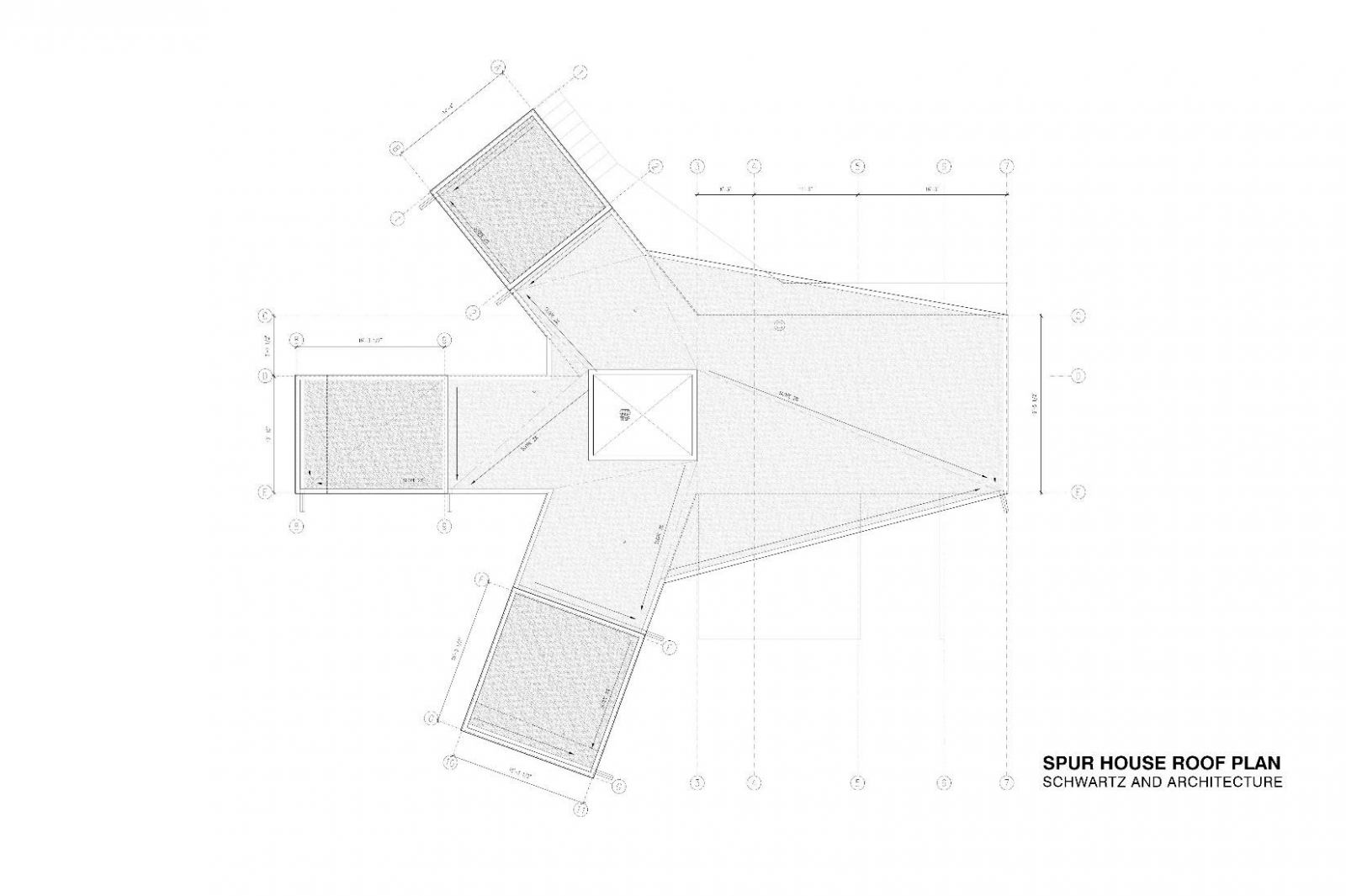
Similarly, each of our three recent small scale residential prototypes –the Sonoma vineyard Hydeaway House, the hillside Box on the Rock, and the SPUR House in the woods of Mendocino County—each began their life as a traditional one-story residential box that is then pushed and pulled to both conform to and take best advantage of each of their unique sites.
In direct answer to your question though, for most good architects that I know, the “challenging” is the “liberating”; we tend to thrive on solving complex problems!
How do those projects respond, and conform, to their sites?
Each of the projects I mention above is meant to “click into” the particular surroundings in subtle and complex ways. They aren’t pre-conceived but come as a response to the particular qualities and opportunities of each site.
We begin a thorough analysis of the natural context, trying to really understand both its positive and potentially negative attributes. In particular we consider solar orientation, views, acoustics, geology, wind, neighbors, and any other environmental condition that defines the feeling of the existing site.
Then, we try to focus on the most impactful qualities of each and intensify those through the design. The idea is that the building somehow expands our understanding of the natural surroundings much like a camera might focus our view on a particular point of interest or beauty and filter out extraneous elements.
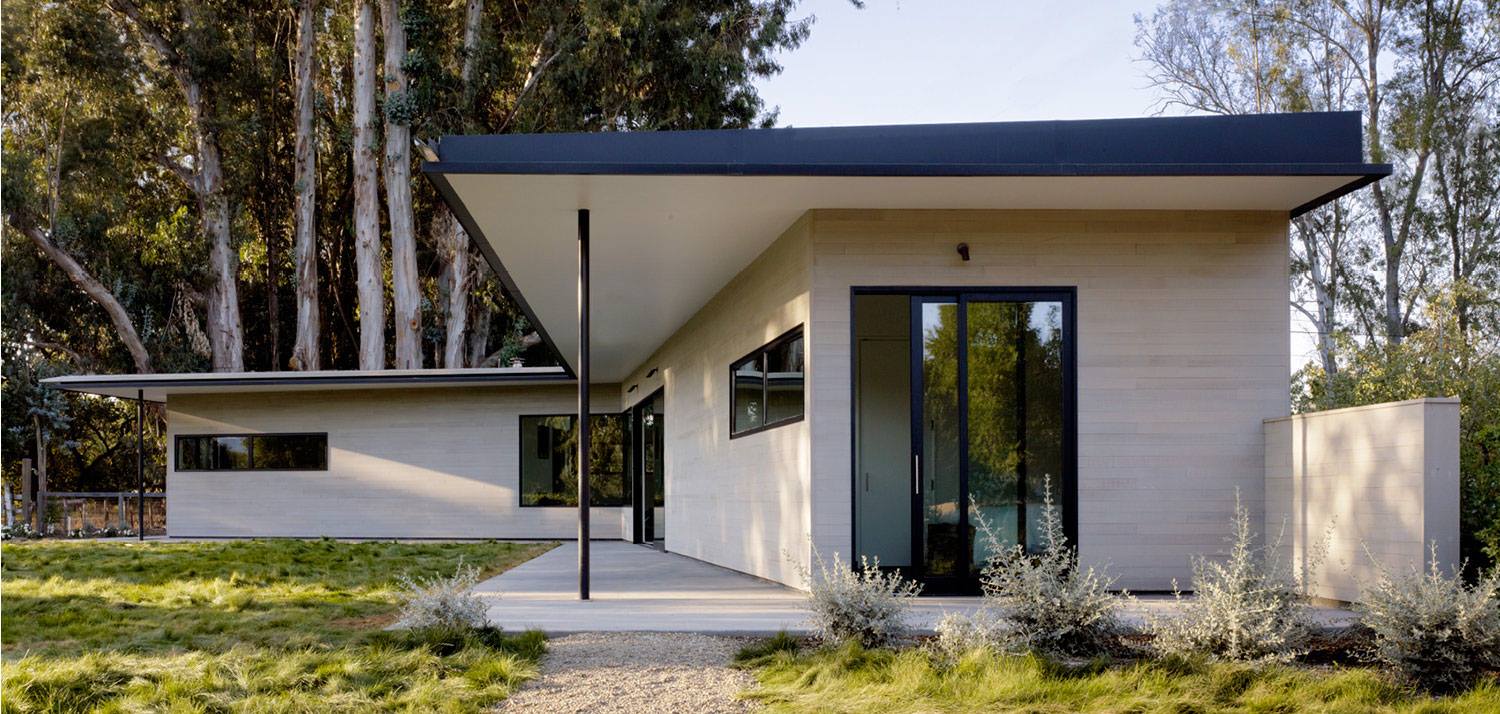
For example, in Box on the Rock, the house is placed at the crest of the hill at the end of a long and steep driveway. Rather than arrive at the “front” of the house, you continue past the home and arrive at the “rear” entering through an open courtyard focused entirely on the expansive views through the house and out across the Sonoma Valley beyond. Because the view is not apparent from the lower road and because as you climb the driveway you are facing away from it, you first become aware of the true power of the site as you find yourself standing at the front door. This was not unplanned.

Your practice also pushes the capabilities of materials, like your Crook | Cup | Bow | Twist project. Can you share more about how that project, and how innovative approaches to materials inspires your designs?
Thank you for noticing that. I always want our work to look much more expensive than it actually is. Part of this is that we typically don’t rely on expensive materials to create the power of our spaces. I would much rather take a more humble material and use it in a creative and interesting way than rely on unique or fancy materials alone.
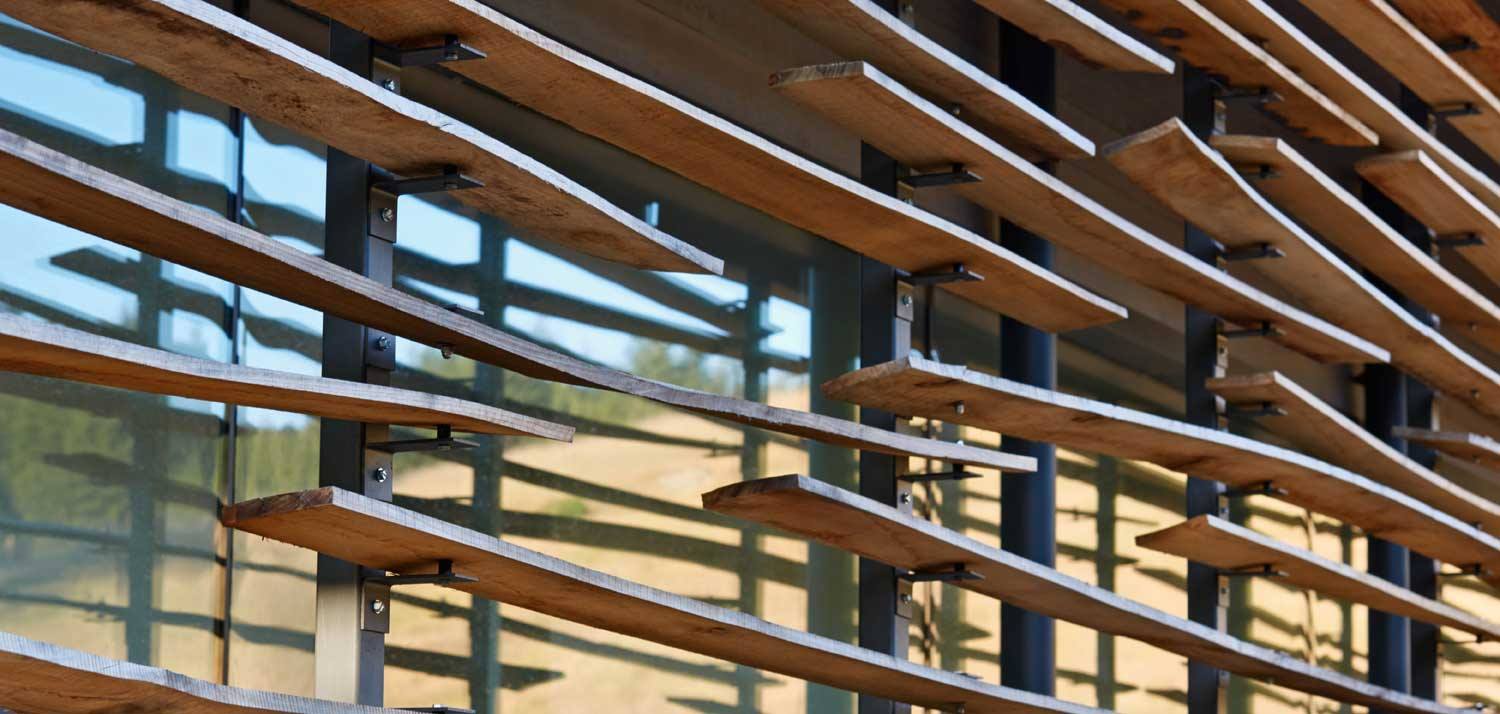
In Crook | Cup | Bow | Twist the Eucalyptus solar screen, which is meant to deform over time as it weathers, is made from an invasive species of tree that is known for its lack of stability. Because the theme or “context” for the house was attempting to highlight our understanding of the site’s natural systems of movement, we encouraged the wood slats to move – crooking, cupping, bowing, and twisting over time in ways beyond the architect’s control.
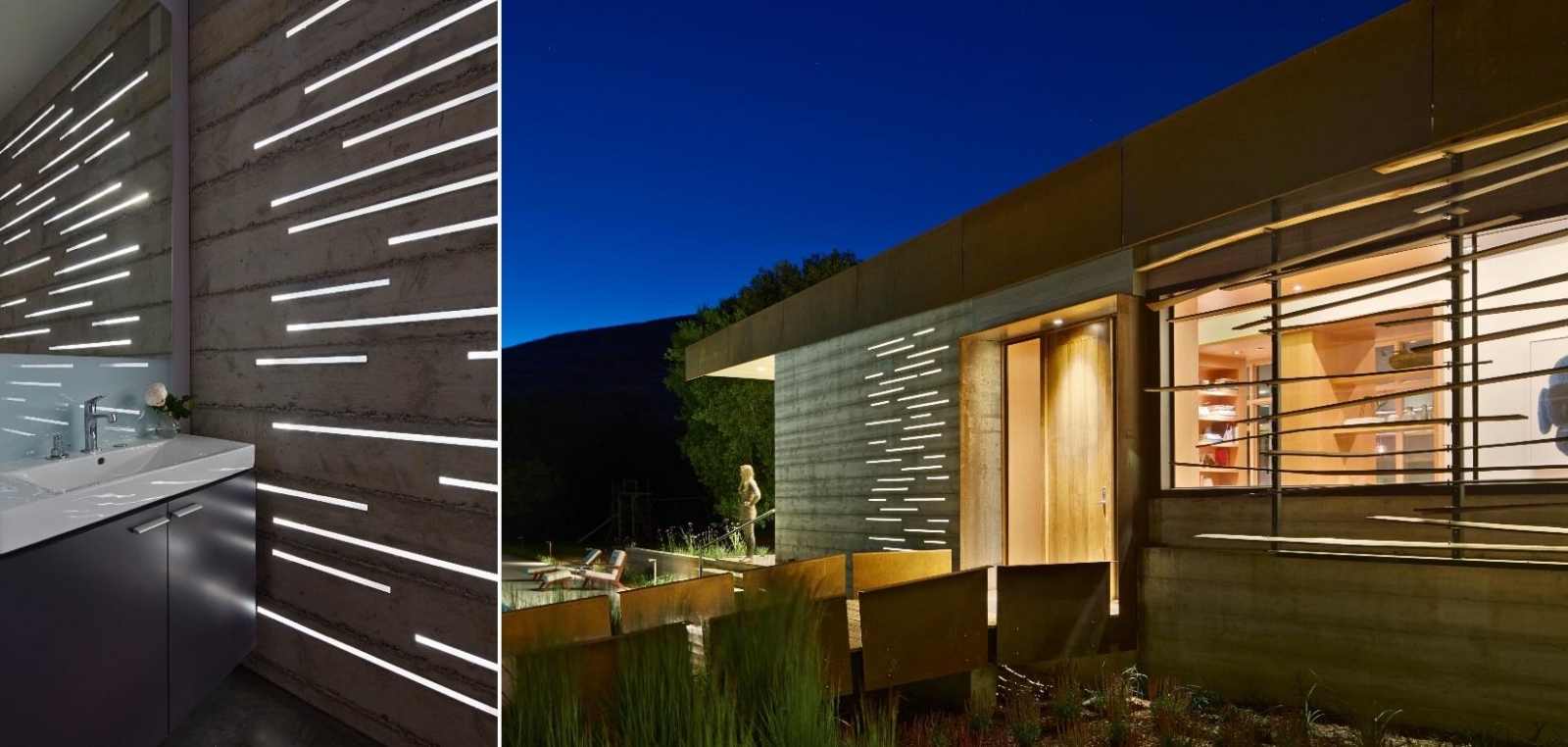
Similarly, the powder room concrete wall at the entryway was embedded with slats of simple acrylic to create an unexpected light show both inside and out. During the day, the south facing wall of the powder room is illuminated by the dynamic slats of light. In the evening the effect is reversed to create the glowing nightlight at the entry bridge.
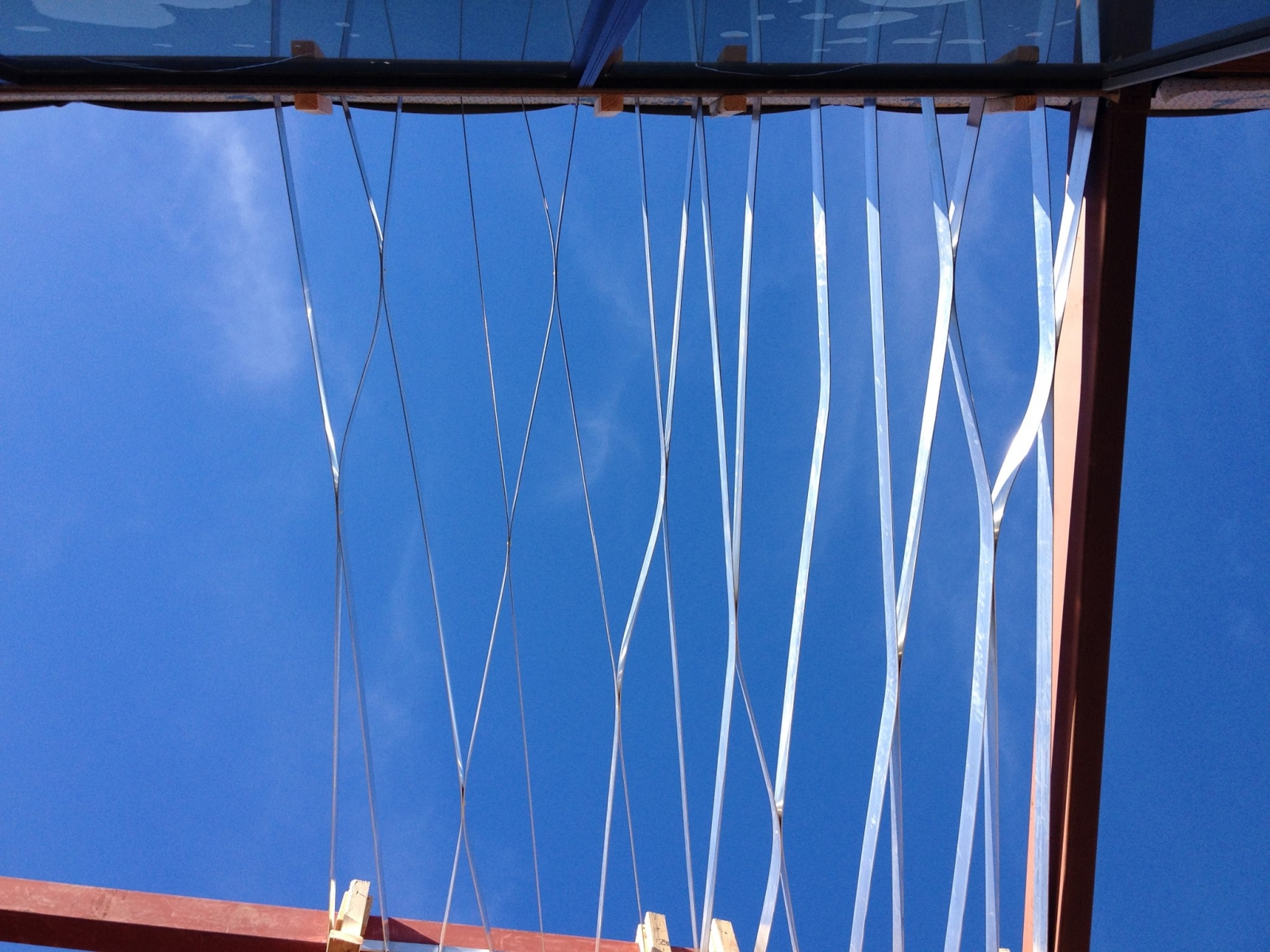
Or in the Lichen House, we are taking fins of lightweight aluminum to create a trellis that references the pattern of the lace lichen and casts a dappled shadow pattern just as the lichen does. In each case the material is manipulated to create an effect that is meant to be far richer than the material itself.
Thanks again for chatting with us, Neal Schwartz. We have a few more questions. You have a dual master’s degree in architecture and public policy from Harvard. How does your understanding of policy impact your community design work?
In my first semester at the Kennedy School of Government, I attended a lecture in which the professor made an argument that the same qualities we consider in evaluating artistic beauty could be applied to evaluate a public policy solution. It seemed a far stretch at first, but the more I thought about it the stronger the connection became.
When thinking about both fields I first try to understand the problem at hand and then develop solutions that tackle that problem directly, often trying to flip our understanding of the problem itself to re-frame it in a new light. For me, the solutions have to meet that elusive criteria of “feeling right”, seeming to be an appropriate, economical, and direct answer to the question at hand. By that I mean, whether in crafting a policy solution or a design solution, it should somehow feel intuitively obvious, easy, and logical despite the often circuitous paths we take to get there. I do think the criterion of the “beautiful solution” can somehow apply to a leading a policy discussion as well as a design process.
Your work includes a very engaged schedule of teaching at CCA. How does this inform your professional practice?
Well, this follows nicely from the prior question. In my teaching at the California College of the Arts in San Francisco I have made a conscious decision each semester to partner with a non-profit organization outside of the school in order to encourage the students to address important current policy discussions about the city and to give them real-world engagement with a client and their community.
We have design LGBTQ housing for seniors in association with the non-profit Open House, we have built puppets for the Children’s Creativity Museum, and we have worked with Public Architecture and the City of Pacifica on disaster-relief community centers. Last year we were part of the Market Street Prototyping Festival working with Larkin Street Youth Services building our “Guerrilla Street Museum”, a mobile exhibition space for the work of homeless and at-risk youth. Right now we are working with the community performance arts organization Counter Pulse on a series of installations for their new home in San Francisco’s Tenderloin neighborhood.
One of CCA’s watchwords is “Make Art that Matters” and I try to take that to heart in my teaching, my policy interests and my practice.
What excites you most, and concerns you most, about San Francisco’s building boom?
As a side project to my practice and teaching, I am currently the Chair of an AIA San Francisco committee consisting of representatives of AIASF and the San Francisco Planning Department. This work emerged out of a frustration with both the way the City’s design review process was being applied and the dramatic rise in contentious neighborhood fights over development and design. In a somewhat desperate attempt to vent, I wrote a mini-manifesto in the form of a ten-point policy memo to try to at least channel my concerns in a productive way. To my surprise, the Planning Department has responded positively and this memo has become the blueprint for the committee and what I hope to be significant positive change in the evolution of the city.
At heart, I believe that architects need to do a more thoughtful and thorough job of articulating to the public the value and impact of good design by promoting it as a significant cultural value. I have studied and lived abroad, particularly in Germany, and I am impressed with the heightened level of public discourse about architecture and urbanism in those cultures.
I see reasonable, well-design buildings by talented and thoughtful architects being opposed every day, often by folks that have developed their own homes in the past and now take a reactive stance against any further change. A city is a living, breathing organism and architects needs to more effectively frame the public discussion about its evolution.
Can you share a bit about the current project(s) you’re most excited about?
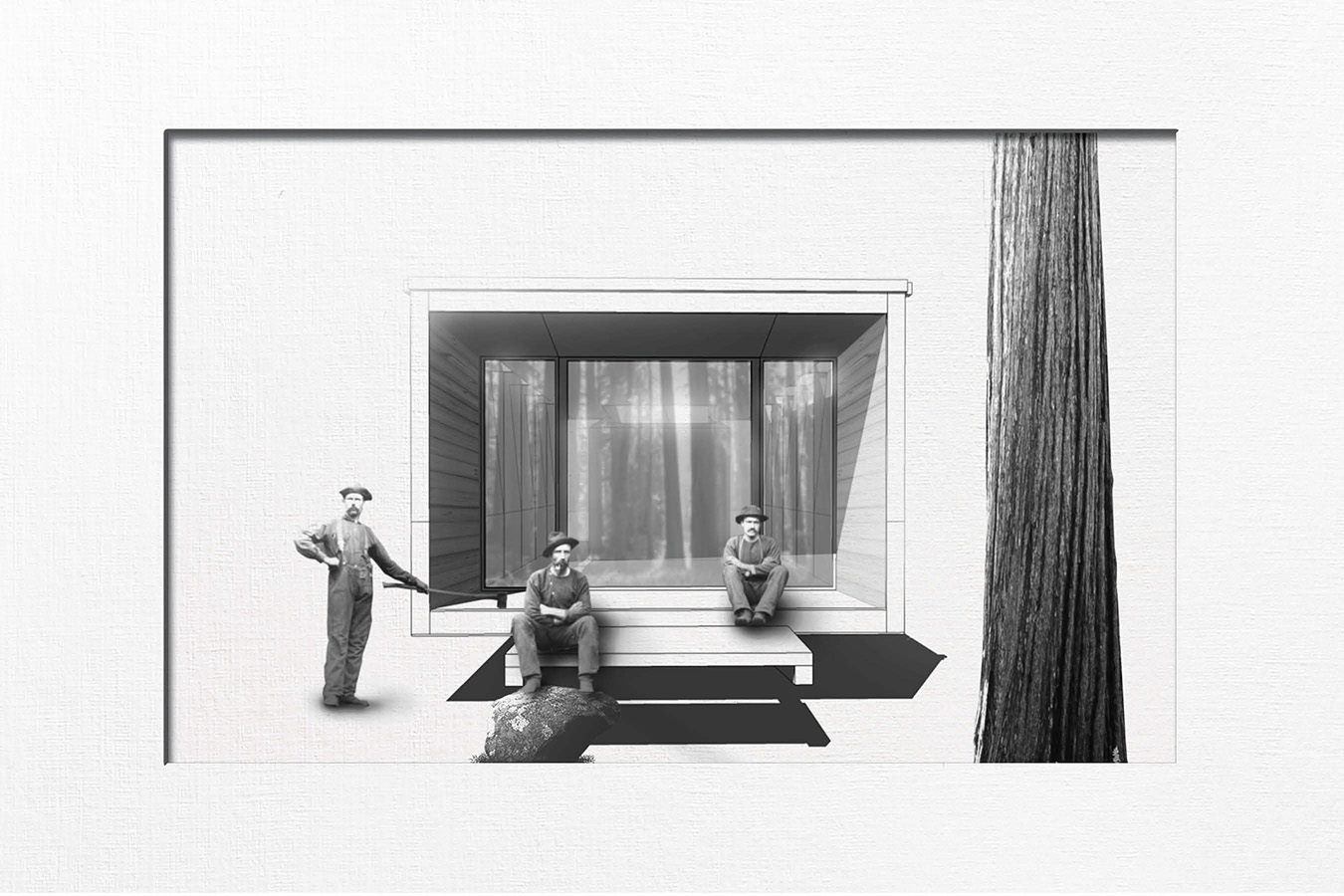
The great thing about getting our work built is that at every stage there is something to get excited about. Right now in the concept design phase we are working on prototypical small-scale structures called the Boonville Cabin Kits. They emerged from an analysis of the old time logging camps in the woods around Boonville, California, their structure, way of building and relationship to the land. The Cabin Kits reinterpret the lumberjack’s hut in a new and more environmentally sensitive way. It is probably one of our smallest projects but inspiring none-the-less. Here’s a preview!
In construction, we have the Lichen House taking shape in Sonoma with the first full-scale mock ups of the lichen trellis and the testing of the dappled light effect I mentioned earlier.
And just finishing construction we have an urban project no one has seen yet. We lifted an old Victorian structure and “hid” a new modern home beneath and behind it. The sheer unexpected nature of the modern space behind the relative demure “historic” façade is something we are very proud of and hope to share soon.
Last question. But it’s a good one. Is there a dream project you’ve yet to design? What would it be?
As the scale of our projects has grown and we have been able to really think about the relationship of buildings as sculptural objects to their natural sites, the urge to take on more complex questions about the occupation of our buildings beyond residential comes up.
Given my teaching and policy interests, I’d love to do more public, civic and community work — a school, a gallery, a winery or museum for example. Growing up, my parents ran a day-care center in our home. That would certainly be coming full circle!
Whatever the path, I am excited for the opportunity to share the work of our studio more broadly in venues such as this. So, thank you so much for the opportunity to chat and for the beautiful article in this month’s magazine!
Thank you, Neal Schwartz and thanks to the entire team at Schwartz and Architecture. We really enjoyed chatting with you today! Thank you! Thank you!
Visit Cottages & Gardens on Facebook to join our next live Facebook chat and leave a question for more of your favorite design professionals!
