


Twelve-year-old Gretchen, a bouncy Brussels Griffon, didn’t exactly tell Roric Tobin and Justin Concannon to buy the 1920 Dutch Colonial they had been renting in Greenport. But she so enjoyed the walk to and from the beach that Concannon called Tobin one day and said, “We should just buy this house.”

Tobin, an interior designer who also produces his own furniture line, and Concannon, and agent with Sotheby’s International Realty, are no strangers to spotting real estate with lots of potential. They had been renting the Greenport property while building the third of three houses in nearby Orient, all of which had sold almost as soon as they were completed. Meanwhile, the shingled two-story rental had won their hearts even before they noticed how many original details hid beneath decades of paint layers or realized that the lot could accommodate a sweeping swimming pool—an unusual commodity in the heart of the village. The backyard, Tobin adds, provides ample space for Gretchen “to chase bunnies and squirrels and frolic in the sunshine.”

Two beaches lie just around the corner from either end of their block, and downtown Greenport’s shops, restaurants, and galleries are a three-minute walk away. But the street, in a neighborhood known as West Dublin, is quiet and virtually free of traffic, ideal for enjoying lazy breakfasts and coffee on the side porch. In the spring, rows of cherry trees “form a tunnel of blossoms,” Tobin says.
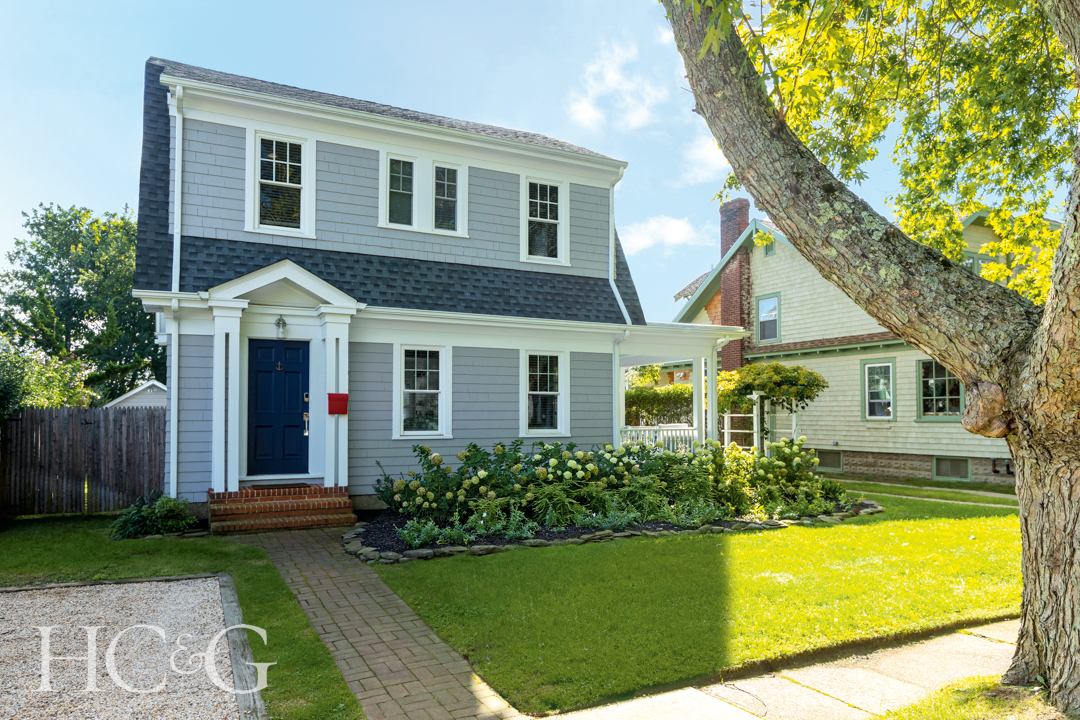
The tidy façade’s front door features a high-gloss blue from Fine Paints of Europe.
In the sitting area, Spencer sofas by Gus Modern flank a cocktail table by Tobin and an area rug from Lulu and Georgia.
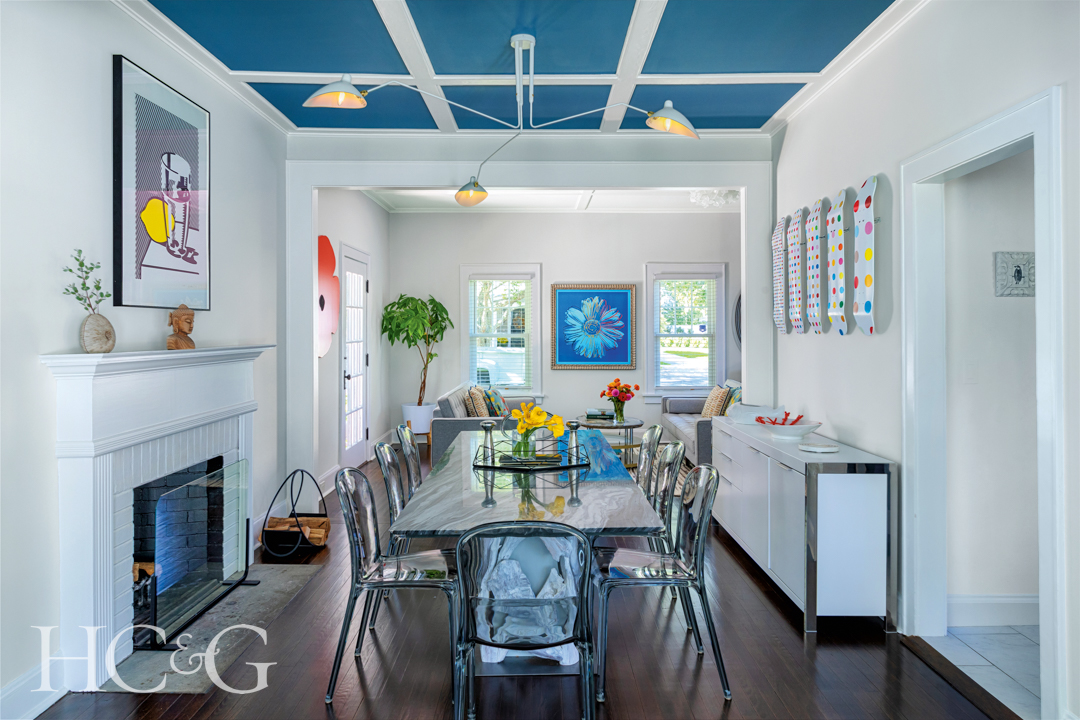
Benjamin Moore’s Philipsburg Blue amplifies the gridded dining room ceiling and the artwork in the sitting room beyond. The chandelier is a Serge Mouille design.

In the dining room, chairs from Joss & Main surround a marble and driftwood table designed by homeowner and decorator Roric Tobin. A Roy Lichtenstein lithograph hangs above the fireplace.
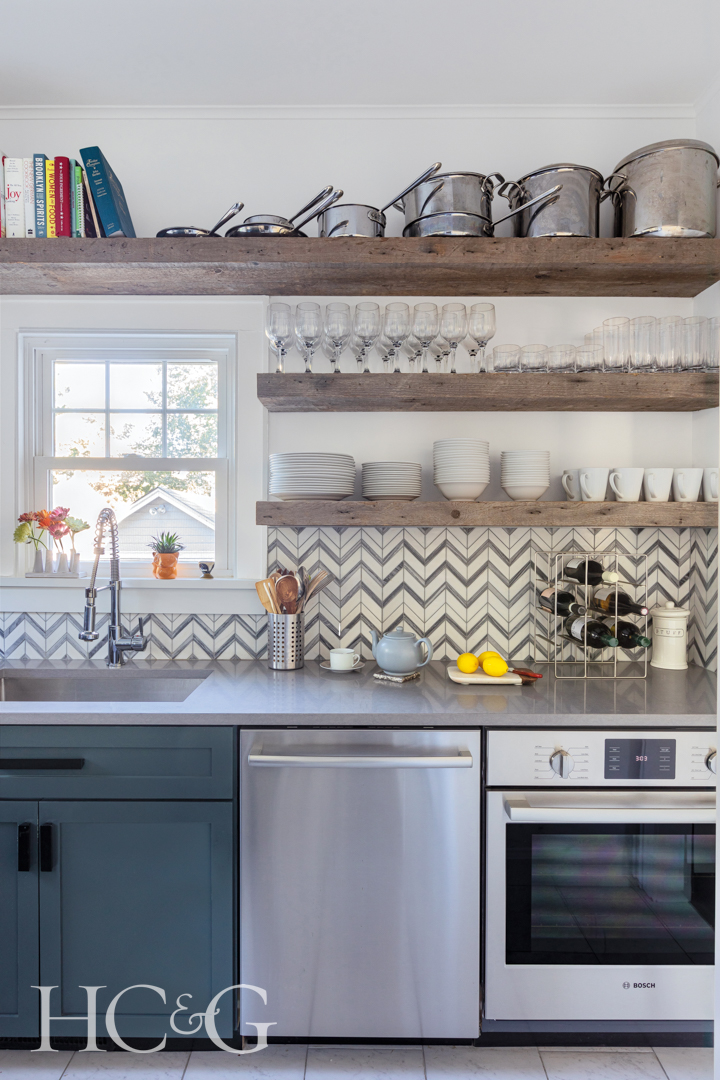
The kitchen features backsplash tile from Walker Zanger, Cambria countertops, and a Bosch range.
A canvas by Hans-Jörg Glattfelder hangs above a Samsung Frame TV in a corner of the family room.
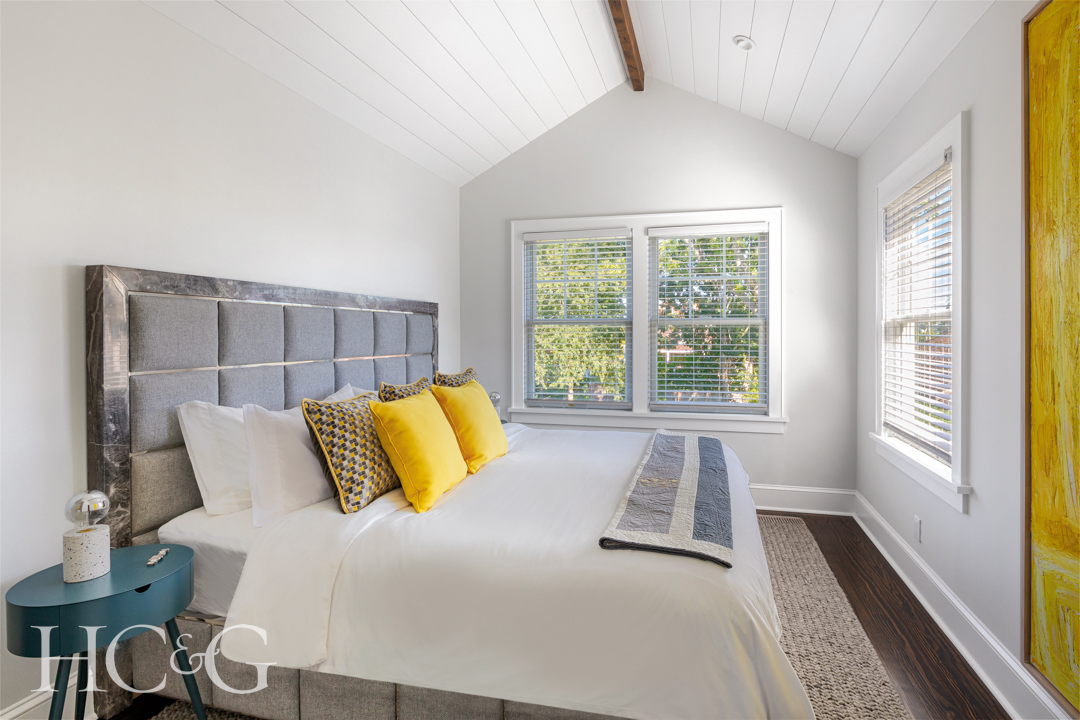
Tobin designed the primary bedroom’s marble, fabric, and polished stainless-steel bed.
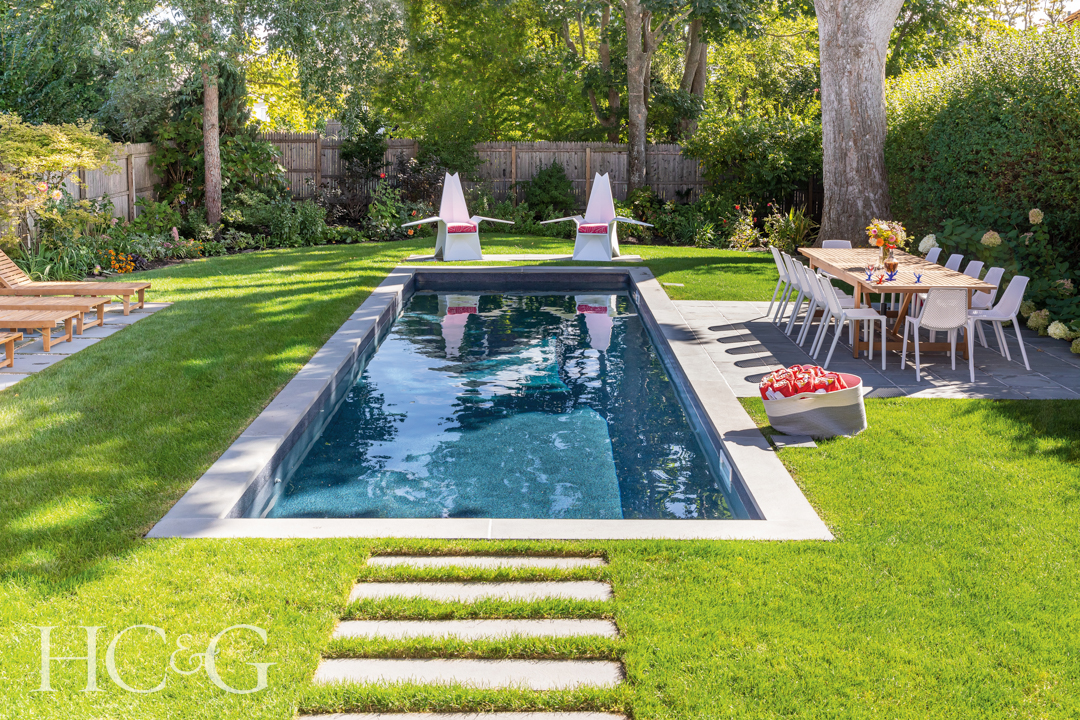
Tobin-designed Crane chairs, made from powder-coated steel, anchor one end of the swimming pool.
Despite the house’s considerable charms, it was “too-too small” for the couple’s needs, says Concannon, since it was “technically a three-bedroom, but the third bedroom was tiny, and there was only one bathroom.” So they built a 750-square-foot addition on the back, comprising a primary bedroom and bath upstairs and a family room below. The shower in the new bathroom has a view of the Shelter Island ferries as they come and go.
Because the couple wanted to respect the history of the century-old house, they sourced as many vintage materials as possible. A floor joist from a nearby abandoned barn was hewn into floating shelves for the kitchen, and a beam from the salvage company Lumber & Salt now bisects the primary bedroom’s lofty ceiling.
Tobin, who first got his taste for design while creating stage sets as an undergraduate at Yale, prefers to make bold statements, an aesthetic he fine-tuned during his years working with the larger-than-life decorator Geoffrey Bradfield. The architectural refinements to the home handsomely showcase the graphic, eye-catching art that Tobin says “is such a focus of my work and of our life.” Donald Sultan’s aluminum Red Wall Poppy punctuates the sitting room, holding a contemporary conversation with an Andy Warhol crayon daisy and a Takashi Murakami flower ball, while Roy Lichtenstein’s lithograph Still Life with Lemon and Glass holds court in the adjacent dining room.
The artworks—referencing the natural world of fruits and flowers, sea and sand—help give the house what Concannon calls a “good nature energy,” also evident in furnishings like the dining table, which Tobin designed from a single slab of strikingly veined black marble resting on a pedestal of whitewashed driftwood. Punctuating other spaces are occasional tables made from multicolored geodes sourced in South America. They are the inevitable outcome, Tobin says, of having grown up as “a nerdy kid who liked to order rocks from the Nature Company.” Outside, at the far end of the pool, two of Tobin’s sculptural, powder-coated steel Crane chairs seem poised to take flight. “Cranes,” Concannon says, “are Chinese symbols of longevity, immortality, and wisdom.” Arguably they have something in common with Gretchen, who obviously knew a good thing when she saw it.
