


Becky Birdwell found an Old Greenwich fixer-upper in 2018 just an hour’s drive from Manhattan. “I thought it would be a good place for the kids to grow up,” she notes, a weekend pad with water views. “In summer, it’s actually stunning—incredibly green and gorgeous. But I’m from Texas. What did I know about marshes?”
Turns out, there was quite a bit to be learned. Rebecca “Becky” Birdwell is an interior design insider. At the time of the purchase, the former managing director of the Design Leadership Network was living in NYC with her partner, now husband. It was Covid that brought them out to the property full-time.
The classic Shingle-style house sits on one-third of an acre boarded on two sides by marsh. The first owner of the property was a sea captain and, presumably, oyster fisherman; there’s also a waterside oyster house—traditionally known as an oyster shack—a place where oyster barges would package their catches. He had eight children. “The architecture is kind of crazy,” Birdwell says.

The previous (second) owners of the property also made great use of the waterfront, hauling in kayaks and driving their cars around the house like it was a traffic circle. There were other issues. “The two water sides are in the flood plain making it complicated,” says Birdwell. “We had to raise the house over four feet because of potential flooding. I often wonder if it was enough.”
Getting the right professionals in was key. Working with architect Joel Barkley, the house was gutted. Interior designers Bill Brockschmidt and Courtney Coleman helped reinterpret the cottage’s traditional character with flare. For landscaping, it was Janice Parker to the rescue!
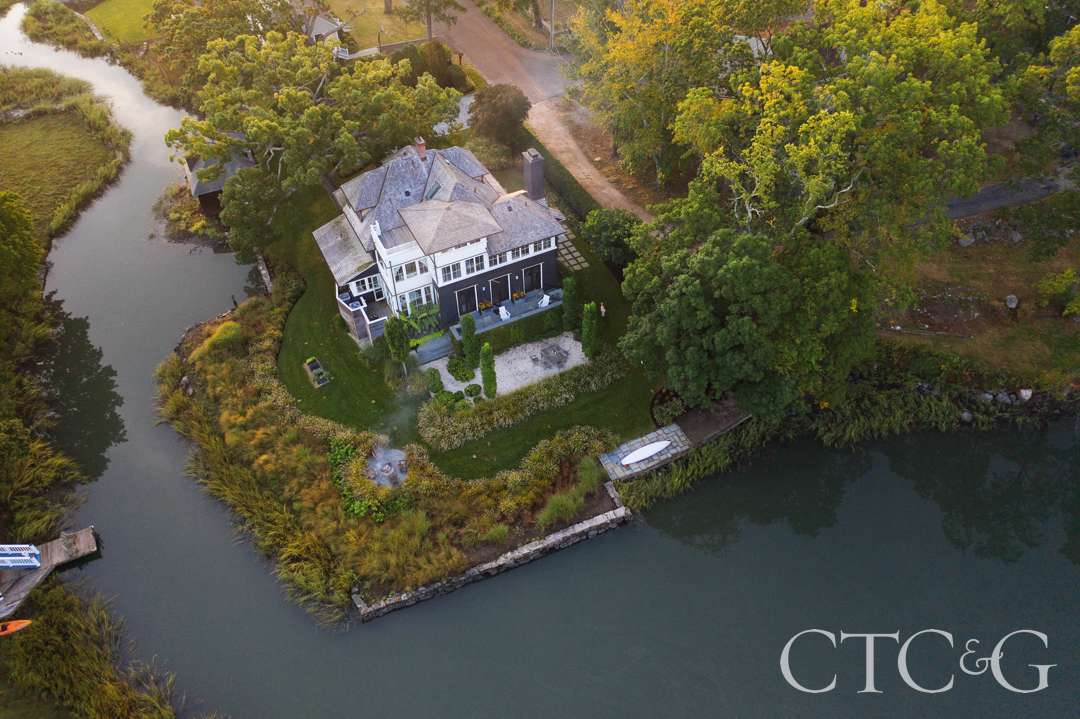
The project was a thoughtful renovation of a classic waterfront home and oyster house along the Long Island Sound and tidal wetlands. Salt tolerant grasses line the border of the property and serve double duty to preserve the coastal borders and prevent erosion and beautify the space.

Birdwell starts every day on the terrace with Angus, a goldendoodle. “There are egrets everywhere,” she says. “Everything is really, really alive.”
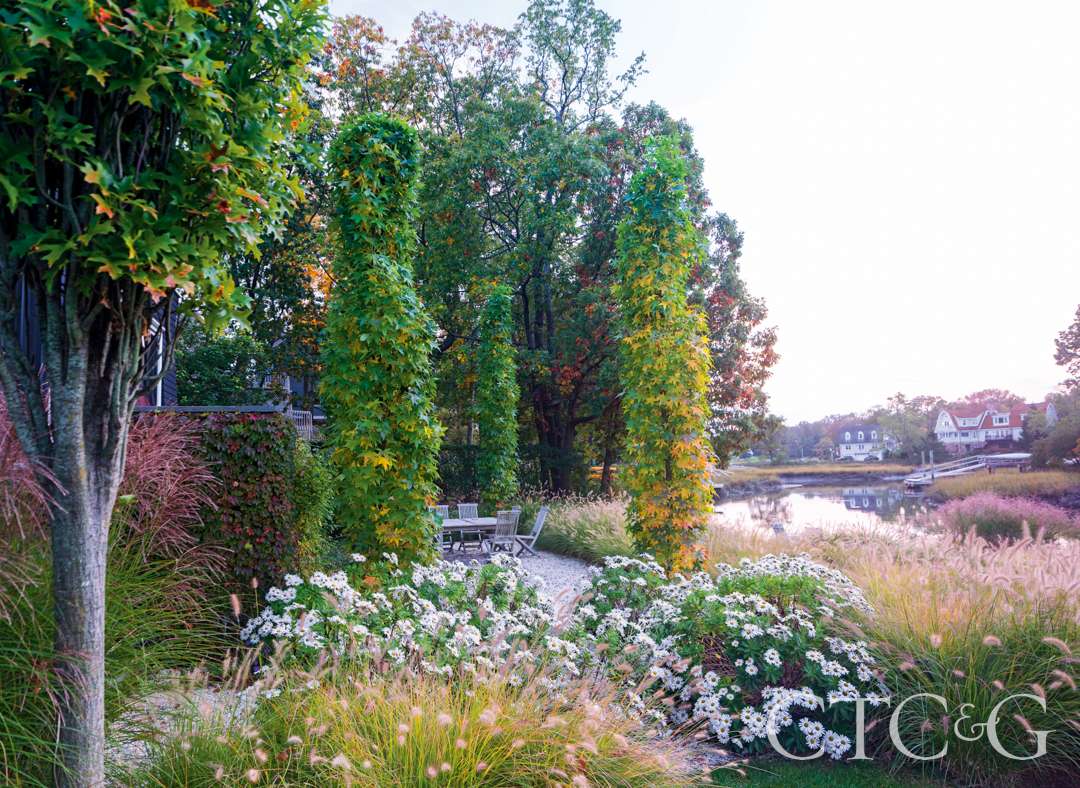
Fastigiate Liquidambar or American Sweetgum define the corners of the dining terrace at the back of the house.

Pennisetum alopecuroides ‘Hamlen’ Dwarf Fountain Grass, Miscanthus sinensis ‘Heavy Metal’ Switchgrass, and Panicum virgatum ‘Shenandoah’ Switchgrass, soften the edges and enclose the space while preserving the water views.
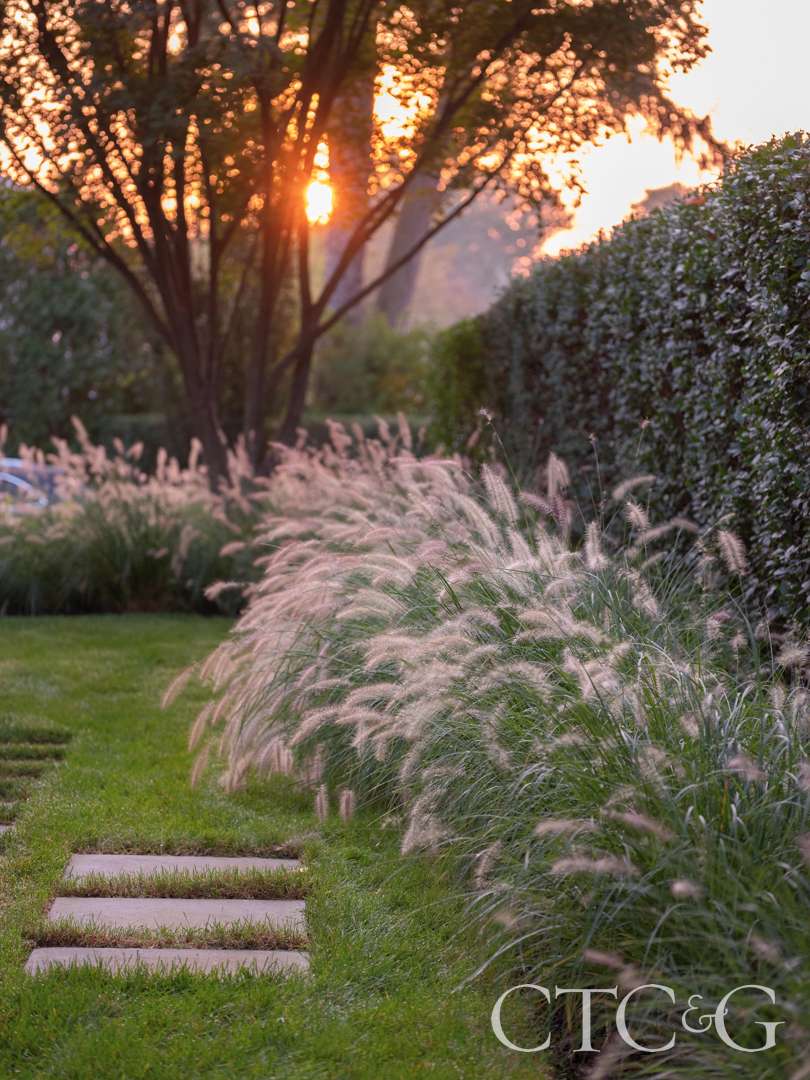
Pennisetum alopecuroides ‘Hamlen’ Dwarf Fountain Grass creates a pillow-like border throughout the property.

Paths created in the grass borders hold intimate seating areas. The fire bowl terrace sits nestled among the grasses, and the gentle curves create paths that lead directly to the boat launch terrace.
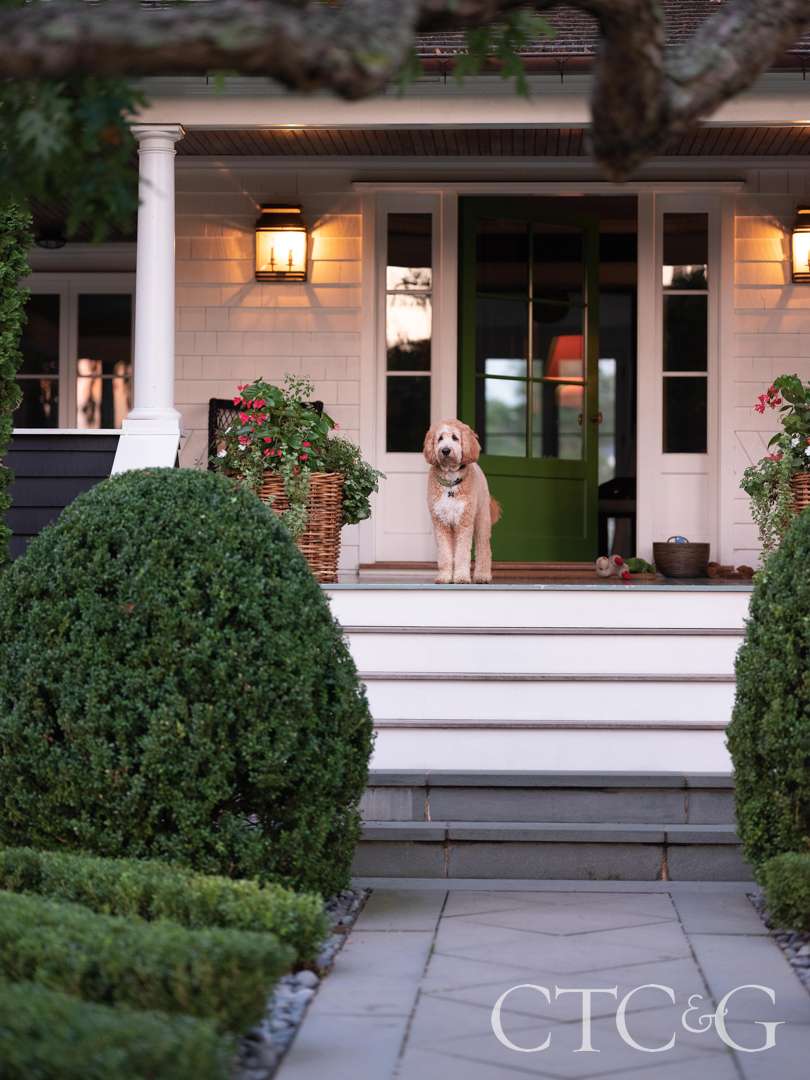
The entry walk is planted with a diagonal pattern of boxwood and gravel at the sides of the main walk leading to where Angus awaits on the front porch.
This small, wild site was an unusual project for Greenwich-based Janice Parker Landscape Architects, an award-winning firm known for incorporating classical design principles into their work. Birdwell’s longtime friend Janice Parker developed the project with the firm’s lead project manager Douglas Clark, who handles the overall design, construction drawings, project management and contracts, construction administration and site work. “It is a compromised site on a saltwater marsh,” says Parker. “Not for everybody.”
A limited palette of plants was selected—primarily native grasses—including those that could tolerate being submerged. “We focused on simplicity and building for the future,” says Parker, a future that includes increased flooding due to climate change.

“We tried to make a couple of magical areas where the water wouldn’t reach,” says Parker. The front of the property is on a rise, so all patios are outside the flood zone. A star here is an old oak, which the designers carefully preserved through the construction process.
Often seen as street trees, four fastigiate Liquidambar or American Sweetgum define the corners of one dining area. “We like to use common plants in uncommon ways and uncommon plants in common ways,” says Clark. Occasionally decked with string lights, the narrow trees create a natural pergola effect.

“This is a unique rural maritime setting just 30 miles from the City,” says Parker. “On the one hand, you have mud flats, but it’s beautiful at high tide. There are snowy egrets, blue herons, fish and crabs jumping out of the water. There is the background of stunning sunsets and water views. You have a great summer and fall. But snow and ice storms do-in the grasses.”
Winters are harsh. “You can’t leave this baby alone,” says Birdwell. “Everything floods. It takes a lot of time and energy to preserve a landscape on the water. It’s a constant process. I definitely have imperfect grass and have stopped using all of the chemicals that the industry says you must have—they roll right into the Sound! Now when something dies, I’m putting in a native. This landscape is what it wants to be. I celebrate that.’
