


According to Benjamin Quittner Davidson, a lighting designer and restorer based in upstate Germantown, the legendary 19th-century dandy Beau Brummell said it best: “To be truly elegant, one should not be noticed.” The mantra rings true at Davidson’s storefront and workshop Quittner, which specializes in restoring antique light fixtures and has grown in recent years to encompass the production of brand-new pieces based on classic designs from the past. Throughout history, Davidson says, light fixtures “were made to solve the same problem: how to bring light into a space in a way that is beautiful, but ultimately unremarkable.” Pointing to a 1930s flush-mount piece that will later be ground and polished on an industrial sander, he adds, “Rewiring and restoring a fixture to modern standards, then updating it with powder coating in different colors, allows it to continue being useful in a disposable market. What’s interesting with many antique fixtures is that attempts were often made to turn the designs into standards, but either they didn’t pan out or they peaked in popularity.”
Davidson and his wife, Quittner CEO Pippa Biddle, operate out of a lovingly restored 1870s barn, replete with antique crystal chandeliers hung from former bridle and tack hooks and bins stuffed with wiring accessories and lamp parts. (The pair’s offices occupy former horse stalls.) Partnering with Aleah Stewart-Souris, a ceramic artist, they produce hand-thrown ceramic lighting pieces ranging from pendants to surface-mount fixtures and table lamps. “Aleah comes from a restaurant production background and has the chops necessary to make the same form over and over again without losing the artistry of it,” Biddle says. Because metal lighting fixtures have standard scale and sizing requirements, it took a while to find the “right way to marry them with porcelain,” adds Davidson, who developed “prototype after prototype” to arrive at the perfect solution. True to his instincts for salvaging and repurposing, he found a way to resurrect a “really striking” piece the couple had given up on earlier and turn it into Quittner’s hallmark library lamp. Each edition bears a unique custom pattern on its ceramic shade, underscoring the personal touch that gives the company’s products a bespoke, luxury appeal. “A lot is asked of a light fixture,” Biddle muses, “so it’s important to pay attention to detail, especially with historically informed design.”
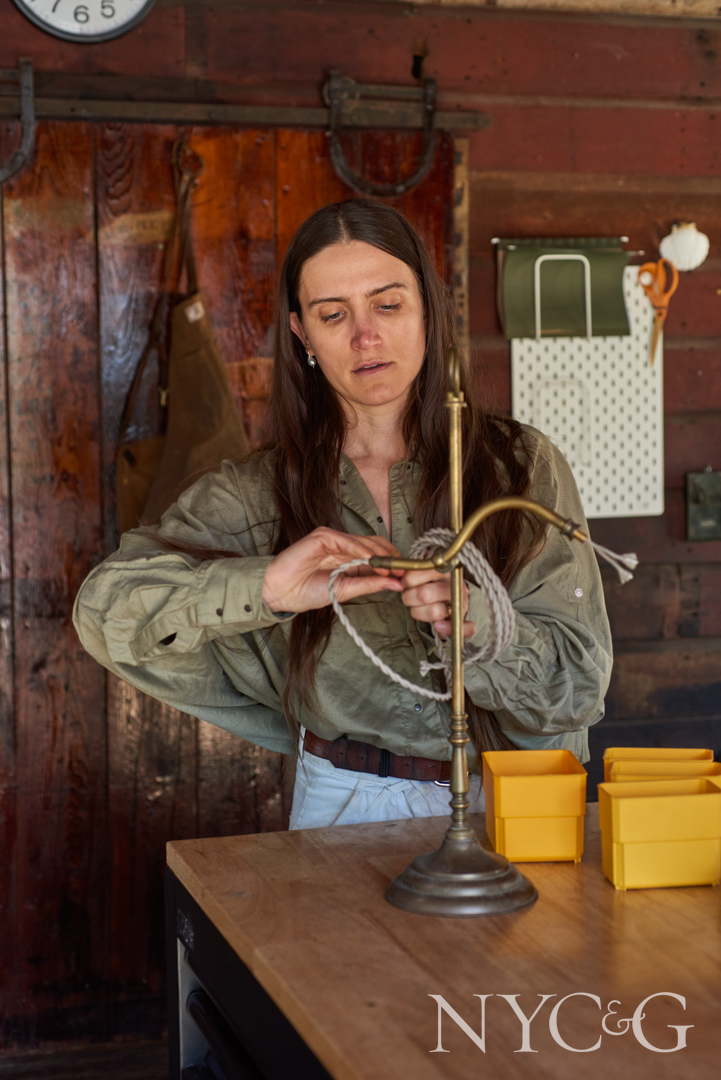
Biddle threads the company’s signature cloth-covered wire through a restored lamp.
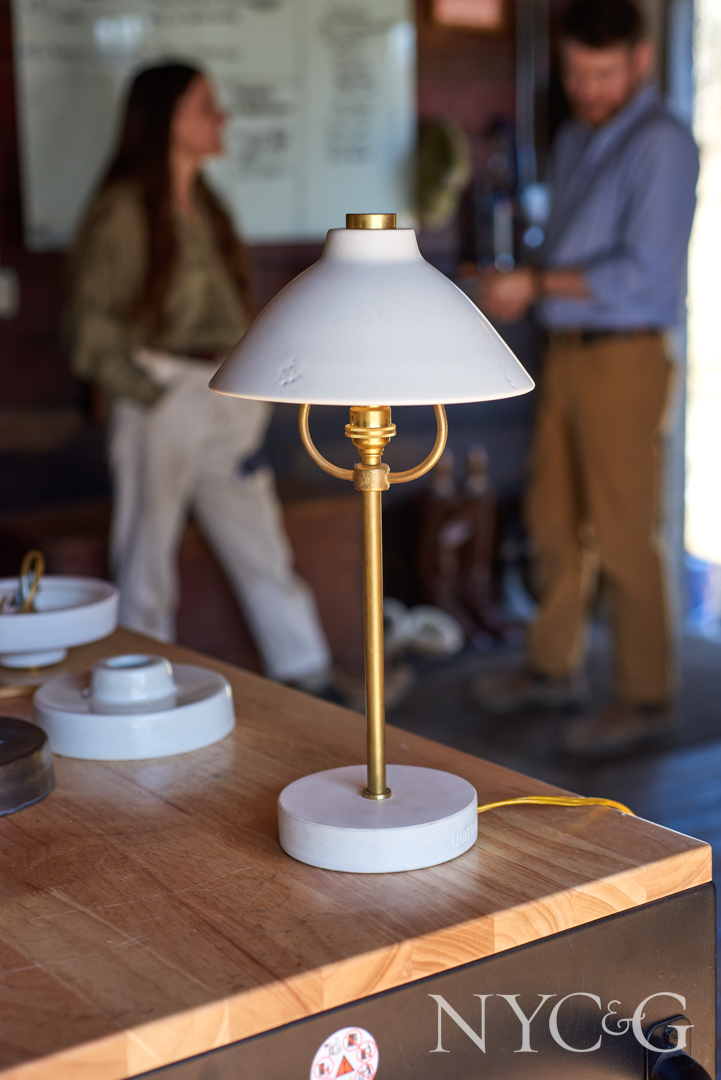
Quittner’s library lamp features a brass body and a hand-thrown porcelain shade and base.
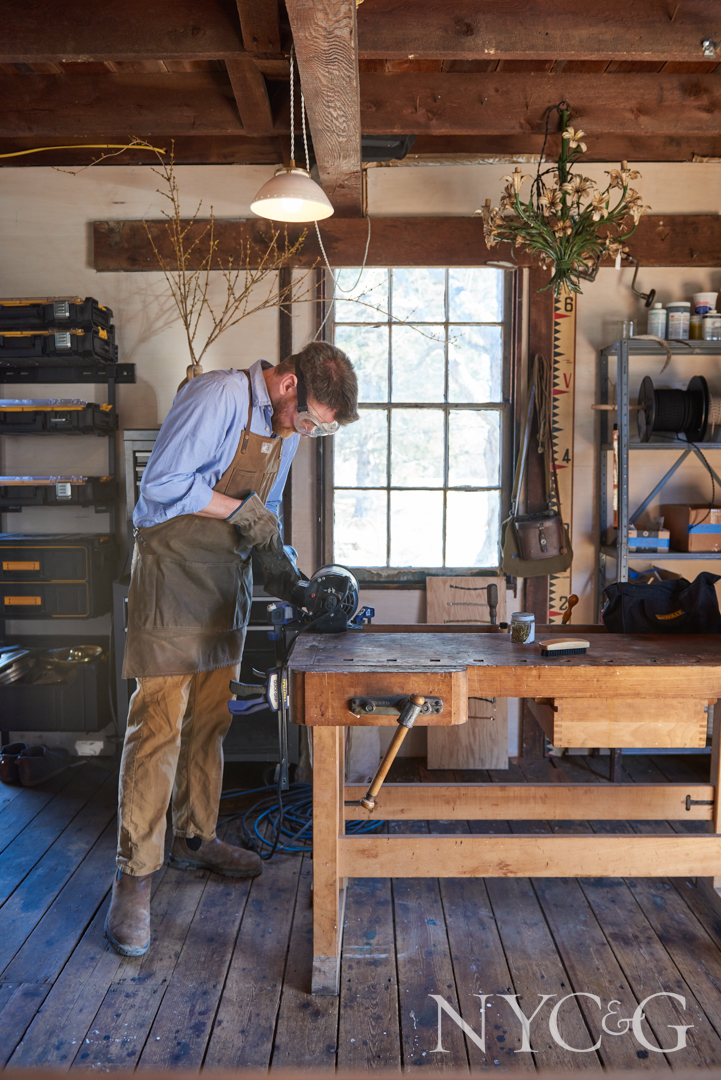
Davidson completes various stages of production, including sanding and polishing a 1930s flush-mount fixture and employing a wire stripper.

Davidson completes various stages of production, including sanding and polishing a 1930s flush-mount fixture and employing a wire stripper.
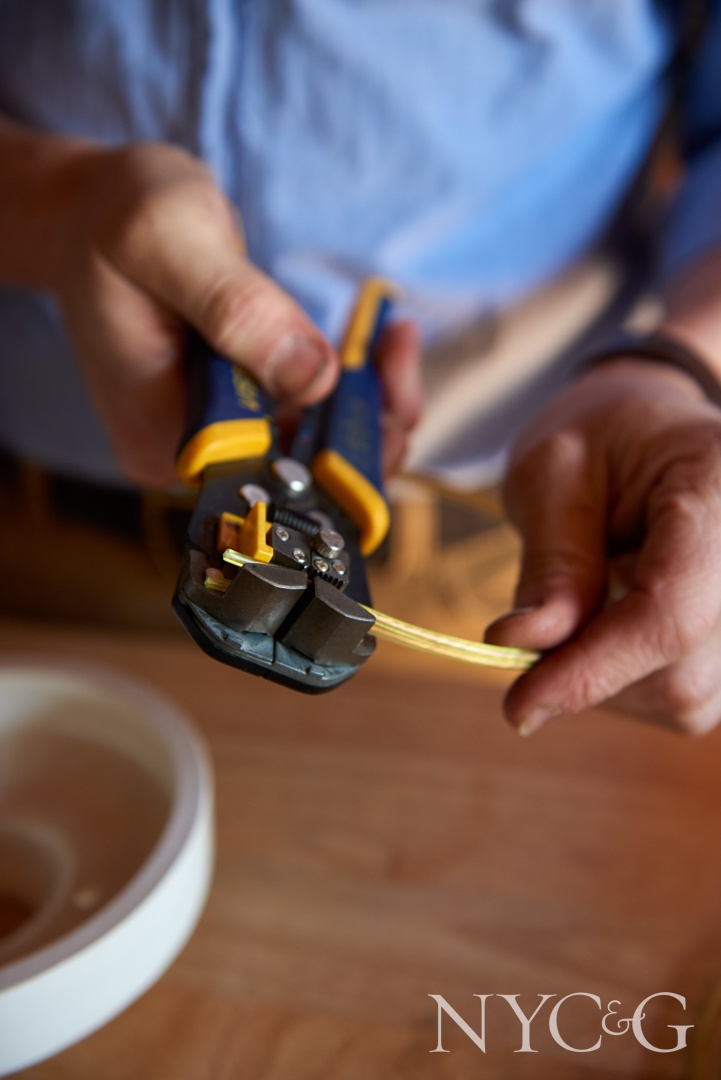
Davidson completes various stages of production, including sanding and polishing a 1930s flush-mount fixture and employing a wire stripper.
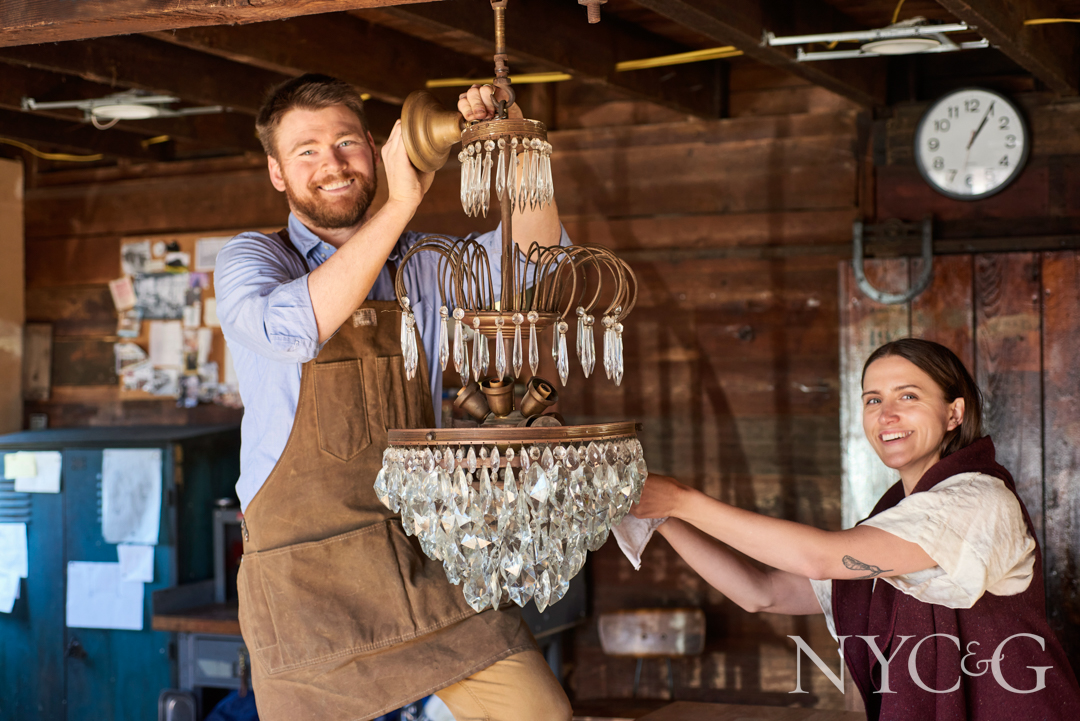
Benjamin Quittner Davidson and Pippa Biddle restore an antique chandelier at Quittner, their workshop in Germantown.
The final Quittner touch: a twisted cloth wire, offered in a variety of colors. “It feels nostalgic,” Biddle says, “and we consider it a bit of our signature.” Her husband concurs, saying, “In the 1920s, when people first started electrifying light, they could have run rubber-coated wire into a room, but they weren’t ready to make such an inelegant compromise. If you have to see wires, you can at least cover them so that they look good. Something that’s essential doesn’t necessarily have to be unattractive.”
