


Purity Vodka … 901 Silver Tequila … Shipwreck Run …Bordeaux … Oyster Wines …Smell the Bubbly
So, what should we drink this year? We’re about to drink our way through a New Year of liquor launches, spirits-soaked parties and wine-pairing dinners.

Let’s start with the U.S. debut party for the “ultra” premium Purity Vodka—yes, another vodka in a gorgeous designer bottle—held at the glamorous Gramercy Park Hotel rooftop, the perfect venue to showcase a high-end spirit. Designed as a diamond with cut glass facades, the bottle itself is a piece of art. The master blender Thomas Kuuttanen was on hand to tell the revelers just why Purity is so pure. It’s actually 34 distillations pure—yet full-bodied with lots of character—and made in a pot still at the Ellinge Castle in southern Sweden. Kuuttanen spoke of its sweet and salty character, which he said captures the taste of unami. When most vodkas aim for tastelessness, this was different. And made in a castle? I could identify. I liked the story, liked the bottle and especially liked the creative drinks. Yes, a nod to this Swedish vodka and its 34 distillations.
A few nights earlier I attended a party featuring one of my favorite spirits, 901 Silver Tequila (maybe I am swayed because it is Justin Timberlake’s tequila) held at the Milk Studios. We drank fancy cocktails to a pop-up art exhibit (called ASymbol) of photos and paintings from the worlds of “snow, surf and skate.” The art was great and affordable and I particularly liked this cocktail:

901 Chili Flake Margarita
2 oz 901 Silver Tequila
2 oz chili syrup
2 oz fresh lime juice
Cube ice
Crushed Ice
Put cube ice in a shaker. Add 2 oz 901 Silver Tequila, 2 oz chili syrup and 2 oz lime juice. Cover and shake well. Strain into a martini glass filled with crushed ice.
While we are talking spirits, in the mail I received a box containing Shipwreck Spiced Rum by Brinley Gold, made in St. Kitts, West Indies. Its tall, handsome bottle with a torn-edged label is designed to look like a found relic. The 4-year-old rum is infused with nutmeg, clove, orange and vanilla. Shipwreck also has a great backstory about being dedicated to the memory of a British naval ship that sank off the coast of St. Kitts in 1782 during a battle with the French. An inspired promotional touch: When you finish the bottle you find a note saying: “If you are reading this, then alas it is too late … our beloved ship is beyond repair. We are off the coast of St. Christopher. Find General Prescott, tell him we did our best … Rule, Britannia.”
Onto the world of wine: The first gala wine dinner of the New Year was held at the New York Times four-star restaurant, Eleven Madison Park. Upon receiving the rare invitation to a four star, I RSVP’d without taking a breath. The dinner featured serious wine from a famous Bordeaux negociant, Yvon Mau, who has put together a portfolio of Grands Cru Classes (i.e. those great chateaux that were chosen as top in the Classification of 1855).

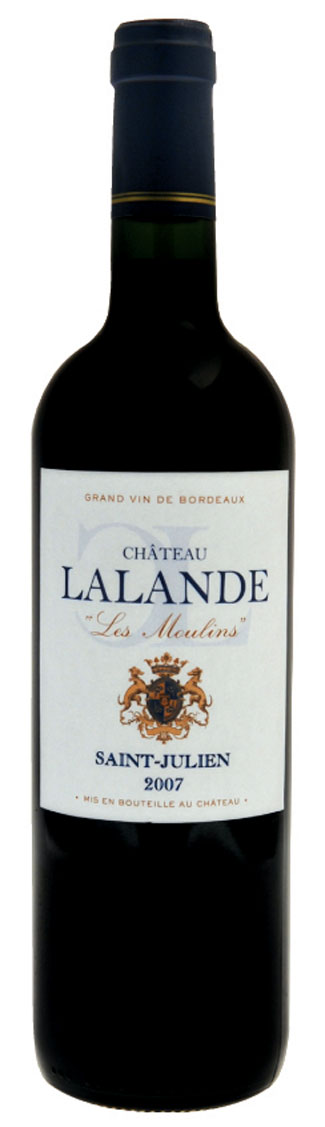
For the first hour we wine journalists were asked to do a standing tasting. Yvon Mau wines, all from the best chateaux, showcased that Bordeaux can be affordable—the pre-dinner bottles were priced at $37 to $48. Often these standing tasting rituals reek of pecking order among journalists, who ceremoniously swish and spit while competing to look ultra-reflective while taking notes on each wine. I tried to avoid that air of wine-geek solemnity as we tasted through 10 wines from regions like Pomerol, Margaux and St. Emilion. Chateau Lalande Les Moulines from St. Julien was my favorite of this lineup for its balance, ripe tannins and elegance, and lovely fragrance of blackberry and cassis. Some of these Bordeaux wines were more of a challenge with characteristic funky notes—barnyard and leather.
Dinner had precisely prepared courses—crab and sea urchin, beef with Swiss chard and sauce Bordelaise, cheese plate, and tarte aux pomme—all meant to accent the wines. Even though this was an all Bordeaux event, no respectable French dinner would dare commence without Champagne. The yeasty fresh Henri Abele Brut NV Champagne was a discovery. Then came a dozen heavy hitting Bordeaux (priced between $58 and $98), among them Chateau Lascombes from Margaux (‘00 and ‘06), Chateaux Talbot from Saint Julien (‘00 and ‘06) and Chateau La Tour Blanche 06 and 01 Sauternes (both $98). The beef and cheese courses each had four different wines to accompany them. Needless to say it was an epic dinner which made me dance home over the huge snowdrifts.

Just the night before, I ventured through virgin snow to an oyster and wine pairing at Grand Central Oyster Bar. Oyster guru, Rowan Jacobsen, holding his new book American Terroir (based on his year of traveling the country eating oysters), took a crowd through four kinds of oysters: Kumamoto (sweet and tiny from the West Coast, originally came from Japan in the 1940’s), Peconic Pearl (Long Island, with minerally flavor), Sewansecott (Chesapeake Bay, plump and salty), and Fanny Bay (sweet cucumber flavor from British Columbia). He paired these oysters with oyster wines from three producers. From New Zealand’s The Crossings winery we had Unoaked Chardonnay 2009, which had racy acidity and flinty notes. From Italy’s Barone Fini, two wines: an Alto Adige 09, which had citrus, pear and floral aromas and Valadige 09, with flavors of apple and litchee nuts. And from France from the Andre Lurton portfolio came Chateau Bonnet Blanc 09, a Semillion and Sauvignon Blanc blend, which was charming with peach, apricot and a little spice. To me the sweeter style oysters worked well with Barone Fini and Chateau Bonnet and the more minerally, salty oysters with The Crossings.

The House of Ruinart, the oldest of the Champagne brands, is making a huge play to get the word out about its elegant, perfumed bubbly in the bulbous 18th century bottle. They held an event at Blue Hill for editors and writers where handsome Ruinart cellar master, Frederic Panaiotis—on crutches from a recent skiing accident at glamorous Courchevel in the French Alps—faced off against olfactory whiz Bruno Jovanovic of IFF Perfumer International Flavors and Fragrances. They were comparing the tasting notes and scent molecules in perfume as against champagne. Each journalist received a kit with 8 little perfume bottles containing pure scents. These aromas represented the aromatic components in Ruinart Blanc de Blancs, a 100 percent chardonnay cuvee with distinct scents of white flowers, citrus and exotic fruits.
We, the trained noses of the wine world, all dipped our perfume tester strips into the little bottles and had to guess the scents by writing them down on score cards which listed many choices. The first jar clearly held jasmine—one journalist blurted the answer out, giving the group a head’s-up. Then we sniffed lemon (which smelled like orange blossom or maybe citron), next was the true citron; then pineapple (close in its tropical scent to passionfruit), white peach (easily mistaken for apricot), pink peppercorn, ginger (easy) and finally cardamom. I got 6 out of the 8. I sat next to Lettie Teague, wine writer for the Wall Street Journal, and she also found the same confusion points—white peach vs. apricot being the toughest to pin down. By smelling all the testing strips in one sniff, you could really replicate the nose of Ruinart. It was a fascinating demonstration. A perfect pairing lunch followed with foods chosen to echo the notes of Ruinart—poached hake in preserved lemon and pink peppercorns, grass fed lamb with cardamom ( an unconventional choice to pear bubbly and lamb but the cardamom spice bridged the two) and citrus spice cake with orange cream and lemon ice (a delightful match with the bubbly).
photograph of Ruinart by Ben Gabbe, Patrick McMullan
