


A few years ago, interior designer Gretchen Farrell learned firsthand about the unexpected benefits of taking a walk when her husband made a serendipitous connection on the road in their North Salem Home. “Our husbands met while walking on the road where we live and made plans to get the families together,” says Farrell. “Chemistry and a mutual love for design led to more formal conversations about making some considered changes to their barn house.”

The owners wanted to make their home more functional for their family, while maintaining the integrity and original design intent of the structure. “My clients and I had a mutual passion for preserving the character of the house,” Farrell says. “I could sense they were committed to respecting the architect’s design intent, and I was keen to guide them through renovations that honored this commitment.” A kitchen renovation and bathroom updates were planned for the home, which is mostly used on weekends and holidays.
The structure—a 19th-century hay barn relocated from near Albany, NY—was converted into a 4,000-square-foot home by the original owner’s son, architect John Herrera, and architect Leslie Neblett. “The architects skillfully positioned the walls and windows to define the programming of the space—the natural light and view of the sloping hill with its stone walls that lead to the reservoir are inspiring,” says Farrell. “Carpets, furniture and lighting further define the living spaces. Quiet choices were made to let the main character—nature—really shine.”
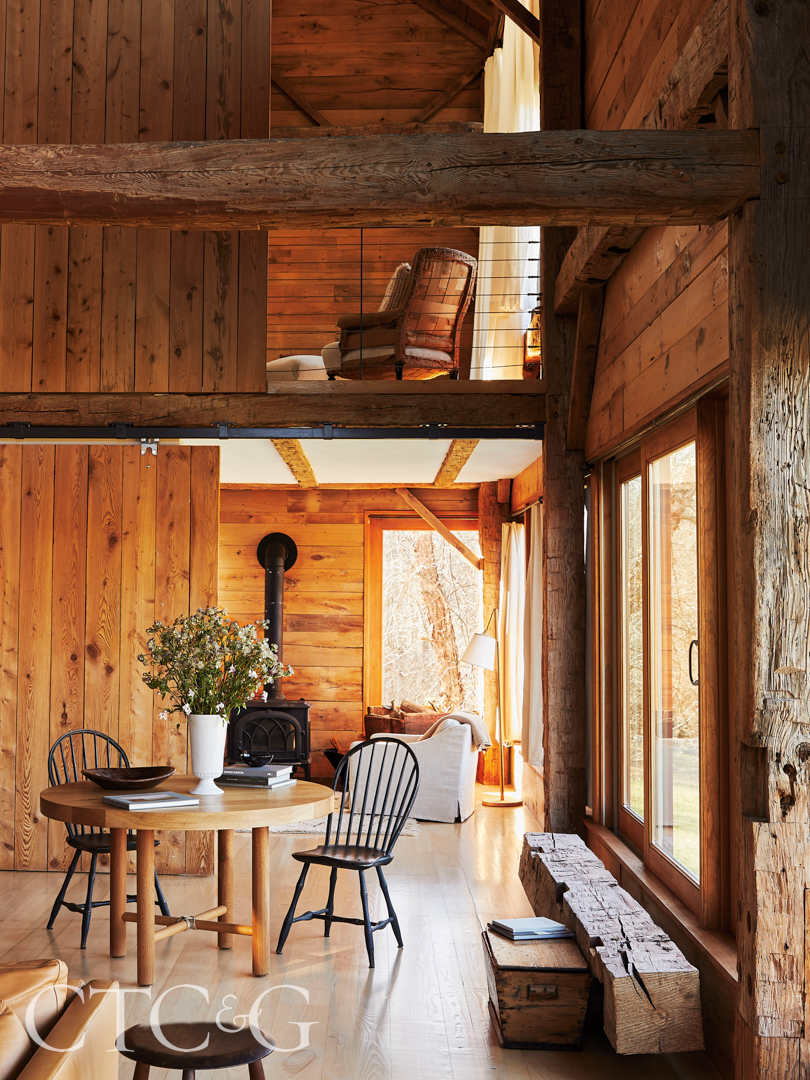
Windsor chairs flank a Nickey Kehoe table in the living room. The 19th-century French chair seen on the second floor was found at Michael Trapp Inc.
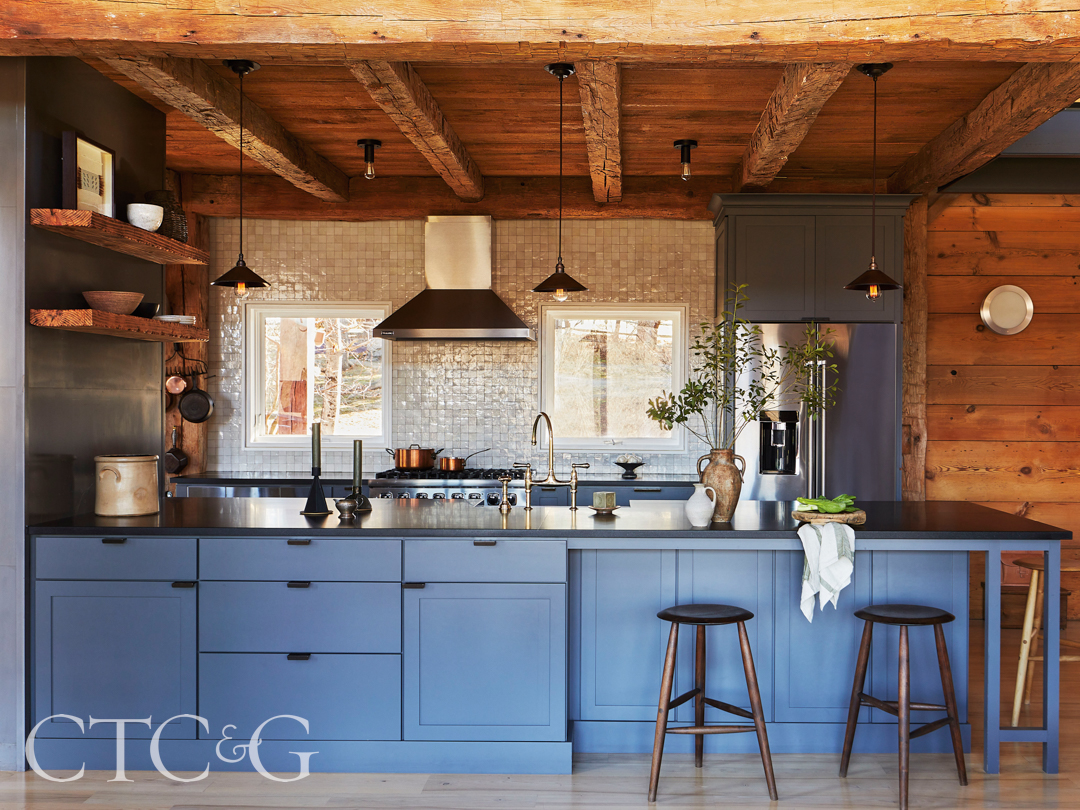
Mosaic House Zellige backsplash tile is through Greenwich Tile & Marble. The unlacquered brass faucet is Perrin & Rowe, and edge pulls are from Rocky Mountain Hardware.
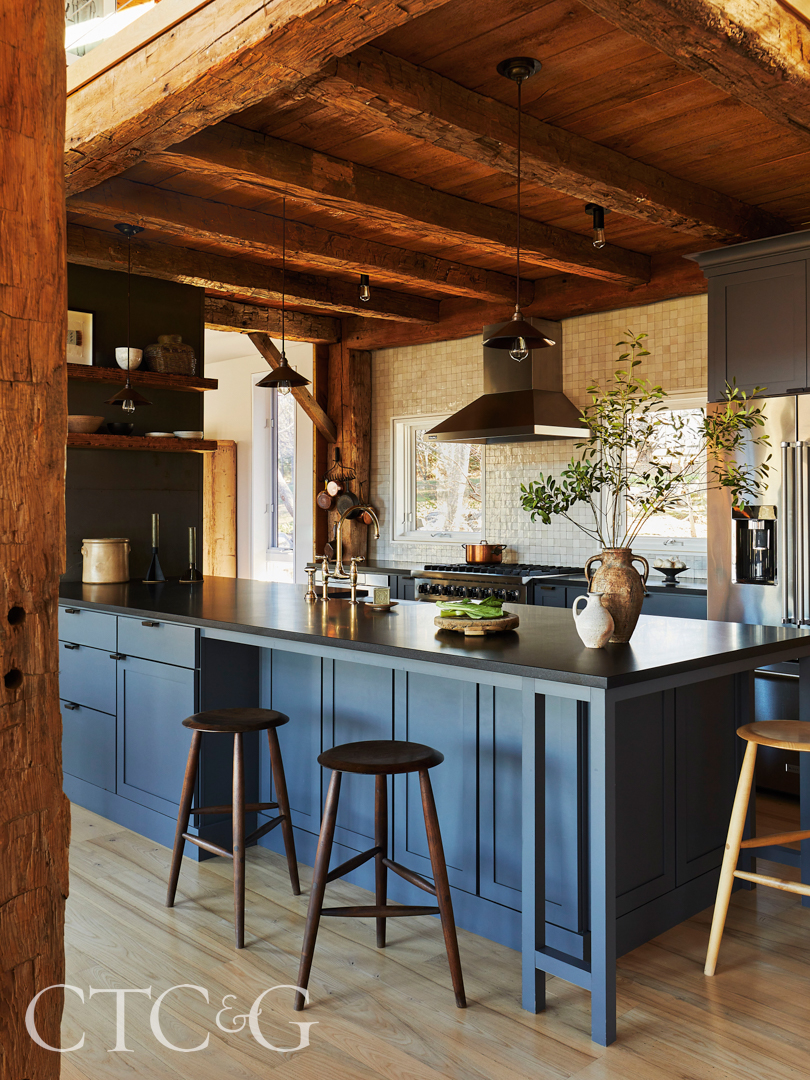
Kitchen Cachet Sawkille Co. stools provide seating at the kitchen island, which is illuminated by Jamb Ltd. pendants. Kitchen construction was by Concordia General Contracting.
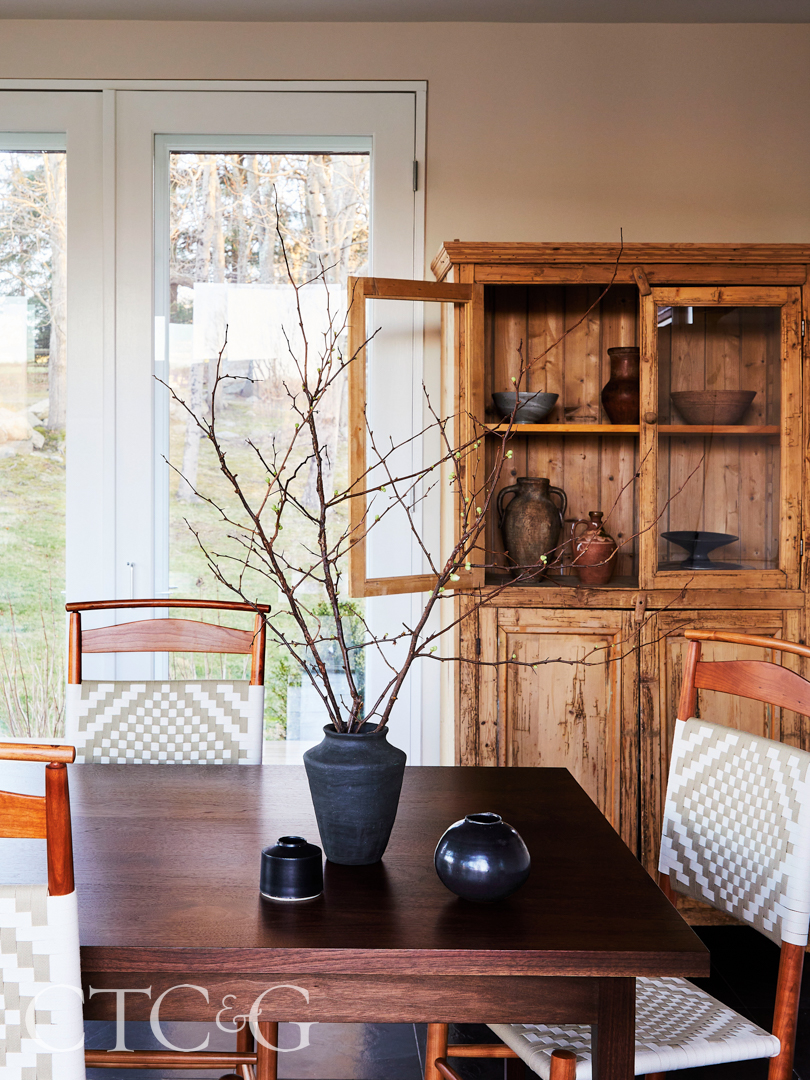
Dining table and chairs are from Ian Ingersoll.
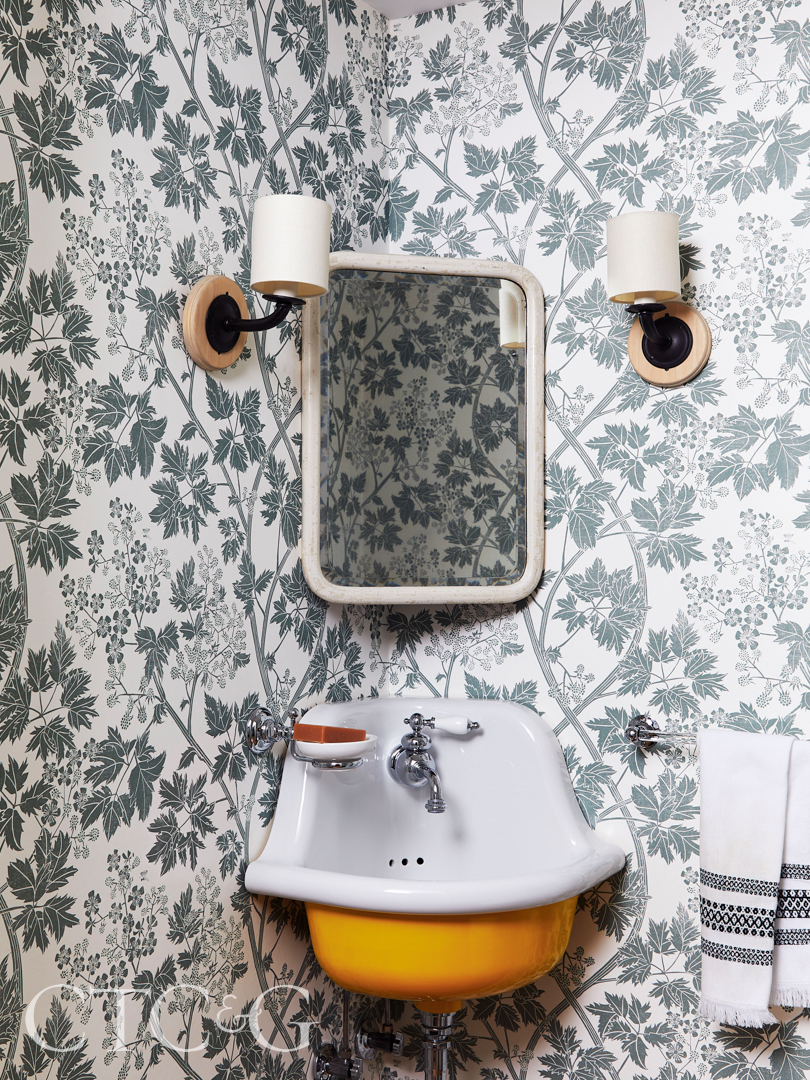
Marthe Armitage wallpaper lines the powder room walls, while Howe London sconces flank an antique mirror. The sink and faucet are from Dyke & Dean.

Bedding from Parachute (pillowcases) and Society Limonta (blanket) plus throw pillows from Shoppe Amber Interiors establish a serene bedroom palette.
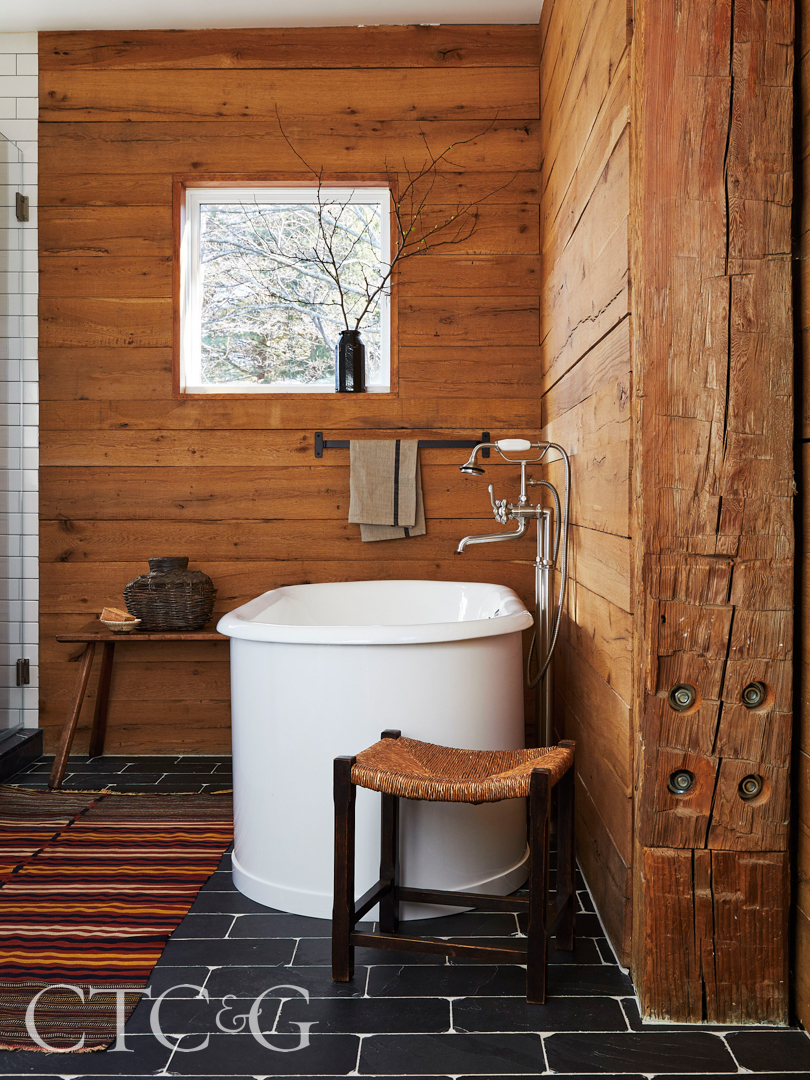
A Penhaglion cast-iron tub takes pride of place in the bathroom atop a floor of tumbled slate.
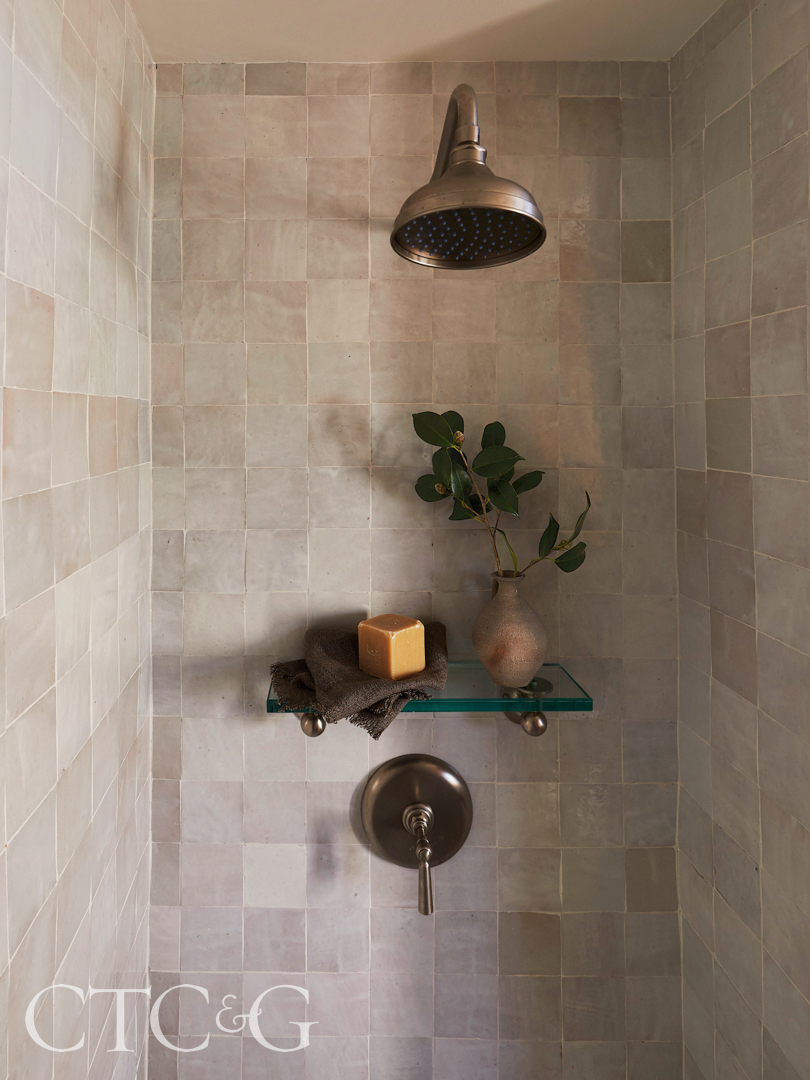
Watermark Designs fittings complement shower tile from Greenwich Tile & Marble. The shelf is from Urban Archaeology.

In the family room, cozy Togo seating is from Ligne Roset; the round Muuto table is through Hive Modern; and the vintage Moroccan rug is from Michael Trapp Inc.
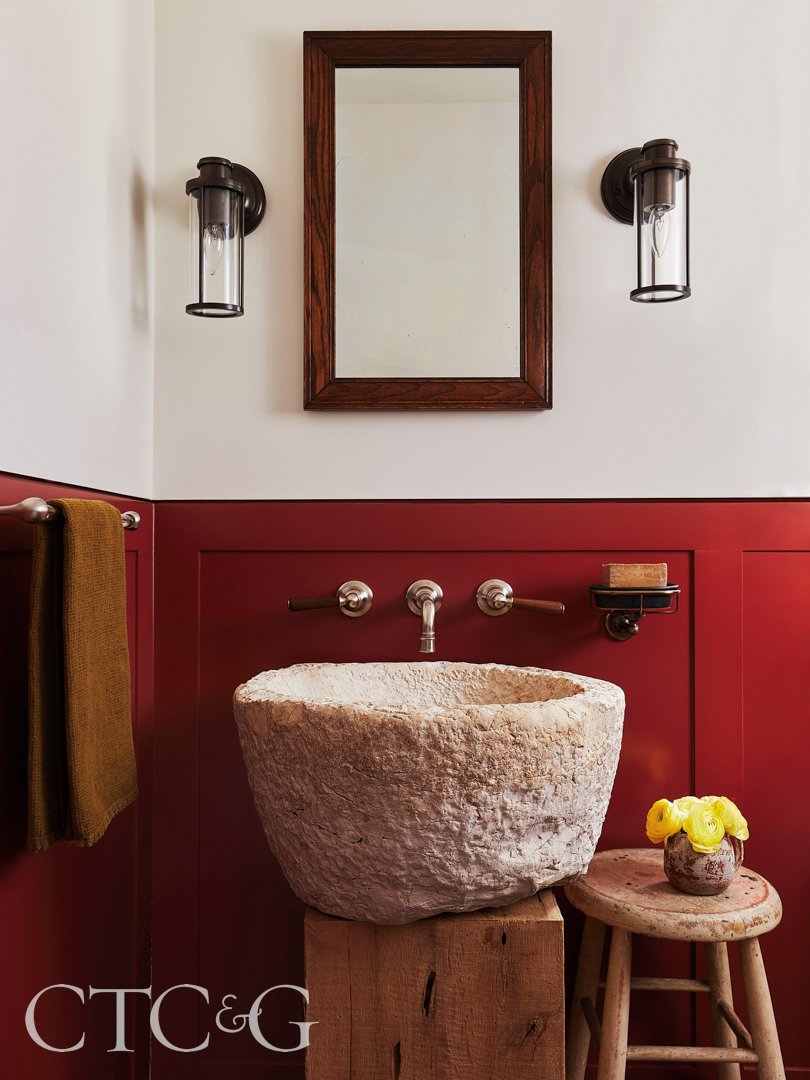
A faucet from the Water Monopoly is paired with a stone trough sink in a powder room.
According to Farrell, inspiration for the interiors was the barn itself: a raw, open, farm structure. “When you’re inside, you actually feel like you’re outside,” she notes. “To maintain this vast feeling, we researched Shaker philosophy and interiors, early American and English barns, early American furniture and midcentury furnishings. We were interested in an artistic and authentic feel. The pairing of modern and early colonial furnishings sits very well in the house. We even kept the original owner’s painters drop clothes that hung on the rings as curtains. Some panels dramatically hang 15 feet from the ceiling.”
The color palette was chosen to complement the views outside. “Oversized windows on every floor invite nature to play a leading role in the overall color scheme,” says the designer. “The public rooms maintain rather neutral tones. Some of the yellow accents are intended to complement the outdoor summer palette and conversely contrast and warm a wintry grey palette. The red wainscoting in the main floor powder room was color matched to honor the red barn exterior.”

by Concordia General Contracting. Photography by Kate S. Jordan, styling by Brittany Albert
Black honed-granite countertops, colorful cabinetry and handmade Zellige tile fill an attractive and functional kitchen, which anchors the main living space. “The cabinets are actually a peppercorn grey, but as warm sunlight pours in, the color takes on a deep blue-grey hue that contrasts all of the warm wood siding and beams,” says Farrell. “I wanted the backsplash to reflect the light that comes in through the opposite picture windows. Zellige was the perfect material for this wall, the way light dances on it is unique to the material. It also has a wonderful old-world feel that feels appropriate in the space.”
Throughout, contemporary touches happily coexist with antiques and traditional pieces “We love the juxtaposition of modern and contemporary pieces with primitive and utilitarian pieces in the raw space,” says Farrell. “I try to mix new pieces with antiques or heirlooms in many of my projects. The modern pieces are often very practical, comfortable, sculptural, while the antiques add texture and character—and they usually come with a story.”

Two bedrooms and two bathrooms occupy the second floor, where a giant sliding door opens the primary bedroom to view the public space below. The third floor has an office with a pitched ceiling and an interior window that looks below to the living and kitchen areas. “Occasionally, there is a bird that finds its way inside and rests on these high beams near the office!” says Farrell.

When discussing favorite aspects of the project, the designer notes: “Fortunately, every house has a room where there is license to play, a room to exercise the unexpected. In the company of many restrained and utilitarian decisions, the powder room with its yellow corner sink and walls clad in blackberry vine wallpaper was designed to feel like a farmhouse loo but with an element of surprise. That is second, however, to my favorite part of the project, which is the friendship we have formed while sharing our mutual love for design and North Salem.”
