


When Amy Jedlicka bought a Litchfield County lakeside cabin, she had a vision for the land. Her mother is an avid gardener. Her father was a naturalist. Her childhood summers were spent roaming the family’s 300 acres in Vermont, collecting elderberries, etc. Foraging was the language they spoke.

So, in 2013, Jedlicka dove into landscaping her newly acquired land. “It was really the first order of business,” she says. Although lawn prevailed, the one-acre parcel came with some endearing elements—like the smoke tree, flowering quince, hydrangea, pear and rose of Sharon. Erasing those mature treasures was not her plan, but intentionally tying it all together felt right…and necessary. For help with the project, she aimed high. Nationally famed for naturalistic plantings, Larry Weaner is like a wildflower whisperer. After reading about his feats in the Wall Street Journal, Weaner was contacted.

Weaner saw opportunity galore. The fact that Jedlicka wanted an edible element in homage to her youthful foraging plus a mini-meadow, macro-orchard, pint-sized berry patch and all salvageable trees left standing was the sort of challenge that Weaner loves. To expand the experience, he carved a circuitous and adventuresome journey into the property. Pathways curve through, hiding and revealing moments throughout, harnessing the mature shrubs as transitions to conceal or frame further vignettes, underscoring something wonderful as you round a bend. With foraging in mind, he added elderberry, pawpaw and blueberry bushes. But the real fancy footwork came with the layering.
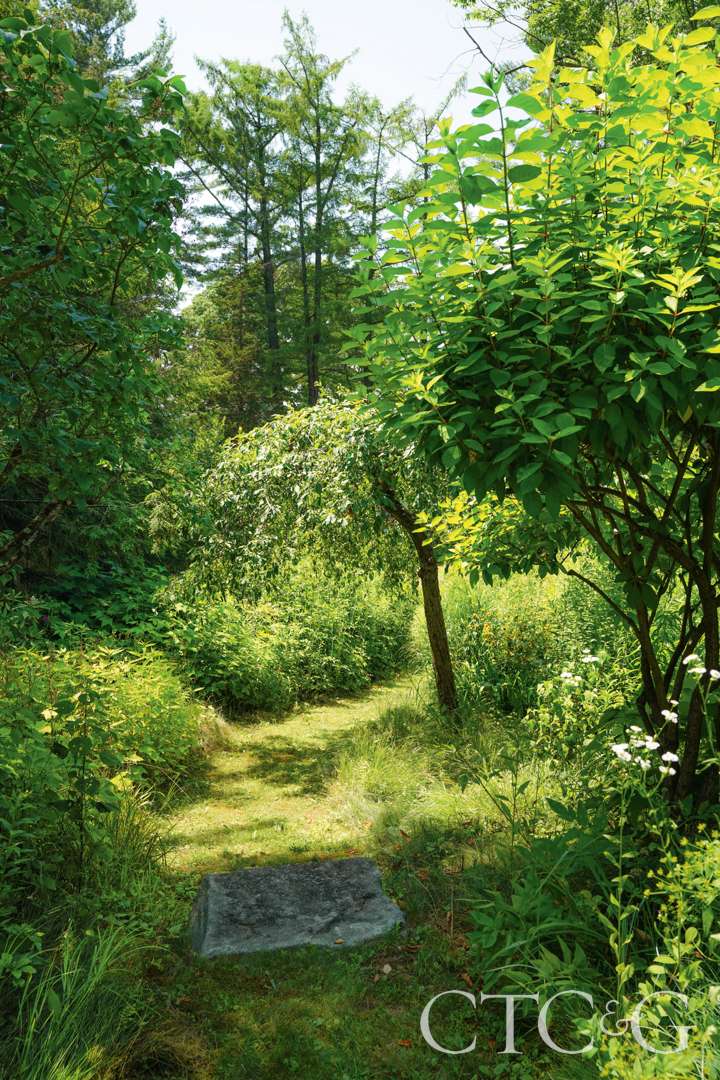
A weeping crabapple signals the gateway where the woodland transitions to meadow.
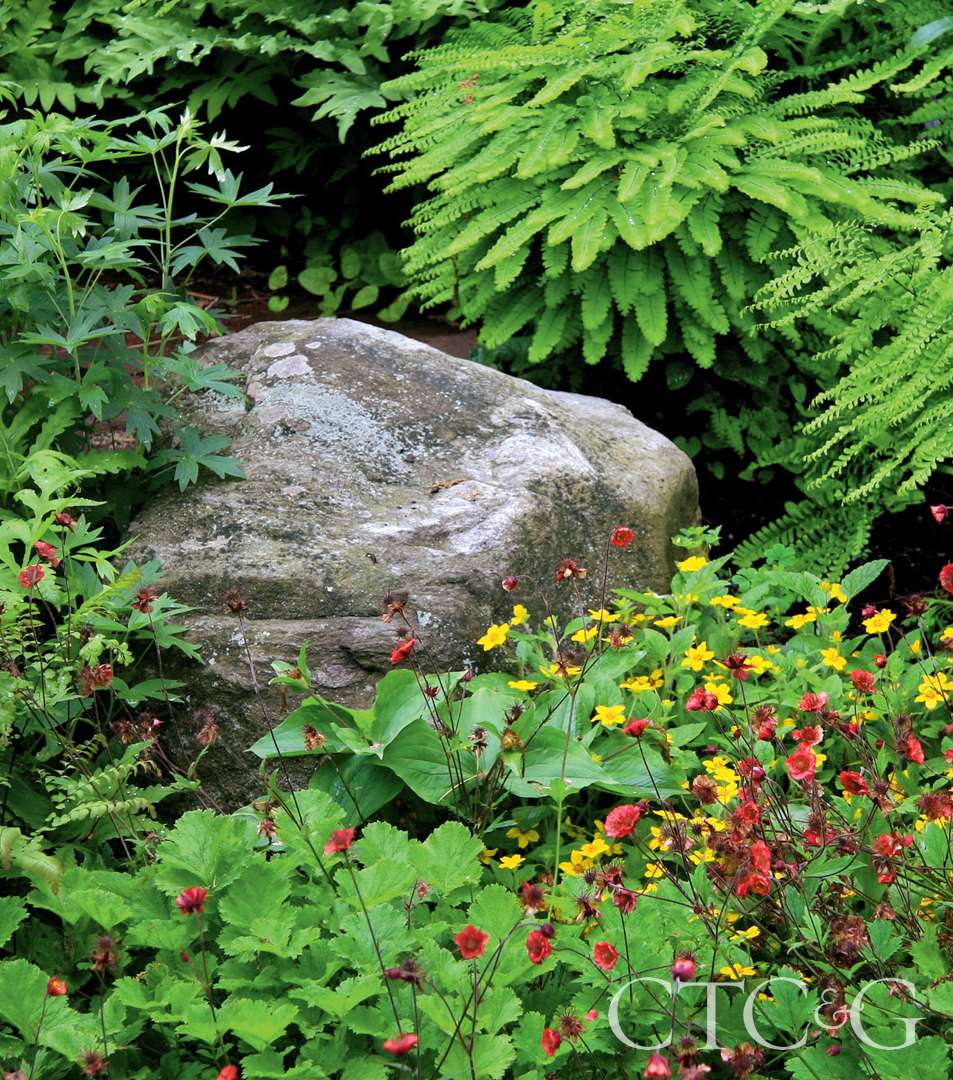
Chrysogonum virginianum, geum and native maidenhair fern carpet the ground in the front garden.

The relatively slow-growing native Pachysandra procumbens features buff leaves.

The colorful ground-hugging weave includes geum, chrysogonum and polemonium.

A green-on-green edging along the path is created as chrysogonum spreads between tufts of native sedge Carex pensylvanica.
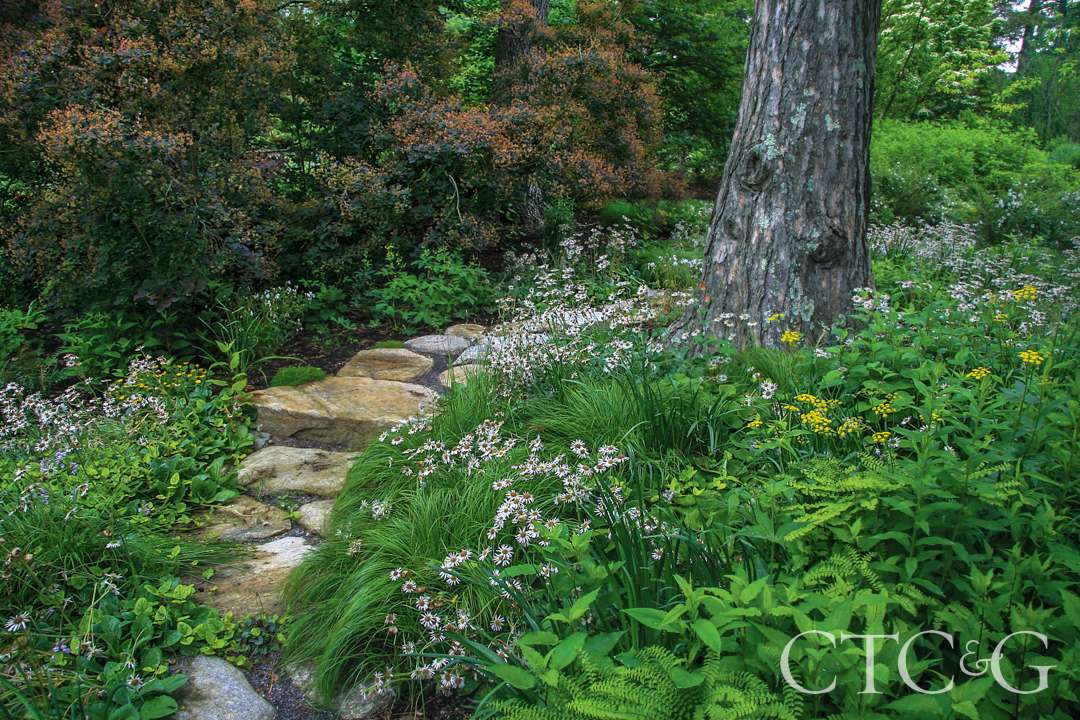
A mature purple smoke tree came with the property and now eases the pathway’s curve through Erigeron pulchellus ‘Lynnhaven Carpet’ dappled with zizia.

The low-growing intermingled tapestry of knitted plants forms a solid weed barrier.
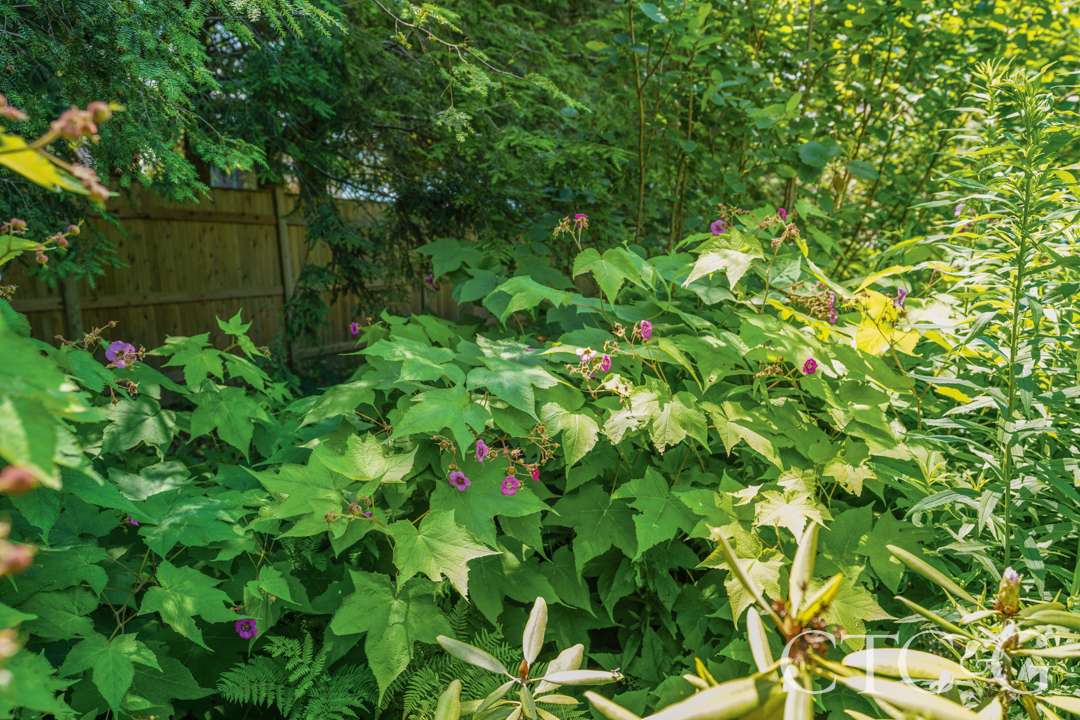
The flowering raspberry, Rubus odoratus, enhances the property line serving as a screen.
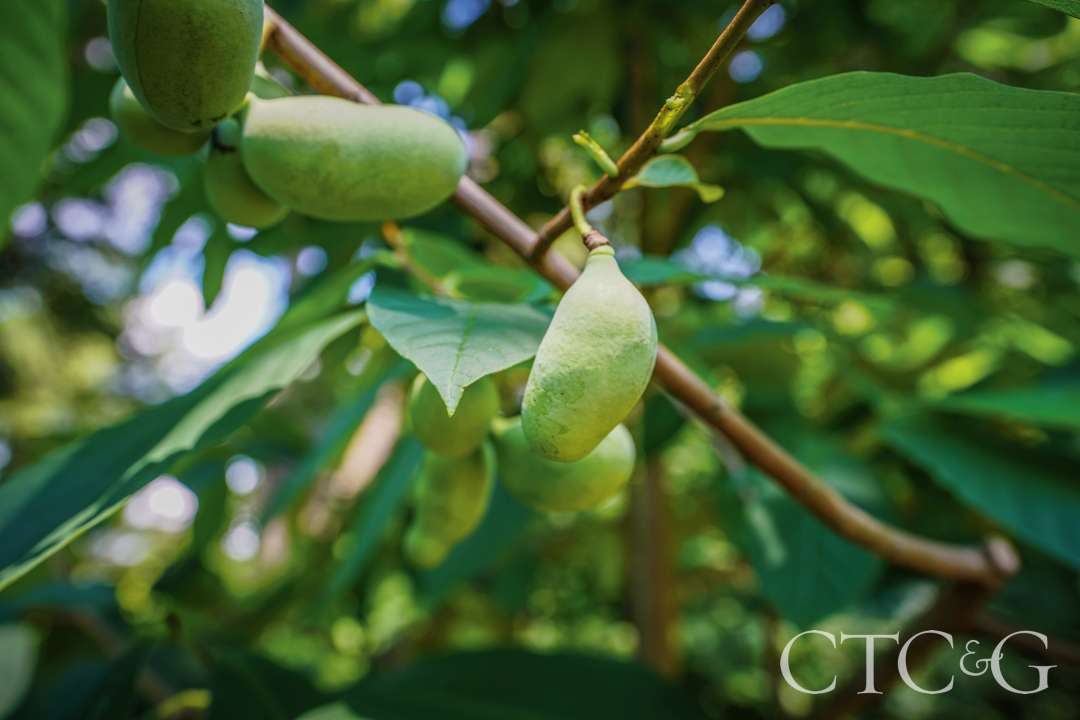
A pawpaw tree was added for its summer fruits.
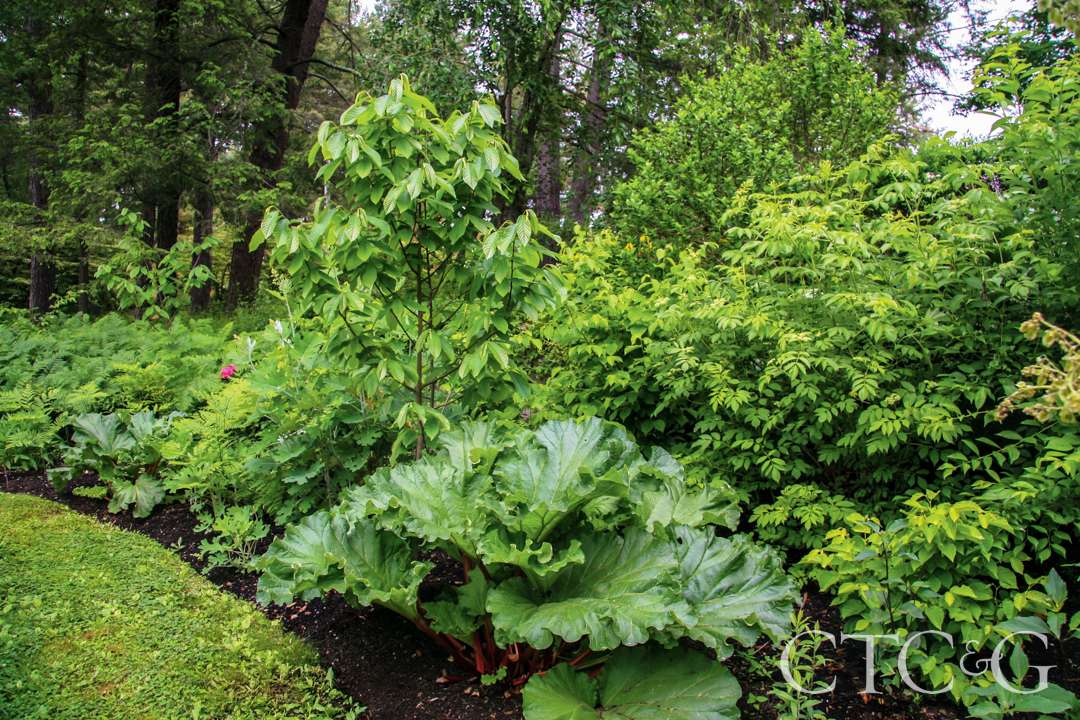
Rhubarb does double duty as an ornamental feature along the woodland edge.

European toadflax and grasses form a shaggy carpet below the mini-orchard.
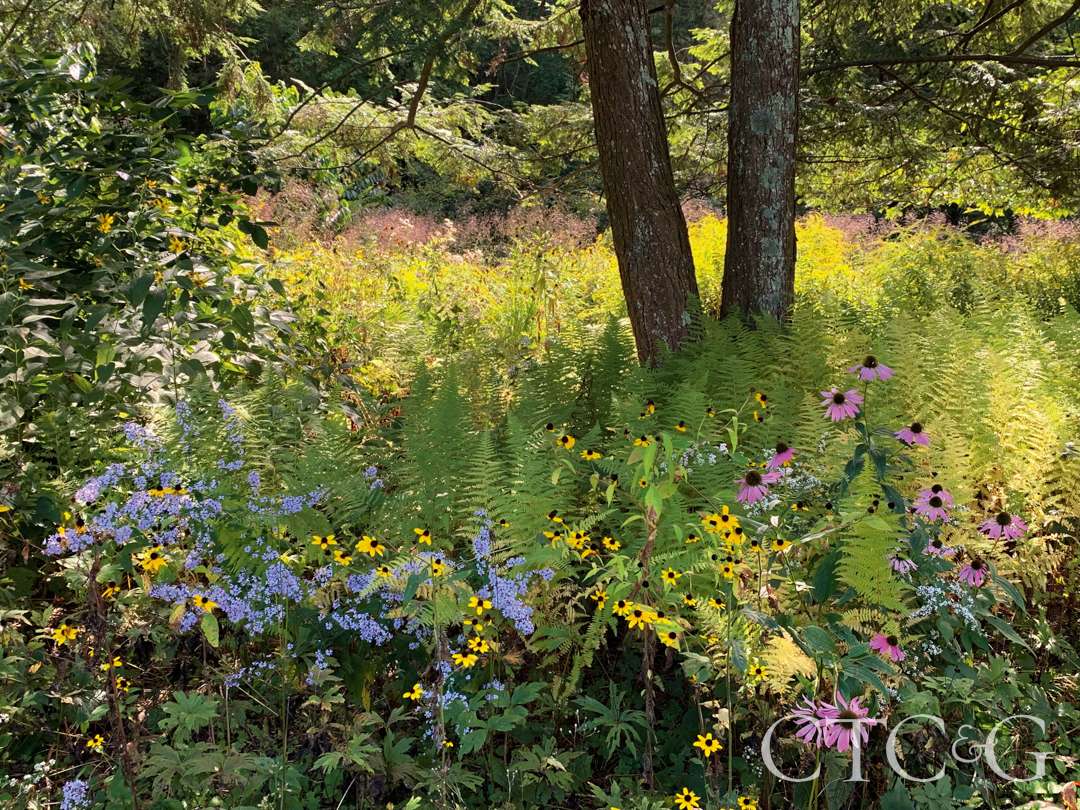
Mature trees surrounded by blue mistflower (Conoclinium coelestinum), echinacea and brown-eyed Susan frame glimpses into the further meadow.
Not only do you need to know the territory when working wild, but intimacy with the plant players is essential—starting with the roots. “Plants have shallow, mid-level or deep roots,” Weaner explains. When the goal is dissuading weeds—and weeds opportunistically love to infiltrate a wild scene—he creates a weave so dense that seeds literally cannot make inroads. By layering a handpicked army of aggressive “good guys” below and above ground, nothing nefarious can easily sneak in. Additionally, Weaner knows the longevity of plants in a scene where some elements will start small but eventually expand while others with a briefer lifespan serve as space holders. Some plants are meant to disappear, that’s all part of the plan. Other plants eventually fill out the picture. And the ever-changing performance is thrilling. Clients who prefer an instant and absolutely stable scene might not understand this sort of landscape. But adventuresome clients love it. And even those who thought they wanted an instamatic and predictable picture almost invariably learn to love the dynamic process.

Amy Jedlicka was definitely in for the ride. She loves everything about her landscape, especially its unpredictability. On a daily basis, stewarding wildlife is fascinating, eventful and fulfilling. The garden is not maintenance free—in addition to ongoing consultations with Weaner’s team, Henry Quezada of Inspiration Landscaping serves as her “boots on the ground” liaison. The result is a garden of vibrant beauty framing one of the area’s most scenic lakes.
