


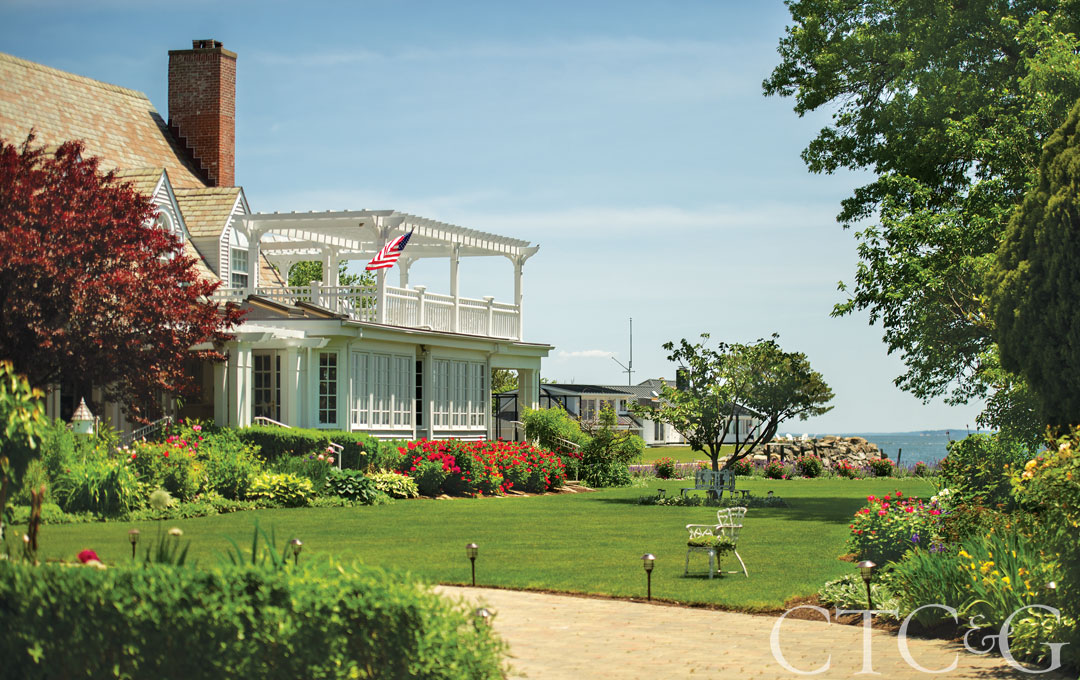
In a view of the property from the street, on the left, an ornamental plum tree anchors the Friendship Garden. In the center of the lawn is a Kwanzan cherry. Against the house are Knock Out roses. In the right forefront, the high yellow is a Graham Thomas climbing rose, and the low yellow is loosestrife.
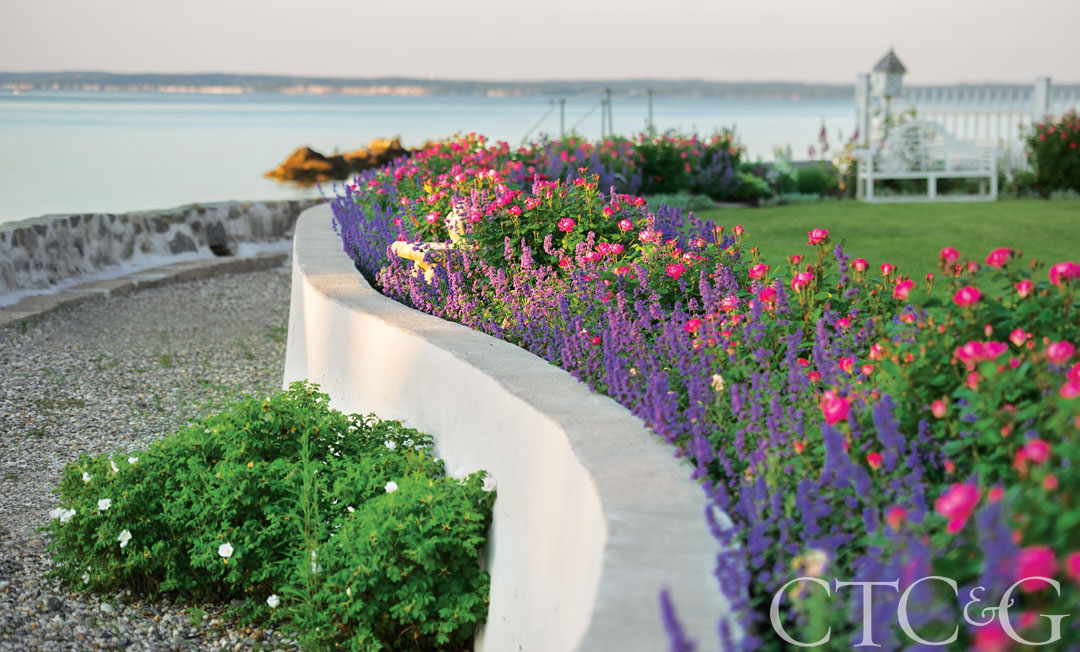
A white Rosa rugosa grows between the two sea walls, where a gravel-lined moat provides room to stow kayaks, play horseshoes and have a barbeque. The seaside border includes nepeta and double pink Knock Out roses.
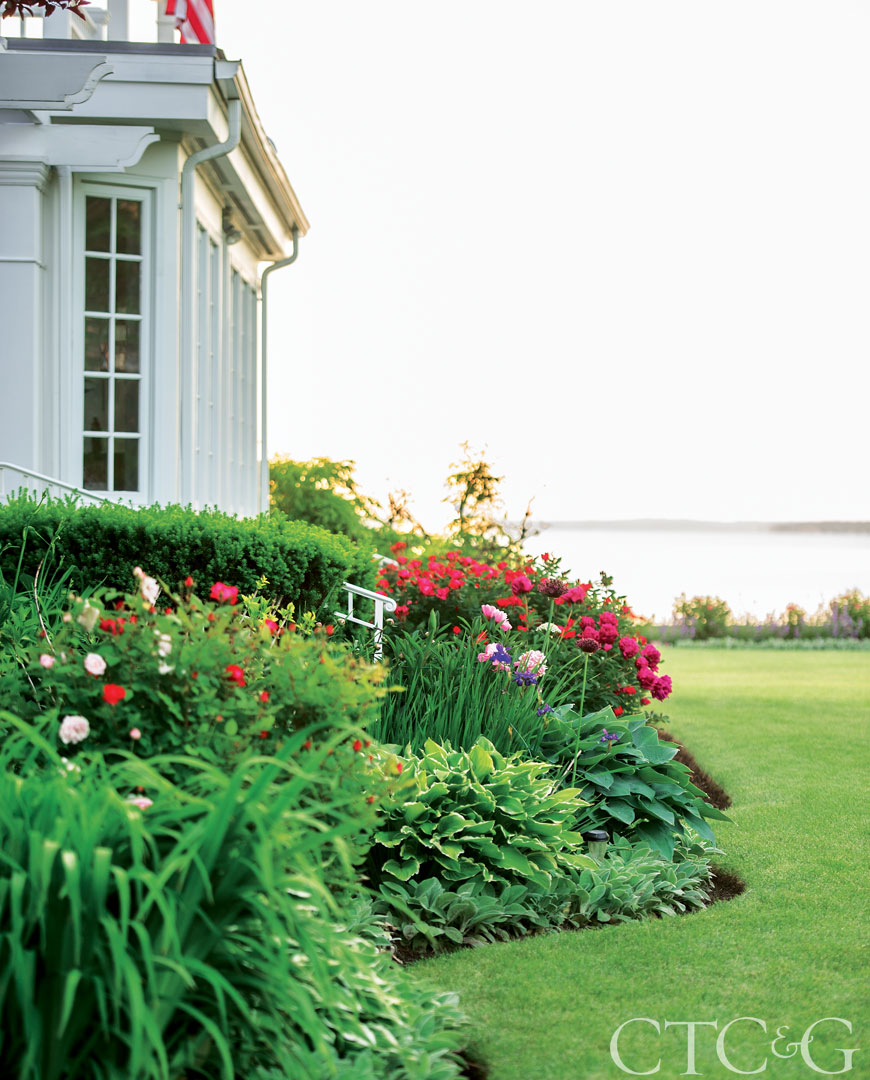
A border along the south side of the house has lamb’s ear, day lilies, hosta, iris and Knock Out roses.

Garden rooms frame features like a special bird house.
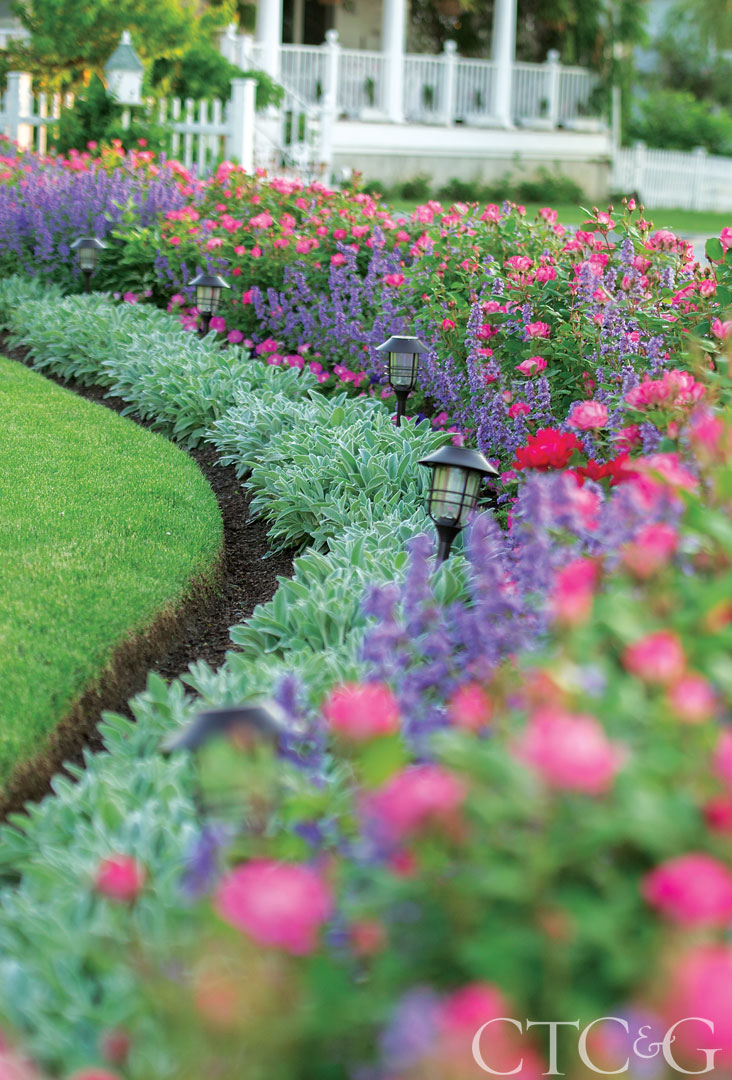
Dark agra-peat separates the lawn from the garden, creating a well organized border.

Thurlow’s many roses include this David Austin rose: Graham Thomas.
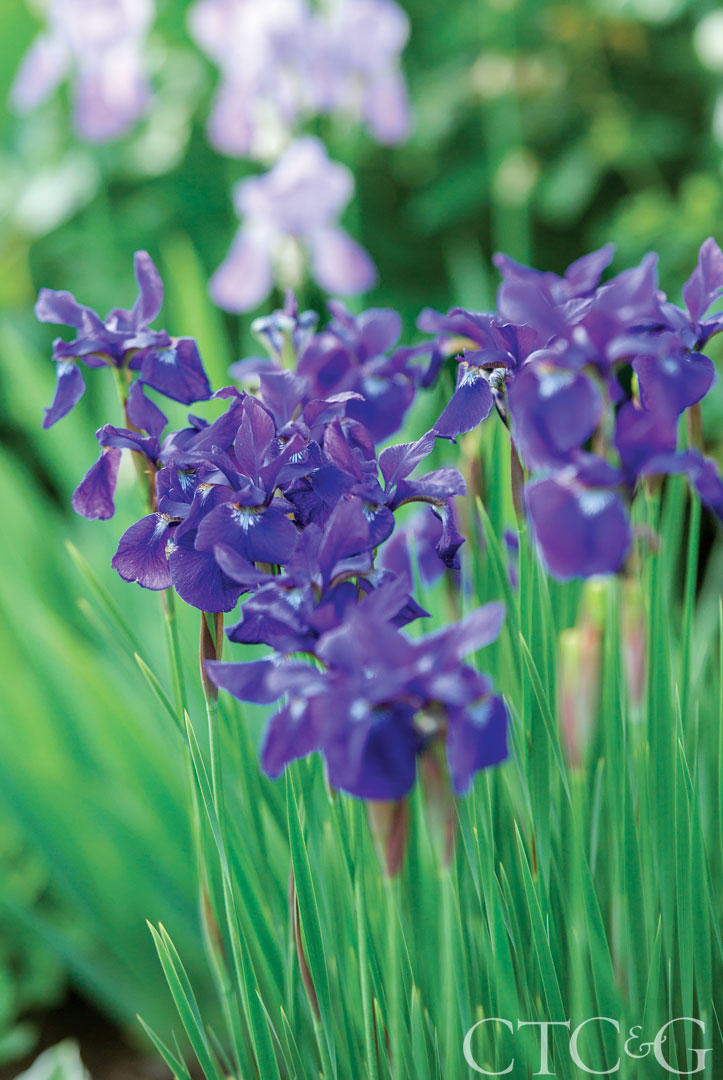
A few spiky favorites include Siberian iris with a light lavender bearded iris in the background.
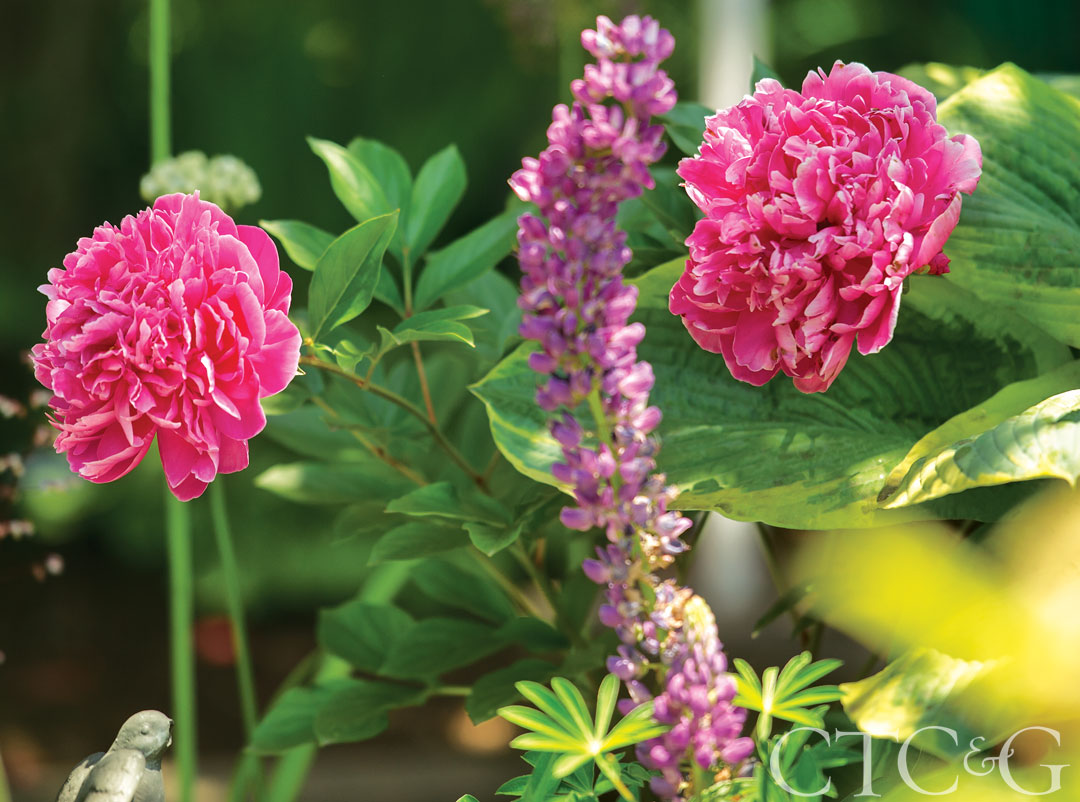
Paeonia officinalis ‘Rubra Plena,’ a double-flowered cultivar, was given to Thurlow by her late friend Joan Blackmore. Also in the photo are Russell lupines.
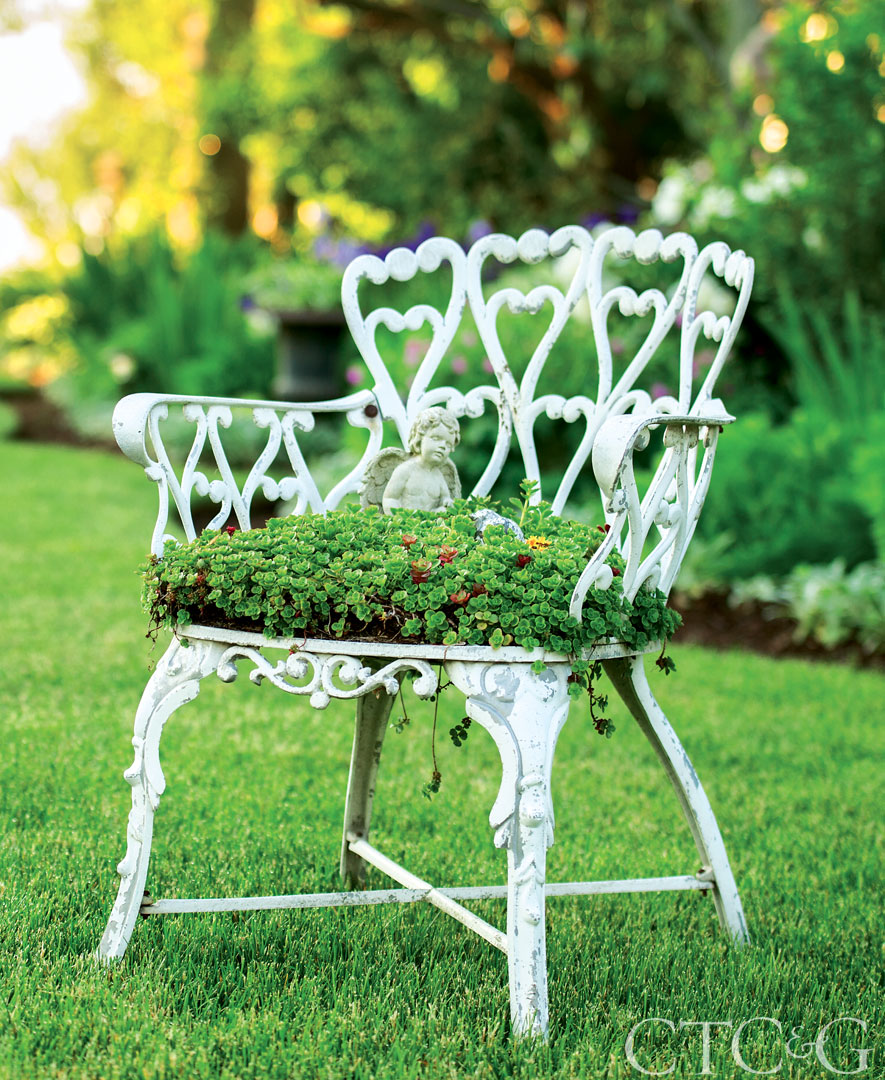
Drought-resistant sedum forms the cushion of a vintage iron seat.
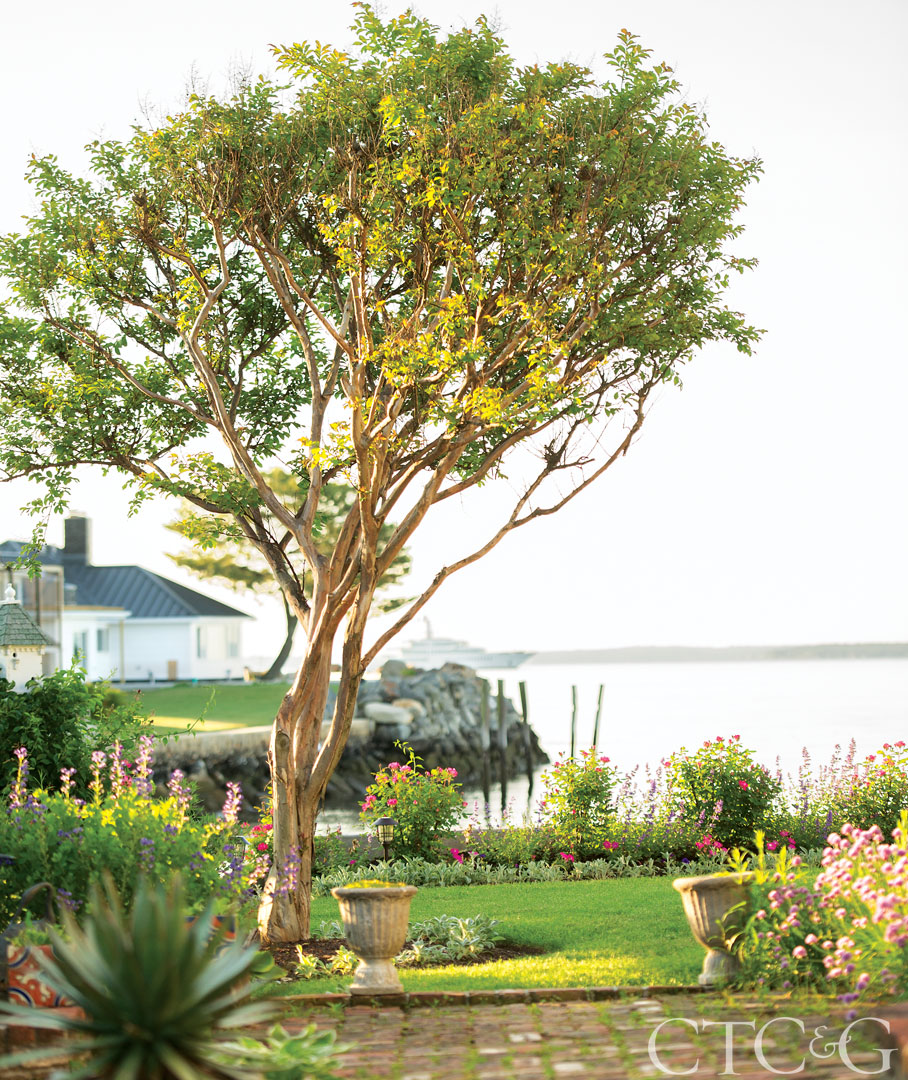
A Natchez crepe myrtle grows this far north because of the more temperate environment on the water. The cement container holds a large yucca. The brick patio was made from a chimney that originally was part of the house.
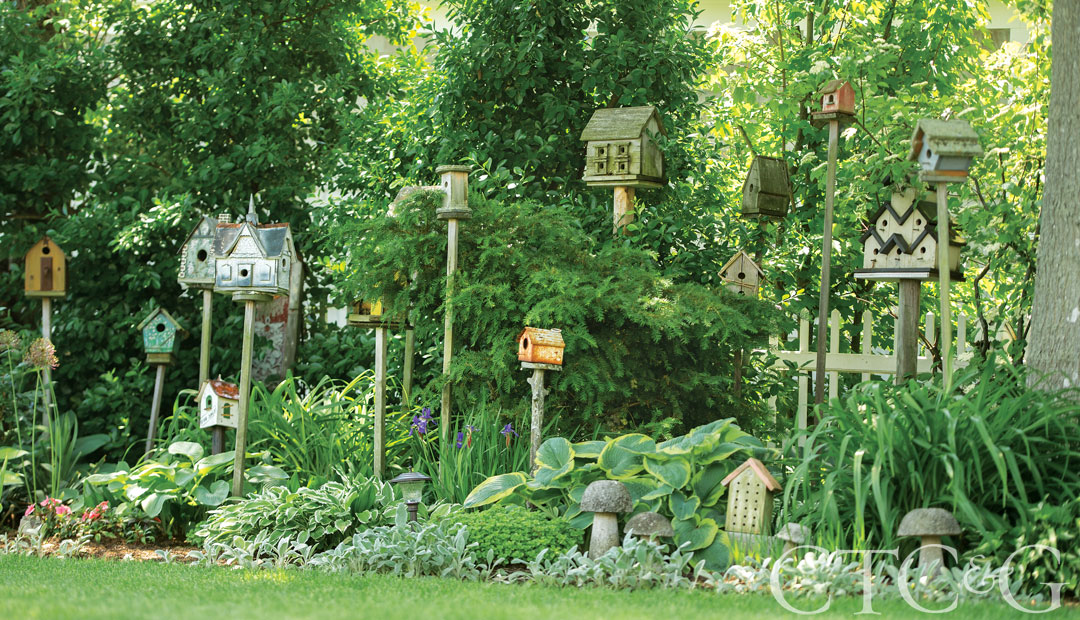
Bird and bee houses in the Bird Village—bordered by stachys, hostas, daylilies and Geranium cranesbill—enliven the space beneath a black oak.
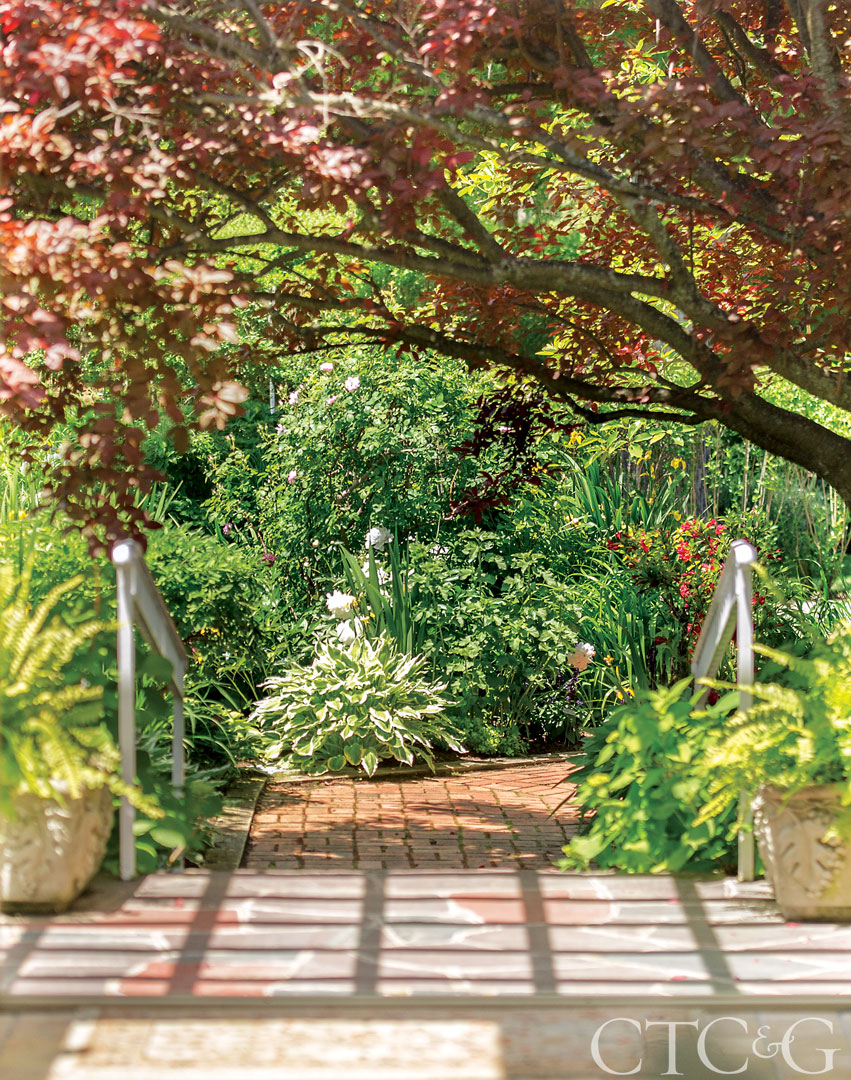
A path leads through the Friendship Garden, which was built by Thurlow’s friends after the property was ravaged by a nor’easter in 1992.
