


Some fantasies follow us our entire life, until we fulfill them. It took many years, but the owner of this SoHo duplex was able to realize a goal he had nurtured decades ago as a young man. Prior to marrying, raising two children, and finding substantial financial success in San Francisco, he had always wanted a New York apartment he could consider a true bachelor pad—a decidedly cool space for friends to gather in a hip Manhattan neighborhood.

“He has now created what he’d always wanted, and we were happy to make that come true for him,” says Terrence Charles, Design Director at David Kleinberg Design Associates. Charles, along with David Kleinberg, who heads the firm, assembled the interiors of a spacious two-story apartment in what had once been a former factory. Long ago, the space had been transformed into a residence, but, according to Charles, who says with great understatement, “This was essentially a decoration project, though we did completely start from ground zero when it came to furnishings and accessories.”
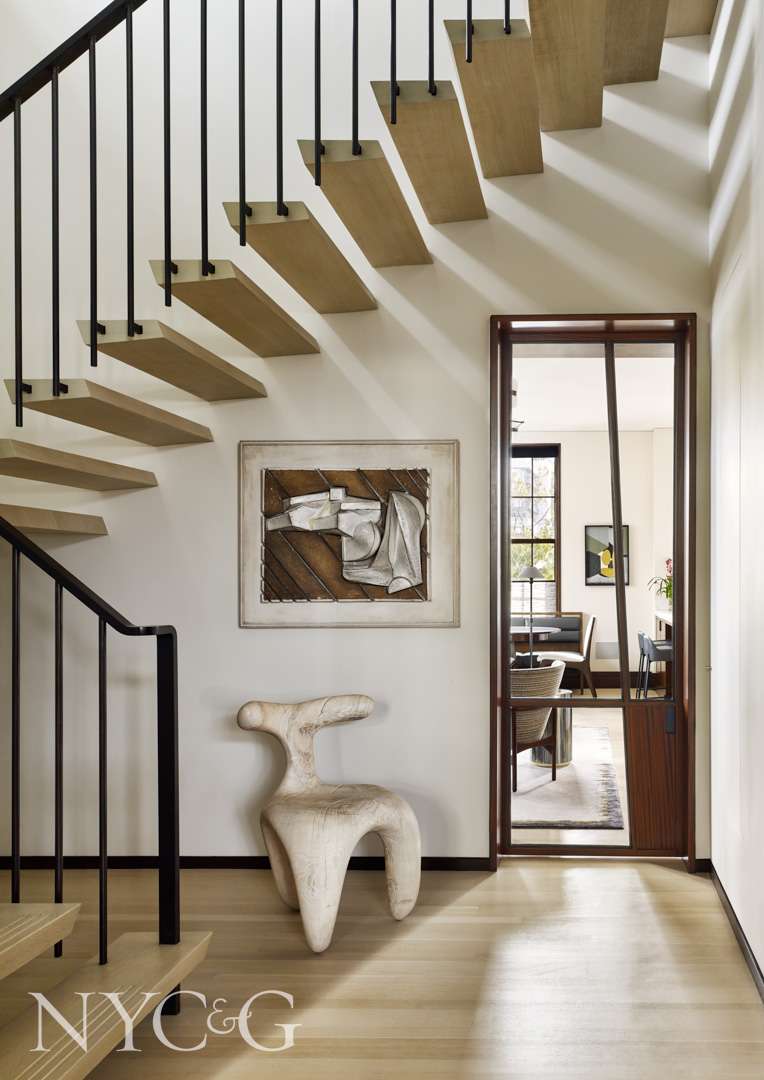
The stair hall features artwork by Claudio Parmiggiani and a sculptural chair by Aaron Poritz.
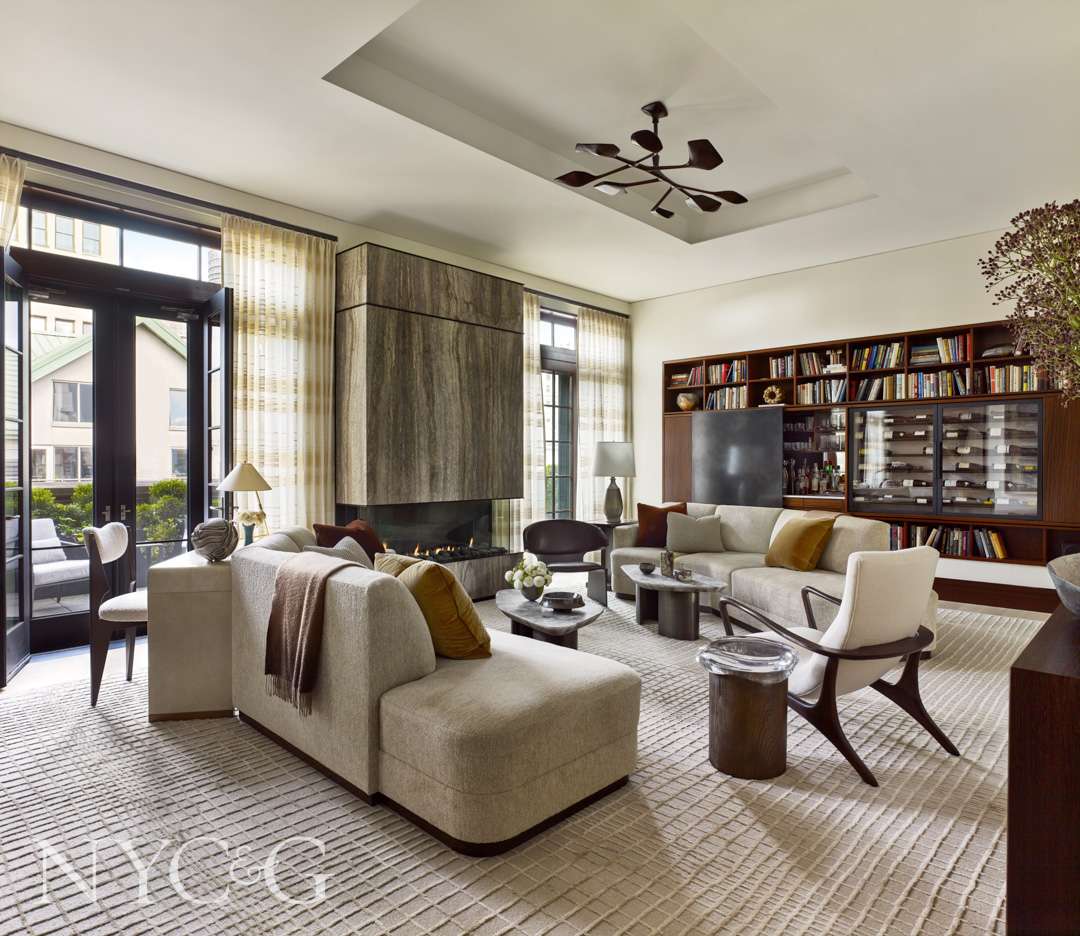
In the living room, the custom cabinetry is by Alexander Lamont, and the sofas were designed by David Kleinberg Design Associates. The coffee tables are from DeMuro Das. An Edward Fields carpet anchors the space. The Holly Hunt armchair is covered in a Holland & Sherry fabric.

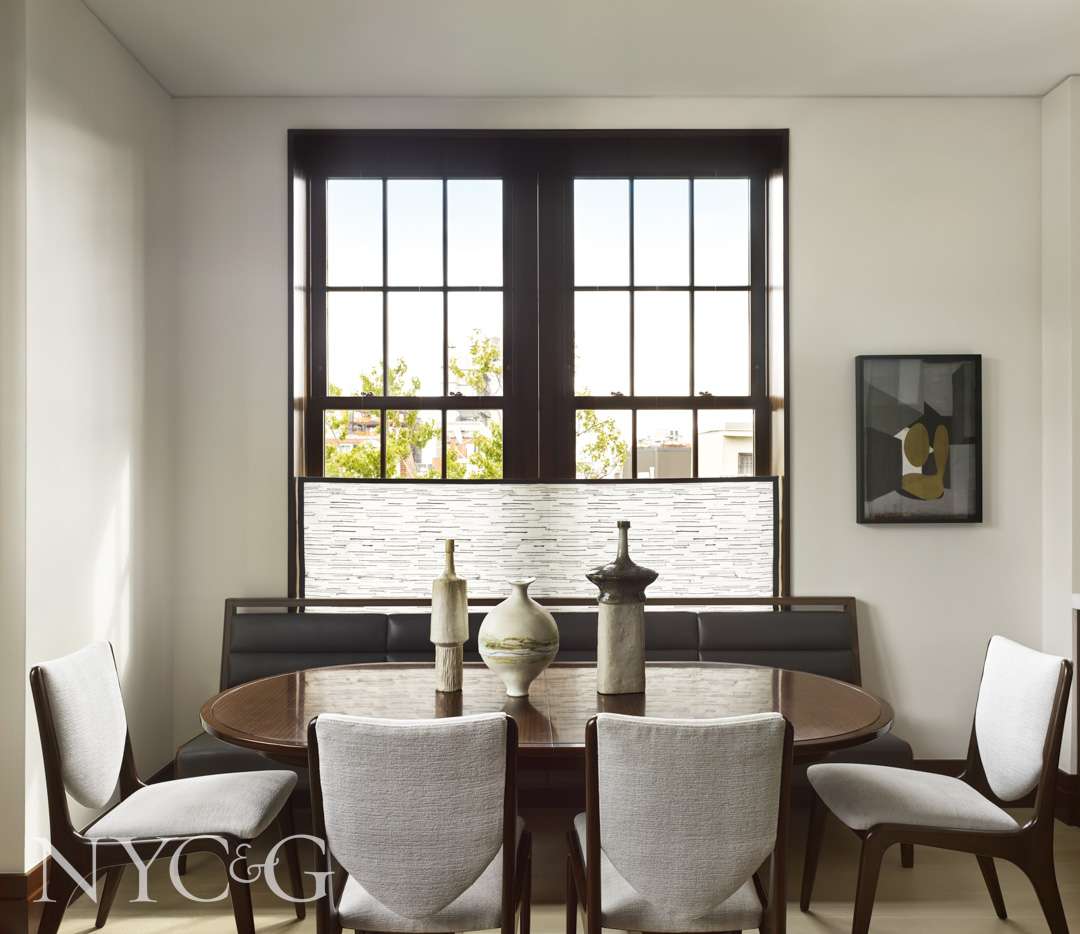
In the kitchen, the cabinetry is custom by David Kleinberg Design Associates.
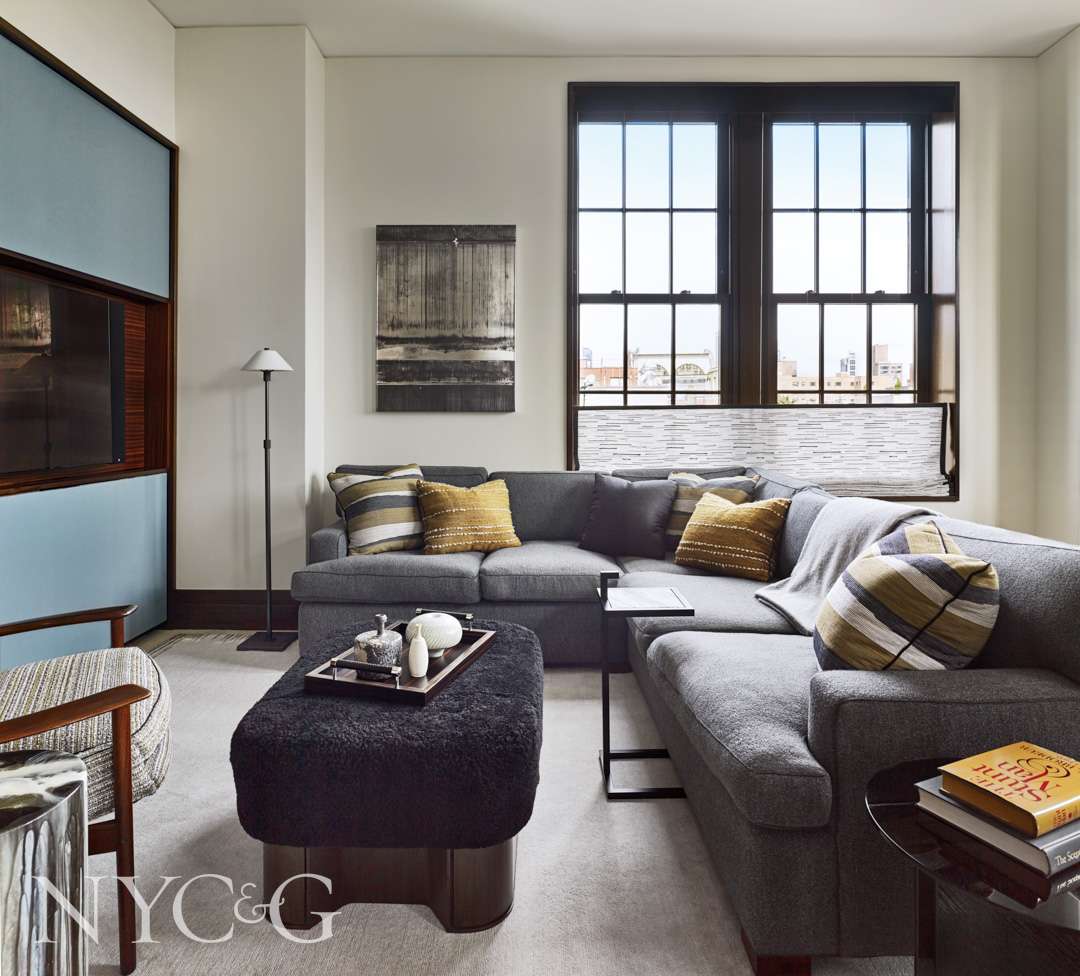
A sofa and ottoman in the family room are custom by David Kleinberg Design Associates with David Lawrence. The sofa is covered in a fabric from Holland & Sherry, and the ottoman is covered in a fabric from Moses Nadel.
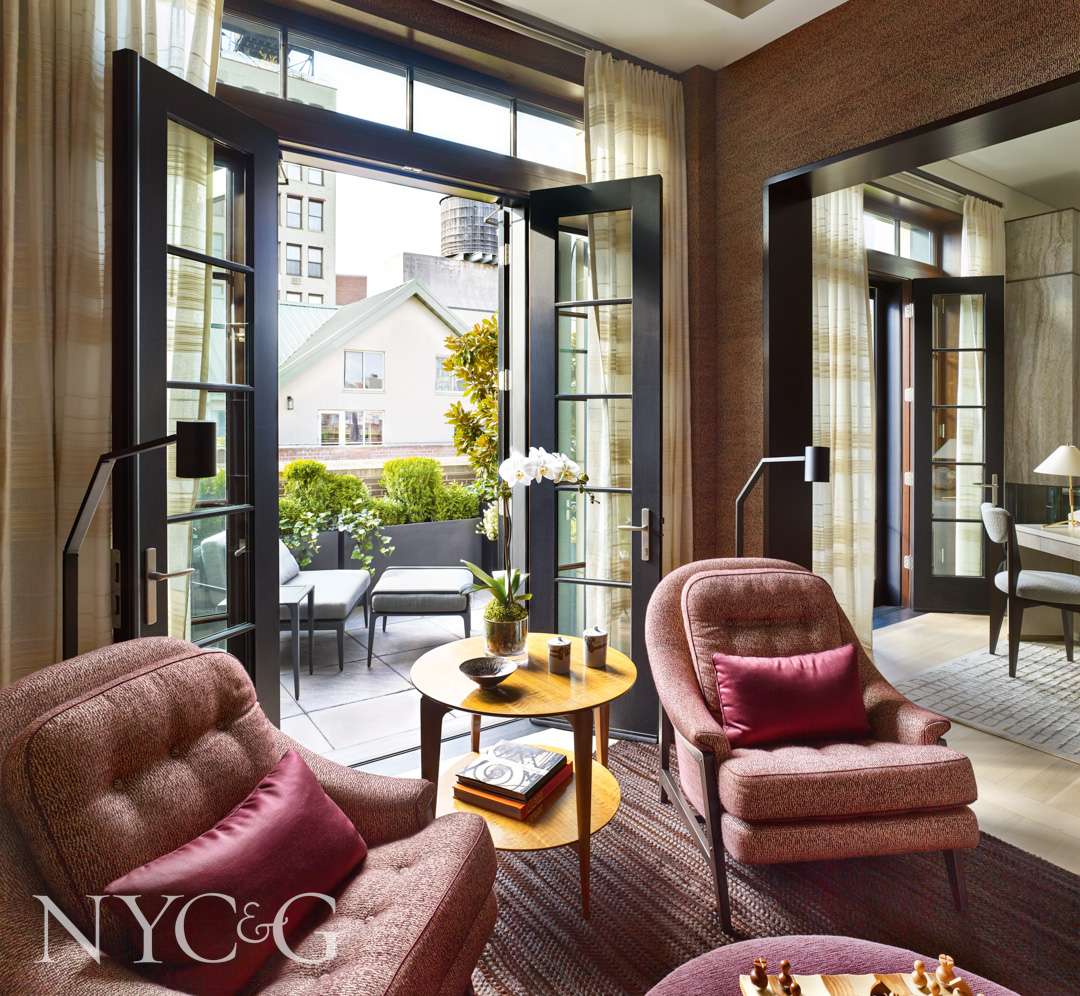
In the study, a pair of Edward Wormley chairs are covered in a fabric from Holland & Sherry.
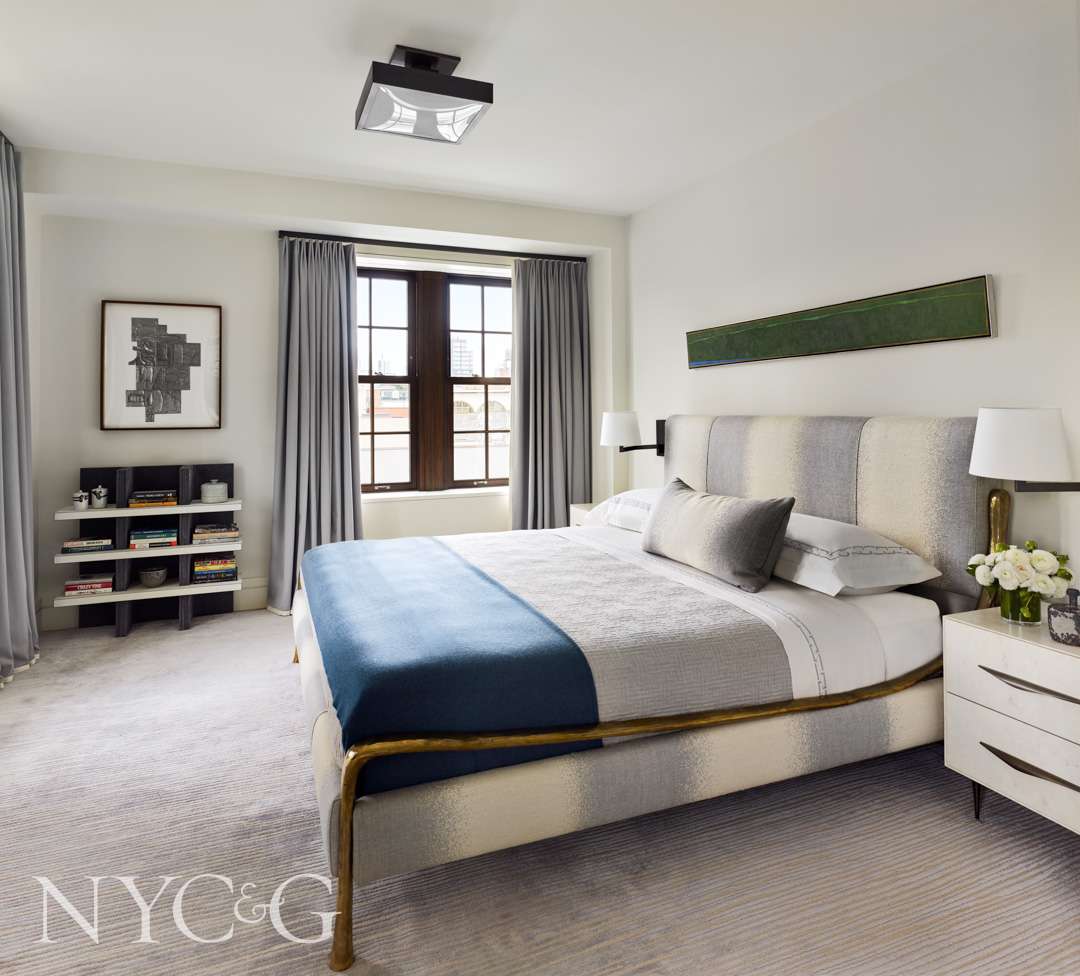
The primary bedroom’s bed is a custom design by David Kleinberg Design Associates. The artwork is by Stanley Boxer. Custom curtains are in a Holland & Sherry fabric.

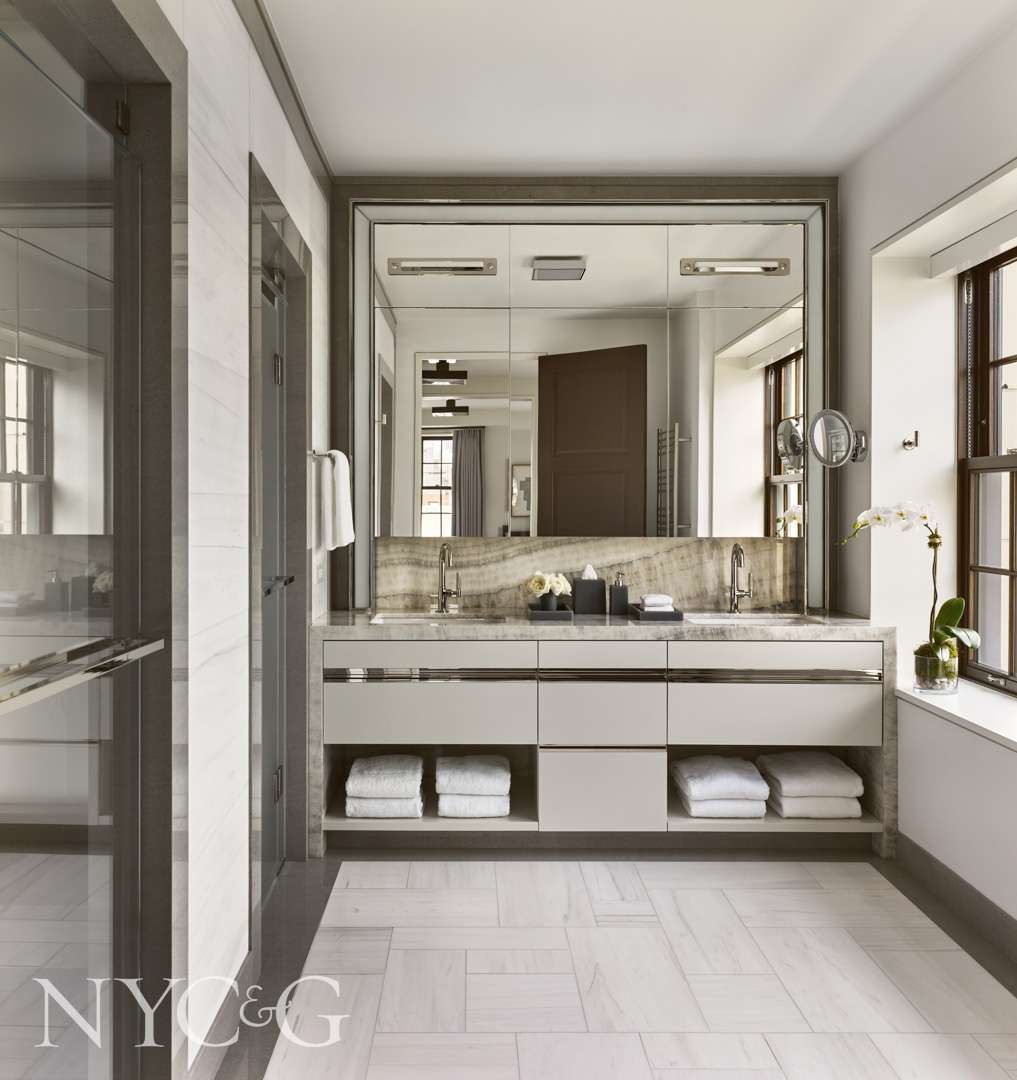
In the primary bath, the sconces are by Paul Loebach and accessories are from Waterworks.

One of the bedrooms features a wall covering from Phillip Jeffries. A Bergboms table lamp, sourced from 1stDibs, graces the nightstand.
And just to be sexist for a moment and admit to a fact about many, if not most, interior design projects undertaken by a husband–wife couple, this one was wholly, atypically done by the husband homeowner. “The surprising fact about this one,” says Charles, “is that it was all the client-husband’s vision. His wife, a lovely, smart woman, really into books about philosophy, let him go at this entirely. It came together without her involvement.”

Given the client’s desire for a relaxed, unpretentious, low-key home, typical of a young bachelor (though, alas, he is neither now), Charles and Kleinberg adhered to a neutral palette. And when colors do appear, they are muted. The primary bedroom, for instance, is a subtle blend of blues and grays, which are echoed in the primary bath. A long horizontal painting, Tender Grasses, by Stanley Boxer, was acquired by the designers at auction and provides a rare strip of green over the bed. A sitting area off the living room is defined by a pair of rusty-red armchairs, a hue referenced elsewhere in throw pillows. “Apart from those moments, though, we stuck to softer earth tones throughout,” Charles emphasizes.

While the designers maintained the original floor plan, they did much to reorient the way people occupy the rooms. Charles claims that the only design matter the client “needed to wrap his head around” was the orientation of the two custom, angled sofas in the living room. Neither their shapes nor their position in the center of the room are typical, but, as Charles says, “They make for the best use of the room and provide maximum seating.”
The placement of the furniture in the room also allowed for the best use of a bar area that the designers fashioned at the end of a built-in bookcase that spans a wall, as well as for easy access through French doors to a terrace. Charles and Kleinberg took advantage of that built-in to accommodate the client’s wishes for an area to display his collection of fine wines, any bottle of which he can now easily uncork at the adjacent bar, subtly concealed by a sliding cabinet door. “He can sit in a chair across the room and monitor temperatures in the wine case,” says Charles. “The moment the temperature fluctuates, he adjusts it with a remote.”

Other changes included the bleaching of the existing walnut kitchen cabinets, removing a clunky built-in from the base of the open-tread staircase, and fashioning a TV-watching den with a sectional.
Given that the homeowners lived in California, the project came together without them witnessing its progression. “The big reveal for him was an even bigger reveal for her,” says Kleinberg about the clients when they saw his firm’s finished work.” As Charles adds, “He wanted to show off to her what he had been able to do, with his choices and decisions.” Now, the happy bachelor—and his wife and two grown children—gather together regularly.
