


On display in galleries around town are art works engaging a variety of themes: life before the Nazi emergence, passionate paper, surreal imaginings, finely choreographed “random” compositions, and primary colors. Treat yourself to experiencing the emotions evoked by these outstanding shows.
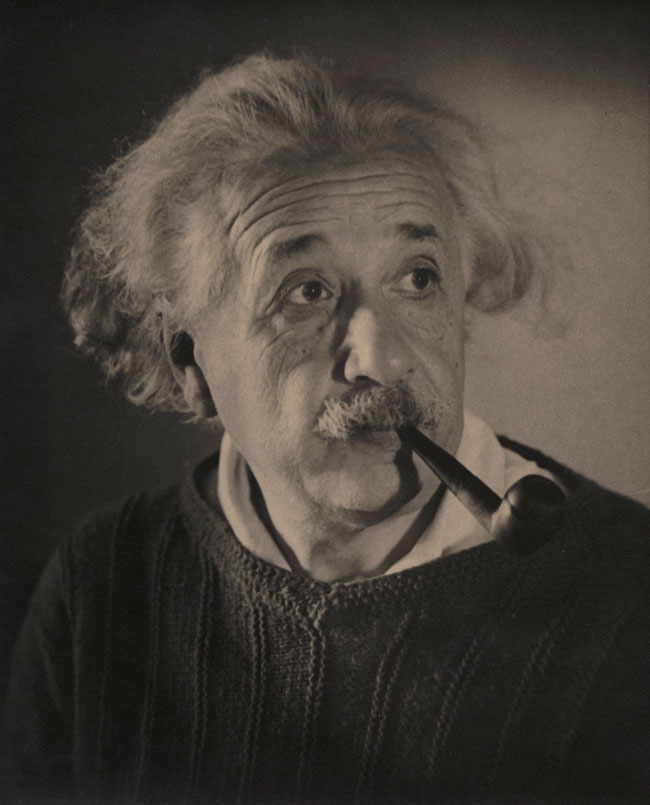
Roman Vishniac, [Albert Einstein in his office, Princeton University, New Jersey], 1942. © Mara Vishniac Kohn. Courtesy International Center of Photography.
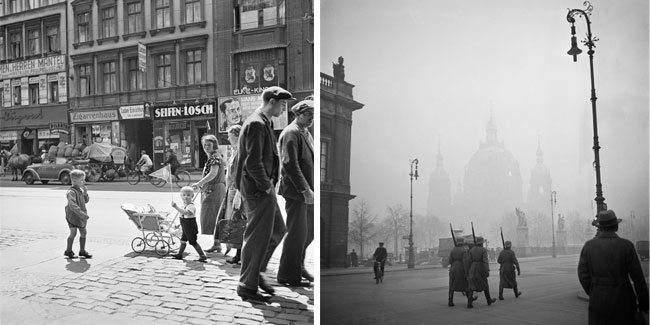
left to right: Roman Vishniac, [Street scene with swastika flag in background, Berlin], ca. 1935–36. © Mara Vishniac Kohn. Courtesy International Center of Photography; Roman Vishniac, [Nazi Storm Troopers marching next to the Arsenal in front of the Berlin Cathedral], ca. 1935. © Mara Vishniac Kohn. Courtesy International Center of Photography.
Roman Vishniac Rediscovered
Pictures documenting the Nazi rise to power and the “Vanished World” of Jewish village life about to be annihilated, portraits of Albert Einstein and important scientific photos of microscopic tissue from frogs and slime mold are among the varied works of 20th century Russian born photographer Roman Vishniac. Vishniac a Renaissance man whose name should rightfully be a household word. Brutal shots of children lingering in front of a swastika flag and storm troopers in front of the Berlin cathedral contrast with moody portraits of Imogene Coca and Marc Chagall whom the photographer met after moving to New York before becoming a pioneer in the field of photomicroscopy.
Now on display at the International Center for Photography, the extensive and varied exhibit shows the range and sensitivity of one of our era’s most important visual chroniclers. www.icp.org
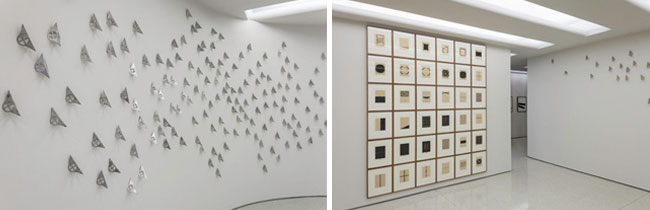
from left to right: Installation view: Zarina: Paper Like Skin, Solomon R. Guggenheim Museum, New York, January 25–April 21, 2013. Photo: David Heald © 2012 Solomon R. Guggenheim Foundation; Zarina: Crawling House, 1994 Hand-cut and molded tin (set of 500 units from an edition of 1000 units), each unit: 12.7 x 6.4 x 5.1 cm. Courtesy of the artist and Luhring Augustine, New York
Zarina: Paper Like Skin
Claiming, “you can scratch it, you can mold it even if it ages,” artist Zarina describes the medium, which is her focus in this show of paper sculptures and related sculptures in bronze and cast paper pulp. Ranging from an evocative series of pieces of paper pierced with pinpricks to a shimmery gold collage of “Blinding Light,” the works on paper at the Guggenheim express associations with themes of displacement and exile, memory and nostalgia.
Displaced as a child by the partition of India and Pakistan, Zarina focuses often on the concept of home. “Border Line” and “Crawling House” the wall arrangement of paper foldings evocative of airplanes direct viewers’ minds to ideas of nothingness and infinity, encumbrance and enlightenment, eternity and nevermore. www.guggenheim.org

left to right: Alberto Giacometti (1901–1966), La table surrealiste (The Surrealist Table), 1933 Ink. © 2012 Artists Rights Society (ARS), New York / ADAGP, Paris. © Alberto Giacometti Estate/Licensed by Vaga and ARS, New York Collection Michael and Judy Steinhardt, New York The Morgan Library & Museum; Francis Picabia (1879–1953), Olga, 1930. Graphite pencil and crayon on paper. Bequest of Mme Lucienne Rosenberg 1995 CNAC/MNAM/Dist.RMN-Grand Palais/Art Resource. © 2012 Artists Rights Society (ARS), New York / ADAGP, Paris; Salvador Dalí (1904–1989), Study for “The Image Disappears,” 1938. Pencil on paper. © Salvador Dalí, Fundació Gala-Salvador Dalí, Artists Rights Society (ARS), New York 2012. Photo © 2012 Museum Associates/ LACMA, by Michael Tropea, Private Collection.
Drawing Surrealism
Salvador Dali’s painting of limp watches, Magritte’s green apple top hat are touchstone works from the Surrealist school in the first half of the 20th century, but drawing was an important means of innovation and expression for these artists, and the Morgan has mounted more than 160 works on paper exploring the central role drawing played in the movement and the quirky methods of expression the artists employed to liberate the imagination by involving chance, dreams, the unconscious, and the play of thought itself.
Frottage rubbings and collage assemblies, automatic drawings in which the artist allowed his hand to merely meander across the sheet, “exquisite corpses” in which artists added sections to unseen works on folded paper, and detailed recreations of dream images are among the visionary techniques. Magritte’s fedora figure walking among raining knives and forks and a veiled lady sitting at a table with four unmatched legs are among the images, which may be recognizable but not familiar. www.themorgan.org
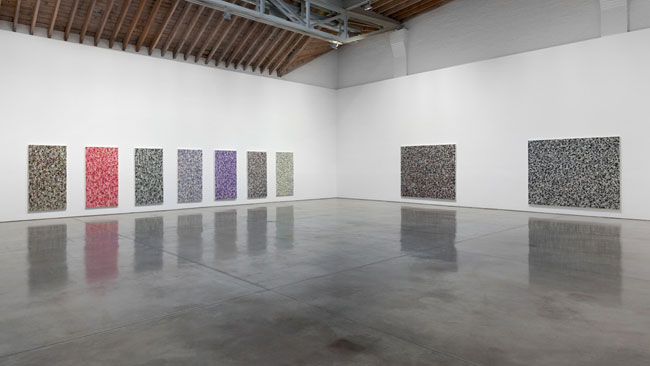
Installation view from Julian Lethbridge, Paula Cooper Gallery, New York, NY (1/12– 2/16/13). © Julian Lethbridge. Courtesy Paula Cooper Gallery, New York
Julian Lethridge
From a distance the canvases appear to be covered with free-form paint in the latest works of British educated painter Julian Lethbridge, but closer examination reveals multidimensional layers. Sparely under painted six-foot high canvases are choreographed with overlaid brushstrokes creating a depth regulated by regular rows of ridges in works,which richly reward with close examination.
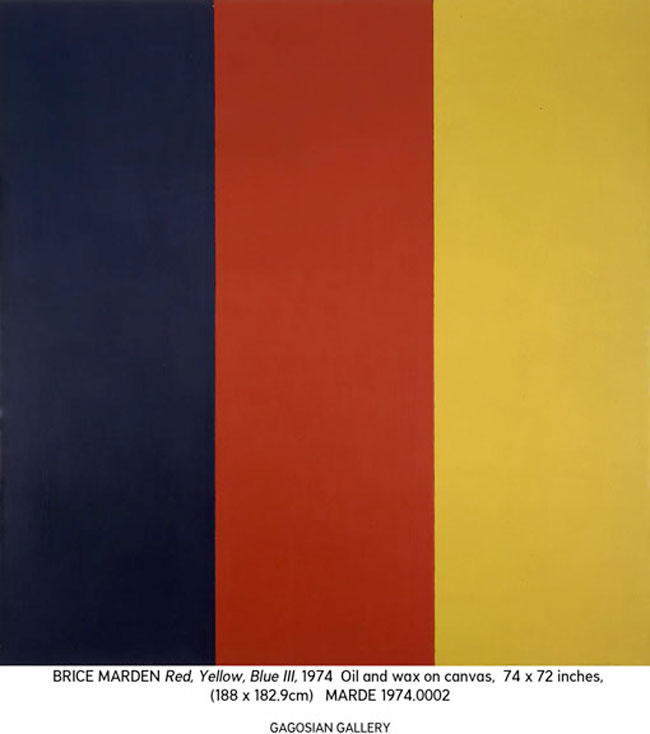
© Brice Marden. Courtesy Gagosian Gallery. Photography by Robert McKeever
Brice Marden: Red Yellow Blue
Working with the basics, a different shade on each of the tri-partite panels, Marden stretches each primary color from ochre to saffron, from cobalt to indigo from cadmium to near black. The four works created in 1974 are shown together for the first time and joined by an additional related painting. www.gagosian.com
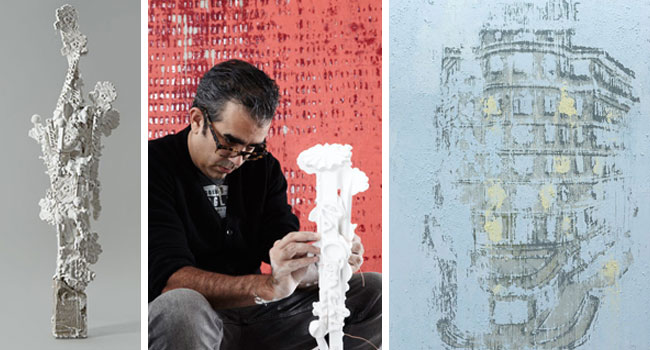
left to right: Condado Beach Hotel, November 2012. Plaster cast for bronze sculpture on stone base. 44 x 14 x 9 inches (111.8 x 35.6 x 22.9 cm). Photo Courtesy of Acquavella Galleries; Photo courtesy of Kent Pell; Normandie, November 2012. Oil on canvas, 80 x 60 inches (203.2 x 152.4 cm), Photo Courtesy of Acquavella Galleries.
Enoc Perez
“The Good Days” paintings by Enoc Perez at the Acquavella Galleries are evocative portrayals of Caribbean hotels—San Juan’s Caribe Hilton, El Miramar, and others, their architecture reflecting the political and social circumstances of the 1950’s and 60’s while suggesting utopian ideals for a better tomorrow. Along with the pictures, the now Puerto-Rican born, New York-based artist has created a series of sculptures in plaster and bronze which are inspired by his collection of swizzle sticks, many originating from the pictured hotels. The handsome catalog featuring pictures of the works also includes photos of the actual hotels, the artist’s studio, and an informative essay by Vanity Fair correspondent Bob Colacello. www.aquavellagalleries.com
