


Thanks to this algorithm-driven world we live in, America’s residential landscape seems to be drifting toward monotonous and dull. Streams of sameness (looking at you, social media) are drowning personality, originality and, more often than not, good taste. So how does one avoid the trappings of the unimaginative? Hire the right architect, of course.

In this case, Connecticut-based real estate agent Liz Beinfield had a definite in. Her brother, Bruce, happens to be a very well known local architect. The arrangement was, recalls Bruce: “I would give her the family discount, if she let me do whatever I wanted. But she turned out to be a regular client and wanted to do what she wanted, which tends to be annoying, and architects frankly don’t like that.” His sister counters, “There was a lot in Rowayton he had been obsessed with for years, so I called him up during the pandemic and said, ‘I think I am going to buy this lot.’ And Bruce said, ‘The deal is Lizzie, if you buy the lot, I will design you the coolest house in town, but you have no say in it.’ Though I did request a big closet.”
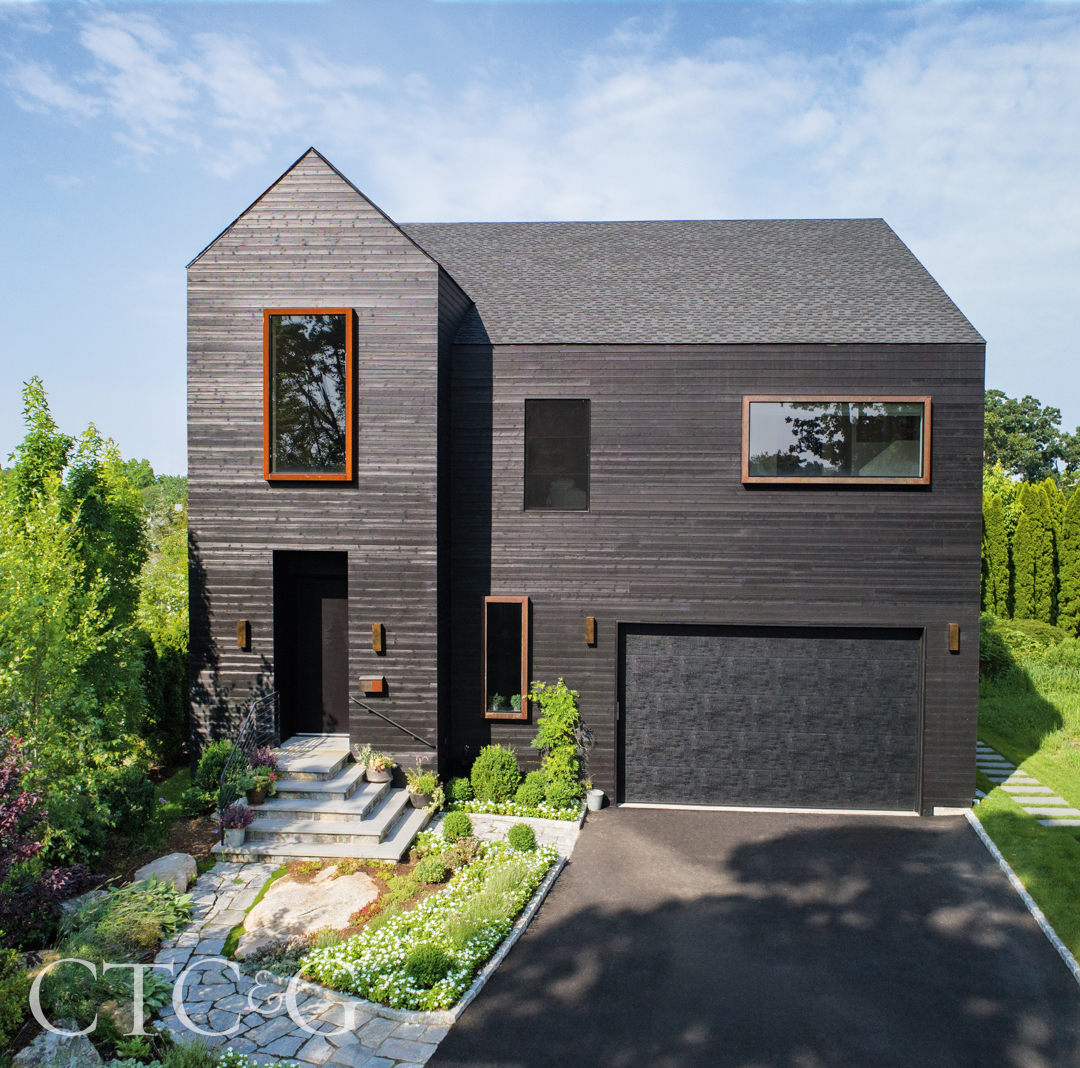
The lot is located at the highest point in the village of Rowayton. “I love the feel of Bruce’s house and wanted something similar,” says Liz of her brother’s modern barn he built on a thin spit of land nearby. Bruce came up with another barn-like structure, this one taking advantage of its high elevation. “I wanted to exaggerate that with the gable form on the front of the house,” says Bruce. “The idea was to emphasize the height, almost like a church steeple.”
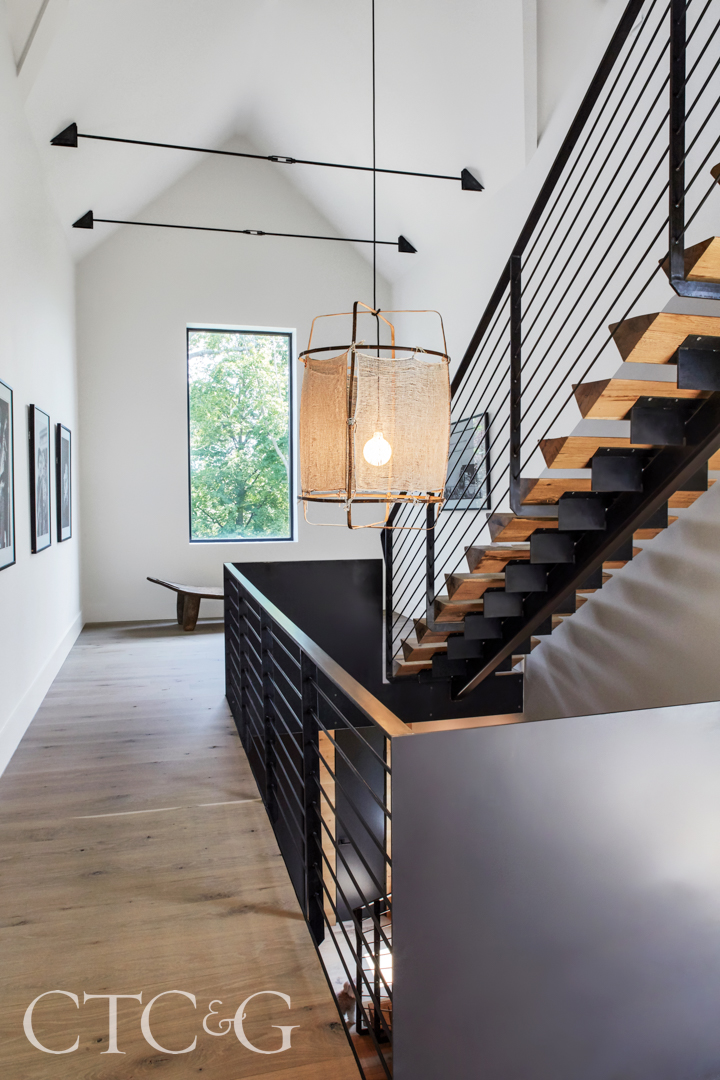
The staircase is crafted from reclaimed white oak beams with a railing fabricated by Carlucci Welding & Fabrication and is lit by a fixture from Ay Illuminate.
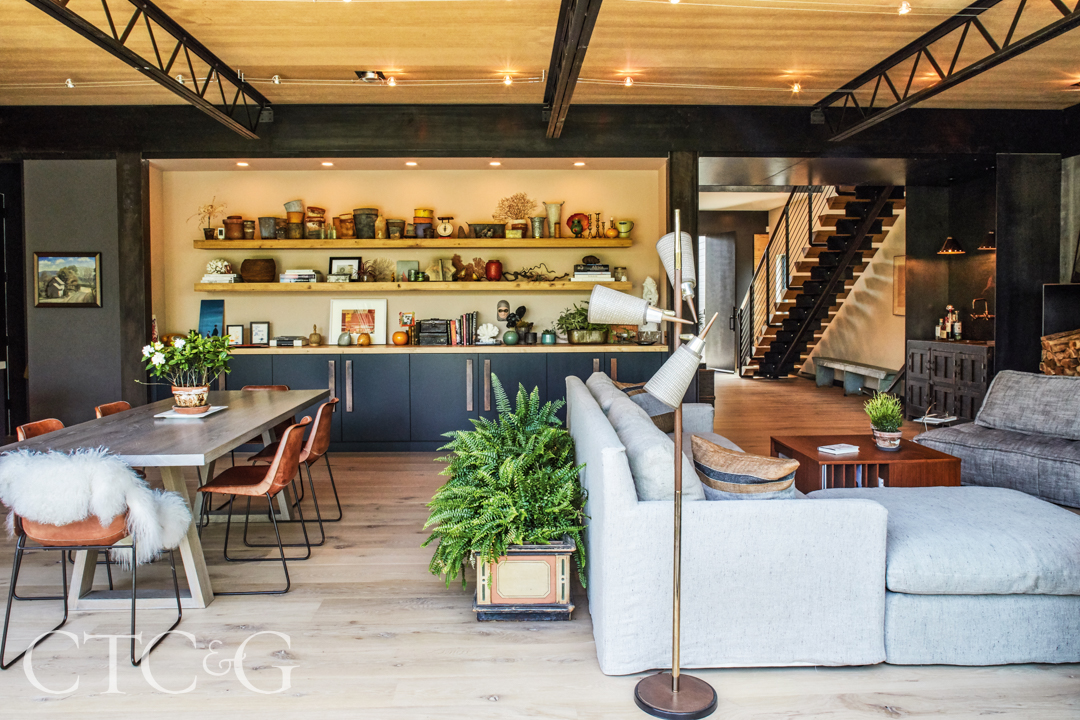
Custom shelving by V&V Woodworking fills one wall in the open plan living space. The sofa and ottoman are from Stowed, and the midcentury floor lamp was found at Refill Vintage. The cable lighting is through Visual Comfort.
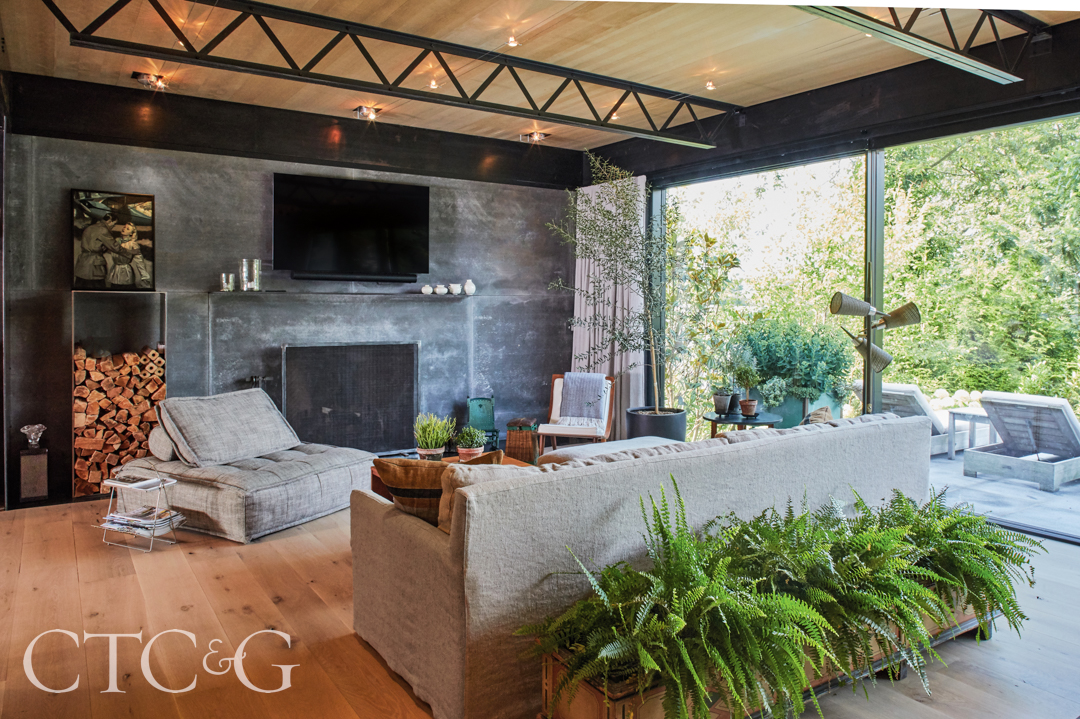
The midcentury chair in the living room is through John’s Living Room, and the custom firewood container and fireplace screen were made by Vinny’s Custom Metal Fabricators. The curtain material is a linen from Rogers & Goffigon.
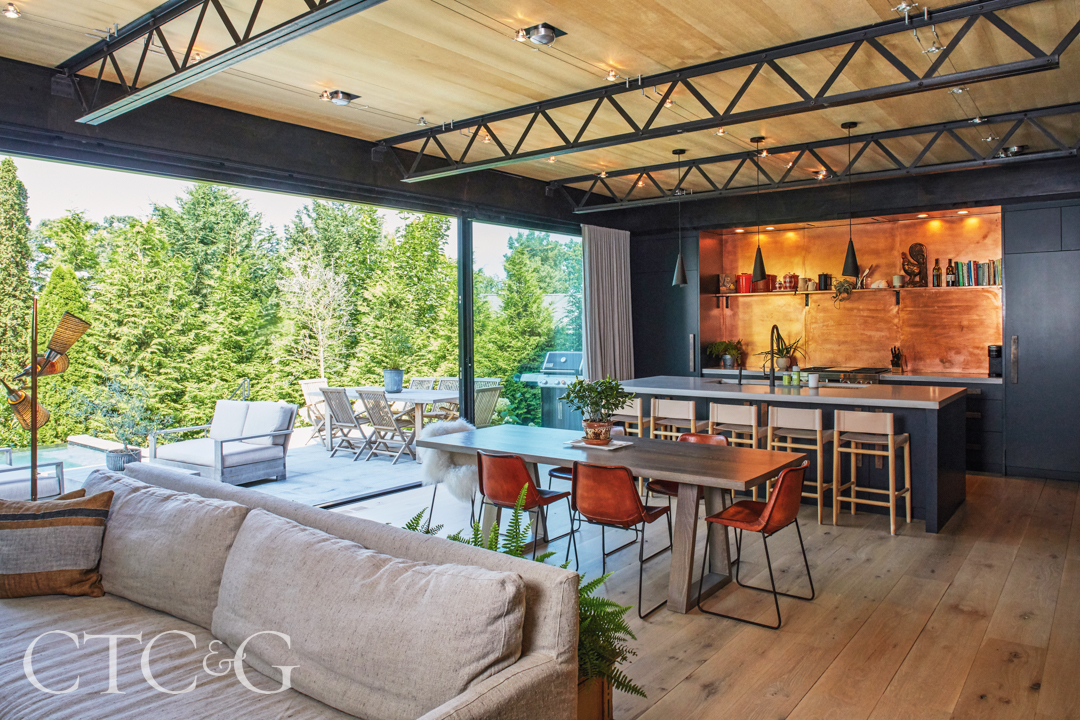
Copper, fabricated by Carlucci Welding & Fabrication, backs kitchen shelves by V&V Woodworking.
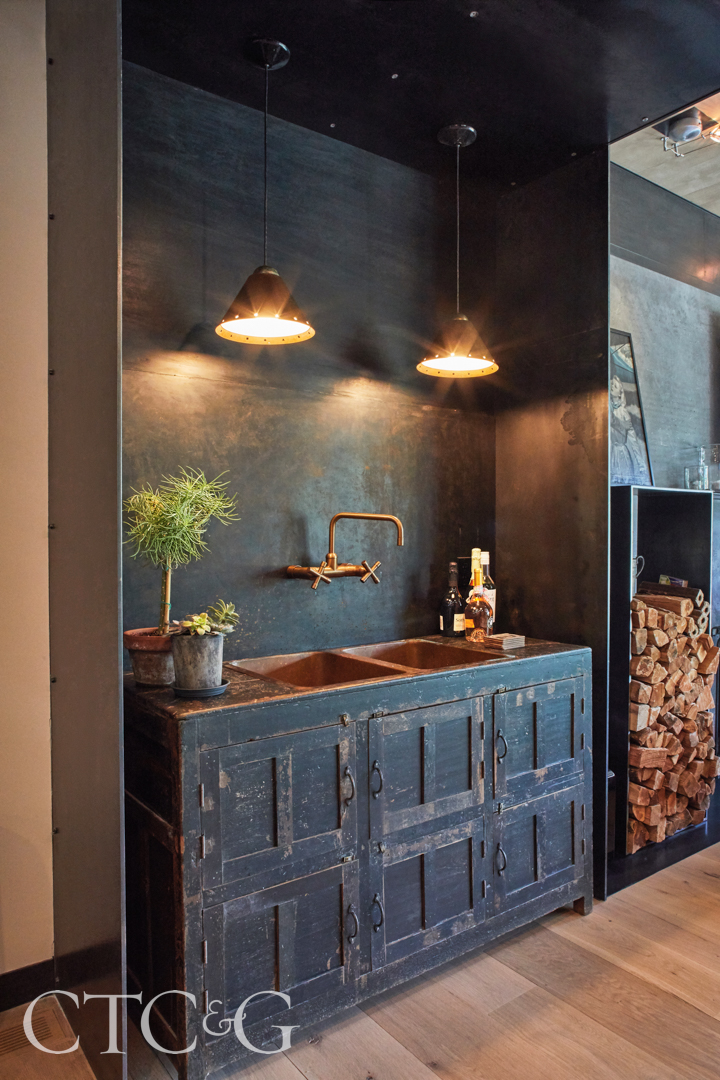
A bar was created from an old cupboard and a copper sink found at Round Top Antiques Fair.
The house, clad in black shou sugi-ban, stretches upward to capture the surrounding views. Inside, an open floor plan reveals a great room, a kitchen and a wall of operable glass—a span of about 32 feet—that opens up to a pool deck. “She wanted to have a garden in the back and a swimming pool,” says Bruce. “One of the main characteristics of life in Rowayton is that lots are on the small side. I wanted to create a little bit of an oasis, so the house totally opens up to the back.”
The floors are white oak, as well as the ceiling where exposed steel beams run across. A thin concrete panel covers the fireplace wall. “Concrete is typically used in commercial construction for fireplace floors,” says Bruce, “but we like to use very ordinary materials and take them out of their typical context and celebrate them. People think of marble as being high grade and concrete as low grade, but by challenging some of the typical preconceptions about how materials are put together, it can widen the range of what is acceptable.”

A staircase, meticulously crafted of reclaimed white oak, visually connects all three floors, leading to the roof deck. “I liked the idea of having one element that is more sculptural,” says Bruce. “I was interested in seeing the impact of that on the whole space. The stairs were the one element that we invested a lot of energy into crafting.” Copper lines the kitchen wall, and concrete makes another appearance as the island’s countertop.
“I don’t entertain often,” says Liz, “but when I do, the comment I hear more than anything else is: ‘your house is so warm and inviting.’” Though a house full of industrial surfaces and metals begs the question: how? “You balance all this concrete and steel” says Liz, “with lush fabrics, linens and fur throws—and I also love plants to add warmth. I am a collector of things that have meaning to me and have filled the house with those. My house is comfortable and personal. It’s a mix of old and new, and it goes hand in hand with Bruce’s architecture.”
