


Jim and Susan Shehan are impressionable. Whenever they travel, inspiration comes home. But they also personalize and reinterpret their cognitive souvenirs, so they become unique and feel at home in Litchfield County. For example, Sissinghurst influenced the planting around their arbor, but Vita Sackville West’s ode to white has been so loosely translated, you’re never going to guess the provenance of the Shehans’ glowing tribute. And they don’t stop at design reinterpretation—the two are also manic plant collectors.
If they see something that is brand new, very old, or exquisitely odd, their inner bloodhound goes berserk and somehow that plant ends up romping on their ridge, rubbing shoulders with rarities from around the world. Because they have their antennae poised and quivering, they also know everyone. If you want to put your finger on the pulse of what’s happening horticulturally, rub shoulders with the Shehans.

Although they are unabashed collectors, don’t assume that the Shehans’ private garden is a botanical museum, because their powers of design are impressive. When they came from the city in 1997 to purchase the 1830s farmhouse on three acres, the property was uncomfortably close to naked. In fact, they wondered how previous owners fought off the fierce winds that race across the site. Basically, it was lawn, a hay field and poison ivy-on-steroids. In residence were rhubarb, peonies, lilacs and two very large dogwoods, but not much else. Terracing the property was early on the agenda, and then they really dug in.
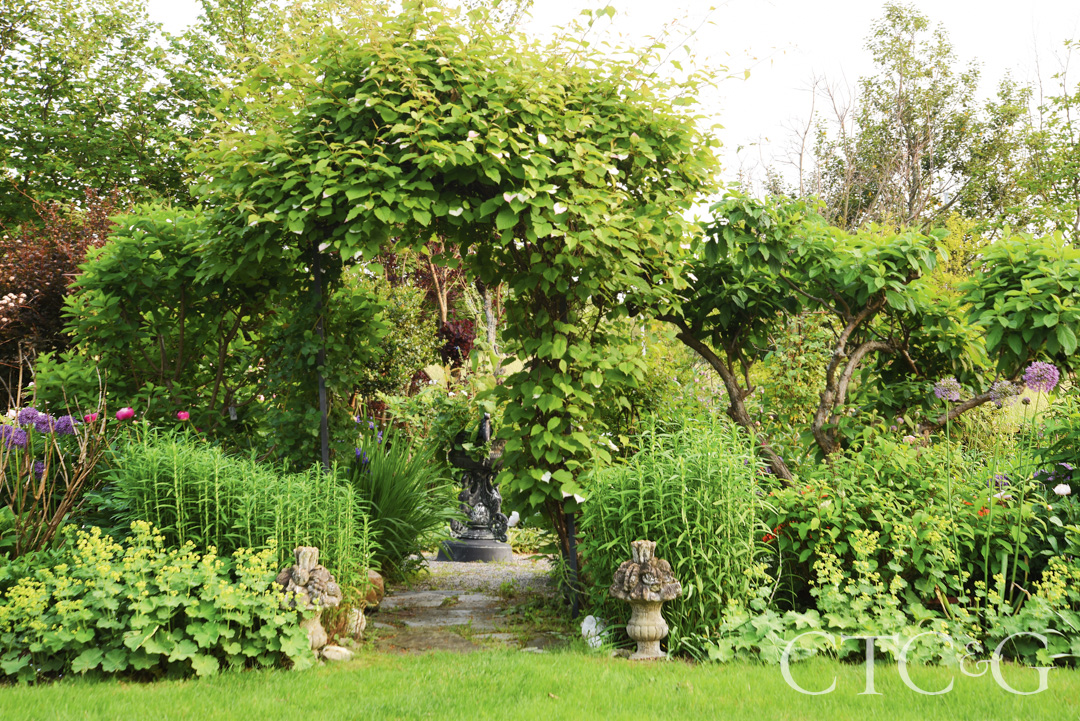
An Actinidia ‘Arctic Beauty’ forms a thick live arch leading into the peony allée.
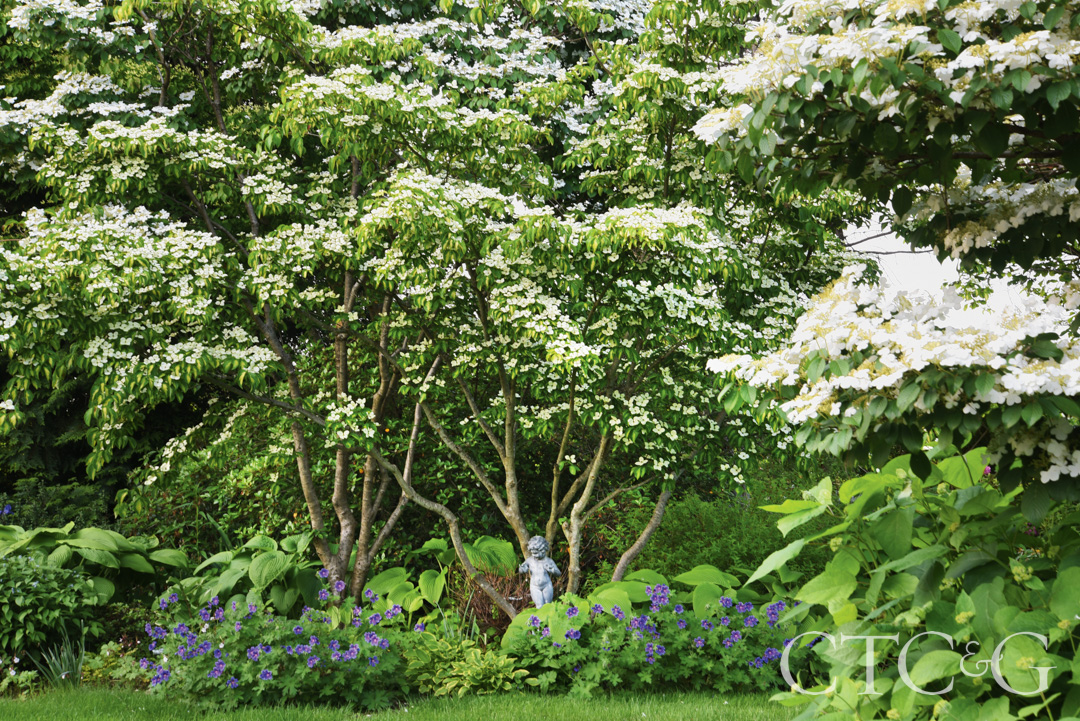
Cornus kousa ‘Gold Cup’ casts shade for the hostas and geraniums beneath.
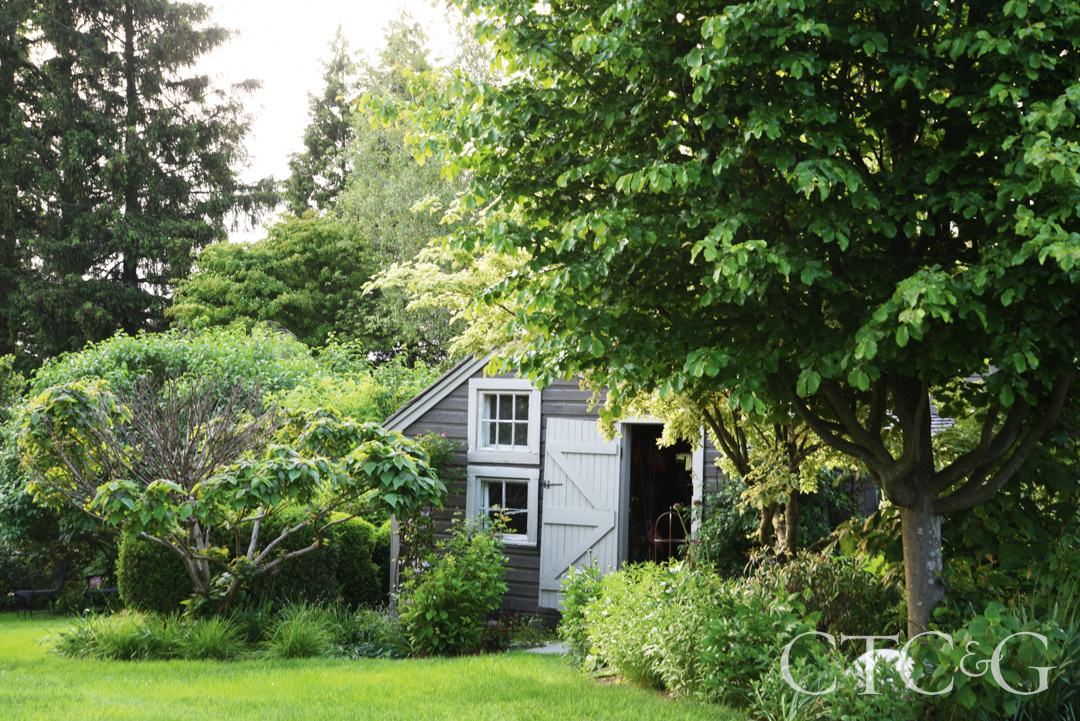
A parrotia and a Cornus kousa ‘Wolf Eyes’ flank the garden shed.
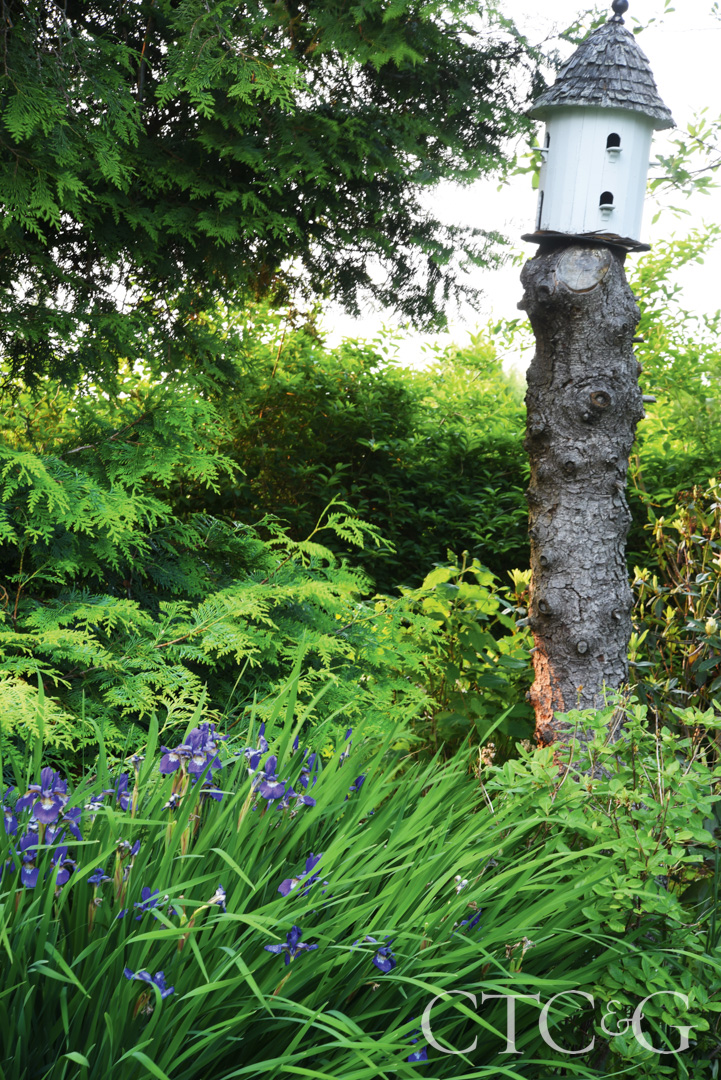
The Shehans found a birdhouse at White Flower Farm and perched it on a blue spruce stump while Japanese irises romp below.
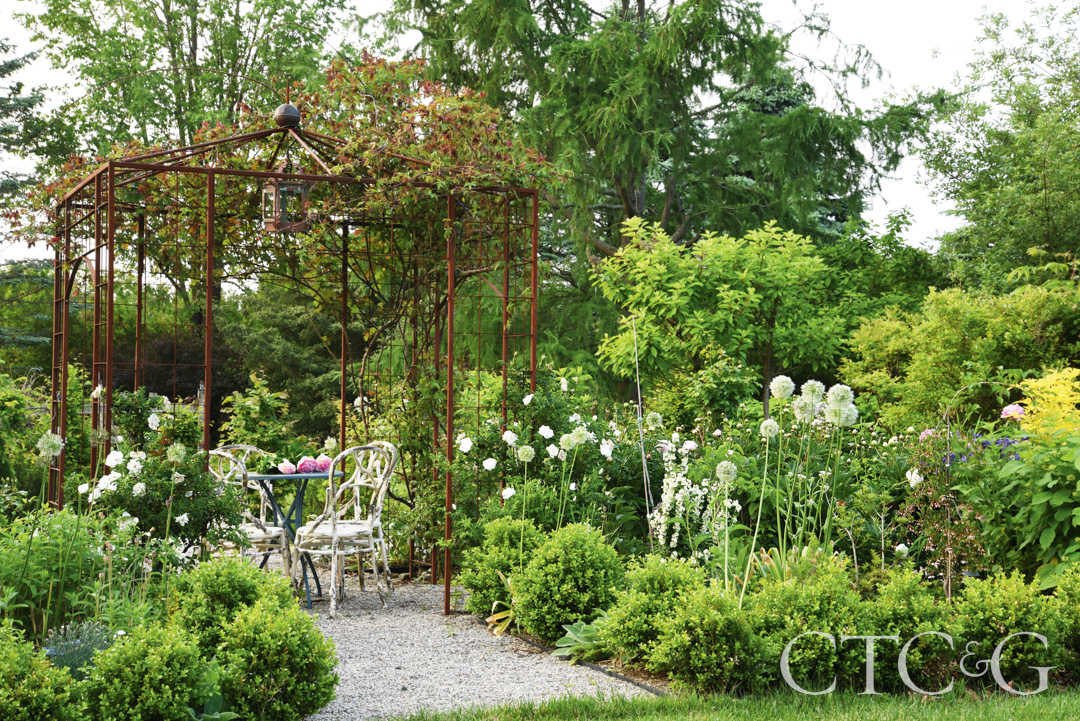
Inspired by Sissinghurst, Susan Shehan asked Bob Kluge of Anvil Artistry to custom-craft an arbor, and then she fittingly draped it in rambling Rosa mulliganii bearing a profusion of white, banana-scented flowers in spring followed by the orbs of ‘Mount Everest’ alliums.
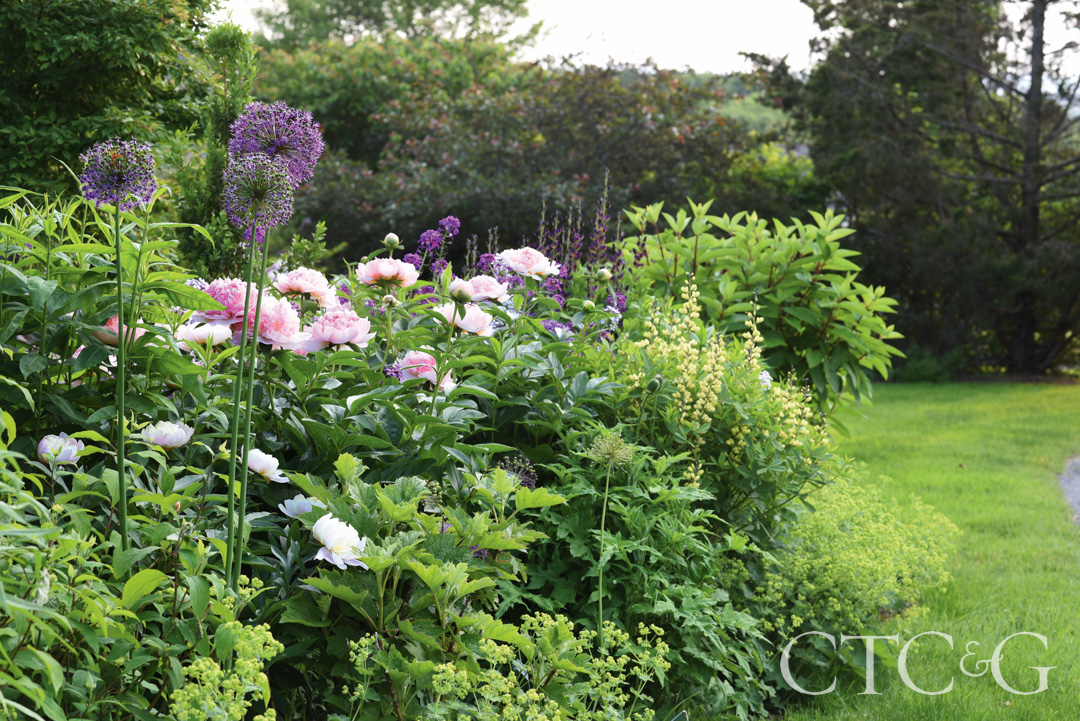
The peony allée begins its performance with tree peonies followed by early, midseason and late herbaceous peonies as well as intersectional peonies to keep the homeowners in cut flowers for weeks.
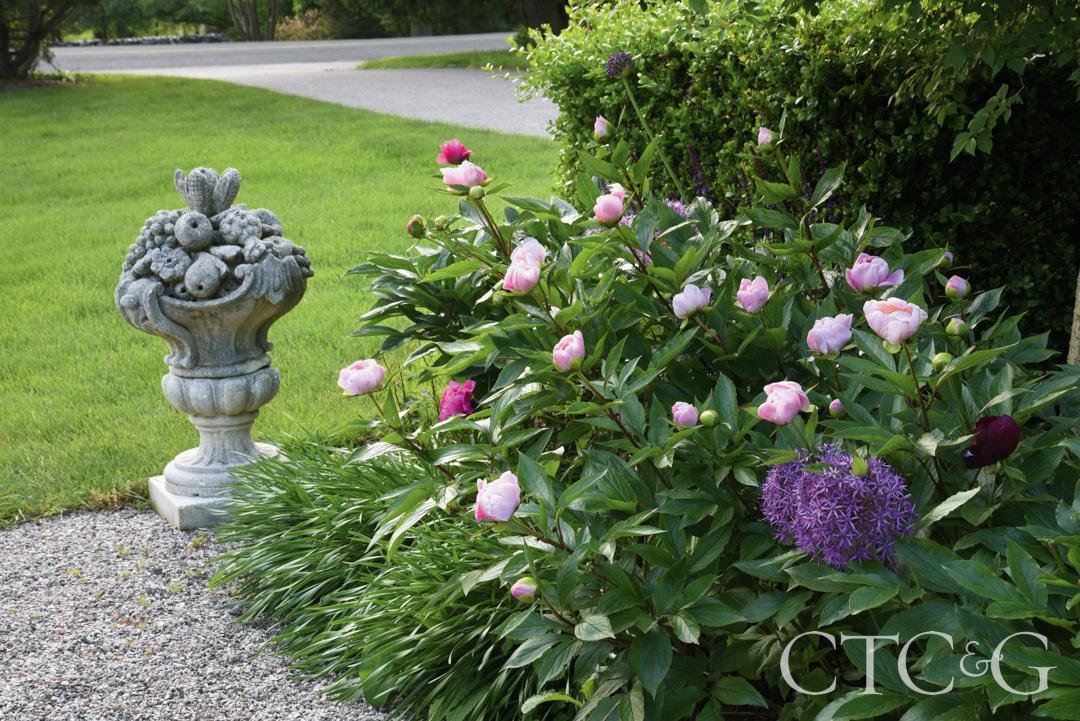
When the homeowners earned the winning bid at a fundraiser, they brought home the fruit-filled stone urns to cap the peony allée.
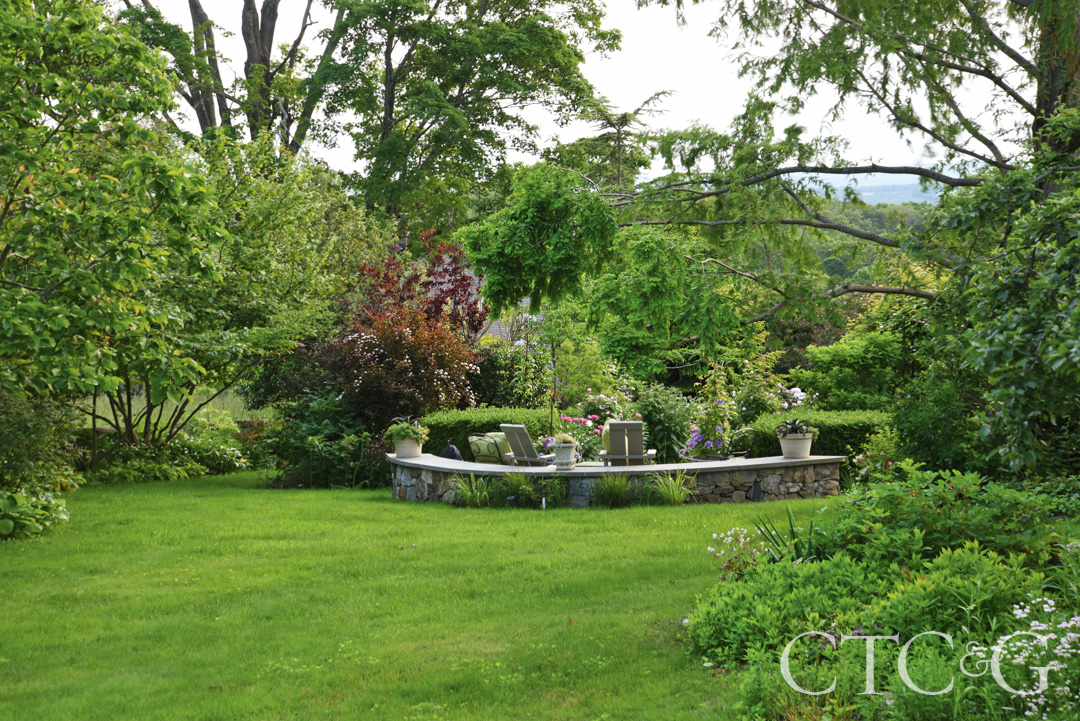
The family calls the sitting patio where they enjoy the view their “sitooterie” furnished with chairs from Wave Hill and accented by planted Ben Wolff hand-thrown pots.
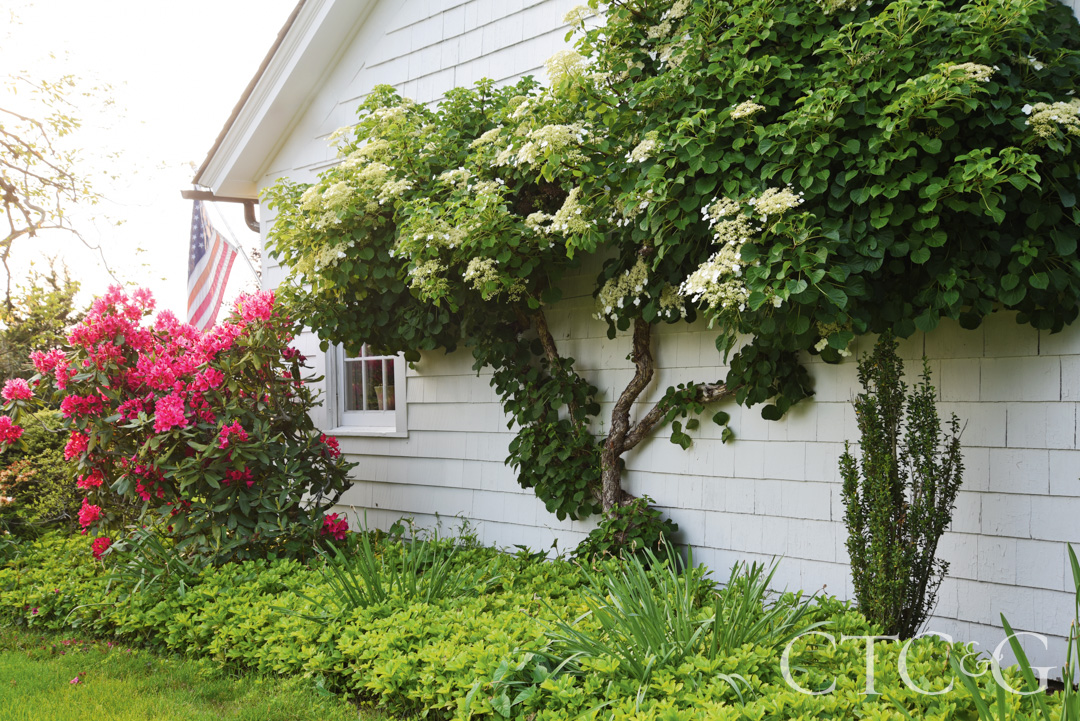
A red rhododendron was one of the few plants that came with the house, and the homeowners added the climbing hydrangea pruned as a loose espalier against the wall.
Not all husband/wife gardening duos collaborate outdoors with such great ease. Perhaps because rehoming new plants is their united goal, the Shehans do it with impressive harmony. They conquer a space, they hunt down players to occupy that space, plant them, and then relocate them elsewhere—just like all gardeners. “I can’t tell you how many times Susan has asked me to move something rather large,” Jim muses, “and with much cursing, I eventually do it.” The American hollies have migrated from their original location twice. The hydrangeas have drifted around. And every year more plants arrive to juggle. “Winter is the most dangerous time,” Susan confesses, “we get catalogs and succumb.”

Prone to impulse buying, their love of nursery hopping and garden touring fanned the fires leading to more gardens. With a litany of great nurseries in the region, their ratio of green rarities is seismic. Plus, friends come bearing green gifts—which go to a doting home.

But design is always part of the dialogue, and it’s all incredibly well done. For a couple who clearly have little spare time to loll around, they have created a restive series of entertaining, eating and relaxing destinations. Almost every garden space has seating swamped in the sorts of plants that lap at your ankles and make you feel deliciously Edwardian.
Due to their efforts, the ridge now has ample trees (we’re talking about rare trees, each with its own backstory—Jim being the documentarian). And those trees form the structure that syncopates the collection. You wander up and down allées. You disappear into lush greenery via meandering pathways. Areas are arranged to admire the view or indulge in a hidden snack. You can do tea (or other drinks) al fresco.

And although the farmhouse is now draped in trained limbs and whatnot, it still manages to retain its original innocence. So does the adorable shed that came with the place but was enlarged to house the John Deere that now makes all their fiddling possible at this personal paradise.
