


The greatest virtue a client, interior designer, and architect can possess is patience. This project, which required refashioning the three top floors of a former industrial building into a cohesive family home, required not only truckloads of quality materials and stylish furnishings but also equal amounts of patience.
As Interior Designer Christa Frey says of her client, “She and her husband had been looking for years for just the right space. She held out. She was able to laugh about taking her time to find everything. When they found this, she was totally ready to go from ground up.”
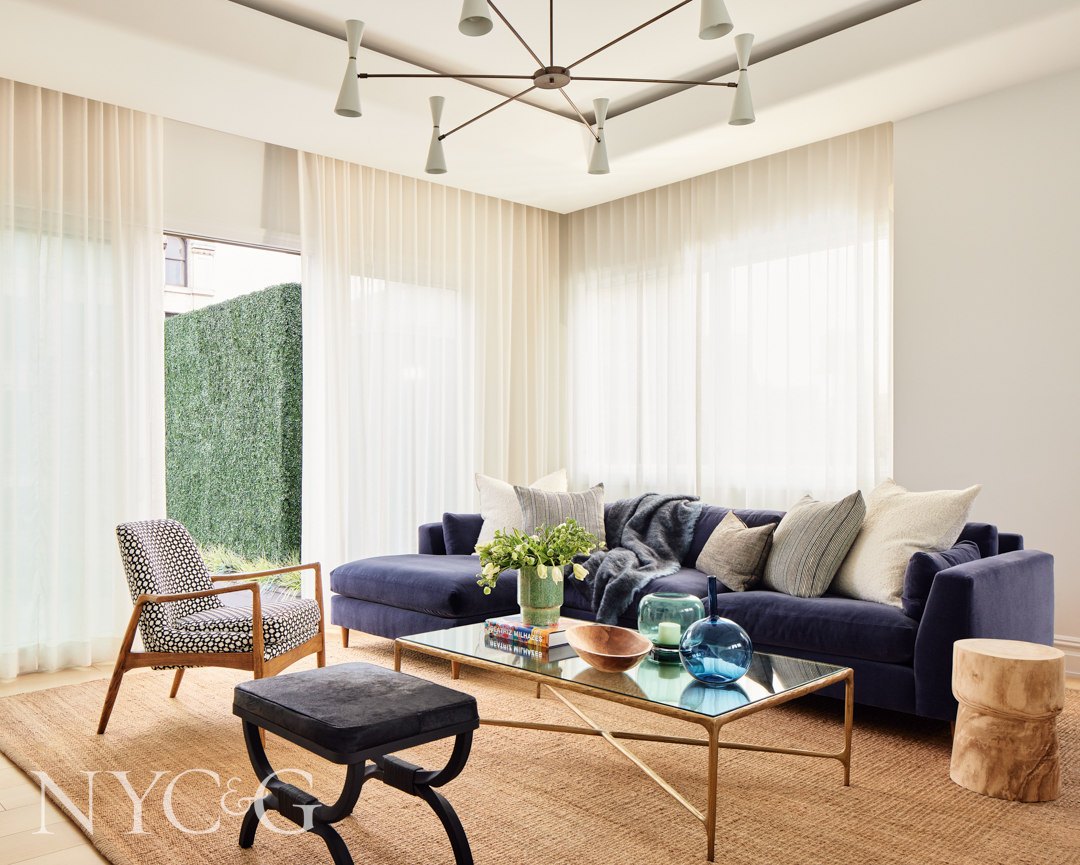
In the penthouse sunroom, an armchair from Anglepoise is covered in a Schumacher fabric. The Crate & Barrel sofa is covered in a Maharam fabric.
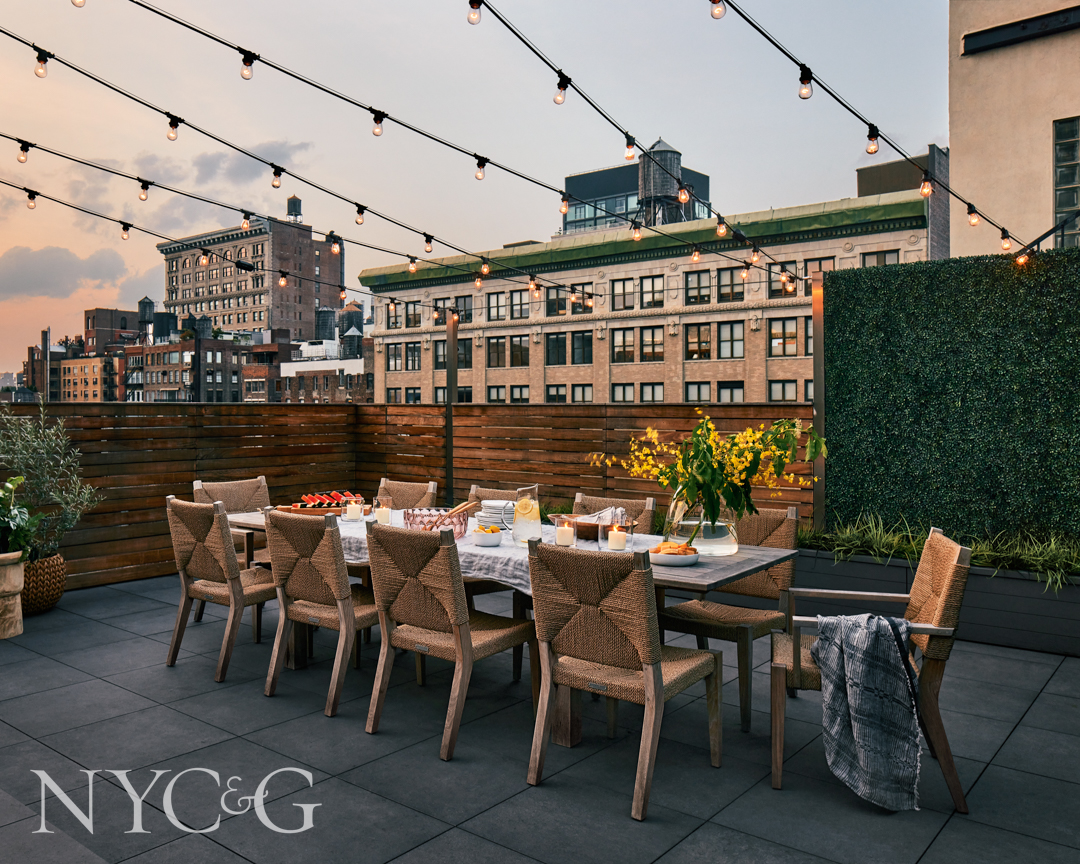
Furnishings from Kingsley Bate anchor the home’s rooftop entertaining area.
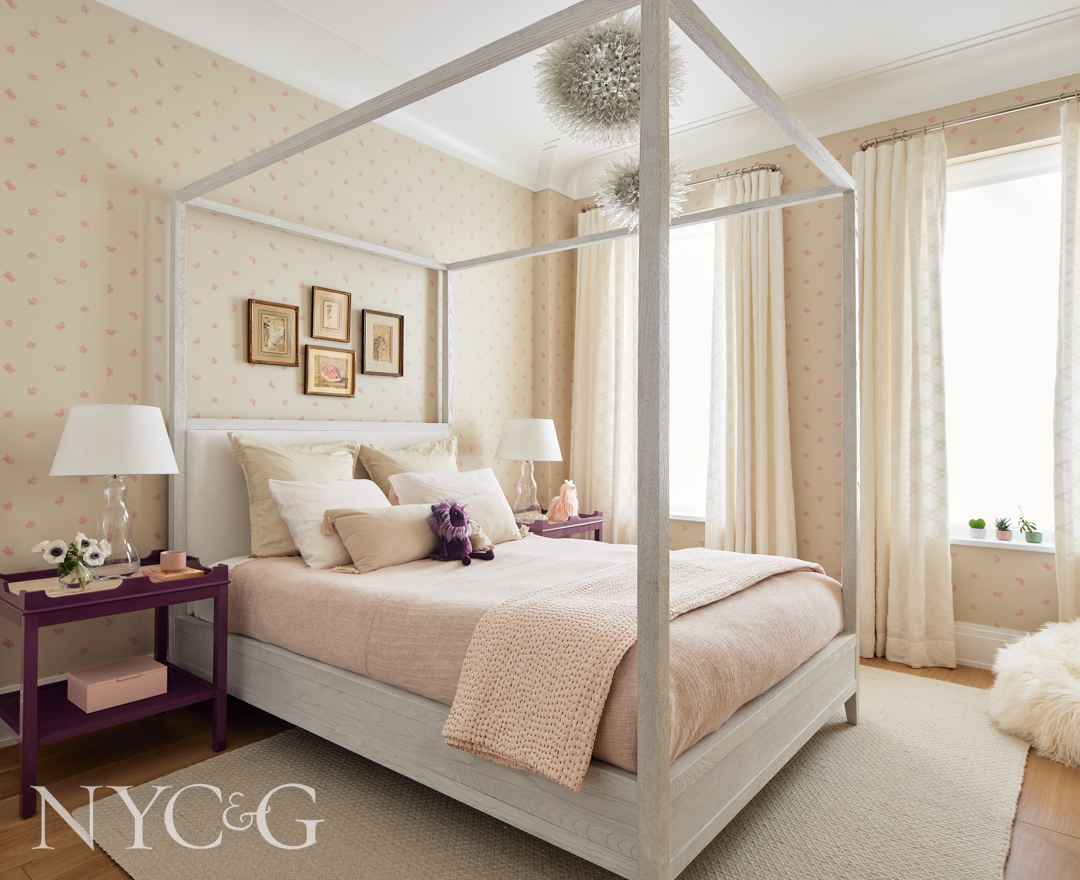
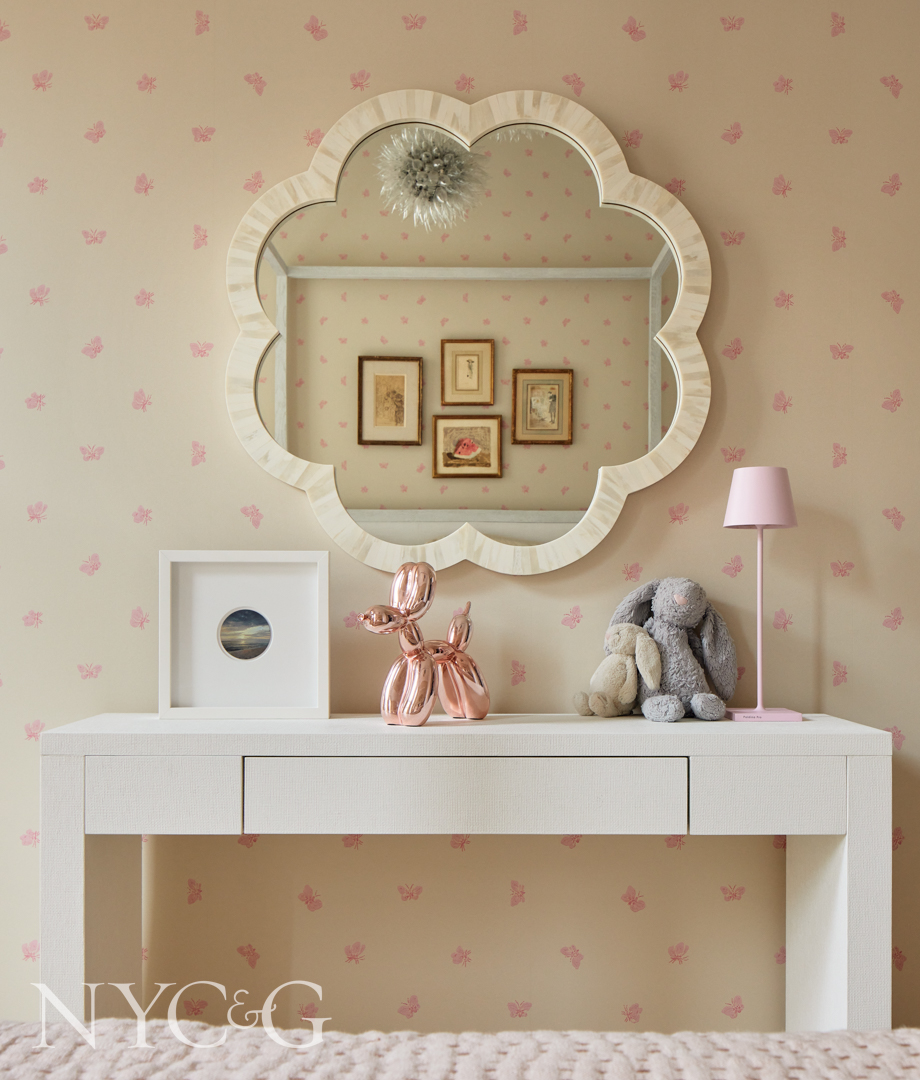
In the daughter’s bedroom, the wall covering is from Carl Hansen & Søn, and the bed covering is from St Frank. Curtains from Villa Nova complement a rug from Armadillo & Co.

Millwork in the kitchen is by Plain English Design. Bar stools surrounding the island are from Rove Concepts. The range and hood are by Wolf.
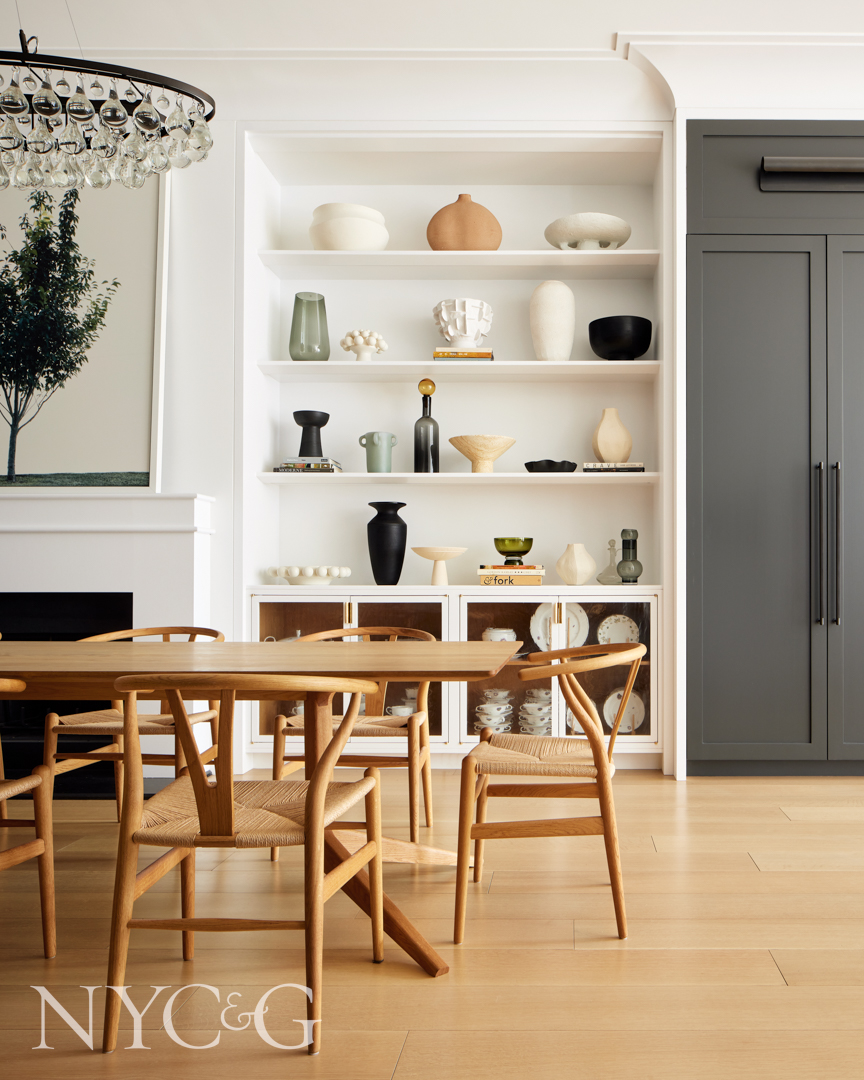
Chairs from Carl Hansen & Søn surround a dining table from De La Espada.
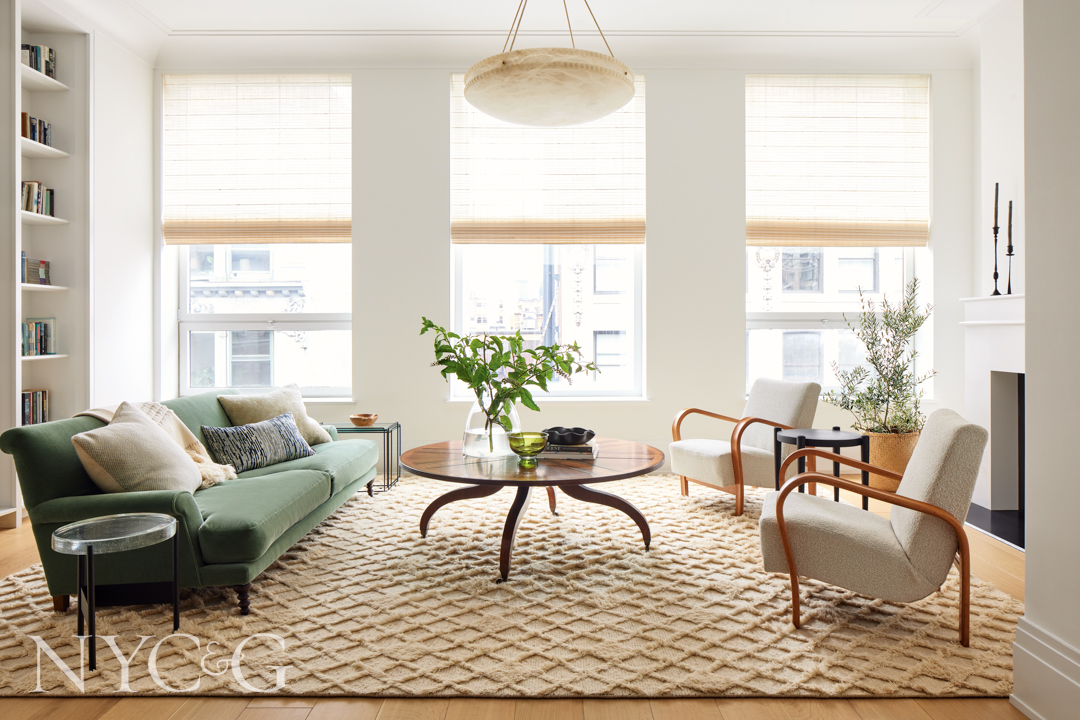
In the living room, a sofa by Matthew Hilton from The Future Perfect is covered in a Maharam fabric. The custom rug is by Armadillo & Co., and the fabric for the window shades is from Horizon Shades.
Indeed, part of the gutting of these floors involved going from the ground—tearing up the existing floors, which architect Brian Papa likened to a “patchwork quilt of materials”— as well as reconfiguring the layouts of each 25-foot by 100-foot floor, and seamlessly linking three levels to feel like a cohesive home. “When we began the work,” says Papa (whose firm, Francis Mildred, is named for his beloved grandmother), “everything and every floor felt very separate, not like one apartment but rather three apartments.” While stairs connected the floors, Papa says “the existing staircases made you feel like you were entering a basement.” He widened the stairwells, so much that they “became spatial elements,” a dynamic Papa and his team understand well given their specialization in working with lofts.
As they worked in concert, Papa and Frey were aware from inception that a defining characteristic of the husband-wife couple was their mutual love/passion for the culinary arts. “They met, in fact, in culinary school,” Frey relates, “and he cooks every single day, baking, creating dinner for them and the two kids, frequenting the farmers’ market. As Brian and I worked on the project and I watched the client prepping meals, I’d joke about wanting to move in, too, and sit at the table.”

So central was the life of the kitchen to the family, that Papa convinced the clients to center the kitchen on the main living floor (one floor is reserved for the bedrooms, another for the main living spaces, and the top for entertaining and roof access). When they purchased the apartment, an existing kitchen was configured at the front, clumsily extending across the width of the space (what is now the formal living room). By repositioning a new kitchen in the physical center, “we created a spiritual center at the heart of the home,” Papa says. Using exclusively Plain English kitchen items, he and Frey had much of the equipment, cabinetry, and ten-foot island customized.
While virtually everything brought into the apartment was new, one of the few items that client insisted on keeping was another source of green—a photograph of a tree that now hangs over the fireplace in the dining area of a great room that encompasses the kitchen and living room. “That photograph makes her so happy,” says Frey. “For her, it’s about bringing the outdoors in, especially important in New York.”

The outdoors is very much a part of this home, however, with a spacious roof deck. To soften that al fresco space, Papa designed perimeter walls of Ipe, a naturally water-resistant wood from Brazil. Faux greenery “grows” on some walls. “We worked with a landscape vendor, who specializes in faux greenery,” he says, “and it all feels really natural as well as being maintenance free.”
Within shells of floors with 11-foot ceilings, Frey managed to create a chic living room, a defined dining room, children’s rooms, and a cocoon-like primary suite that subtly incorporates a 1940 Josef Frank fabric pattern favored by the client. “The fact that Brian and I were able to change everything one hundred percent is what made this project so fulfilling. It has a wonderful symmetry to it now.”
