


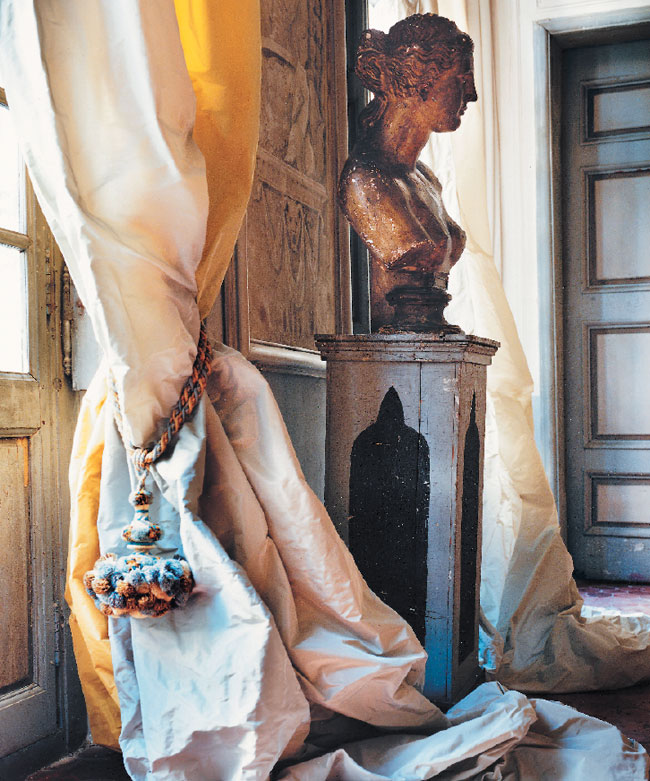
Rustling silk taffeta curtains pool on the floor. The divine tieback was a collaboration with Declercq Passementiers.
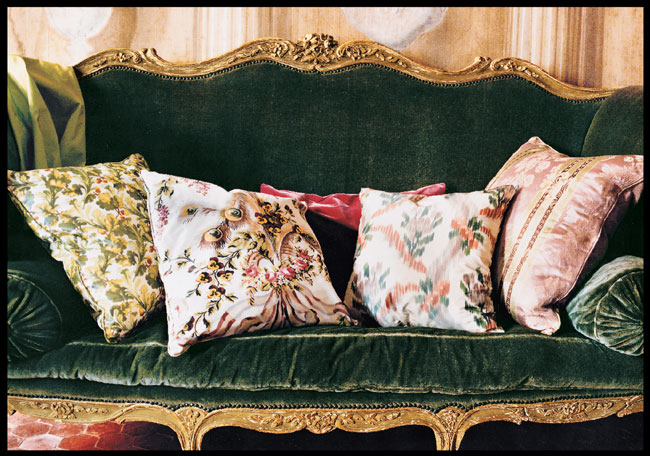
Warp-printed silks include Feuilles de Chêne, adapted from a Tassinari & Chatel brocade originally woven for Marie-Antoinette’s private summer room; Versailles, a pattern from Prelle, adapted from a brocade in Marie-Antoinette’s bedroom; and Langeais, made by Lelièvre exclusively for Clarence House from a document in the Quenin archives; Rayure Eugénie, a lavender-and-green silk damask, is an 18th-century design from the Quenin archives that Clarence House adapted in color and pattern.

Couvert de Feuilles, a striking black-and-white cut velvet woven by Leclercq-Leroux, combines structure and organic forms in a pattern that was drawn from a stylized 16th-century Italian design of interlaced branches.
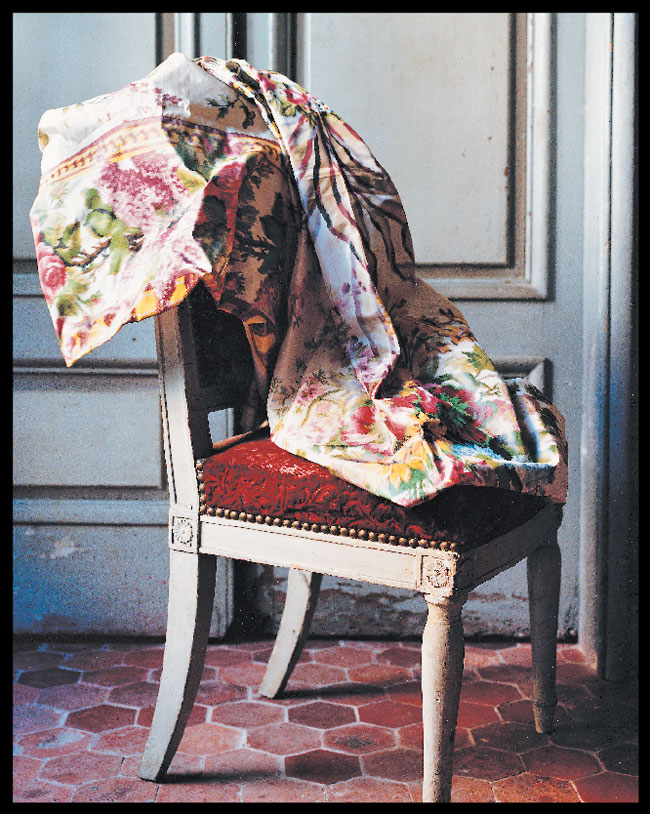
Blurry outlines characterize a warp-printed silk, such as the multicolored floral silk from Tassinari & Chatel.
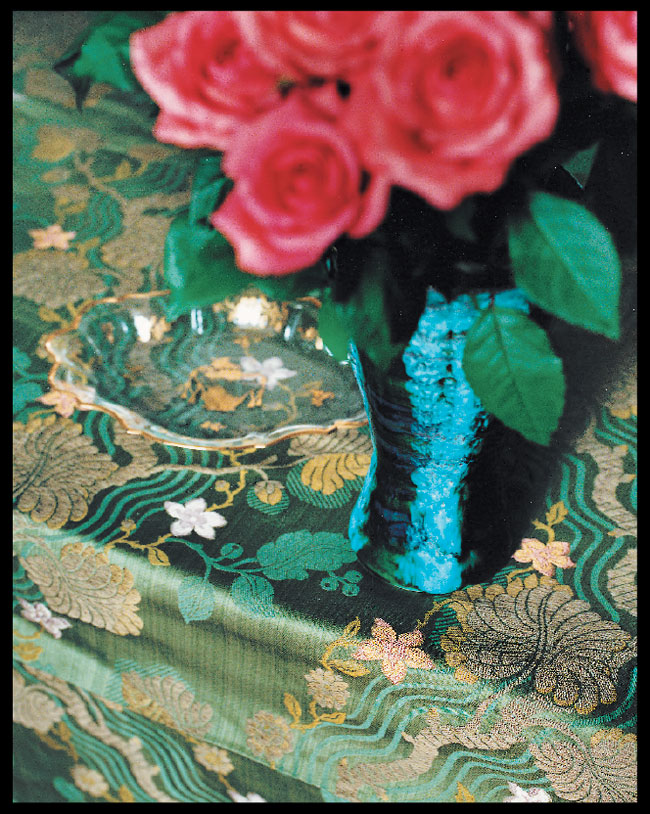
Cluny, a rich silk-and-linen brocade with a striéd ground, has a traditionally opulent look and feel.
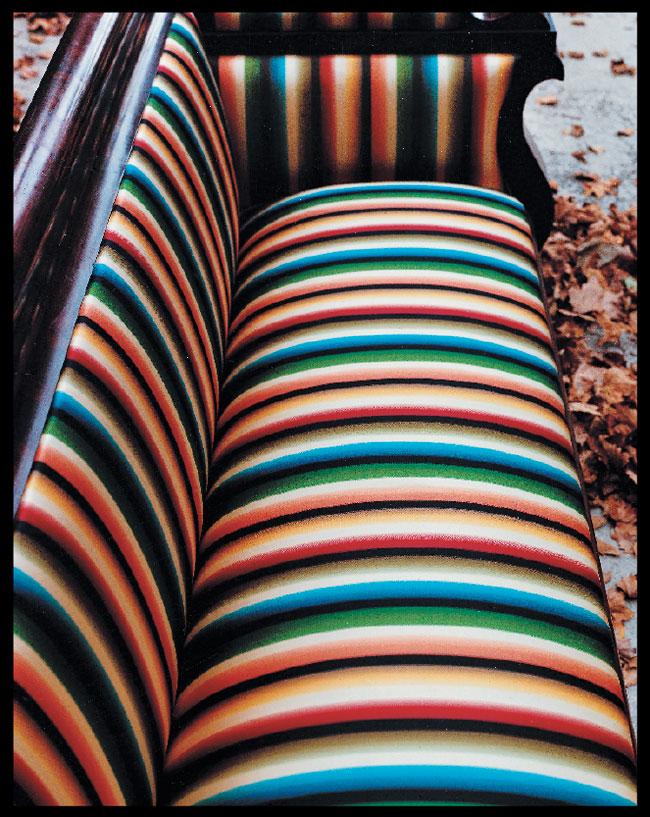
The rainbow effect of the silk Elio Satin Stripe is decidedly modern, although it is woven using traditional methods.
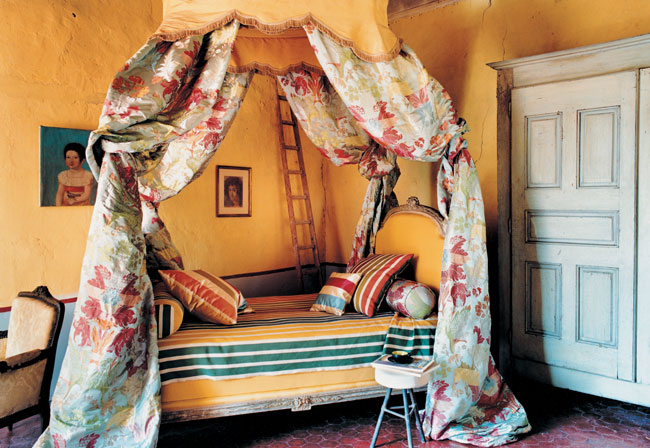
A lit à la polonaise draped with Verlaine, a multicolored lampas beautifully complemented by the mattress and cushions covered in Clarence House stripes.
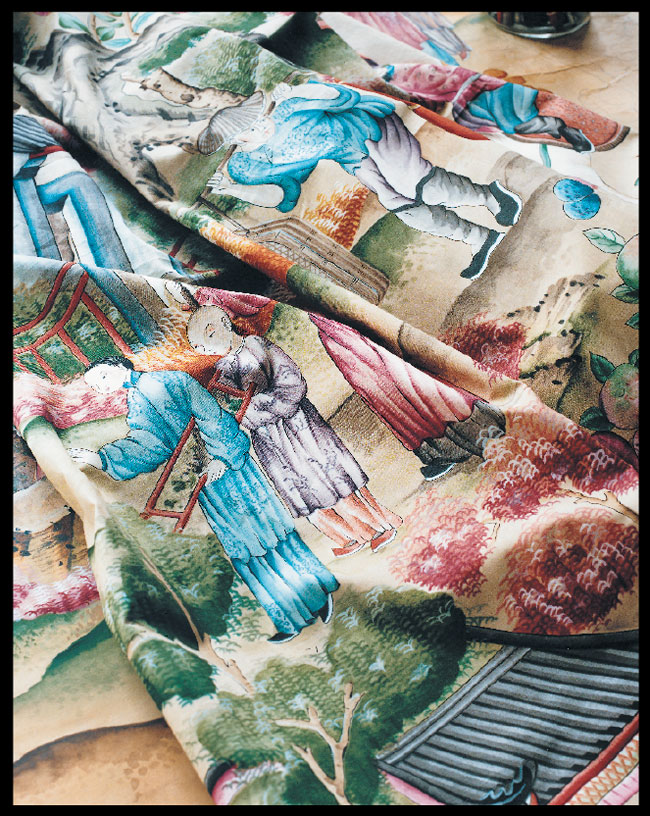
Hand-printed in Italy at the Ratti facilities, Grand Tableau Chinois is a large-scale design of great intricacy and whimsy. The scenes and characters were adapted from an 18th-century Chinese handpainted silk.
