


By all accounts, the 19th-century West Village townhouse that Peter Pennoyer’s clients had purchased was a diamond in the rough. Built in the 1850s, the dwelling had features considered rare for a townhouse of this era, such as an unusually shaped polygonal bay and a shared lot-line wall that boasted windows, bringing coveted light into the home’s core. Its condition was another matter. After years of neglect, the derelict house was in dire need of renovation, something which the new homeowners and their architect would spend three and a half years doing.

A polymath who is also a writer and architectural historian, Pennoyer approached the house’s restoration in archaeological fashion, documenting and preserving what original details remained, such as bits of cast plaster molding and fireplace mantels. “Part of the work here was to capture these pieces, study them, reproduce them, and bring them back into the building,” says Pennoyer. With the artifacts safely taken care of, he then turned his attention to rehabbing the structure by replacing its framing, flooring, and walls. Even the curving staircase, whose deteriorating condition had become hazardous, was intricately reproduced to replicate the original.
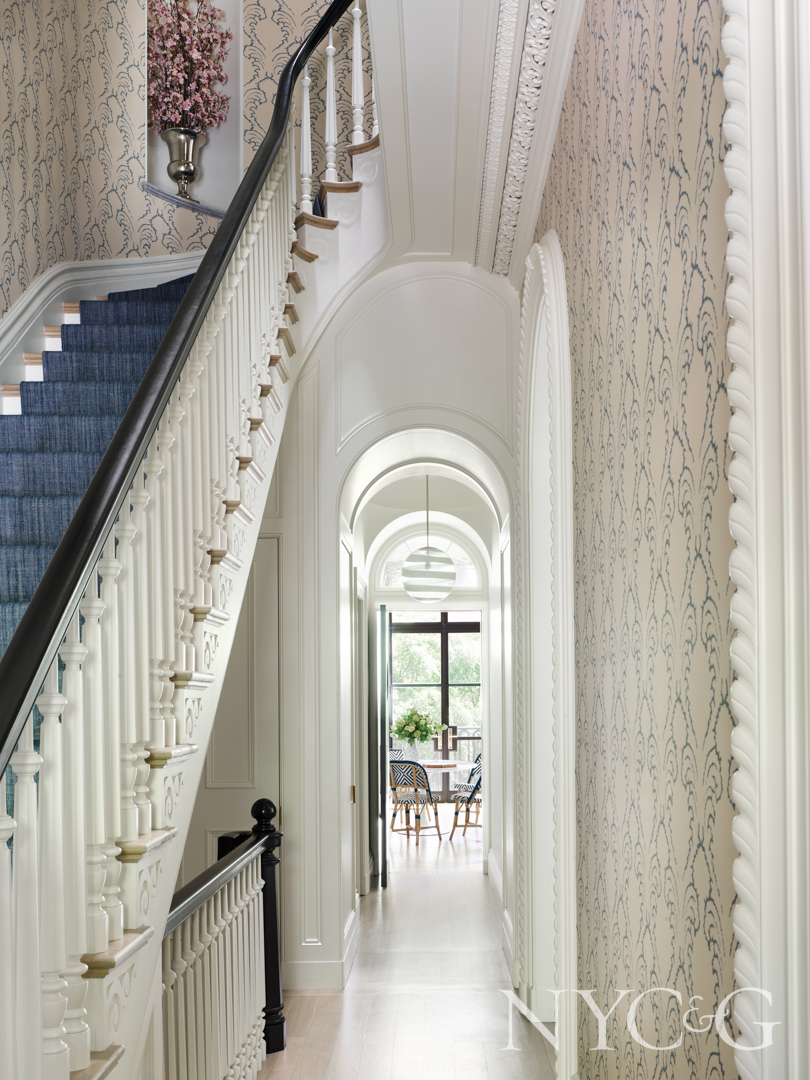
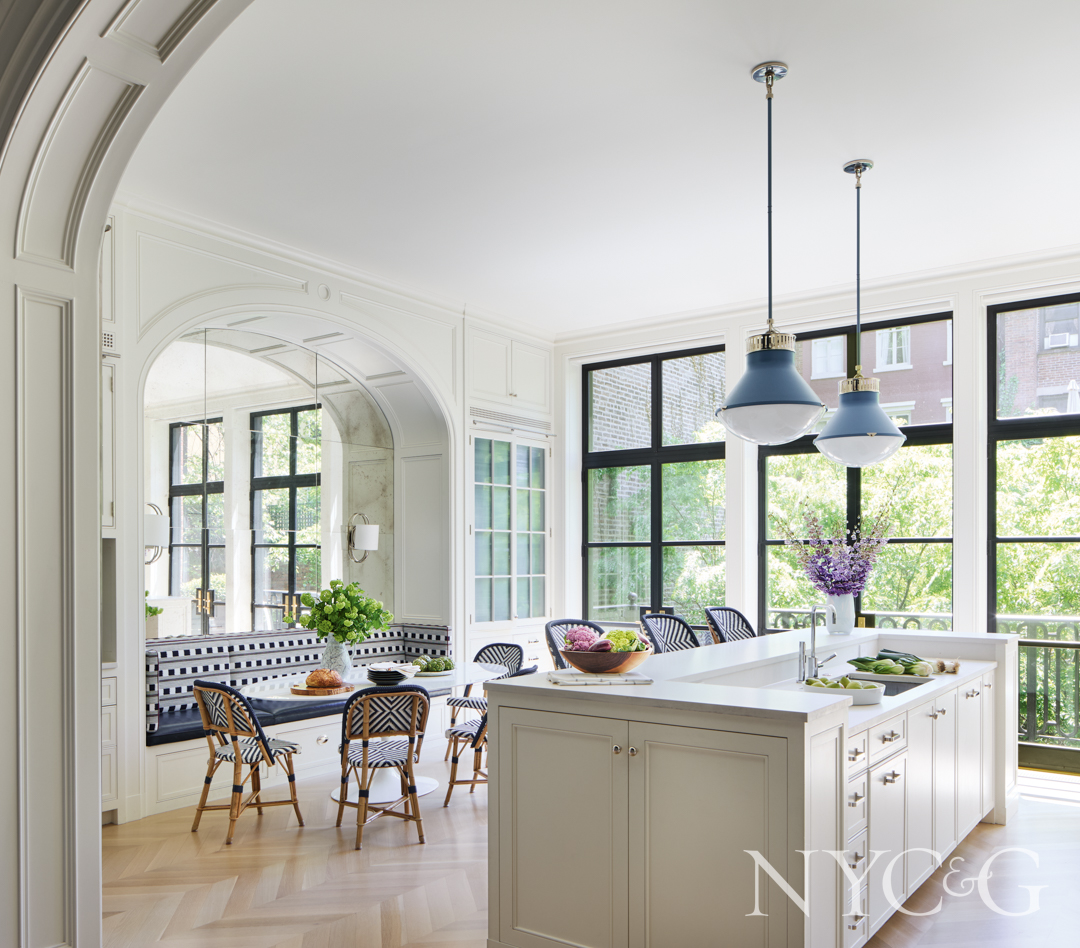
Pendants from The Urban Electric Co. hang above a custom kitchen island by Peter Pennoyer Architects. Chairs from Maison Louis Drucker surround a table from Design Within Reach.

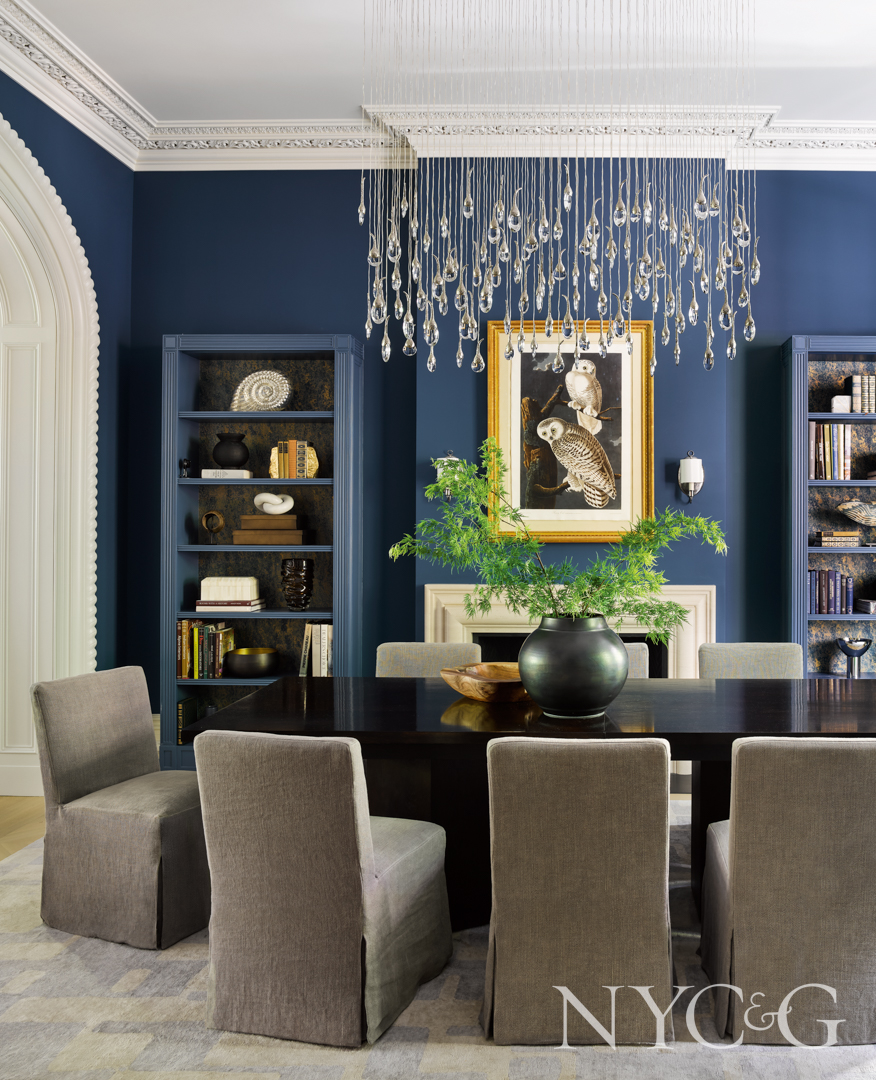
A dining table from The Last Workshop is surrounded by chairs from Level 4 Designs.
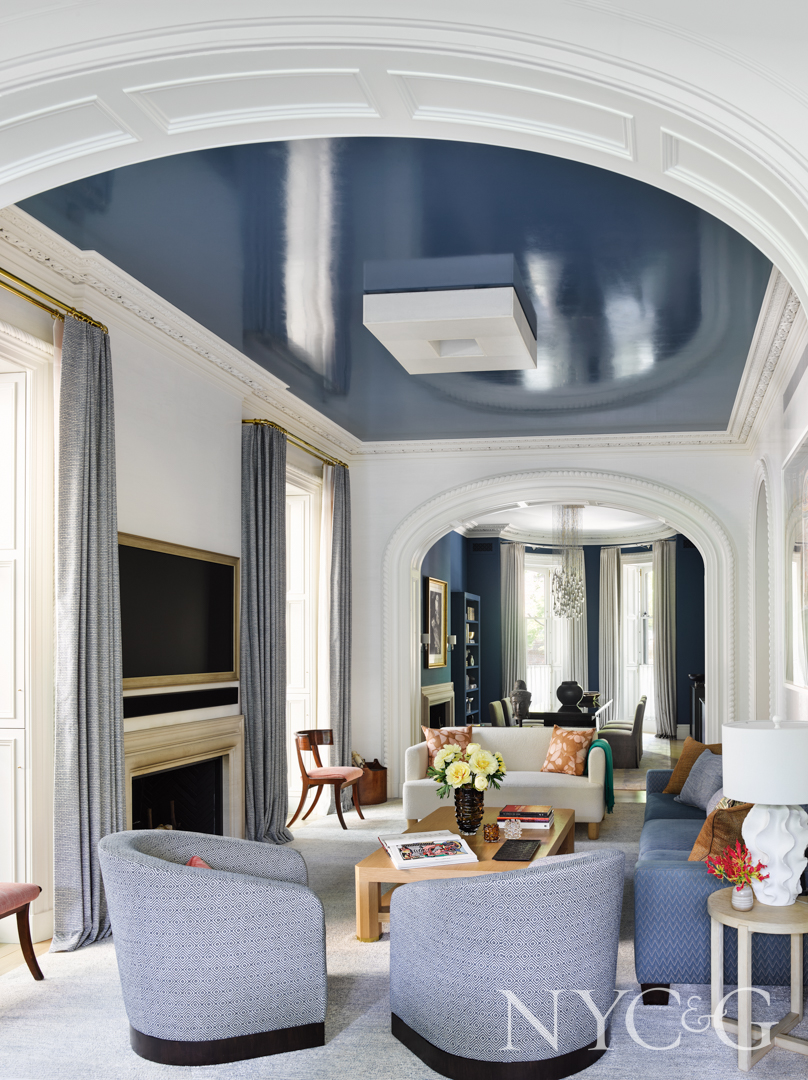
A custom chair by ANJ Interiors is covered in a fabric from Schumacher. The rug is from Beauvais.
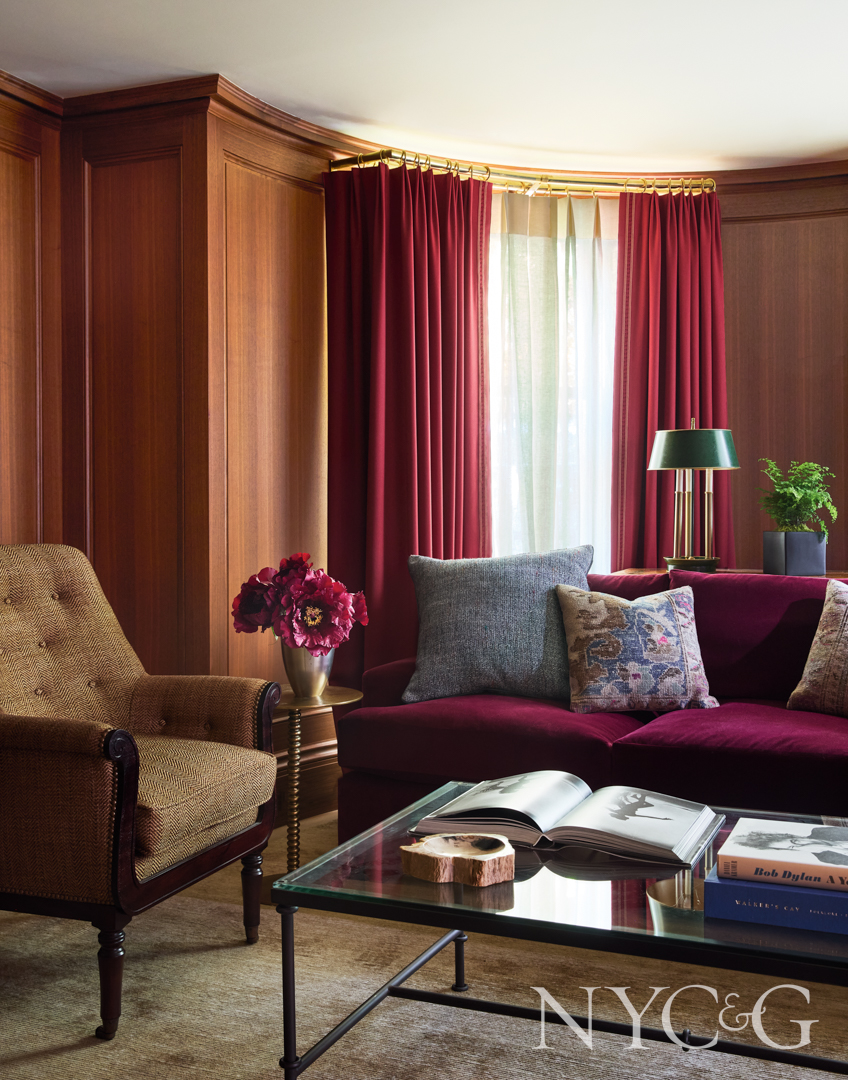
In the study, a John Rosselli & Associates sofa is upholstered in a Scalamandré fabric.
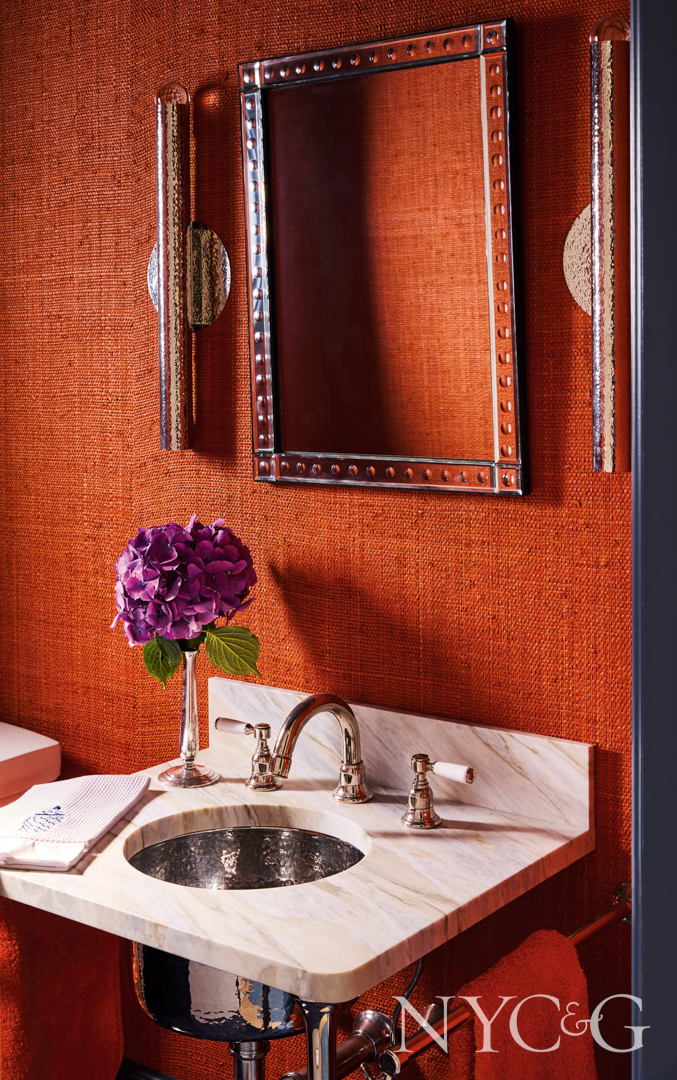
The powder room’s custom vanity by Peter Pennoyer Architects, with BAS Stone countertops, complements a wall covering by Phillip Jeffries.
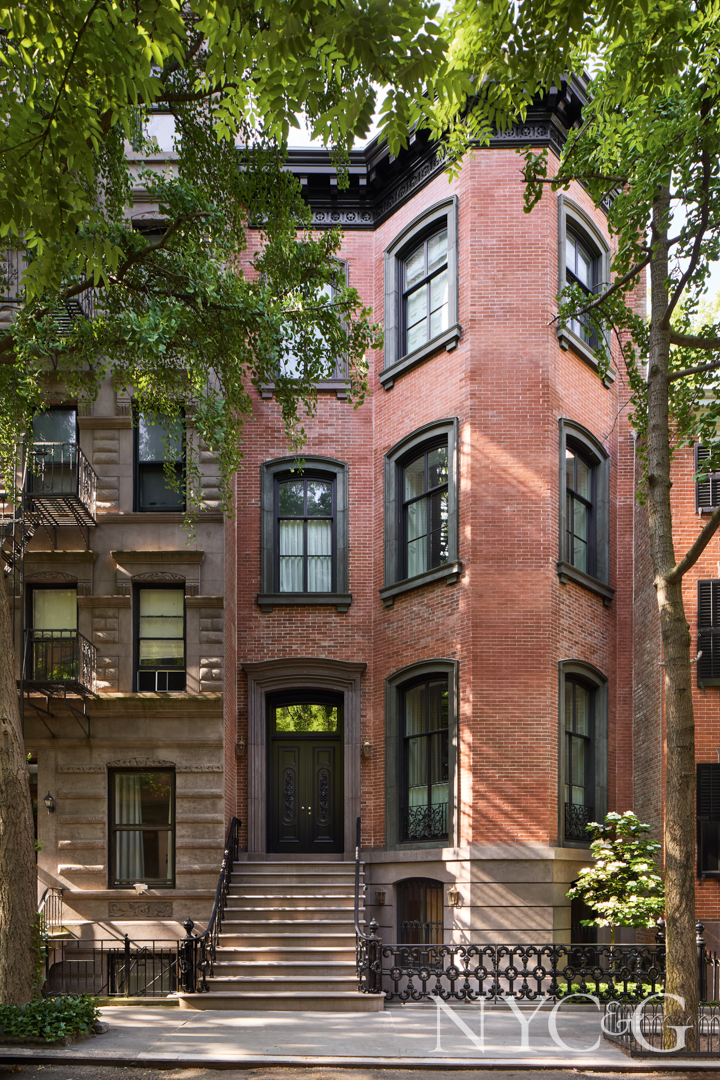
The townhouse’s inviting façade.
Although the interior floor plan was not substantially altered, Pennoyer enhanced the townhouse with a few additions. A small extension was built at the back of the house to enlarge the ground-floor family room and the main-level kitchen, which is now spacious and bright thanks to the presence of newly installed steel and glass windows. He also added a small rooftop lounge that is not visible from the street, thereby maintaining the residence’s historical appearance. Even with these enhancements, the home’s architectural essence remains largely unchanged, especially given the original and reproduction interior molding that Pennoyer reintroduced throughout the house. “We weren’t inventing a new language for the architecture. We were weaving in what had been there to make it look seamless,” he says.

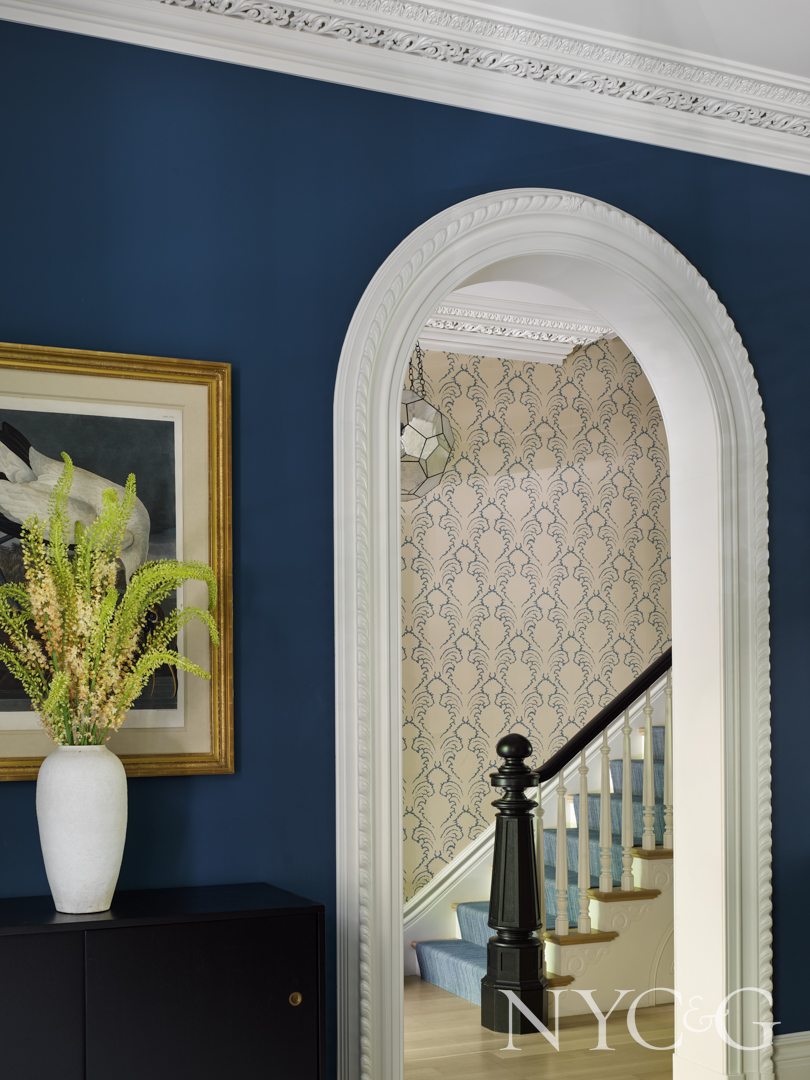
Given that a young, lively family would be occupying the home, Pennoyer took a modern approach to the interiors, for which he was also responsible. “The interiors had to be relaxed. They intentionally do not emulate the architecture but rather stand apart,” he explains. Primarily using a blue-and-white palette for the main-level rooms, which connect through period archways, he imbued the living room with an almost contemporary feel. A blue lacquered ceiling, geometric light fixture, and streamlined furniture dispel any notions that a historical house requires antique furniture. The adjacent dining room is similarly fresh, with deep blue walls and crisp white plaster trim that set off a mix of modern furnishings, including a chandelier that could double as glass art.

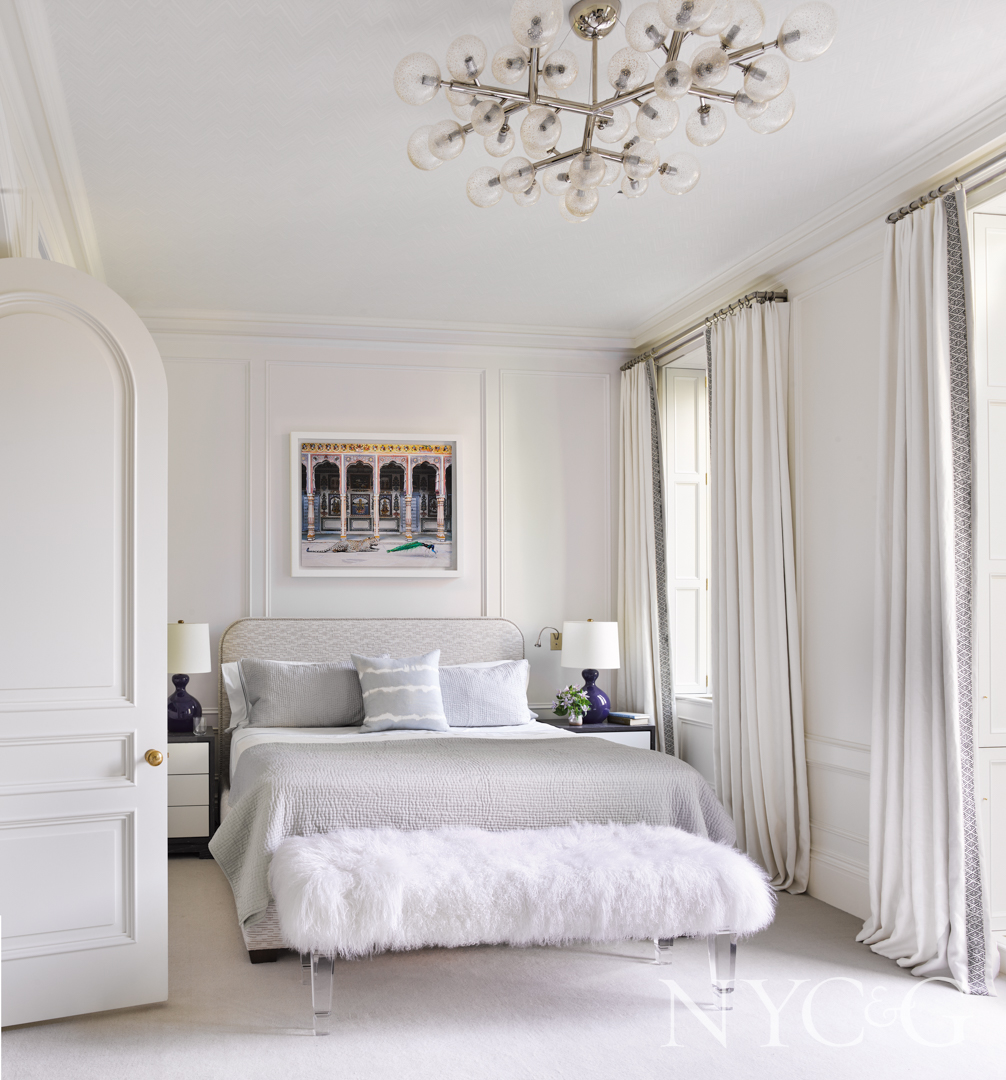
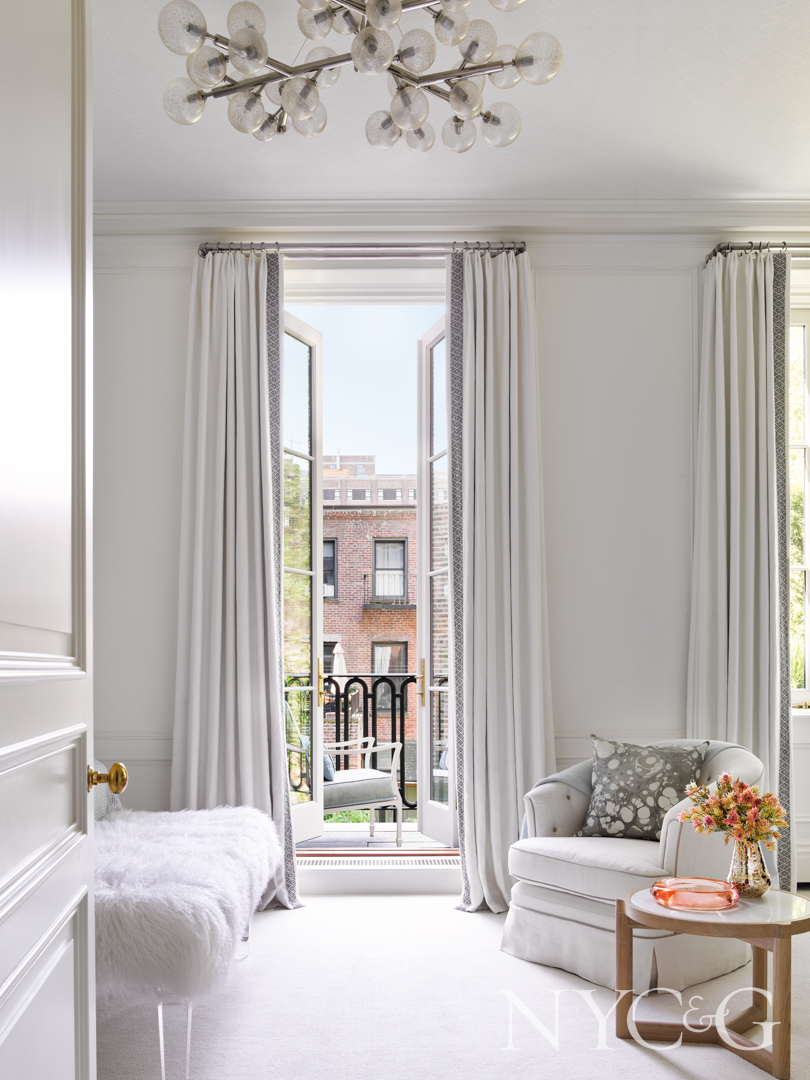
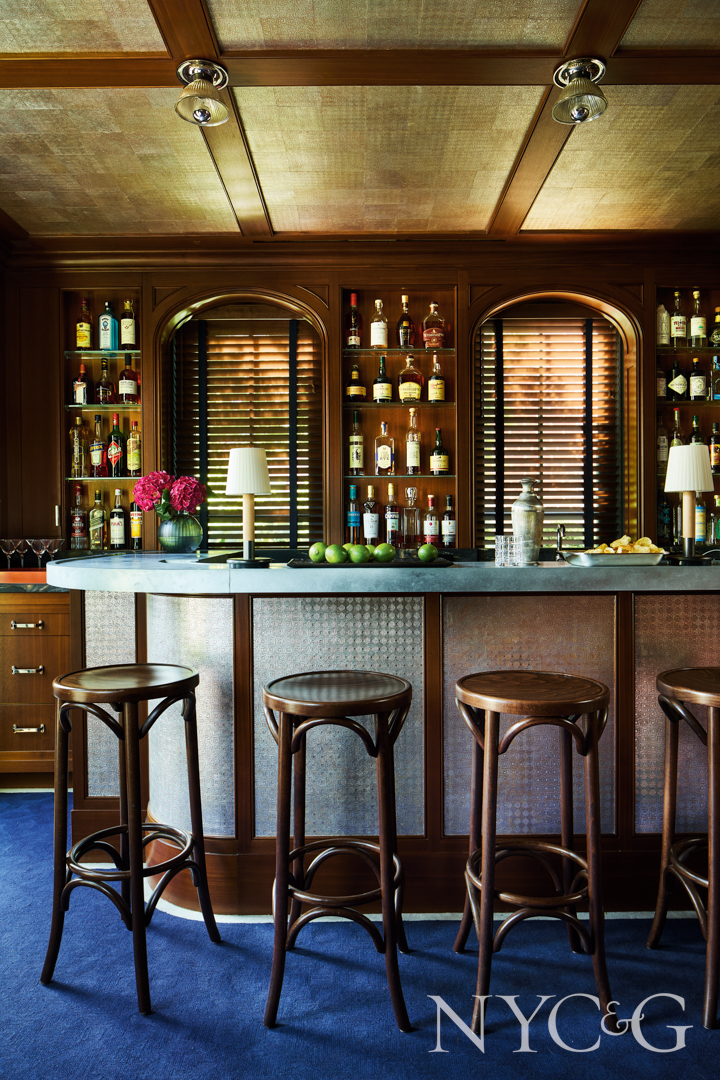
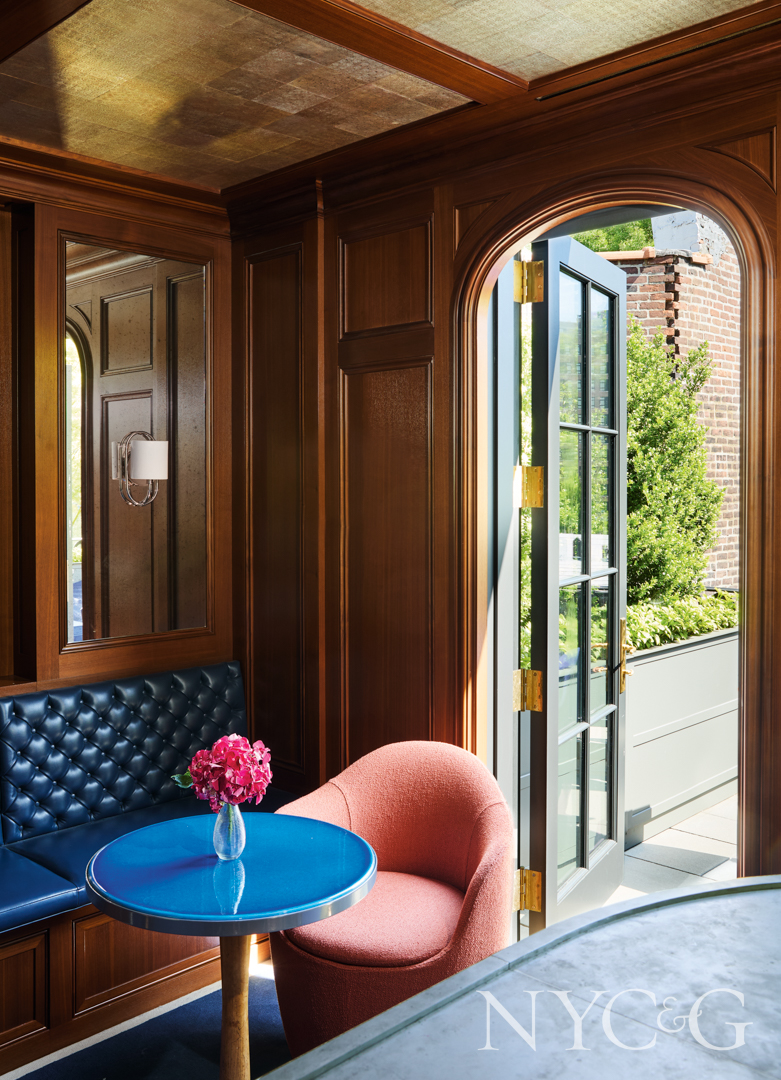
The upper floor rooms are equally up to date. The primary bedroom suite is calm and ethereal with serene hues that complement transparent pieces like a bubble chandelier and an acrylic bench covered in soft sheepskin. With the roof of the kitchen extension providing the bedroom with a terrace, Pennoyer added French doors, which flood the room with light, something often missing in 19th-century New York townhouses. Perhaps the biggest surprise is the rooftop lounge, whose bijou interior is a design mixologist’s dream with mahogany paneling, vivid blue carpeting, and a ceiling and bar appointed in silvery embossed leather. Now restored to its former glory, the house has been given a new lease on life. “Even though the house itself is historically accurate, it has a vitality because of its contrasting furnishings. The house now feels vibrant and alive,” says Pennoyer.
