


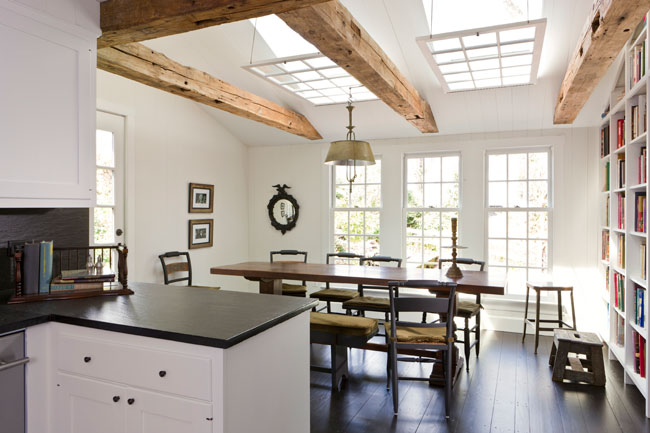
In many new constructions and renovations, ceiling facelifts can take interiors to the next level. What drives this desire to alter such an essential architectural element of a house? The ceiling not only serves a supportive purpose, but also has the ability to bring a room to life. As designer Darryl Carter says, “a ceiling treatment” [raising, refinishing or adding detail] “can affect the entire sense of the room.” It plays a fundamental role in the home’s aesthetic.
In his first book, The New Traditional, Carter discusses what makes a home comfortable yet extraordinary, letting us view it as a collection in which colors and themes connect rooms and spaces. This aspect of design accentuates the style and effect of ceilings. It may seem counterintuitive, but embellishing an already low ceiling actually creates a greater sense of height. Creating texture, painting effects or adding a basic rosette to a ceiling can improve a sterile surface and add depth and continuity to the space’s motifs.
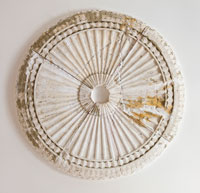
Ceiling lights, in addition to surface detail, may also be added. Laylights (flush glass panels through which light can pass) and skylights can also be used to draw attention to a specific element of a room. If restructural or detail work is not sufficient when altering a ceiling, adding a skylight or laylight can achieve the desired affect. Adding an unexpected element to a room and to an otherwise flat surface contributes to what Carter considers “unique and timeless style.”
