


Sabrina Nagel wasn’t looking for a vacation home, and she certainly wasn’t looking for a home in an exclusive enclave. But the minute she laid eyes on this storied boathouse estate, floating above Lake Sterling on four acres in Richmond Hill, GA—while helping a friend who was relocating from Connecticut find a home—she knew she had to have it. Or rather, it had to have her, as a careful custodian to its layered past.
The home is on one of the most unique lots within the Ford Field & River Club, formerly the Ford Plantation, which was founded in 1917 by Henry Ford—who, at the time, was the wealthiest man in the world. Over the next decade, he quietly acquired tens of thousands of acres along Georgia’s Ogeechee River, investing in the land and its residents, seeking a respite from the world. From the 1920s through the 1940s, Ford transformed the acreage into a progressive working estate that he called “Richmond Hill,” now the town’s moniker.

Following Ford’s death and the passing of his wife, suffragist Clara Bryant Ford, three years later, the property saw many ownership changes, until 1987, when it was acquired by a private owner seeking to transform it into a sporting club. Today, members of this gated community take up the mantle of preservation Ford left, which is exactly what Nagel, an interior designer and real estate investor, wanted to do.

At the time, right around the peak of Covid, Nagel was very happy in her home in downtown Savannah and not looking to acquire a second home. “But I happened to be browsing, and I came across this listing. And from the minute I saw it, it was love at first sight. I just knew I had to have this house.” She called up the listing agent to see the home the next day, skipping the tour of The Ford and its amenities. “I passed the bridge to the entrance and its majestic, 300-year-old plantation oaks, and that moment, that was it.”
She appealed to the seller, who renovated and built the home in the early aughts, promising to take care of the fruit orchards on the property and do little to the structure of the home, which she calls an architectural masterpiece. Her bid won out and in 2022, seven months pregnant with her second child, Nagel moved into her new vacation home, her happy escape for her and her two daughters. Though friends questioned her decision to purchase a boathouse on a lake with alligators (she doesn’t boat or fish), there was no denying the home found her when she needed it most.
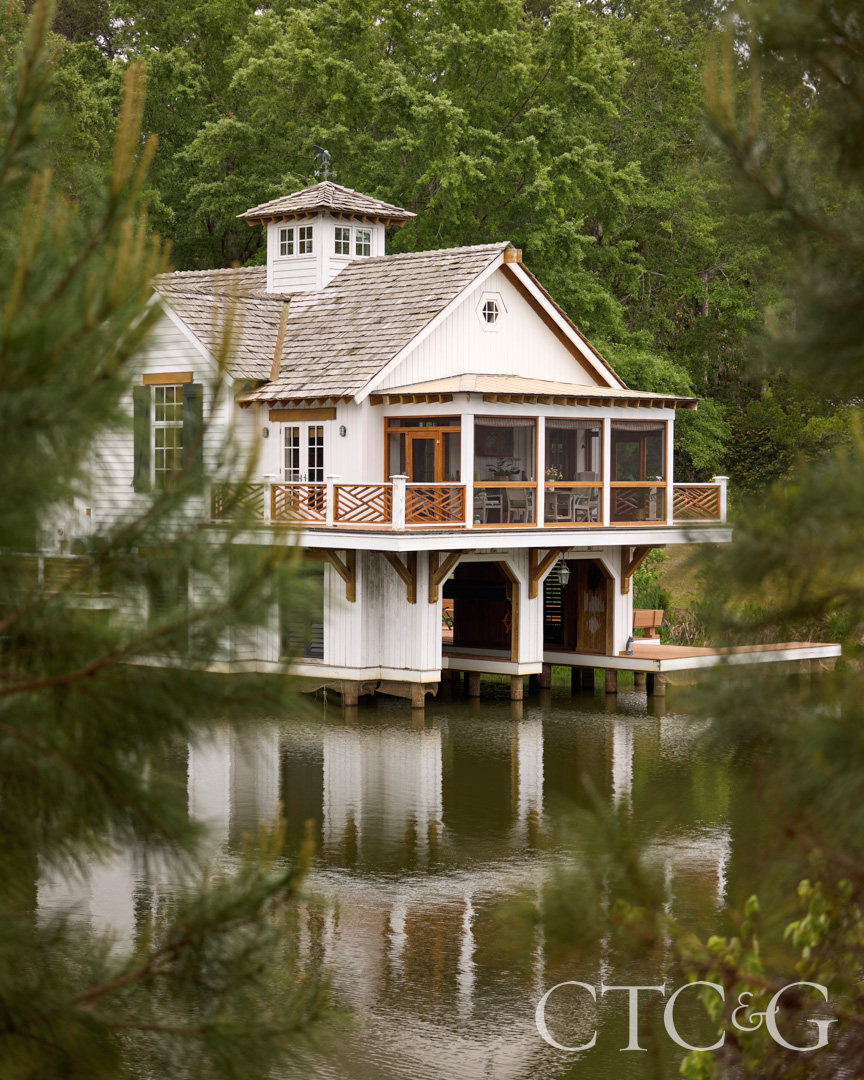
Poised above Lake Sterling, this boathouse home is topped with a copper weathervane handcrafted by Tuck & Holand Metal Sculptors in Martha’s Vineyard.

Centuries-old live oaks, draped with Spanish moss, flank an antique bridge leading to the property; Nagel and her daughters cruise around the property in their Moke electric vehicle.
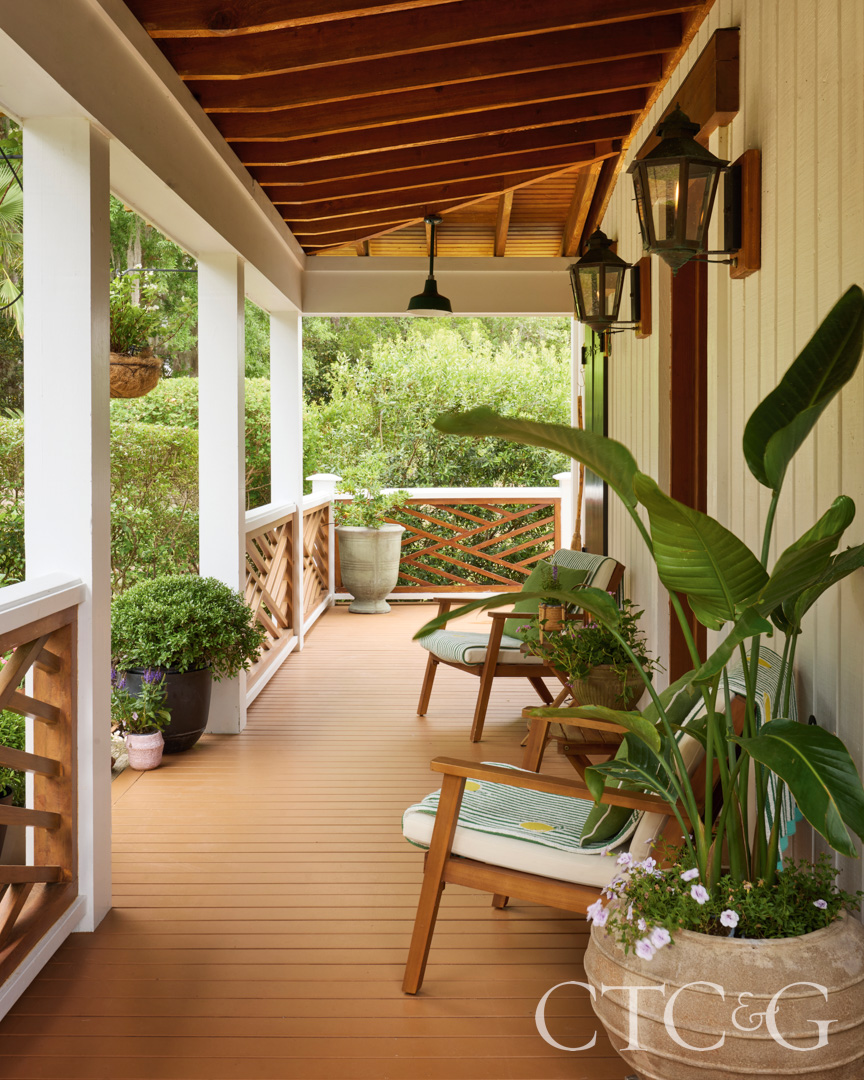
The front porch features striped throws from Anthropologie and gas lanterns from Charleston Lighting.
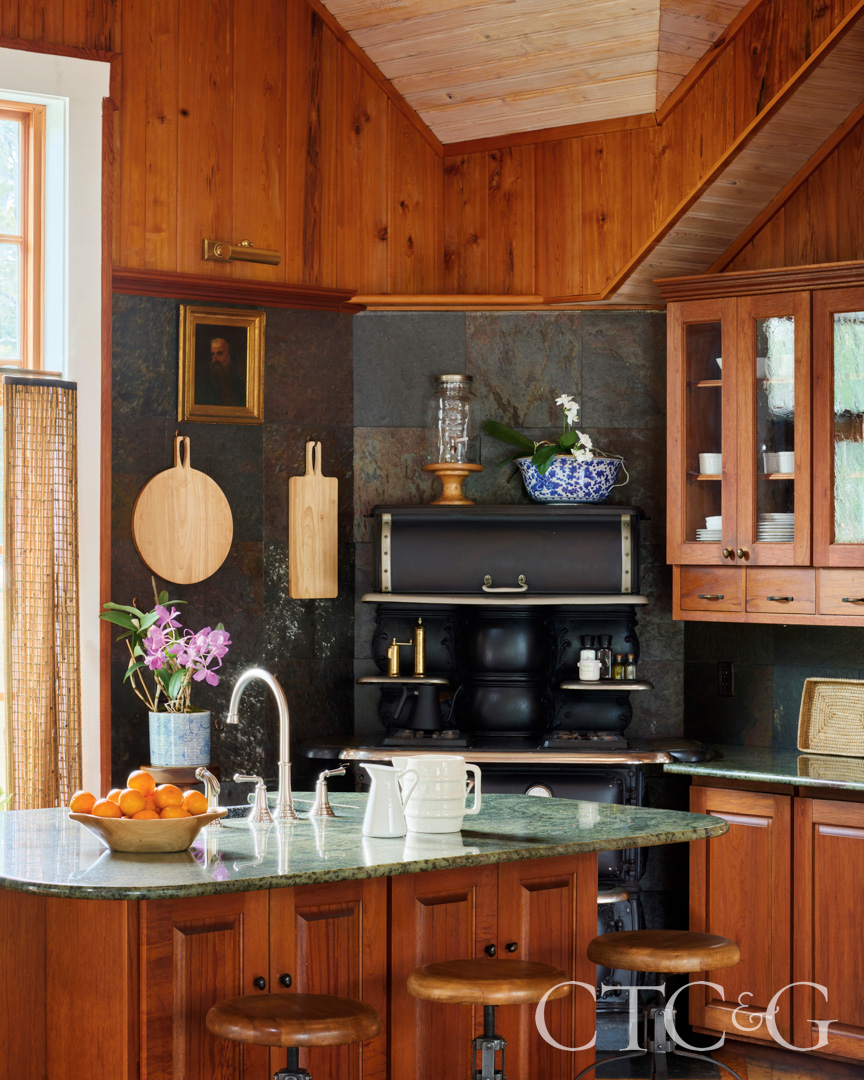
In the kitchen, the Palace Crawford Stove, circa 1898, has been converted to gas and is fully functional.
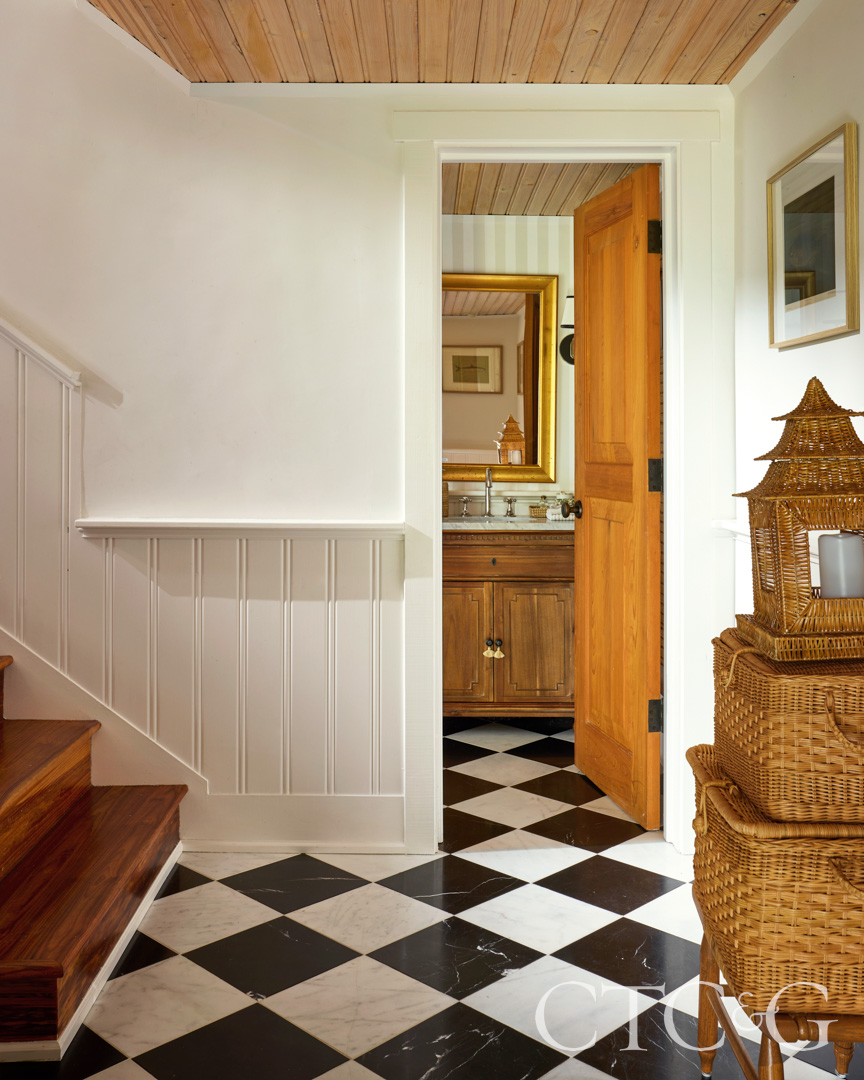
The checkerboard marble flooring in the entry is from Garden State Tile, and an Asian pergola lantern from Hannah E. is stacked on top of baskets on an antique bench.
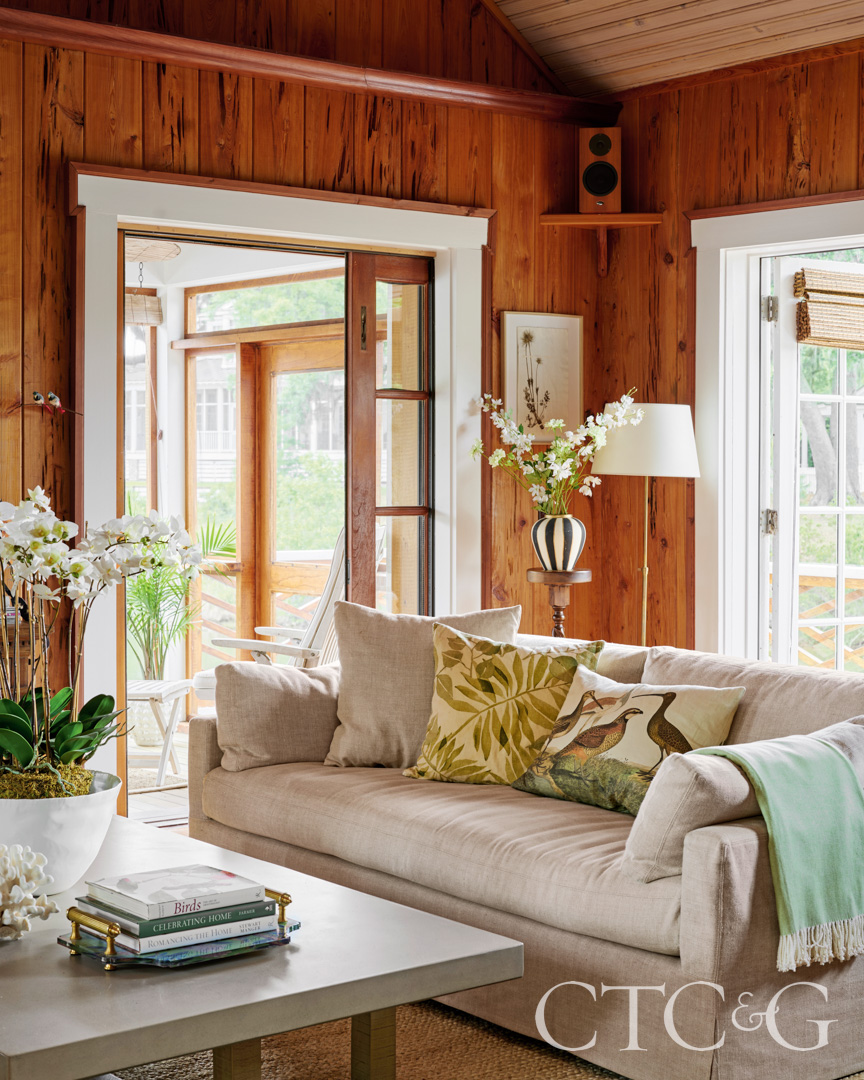
In the living room, a sofa from RH is topped with John Derian accent pillows, while the orchid on the coffee table is through Courtyard Lifestyle.
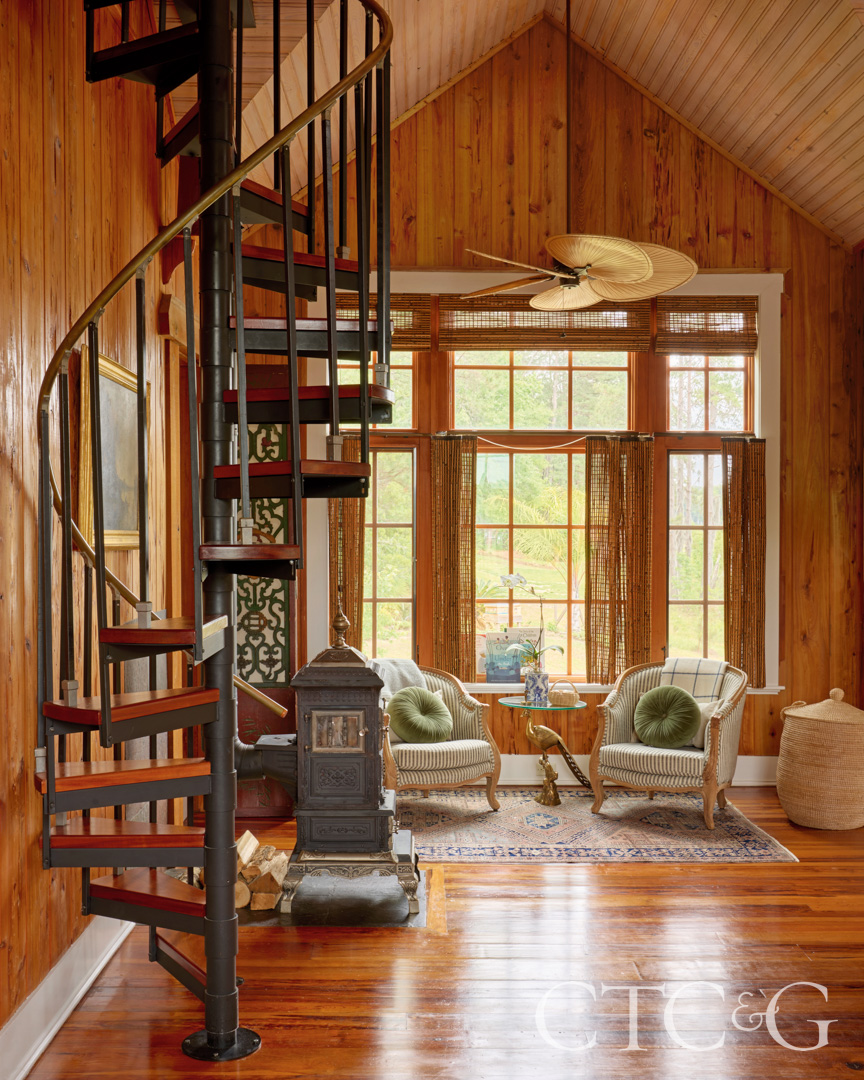
Round moss-green pillows from Lulu and Georgia add a pop of color to chairs in a corner of the living room. In the bedroom, a ladder through Everard Auctions & Appraisals that has been repurposed as a bedside table is topped by hand-painted geraniums from Courtland & Co., while the bed and rug are from RH.

In the bedroom, a ladder through Everard Auctions & Appraisals that has been repurposed as a bedside table is topped by hand-painted geraniums from Courtland & Co., while the bed and rug are from RH.
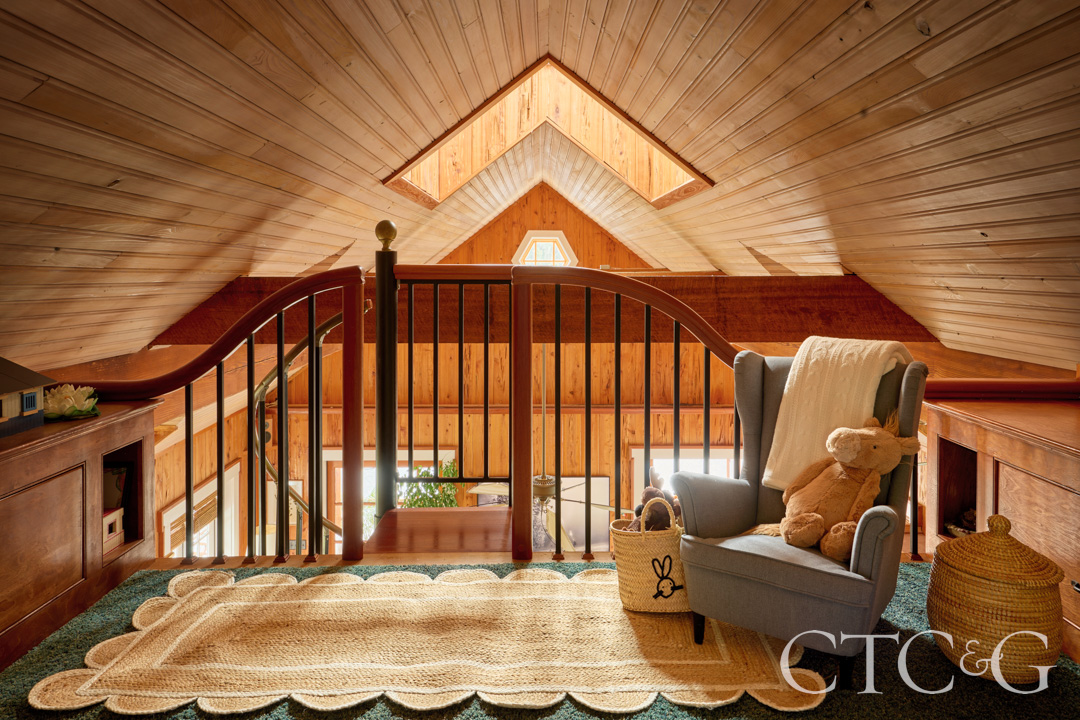
The upstairs loft is the girls secret fort hideout.
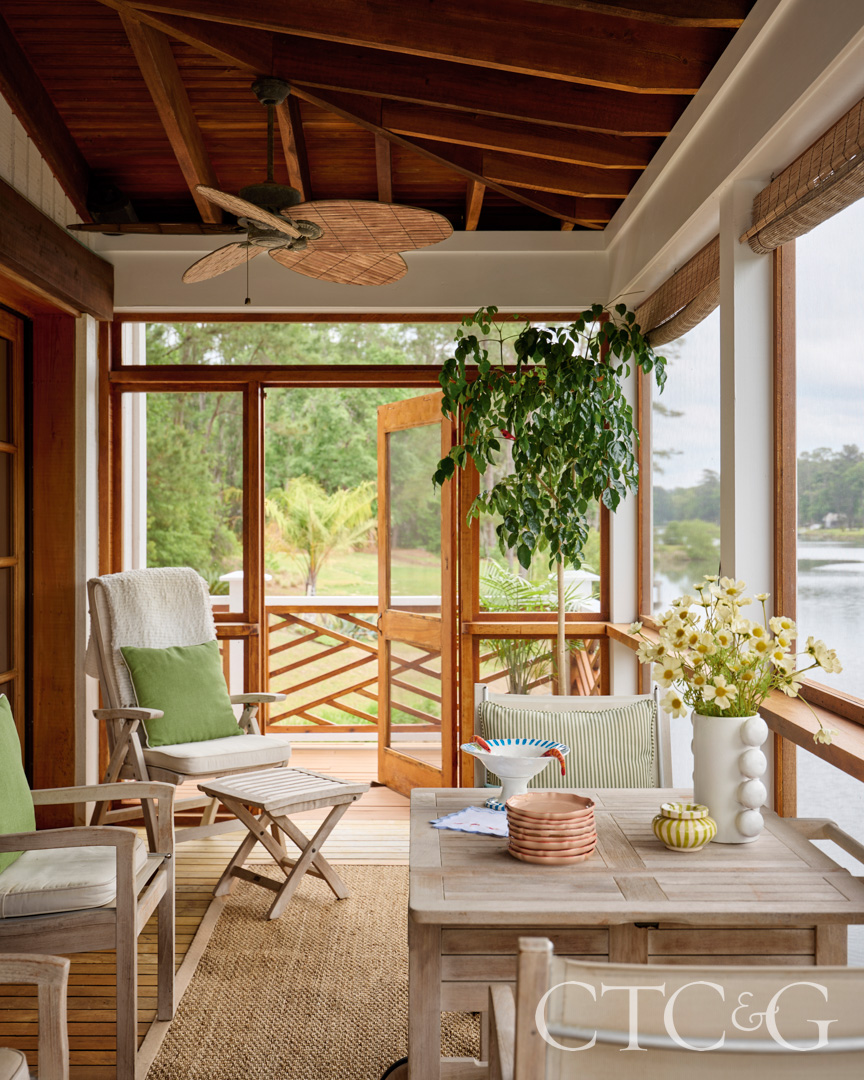
The screened porch is furnished with some of Nagel’s favorite pieces, like the green-striped ceramic ashtray purchased in Morocco and a white vase from Savannah’s The Paris Market.
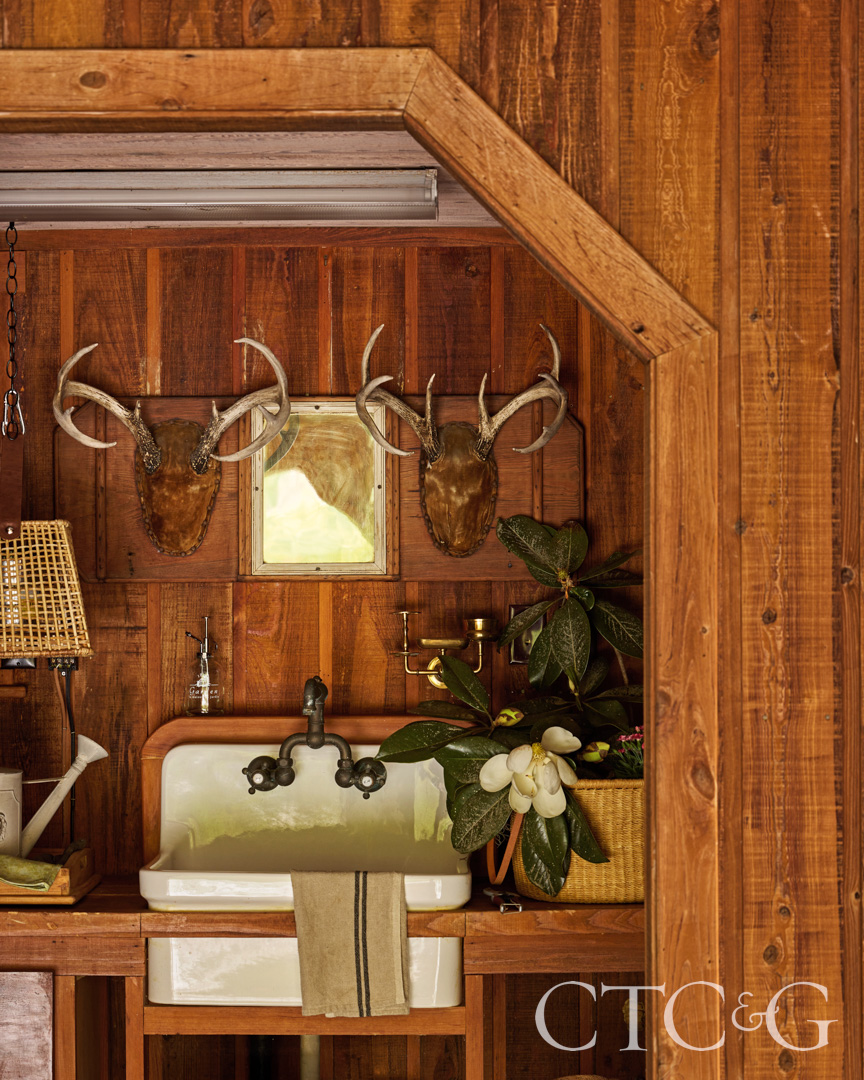
Antique antlers with a mirror hang above the sink in the boat port potting area; the round basket holding magnolia leaves and blossoms is from Asher + Rye.
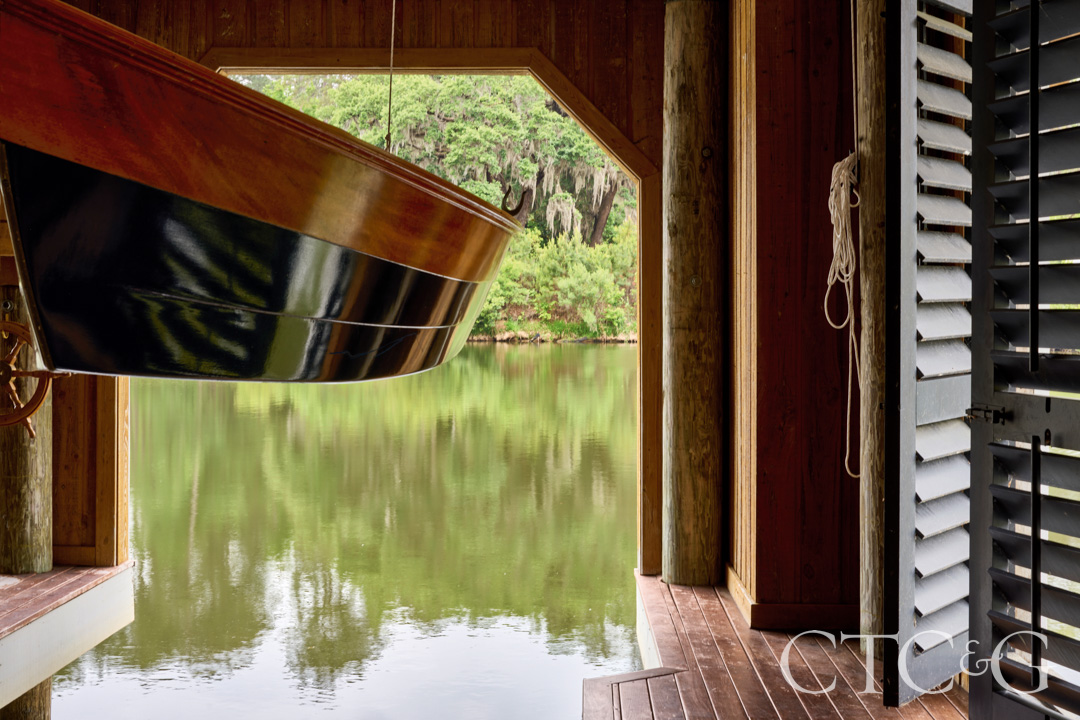
The boat port doubles as Nagel’s wet bar when she entertains.
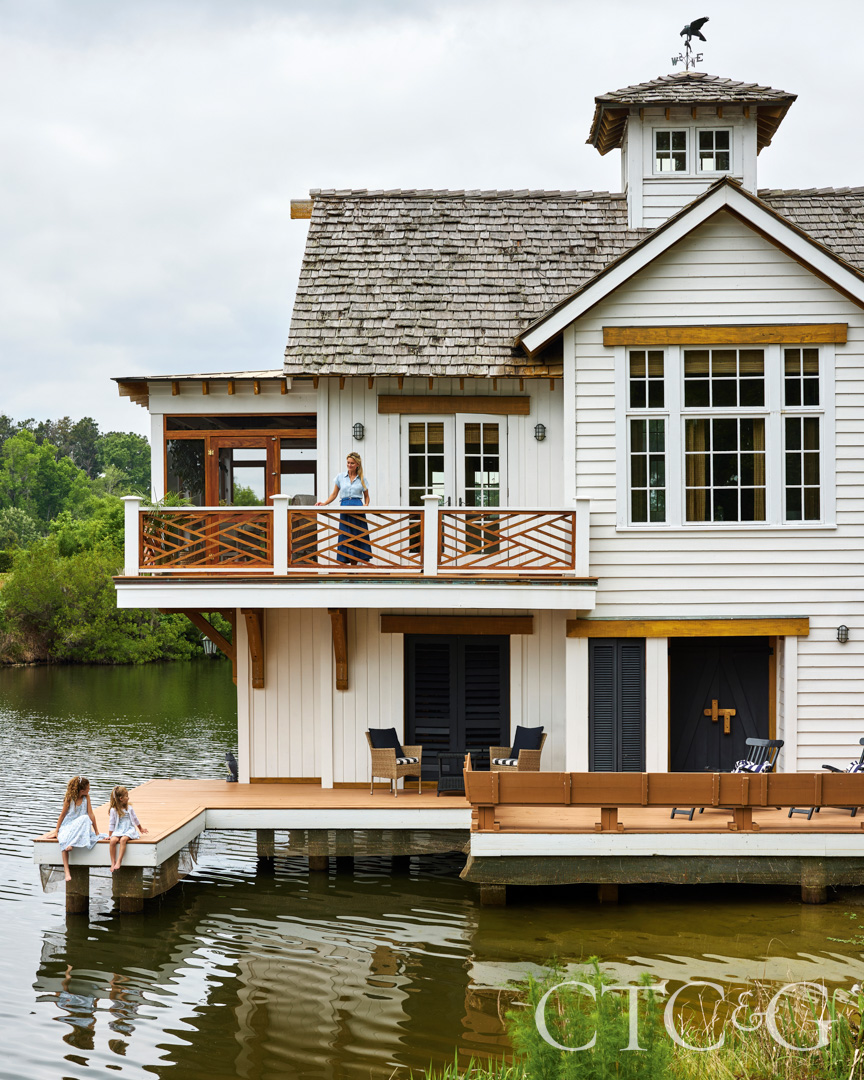
The home is crafted from pecky cypress, cedar and ironwood to stand up to its lakeside environment.
Now, the family harvests their own fruit from the orange and grapefruit groves and blueberry bushes. “We have beehives, and we go on birdwatching hunts for blue jays,” she adds. “It became this retreat where we can escape everything, and my daughters can chase butterflies and have popsicles by the water. It’s a very special place, with a special vibe that’s hard to explain, but when you walk into that house, it’s like, ‘wow, where am I?’”

Indeed, walking into the home feels transporting to another era. Nagel, who has a degree from Savannah College of Art and Design, installed a checkerboard marble floor in the entryway for a classic yet unexpected look. She also redid the bathroom with vintage-style Waterworks fixtures.
True to her promise, she left the home’s architecture largely untouched. To stand up to the lake and its swells, the house was crafted from cedar, ironwood and pecky cypress (which panels the interior walls). The large exposed beams are salvaged and reclaimed wood.

She still uses many of the home’s special antique elements, including an antique cast-iron Invader wood stove, manufactured by Union Stove Works in the late 1800s, and a cast-iron cooking stove and oven by Palace Crawford, crafted in the late 1800s. Converted to gas, the stove is still fully functional, and Nagel uses it as her main cooking source.
The rest of the home’s design was led by Nagel’s intuition in a neutral palette with touches of color that reflect the lake. She layered contemporary items with antiques—from vintage antlers to an antique ladder repurposed as a nightstand. Originally from Venezuela, Nagel led with her gut when it came to design decisions, rather than subscribing to a particular aesthetic.

“The house itself has an aura to it as a whole,” she explains. As a designer—and mom—she loves the kids’ loft (which her daughters consider their fort with its own spiral staircase) and the screened-in-porch, perfect for serene summer nights overlooking the water. “The house itself is what makes being there magical,” she adds. “I can’t say there is anything material in it that matters more than the experience of being there.”
